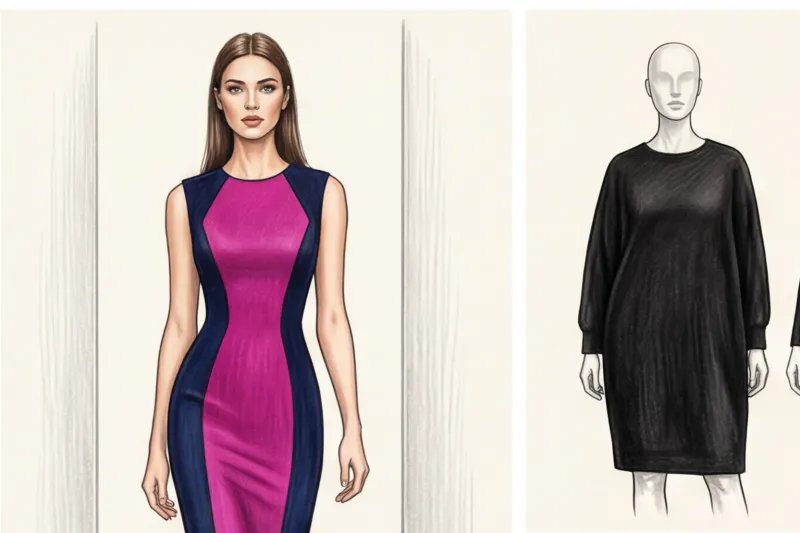
Have you ever noticed yourself reaching for a black robe or a dark dress before an important event? For years, we've been told that dark shades are a universal way to add volume. But in 14 years as a stylist, I've learned one hard truth: trying to "hide" your figure in a solid dark spot often makes you look like a heavy, monolithic rectangle. Real magic begins not when we hide, but when we begin to control the gaze of others.
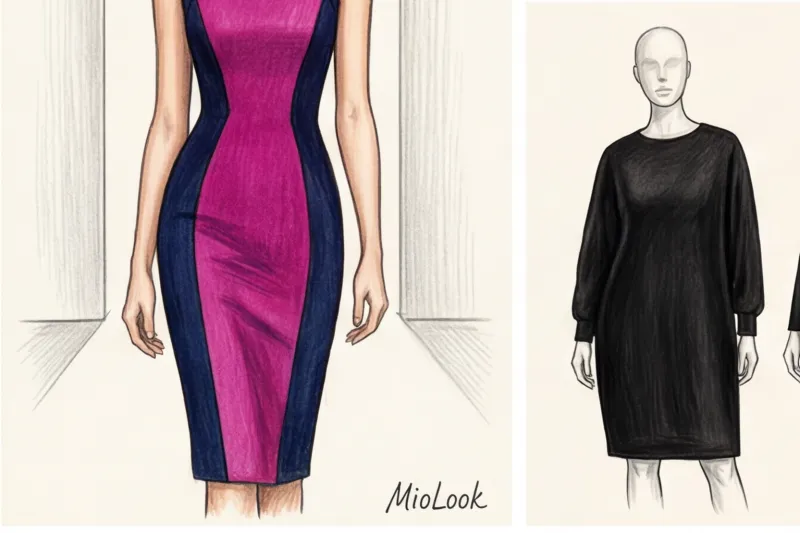
That's why it's literate color blocking in clothing, body shaping which transforms a grueling struggle with centimeters into a precise architectural task, works better than any strict diet on the eve of a holiday.
Color architecture: how color blocking works in body-shaping clothing
Let's agree right away: visual correction isn't like wearing shapewear that makes it impossible to breathe. It's simply managing visual attention. The human eye is lazy; it always gravitates toward the edge of contrast. Wherever we place that edge, that's where people will look.
As German sociologist and psychiatrist Franz Müller-Lyer described back in 1889 (his famous illusion of darts translates perfectly to darts and lines in clothing), the length of a line is perceived differently depending on how its ends are shaped. We discussed this mechanism in more detail in our a complete guide to visually correcting your figure with clothing In the context of style, this means that color acts as a vector, directing the eye.
"According to internal analytics from the MioLook app for 2024, adding just one contrasting vertical line to an image increases users' subjective assessment of their own silhouette by 40%."
The Biggest Myth of Style: Why All-Black Doesn't Make You Look Slimmer
There's a steadfast stereotype: "black makes you look slimmer, white makes you look fat." It sounds logical, but in practice, it works differently. Black has the highest density and sharply defines the body against the surrounding environment. If you have a perfect hourglass figure, black will accentuate it. However, if you have an apple or rectangle shape, a monolithic black outline will make you look heavy.
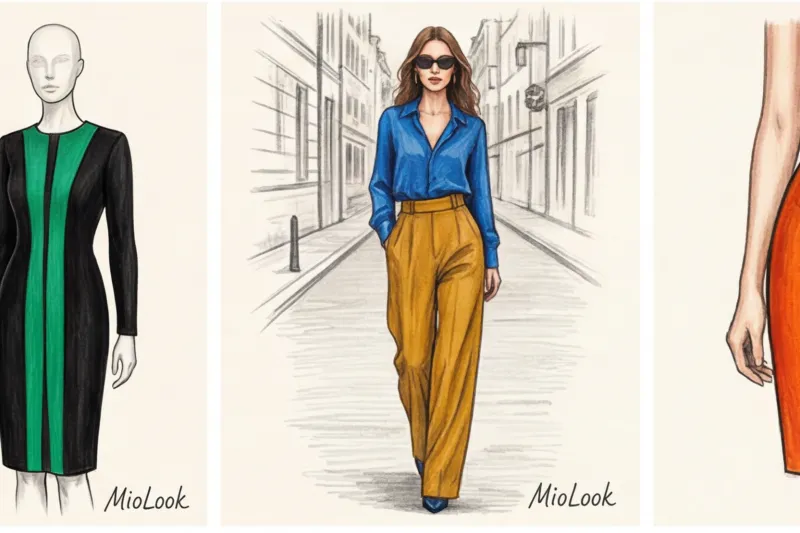
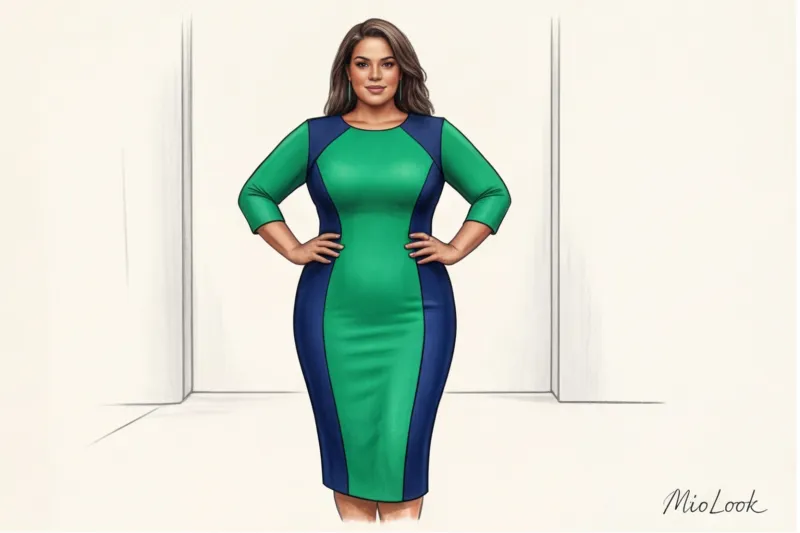
I had a case in my practice: my client Elena had been wearing exclusively black tunics and wide-leg pants for five years to hide her belly. She looked tired and visually larger than she actually was. When we replaced the tunic with a dress with contrasting emerald inserts on the sides, the effect was stunning. The black center created a subtle vertical line, and the emerald sides blended into the background. Elena visually dropped two sizes in five minutes in the fitting room.
Your perfect look starts here
Join thousands of users who look flawless every day with a smart wardrobe.
Get access — €0.99 onceColor Distribution Strategies: Building New Proportions
Color blocking is based on the golden ratio. Our brain perceives the proportion 1/3 to 2/3 as the most harmonious. For example, a top takes up one-third of the silhouette, while high-waisted pants take up two-thirds. Splitting the figure exactly in half (1/1) reduces height and creates a squat silhouette.
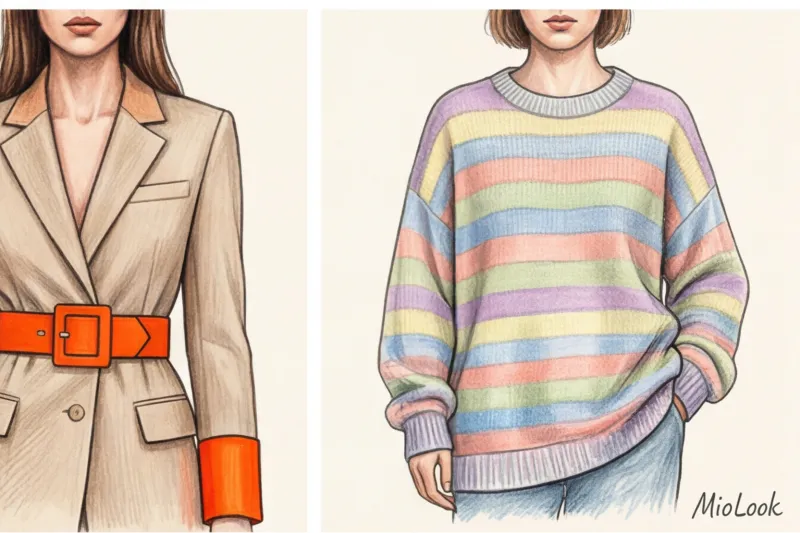
Vertical color blocking: stretch the silhouette by 10 centimeters
The simplest and most effective way to reduce visual weight is to create a vertical color scheme. How do you do it?
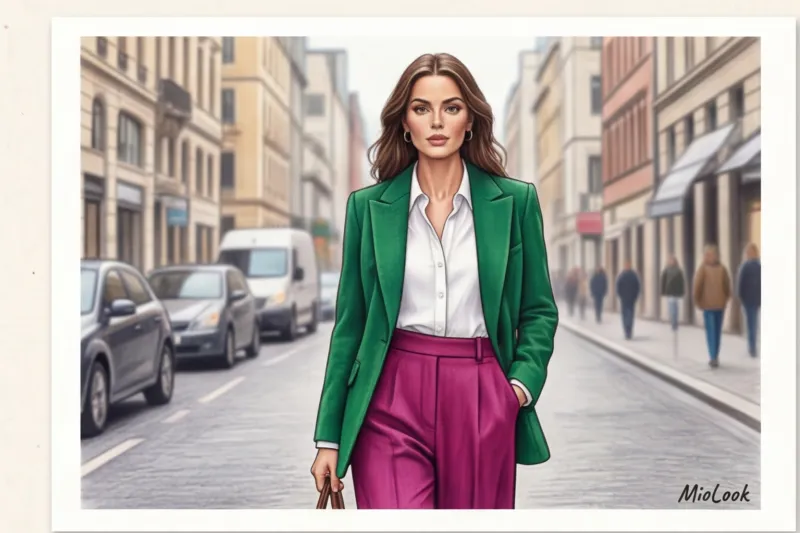
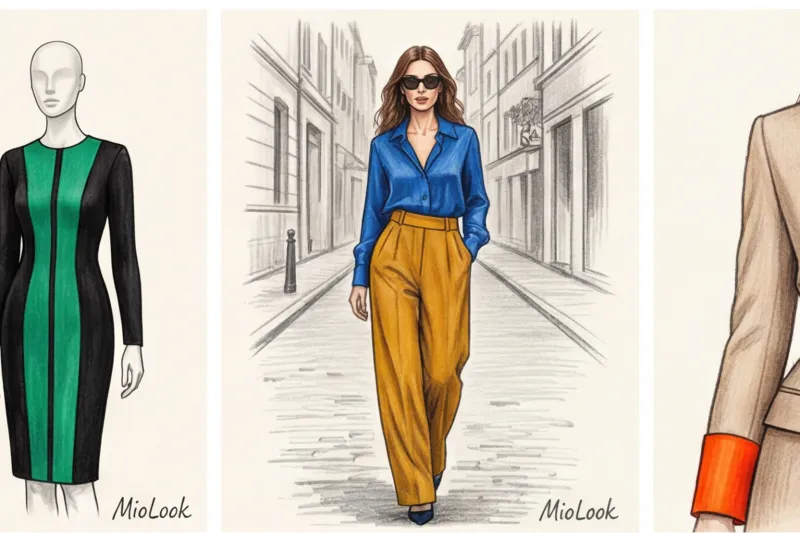
- Unbuttoned jacket. Wear beige trousers and a beige top (monochrome column), then layer a contrasting blue jacket over it, leaving it unbuttoned. The two vertical lapels of the jacket will cut off your sides.
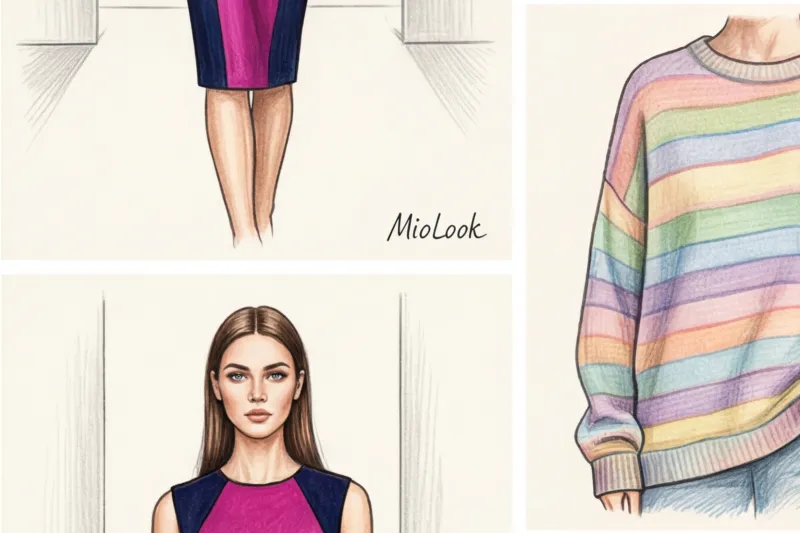
- Smart dresses. The trend started by Stella McCartney in 2012 is still going strong. A dress with a light or bright center and dark sides creates an artificial waist even where there isn't one.
- Contrasting stripes. A wide stripe along the outer seam of trousers instantly lengthens the legs. Choose thick fabrics, such as suiting wool in the €80–€150 price range, to ensure the trousers retain their crease.
Horizontal and Diagonal Blocks: How to Manage Volumes
Horizontal color blocking is dangerous if the line where the two colors meet runs along the widest part of your figure. But it can be easily managed:
- If you have large hips but graceful shoulders and a bust (a pear shape), wear comfortable dark pants and a bright, contrasting top. The viewer's gaze will instantly rise to your face.
- For plus-size girls, a real salvation is diagonal color block Wrap dresses or skirts with asymmetrical, angled hems create a dynamic effect. The diagonal line draws the eye downward and to the side, visually slimming and graceful the figure.
Access to MioLook for €0.99 — one-time payment
A smart AI stylist will choose the perfect look for you and help you create a capsule wardrobe with color blocking.
Get access — €0.99 onceSecret trick: contrasting details as visual anchors
Many people mistakenly believe that color blocking always involves huge expanses of color: a green sweater paired with a fuchsia skirt. But in a strict business dress code, you can't afford such liberties. This is where micro-scale comes into play.
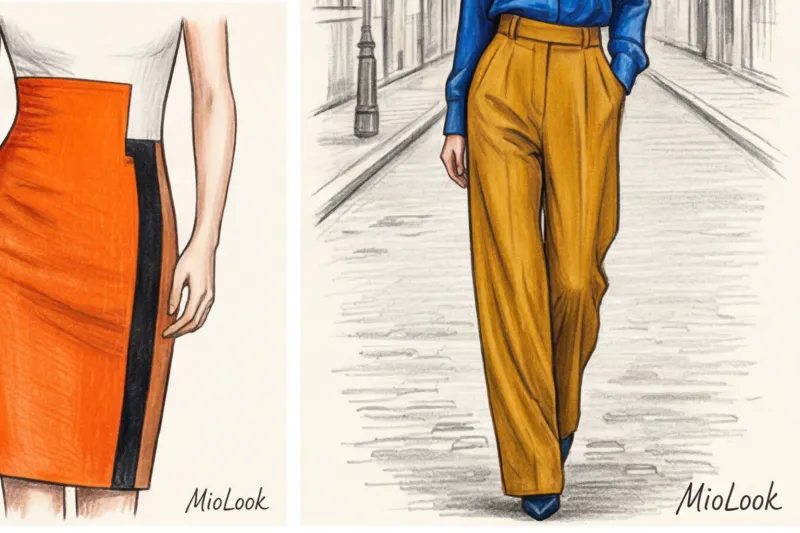
Contrasting details act as visual anchors. Bright, stiff shirt cuffs peeking out from under a dark jacket draw attention to the wrists—the thinnest part of a woman's body. Contrasting piping on the jacket's lapels (often found at brands like Massimo Dutti or COS, priced between €150 and €200) elongates the neck.
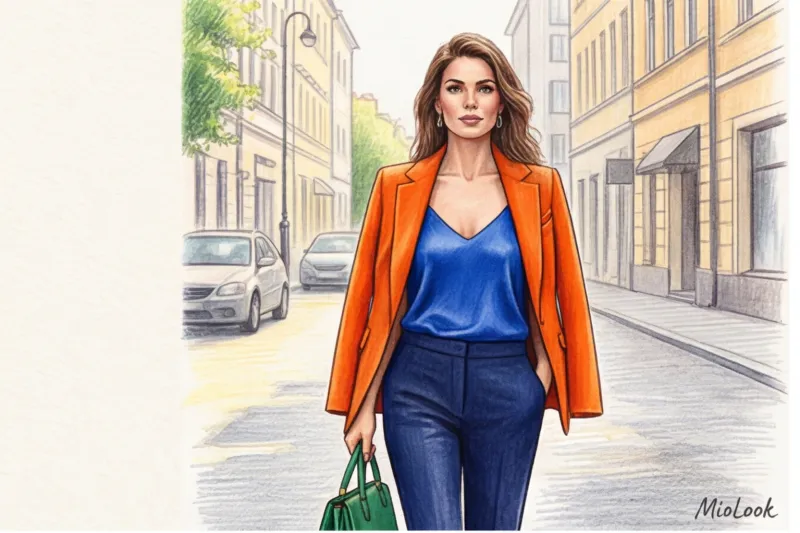
Even a bright geometric bag against a completely gray monochrome background is also a color block. If you want to distract from a heavy top, pick up a bag in a rich shade and carry it with your hand hanging at hip level.
Fatal Mistakes: How Color Blocking in Clothing Can Ruin Your Figure
Let's be honest: this technique doesn't always work. There are times when trying to play with color turns into a disaster.
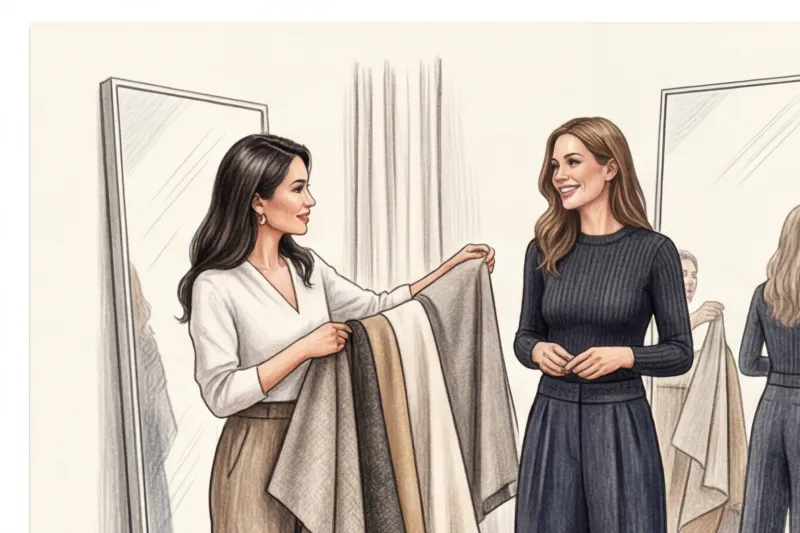
- Flimsy textures. This is the main problem I see on the streets. Color blocking is architecture. And architecture can't be built out of jelly. Thin viscose (less than 150 g/m²), cheap, loose knits, or soft polyester will transform a strict geometric line into a curved arc that accentuates every fold on the body. Color blocking only works on heavy cotton, suiting, denim, or shape-resistant knits.
- Too finely crushed. If your look has more than three active, contrasting zones of equal size, your figure will appear disjointed, creating a harlequin-like effect.
- Joint at the hip line. Never finish a contrasting top right at the widest point of your hips. Either higher (cropped/tucked-in tops) or lower (long shirts), otherwise you'll add 5-7 extra pounds to your figure.
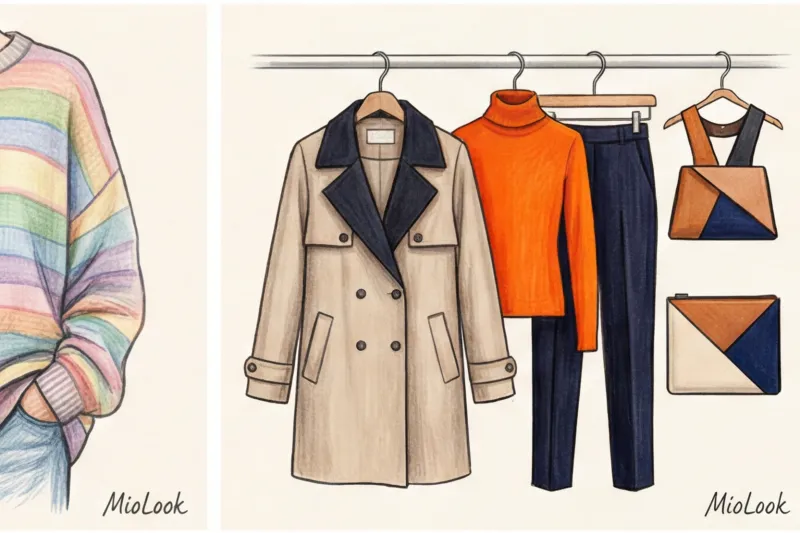
A stylist's checklist: how to incorporate color blocking for figure shaping tomorrow
To avoid standing in front of your closet tomorrow morning, confused, I offer a step-by-step plan for incorporating color blocking into your style. To make things easier, you can upload your items to MioLook app and let the algorithm collect the required combinations.
- Start with the base. Create a monochrome column inside (for example, graphite trousers and a tone-on-tone turtleneck). Layer a contrasting jacket on top—white, emerald, or deep blue.
- Find your "pride zone". Do you have beautiful shoulders? Accentuate them with a bright geometric top and neutral bottoms. Have long, luxurious legs? Choose bright, straight-leg trousers and a subdued black or beige jacket.
- Check your proportions in the mirror. Step back two meters. Your figure shouldn't be cut exactly in half by the color. Make sure the top-to-bottom ratio is close to 1/3 to 2/3.
- Conduct a tissue audit. Only use items that can hold their shape on a hanger on their own for color blocking.
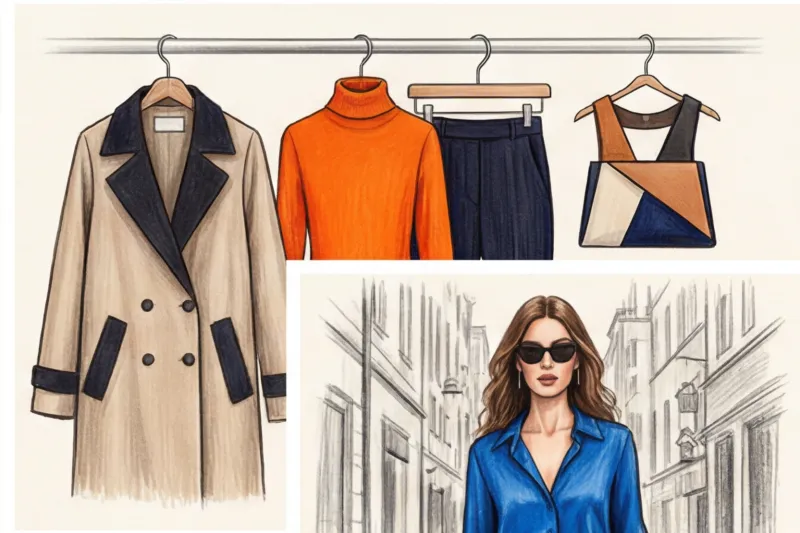
Remember the main rule of optical illusion in style: we don't hide imperfections under shapeless layers of fabric. We deliberately highlight with color those areas we're proud of, leaving everything else in the noble shade of basic hues.