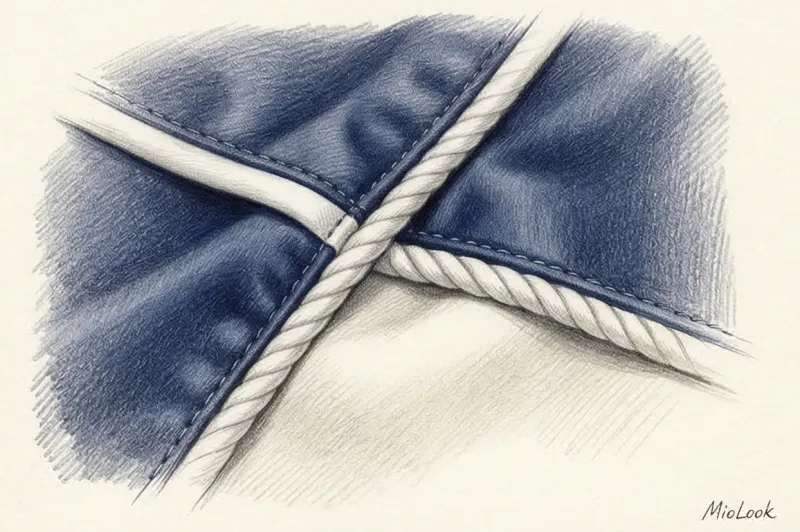
What is edging?
Kant In clothing, a narrow strip of fabric, colored cord, or trim sewn into a seam or along the edge of a garment. Classic fabric piping is cut on the bias at a 45-degree angle. This technique allows the material to remain flexible and lie flat on curved areas of a design, such as along an armhole or neckline.
The detail serves two main functions: practical and decorative. The sewn-in strip reinforces seams, prevents the edges of the garment from deforming, and helps the garment maintain its shape. Visually, the piping separates the design elements, emphasizes silhouette lines, and creates a clear, graphic outline.
Main types
In clothing design, various modifications of this part are used, depending on the purpose of the item and the materials used.
- Flat edge. It's a strip of fabric folded in half without any inner filling. It's used for delicate finishing of lightweight dresses, silk blouses, and lingerie.
- Volumetric (cord) edging. A strip of fabric with a dense cord sewn into it to create a raised profile. It's used in structured garments like jackets, coats, and uniforms.
- Reflective piping. A specialized reflective insert. Integrates into the seams of sportswear, workwear, and outerwear to ensure safety in the dark.
- Material variations. Satin piping is traditionally used to trim evening tuxedos. Leather trim is used with thick wool and tweed, and knitted elements complement knitwear.
How to use
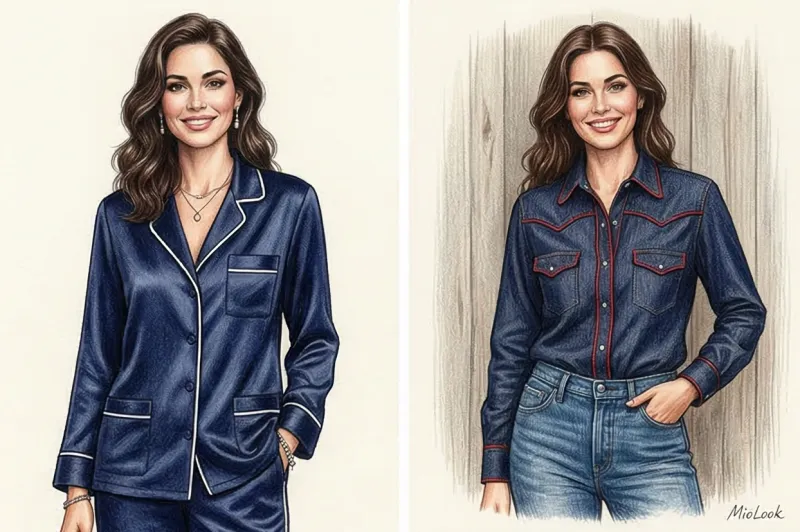
In a modern wardrobe, piping serves not only as a technical element but also as a distinct stylistic element. A typical example is silk two-piece pajama-style suits. In these sets, a contrasting stripe runs along the lapels, cuffs, and patch pockets.
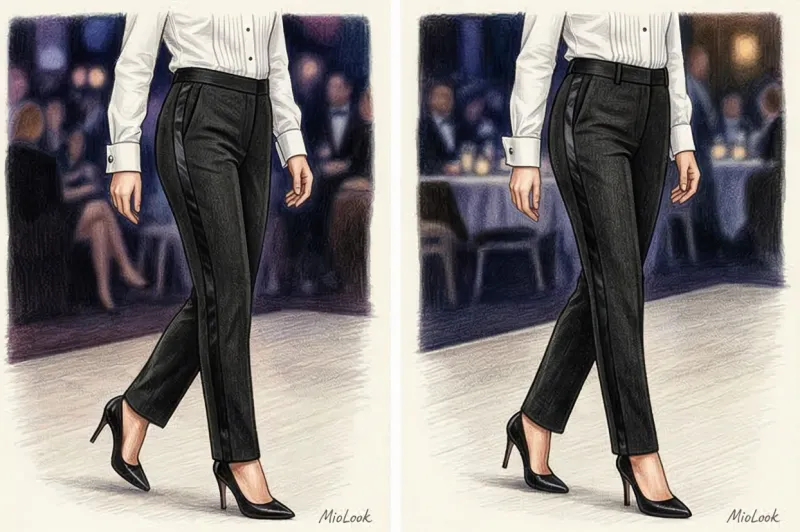
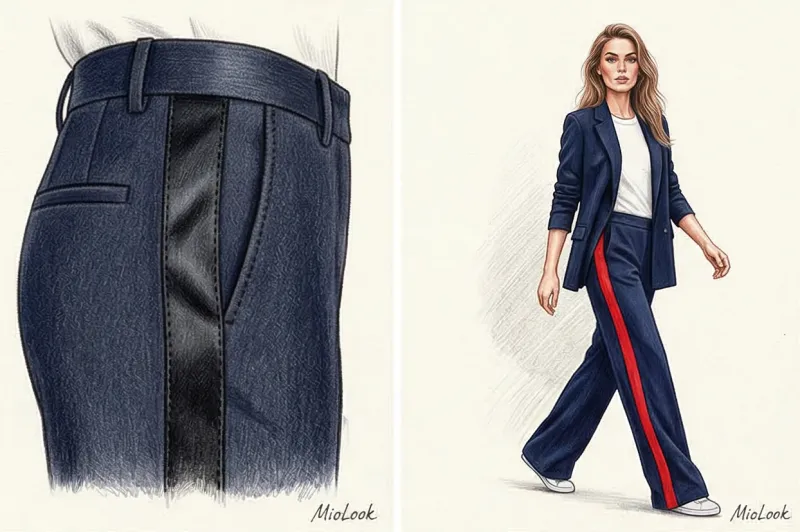
In eveningwear and formal business attire, this element emphasizes the garment's status. Classic women's trousers are often complemented with a thin satin piping along the side seam, evoking the aesthetics of a traditional men's tuxedo. Tweed jackets are decorated with woven piping along the entire perimeter.
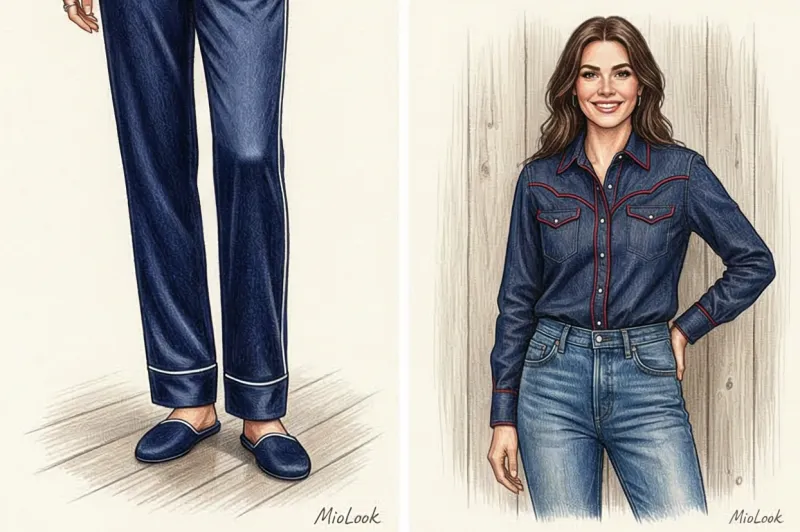
Western and retro styles actively use this detail in shirt designs. The shaped yoke on the chest and back, as well as pockets, are often accented with bright cord piping. Besides the stylistic impact, contrasting lines visually enhance the figure. Vertical piping on trousers or skirts visually elongates the silhouette, while curved lines on a dress bodice accentuate the waist.