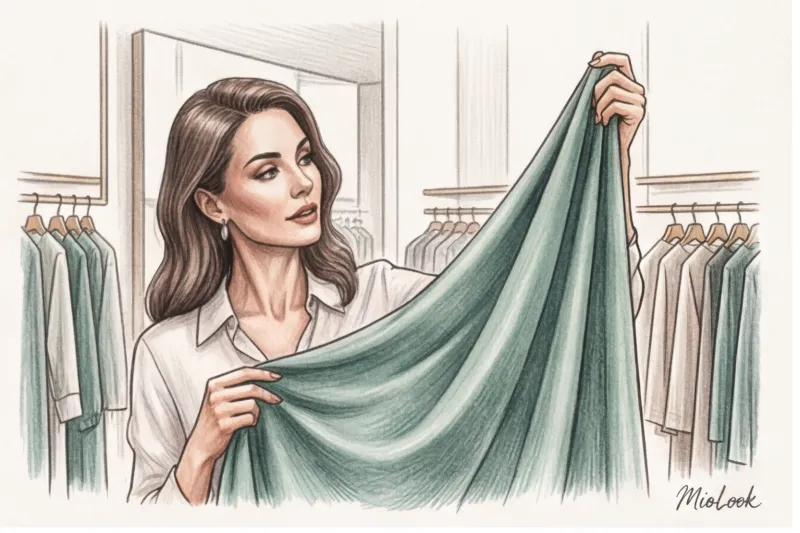
Imagine a familiar situation: you buy a luxurious silk blouse for €250, wear it to an important presentation, and just an hour later, under the spotlights, you notice telltale damp spots. And at the end of the month, the dry cleaning bill makes you wonder who's working for whom: you for your wardrobe, or it for you? Over 12 years as a stylist, I've heard this complaint from hundreds of clients.
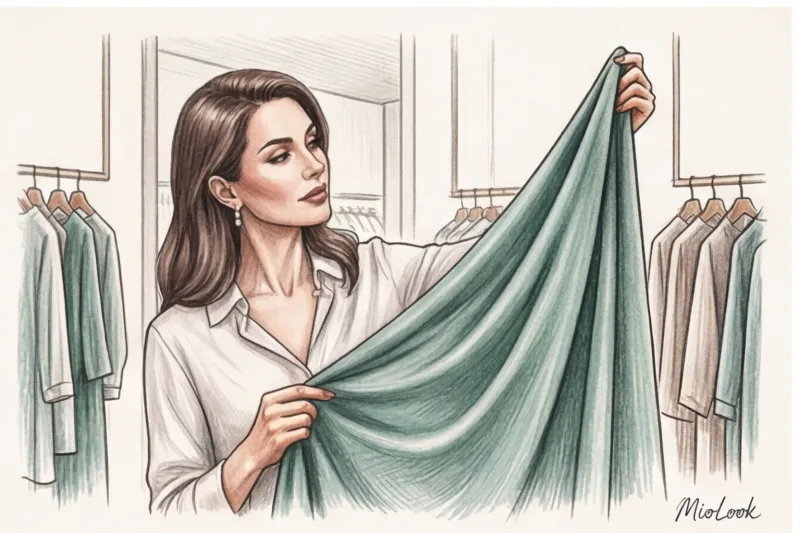
My name is Julia Rossi, and I specialize in investment wardrobes. I help women build capsule wardrobes that look great without requiring a million-dollar upkeep. And today, I want to talk about a material that's revolutionized the luxury segment.
Many people still type the query “ What kind of fabric is Tencel? ", suspecting it of being just another cheap synthetic. This is a colossal misconception. We've already discussed this fiber's place among other innovative materials in more detail in our The complete guide to eco-friendly clothing fabrics Today, we'll explore Tencel not just as an "eco-initiative," but as a strategic investment in your stealth wealth and calculate the real cost of care.
Tencel: What is this fabric and why are premium brands crazy about it?
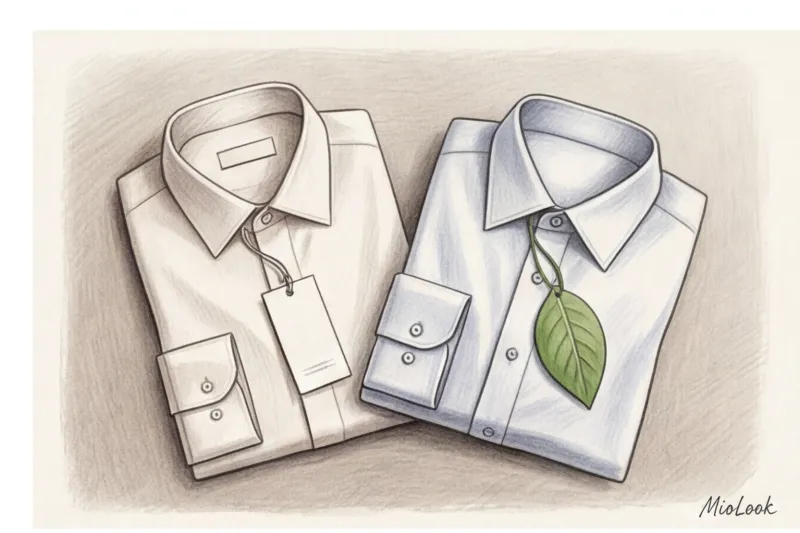
Let's get this terminology out of the way right away, as even some boutique consultants are confused. Lyocell is the name of the fiber itself. Tencel™ is a patented brand owned by the Austrian company Lenzing AG. The difference is the same as between any SUV and a Jeep. If the label says Tencel™, you're dealing with benchmark Austrian quality.
How is this fabric made? Unlike polyester, which is distilled from petroleum products, Tencel is completely natural. The wood of the Australian eucalyptus tree is crushed and dissolved in an organic solvent. The process is closed-loop: 99% of the solvent is recycled, without polluting water. No toxic waste is produced.
According to the Textile Exchange 2024 report, the share of cellulose fibers, including lyocell, in the premium segment has grown by 18%. Brands are emphasizing durability and tactility, moving away from fickle natural fabrics.
That's why today you'll find Tencel not only in sustainable brands' collections, but also in giants like COS, Massimo Dutti, and even Max Mara. They're using it en masse to replace traditional cotton. Why? Because cotton with a density below 180 g/m² quickly loses its shape and fades, while eucalyptus fiber retains its pigment for years.
The Main Benefits of Tencel: Why It's the New Silk for the Smart Wardrobe
My style philosophy is built on the concept of "quiet luxury." A garment shouldn't scream logos; its status is revealed through its texture. And here, Tencel beats many natural fabrics.
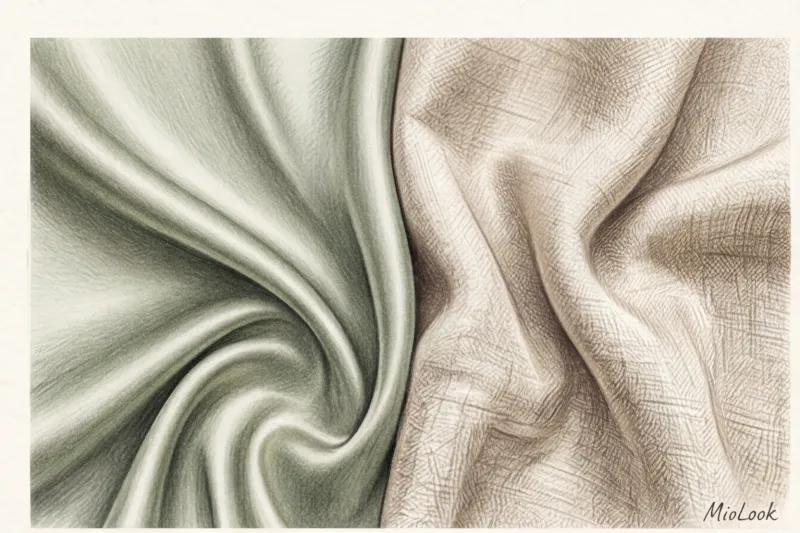
It has a heavy, "expensive" drape. As you walk, the fabric flows around your silhouette, creating an elegant dynamic. It has a delicate matte sheen—not the cheap, glassy sheen of viscose or polyester, but a refined glow reminiscent of washed silk.
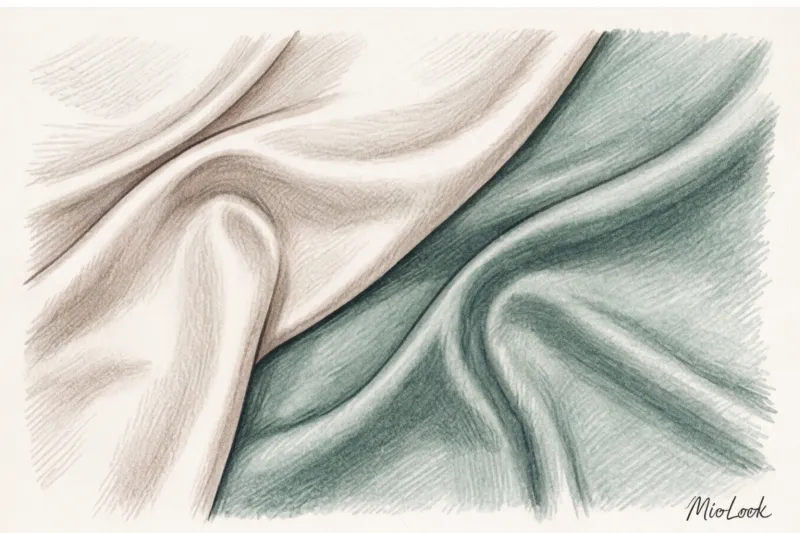
Another crucial advantage for city dwellers: unlike synthetics, Tencel doesn't accumulate static electricity. Did you know that static electricity is what causes skirts to stick to tights in winter? With eucalyptus fiber, you can forget about anti-static.
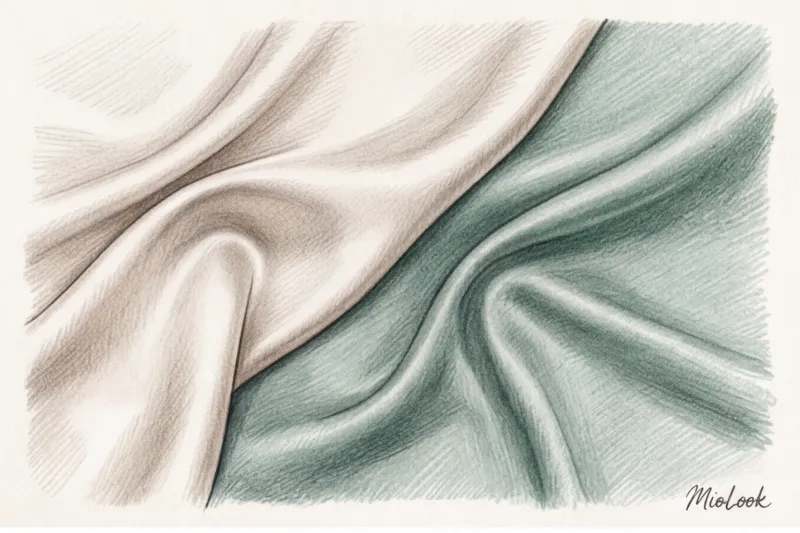
Tactility and thermoregulation (speakers' experience)
I recently styled a keynote speech for the CEO of an IT company at a large conference. We were choosing a look for the stage. Spotlights, stress, and a long event. I categorically rejected silk and thin cotton.
It's all about physics: Tencel absorbs moisture 50% more effectively than cotton and instantly wicks it away. Plus, the very nature of eucalyptus gives the fiber a mild antibacterial effect. Odor-causing bacteria simply don't multiply as quickly on it as they do on synthetics.
We chose a pantsuit made of heavy-duty lyocell. The result? After two hours under the hot lights of the cameras, there wasn't a single damp spot on the blouse, and the client herself noted the incredible softness of the fabric, which didn't irritate her skin during moments of stress.

Your perfect look starts here
Join thousands of users who look flawless every day. Upload your items, and AI will create a capsule for you.
Get access — €0.99 onceThe flip side of luxury: the downsides and features of the material
I'm always brutally honest with my clients: perfect fabrics don't exist. If you're used to throwing everything in the washing machine at 60 degrees with a hard spin cycle, don't buy Tencel. You'll ruin it in one wash.
This material has a vulnerability: when wet, the fibers swell and become brittle. If you wring a damp blouse too hard, it can develop micro-tears and whitish creases (a peach skin effect) that cannot be smoothed out.
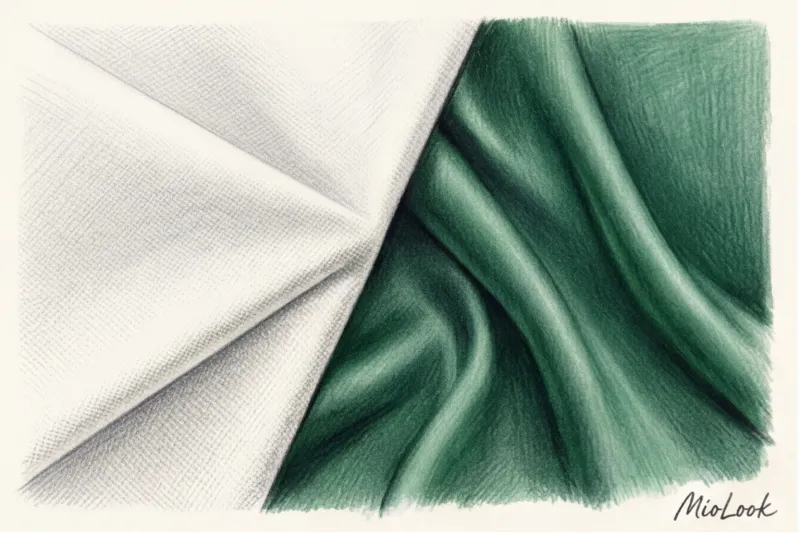
Also consider wrinkle resistance. Yes, Tencel wrinkles less than linen, but slightly more than heavy cotton. However, there's a catch: its creases appear as soft waves, not sharp, untidy folds. It has the casual casualness of an expensive resort, not the look of a wrinkled shirt on the subway.
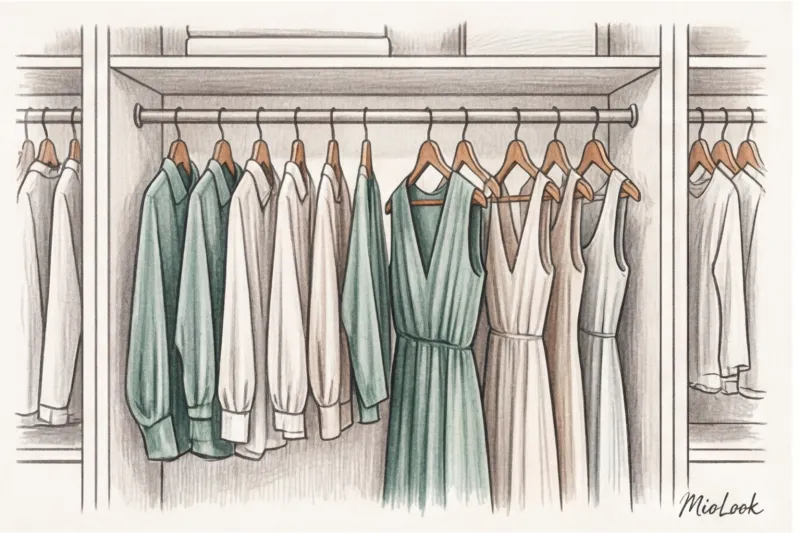
Stereotypes shattered: why synthetic Tencel is better than natural silk
The stereotype that "natural is always better than synthetic" is hopelessly outdated. Many people confuse artificial fabrics (man-made from natural materials, like Tencel) with synthetic ones (chemically produced from petroleum, like acrylic).

One of my clients, a top bank manager, adored silk blouses. But she was irritated by having to take them to the dry cleaner every week. Let's calculate the cost-per-wear.
A good silk blouse costs around €300. Dry cleaning (and washing premium silk at home is a gamble) will cost around €15 per wash. If you wear it 20 times a year and clean it 10 times, you'll pay €150 just for care. The total cost of the garment soars to €450 in the first year.
A visually similar blouse made from original Tencel™ will cost €120–€150. You can gently wash it at home with liquid detergent. The annual maintenance cost will be no more than €5. Tencel won't yellow from deodorant, as silk often does, and it won't fade.
By the way, keeping track of your wardrobe and automatically calculating the cost-per-wear is incredibly convenient in MioLook app This shifts thinking from spontaneous purchases to smart investments.
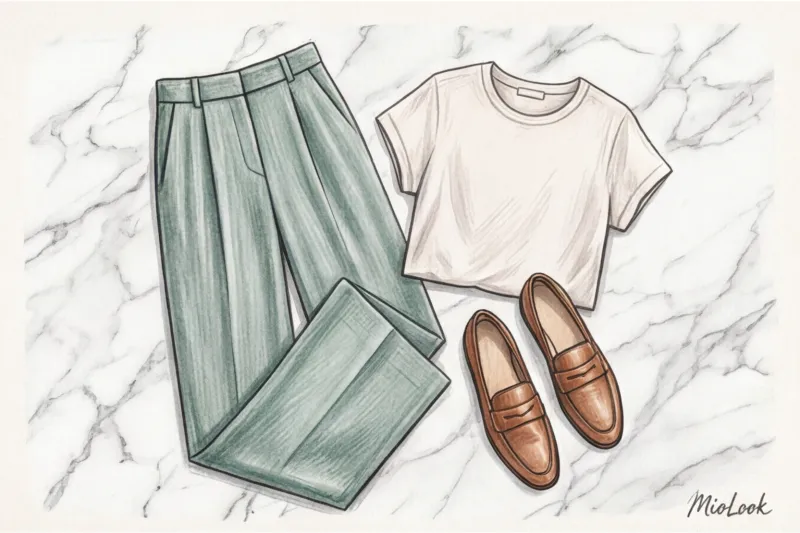
How to Wear Tencel: 3 Ideal Scenarios for the Business Woman
How can you integrate this material into your wardrobe to enhance your status? Here are three proven strategies from my experience as a stylist.
- Interview at an IT or creative agency. A stiff cotton two-piece suit would look too conservative here. Replace it with a Tencel blouse in a deep shade (sapphire, emerald, dark chocolate) and wide-leg palazzo pants. The fabric allows for unrestricted movement, leaving you feeling relaxed yet looking put-together.
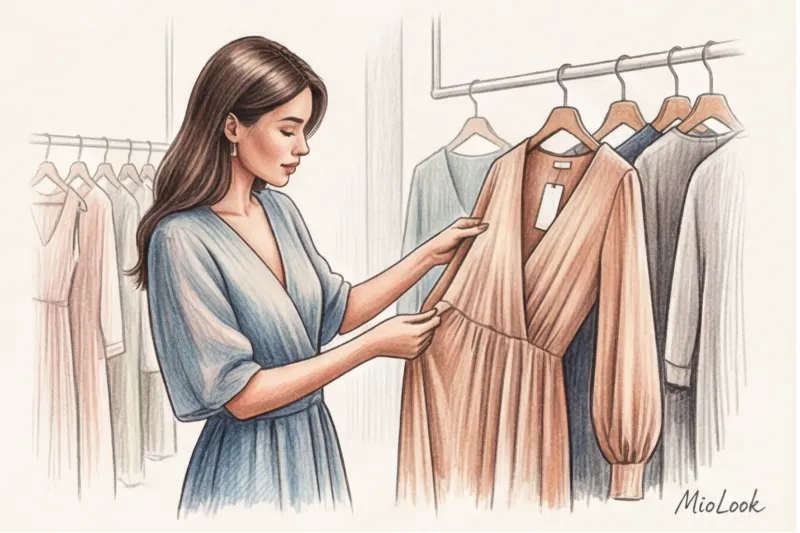
- Long flight or business trip. This flowing Tencel midi dress is a lifesaver for the business woman. You won't leave the plane looking rumpled, and thanks to the temperature-regulating design, you'll be comfortable in both the air-conditioned cabin and on the heated steps.
- Friday casual in the summer office. Suits made from a linen and tencel blend (the ideal ratio is 55% linen, 45% lyocell). Tencel softens the prickliness of linen and prevents it from forming hard creases under the knees and elbows. You get the texture of linen, but with premium comfort.
Ready to update your wardrobe wisely?
MioLook's smart AI stylist will analyze your preferences and help you put together a capsule wardrobe of the right fabrics.
Get access — €0.99 onceCare checklist: how to extend the life of Tencel items
Maintaining a prestigious wardrobe isn't a chore; it's a ritual of cherishing your investment. Eucalyptus fiber will last for years if you follow four strict rules:
- Temperature conditions: strictly up to 30°C. If your washing machine has a "Silk/Delicate" cycle, use it. Spin at a maximum of 600 rpm, or better yet, turn it off completely.
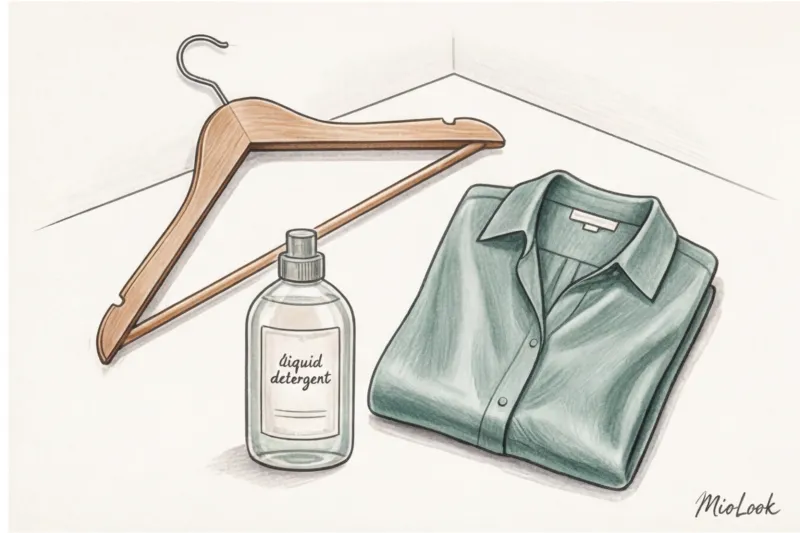
- Choice of product: liquid gels only. No detergents! Powder grains in water act as an abrasive, damaging swollen fabric fibers. Avoid detergents containing harsh enzymes and bleaches.
- Drying: do not twist. Lightly squeeze out the water with your hands (simply squeezing the garment like a sponge). Dry flat on a surface or on wide, soft hangers to prevent the weight of the water from stretching the shoulder seams.
- Ironing: steam instead of iron. Tencel loves steam. Use a handheld or vertical steamer—it will straighten the fibers in a couple of minutes. If you use an iron, iron only on the reverse side, using the "Silk" setting.
Treat your choice of fabrics the same way you would choose a business partner. Tencel is the partner that won't let you down in a stressful situation, will save your face at an important meeting, and won't require exorbitant upkeep. Invest in quality that works for you every day.