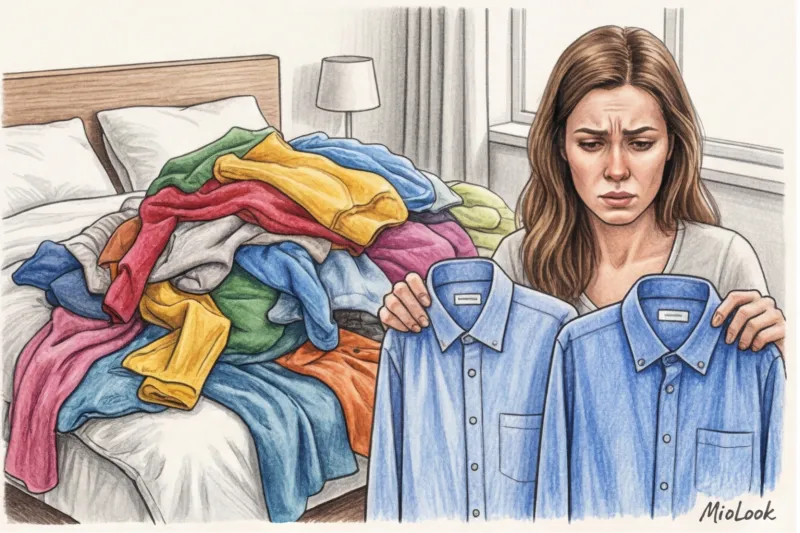
Recently, one of my clients, while cleaning out her closet, found three brand-new children's snowsuits with tags still on. The next day, she bought her husband a fifth blue Oxford shirt. Why? Because she was sure the old ones were "worn out," and she'd bought the children's clothes on sale a year and a half ago and forgotten about them. This closet chaos isn't a sign of shopaholism, but a classic symptom of a lack of structure.
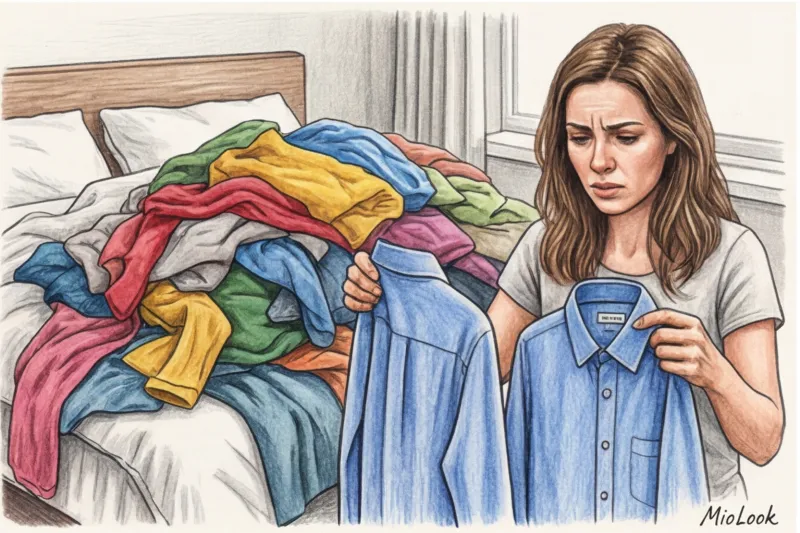
Most advice on how to plan clothing purchases boils down to the banal "make a list and wait for sales." After 12 years of working as a stylist and textile specialist, I've realized that this doesn't work. Families need a different approach. Treat your family wardrobe not as a collection of items, but as an investment portfolio, where the key factors are durability, calculating the cost of each item, and digital accounting.
We talked about this transition from chaos to system in more detail in our A complete virtual wardrobe guide for the whole family , and today we'll look at practical steps to take before going to the mall.
Why Traditional Shopping Lists Don't Work Anymore
Paper shopping lists are a lifesaver at the grocery store, but your brain works differently at a clothing store. You're shopping for tailored trousers, but you see a cashmere sweater in the perfect shade for 40% off. Your brain screams "what a bargain!" and the sweater heads to the checkout.
This results in wardrobe "blind spots." According to a major 2023 report by WRAP (Waste and Resources Action Programme), the average person regularly wears only 20-30% of their closet contents. The rest consists of duplicates, items in need of repair, or clothes waiting for a "special occasion." For a family of three or four, this unused space becomes a financial black hole.
The illusion of saving on sales
Sales are the main enemy of long-term planning. I often hear the objection: "But isn't it a good idea to buy a child's winter jacket in March for half price?" In practice, this is the riskiest decision. According to statistics from children's clothing brands, up to 40% of items bought "to grow into" in the off-season become too small after being worn less than three times.
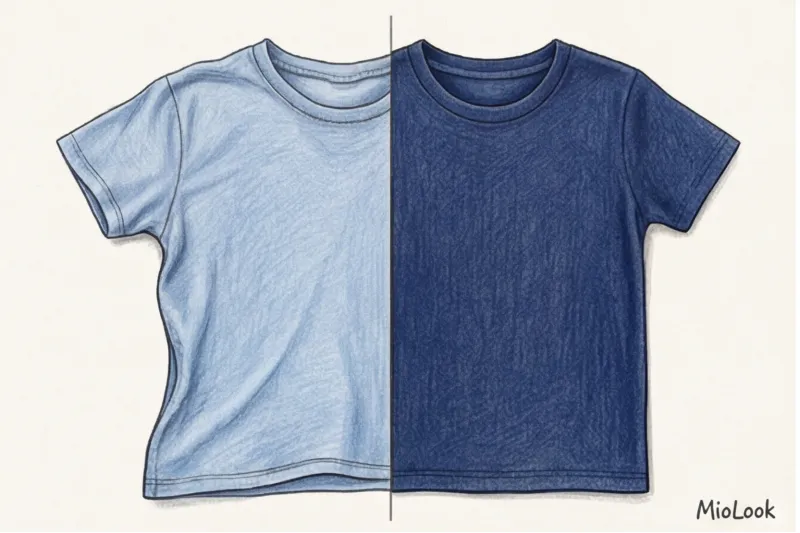
Children grow in leaps and bounds. A jumpsuit bought in advance might fit perfectly in July, but by December the sleeves will be too short. Furthermore, the hidden cost of cheap items is the quality of the knitwear. A €5 T-shirt will be warped at the seams and covered in pilling after three washes, requiring a new purchase. This isn't savings; it's a subscription fee for low-quality items.
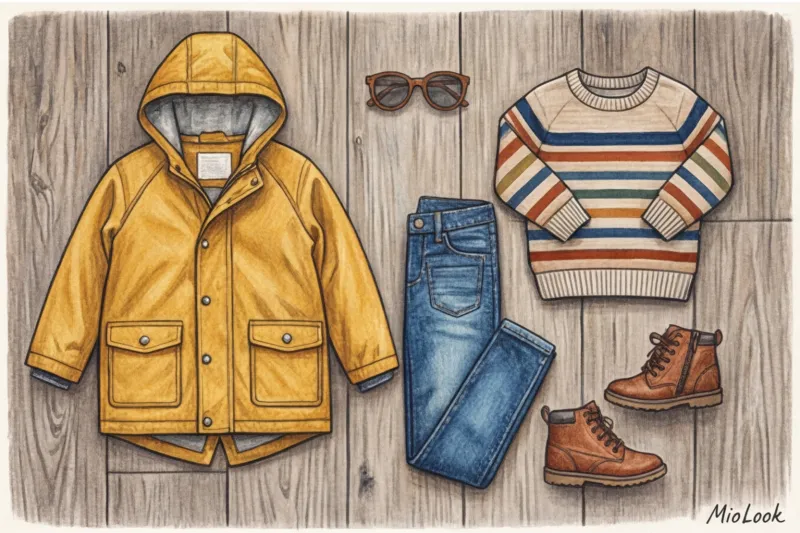
How to Plan Clothing Purchases: Audit and Digitization
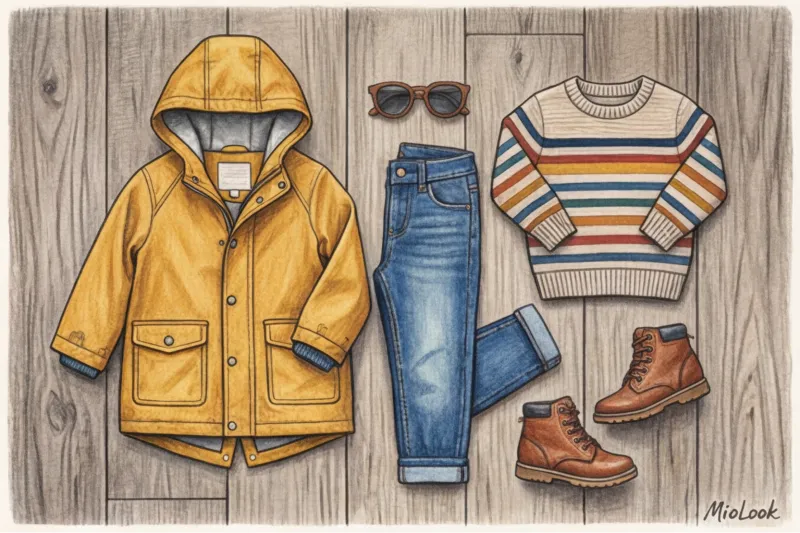
The secret to rational consumption lies in the transition from physical chaos to digital assets. It's impossible to keep track of all your husband's T-shirts, your kids' seasonal shoes, and your own basic turtlenecks. That's why I always recommend that my clients transfer their wardrobes to their smartphones.
When you use MioLook , you can open the app right in the fitting room and check: do you already have a similar item? What will this new skirt go with? It's instantly sobering.
"Digitizing your wardrobe takes time at first. It's not a magic wand—the app won't work unless you take photos of your items. But by spending one weekend downloading your database, you'll save hundreds of euros next season."
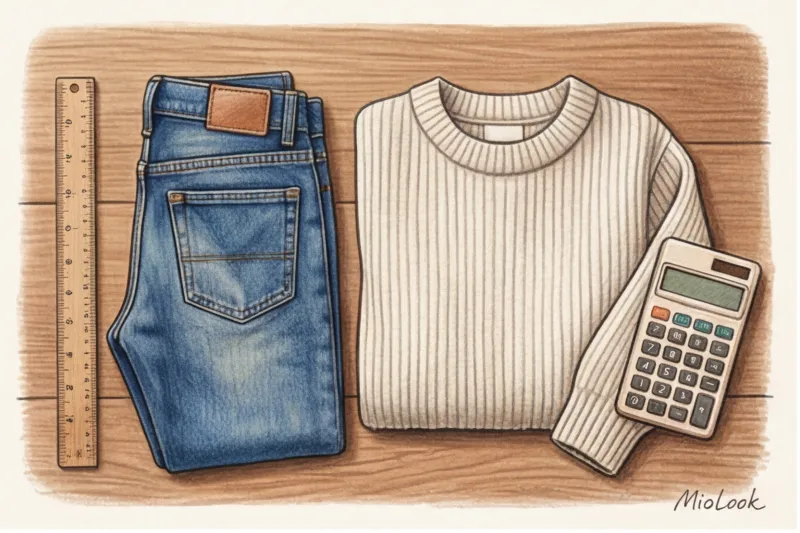
The key metric to incorporate into family shopping is Cost-Per-Wear (CPW) or cost per wear. The formula is simple: the cost of the item plus care costs, divided by the number of wears.
Let's compare two situations:
- Sweater A (budget mass market): It costs €30. Due to the low quality of acrylic, it tends to pill and lose its shape. You wear it three times. CPW = €10 per wear.
- Sweater B (high-quality wool/cashmere): It costs €120. It serves faithfully for three years. You wear it 60 times. CPW = €2 per wear.
The €120 item turned out to be 5 times cheaper than the €30 item. That's why it's important to be able to evaluate fabric before you go to the checkout. And yes, you don't have to buy quality basics at full price—sometimes the best items can be found at resale if you do your research. How to choose clothes at a second-hand store.
Digitize your wardrobe today
Forget about duplicates and random purchases. A smart AI algorithm will help you put together a capsule wardrobe from what's already in your closet.
Get access — €0.99 onceTextile Expertise: How to Choose Fabrics for an Active Family
One of the most common mistakes moms make is obsessively searching for 100% cotton for children's clothing. Cotton is great for underwear (undershirts, briefs, pajamas). But if you're buying hoodies, joggers, or sweatshirts for preschool, 100% cotton is your enemy. It fades quickly, shrinks with frequent washing, and wears out at the knees.
Look for blended fabrics. The ideal ratio for everyday children's knitwear is 80% cotton and 20% polyester. The synthetic fibers act as reinforcement, maintaining the garment's shape, protecting color, and increasing wear resistance. According to the German Hohenstein Institute, which tests textiles for durability, blended fabrics can withstand 2.5 times more washing cycles without losing quality.
When choosing outerwear, look not at the jacket's bulk, but at the membrane's properties:
- Waterproof: For city walks, 5,000 mm is sufficient. For downhill skiing in wet snow, look for a reading of 10,000 mm or more.
- Breathability (vapor permeability): To prevent a child from sweating and getting sick, the indicator should be no less than 5,000 g/m²/24 hours.
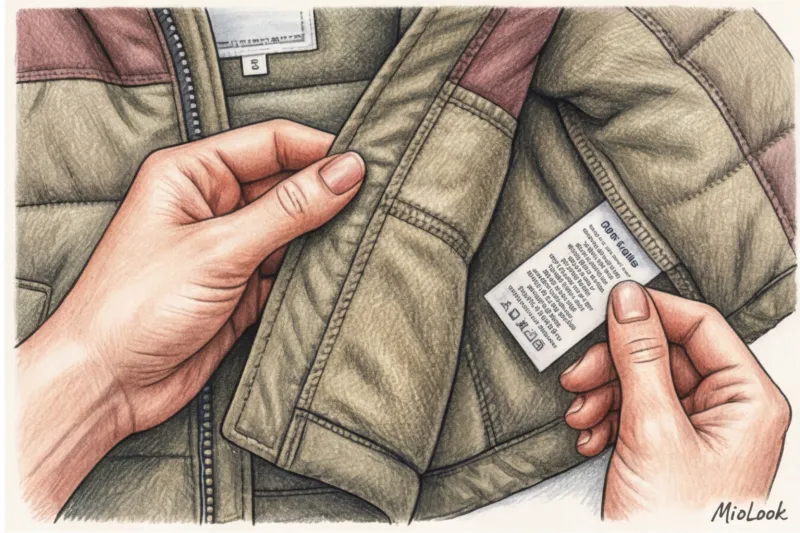
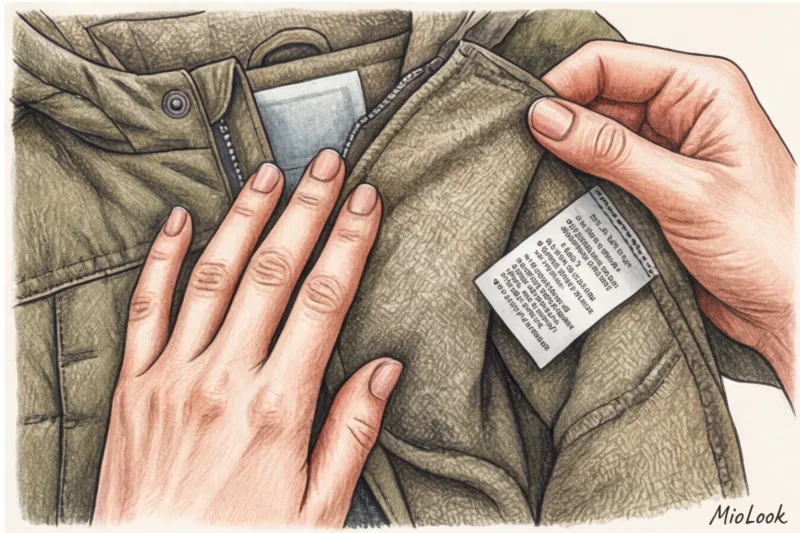
Turn the item inside out right in the store. Did you find double reinforced stitching on the inseam of the legs? Are there Cordura inserts on the knees and seat? If so, this item will survive the winter.
A Growing Wardrobe Strategy for Kids

The desire to save money pushes parents to buy clothes two sizes too big. "Let's roll up the sleeves, but they'll last for three years!" This is a bad strategy. A shoulder that's sagging in the wrong place restricts movement, pant legs that are too long bunch up at the bottom, making it difficult to walk, and they quickly wear out on the pavement, ruining the child's ergonomics and posture.
Instead, choose clothes with smart cuts:
- Trousers and jeans with hidden perforated elastic waistband (button closure).
- Jackets with the “I-Grow” system (lengthening sleeves by unraveling a special inner seam).
- Oversized sweaters, which are designed to be voluminous from the start. In the first year, it will be a tunic, in the second, a classic sweater, and in the third, a cropped sweatshirt worn under a shirt.
Create a capsule for the whole family
Use MioLook to plan your seasonal purchases and find the perfect looks without breaking the bank.
Try MioLookCapsule Approach for Adults: Focus on Multitasking
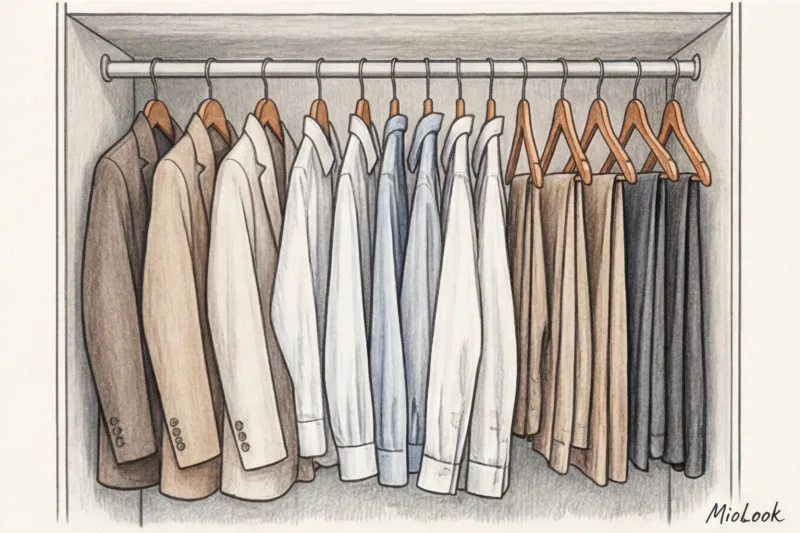
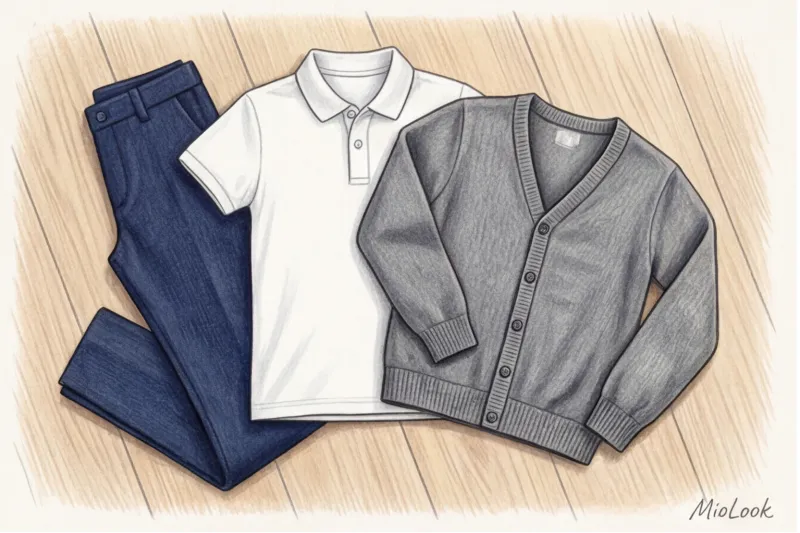
With the arrival of a family, an adult's wardrobe often splits between two extremes: formal office wear and stretchy tracksuit bottoms for the playground. Anything in between is eliminated. To solve this problem, adopt the capsule wardrobe principle, which focuses on multitasking.
I teach my clients the "1 to 3" rule. Never buy an item unless it pairs with at least three items in your current wardrobe. Found a great blouse for €60? Open the app and look at your bottoms. If you need to buy new trousers, shoes, and a bag to go with the blouse, the real cost of that purchase will exceed €250.
Invest in heavyweight denim, quality wool jackets, and good shoes. The trend for "quiet luxury" and smart casual is perfect for the busy lifestyle of moms: straight jeans, loafers, and a structured jacket work for a business meeting, a parent-teacher conference, or a casual coffee with friends.
Checklist: 5 steps before going shopping

Before you head to the mall (or click the "Place Order" button), go through this list. It takes 15 minutes, but it can save you hundreds of euros:
- Check the digital cabinet. Open MioLook and make sure you're not buying a duplicate of something you already have hanging in the back corner.
- Make a list of "gaps". Don't write "kids need sweaters." Write "fleece undershirt, height 110 cm," "basic long sleeve t-shirt, gray/blue." The more precise the wording, the less likely you are to make an impulse purchase.
- Calculate your budget using CPW. Would you be willing to pay €150 for winter boots for your husband, knowing he'll wear them 120 days a year for three years (€0.41 per outing)? Probably yes.
- Study the composition before paying. Make it a rule to always turn items inside out and read the tag. See 100% acrylic or polyester in a sweater that's supposed to keep you warm? Return it to the hanger.
- 24-hour rule for online. Completed your shopping cart on the marketplace? Close the tab. Come back to it the next day. Experience shows that out of 10 items in your cart in the morning, you'll keep a maximum of 4.
Smart shopping is a skill that can be practiced. Start small: stop looking at the discount rate and start evaluating the quality of the seams, the fabric composition, and the potential of the item within your wardrobe. Then you'll never again be surprised by new overalls forgotten in the attic.