In my 12 years as a personal stylist, I've heard this phrase hundreds of times: "Isabella, I bought white sneakers because they go with everything, but they look absolutely ridiculous with my favorite trench coat." Women sincerely believe that any light-colored lace-up shoe is automatically a lifesaver. This is one of the biggest fashion misconceptions.
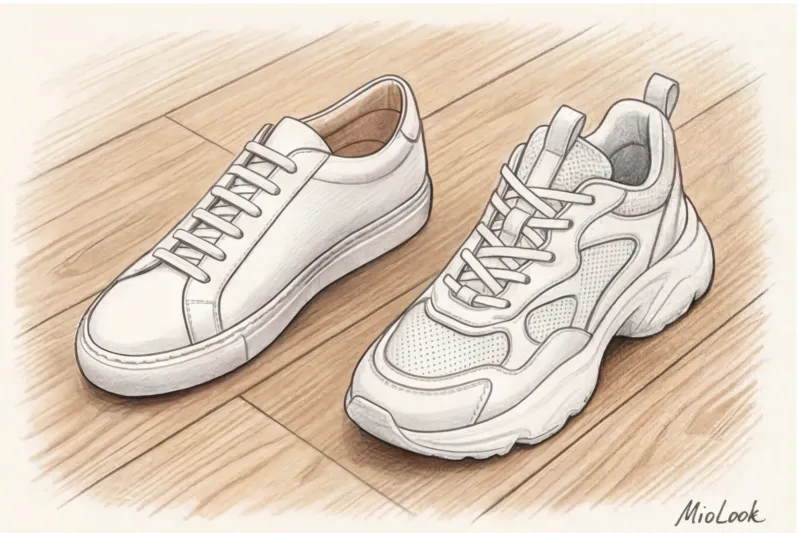
Actually, the correct ones basic white women's sneakers — it's not just color. It's strict architecture, precise texture, and a complete absence of visual noise. The evolution of modern dress codes has completely erased the boundaries between styles, and we've already discussed this phenomenon in more detail in our A complete guide to pairing sneakers with dresses, suits, and coats But for this magic to work, you need the right pair.
Today we'll explore the "anatomy of versatility." I'll show you how sole thickness, toe box shape, and leather quality distinguish a true foundation shoe that will last you for years from a running shoe that's only fit for the treadmill.
The White Trap: Why Not All White Sneakers Are Basic
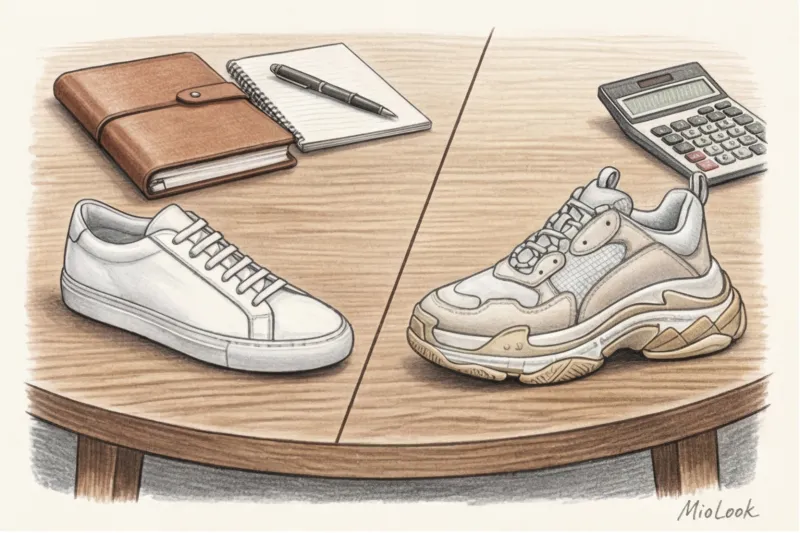
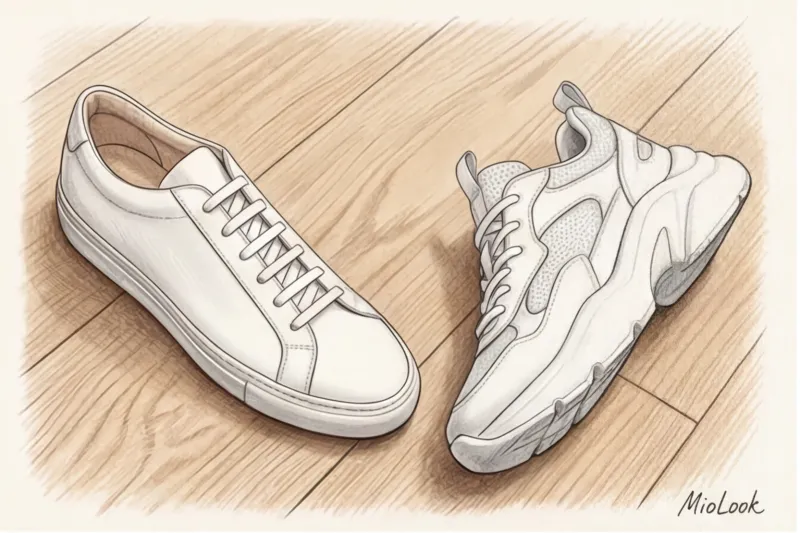
According to a major Business of Fashion report (2023) on the transformation of office style, the sneaker category has definitively split into two camps: Performance (for sports) and Lifestyle (for everyday life). And the biggest mistake is trying to fit the former into the latter simply because of the color white.
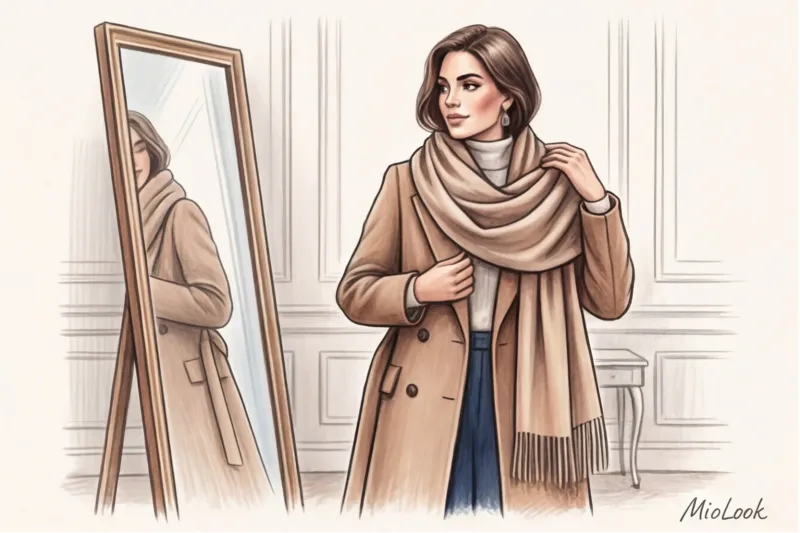
One of my clients, a top IT executive, once showed up for a wardrobe review with pride: she'd invested in the trendy, chunky Balenciaga Triple S, deciding they were the perfect "basics." When we tried them on with her impeccable double-breasted camel coat, her figure's proportions collapsed. The oversized sole and complex, layered upper weighed down her bottom, transforming the elegant woman into a teenage skater.
"Basic shoes operate according to the rule of 'visual silence.' The fewer details that catch the eye, the more expensive and harmonious the overall look."
The true base has no perforations (except for microscopic ones on the toe), complex plastic panels, reflective elements, or contrasting logos. It's a blank canvas.
Access to MioLook for €0.99 — one-time payment
A smart AI stylist will select the perfect look based on your wardrobe.
Get access — €0.99 onceHow to Choose Basic White Women's Sneakers: A Stylist's Checklist
When you open an online store, your eyes are dazzled by hundreds of "plain white" styles. To filter out the unnecessary, use my professional filter.
1. Geometry of the cape (toe). Avoid completely round, blunt toes—they visually shorten the foot and make the leg look chopped. A slightly elongated, almond-shaped toe is ideal. It continues the line of the leg, creating a more graceful silhouette, even if you wear a size 10.
2. Trouser hem test. My favorite fitting room trick: Pair sneakers with your favorite wide-leg palazzo pants or straight-leg jeans. The right basic pair has a fairly narrow shaft and a flat tongue. The pant leg should fall smoothly over the sneaker, creating one beautiful crease. If the tongue is bulging and the pant leg is stuck on it, this pair will ruin half your looks.
3. Materials technologies. Forget faux leather if you're looking for everyday shoes. It's a waste of money: polyurethane doesn't breathe, quickly develops permanent creases, and yellows. Invest in smooth calfskin (Nappa). Unlike cheap split leather, which is coated with a thick layer of polymer paint, Nappa retains its natural elasticity, adapts to the contours of your foot, and ages gracefully.
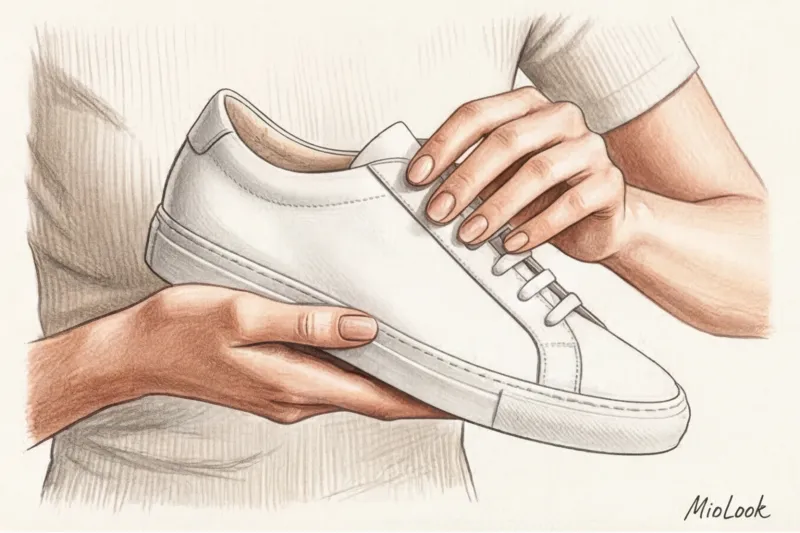
Sole architecture: finding the golden mean
Many people mistakenly believe that the thinner the sole, the neater the shoe looks. From a biomechanical and style perspective, a completely flat sole (like that of classic sneakers) is a disaster. It provides no cushioning, ruins your posture, and makes your gait heavy.
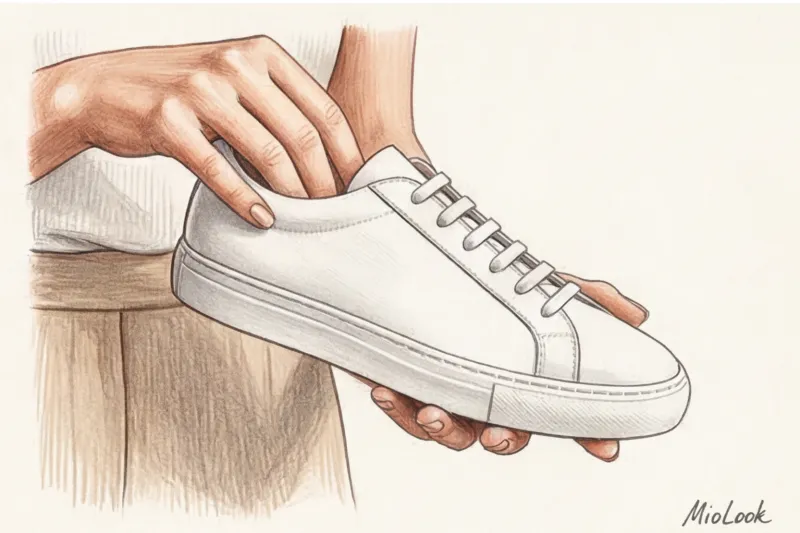
The ideal sole height for basic sneakers is between 2.5 and 4 centimeters. This height provides the necessary support for the foot and visually adds a couple of centimeters to your height without turning the shoes into platforms.
Pay attention to the color of the sole. Crimson white rubber blends in with the upper and looks extremely formal. But if you want to add a touch of retro aesthetic (old money), choose models with a gum sole (natural honey rubber). This instantly adds a touch of class to the pair.
Taking off your rose-colored glasses: why fabric sneakers won't replace a leather base
I'm ready to argue with the glossy magazines that sing the praises of fabric sneakers like classic Converse or Superga every summer, calling them "the perfect basic." As a practicing stylist, I'm categorically against fabric shoes being your go-to. the only one base pair.
Why? The fabric doesn't hold up. Soft fabrics quickly lose their shape, stretch at the sides, and create a slouchy look. When you wear a structured jacket made of thick wool, a silk skirt, or suit gabardine trousers, a stark stylistic clash occurs. The expensive, refined fabrics of the outer layer clash with the cheap texture of the cotton on the legs.
Leather sneakers are an all-season staple. They have enough visual heft to support both a lightweight poplin summer dress and a voluminous cashmere coat in November. A textile coat always looks like you just popped out for some groceries.
To be fair: This rule doesn't apply to vacation wardrobes. On the Amalfi coast, fabric sneakers paired with linen shorts might look natural. But for city life, they're not enough.
Your perfect look starts here
Join thousands of users who look flawless every day with MioLook.
Get access — €0.99 onceWhat to wear with white sneakers: 3 foolproof formulas from MioLook
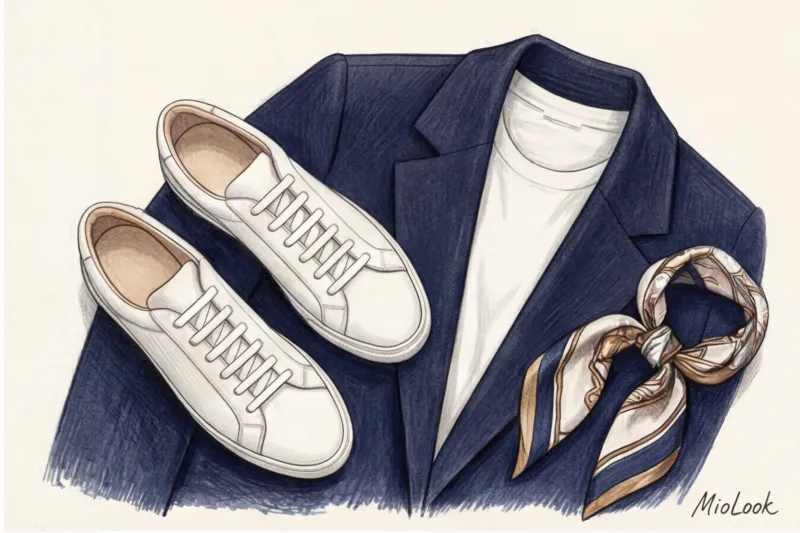
My approach to style is largely influenced by Mediterranean aesthetics: it's always a balance between relaxed style and impeccable tailoring. Here are three of my signature formulas that work without fail.
Formula 1: Office Chic
Men's cut trouser suit + basic T-shirt made of thick cotton + sneakers.
The secret is to avoid the "coworker who changed her shoes on the subway and forgot to put them back on in the office" look. The suit should be slightly oversized, and the trousers should be full-length, fitting smoothly over the shoes. A T-shirt of at least 180 g/m² will pull the look together.

Formula 2: Feminine Eclecticism
Silk bias-cut midi skirt + oversized cashmere sweater + sneakers.
Playing with contrasts is the foundation of contemporary style. Smooth, shiny silk, fluffy cashmere, and matte leather sneakers create a complex textured story. The sneakers tone down the overly pretentious silk, making the outfit appropriate for a daytime café outing.
Formula 3: Smart Casual Weekend
Straight jeans of the right length (ankle length) + structured tweed jacket + sneakers.
Tweed has historically been associated with strict classicism. Wearing it with pumps can make you look 10 years older. Basic white sneakers instantly rejuvenate the look, adding a dynamic touch.
If you have any doubts about how these items fit together in your wardrobe, upload a photo of them to MioLook app The smart wardrobe feature will analyze your items and suggest dozens of ready-made combinations with white sneakers, taking into account your individual proportions.

Status in detail: how to maintain whiteness and a premium look
Let's be honest: a dirty, worn-out white base coat can ruin even the most precious look. Women's white sneakers are unforgiving when it comes to sloppiness. But caring for them doesn't have to be a daily chore if you know a few secrets.
First, forget about washing your shoes in a washing machine. This is the biggest mistake I see. Hot water and harsh detergent destroy industrial glue, dry out the natural leather (it becomes hard and cracks), and deform the shoe last.
Insider's routine:
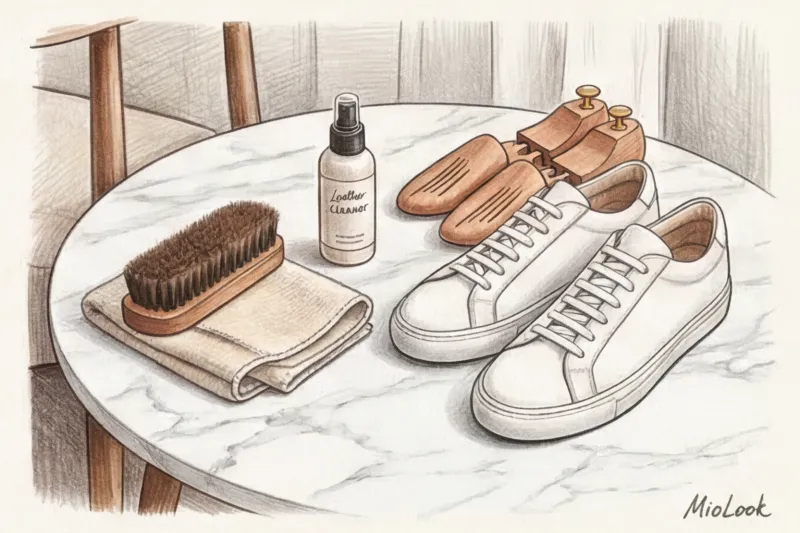
- For cleaning white soles (especially textured ones), there's nothing better than a regular melamine sponge soaked in water. It removes black marks in seconds.
- Leather needs to be nourished. Use a clear shoe polish with beeswax every two weeks. It not only moisturizes the nappa leather but also creates a hydrophobic film, preventing dirt from sticking.
- Shoe trees. The secret to longevity that 90% of women forget: When taking off your sneakers, immediately insert cedar shoe trees. Cedar absorbs excess moisture (sweat) overnight and smooths out creases in the leather. This extends the life of your shoes by at least two times.
Wardrobe Math: Why Basic Sneakers Are Worth the Price
I often hear the question: "Why pay $150-$200 for simple sneakers when you can get similar ones for $40 at the mass market?" In response, I always provide a Cost Per Wear calculation.
Let's say you bought a pair of faux leather shoes for $40. After 20-30 wears, cracks will appear at the folds and the soles will turn yellow. You'll throw them away. The cost per wear will be about $1.50, but you'll be wearing unkempt shoes most of the time.
A premium pair of smooth calfskin shoes for $200, with proper care (with shoe trees and shoe polish), will last you at least two years of active wear (about 200 times). The cost per wear is $1.00. The math is inexorable: a quality item costs less and looks classy every single day.
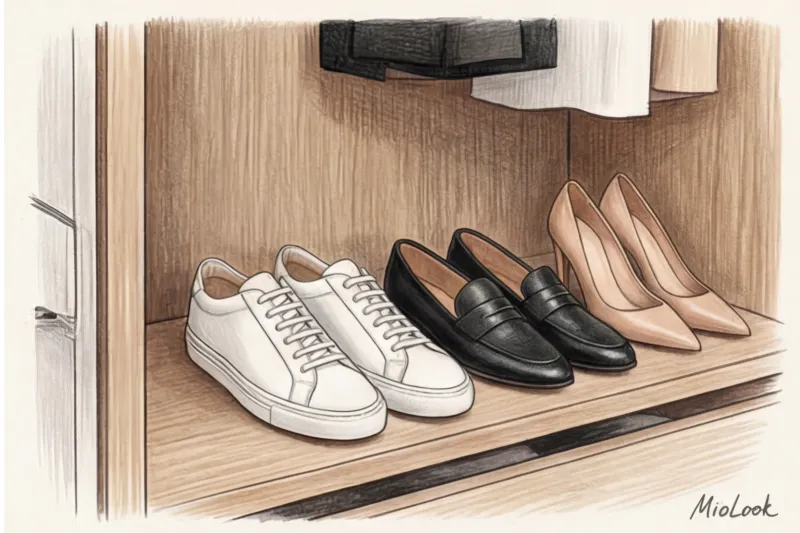
One great pair of basic sneakers can befriend 80% of your closet. It's more than just buying another pair of shoes. It's an investment in your personal comfort, saving time in the morning, and the confidence of looking flawless, even if you're just grabbing a coffee.