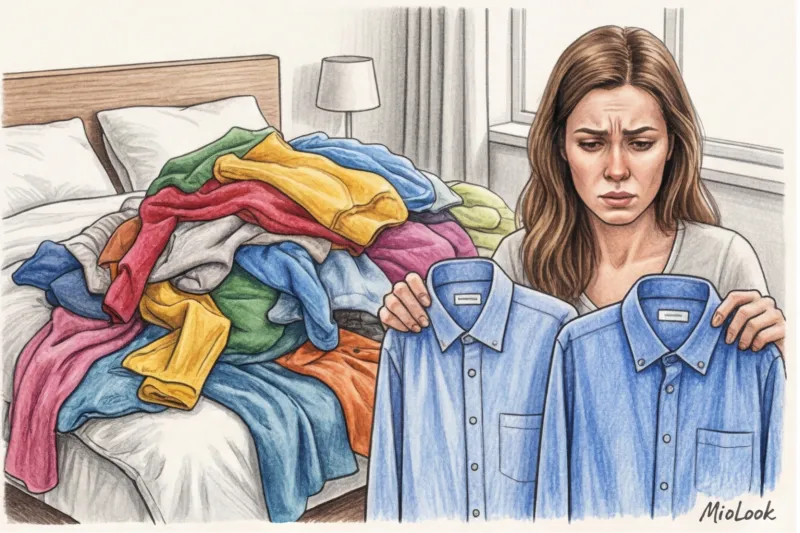
Have you ever noticed how, after a major children's sales, your closet is literally bursting with clothes, and the morning before kindergarten, you're once again desperately saying, "I have absolutely nothing to wear"? The paradox of modern consumerism is that the availability of cheap "fast fashion" forces us to spend more while getting less.
As a stylist and colorist, I often encounter requests from mothers whose budgets are dwindling due to the need to constantly update their growing child's wardrobe. The main question is: How to save money on children's clothing , without turning your little one into an ambassador for faded knitwear and stretched knees. We've already covered the basic principles of creating such a wardrobe in our complete guide: A capsule wardrobe for a child: stylish and practical In this article, we'll go further and explore the rigorous mathematics of smart shopping.
The Illusion of Value: Why Cheap Things Cost Parents More
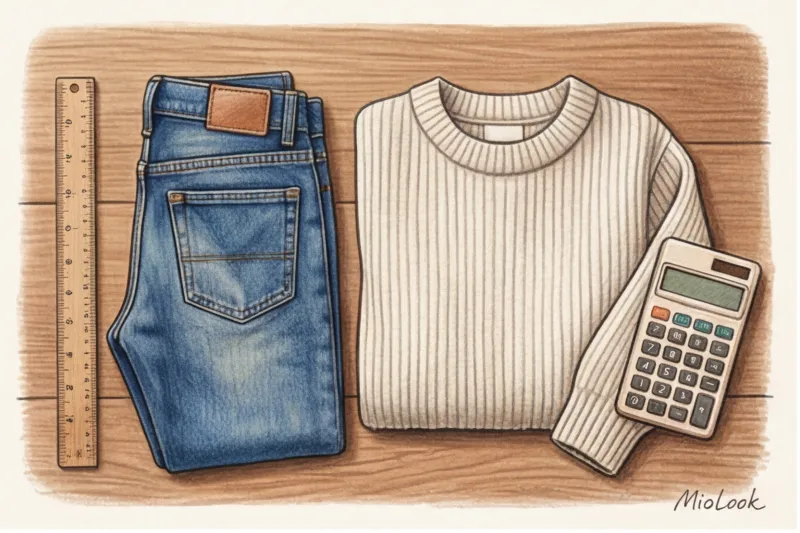
In professional styling, there's a golden rule: Cost Per Wear (CPW). This formula works perfectly for children, too: the price of an item is divided by the number of days the child wears it.
I had a telling case in my practice. A client proudly showed off her haul from a seasonal sale: a huge bag of high-street items for just €200. Sound like a win? In reality, we received neon-green shorts, a sweatshirt with an intricate T-Rex print, and five slogan T-shirts that didn't pair well with any pants. According to the analytical agency WGSN (2023), up to 40% of children's impulse purchases are worn only once or twice before the child outgrows them.
"A miser pays twice, but a parent who buys ultra-budget cotton with a density below 150 g/m² pays three times. Such knitwear starts to warp along the side seam after just three washes at 40 degrees."
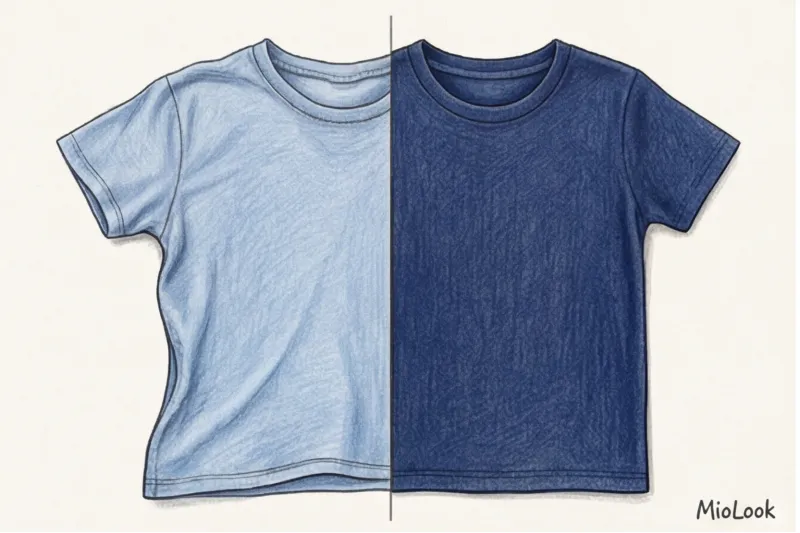
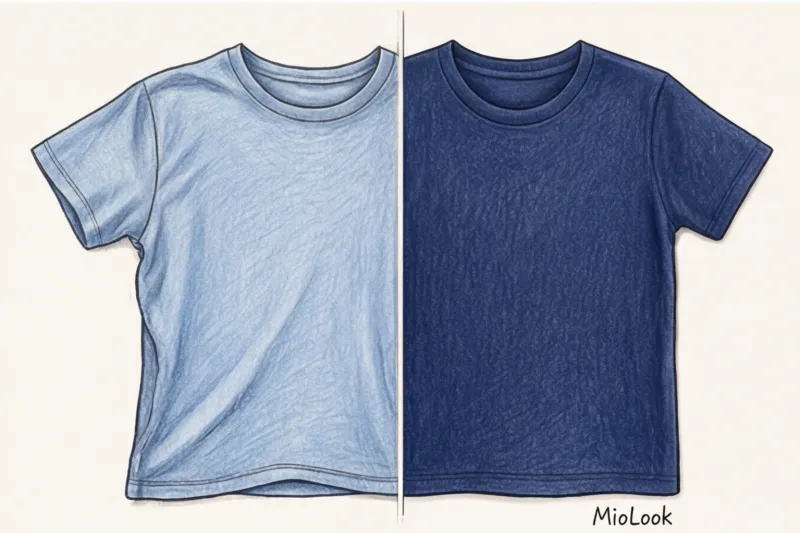
Let's compare the numbers. Five T-shirts of dubious quality, each priced at €8, will cost €40. After a month of heavy wear and washing, the necklines will stretch out and the prints will crack. An alternative is three basic T-shirts made of thick, premium cotton (180 g/m² and above, with 5% elastane added to maintain shape) for €15. That's a total of €45. But these three items will last the entire season, retain their appearance, and, looking ahead, they can still be sold or passed on to younger children.
The Mathematics of a Smart Capsule: How to Save on Children's Clothing Without Compromising Quality
A capsule wardrobe isn't a boring uniform; it's a financial strategy. The essence of a capsule wardrobe is that every item performs to its full potential.
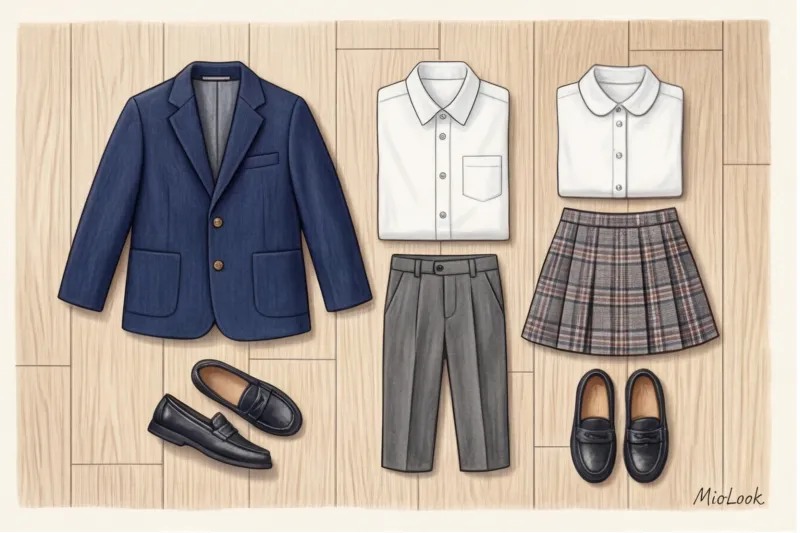
The biggest budget-busting mistake is buying so-called "ready-made suits" with complex patterns. If the pants from such a suit rip at the knee while walking, the sweatshirt automatically becomes a "nothing to wear with" item, as finding neutral bottoms to go with it can be extremely difficult. Buy items strictly individually or opt for monochrome suits in basic colors that are easy to style.
The "3 bottoms to 5 tops" formula
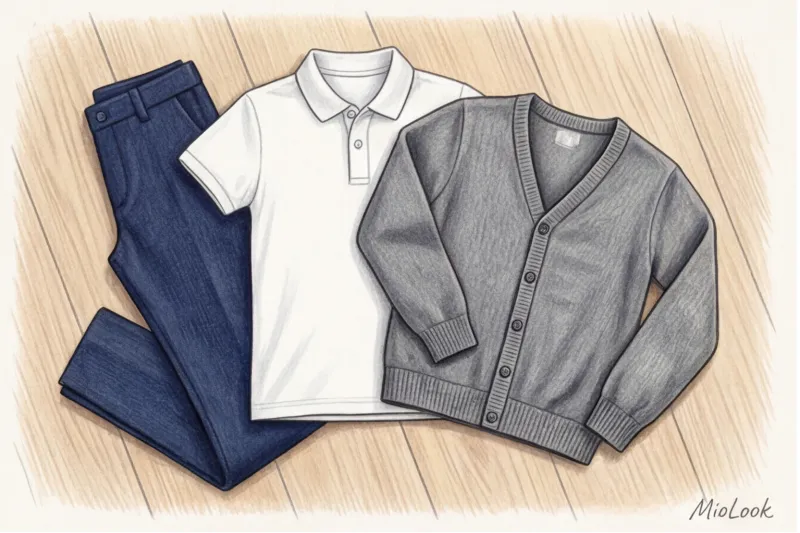
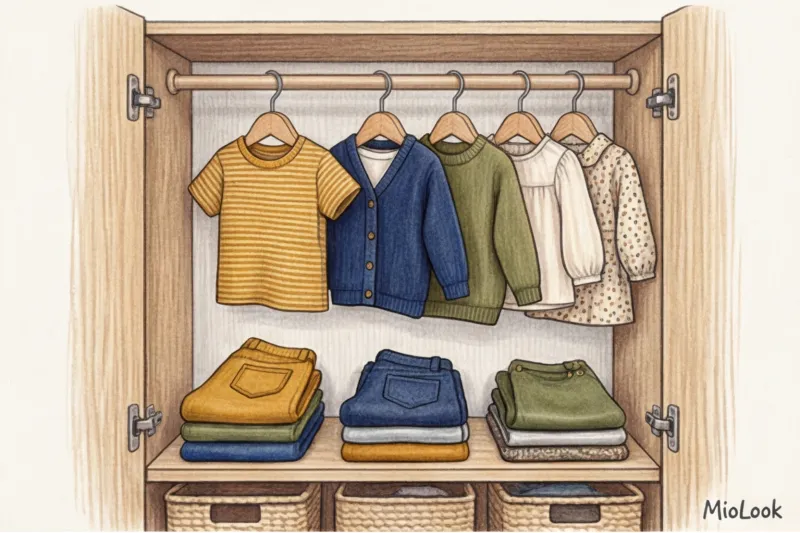
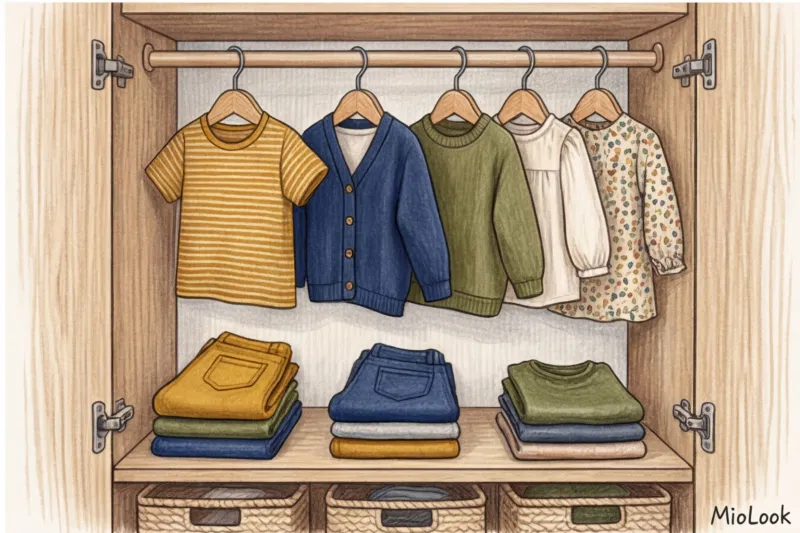
For a single season, a kindergarten-aged child needs a strictly defined formula: 3 bottoms (e.g., jeans, joggers, corduroy pants) and 5 tops (3 long-sleeved T-shirts, 1 hoodie, 1 cardigan). If all these items coordinate in color and texture, you get 15 unique outfits.
To avoid having to keep these combinations in mind, I always recommend that clients use MioLook app You simply take photos of these eight things, and the algorithm automatically assembles them into outfits for each day. This is especially helpful in the mornings when dad or a nanny is tasked with getting the child ready for daycare.
Don't forget the rule of layering: a basic summer T-shirt works perfectly in winter as a first layer under a warm, chunky knit cardigan. No need to hide your summer essentials in the back of your closet.
Color Palette: Coloristics That Saves You Both Stress and Money
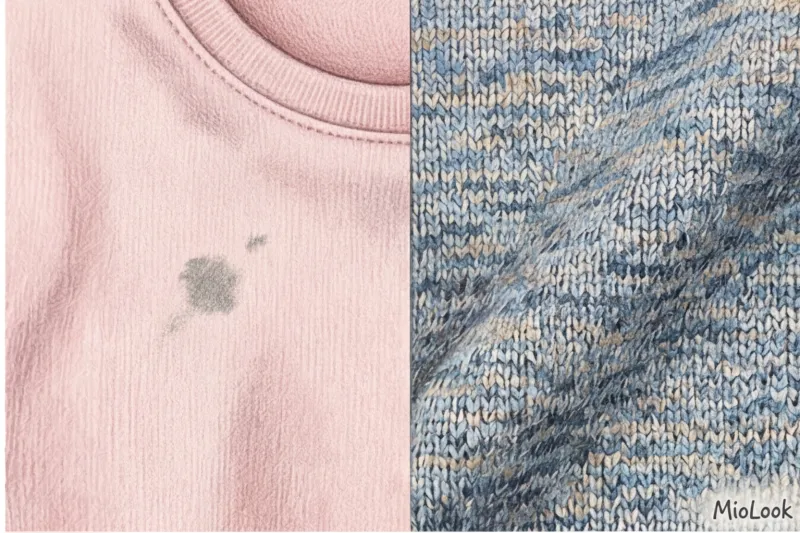
As a certified colorist, I am categorically against the use of pure pastel shades (light blue, pale pink) in children's everyday wardrobes. Solid light-colored cotton attracts stains from berries, markers, and grass, which are impossible to remove without damaging the fibers.
Knowing the simple laws of optical illusions will save you hundreds of euros on replacing damaged items:
- Melange: A fabric in which the thread is twisted from fibers of two or three related shades (for example, gray-beige). It creates a visual micro-noise in which small stains simply dissolve.
- Small pattern: Hazelnut, small Vichy checks, or tie-dye are ideal camouflages for children's pranks. The human eye focuses on the contrast of the pattern, ignoring localized dirt.
- Core color: Choose one deep, rich color as the base of your seasonal capsule wardrobe. For example, deep terracotta or classic navy blue. All other purchases (hats, scarves, boots) should complement this core color.
Your perfect look starts here
Join thousands of users who use AI to create perfect capsules every day.
Get access — €0.99 onceThe myth of buying "for growth": how to buy clothes with room to spare
One of the most harmful myths I regularly debunk during my consultations is the idea of buying clothes 2-3 sizes too big to save money. This is a false strategy that ruins the aesthetics.
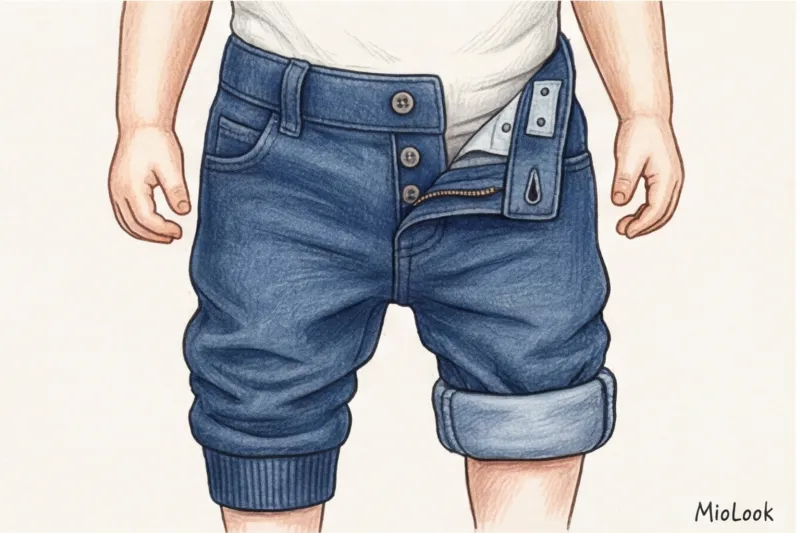
What's really going on? The child wears jeans that are too big. The long legs bunch up at the bottom, rub against the pavement, and fray until they have holes. The jacket sleeves are too long and constantly roll up, the elastic stretches and loses its elasticity. By the time the child finally grows into the item, it looks worn and unkempt.
Instead of mindlessly increasing the size, look for smart cut:
- Raglan sleeve: It doesn't have a defined shoulder seam. This sweatshirt will fit your child softly now (like a slightly oversized one) and will look great in a year, just a little more fitted.
- Internal tightening: Trousers with adjustable elasticated waistband with buttons.
- Transformer cuffs: Extended knitted cuffs on jackets that can be aesthetically folded inward or outward without compromising the functionality of the membrane.
- A-line dress: Girls can wear it as a full dress the first year, and then as a stylish tunic with leggings the following season.
Discount Calendar: The "Prepare Your Sleigh in Summer" Rule for Parents
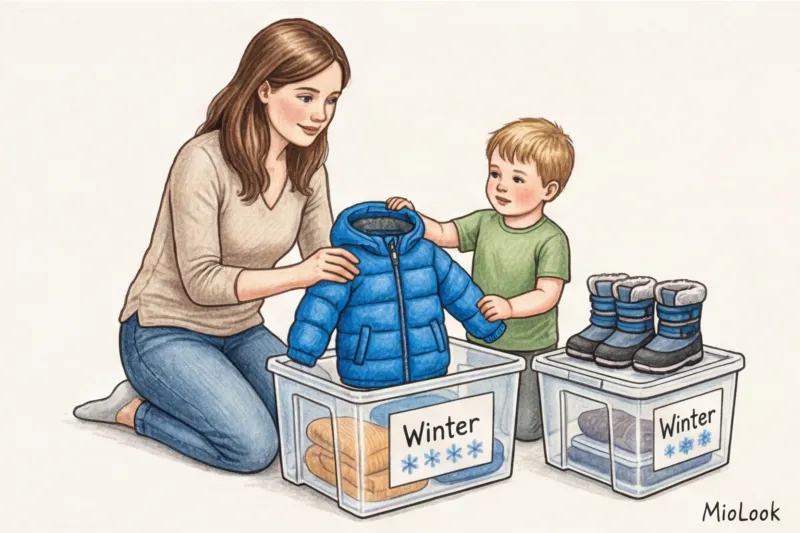
Retail operates on strict mathematical cycles. If you buy a winter suit in November, you're paying the brand's marketing costs. If you buy it in February or March, you're paying the actual price.
Buying outerwear at the end of the season for the following year can save 40% to 70%. To avoid getting the wrong size, use the WHO (World Health Organization) percentile growth charts. Children grow in spurts, but the average growth curve after age 3 is fairly stable (about 5-7 cm per year).
But there is an important limitation: This rule absolutely does NOT apply to shoes. Never buy winter boots on sale in the summer. Children's foot growth is unpredictable: a foot might not grow for six months, and then grow two sizes in a month. Shoes that are too big lead to orthopedic problems and tripping, while shoes that are too small simply won't fit. Always buy shoes according to the season.
Resale and Second Life: How to Sell Children's Items at a High Price
Let's calculate the return on investment (ROI). Let's say you bought a cheap winter suit from a no-name brand for €50. By the end of winter, it's faded, the fittings are peeling, and the knees are worn through. You simply throw it away. Your real outlay is €50.
Now let's consider another scenario. You buy a premium membrane suit (with a waterproof rating of at least 8000 mm) for €120. Thanks to its quality, it easily withstands a season of active downhill skiing. In the spring, you wash it with a special membrane cleaner, take beautiful photos, and sell it at a local flea market for €70. Your actual outlay is still €50. But all winter long, your child has been wearing high-tech, lightweight, and warm clothing!
Rules for successful resale:
- No air conditioning: Never wash the membrane with detergent or fabric softener—they clog the pores of the fabric, causing the garment to lose its temperature-regulating properties. Resale buyers often check this point.
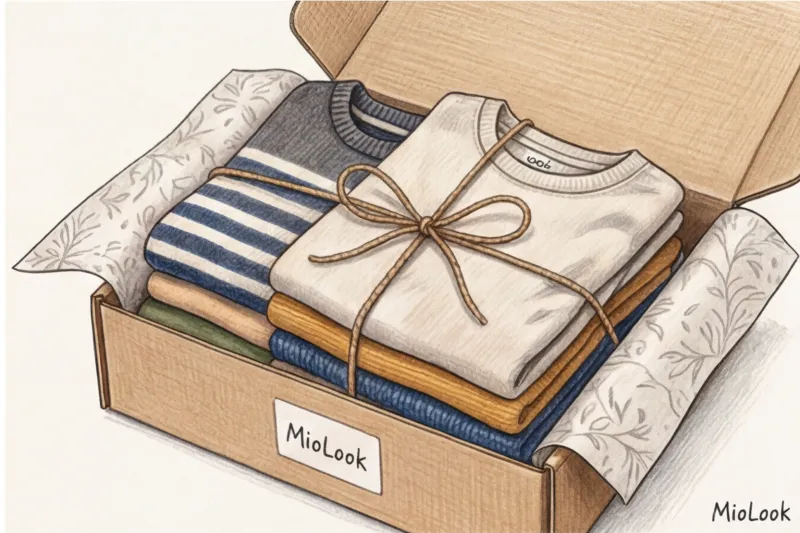
- Visual presentation: Photograph items in daylight against a flat, uniform background. Be sure to take macro shots of the most vulnerable areas—knees, cuffs, and buttocks—to show the item's true condition.
- Tags matter: Always take a photo of the sewn-in label with the composition and care instructions.
Access to MioLook for €0.99 — one-time payment
A smart AI stylist will create the perfect look for you. Digitize your children's wardrobe and stop buying unnecessary items.
Get access — €0.99 onceWardrobe Audit: A Pre-Shopping Checklist
The most senseless spending happens when you go to the mall without a clear plan. Before the start of any season, I have my mom-clients conduct a rigorous audit using this algorithm:
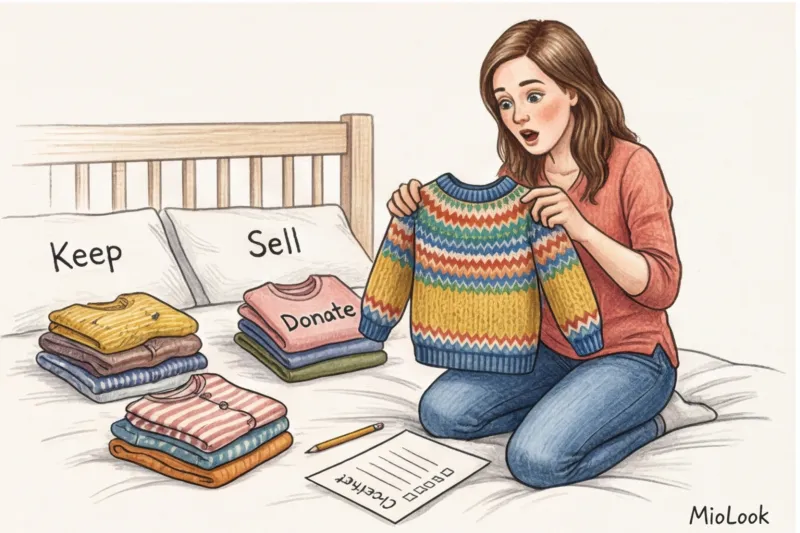
- Total unloading and fitting: Remove absolutely everything from the closet. No eyeballing. Your child should try on every item. Anything that's too short or too tight should be put in a resale box or donated.
- Finding gaps: Organize the remaining items into piles: bottoms, tops first layer, tops warm. What's missing from our "3 bottoms, 5 tops" formula?
- A strict shopping list: We don't just write down "buy a sweater," but rather as specifically as possible: "I need a terracotta or mustard-colored thick cardigan with buttons to pair with blue jeans."
Before leaving home, upload your current wardrobe to MioLook. Standing in front of an attractive discount rack in the store, simply open the app. Ask yourself: "Which three items from my virtual closet could I wear this with tomorrow?" If the answer is no, feel free to return the item to its hanger.
Saving on children's clothing doesn't mean sacrificing beauty or comfort for the sake of your wallet. It's about strategic thinking: assessing the cost per wear, understanding fabric composition, and not falling for the gimmicks of marketers and their aggressive sales. By investing time in creating a well-thought-out capsule collection once a season, you buy yourself the most valuable things: a peaceful morning routine and extra time to spend with your child, not a frantic search for a clean T-shirt.