In 12 years as a personal stylist, I've thrown more leggings into the trash than any other item. Let's be honest: the line between a stylish urban look and feeling like you forgot to wear a skirt is incredibly thin. If you don't know, How to choose the right leggings , they will mercilessly reveal all the secrets of your underwear at the first bend over to pick up your dropped keys.
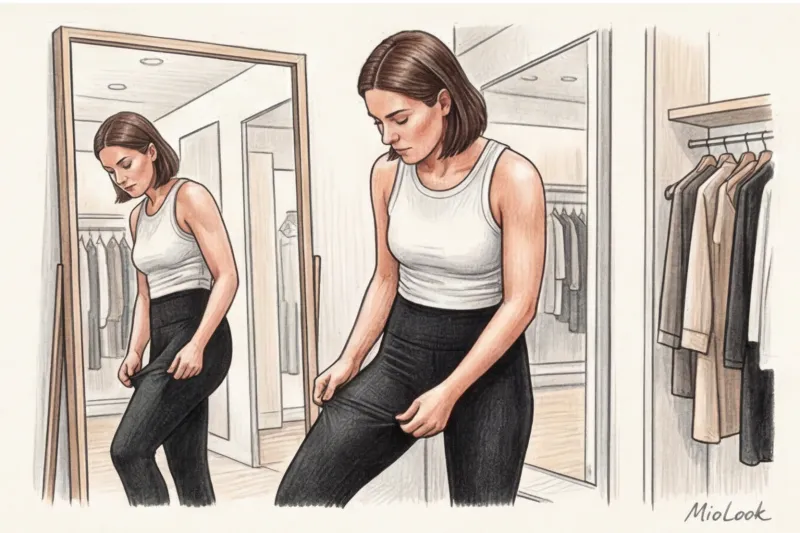
I suggest we stop treating leggings as relaxed loungewear. In the context of a modern wardrobe, they are a technical urban uniform. We've covered more about integrating this element into different looks in our The complete guide to styling leggings in the city , and today we'll focus on the "anatomy" of the perfect pair. We'll explore fabric density, seam architecture, and the mathematics of elastane to put the issue of see-through knees to rest once and for all.
Why 80% of the leggings in your closet aren't suitable for the city
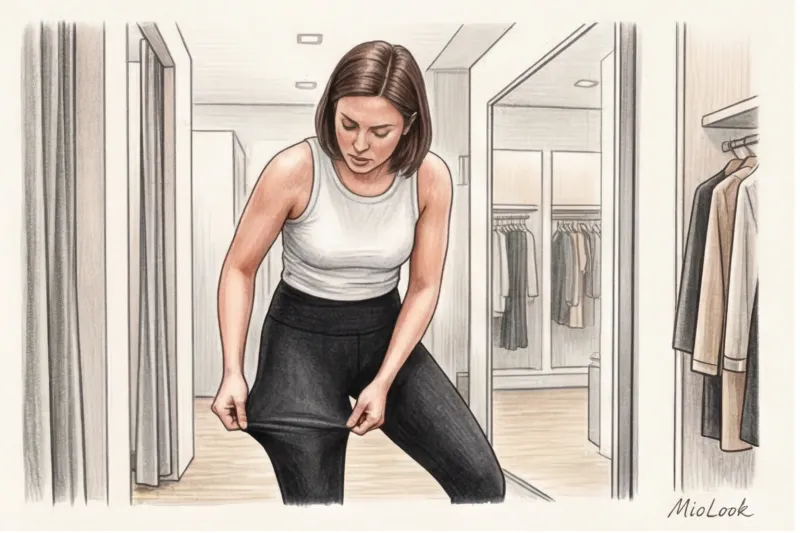
I had a revealing case in my practice. A client, a top manager at an IT company with a relaxed dress code, came to me. She complained that she felt "naked" in leggings at work, even though she'd bought expensive styles at a well-known sports store. During a wardrobe review, I made her do the famous squat test (Squat test) right under the merciless fluorescent lights of my studio. The result? We threw out five of her six favorite pairs. The brand name on the tag of her underwear was visible through the fabric stretched across her buttocks.
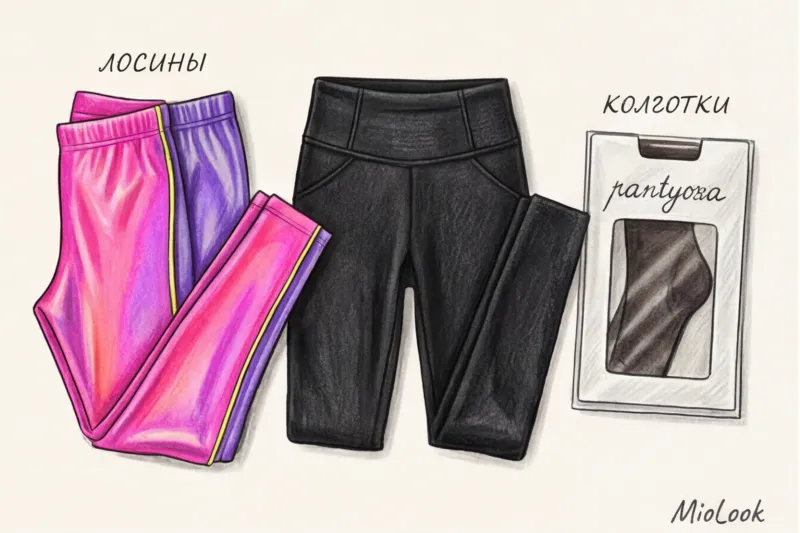
The biggest mistake is confusing athletic gear with streetwear. Athletic styles (even premium ones from Lululemon or Alo Yoga) are designed with one goal in mind: to wick away moisture and act like a second skin. They need to be thin. Urban leggings serve a completely different purpose: they need to create structure, contour, and hold their shape like classic trousers.
Thin yoga leggings paired with a casual blazer instantly cheapen an outfit. According to the WGSN athleisure market development report (2024), consumers are increasingly abandoning overtly athletic textures in favor of hybrid materials that visually mimic classic textiles.
How to choose the right leggings based on their composition: Read the label like a pro
Mass-market cotton leggings are a waste of money. Sure, they feel nice on the body, but 100% cotton has no shape memory. By lunchtime, you'll have stretched-out, baggy knees and saggy buttocks. When my clients and I digitize their wardrobes in an app MioLook I always ask to photograph the labels with the ingredients. The algorithm is merciless to items that won't survive a season.
The perfect formula: Ponte di Roma and blended knitwear
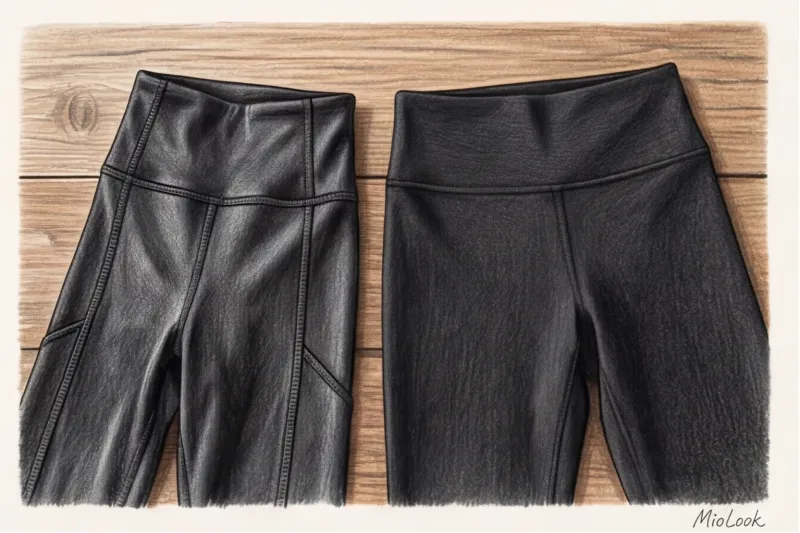
If you want an item to last for years, look for fabric on the label or in the product description. Ponte di Roma This is a dense, double-knit fabric. Unlike a regular stockinette, Ponte looks the same on both sides and has a high density. It works like a lightweight corset: it smooths out uneven skin and remains opaque even when stretched to its maximum tension.
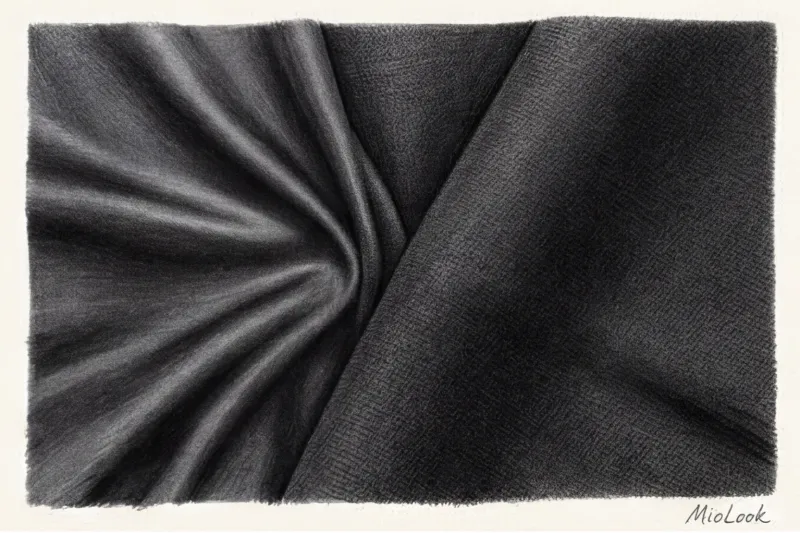
Excellent alternatives include dense matte eco-leather on a suede base (it doesn't creak when walking and doesn't create a greenhouse effect) or a high-quality combination of viscose (60-70%) and nylon.
The Elastane Rule: Why More Isn't Better
Remember the golden rule of style math: the ideal percentage of elastane (spandex or lycra) for urban leggings is from 5% to 8%.
In sportswear, this figure often reaches 15-25%. What happens when you wear such a garment to the office? Firstly, the high elastane content creates a distinctive synthetic sheen that reflects light and makes you look fat. Secondly, excessive compression turns your legs into "sausages," unnaturally constricting your calves and thighs. We want elasticity, not the effect of medical compression garments.
Your perfect look starts here
Join thousands of users who look flawless every day with MioLook. A smart AI stylist will analyze your wardrobe and suggest the best combinations.
Get access — €0.99 onceThe architecture of tight leggings: seams, waistband, and gusset
The construction of proper leggings is much more complex than simply two sewn tubes of elastic fabric. Clothing construction technologies dictate their own rules for tension distribution.
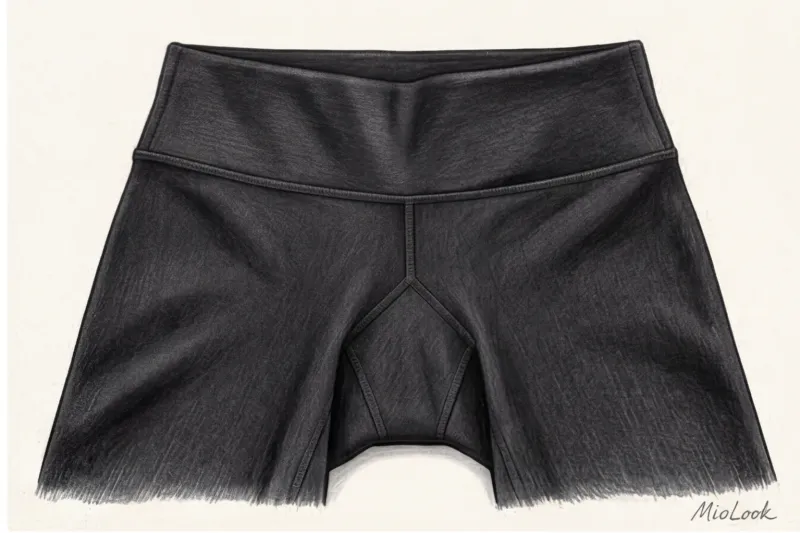
Turn the leggings over and look at the inseam. A quality urban style should definitely have one there. diamond-shaped or triangular gusset — a small insert of fabric in the groin area. Why is it needed? Without a gusset, four seams converge at one point, creating tremendous tension. Firstly, this leads to the fabric quickly tearing along the seam. Secondly, the lack of a gusset creates that awkward "camel toe" effect (anatomical folds), which is unacceptable outside the gym.
The myth of seamless models
Here I want to debunk one of the biggest myths of modern fashion. Seamless leggings are the worst choice for the city. Yes, they're incredibly comfortable for Pilates or weekends at home. But contrary to popular belief, the lack of side seams detracts from the overall aesthetic.
As fashion historian Valerie Steele (2023) notes, it is the structural seams that transform knitwear into a fully-fledged wardrobe item, defining shape and directing the eye.
Without a side seam, leggings lose the visual vertical line that slims the leg and begin to look like regular thick tights. And wearing tights instead of trousers is a stylistic no-no.
A wide belt like a corset
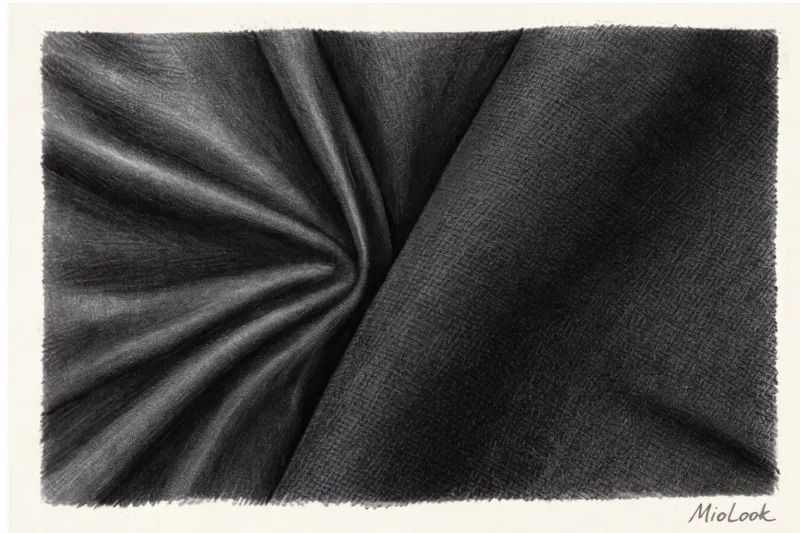
The right belt should be at least 8-10 cm wide. Avoid styles with thin elastic waistbands—they'll inevitably cut into your silhouette, creating a "muffin top" effect, even if you have perfect abs. Choose a one-piece, double-sided belt made from the main fabric: it will gently but firmly support your stomach and prevent it from bunching up when you bend over.
Visual and tactile test: GSM metric
There is an indicator in the textile industry GSM (Grams per Square Meter) — grams per square meter. Typically, this term is known only to buyers and technologists, but premium brands (such as COS or Massimo Dutti) are increasingly including it on labels or product information.
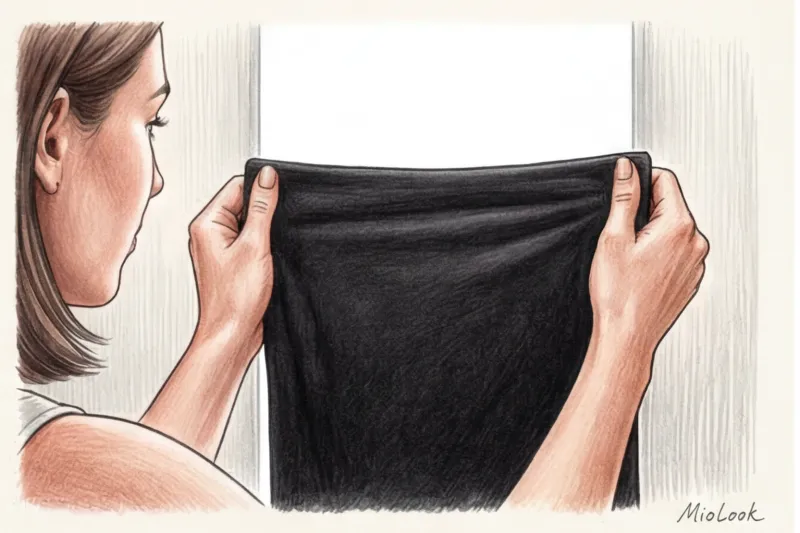
For quality urban leggings, the density guideline starts from 300 to 350+ GSM Anything below 250 GSM will inevitably show through.
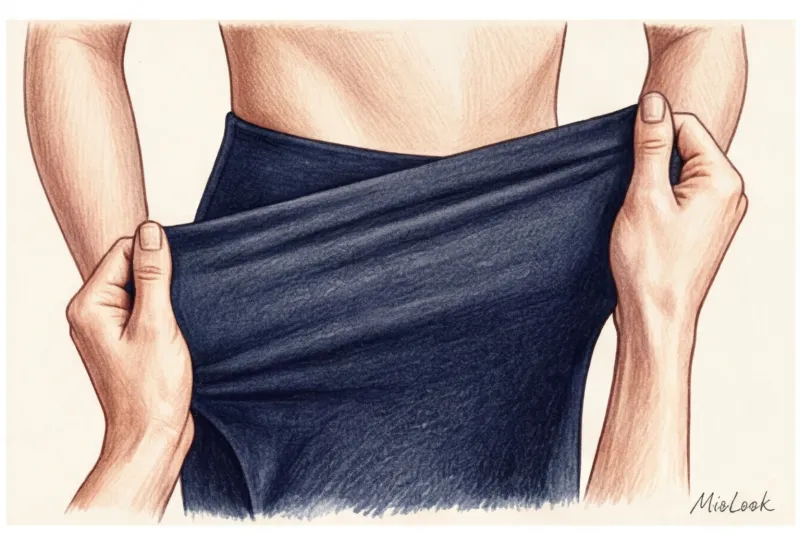
How can you check this in a store if the GSM isn't listed? Do the "fist test." Place your hand inside the pant leg, make a fist, and pull the fabric tightly over your knuckles, holding it up to the bright light of the fitting room. If you can see your skin tone or the outline of your knuckles, return the item to the hanger. Dense pigment and proper weave shouldn't allow light to pass through.
Pre-Shopping Checklist: How to Choose the Right Leggings (5 Steps to the Perfect Pair)
To avoid wasting time returning unwanted items, keep this practical algorithm in mind. I recommend checking it every time before you check out:
- Squat test passed. When squatting deeply in front of a mirror, the color and texture of the underwear are completely indistinguishable.
- Matte finish. The fabric does not reflect light and does not shine under the lamps (no cheap sports effect).
- Correct composition. The label states no more than 8% elastane. The base is viscose with nylon, heavy cotton (from 300 GSM), or faux leather on suede.
- Architecture of the cut. There is a wide belt (from 8 cm) and a diamond-shaped gusset in the groin area.
- Ideal length. There should be no gathers at the ankles. Leggings should end exactly at the ankle bone.
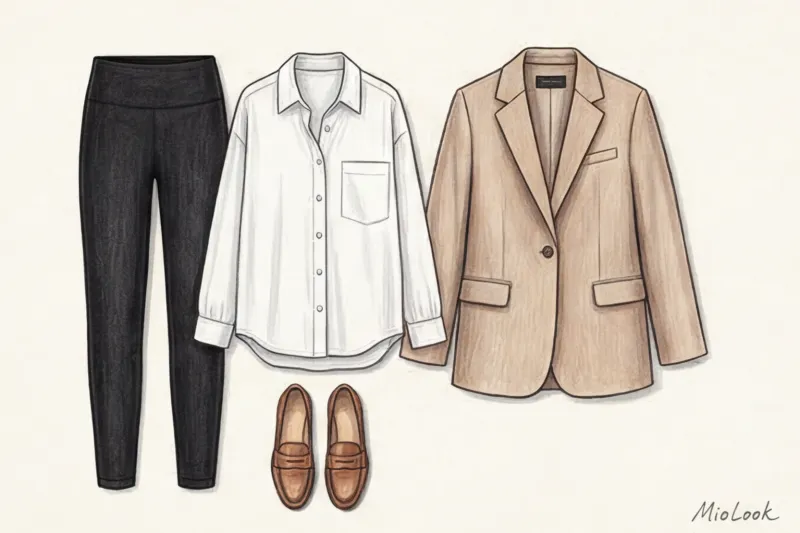
Style Integration: How to Wear Leggings Outside the Home
Let's be honest: this rule has its limitations. Even the thickest Ponte di Roma leggings won't replace classic pleated trousers in a strict corporate dress code (business formal). If your work has strict regulations, save leggings for casual Fridays or weekends.
For smart-casual looks, there is one unshakable golden rule for stylists: the groin area and buttocks should be covered It's not a question of modesty, but of proportion. Leggings hug the lower half of the body as much as possible, so the top should create a voluminous counterbalance.
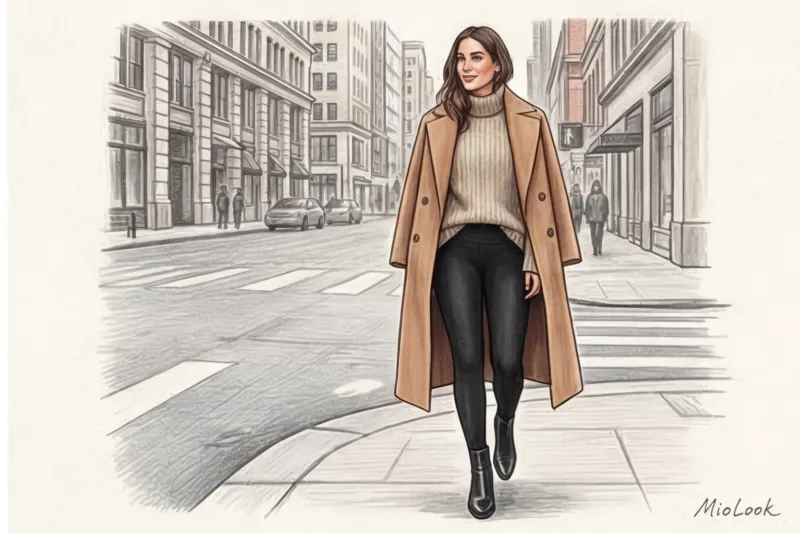
Your ideal companions:
- Men's cut elongated blazers (to mid-thigh).
- Men's oversized shirts made of thick cotton (in combination with business leather bag it looks incredibly prestigious).
- Chunky knit sweaters that cover the hips.
Footwear choice is also critical. Avoid running sneakers (you're not jogging, after all). Replace them with chunky loafers, thick-soled Chelsea boots, or thigh-high tube boots whose shafts will cover the edge of your leggings.
Ready to get started?
Try the MioLook free plan—no commitments required. Upload your items and get ready-made look formulas for every day.
Get access — €0.99 onceSmart care: how to maintain density and matte finish
You've found the perfect pair, checked the gusset and gusset, and paid a hefty price. How can you avoid ruining them after just one wash?
The main enemy of any stretch fabric is fabric softener. There's a myth that fabric softener makes things softer and better. In reality, the chemical composition of fabric softeners coats the elastane fibers in a thin film, destroying their structure. This causes leggings to lose their elasticity, slip when you walk, and bunch up at the knees.
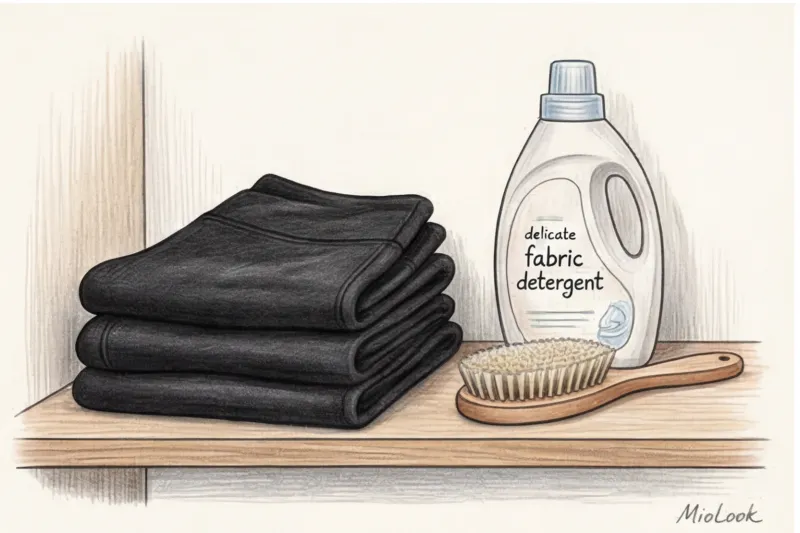
Rules for washing technical knitwear:
- Wash only in cold water (no hotter than 30 degrees Celsius). Hot water will cause the elastane to set.
- Always turn the item inside out - this will protect the matte surface from rubbing against the drum and causing pilling.
- Never dry leggings on a radiator or in a tumble dryer. Dry them flat out of direct sunlight.
Leggings aren't a compromise between laziness and style. They're a powerful, technologically advanced staple in your wardrobe. If you take the time to find a pair with the right cut and a density above 300 GSM, you'll get something that complements your silhouette, not works against it.