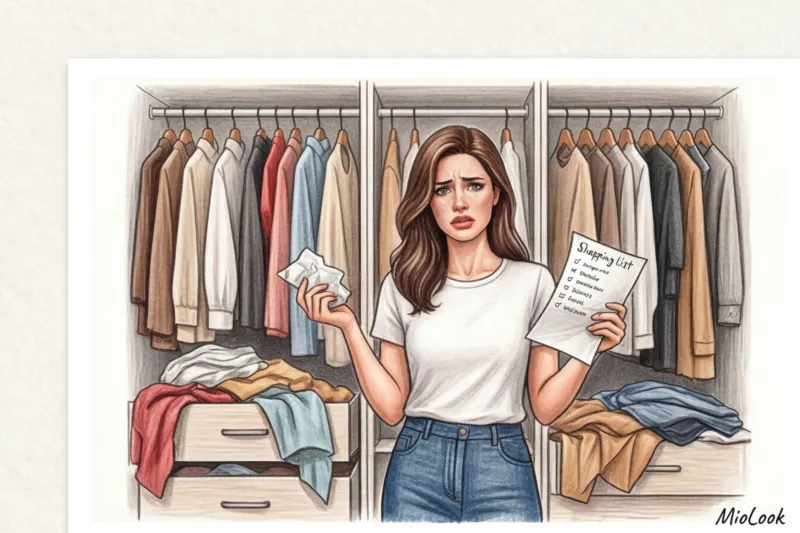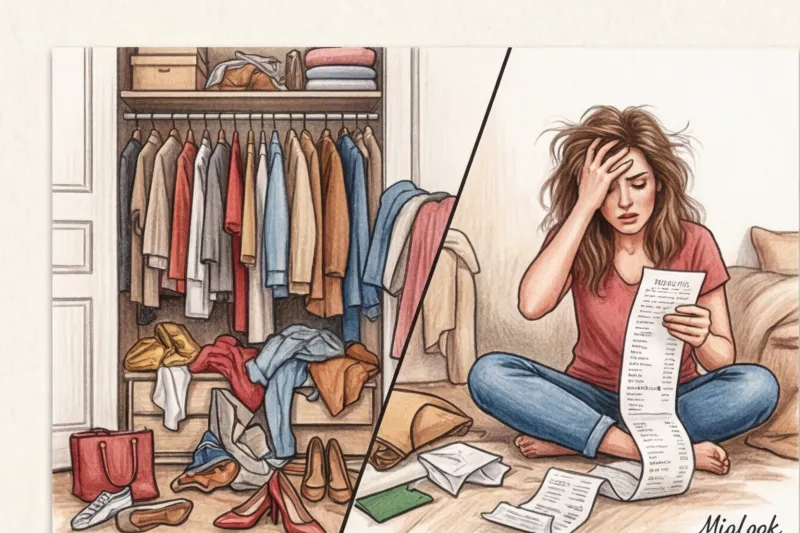
Over twelve years of working as a fashion consultant, I've seen the same scene dozens of times. One of my clients—let's call her Anna—was systematically buying up sequined evening dresses, backless silk slips, and six-inch stilettos. There was just one problem: Anna worked as a financial analyst five days a week from her home office and spent her weekends out of town. Her closet was overflowing with luxury, but every morning she began with stress and a stretched-out cashmere sweater.

Most women make this mistake: they view their wishlist as a bottomless bin for emotional "wants" or a fantasy version of themselves. I propose a radically different approach. Your shopping list is a rigorous investment portfolio of your wardrobe. And every item on it must undergo a rigorous audit for cost-per-wear, fabric quality, and fit with your realistic schedule.
Of course, before investing, it's essential to take inventory of your assets. You can't plan your purchases effectively if you don't know what's lurking in the depths of your shelves. We covered this in more detail in our a complete guide to wardrobe analysis and shopping list creation Only after clearing our space can we begin conscious planning. Let's explore how to create a clothing wishlist that will save you thousands of euros and turn your wardrobe into a seamlessly functioning machine.
An Investment Approach to Wardrobe: Why You Really Need a Wishlist
According to the British environmental organization WRAP (Waste and Resources Action Programme) in 2022, the average woman wears only 20% of her wardrobe 80% of the time. The remaining 80% are impulse buys, sale items, and those "special occasion dresses" that sit around for years, causing nothing but guilt and sensory overload every time the closet door opens.
Wishlisting addresses this problem at the neurobiological level. Behavioral psychology research, particularly the work of Stanford University professor Robert Sapolsky, demonstrates that the maximum release of dopamine (the hormone that produces pleasure anticipation) occurs not at the moment of receiving a reward, but during the anticipation and pursuit of it.
By adding an item to your wishlist, you trick your brain. You get a dose of pleasure from the act of choosing, but your money stays in the account. You shift from a paradigm of mindless consumption to a paradigm of investment. Instead of buying three acrylic jumpers for €40 each to satisfy your shopping cravings right now, you calmly save up for one perfect Mongolian cashmere pullover that will look luxurious in five years.
Your perfect look starts here
Join thousands of users who look flawless every day with MioLook.
Get access — €0.99 onceA Step-by-Step Guide: How to Keep a Clothing Wishlist
A typical beginner's mistake is jotting down abstract phrases like "buy black pants" or "need a new coat" in your phone's notes. This is a surefire way to compromise. You'll get to the store, get tired of trying on clothes, and buy the first pair you see, which simply button at the waist.
To make your list work, divide it into two categories: "essential investments" (things that form the framework of your wardrobe) and "accent trends" (details that refresh your look).
Then apply detail rule I always teach my clients to formulate their requests as specifically as possible, including the details. If you're unsure what to look for, research What fabrics look expensive? Your post shouldn't look like "black pants," but like this: "Black straight-leg trousers made from 100% super 120s wool, high waist, pleated waist, full heel length." Only with such a brief will you find the perfect item.
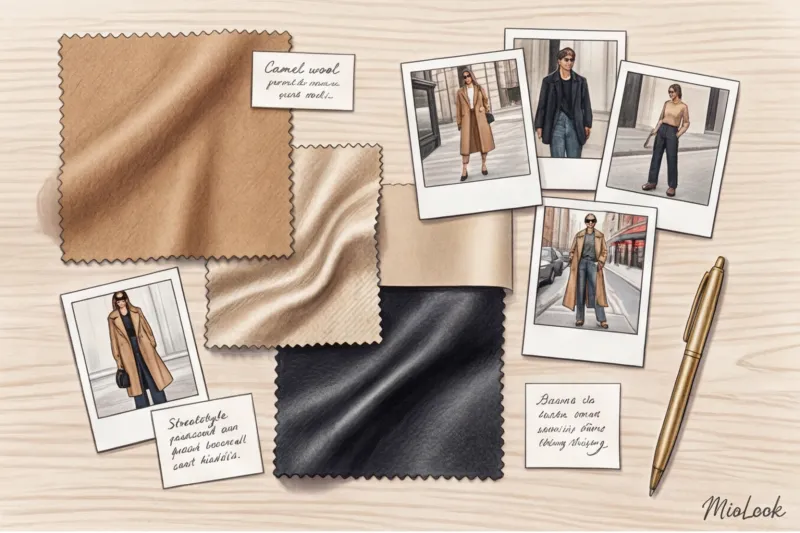
For this level of detail, simple text notes are not enough. I recommend using digital tools for visualization. For example, adding a photo of the desired item to MioLook smart wardrobe , you'll be able to create collages with it right away. Be sure to save not only sterile catalog photos on a white background, but also street style looks—this way you'll understand how a piece performs over time and what trendsetters wear it with.
The Fantasy Self Trap
Returning to Anna's story with her evening dresses, there's a golden rule of wardrobe investment: 70% of your budget should go toward the clothes you spend 70% of your time in.
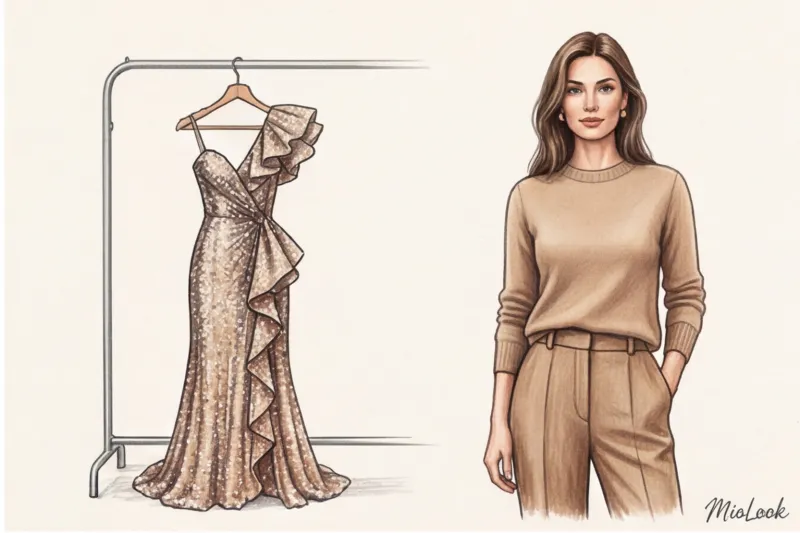
If you're a stay-at-home mom, your investment choices are a flawless cashmere suit, premium sneakers, and a perfectly tailored wool coat, not a silk tuxedo. If you work in the corporate sector, your priority is structured jackets and status bags that look expensive Analyze your actual calendar, not your Pinterest board.
Cost-per-wear: The math behind conscious shopping planning
When my clients look at the price tag of a high-quality mid-up or premium item, their first reaction is often one of fear. To address this, we always calculate the cost-per-wear (CPW)—the cost per wear.
The formula is simple: Price of the item ÷ Estimated number of wears.
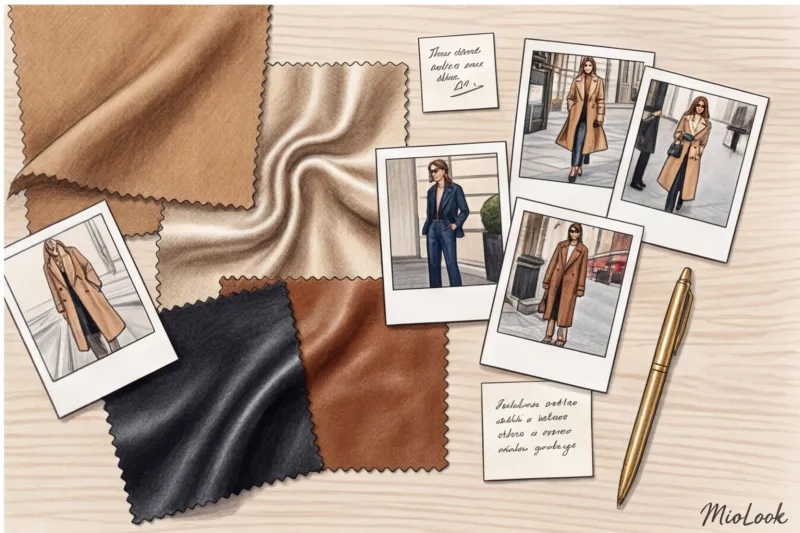
Let's do the math. You can buy a trendy 100% polyester blouse at a mass market for €50. It's staticky, hot, and doesn't breathe. You'll wear it exactly twice to parties and then throw it in the closet. CPW = €25.
Now let's take a classic blouse made of thick matte silk for €500. It fits perfectly, is tactilely pleasant, and goes well with both jeans and a business suit. You'll wear it at least 100 times over the next couple of years. CPW = €5.

"Buy less, choose better, make it last" – this manifesto by Vivienne Westwood should be the title of your wishlist.
In 2015, eco-activist and founder of the Eco-Age agency Livia Firth launched the #30wears campaign. Its essence is to ask yourself before every purchase: "Will I wear this at least 30 times?" If the answer is no, the item has no right to cross your threshold.
Let me share a personal experience. Eight years ago, I gave up buying five seasonal "compromise" jackets and coats to save up for the legendary Max Mara 101801 double-breasted camel and cashmere coat. It cost around €2,500. I've worn it at least 90 days a year for eight years (720 wears). Its CPW is currently just €3.40 per outing. And every year that figure drops, yet the coat still looks just as impeccable.
Try MioLook
A smart AI stylist will select the perfect look for you based on your wishlist.
Get access — €0.99 onceThe 72-Hour Rule and "Quarantine" for New Desires
Even the most disciplined investor is susceptible to emotions. What should you do when you see something in a store window or on Instagram and want to buy it right then and there?
I've instituted a strict "quarantine" rule for my clients. Any unplanned item must sit on their wishlist for at least 72 hours. For large purchases (over €500), the quarantine lasts a week. During this time, the dopamine rush subsides, and rational thinking kicks in.
While in quarantine, the item must pass an integration test - The rule of three combinations. Mentally (or in a wardrobe app) create at least 3 complete looks with this new item, using exclusively the clothes that are already hanging in your closet.
If in order to wear a new skirt you need to buy a special top, matching tights and shoes that look expensive , is not an investment. It's a financial black hole. Things should work for you, not you should maintain them.
The Sales Mistake: Why Discounts Are Ruining Your Shopping List
Here I will say something that will cause outrage among many shopaholics: I categorically forbid clients from buying things from the wishlist. only because they announced a discount on them.

Sales are the greatest enemy of the perfect wardrobe. Marketers masterfully exploit FOMO (fear of missing out), tricking us into buying items in the wrong size, odd cut, or compromised color, simply because the price is 50% off. Furthermore, here's an insider fact: many mass-market and mid-market brands create separate collections specifically for Black Friday and outlet shopping, using cheaper fabrics. You're not buying the same item for less; you're buying an inferior item.
Conduct full price test When looking at a discounted item, ask yourself: "Would I buy this right now for 100% of the original price?" If the answer is "no," close the tab immediately or leave the store. A discount doesn't make an item you don't need feel good.
Checklist: 5 Tough Filters to Check Before Adding to Your Wishlist
To prevent your shopping list from becoming a link dump, run every potential update through this filter. Save it and use it every time you shop:
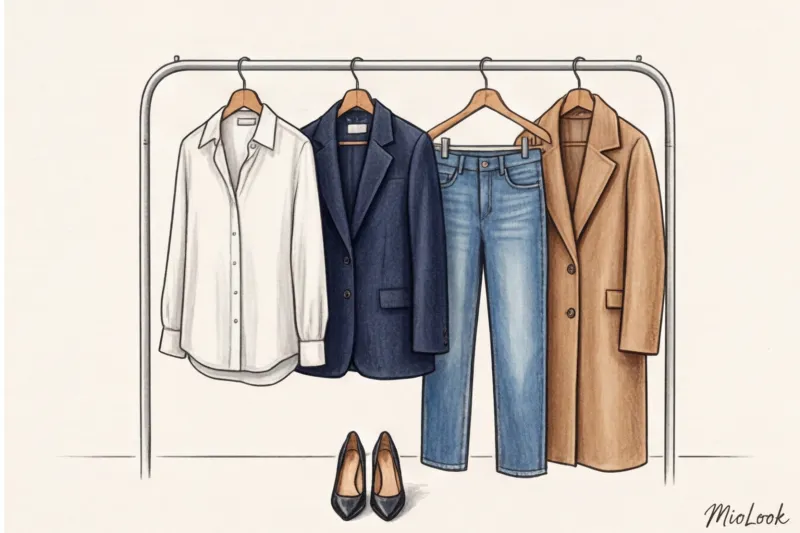
- Does the fabric quality meet my standards? No acrylic or 100% thin, squeaky polyester. Look for cotton with a weight of 180 g/m² or more, wool, heavy viscose, and blends with cashmere or silk.
- Does this item have any hidden costs? If you need to buy special invisible underwear and new sandals to go with a backless dress, the actual price of the item doubles.
- Does the cut suit my body type? Or does it just look phenomenal on a 6'1" model who's a size 0? Be honest with yourself.
- Does it replace a worn-out favorite item or duplicate what you already have? Buying a fourth pair of blue straight jeans won't make your style any more interesting.
- Does it express my personal brand and status? When you wear this item, do you feel like the woman you aspire to be?
To be fair, this checklist does have one limitation: it doesn't work If you're packing for a once-every-five-years vacation and urgently need a swimsuit or a sarong for a couple of days, this is a must. But for building a foundation, this is an absolute must.
Conclusion: From a Wish List to a Status Wardrobe
True luxury is when your closet is spacious, air circulates freely between the hangers, but at the same time you Always There's something to wear for any occasion. A wishlist isn't a list of restrictions. It's your personal tool for controlling your style, budget, and visual message to the world.

Treat clothing shopping the same way you would choose a car or invest in an education. Demand impeccable quality, analyze the cost-per-use (CPW), and ruthlessly eliminate anything that doesn't meet your standards. Start today: review your current items and create your first conscious shopping list of 3-5 truly worthwhile items.