When I'm shopping with clients, I often conduct a brutal but sobering experiment. I ask them to close their eyes, place a bag in their hands, and ask them to guess its price. Nine out of ten women can accurately identify a cheap mass-market item without even looking at it. How? Micro-sensations decide everything: the treacherously light weight of the metal, the sound of a rattling zipper, and the feel of the empty, shapeless plastic under their fingers.
In this article, we won't discuss trivial advice like "just buy a basic black model." We'll focus on the accessory's architecture and the physics of materials. You'll learn how to choose a bag that looks 10 times more expensive than it is, and what to look for when shopping to avoid wasting money on something that will cheapen your entire look.
I talked in more detail about how to create a cohesive and visually rich image without huge investments in our a complete guide to a status wardrobe in adulthood Today we'll take a closer look at the accessory base.
Accessory Architecture: Why Form Is More Important Than Brand
According to the WGSN analytical agency's 2024 data, the global trend toward "quiet luxury" has finally shifted focus from logos to texture and geometry. Logomania is dead, especially in the budget segment. A bag covered in monograms, bought for €40, screams not status but a desire to appear, not to be.
A mature woman's high-status wardrobe is built on the concept of "visual calm." Your look shouldn't fuss, deform, or fall apart by the end of a hard day's work. A bag should behave the same way. Inexpensive models have a brutal cost breakdown: up to 60% of the retail price goes to logistics, taxes, and marketing, with only a paltry 5-7% going to the hardware and frame itself. This is why brands often skimp on the interior padding.
The Rigid Frame Rule: Bags That Look Expensive
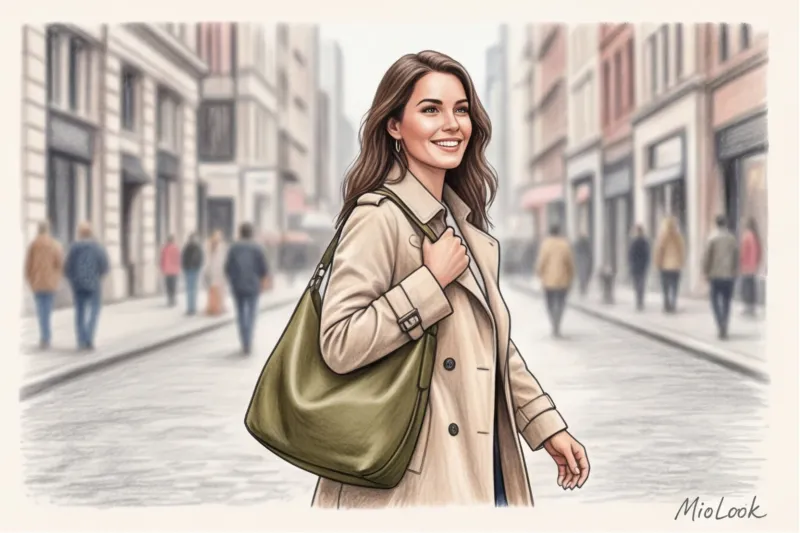
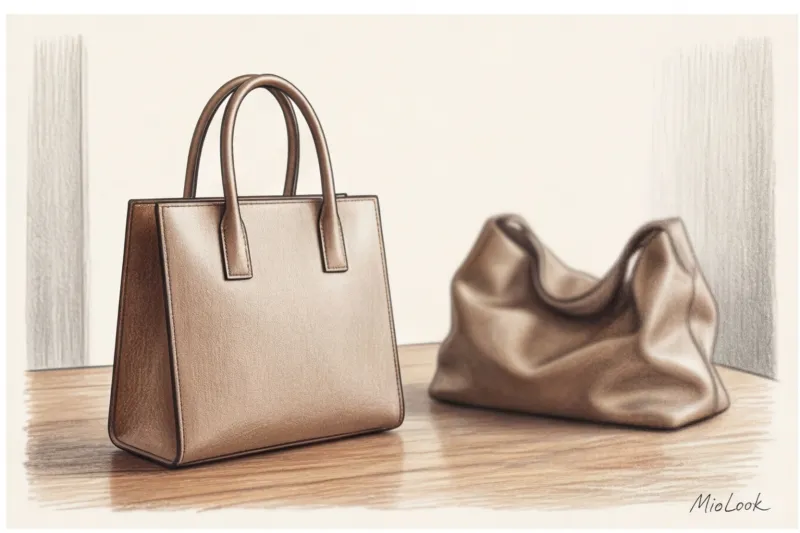
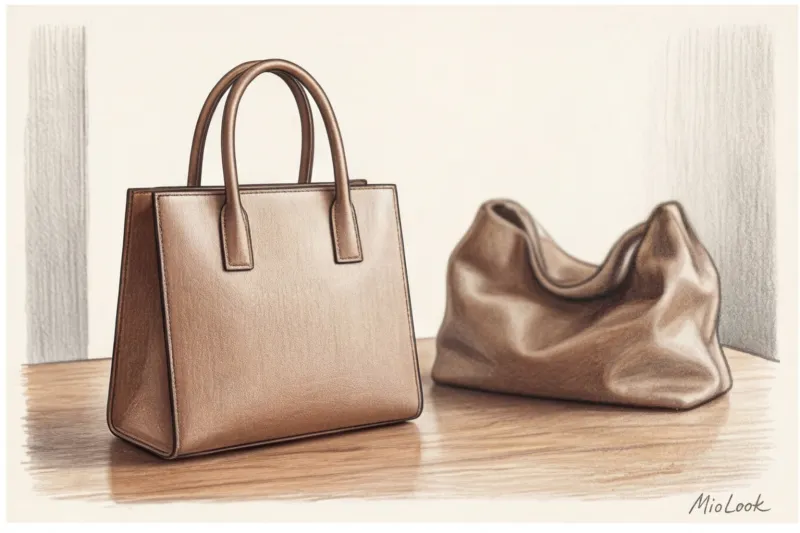
There's a popular myth that soft hobo bags look relaxed, bohemian, and stylish. The truth is, if you're on a budget, a soft bag is your worst enemy.
Faux "relaxation" works exclusively with premium materials—thick, finely crafted, grained leather that drapes heavily into folds. Cheap, soft leather or thin, hobo-style polyurethane look like a deflated balloon, creating a sloppy effect.
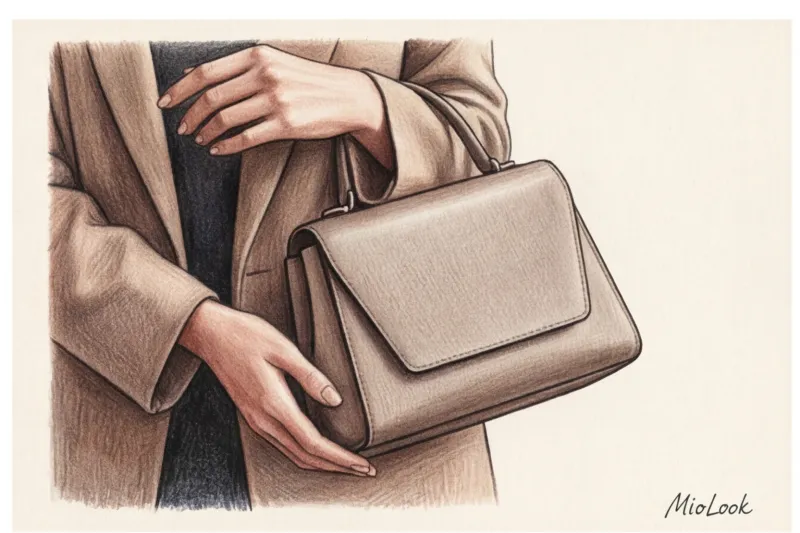
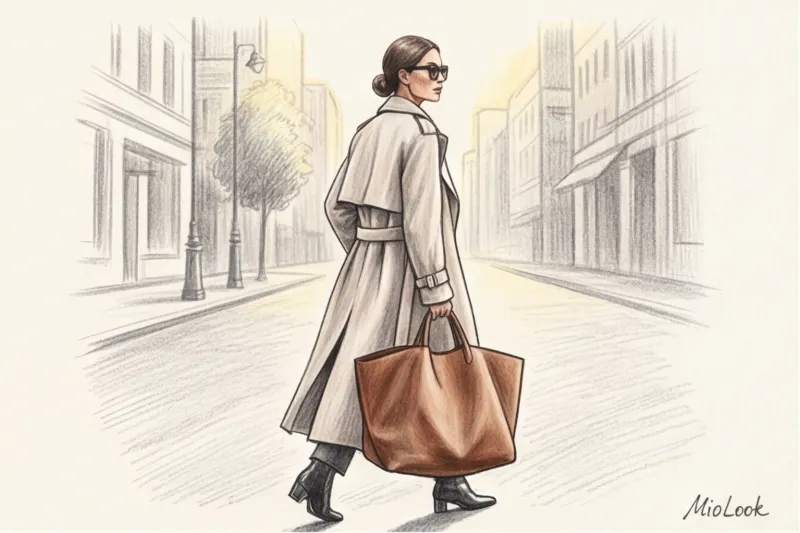
Rigid geometric shapes—totes, satchels, and baguettes—always look more expensive. Clear geometry deceives the eye, creating the illusion of a complex manufacturing process. Try the emptiness test: place an empty bag on a table. If it tips over or collapses, leave it in the store. The ideal bag should stand upright like an architectural model, even if it only contains a single lipstick.
Access to MioLook for €0.99 — one-time payment
A smart AI stylist will find the perfect look with your new bag.
Get access — €0.99 onceHardware is the #1 traitor: how sound and weight reveal the price
I have a client, a top manager at a large IT company. One day, she showed up to a meeting wearing a luxurious, minimalist look, but every time she took her phone out of her bag, the hardware made a cheap, jingling sound, reminiscent of a set of keys. The magic of status was instantly ruined.
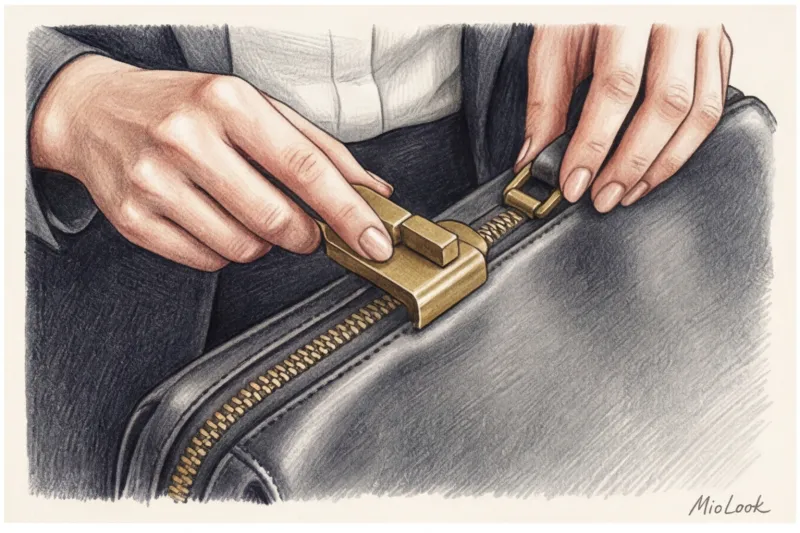
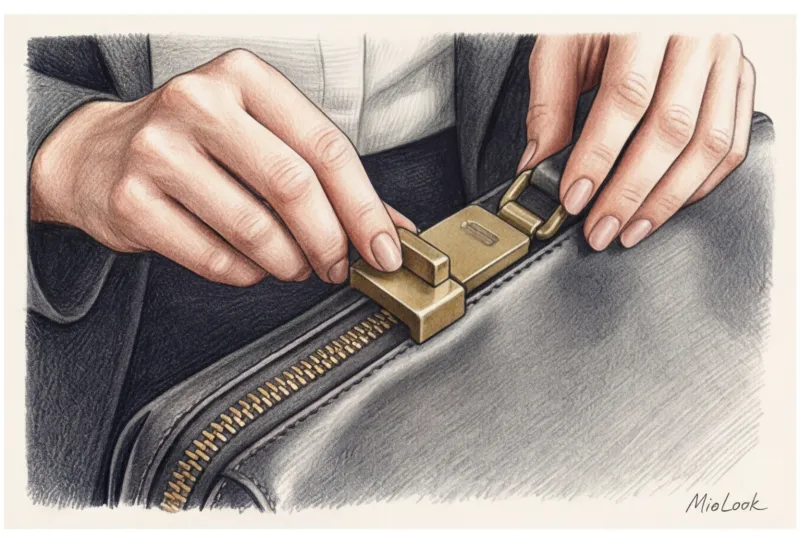
Metal is a more ruthless price-maker than the fabric itself. In the sub-€100 segment, manufacturers often use hollow aluminum hardware coated with shiny paint. This is the same "samovar gold" or unnaturally shiny silver that begins to fade after a month of wear.
- Look for a matte finish: Aged brass, matte silver or puten bronze in the mass market always look more noble.
- Check the density: Carabiners, rings, and clasps should be cast and heavy to the touch. Feel the handle's mounting ring—it shouldn't bend with your fingers.
- Lightning is an indicator of quality: Plastic teeth painted to look like metal or thin spiral zippers are a no-no. An expensive bag has a massive metal zipper that moves smoothly, with a distinctive deep, expensive sound.
Technical details that instantly make a bag cheaper
Leather goods production technology is such that high-quality edge finishing often costs more than the leather itself. It's in the craftsmanship of these micro-details that the devil hides, distinguishing a €500 masterpiece from a €30 piece.
Edge and contrast stitching
Never buy a bag with contrasting stitching (for example, white thread on black leather) if your budget is under €300. Any misalignment of the machine needle, even the slightest, will be clearly visible. Tone-on-tone stitching (or "thread matching the leather") skillfully conceals manufacturing flaws.
The second disaster is the edge (the finished leather edge). Look at the handle edges. Cheap bags coat them with a thick layer of rubber-like paint that will crack and start peeling off in chunks after three weeks in the cold. A quality bag's edge is thinly and neatly sealed, without any burrs or air bubbles.
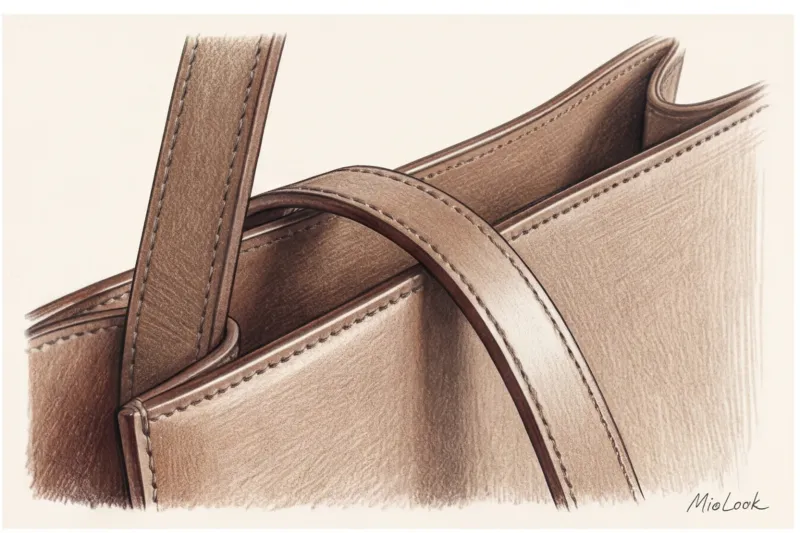
Lining and excess decoration
Open the bag and feel the fabric inside. Rustling polyester that clumps and gathers in creases is a sign of extreme frugality. Look for dense cotton twill or faux suede (Alcantara).
And remember this rule: the more tassels, chains, fake locks, and rivets an inexpensive bag has, the worse its basic design. In mass-market bags, embellishments are used as camouflage to distract from crooked seams and cheap polyurethane.
Texture and Color: Investing in the Right Illusions
Mass-market brands (Zara, H&M, Mango) find it much harder to ruin a complex, deep color than pure, basic shades. Dazzling white or jet-black polyurethane often has a cheap, plasticky sheen. But once you deepen the color, the fabric begins to look significantly more premium.
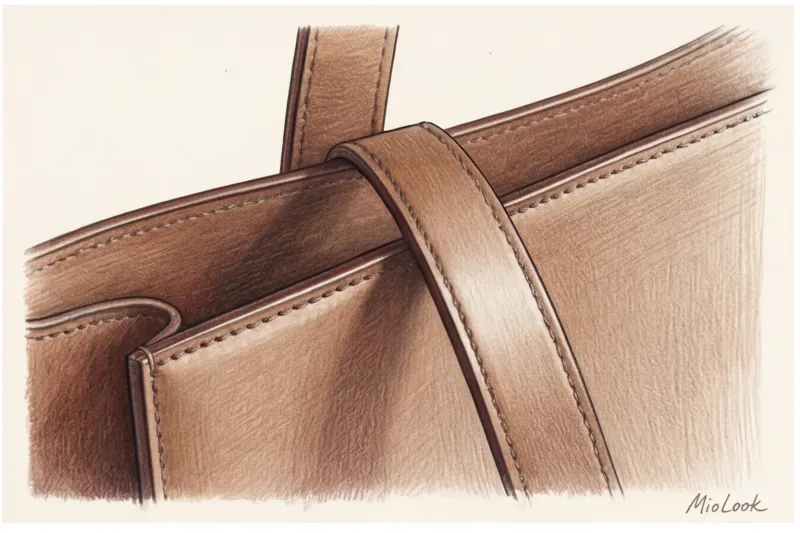
Use the PANTONE Color Institute's fall/winter palette as a guide. Burgundy, dark chocolate, deep emerald, and rich caramel—these colors create the illusion of rich leather. If you're searching for an accessory in the app, MioLook , notice how noble these shades work as accents in monochrome looks.
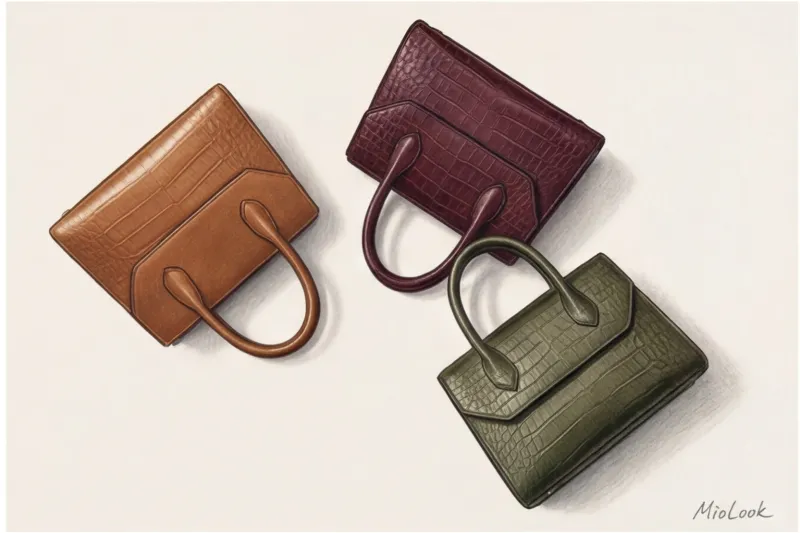
If you're on a budget and opting for faux leather, the best investment is a reptile (crocodile, snake) embossed surface. This textured surface perfectly conceals the material's chemical origins, masks minor scratches, and prevents creases at the folds.
But there is a hard exception here: This only works with a matte or semi-matte finish. Patented faux crocodile looks like a prop from a cheap 2000s movie. When in doubt, choose Saffiano leather—its distinctive diagonal ribbing makes the material virtually indestructible.
A stylist's checklist: choosing a bag in a mass-market store
The main rule of a status wardrobe: a high-quality, well-designed no-name is always better than a knockoff of a recognizable brand. A counterfeit Birkin or a copied Bottega Veneta will never fool a trained eye, and you'll feel insecure. If you want to delve deeper into the topic of wardrobe investment, I recommend studying Cost per wear formula.
Let me give you an example: a hard polyurethane bag for €80 that you wear 150 times (€0.53 per outing) will end up costing you less than a trendy puffy micro bag for €25 that will rip after 10 days (€2.50 per outing).
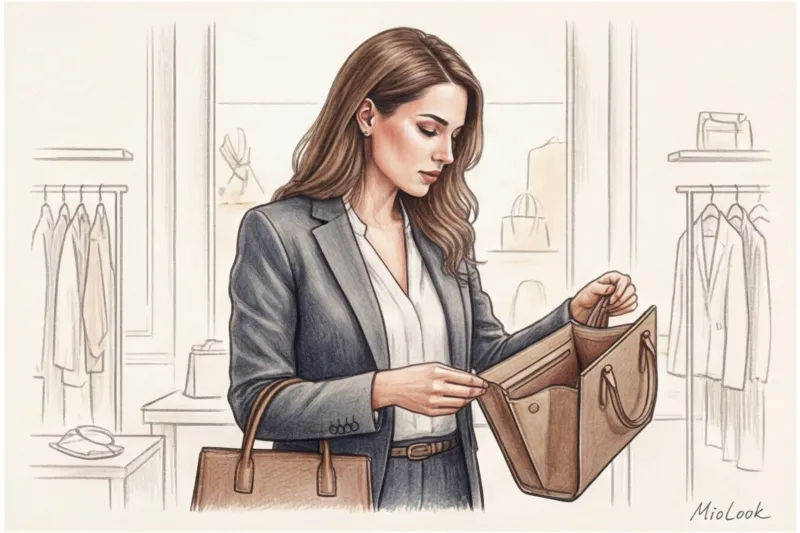
5 steps to check before purchasing:
- Weight test: Hold the bag by the handles. It should have a pleasant, balanced weight before you fill it.
- Bottom test: Feel the bottom. A structured bag should have a rigid insert and, ideally, metal feet.
- Inspection of seams: Check the attachment points of the handles to the body. If there are visible traces of glue or wavy threads, the bag won't last a season.
- Smell: Don't hesitate to smell the product. The strong fishy or chemical smell of the solvent will never go away.
- Proportions: Consider the scale. A tiny, rigid handbag will be lost against a fuller figure, while a huge, rigid shopper will overwhelm a petite woman 155 cm tall.
How to Incorporate an Inexpensive Bag into a Business Dress Code
If you need a bag for the office (for example, in a business casual style), use the one-focal-point rule. You can pick up a bag from COS or Massimo Dutti for €100, but pair it with impeccable genuine leather shoes or a high-quality wool jacket. An inexpensive but architectural bag will blend seamlessly with the textures of your clothes. For the office, simple A4-sized satchels and minimalist totes without external pockets are ideal.
Your perfect look starts here
Join thousands of users who look flawless every day with the MioLook AI stylist.
Get access — €0.99 onceAccessory Care: How to Make a Budget Bag Age Gracefully
Even the most expensive leather bag will turn into a rag if you throw it on the floor and store it flattened under a pile of sweaters. To ensure a budget bag ages gracefully, treat it like a luxury item.
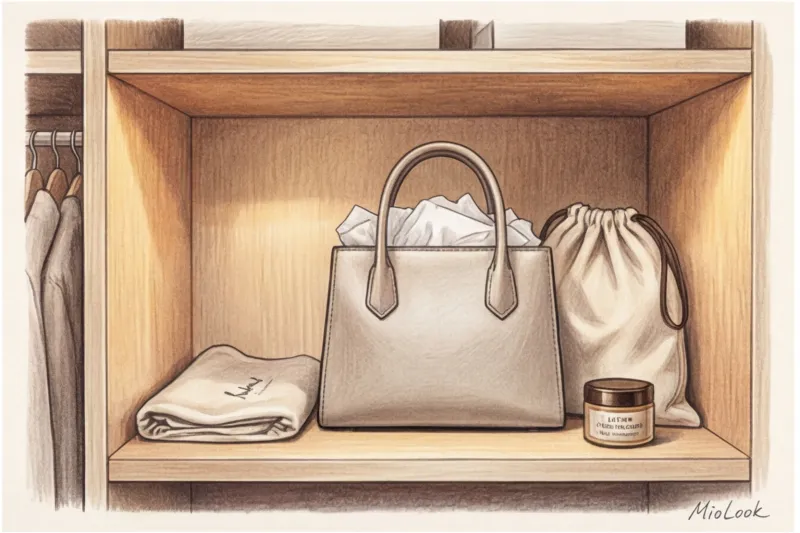
First, never store your bags empty. I've seen hundreds of ruined accessories with irreparable creases in the leather. Buy special bag shapers or use crumpled white parchment paper (not newspaper, as the ink can transfer to the lining).
Secondly, the most vulnerable part of any bag is the handles. Skin oils, hand cream, and sweat destroy the edge and material. Wrap the handles with a small silk scarf (twilly). This will not only protect the material but also add that "old money" flair to the look. We wrote about this trick and other ways to look classy on a budget in our article about affordable status wardrobe.
And finally, moisturize. Polyurethane and eco-leather also dry out and crack from central heating and frost. Wipe them with special silicone sponges or a light conditioner for synthetic materials once a month, and polish the hardware with a dry flannel cloth.
Choosing a bag that looks far more expensive than it is isn't a matter of luck. It's a cold, calculated analysis of the garment's architecture. Ditch soft, shapeless bags for stiff totes, swap garish gold chains for elegant matte brass, and you'll notice how the visual appeal of your entire wardrobe instantly improves.