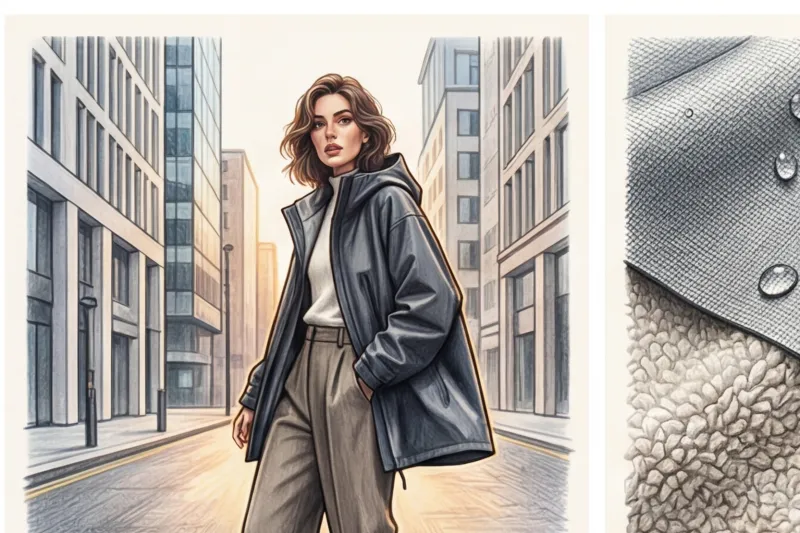
What is gorpcore clothing and why has outdoor taken over the streets?
Have you noticed how the city's dress code has changed over the past couple of years? Not long ago, a high-tech membrane jacket worn over a formal suit would have raised eyebrows. Today, it's not just the norm, but a marker of someone who values their time, health, and personal comfort over outdated stereotypes. This phenomenon has been dubbed gorpcore clothing style — a unique destination where the rugged aesthetics of mountaineering and hiking have gracefully descended onto the asphalt of megacities.
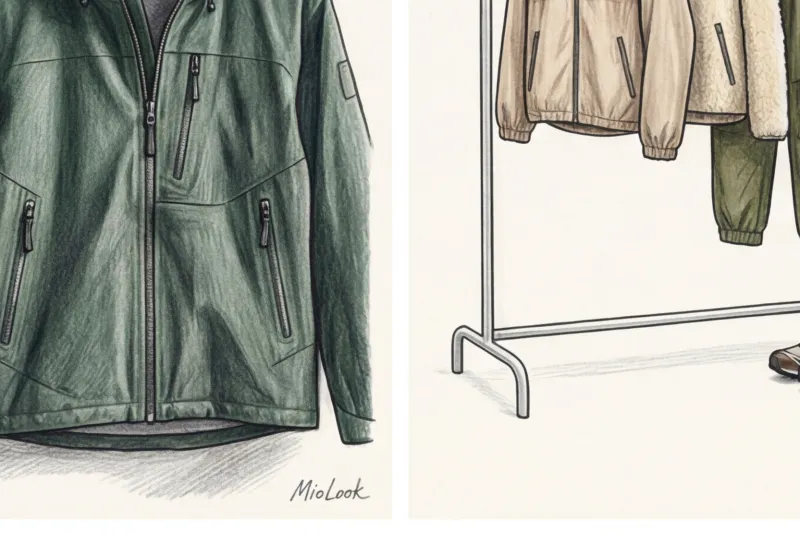
The term "gorpcore" was first coined by journalist Jason Chen in 2017. The word "GORP" itself is a charming acronym for "Good Ol' Raisins and Peanuts." This is what American hikers call the traditional high-calorie snack on challenging trails. The trend initially emerged as a wry response to overly sophisticated, polished, glamorous fashion. Fashion industry insiders, tired of uncomfortable shoes and restrictive coats, began ostentatiously wearing Patagonia fleeces and Salomon trail running shoes in the front rows at Fashion Week.
The gorpcore philosophy is based on the fundamental principle of industrial design: function follows form. No decorative buttons, false pockets, or fabrics that require complex maintenance. In the unpredictable urban climate—with its sudden downpours and piercing winds in the concrete jungle—uncompromising weather protection has become a new form of luxury.
"Luxury today isn't measured solely by the designer's name on the tag, but also by how much a garment makes your life easier. If a jacket doesn't get wet in the rain and still breathes on the subway, its value increases exponentially."
Over my 12 years as a stylist, I've seen clients struggle with stiff, aesthetically pristine, yet utterly impractical trench coats. When I first suggested one of them swap out her classic gabardine raincoat for a simple, neutral-toned windbreaker, her reaction was predictable: "Why didn't I do this sooner?" This personal experience is confirmed by global statistics. According to Business of Fashion (2023), a tectonic shift in consumer preferences has occurred: over 68% of shoppers now prioritize the utility and durability of clothing. People are more willing to invest €200-€500 in a high-quality, high-tech item, knowing it will remain relevant and functional for the next decade.
The pandemic was the undoubted catalyst for this transformation. The forced transition to remote work, followed by the entrenchment of a hybrid work schedule, forever shattered the strict boundaries of office dress codes. We've become accustomed to the absolute comfort of joggers at home and are no longer willing to tolerate physical discomfort outside of it. Gorpcore offered the perfect compromise: you look put-together but feel as free as in your favorite pajamas.
Integrating outdoor activities into your daily life requires a certain amount of foresight. The safest approach is to play with contrasts. You can explore Combining textures in clothing and the rules of layering to understand how matte, dense nylon beautifully accentuates the softness of a cashmere sweater. Or, for example, find out What to wear over a white shirt Instead of your usual classic vest, try wearing a thin microfleece with a zipper—the seriousness will be reduced, and the look will immediately become more dynamic.
To make the process of incorporating tech items into your regular wardrobe stress-free, I always advise my clients to visualize their future outfits. Smart wardrobe in the MioLook app Simply take a photo of your new shell jacket or ripstop pants, and the AI stylist will help you create dozens of coordinating looks from what you already own, saving you time and money in the morning.
Anatomy of Style: Fabrics, Layers, and Technological Innovations
I'm often asked: why can a utility jacket from Arc'teryx or Snow Peak cost €400, and sometimes even €800? The answer lies not in the marketing premium for the logo, but in the colossal research and development costs and the complex assembly process. While a classic drape coat consists of 20-30 patterns and is stitched together with thread, a high-tech hardshell can include over 60 elements. Every detail is laser-cut for perfect precision, the seams are sealed with special tape at high temperatures, and ultrasonic welding is often used instead of traditional stitching. You're paying for an engineering masterpiece.
It was this uncompromising functionality that made the outdoors so attractive to city dwellers. The basic principle of mountaineering is three-layer rule (basic, insulating, and protective) – perfectly suited to the rhythm of the metropolis. Imagine your typical winter or autumn route: a 15-minute walk in the icy wind, a descent into the stuffy subway where the temperature reaches 20°C, and finally, an air-conditioned office.
If you wear a heavy wool coat over a cotton shirt, you'll inevitably sweat on public transportation, and once outside, you'll instantly freeze. A three-layer system works differently. The base layer wicks moisture away from the body, the insulating midlayer traps warm air, and the protective shell blocks wind and precipitation. On the subway, you simply unzip your lightweight jacket without overheating, and once outside, you're back in an impenetrable cocoon.
Technological materials: membranes, microfleece and ripstop
As a textile specialist, I always urge my clients to read the ingredients. High-tech fabrics are the foundation upon which gorpcore clothing is built. The biggest misconception is confusing a cheap waterproof jacket with a membrane one.
Budget raincoats from mass-market stores are usually made of nylon with a polyurethane (PU) coating. Basically, it's oilcloth. It's truly waterproof from the outside, but it acts like a greenhouse: body vapor has nowhere to go, and you get wet from your own sweat. A real membrane (like Gore-Tex or eVent ) has a microporous structure. Imagine a film with pores 20,000 times smaller than a drop of water, but 700 times larger than a vapor molecule. Rain can't penetrate, but body vapor can easily escape.
When choosing a membrane, look at its waterproofing ratings. For urban use, a water column rating of 5,000–10,000 mm is sufficient—it will withstand even a heavy downpour. Save ratings of 20,000+ mm for freeriding and climbing; in the city, such fabrics will feel overly stiff and noisy.
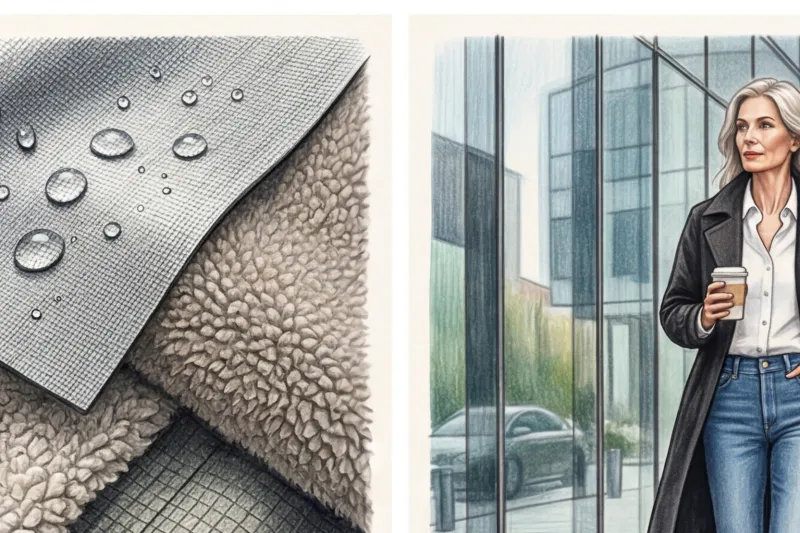
Fleece is the undisputed leader as a midlayer, an insulating layer for outdoor wear. Why is it replacing traditional wool? It's all about the weight-to-warmth ratio, as well as its hydrophobicity. Wool absorbs up to 30% of its own weight in moisture and takes a long time to dry. Fleece (from smooth Polartec until fluffy High-Loft ) absorbs less than 1% moisture. It traps warm air in the micro-weaves of synthetic fibers, remaining weightless and easy to care for—it can be machine washed even weekly.
Ripstop and Cordura fabrics ensure durability in outdoor gear. If you look closely at technical cargo pants or a backpack, you'll notice a fine, square mesh on the fabric. This is ripstop—thicker reinforced threads are embedded in the base weave at regular intervals. Even if you accidentally catch your sleeve on a sharp corner while transporting goods, the fabric won't tear more than a single square.
Access to MioLook for €0.99 — one-time payment
A smart AI stylist will create the perfect look and help you seamlessly integrate tech into your basic wardrobe.
Get access — €0.99 onceQuiet Outdoor: Why Gorpcore Clothing Is Suitable for Adults and the Office
There's a persistent stereotype: as soon as the phrase "gorpcore clothing style" is mentioned, the imagination helpfully conjures up images of a teenager in an acid-orange storm jacket, oversized pants with a dozen pockets, and aggressive trail running sneakers. Because of this visual cliché, many women over thirty dismiss the outdoor aesthetic as solely a youth or subcultural phenomenon. In fact, the most commercially successful branch of this trend right now is Quiet Outdoor (quiet outdoor). And it was created specifically for adults with high demands on their everyday wardrobe.
In my styling practice, one of the most frequent queries from executive clients is: "How do I get from my car to the office in November without ruining a €1,000 suit?" Wool jackets, silk blouses, and delicate cashmere coats are utterly invulnerable to wet snow and chemicals. And here's where a counterintuitive insight comes to the rescue: technical parkas are the perfect companions for a strict business dress code.
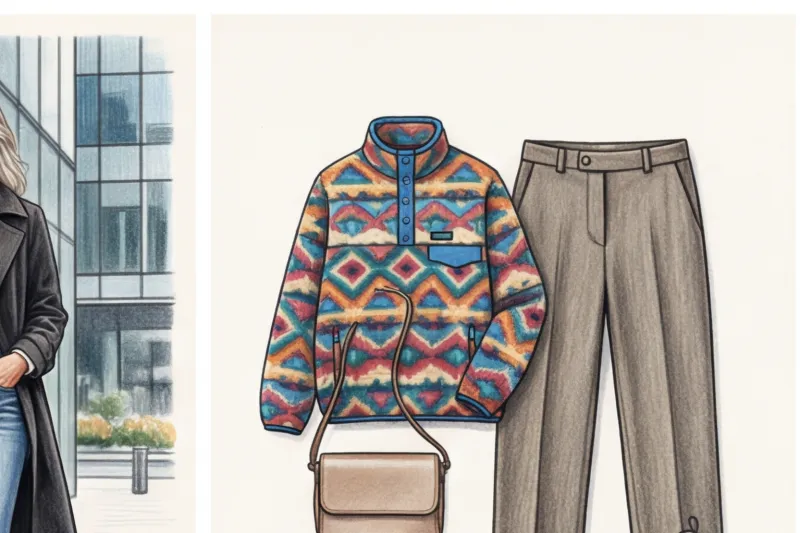
I regularly incorporate minimalist membrane jackets (for example, from the premium urban lines Veilance or Goldwin) into the wardrobes of corporate lawyers and top managers. They reliably protect expensive fabrics from moisture, and thanks to their precise, architectural cut, they look as classy as a classic coat. This doesn't ruin the professional look, but rather adds a pleasantly modern touch.
To integrate such pieces into a wardrobe for those in their 30s and 40s, I recommend focusing on three key principles: absolute minimalism, monochrome, and a complete absence of flashy logos on the chest or sleeves. In "quiet outdoor," all the technology is hidden within. Choose deep, refined shades: graphite, rich navy, sage, or warm camel. Instead of glossy nylon, look for matte textures that feel and look almost indistinguishable from heavy cotton but offer significant water-repellent properties.
The combination of classic and outdoor styles works amazingly well when you cleverly replace familiar elements with their technological counterparts. Let's look at some specific examples:
- Trench coat made of membrane fabric instead of gabardine. The classic cotton trench coat was a breakthrough a hundred years ago, but today it gets hopelessly soaked within ten minutes of a downpour. Models made from a three-layer membrane (ranging from €300–€600 from brands like Nanamica or Herno) maintain a recognizable silhouette with epaulettes and a belt, hold their shape well, and still function as a fully functional raincoat.
- Waterproof Chelsea boots instead of rubber boots. Forget heavy rubber boots that leave your feet sweating within an hour. Brands like Swims produce elegant leather or suede Chelsea boots with an integrated membrane and micro-tread. These look like neat urban shoes that look perfect with skinny pants and flowing skirts, but you can safely step into puddles without worrying about getting your feet wet.
Incorporating utilitarian pieces into a classic wardrobe requires a keen eye. Before buying an expensive shell jacket, try putting together outfits virtually. You can digitize your formal suits with MioLook and use the smart wardrobe feature to check how well a simple hardshell jacket will complement your everyday office outfits.
"The secret to successfully adapting outdoor styles for an adult audience is a balance of textures. A technical garment should look like it was made in a Jil Sander studio, not bought in a mountaineering shop," WGSN analysts note in their 2024 report on the development of functional fashion.
It is this approach that allows us to maintain elegance and status without sacrificing uncompromising comfort.
A stylist's guide to incorporating outdoor style into everyday looks.
Have you ever caught yourself thinking that in your new, expensive gear, you look like you're about to conquer mountain peaks rather than a business meeting or brunch downtown? In the styling industry, we call this common mistake the "lumberjack effect." It's a tricky stylistic and psychological trap: we buy a complete outfit from an outdoor brand because it looks organic and cohesive in the brand's lookbooks. But on the streets of the big city, a stiff shell jacket paired with trekking pants, a functional backpack, and mountain boots completely suppresses your individuality, turning you into a lost tourist.
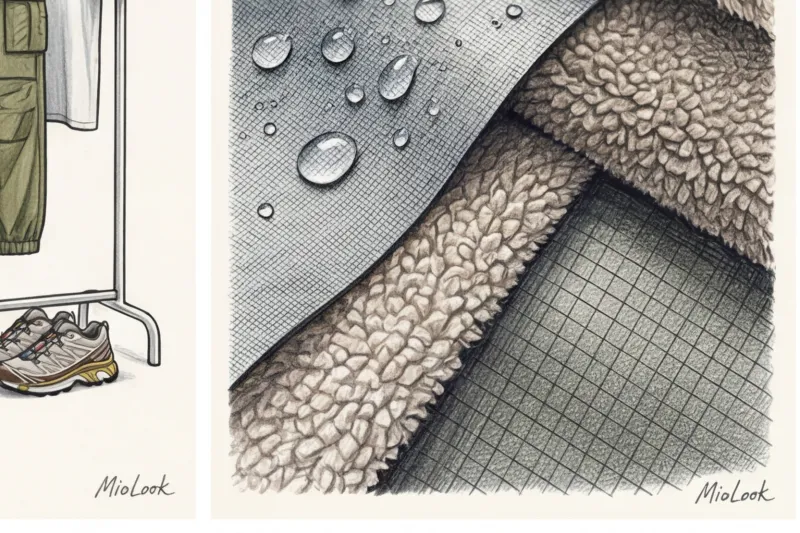
Gorpcore clothing works in an urban environment thanks to one concept: the theory of contrasts. Wearing everything touristy and functional at once is strictly discouraged. The secret lies in the intentional clash of opposing aesthetic worlds. Strictly tailored meets relaxed, high-tech synthetics meet natural fibers, and matte surfaces meet glossy ones.
To avoid getting your proportions wrong, use the golden 80/20 rule: your outfit should consist of 80% familiar urban, casual, or classic basics and only 20% technical outdoor accents. This is a mathematically precise formula that maintains elegance while adding the necessary dynamism to the look. For example: a tailored wool suit and a basic cotton shirt (our 80%), plus an accent fleece vest under the jacket instead of a classic vest (20% gorpcore).
Assembling such a complex multi-layered design on the first try can be challenging—you have to consider not only the density of the fabrics but also the weather conditions. In my practice, I constantly turn to technology for help and use smart wardrobe feature in the MioLook app AI algorithms not only help visualize images but also analyze the current weather outside, assessing the compatibility of textures. This insures against mistakes, ensuring that the delicate silk will not conflict with the tough Cordura, and that the multi-layered outfit will be comfortable in a specific temperature range.
Beginner level: safe combinations (fleece + denim, trail shoes + classics)
If you're just starting to explore a utilitarian aesthetic, don't immediately invest in complex architectural jackets costing hundreds of euros. Start with micro-substitutions in familiar formulas. The safest and most straightforward trick is to ditch the classic knit cardigan from your everyday wardrobe and replace it with a high-quality zip-up fleece. Paired with straight-leg jeans made of thick, non-stretch raw denim, this looks incredibly fresh. Unlike basic knits, which can stretch out at the elbows over time, technical fleece (especially Polartec materials) holds its shape perfectly and adds a put-together, casual feel.
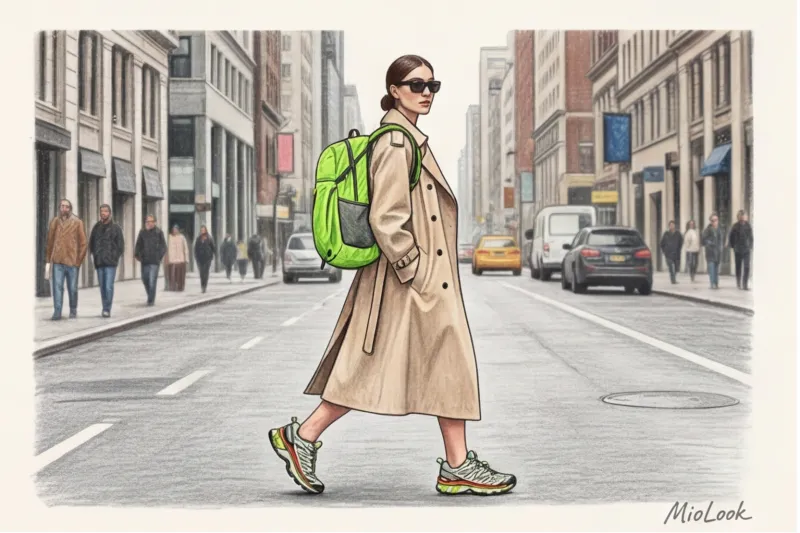
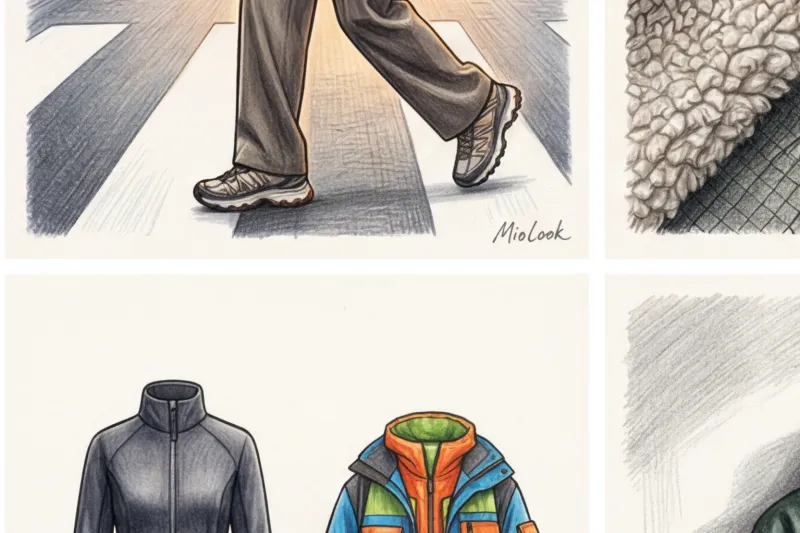
The second starting point is footwear. Forget the stereotype that aggressive tread is only for muddy forest trails. Chunky trail sneakers from giants like Salomon or Hoka (they typically cost in the comfortable €150-€250 range) have become an absolute must-have in street style chronicles. The biggest mistake beginners make is styling them with joggers or leggings, slipping into a banal sportswear look. My life hack for creating the effect of "quiet luxury with character": wear these rugged shoes with classic wide-legged palazzo pants with creases or flowy midi skirts. The exaggerated cushioning sole will create a powerful visual anchor, emphasizing the fragility of your ankles and the clean lines of your silhouette.
Try MioLook
for free
Start creating perfect layered looks based on the weather using AI.
Get access — €0.99 onceAdvanced level: play of silhouettes and textures
Once basic contrasts have been mastered, one can move on to complex architectural stylization. Here, outdoor aesthetics reveal themselves as the art of proportion. The primary tool for such experiments is hardshell jackets. Their uniqueness lies in their absolute rigidity: a waterproof membrane, taped seams, and massive YKK zippers create a structured garment that literally resists wrinkling and holds its own framework around the body.
Try layering a voluminous, slightly crisp hardshell over a tailored office jacket with pronounced shoulders. We recently implemented this technique for a IT director with a relaxed dress code: pairing a graphite business suit with a technical windbreaker in a deep moss shade. This created an intelligent clash of shapes that conveys confidence and modernity. A more sensual option is to layer a rough, utilitarian jacket over a delicate silk slip dress. The stiff synthetic material visually protects the vulnerable silk, creating a flawless yin and yang balance.
Another piece for an advanced level is wide-leg cargo pants made of thin parachute fabric (ripstop or nylon). To avoid direct and cheap references to 2000s R&B culture, completely avoid simple T-shirts and sweatshirts. I highly recommend pairing parachute pants with refined, premium textures: form-fitting bodysuits made of thick viscose, asymmetrical tops, or thin cashmere sweaters.
Cashmere, obtained from the undercoat of mountain goats (where the fiber diameter is less than 19 microns), is the quintessence of tactile luxury. When a jumper costing over €300 meets a utilitarian, rustling bottom, stylistic magic occurs: the smooth synthetic material of the trousers instantly highlights the matte finish and softness of the expensive knitwear, creating a look of depth and incredible sophistication.
Eco-Friendly and Outdoor: Investing in Quality and Durability
According to a 2023 report by the Ellen MacArthur Foundation, the average lifespan of a mass-market item today is only seven to ten wears, after which it's consigned to landfill. Against this backdrop, gorpcore clothing offers a completely different, much healthier paradigm for consumption. High-quality, high-tech gear is a direct and, perhaps, the most effective antithesis to fast fashion.
Let's look at wardrobe math and the concept of Cost Per Wear. You can buy a new trendy raincoat of dubious quality every fall for €60-€80. Mass-market items are tailored to last only one season: they lose their shape, rip at the seams, or lose their water-repellent properties after the first dry cleaning. Over five years, you'll spend about €350 on five cheap raincoats. The alternative? A single high-tech hardshell jacket for the same €300-€400, which will last you a decade. Function dictates durability: outdoor items have taped seams, laser-cut construction, and indestructible YKK hardware designed to withstand harsh mountain conditions. In the city, their lifespan is practically inexhaustible.
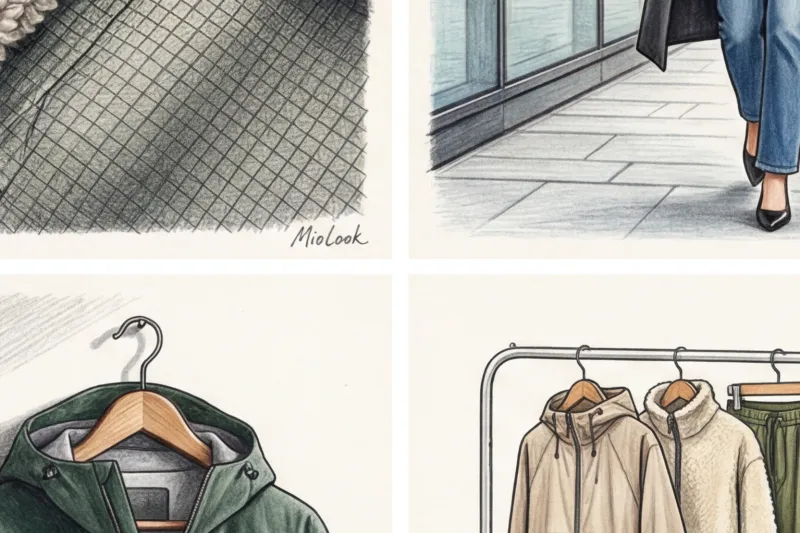
However, sustainability isn't just about buying less. My position as an eco-fashion expert obliges me to discuss the "dark side" of the tech industry. For many years, the famous "lotus effect" (when water droplets roll off fabric in beautiful beads) was achieved through toxic DWR (PFC) finishes. These perfluorocarbons—so-called "forever chemicals"—provided ideal moisture protection but were completely non-biodegradable, accumulating in the world's oceans. Fortunately, today the industry is undergoing a tectonic shift. Under pressure from environmentalists, leading brands are switching en masse to safer alternatives—C0 DWR, fluorine-free finishes based on polyurethane or plant-based ingredients.
Another important breakthrough is innovative work with secondary raw materials. Modern recycled nylon and polyester are in no way inferior to virgin materials in their properties and durability. The process of transforming ocean-caught or discarded plastic bottles into high-quality fleece is a true textile alchemy. The bottles are cleaned, crushed into flakes, melted, and spun into ultra-fine threads. It takes approximately 20–25 plastic bottles to create one dense fleece pullover. The result is premium insulation produced using 50% less energy and water.
"How can the average consumer understand that a brand truly cares about nature and isn't greenwashing? I always encourage people to look not at the green leaves on the labels, but at the presence of rigorous independent certifications."
When choosing a new technological item, pay attention to two main quality markers:
- Bluesign® — the gold standard in the outdoor industry. This certification means the organization has tracked every step of a garment's journey: from the dyes used in the yarn to the environmental impact of the factory's emissions.
- Oeko-Tex® Standard 100 — an unconditional guarantee that neither the fabric itself, nor the threads, nor the metal zippers contain toxic substances that are dangerous to humans in prolonged contact with the skin.
Given that a conscious wardrobe requires thoughtful investment, it's crucial to analyze how effectively your purchases are performing. I recommend digitizing your outdoor items and adding them to MioLook — a smart wardrobe manager will clearly calculate the actual cost of each outfit and prove that an expensive eco-friendly jacket pays for itself much faster than it seems at first glance.
A practical checklist: 5 essential items for an urban outdoor capsule
Just this past fall/winter season, I audited over fifty wardrobes, and the main stylistic problem we encountered was buying overly complex, highly specialized gear. gorpcore clothing style To ensure your gear works for you every day, rather than just hanging around like dead weight waiting for a trip out of town, you need a pragmatic approach. My golden rule: if a new tech item doesn't pair with at least three or four basic pieces from your current closet, it's a bad investment. Below is a curated checklist of five elements that create a functional urban mini-capsule.
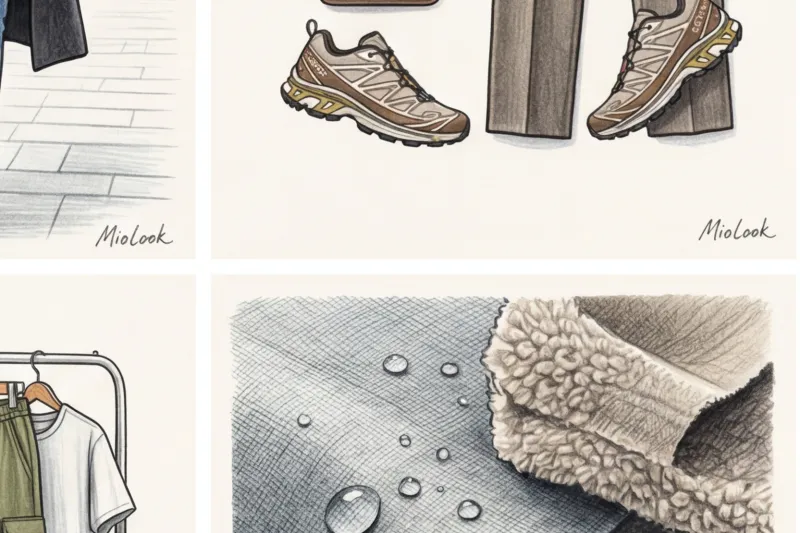
- A lightweight waterproof shell jacket in a neutral shade without unnecessary details.
Forget about contrasting taped zippers, an abundance of reflective material, and large logos. Your ideal base is a minimalist hardshell (in the €250–€450 range) in shades of khaki, graphite, wet asphalt, or muted navy. The idea is for the jacket to function as a versatile protective shell. It should look impeccable with straight-leg jeans, tailored wool trousers with creases, over an oversized cashmere sweater, and even contrasted with a satin midi skirt.
- A quality fleece pullover or vest.
This is your perfect midlayer. I always recommend choosing a style with a stand-up collar and a half-zip closure. A vest made of thick microfleece is a brilliant invention: it protects you from office drafts, allows for freedom of movement, and doesn't create unnecessary bulk in the sleeves. Wear it over a classic white shirt, a thin merino turtleneck, a basic long-sleeve top, or under a voluminous double-breasted blazer for a sophisticated textured look.
- Loose-fitting trousers with drawstrings (made of nylon or ripstop fabric).
The secret to the perfect urban outdoor pants lies in the elastic ankle clasps. They allow you to change the silhouette in a flash: from loose, relaxed palazzos to sporty joggers. Ripstop fabric, with its signature waffle texture, perfectly complements smooth urban fabrics. Pair them with a fitted knit bodysuit, a structured jacket, a silk top (if heading to an evening event), or a basic hoodie.
Your ideal image
it begins Here
Join thousands of users who look flawless every day with MioLook. Digitize your outdoor capsule wardrobe and discover new combinations in just a few clicks.
Get access — €0.99 once- Trail running shoes with a chunky sole (neutral or accent).
Trail running shoes with aggressive tread have firmly cemented their status as urban staples. According to statistics from the global fashion platform Lyst (2024), searches for trail running shoes consistently rank among the top 10 most coveted purchases. You can choose a neutral palette (beige, ecru, black) that will subtly blend into a business wardrobe, or make the sneakers the main color accent. They work brilliantly with a classic cotton trench coat, a loose-fitting pantsuit, tube jeans, and thick knit dresses.
- A tech accessory (a Cordura waist bag, a DWR bucket hat, or touchscreen gloves).
Sometimes, adding a utilitarian aesthetic to an outfit doesn't require a complete over-the-top outfit—the right detail is all it takes. A crossbody bag made of durable Cordura instantly takes the academic air out of a double-breasted coat. A waterproof bucket hat with a DWR coating saves your hair on a rainy day better than an umbrella, and touchscreen gloves made of windproof softshell allow you to navigate your smartphone in the cold. These elements easily integrate into everything from a formal maxi coat to a casual down jacket.
Common Mistakes: How to Avoid Looking Lost in the Woods
Analyzing street style reports from recent Fashion Weeks, I've increasingly noticed a dangerous trend: what looks brilliant in a photographer's lens against a backdrop of concrete walls often turns into a stylistic disaster in real life. By incorporating gorpcore into your everyday wardrobe, it's all too easy to cross the fine line between casual urban elegance and the look of someone who just returned from a multi-day trek and simply forgot to change. Let's explore the three main pitfalls that even seasoned connoisseurs of comfort fall into, and how to avoid them.
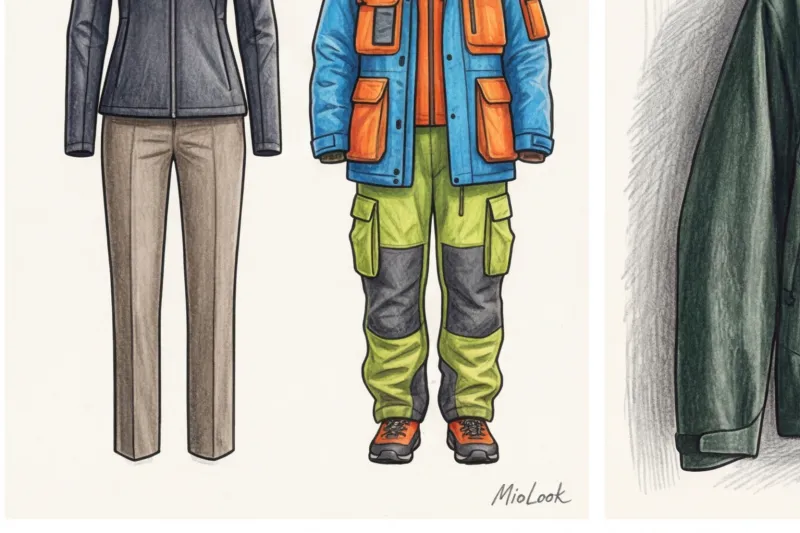
Mistake 1: Too many hardware and pockets. How to tame visual noise
Utility is inherently functional, which means it demands detail. Zippers, snap hooks, Velcro fasteners, drawstrings, and massive patch pockets all create what's known as "visual noise." If you wear six-pocket cargo pants, a storm jacket with taped contrast zippers, and a backpack with straps, the look falls apart. There's nothing to catch the eye.
Solution: My rule for image architecture is: "One utilitarian accent on a blank canvas." If you've invested in a sophisticated, technical anorak jacket (which can easily cost €250-€450 in the premium segment), it should be the star. Subdue it with perfectly sleek trousers without pleats or pockets, simple, sleek shoes, and a completely lack of visible hardware on your bag. Urban minimalism should absorb the excessive aggression of outdoor style.
Mistake 2: Out of proportion. If the jacket is oversized, the hem should be structured.
Membrane hardshell jackets and technical down jackets are almost always made with extra volume—in traditional hiking, this is necessary to accommodate an insulating layer. But in an urban setting, a bulky jacket paired with equally baggy trousers or wide-leg jeans turns the figure into a shapeless square, taking away height and adding visual weight.
Solution: Play with contrasting volumes. A voluminous, puffy, or stiff top calls for a crisp, structured bottom. Pair an oversized storm jacket with straight-leg jeans in thick denim, tapered suit pants, or even a straight-cut Miranda skirt. This will not only maintain the correct body proportions but also emphasize the deliberateness of your choice—you didn't wear this jacket by accident, but as a well-thought-out styling element.
Mistake 3: Wearing thermal underwear and hiking shirts as a standalone urban layer
Often, in our quest for maximum comfort, we begin to confuse layers. A base layer is essentially functional underwear. Form-fitting tops made of synthetic and merino wool blends, adorned with sporty flatlock seams and logos on the chest, look out of place in the office or a café and detract from the look. The same goes for thin hiking shirts with perforated backs and UV protection—their soft collars and shiny nylon fabric betray their strictly athletic purpose.
- What is unacceptable: Use sports thermal underwear with contrasting seams as a substitute for a turtleneck. Wear thin nylon trekking shirts untucked with classic jeans.
- What is acceptable: A smooth, 100% merino wool long-sleeve top with no visible logos can easily replace a basic top. If you still want to wear your favorite fleece or thermal t-shirt, make it an invisible layer: wear it under a thick, oversized cotton shirt, leaving only the top few buttons unbuttoned.
Technological clothing is here to stay, as we're no longer willing to sacrifice physical comfort for rigid aesthetics. But outdoor living in the city requires discipline. Before putting together a complex, multi-layered look, I recommend digitizing your basics. MioLook app The smart wardrobe feature lets you create collages right on your smartphone screen—this way, you can instantly see if your new functional parka clashes with the texture of your office pants, and balance the proportions even before you go to the mirror.
Guide Chapters
Gorpcore Accessories: Backpacks, Sunglasses, and Bucket Hats in the City
Technological outdoor accessories have become the new status symbol. We explore how to seamlessly incorporate them into your everyday wardrobe without compromising your style.
Style Guide: The Difference Between Gorpcore, Techwear, and Streetwear
A Supreme hoodie, an Arc'teryx jacket, or ACRONYM pants? We're exploring modern clothing styles to avoid awkward cosplay and build a foundation.
Gorpcore Winter: How to Wear Membrane Stylishly in Cold Weather
Forget heavy sheepskin coats and uncomfortable fur coats. We'll show you how to stylishly layer and wear technical clothing in freezing temperatures.
Gorpcore Summer: How to Wear Outdoor Style in the Heat
How to adapt technical gear for hot city days. We explore stylish looks with shorts, bucket hats, and trekking sandals.
What to wear with a women's fleece sweater in the city
Fleece is no longer associated solely with hiking and the countryside. We'll show you how to elegantly incorporate a fleece jacket into your basic urban wardrobe.
The Best Gorpcore Brands: Where to Buy Clothing
We're breaking down the top brands for creating the perfect outdoor look in the city. Find out what's truly worth investing in to avoid looking like a mushroom hunter.
Gorpcore: How to Combine Sportswear with Casual Wear
Bought a membrane jacket, but it doesn't look right with your office essentials? Let's explore how to seamlessly incorporate tech pieces into your everyday style.
Gorpcore is the new luxury: history and key features
Functionality has become the new luxury. Learn how to elegantly integrate tech into a successful woman's everyday wardrobe.
What to wear with women's cargo pants: stylist tips
Utilitarianism is trending: learning to apply the "radical contrast" rule. Learn how to incorporate rugged cargo pants and joggers into luxurious and elegant looks.
Gorpcore Women's Style: Fashionable Looks for Everyday Life
Gorpcore proves that technical and warm clothing can be elegant. Learn how to incorporate comfortable outdoor pieces into your everyday wardrobe.
Gorpcore Essentials for Your Wardrobe
We'll explore how to integrate the utilitarian trend into everyday looks. 7 essential elements for creating a stylish and comfortable urban wardrobe.
What to wear with women's trekking boots in the city
Trekking footwear has long since transcended mountain trails and conquered the streets of major cities. Let's explore how to incorporate outdoor aesthetics into your everyday wardrobe.