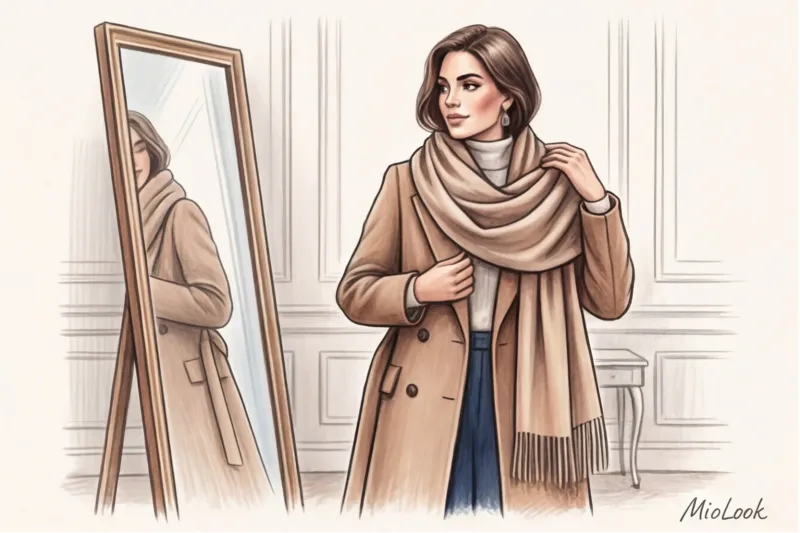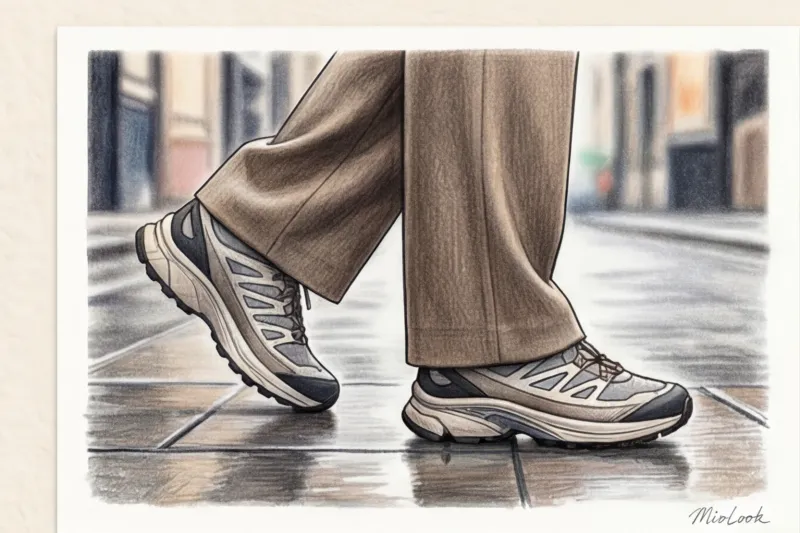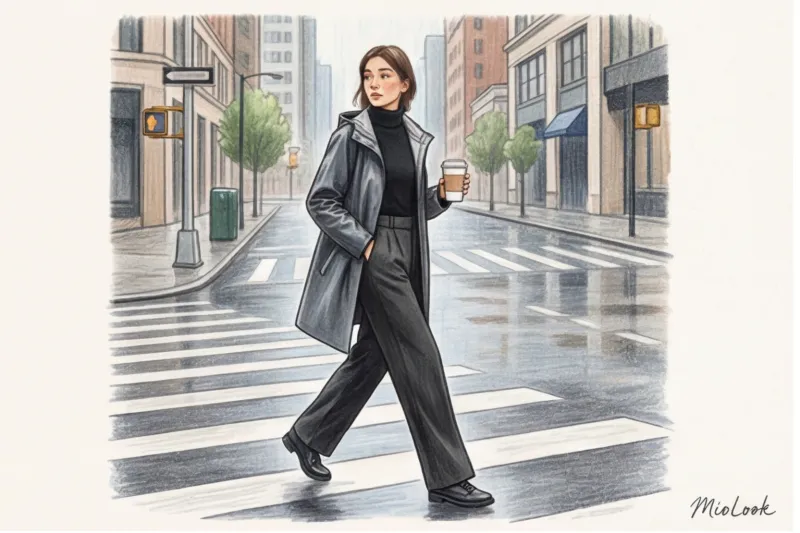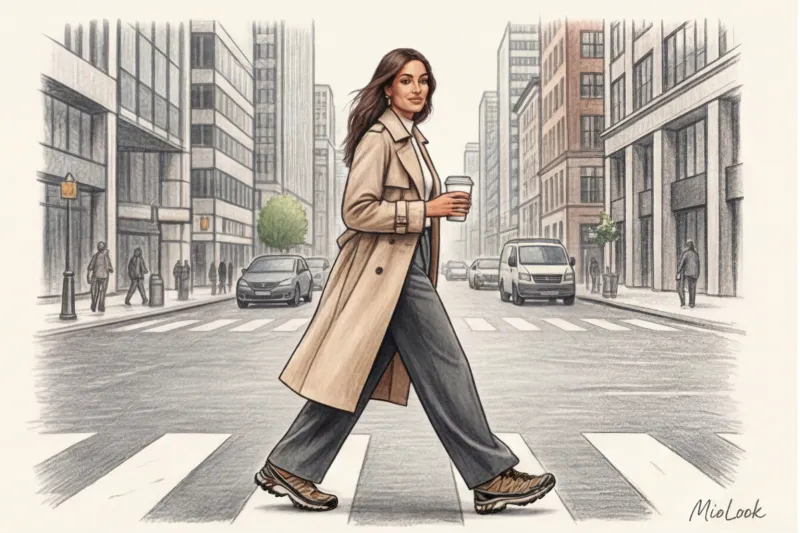
Last year, I conducted an experiment: I wore chunky Salomon XT-6 trail running shoes for 30 days straight on the streets of autumnal New York City. I deliberately paired them with flowing silk skirts, tailored three-piece suits, and cashmere coats to gauge the reactions of those around me and, most importantly, my comfort level. The result? No aching joints by the end of the day, no more questions from colleagues like "Where did you buy that pair?" and a strong desire to retire my stiff loafers forever.
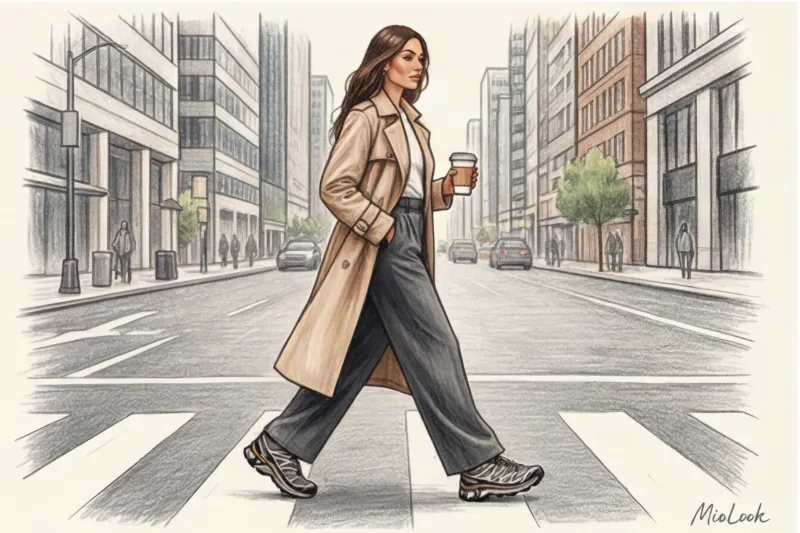
According to statistics, approximately 68% of women in large cities experience discomfort in classic city shoes by the middle of the workday. This is why the aesthetic celebrating utilitarian outdoor gear has so quickly taken over our wardrobes. We explored how this phenomenon has changed the industry in more detail in our The complete guide to gorpcore clothing style But today I want to focus on practice and answer the main question: What to wear with women's trekking boots so as to look modern, and not like a tourist who has fallen behind the group in the mountains.
Why Tech Shoes Have Become the New Essential: From Mountain Trails to Asphalt
A tectonic paradigm shift has occurred in urban fashion: health and functionality have finally triumphed over uncomfortable glamour. According to The Lyst Index's 2024 report, searches for brands like Salomon and Roa have increased by 45% compared to last year, with searches shifting to street style rather than tourism.
The secret to their popularity lies in the design of the shoes themselves. The Gore-Tex membrane keeps feet dry in pouring rain. The rigid tread prevents slipping on wet tiles. The quick-lace system (like Salomon's) saves minutes in the morning. This isn't a one-season microtrend, but a long-term investment in a smart wardrobe where form strictly follows function.
If you calculate the cost-per-wear (cost per outing), high-quality hiking boots costing around €150–€200 pay for themselves faster than any leather ankle boots. In harsh urban environments (chemicals, puddles, temperature fluctuations), they easily last 3 to 5 years, reducing the cost per wear to just a few cents.
Access to MioLook for €0.99 — one-time payment
A smart AI stylist will select the perfect everyday look and help you incorporate trekking shoes into your wardrobe.
Get access — €0.99 onceThe 70/30 Rule: A Guide to Styling Outdoor Footwear in the City
Over 12 years of working as a stylist, I've developed a mathematically precise algorithm for implementing complex trends for my clients. I call it the principle of "stylistic friction." The ideal look shouldn't be too perfect—it needs conflict.
For outdoor footwear, the 70/30 formula works. This means that 70% of your outfit should be decidedly urban, classic, or even refined (a wool coat, a structured jacket, silk, or tailored denim). Only 30% should be dedicated to functional outdoor pieces—the sneakers themselves and perhaps a technical nylon bag.
"Trekking boots are like a spice in the city. If you add a pinch to a classic recipe, the dish will sparkle with new colors. If you empty the entire jar, it will be edible," is how I usually explain this principle when sorting out my wardrobe.
Don't forget about volume management. Hiking shoes visually weigh down the foot due to their aggressive tread. A chunky bottom requires a balanced top: use an oversized cut, accentuated shoulders on jackets, or layering to prevent the silhouette from appearing disproportionate.
What to wear with women's trekking boots: 4 proven formulas
Theory is great, but let's move on to ready-made patterns. I've compiled four combinations that you can add to your wardrobe planning app right now. These formulas are built on contrasting textures and volumes.
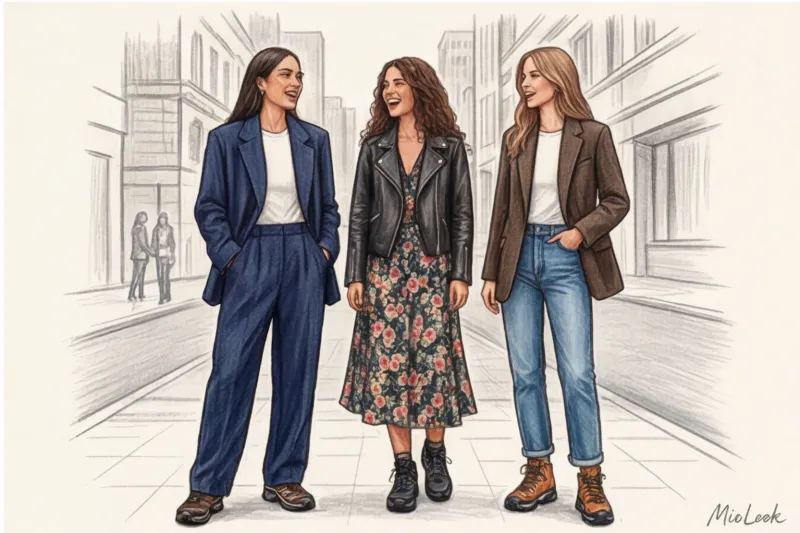
Formula 1: Office Sabotage (with pantsuit)
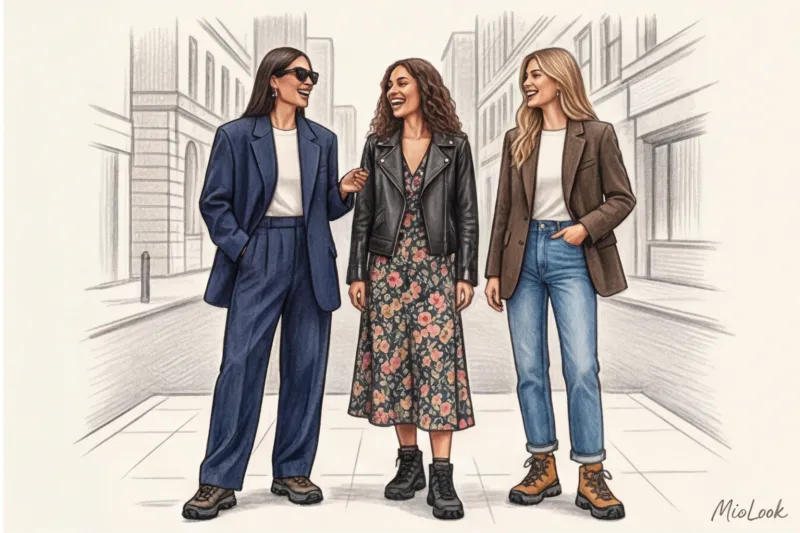
One of my clients, an art director at a major advertising agency, complained about constantly getting tired of her classic loafers. We replaced them with chunky Hoka trail shoes. Paired with a relaxed two-piece suit, this had a stunning effect: her daily activity increased by 40% (she started walking to the subway), and her office status remained unchanged.
How to repeat: Choose wide-leg, pleated-waist trousers (palazzo-length) made of a thick suiting fabric. The leg should fall slightly over the sneaker, covering the laces and leaving only the rugged toe and tread visible.
When it does NOT work: If your company has a strict corporate attire (for example, you're a lawyer at a conservative firm), this trick is inappropriate. This formula is designed for the creative class, IT, and modern marketing.
Formula 2: Opposites Attract (with flowing skirts)
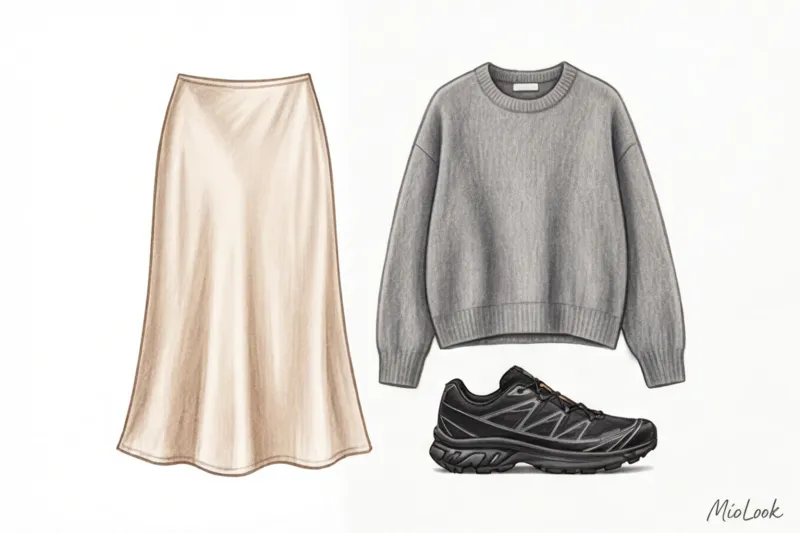
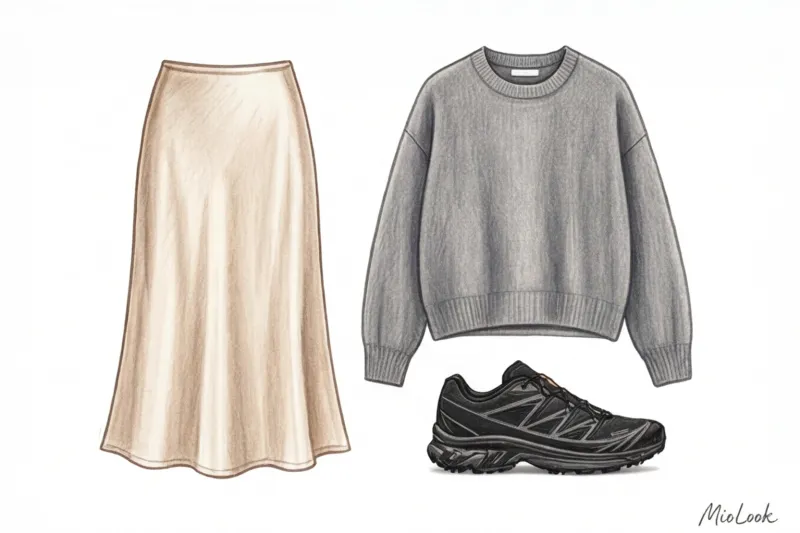
The most beautiful visual clash occurs when the aggressive Vibram sole collides with the delicate, flowing silk or satin. It's the perfect choice for a date or a trip to an exhibition.
How to repeat: Opt for a silk midi or maxi skirt (above-the-knee length with chunky boots will cut off your legs). To balance out the lightweight bottoms, layer a chunky merino sweater or a hand-me-down men's blazer.
Your perfect look starts here
Join thousands of users who look flawless every day with the MioLook app. Upload your items and get ready-made looks in seconds.
Get access — €0.99 onceFormula 3: Smart Casual (with straight denim and a trench coat)
A great way to update a basic spring or fall look. Swap your usual white sneakers for statement-making hikers with a complex design. A classic beige, below-the-knee trench coat will act as a softer layer for your sneakers.
How to repeat: The length of your jeans is key. Choose either straight-leg or barrel-leg styles that end just above the ankle, showing off a thick, textured toe, or long, wide jeans. Avoid skinny jeans—paired with chunky shoes, they'll make your legs look like skis.
Formula 4: Weekend Minimalism (with stirrup leggings)
Many people are afraid to wear trekking boots with tight-fitting hems. But if you pair them with thick leggings with stirrups (pulled over the sneakers), you'll get incredibly long legs and an architectural silhouette.
How to repeat: The main rule here is to keep your groin covered. Wear a long white shirt and a voluminous turtleneck sweater. You'll get a Princess Diana-inspired look, but with a modern twist.
The biggest mistake newbies make: the "lost tourist" syndrome
Intuition often prompts us to make obvious, yet incorrect decisions. The main myth I hear from girls is: "If these are sports shoes, then the clothes need to be appropriate." No and again no.
A contrarian insight worth remembering: if you wear trekking shoes with a shell jacket, rustling ripstop cargo pants, and a duffel bag, you won't look like a street style star. You'll look like you're lost on the way to Everest Base Camp.
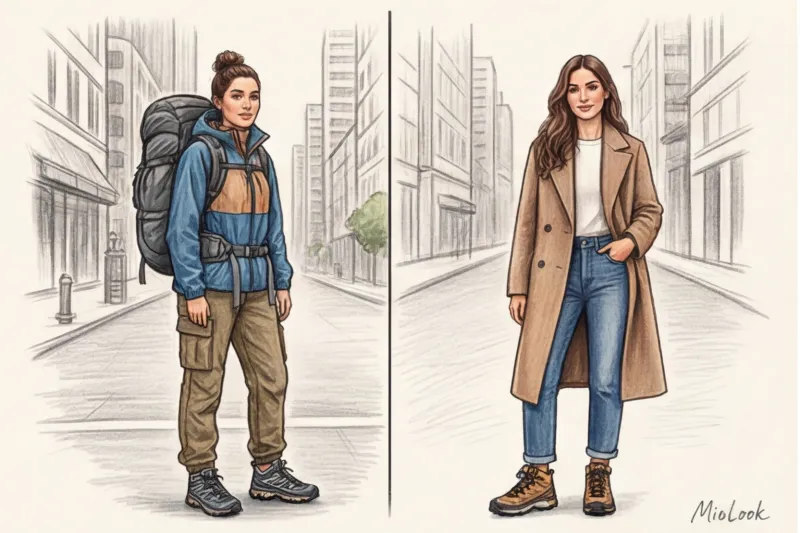
The danger of a "full outfit" in the city is the lack of that very stylistic tension. The brain reads this image literally, finding no aesthetic mystery in it. Always balance functional elements. If you're wearing a technical Arc'teryx jacket and hiking boots, pair them with smart suit pants and a rigid leather bag.
From Salomon to Roa: Which Models to Choose for Your Urban Capsule
Choosing your first pair is a responsible process. The market is overflowing with models, but not every pair will fit into a city wardrobe. Technical data from sole manufacturers (in particular, the legendary Italian company Vibram) shows that the distribution of load on the foot when walking on hard asphalt differs from walking on unpaved surfaces. You need shoes with good cushioning (EVA foam in the midsole), not just aggressive studs.
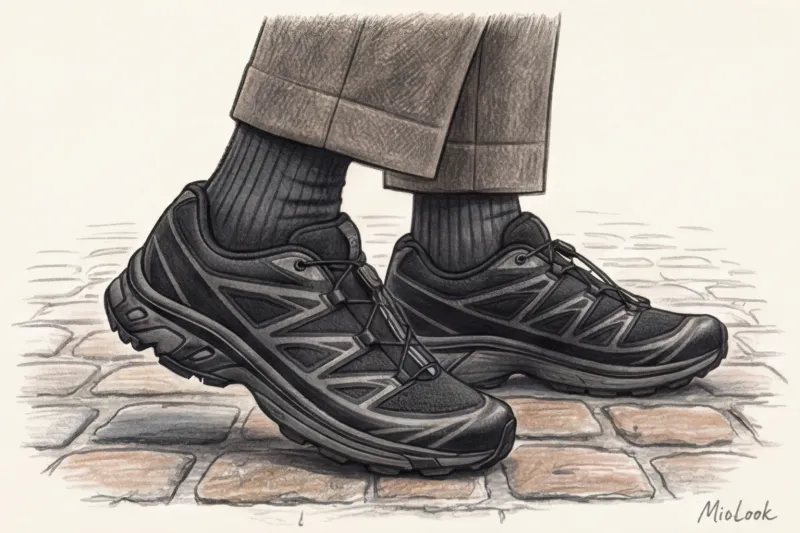
- For minimalists: Monochromatic models. All-black, graphite, or beige sneakers (for example, the Salomon XT-4 OG or Hoka Clifton 9 GTX). From a distance, they resemble a chunky base and easily blend into a business casual look.
- For advanced users: Color blocking and bright details. Brands like Roa Hiking or Merrell often use contrasting neon laces or bright accents. These pairs require masterful color management throughout the entire look.
- Silhouette: Low-cut trail running shoes (for running on uneven terrain) are more versatile than mid-cut hiking boots that cover the ankle. The latter are more difficult to style with pants and skirts.
Quality outdoor footwear typically starts at €150 and goes up to €300 for limited collaborations. Don't try to save money by buying fakes—you'll only get the appearance of a tread without the real orthopedic support and breathable membrane.
Ready to get started?
Upload a photo of your new sneakers to MioLook, and the neural network will suggest dozens of combinations with your other items.
Get access — €0.99 onceStylist Checklist: 5 Steps Before Buying Your First Pair
I love a systematic approach. Before you click "Pay," run your chosen pair through this shortlist.
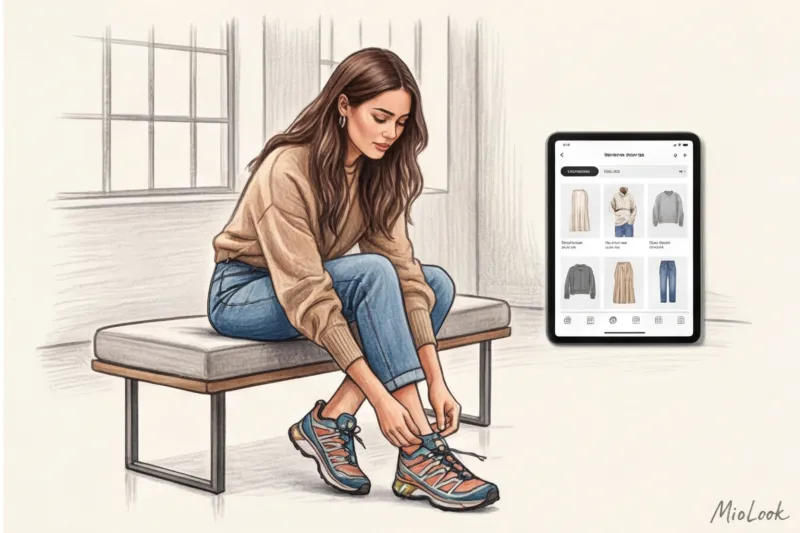
- Compatibility Check (Capsule Math): Can you create at least five different looks with these boots right now, without buying any new ones? If the answer is "no," choose a more neutral colorway.
- Climate analysis: Do you really need Gore-Tex? The membrane protects you from rain and slush, but in an office with powerful heating, it will be uncomfortable for your feet. If you spend 80% of your time indoors, choose models with a breathable mesh.
- Size allowance: Urban socks, even thick, textured ribbed ones, add bulk. Order trekking shoes half a size larger than your standard size.
- Cost-per-wear calculation: Divide the pair's price in euros by the expected number of exits over 3 years. If the amount is less than €1, it's a great deal.
- Digital integration: Add a photo of your shoes to smart wardrobe feature in MioLook Check out how your new sneakers pair with your favorite coats and pants on a virtual canvas.
Outdoor footwear in the big city is a manifestation of a confident woman who values her time and health above imposed stereotypes about "proper" beauty. Allow yourself this comfort. Buy a pair you've been thinking about, wear them with the most beautiful wool suit in your closet, and enjoy how effortlessly you outpace the crowd on the subway.