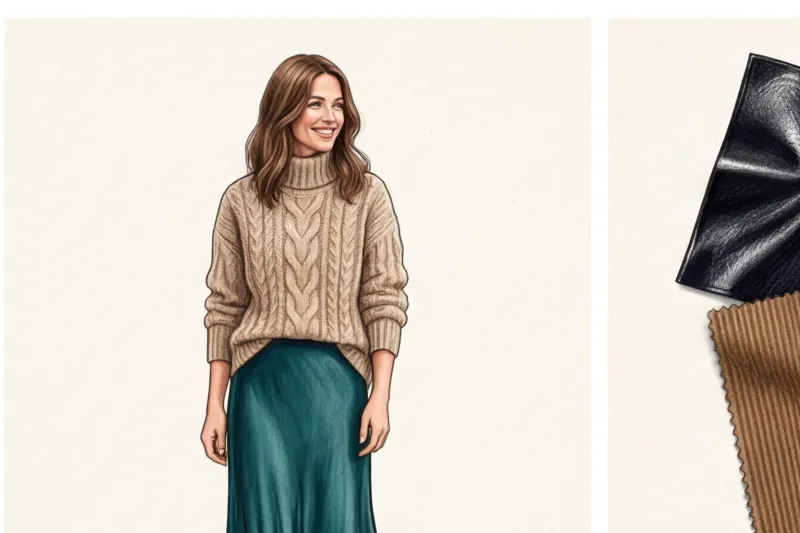
Чи помічали ви, як часто ми несвідомо торкаємося свого одягу в моменти стресу чи задуму? Погладжуємо рубчики на вельветовому жакеті, перебираємо бахрому на шарфі або проводимо рукою по прохолодному шовку. В епоху, коли ми проводимо по 8-10 годин на день, дивлячись у абсолютно плоскі скляні екрани смартфонів та ноутбуків, наше тіло зазнає тактильного голоду.
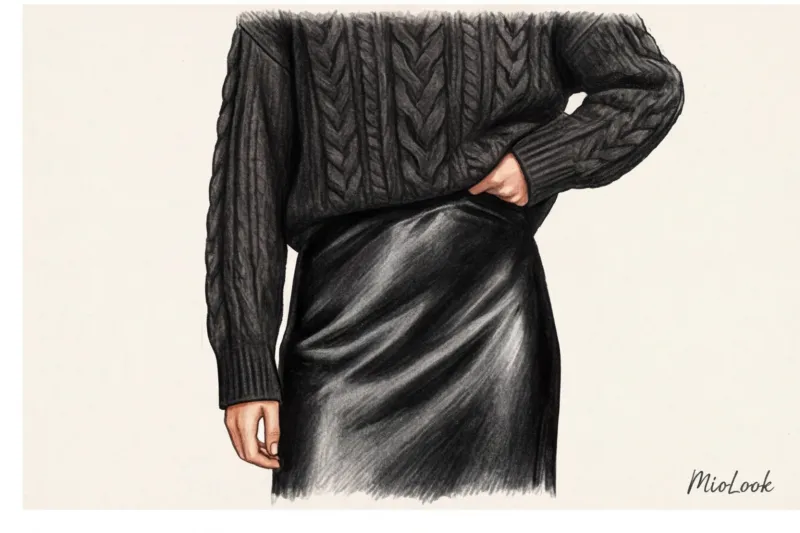
Аналітика глобального тренд-бюро WGSN називає це явище «tactile dressing» (Тактильний гардероб). Ми більше не хочемо просто «гарний» колір — нам потрібний одяг, з яким цікаво взаємодіяти фізично. Грамотне поєднання фактур в одязі стало головним інструментом сучасних стилістів, витіснивши складні схеми кольорів. Детальніше про це ми розповіли у нашому повному гіді за багатошаровістю в одязі , а сьогодні я хочу розібрати фізику та анатомію цього прийому.
Чому правильне поєднання фактур в одязі працює краще ніж гра з кольором
Людське око влаштоване так, що воно швидко починає нудьгувати від монотонності. Рівна, однорідна поверхня не дає мозку зачепитися за деталі. Саме тому тотал-блек образ з однієї матової бавовни часто перетворює фігуру на плоску пляму — я жартома називаю це «ефектом чохла для танка». Одяг зливається, обсяги спотворюються, а образ виглядає плоским.
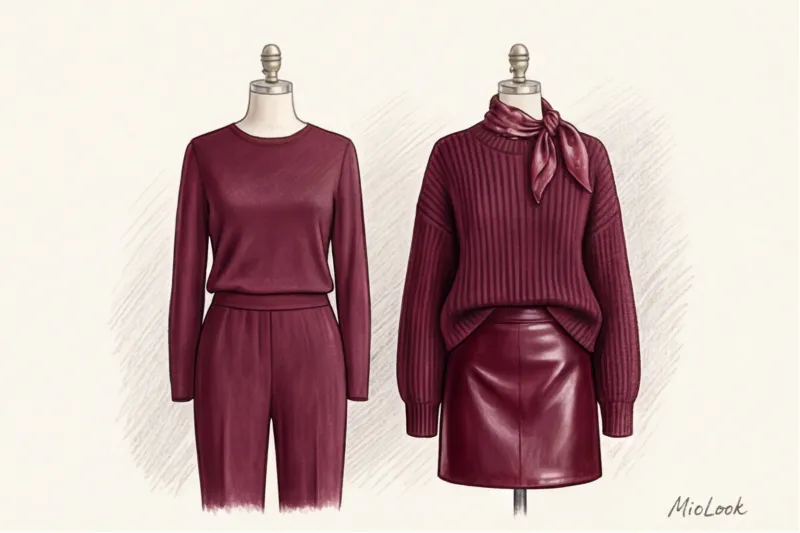
Секрет «дорогого» мінімалізму криється у фізиці світла. Коли ми надягаємо речі одного кольору, але з різною текстурою поверхні, світло заломлюється по-різному. Це створює ілюзію складного дизайнерського задуму, навіть якщо на вас одягнені базові речі з мас-маркету.
Фізика світла: матові, глянсові та ворсові поверхні.
Щоб зрозуміти, як нашарувати речі, потрібно навчитися ділити їх на категорії зі світловідбиття:
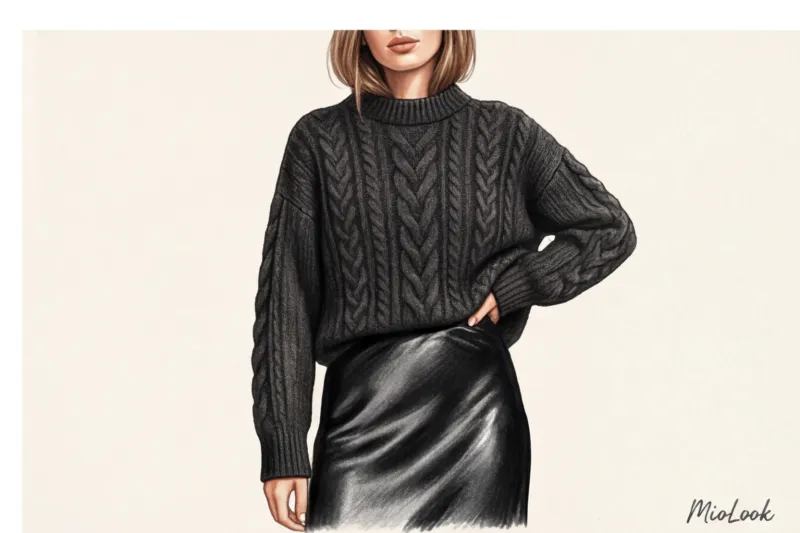
- Глянцеві тканини (шовк, атлас, полірована шкіра): Це ваш хайлайтер. Відповідно до законів оптики, натуральний шовк відбиває до 30-40% більше світла проти матової вовною. Такі тканини привертають увагу до зони, де знаходяться, і візуально роблять образ більш динамічним.
- Матові та поглинаючі світло (вовна, денім, замша, льон): Це ваш бронзер чи скульптор. Вони створюють глибину, приховують обсяги та заспокоюють образ.
Золоте правило балансу, яке я використовую в роботі з клієнтками: на одну фактуру, що відображає, в образі повинно припадати дві поглинаючі. Інакше ви ризикуєте виглядати як новорічна ялинка.
Формула ідеального розмаїття: шовк, вовна, шкіра та денім
За 12 років практики я вивела собі безпрограшний чит-код. Коли ви стоїте перед шафою і не знаєте, що одягти, просто візьміть «велику четвірку» фактур: гладкий шовк, грубу шерсть, щільний денім та шкіру. Якщо змішати в одному вбранні хоч би три з них, образ складеться автоматично.
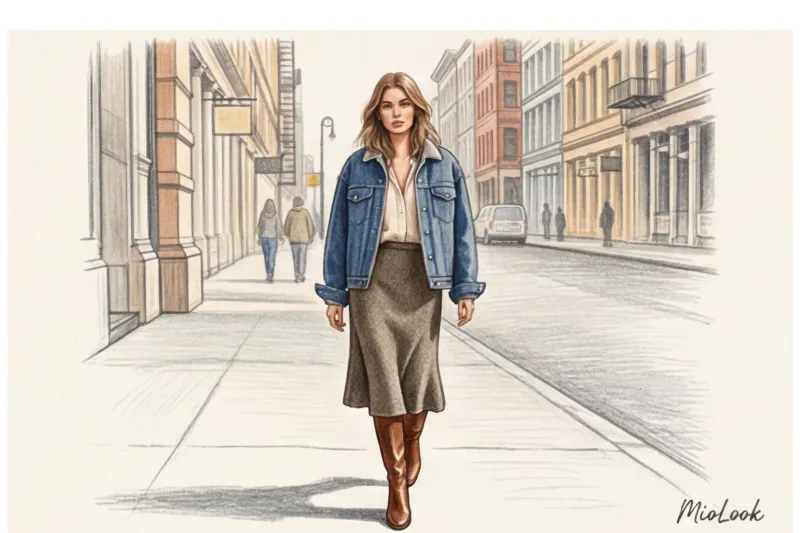
Якось до мене звернулася клієнтка, яка скаржилася, що її базові речі виглядають «простенько». На ній були чудові джинси (від 80 €, хороша щільна бавовна), шовковий топ і гладкий бавовняний кардиган. Я просто зняла з неї бавовну і надягла поверх шовку об'ємний, трохи колючий светр із фактурної альпаки. Конфлікт ніжного шовку, що струмує, і грубої, ворсистої вовни миттєво зробив образ статусним. Дорогі образи завжди будуються на стилістичну напрузі.
Доступ до MioLook за €0,99 — разовий платіж
Розумний AI-стиліст підбере ідеальний образ на основі ваших речей
Відкрити доступ — €0,99 разовоГладка шкіра та ніжний шовк: гра на різниці температур
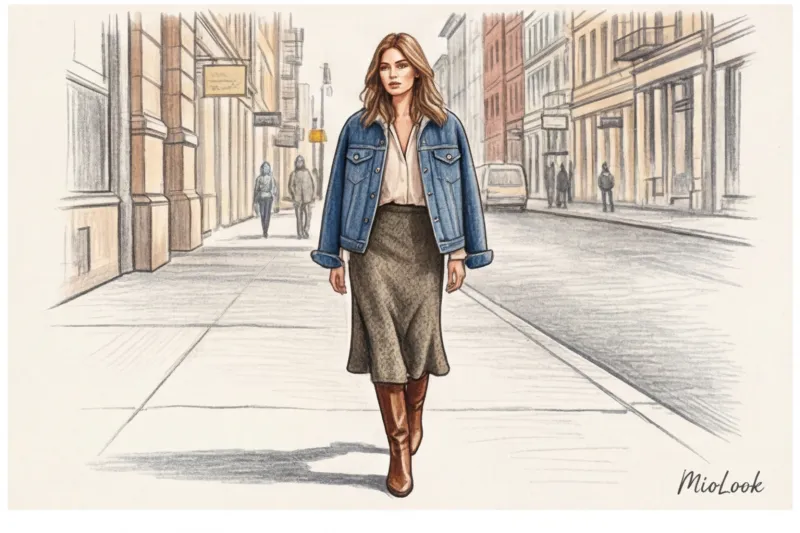
Візуально шовк сприймається як щось «прохолодне» і тендітне, а шкіра як брутальне і важке. Надягаючи об'ємний жакет із гладкої шкіри поверх шовкової комбінації, ви збиваєте градус вечірнього пафосу шовку, адаптуючи його для міських буднів.
Як еко-ентузіаст, я закликаю уважно ставитись до вибору цих матеріалів. Шукайте шкіру рослинного дублення (vegetable-tanned leather), яка згодом набуває красивої патини. А для нижнього шару відмінно підійде мирний шовк (peace silk) або щільна віскоза високої якості як альтернатива.
Груба вовна та денім: архітектура кежуал-образів
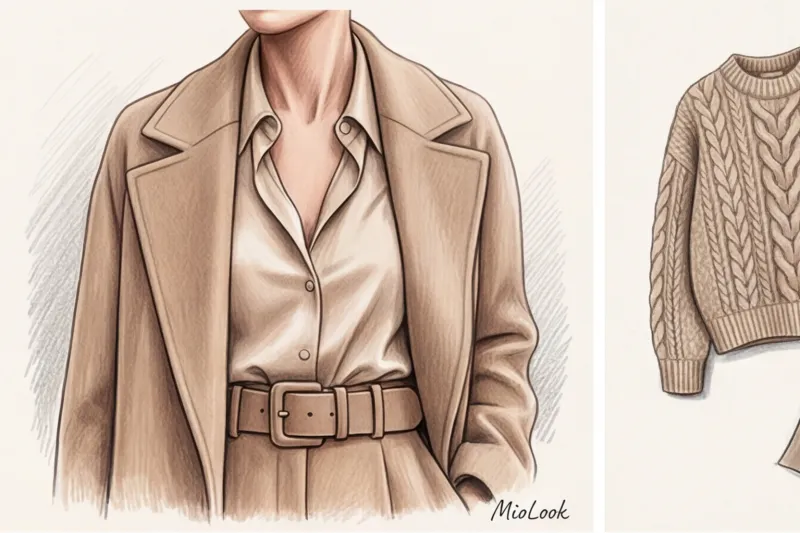
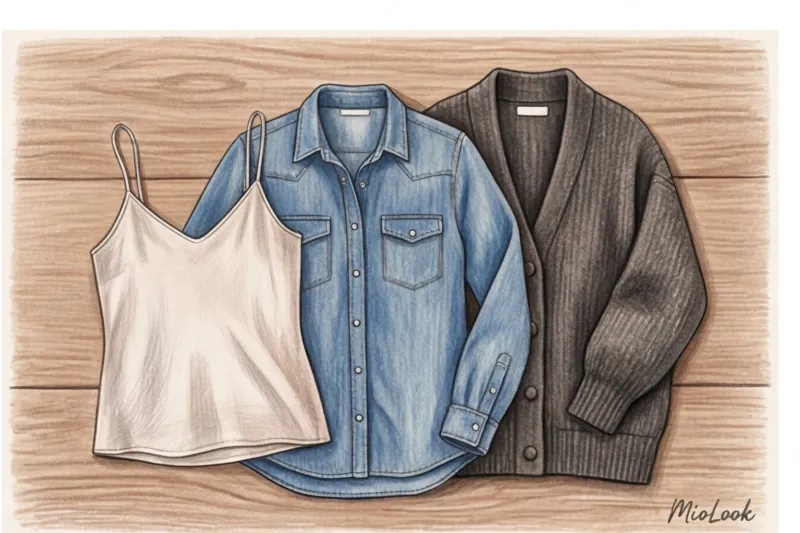
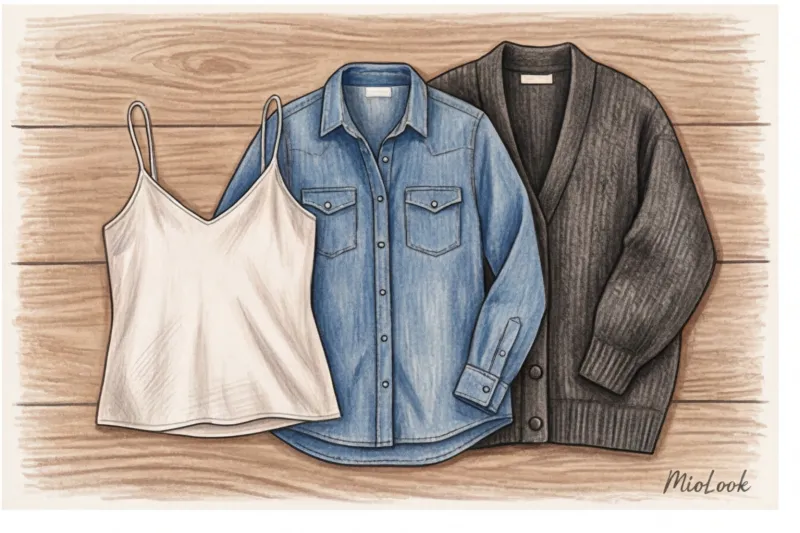
Денім – це архітектурний матеріал. Він тримає каркас як стіни будинку. А об'ємна вовна (мохер, альпака) – це затишне наповнення. Спробуйте надіти водолазку з мериноса, зверху — цупку сорочку з деніму (не застібаючи), а поверх — об'ємний кардиган великої в'язки. Три різні текстури створять ідеальний теплий кокон.
Правило щільності тканин: як нашарувати речі та не виглядати більше
«Я боюся багатошаровості, тому що вона мене сповнює», — цей страх я чую майже на кожній консультації. І його виправдано, якщо порушувати правило GSM.
У текстильній промисловості щільність тканини вимірюється у GSM (grams per square meter — грами на квадратний метр). Наприклад, щільність шовкової блузи становить близько 50-80 GSM, а гарного осіннього пальта від 400 GSM і вище. Щоб багатошаровість не перетворювала вас на «капусту», використовуйте принцип градієнта щільності: нижній шар завжди повинен мати меншу вагу, ніж верхній.
Різниця між сусідніми шарами має становити мінімум 100-150 GSM. Що буде, якщо порушити правило? Уявіть, що ви одягли тонкий кашеміровий джемпер поверх твердої джинсової сорочки. Крізь м'який кашемір проступлять жорсткі шви коміра, гудзики та заломи деніму. Пропорції зламаються, а ви виглядатимете неохайно. До речі, це правило відмінно працює у тандемі з правилом третьої речі в одязі , що ми обговорювали раніше.
Екологічний підхід: як якість волокна впливає поєднання фактур
За даними звіту Textile Exchange за 2024 рік, ринок переробленої вовни та екологічних альтернатив зростає на 15% щорічно. І це чудова новина не лише для планети, а й для наших гардеробів. Справа в тому, що дешевий поліестер не здатний дати красивого фактурного розмаїття.
Гладка поліестерова спідниця і акриловий светр не створять тієї самої магії відбиття світла. Синтетика блищить плоско, «пластиково», і не має тієї мікротекстури, яка робить натуральні тканини живими.
Мій особистий тактильний тест у магазині:
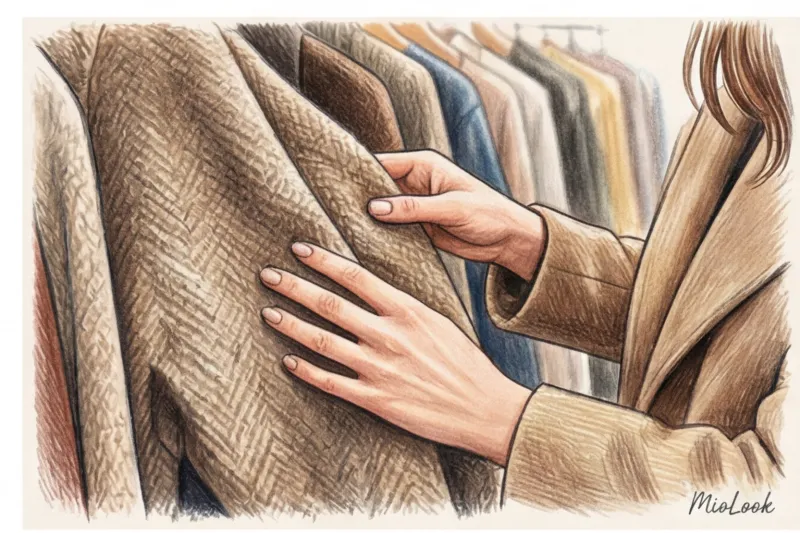
Коли я вибираю речі для нашарування, я тру рукав потенційної покупки про її ж поділ або про річ, з якою планую її носити. Якщо при терті відчувається сильний електричний опір або скрип — річ швидко покриється катишками під час носіння під пальто. Чесне обмеження: цей тест не працює з речами з преміум мас-маркету (на зразок COS або Massimo Dutti), які на фабриці рясно покривають силіконовим фінішом для блиску - вони заскриплять у будь-якому випадку до першого прання.
Ваш ідеальний образ починається тут
Приєднуйтесь до тисяч користувачів, які щодня виглядають бездоганно з MioLook.
Відкрити доступ — €0,99 разовоПомилки новачків: які фактури «вбивають» один одного
Існує залізобетонний міф: «моно-фактурні образи виглядають більш статусними». Багато хто думає, що якщо одягнути кашемірові штани з кашеміровим светром і закутатися в кашемірове пальто тон-в-тон, то вийде образ дружини мільярдера. Насправді глухий, моно-фактурний костюм робить силует плоским і візуально додає вік.
Ось три головні помилки при створення дорогих образів через поєднання фактур в одязі:
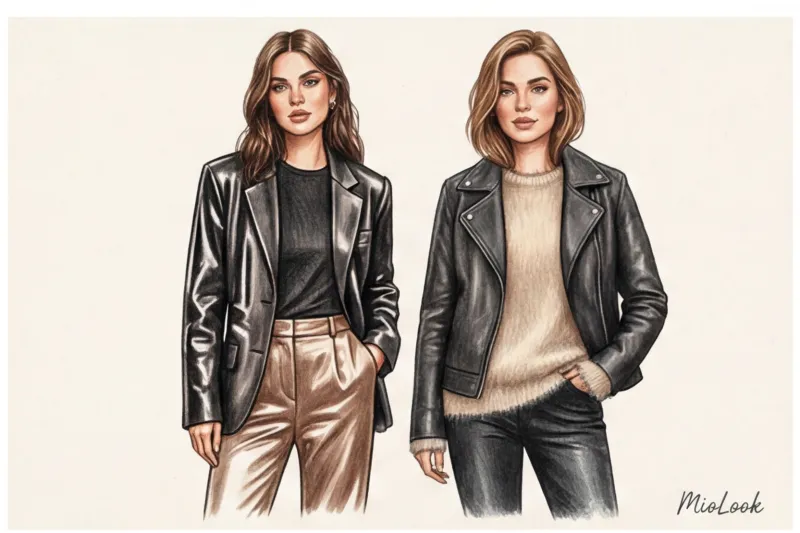
- Помилка двох глянців: Шкіряна куртка у поєднанні з атласними штанами створює ефект поліетиленового пакету. Обидві фактури сперечаються за право відбивати світло. Замініть атлас на матову вовну.
- Конфлікт сезонності: Щільний зимовий твід і тонкий літній льон поряд виглядають так, ніби ви збиралися поспіхом і переплутали сезони в шафі. Льон надто пухкий, щоб витримати візуальну вагу твіду.
- Однакова щільність: Надягаючи щільну бавовняну худорляву під таку ж щільну бавовняну куртку-сорочку, ви штучно збільшуєте себе на пару розмірів. Шари повинні мати різну товщину.
Чек-лист: збираємо складний багатошаровий образ за 5 хвилин
Щоб не стояти перед дзеркалом у розгубленості, використовуйте цей алгоритм збирання образу:
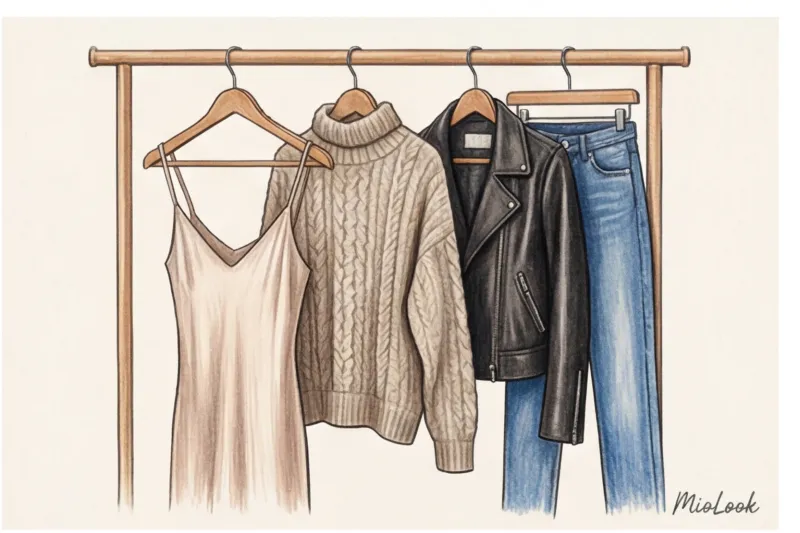
- Крок 1. Полотно: Вибираємо базовий матовий шар, що поглинає світло. Наприклад, класичні прямі джинси чи вовняні штани.
- Крок 2. Відблиск: Додаємо світловідбиваючий елемент ближче до обличчя або талії. Це може бути шовковий топ, гладка віскозна сорочка або навіть просто глянсовий шкіряний ремінь (відмінна альтернатива тим, хто не носить шовк).
- Крок 3. Архітектура: Вводимо жорсткий формотворний елемент. Надягаємо поверх топу жакет із щільної шкіри (від 150 € за хороший еко-варіант) або куртку з важкого деніму.
- Крок 4. Хмара: Якщо на вулиці холодно, завершуємо образ чимось ворсистим і м'яким — накидаємо на плечі светр із альпаки або пов'язуємо об'ємний фактурний шарф.
Тримати всі текстури у голові буває складно. Щоб не перебирати речі вранці, мої клієнтки завантажують фотографії свого гардеробу в MioLook. Розумний AI-алгоритм допомагає заздалегідь візуалізувати ці комбінації, комбінуючи матові штани з глянцевими топами без необхідності приміряти все на себе.
Наступного разу, коли вам здасться, що вашому образу «чогось не вистачає», не поспішайте додавати яскравого кольору або масивних прикрас. Просто замініть одну з матових речей на гладку або гладку - на ворсисту. Конфлікт фактур — це той самий тихий шепіт стилю, який звучить набагато переконливіше за гучні логотипи.