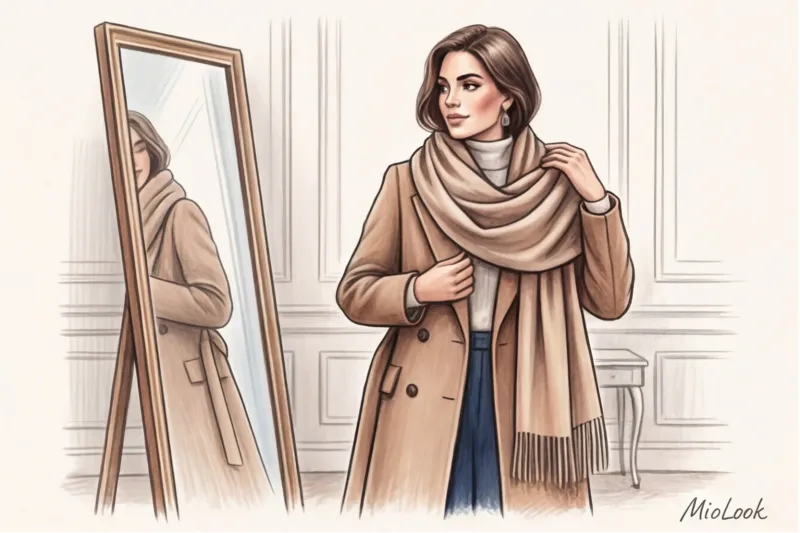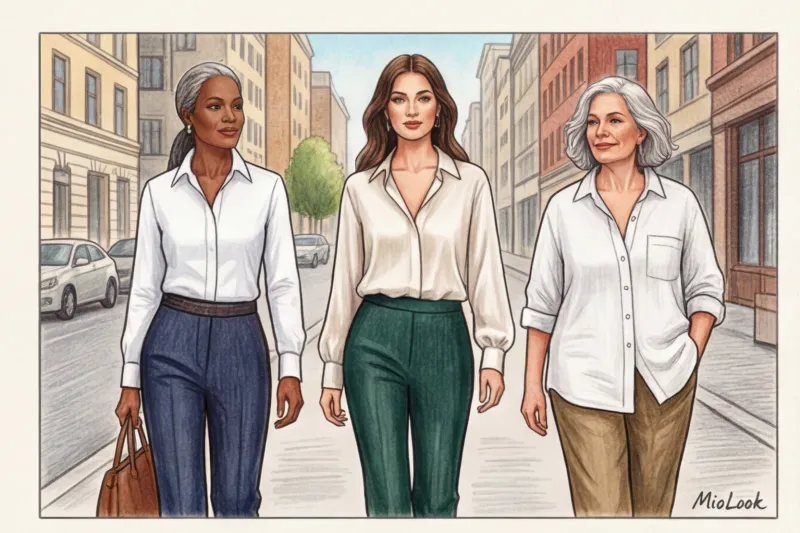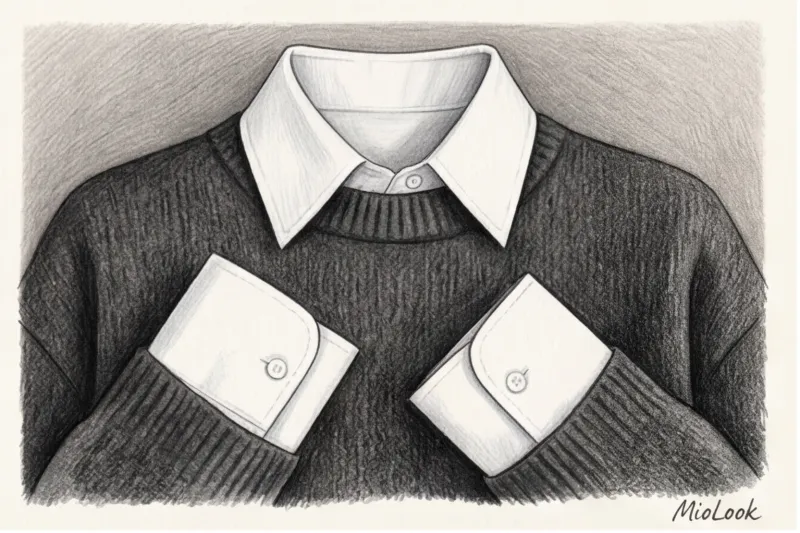
Have you ever wondered why a simple basic shirt under a sweater looks like a well-thought-out design decision in street style photos, but in real life it often resembles a tired schoolgirl's uniform? After 12 years of working as a personal shopper in Europe, I've realized the most important thing: the problem isn't your figure or even the cost of the clothes. The whole secret lies in the density of the fabric.
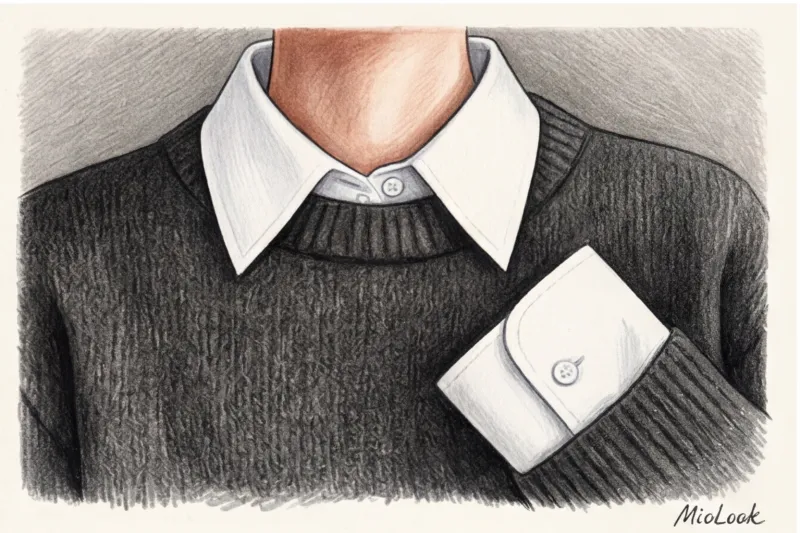
Every time we start a wardrobe review with a new client and the question arises, What to wear over a white shirt , I see the same mistake. Girls try to layer thin, flowing viscose under coarse wool, ending up with untidy lumps and creases. We discussed this principle in more detail in our The complete guide to layering , but today I want to look specifically at working with a white shirt.
This wardrobe staple isn't just clothing. It's your architectural framework. Let's explore an "engineered" approach to layering that will transform mass-market staples into a "quiet luxury" look.
What to wear over a white shirt: the main rule of outfit architecture
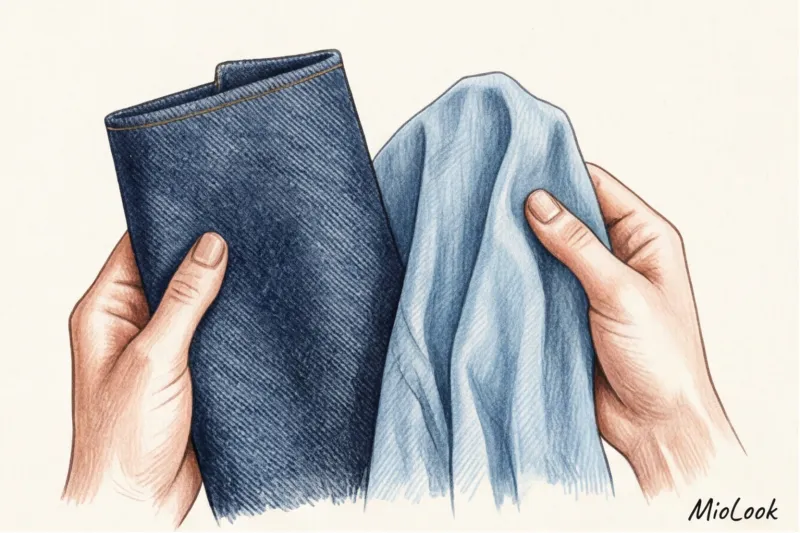
Stylists at London's Central Saint Martins College use the term when teaching students fabric weight ratio (the ratio of texture density). The essence of the rule is elementary, yet 90% of women ignore it: the top layer should always appear visually and physically denser than the bottom layer, or be equal to it. But never the other way around.
Why does a €70 COS cotton shirt look expensive under a cashmere jumper, while a thin Zara blouse bunches up in untidy folds? Because the right shirt acts like a corset. It sets the tone.
- Grammar rule: Look for cotton poplin with a minimum weight of 180 g/m². It's not see-through and holds its shape.
- Collar stiffness: The collar is a portrait zone. If it's soft and rests on the collarbones, the look becomes "homey." A stiff, interlining-lined stand-up collar instantly gathers the face, creating more defined contours.
- The role of the canvas: Think of a white shirt not as a standalone piece, but as a mat for a painting. It should simply frame your knitwear or jacket, highlighting your face with a fresh white hue.
Smart Office: Layered Looks with a White Shirt for a Business Dress Code
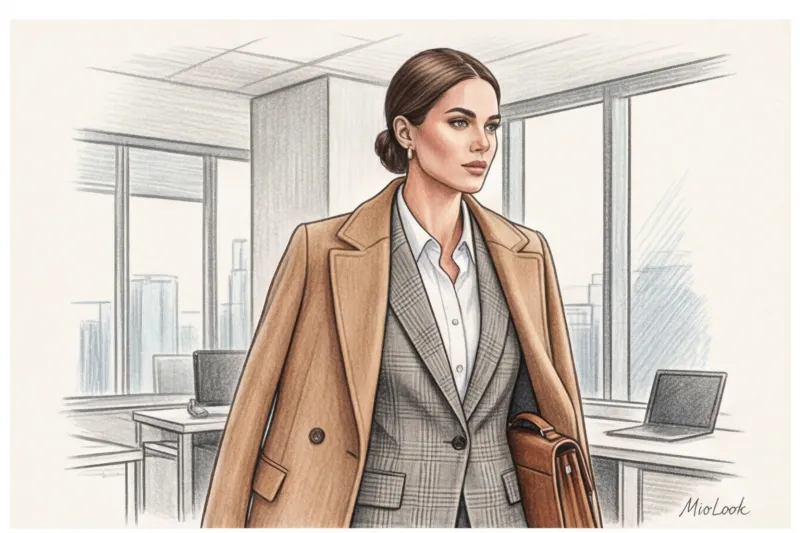
In a strict dress code (Business Formal), the main danger is looking like an intern on your first day. To avoid this, we integrate elements of men's tailoring into women's wardrobes. Layering here serves as a tool for enhancing authority.
Suit vest and classic jacket
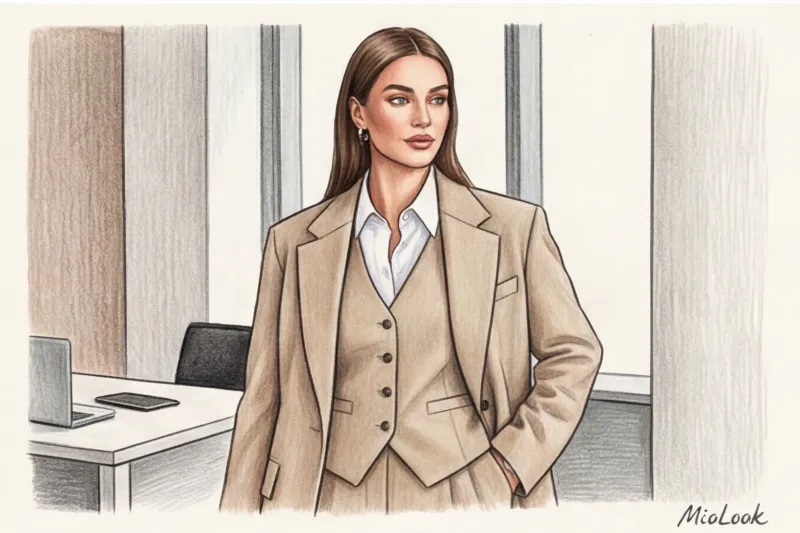
The three-piece suit has made a comeback in women's wardrobes. Wearing a suit vest over a slightly oversized white shirt creates the perfect balance: the tailored silhouette of the vest tames the voluminous cotton of the sleeves.
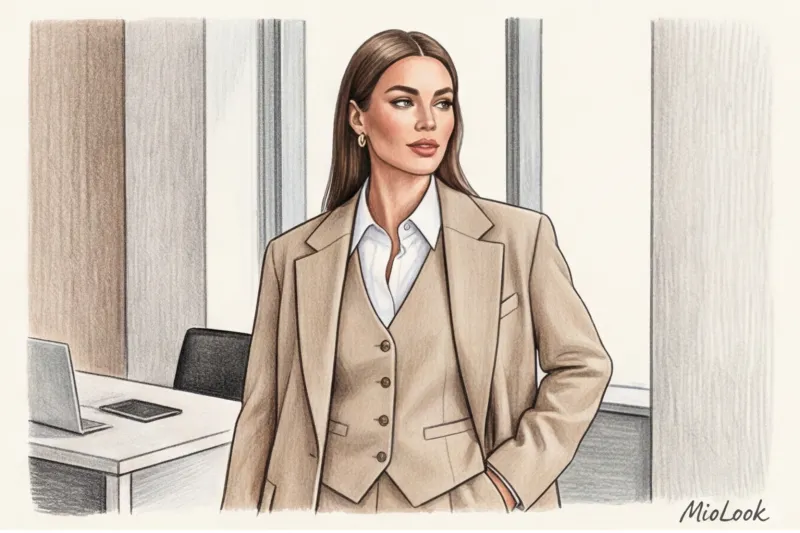
If you're wearing a double-breasted jacket over it, the question arises: what to do with the collar? My rule is this: if the jacket's lapels are wide and prominent, tuck the corners of the shirt collar inward. If the jacket is minimalist, feel free to let the collar hang over the lapels, in a '70s-inspired style.
Fine merino knitwear and cardigans
For the office, we often choose smooth merino wool. A V-neck jumper worn over a shirt is a classic, visually elongating the neck thanks to the double vertical line (the neckline of the jumper and the unbuttoned top buttons of the shirt).
"Don't button a sleek cardigan all the way up. Leave the bottom two buttons undone to reveal the hem. This breaks up the monolithic color block at your stomach and makes your waist appear slimmer."
Your perfect look starts here
Tired of wondering how to combine your clothes every morning? MioLook's smart AI stylist will analyze your wardrobe and suggest ready-made layering outfits for the office and casual wear.
Get access — €0.99 onceSmart Casual: Balancing Work and Urban Style
Smart Casual style requires a shift in focus from "perfectly ironed" to a play of textures. Here, we mix a formal base layer (our ideal shirt) with a deliberately relaxed top layer.
I've created a strict checklist for my clients: if the top is relaxed (like a voluminous, fluffy sweater), the bottoms must be structured. Choose trousers with a distinct crease or straight-leg jeans in heavy denim. Otherwise, you risk looking like you just woke up.
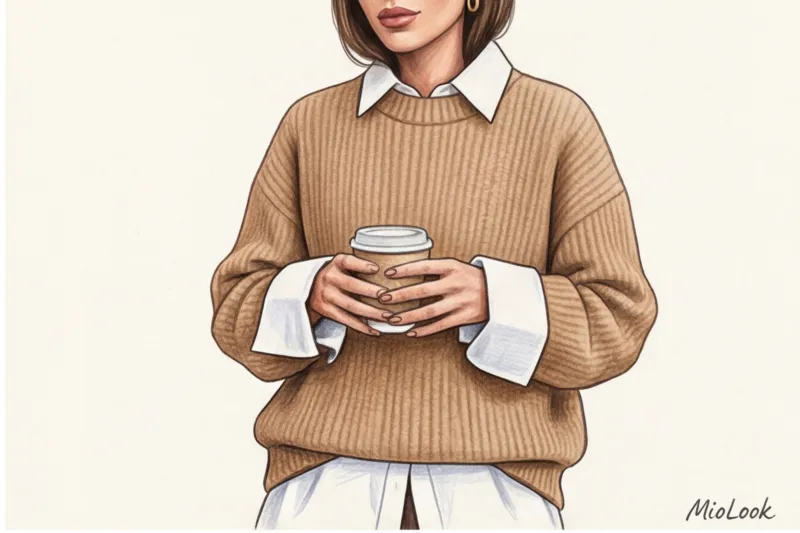
Chunky Knit Sweater
The rule of strong contrast is at work here. Smooth, cool poplin clashes perfectly with voluminous, warm wool (mohair, alpaca). This combination is a delight to explore.
In this scenario, the following comes into effect: 2-centimeter rule This is how much the cuff of a white shirt should show from under the sleeve of a sweater. Don't hide it! Fold the cuff right over the edge of the sweater. Add to this the hem casually pulled out from under the sweater (on one side only), and you'll achieve that effortless chic effect.
Leather blazer or shirt jacket (Shacket)
Grunge meets classic. Swap your usual wool jacket for a crisp matte leather blazer or shirt jacket. The combination of crisp white cotton and rough black or chocolate brown leather looks incredibly stylish.
Wear your jacket unbuttoned. The two vertical lines created by the flaps of a leather blazer over a white shirt act as a powerful figure-shaping tool—they literally cut off excess volume on the sides.
Digitize your wardrobe
Upload photos of your shirts, sweaters, and jackets to MioLook. The app will automatically suggest ideal combinations based on the rule of texture density.
Try MioLookRelaxed Casual and Street Style: Fashion Experiments
According to the WGSN (Sartorial Styling 2024) report, the trend for "intelligent layering" has reached its peak. The white shirt now acts as a peacemaker: it can "calm" and adapt even the wildest runway looks to real life.
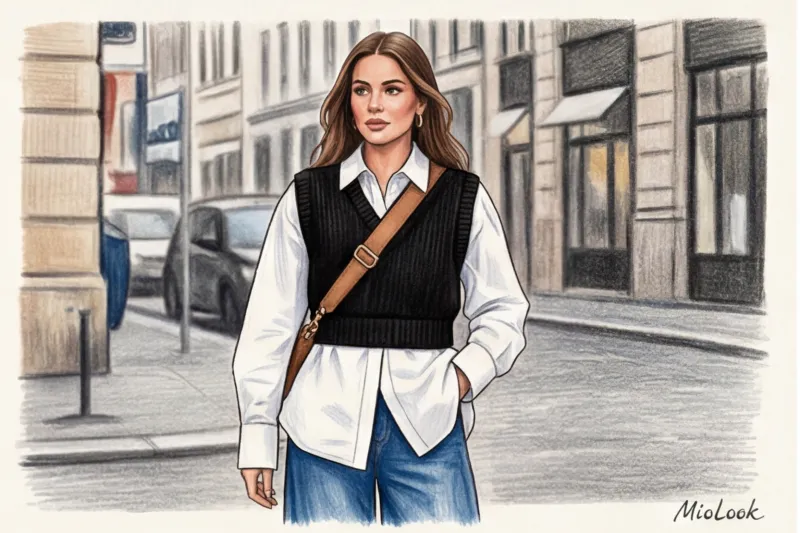
Knitted vests, crop tops and corsets
We're adapting street style looks from Copenhagen Fashion Week. We're taking an oversized, oversized shirt and layering it with a short, contrasting grandpa vest. The long shirt (covering the hips) and short vest visually elongate the legs.
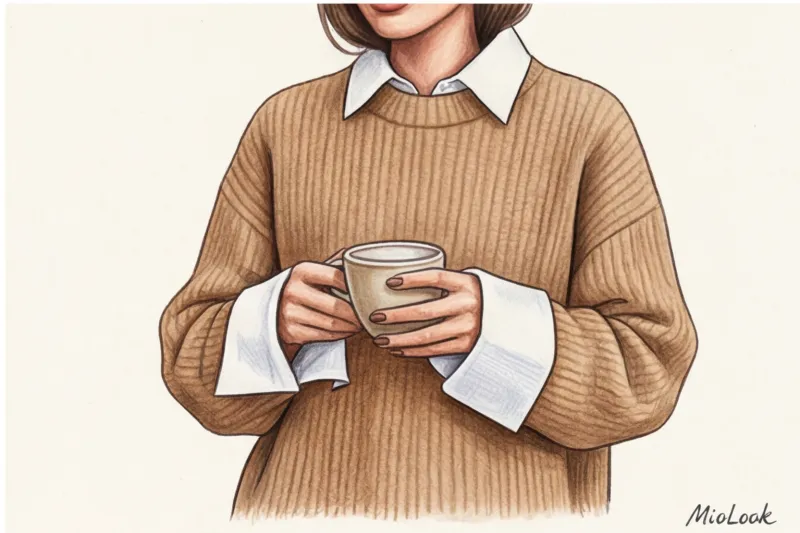
For bolder looks, wear corsets or bralettes directly over an oversized shirt. The crisp cotton underneath will prevent the look from becoming vulgar, elevating it to the realm of architectural avant-garde.
Hoodies and sweatshirts: sporty chic with a collar
Preppy style has made a triumphant comeback. Pairing a sporty, chunky hoodie or sweatshirt with a tailored collar is a great weekend look.
How to do this neatly? If you're wearing a crewneck sweatshirt, don't try to pull the shirt collar all the way over the neckline—this will create extra bulk around your neck. Let just the very tips of the collar peek out, as if it were an accident.
5 Layering Mistakes That Cheapen Your Look
In my personal shopping experience, there is one counterintuitive insight that clients first argue with and then thank me for. Women's fitted shirts with darts made from soft fabrics are the worst choice for layering. Even if you think it's "more comfortable" to tuck a fitted shirt under a sweater, it will ruin the whole look.
Why do I forbid them? Soft fabric doesn't hold up the frame. It wrinkles under knitwear, and buttons start to stick out unattractively, revealing the cheapness of the underlying layer.
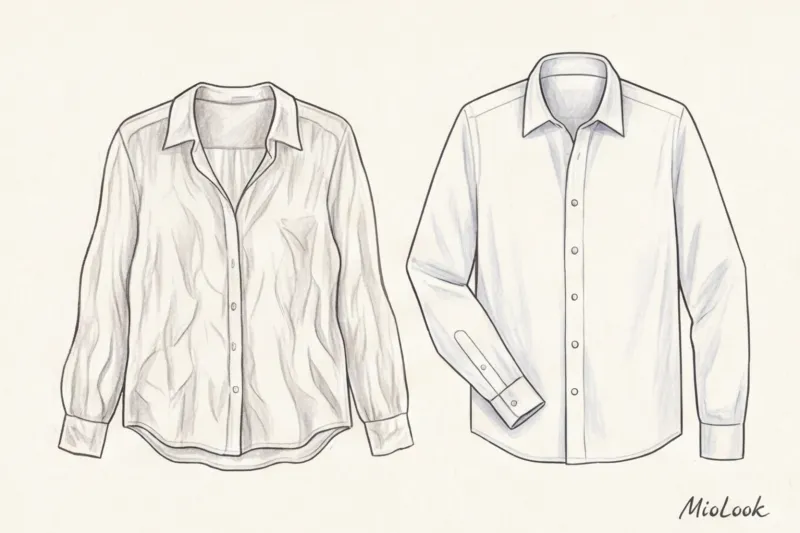
Here are 4 more fatal errors:
- Short shirt under a long sweater. Out of proportion. The shirt should be at least 5–7 centimeters longer than the top layer to create the desired horizontal line.
- The armholes of the top layer are too tight. If a sweater or jacket digs into your armpits, your shirt sleeves will bunch up. Choose a top with slightly dropped shoulders.
- Mismatch of shades of white. Never wear a crisp white sweater over an ivory shirt. Against the crisp white, your shirt will look dirty and washed out.
- Saving on the base layer. Cost-per-wear analysis shows that a heavy, structured shirt for €80–€100 is worn three times more often in layers and looks flawless for years, while a soft blouse for €30 loses its shape after the third wash.
A Stylist's Checklist: How to Choose a White Shirt for Perfect Layering
Of course, this architectural approach has its limitations—for example, for women with very full busts (D+ cup), a tight oversize can add unnecessary bulk, requiring individual adjustments to the fit with the collar open. But a universal formula works for most body shapes.
If you're looking to buy a shirt that will be the perfect base for everything described above, keep this list of features in mind:
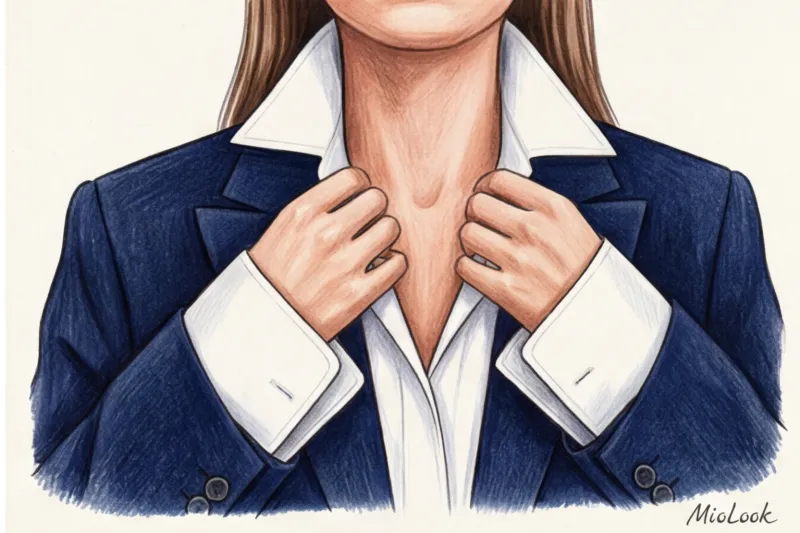
- Composition and texture: 100% high-density cotton. Look for the label "poplin" or "twill." The fabric should feel pleasantly crisp in your hands.
- Cut: A straight men's silhouette (regular fit) or slightly oversized. No darts at the chest or waist.
- Collar and cuffs: Dense, rigidly laminated. They should not be crushed between two fingers.
- Length: The shirt should completely cover the groin and reach mid-thigh. This is important so that the hem peeks out beautifully from under cropped sweaters.
And finally, my personal shopping lifehack: stop searching for the perfect basic shirt in the women's department. Visit the men's section at Zara, H&M Premium, or Massimo Dutti. Men's shirts are cut according to classic standards (without unnecessary darts), made of thicker cotton, and are often cheaper than women's shirts of the same quality. Choose a size S or M, and you'll have the perfect tool for creating dozens of flawless layered looks.