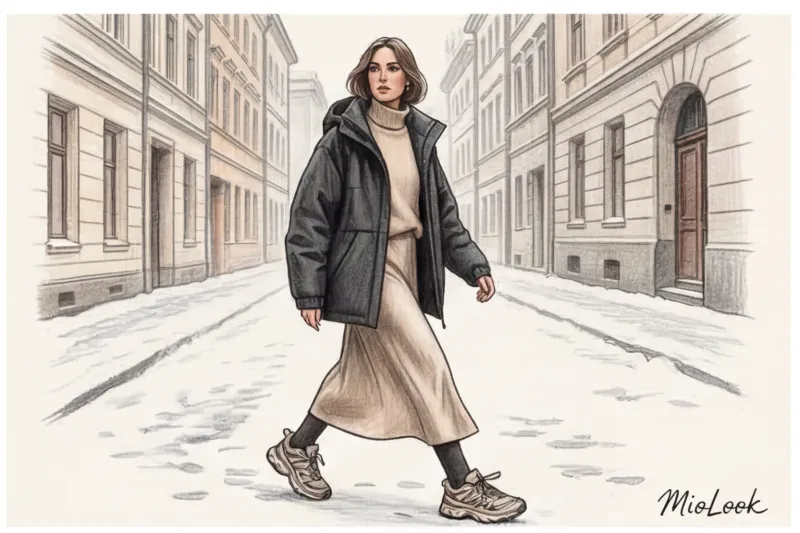
I remember a client, a top manager at an IT company, coming to me with a specific and pressing request: "Darina, I'm tired of being cold. My sheepskin coat weighs three kilograms, making me look like a clumsy bear, and underneath it I wear a thin silk blouse that gives me goosebumps even on the walk from the underground parking lot to the office." I suggested a radical step: put the heavy sheepskin coat away in the closet and try a winter gorpcore—a lightweight membrane jacket paired with the right high-tech layers. She looked at me with obvious disbelief: "In this thin windbreaker at -20°C?" Spoiler: a week later, she wrote me an enthusiastic message about feeling genuinely warm in the cold and cool in the car for the first time in ten years.
We have already talked in more detail about the origins of this style and its basic rules in our The complete guide to gorpcore style and outdoor integration for every day But today we'll talk about the most difficult season. Gorpkor winter — it's not just a trend for chunky sneakers. It's pure physics, coupled with the laws of color and proportion.
Gorpcore Winter: Why Outdoor Aesthetics Has Become a Salvation for City Women
According to Lyst, a 2024 analytics platform, searches for outdoor clothing brands (Arc'teryx, Salomon, The North Face) increased by 45% in the casual urban wardrobe category. This is not surprising. As an image consultant, I observe a global shift: the paradigm of "beauty requires sacrifice" is completely outdated. Today, conscious, technologically advanced comfort has become the main marker of status.
We're tired of tight leather boots that slip on chemicals and heavy natural fur coats. For comparison, a classic insulated wool winter coat can weigh up to 2.5 kg. A full three-layer gorpcor outfit (thermal underwear, fleece, and a membrane) rarely exceeds 1.2 kg. This difference has a dramatic impact on your posture and fatigue level by the end of the day.
The Anatomy of Heat: How Layering Works (and What Style Has to Do With It)
The most common misconception I combat every winter is, "You need a thicker down jacket to stay warm." You throw on a giant puffer coat over a thick cotton hoodie, take the subway, immediately start sweating, and then step out into the cold—and you're chilled to the bone. A thin membrane with the right fleece provides more effective warmth solely through moisture management.
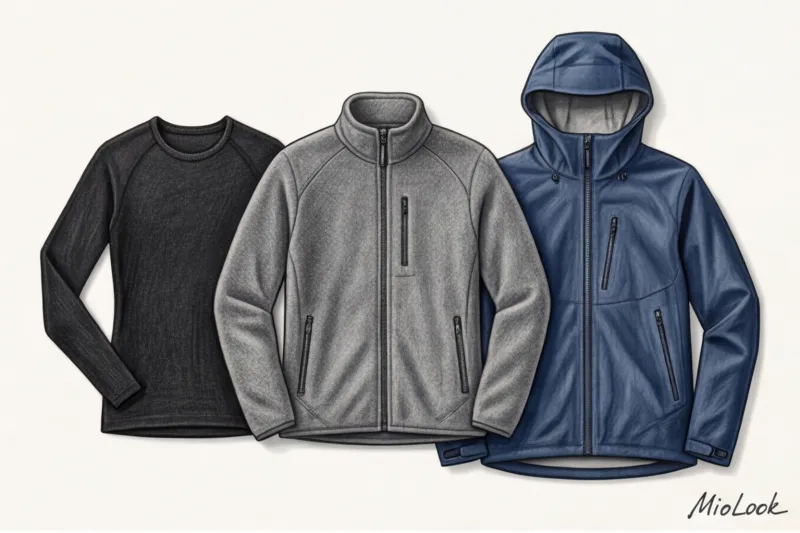
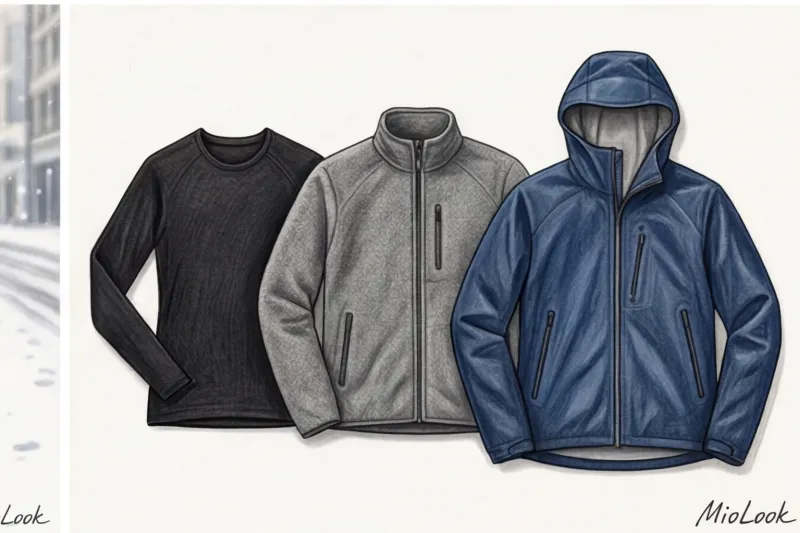
This is how it is built layered look for winter according to the laws of the outdoors:
- Base layer (moisture wicking): Forget cotton. When wet, a cotton sweater loses up to 90% of its insulating properties. Your choice is fine merino wool (it's non-itchy) or high-tech synthetics.
- Insulating layer (heat retention): This is where microfleece, Polartec, or ultra-thin down sweaters come into play. Pay attention to the fill power (FP) rating—the density index of the down. For the city, an FP of 700+ is optimal; such a down jacket can be rolled up and stowed in a bag.
- Protective layer (shield from the elements): Hardshell (membrane). Look at the waterhead rating. For wet snow and rain, look for a rating of 15,000 to 20,000 mm, and for breathability, look for a RET rating of less than 6 (the lower the RET, the better the fabric wicks water vapor away from the body).
Your perfect look starts here
Join thousands of users who look flawless every day. Upload your items, and AI will create the perfect capsule wardrobe for any weather.
Get access — €0.99 onceMembrane or voluminous down jacket: what to choose for the city?
A hardshell jacket without insulation is ideal for those who constantly shuttle between the street, the car, and indoors. Simply remove the fleece midlayer at the office and be left with a comfortable merino turtleneck. Large, cloud-like down jackets are best saved for long, leisurely strolls in the park. If you choose an oversized jacket, make sure the shoulders are not too stiff—dropped sleeves will soften the silhouette and allow you to layer a heavier jacket underneath.
A play of textures and colors: rules for combining technological fabrics
As a certified colorist, I always emphasize to my clients how fabric interacts with light. This is something 90% of women forget when shopping for winter clothes.
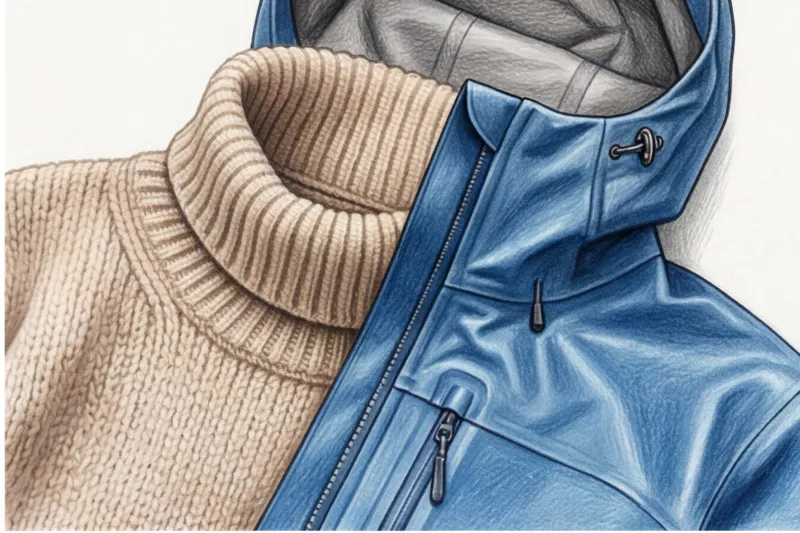
Glossy polyester and nylon create harsh, cool highlights. If you look tired or are prone to dark circles under your eyes, a neon blue glossy down jacket will highlight these nuances. Matte membrane fabrics (such as GORE-TEX Pro) are softer and absorb light, making the face appear fresher. This is also confirmed by the PANTONE Color Institute's 2024 Color Trends report, which names matte, utilitarian textures as a key trend for the coming seasons.
There are two opposing color strategies in gorpcore styling:
- Retro mountaineering style color block: Bright flashes of fuchsia, cobalt, or neon against a black background. It's bold, but it requires impeccable tailoring of the rest of the pieces.
- Monochrome in the spirit of "quiet luxury": Complex earthy tones—graphite, sage, taupe, dark chocolate. This technique allows you to integrate outdoor into monochrome images and look expensive.
"The main law of contrast in gorpcore: technical smooth fabrics look cheap when combined with thin silk or viscose, but instantly acquire a shine against a background of rough wool, cashmere and suede."
Integration into a basic wardrobe: how to avoid looking like a tourist on a camping trip
My clients' biggest fear is: "I'll look like I'm going on a hike to Mount Elbrus rather than a business meeting." To avoid this, we use the "One Thing Rule."
Over 12 years of work, I've noticed that the perfect balance is achieved when a classic urban look is infused with no more than one or two technical details. A lawyer client of mine successfully wears a tailored three-piece suit in a fine chalk stripe with Salomon trail running shoes and an Arc'teryx membrane parka in a muted asphalt color. It looks not casual, but distinctly modern.
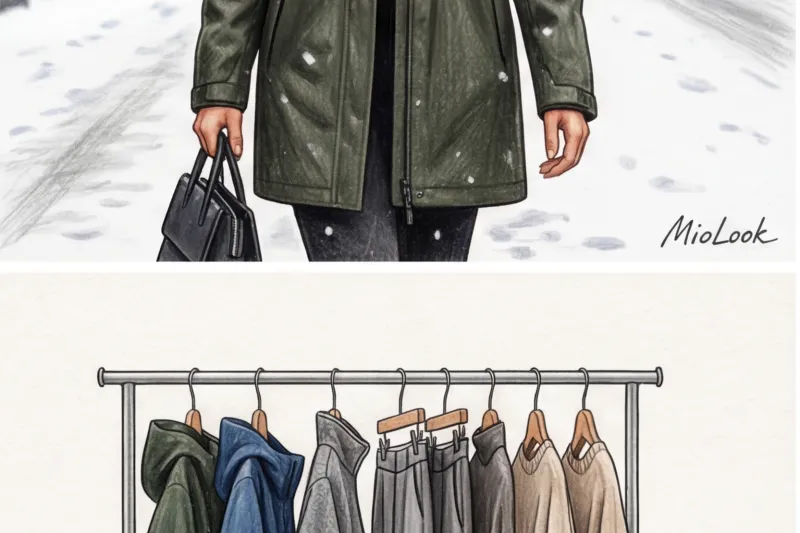
If you're going on a date or to an exhibition, try playing on the contrast between romance and practicality. A technical anorak parka with drawstrings looks great over a flowy satin midi skirt (as long as you wear thick wool tights and high Chelsea boots underneath).
Proportions and silhouette in winter gorpcore
Gorpcore has one honest limitation: it requires control over volume. If you're wearing a chunky down jacket or a wide windbreaker, the hem should be gathered (straight wool trousers, thick leggings with high socks). Use technical drawstrings, waist cinches, and hidden elastic at the hem to define the proportions and avoid turning into a rectangle.
Access to MioLook for €0.99 — one-time payment
A smart AI stylist will select the perfect look based on your measurements and the items in your wardrobe.
Get access — €0.99 onceShoes and accessories: the finishing touches for your winter outdoor look
Footwear is the foundation. In winter, hiking boots with their distinctive D-ring lacing and trail running shoes with a Gore-Tex membrane take center stage.
But here I must offer an important caveat from personal experience. I personally tested brutal trail running shoes with aggressive tread on icy Moscow pavement. And I almost broke my leg. Not every lugged sole is suitable for city ice. If you're buying winter footwear, look for Vibram Arctic Grip soles or similar rubber compounds that won't stiffen in sub-zero temperatures.
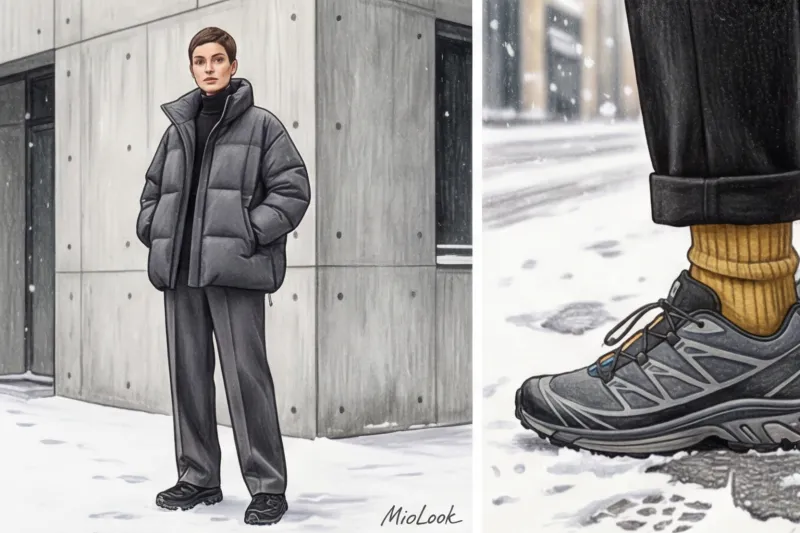
Gorpcore accessories are functional: merino wool balaclavas, puffer hoods (perfect for those worried about messing up their hairstyle), mittens with carabiners, and crossbody bags made of crinkled parachute fabric. Incidentally, peeking out textured wool socks (for example, mustard or pine green) over thick leggings makes a great stylistic micro-accent.
Checklist: 5 Common Mistakes When Creating Gorpcore Looks in Cold Weather
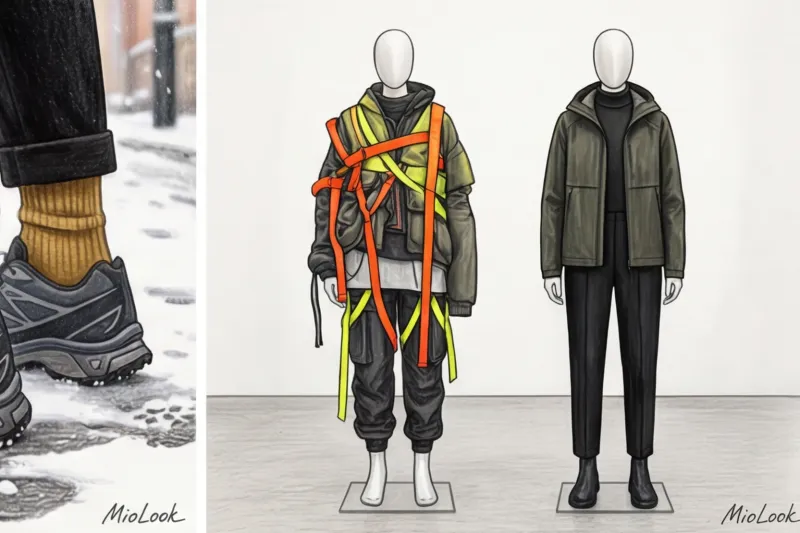
Before you set out to update your wardrobe, check yourself against this list. Here are the mistakes that will ruin both your style and your comfort:
- Mistake 1: Cotton as the first layer. The path to hypothermia. Cotton absorbs sweat and cools the body. Only wool or thermal synthetics.
- Mistake 2: Not enough volume in the outer jacket. The membrane itself doesn't provide warmth; it's the air layer between the layers that does. If the jacket is too tight, you'll be cold.
- Mistake 3: Totally outdoor look. Hiking pants + fleece + membrane + backpack with straps. In the city, it looks like you're looking for a place to start a fire in the conference room. Mix it up with capsule basic wardrobe.
- Mistake 4: Ignoring thermoregulation. When buying a hardshell, be sure to check for pit zips. Without them, a ride on a stuffy subway will be a challenge.
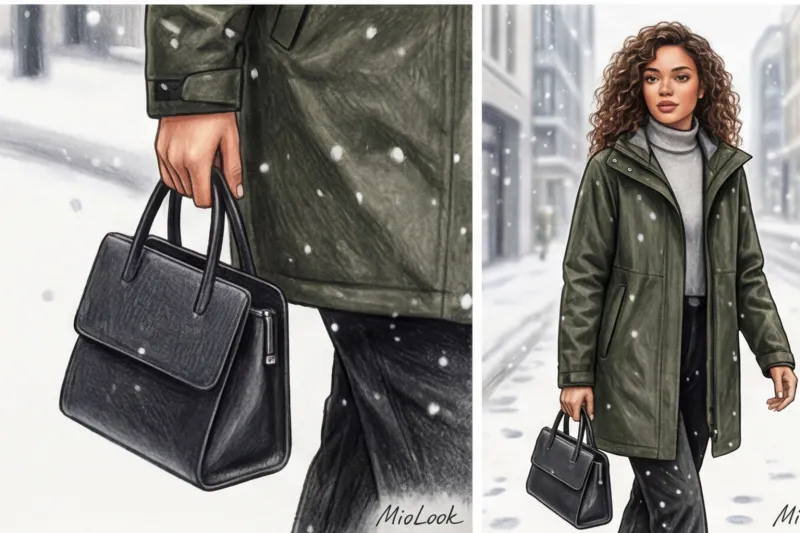
- Mistake 5: The wrong bag. A stiff leather tote clashes with a sporty down jacket. Swap it for a soft puffer bag or a nylon messenger bag.
Summary: Your Perfect Tech Wardrobe
Winter gorpcore is a smart investment in your health, time, and style. A high-quality technical jacket will cost you between €200 and €500, but it will last for a decade and completely change the way you think about winter walks.
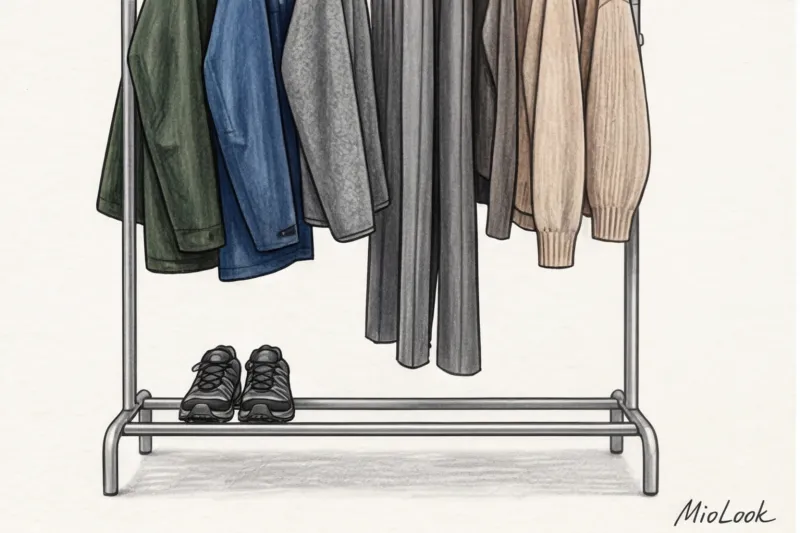
Start small: invest in the right thermal base layer and a good matte zip-up fleece. Try layering this under your usual oversized coat, and you'll feel the difference.
To avoid racking your brain over how to incorporate your purchased fleece or trail running shoes into your everyday office looks, use the virtual wardrobe function in the app. MioLook Simply upload photos of your items, and artificial intelligence will create stylish hybrid looks for you, taking into account the weather outside and current trends. Winter is no reason to sacrifice style for warmth when you can easily have both.