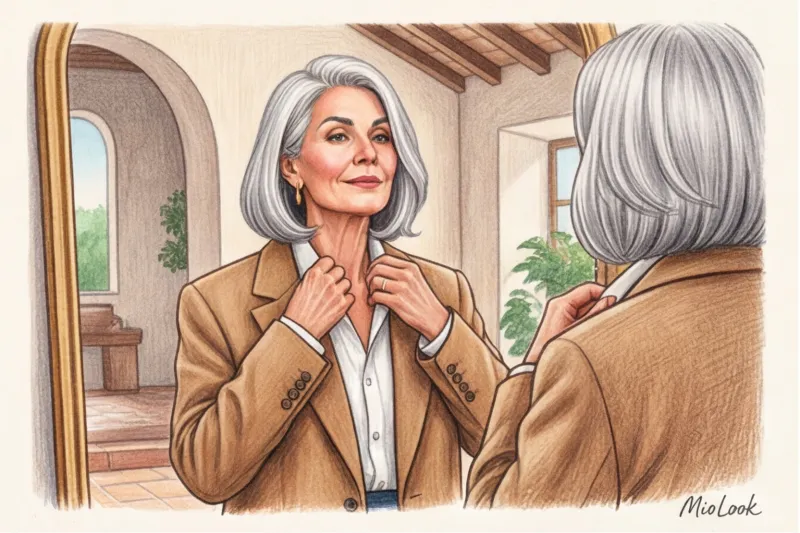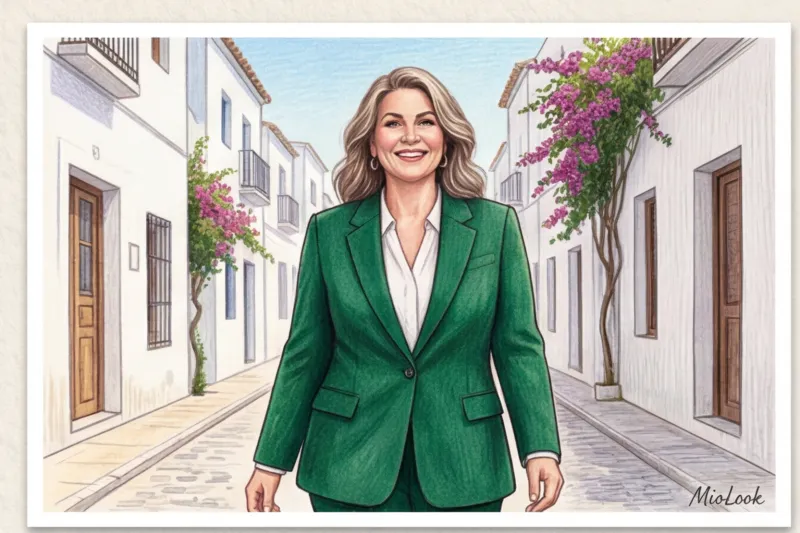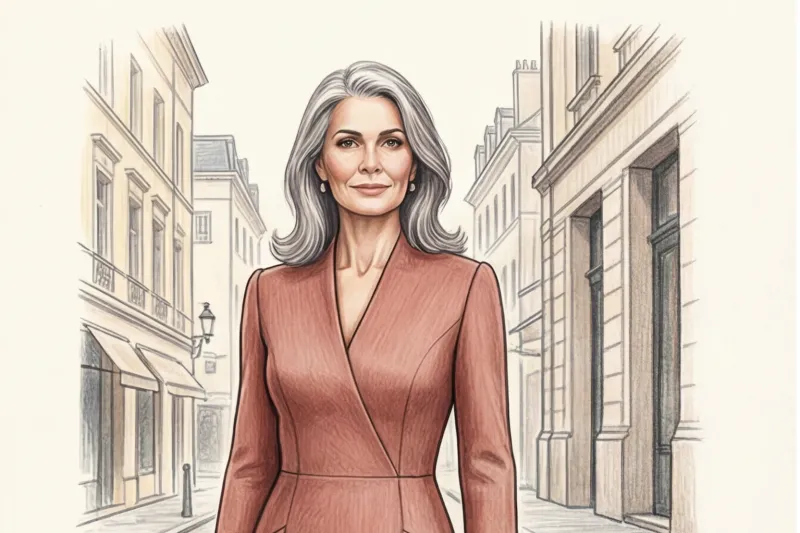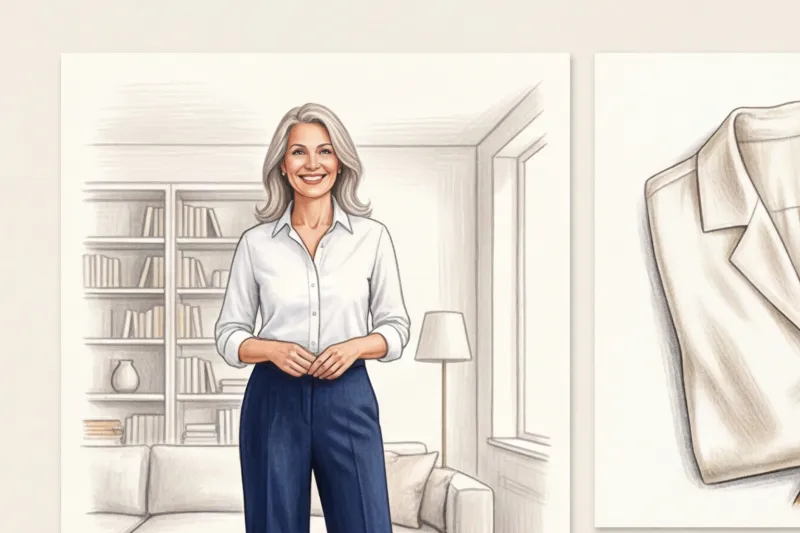
Fashion for Women Over 50: Why It's Time to Forget the "Dress Your Age" Rule
"Isabella, I'm 52. Are these wide palazzo pants too bold for me? Is it time to switch to strict straight pants with a crease?" I hear this question during my first consultation from almost every new client. And every time, I answer: get rid of these limitations. The right fashion for women over 50 Today, it’s not about the numbers in the passport at all.
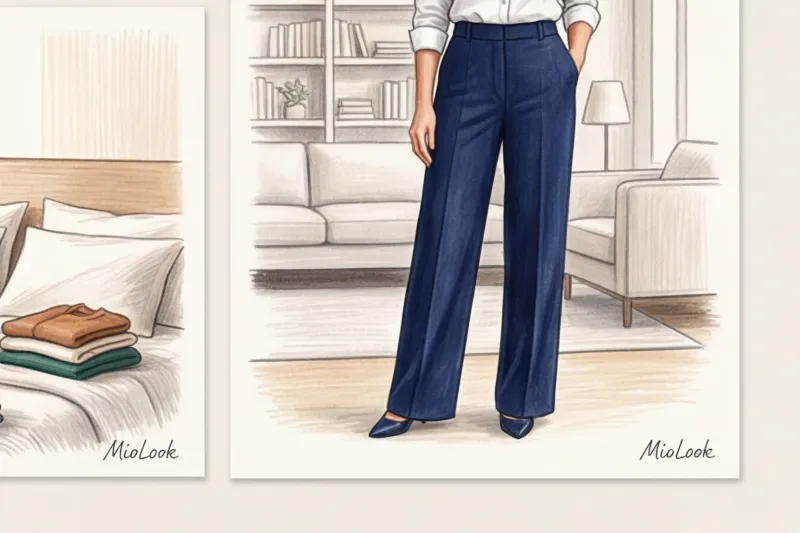
The industry is undergoing a tectonic shift: we have finally moved to the concept ageless fashion (ageless fashion). According to WGSN's 2024 analytical report, leading global brands no longer create collections for "young" or "old." Clothing is segmented according to a completely different principle. We've abandoned the dreary rule of "dressing for your age" to the only true approach—dressing for your status and lifestyle. Do you manage a department? Travel a lot? Love long brunches with friends on weekends? That's what your wardrobe dictates, not your year of birth.
In this regard, I'm incredibly drawn to the philosophy of Mediterranean style. In Italy and Spain, a woman's maturity is associated with the blossoming of her femininity, not with fading. The secret of luxurious French and Italian women is simple: they don't try to look 25 at 55. A desperate pursuit of youth is always perceived by others and, paradoxically, only emphasizes age. Instead, they choose to look expensive and impressive at 50+. Casually rolled-up sleeves of a silk shirt, perfectly tailored trousers, bold sunglasses—they enjoy themselves and their bodies here and now.
The "Auntie" Effect: Where It Comes From and How to Avoid It
Over 12 years of working as a personal stylist, I've come to the conclusion that the notorious "grandmother" effect isn't caused by age, wrinkles, or even excess weight. It's one of the most pernicious myths! Only outdated styling and flabby, shapeless skin make a beautiful woman look "grandmotherly."
A 54-year-old woman wearing a size 50 in a structured blazer and trendy straight jeans looks energetic and modern. The same woman in a shapeless, flimsy cardigan instantly transforms into a tired, ageless woman. Even a €100 jacket made of a thick, shapely fabric will flatter your figure more than a thin, designer blouse for €500.
Let's go over the three main triggers that instantly destroy elegance:
- Guipure, rhinestones and active small decor. This cheapens the look and harks back to the aesthetics of the early 2000s. If you're planning a special occasion, it's best to check out our guide on What should a 50-year-old woman wear to a wedding? , where we focus on noble smooth fabrics (silk, satin, thick viscose).
- Thin, flimsy, tight-fitting knitwear. The main enemy of any silhouette. It makes underwear see-through, gathers in folds on the back and stomach, and visually makes one look hunched.
- The skirt length is unfortunate and falls just below the knee. This tricky length cuts right at the widest part of the calf, flattering your height. Choose from a confident midi (to mid-calf) or a full-length maxi.
How to regain your poise and lightness? The secret is in the right cut. Clothes with a defined, "rigid" shoulder physically force you to straighten your back. Stylish office wear for women It is built on precisely these architectural lines—they literally “gather” the silhouette, making you look visually toned.
Age-related changes in your figure are normal (we just change the cut)
Let's be honest: after menopause, your body changes. Losing a defined waist and changing your arms and décolleté are completely normal physiological changes. This isn't a reason to feel insecure or go on exhausting diets. But the biggest mistake I see in my clients during this period is trying to either hide in giant tent-like garments or squeeze into the tight, bursting-at-the-seams tightness of the past.
Neither works for you. Our best friend is semi-fitted silhouette The golden rule: there should always be 2-3 centimeters of air between your body and the fabric. This creates the illusion of fragility within the garment.
Instead of frantically concealing imperfections, we'll intelligently shift the focus. At any age, at any weight, a woman retains graceful, delicate areas. These are your trump cards:
- Wrists: Always roll up the sleeves of jackets and shirts, adding a chunky bracelet or watch.
- Ankles: Choose the length of your trousers so that your thin ankle flashes when you step (when paired with loafers or sneakers, this looks amazingly dynamic).
- Clavicles: Replace turtlenecks with shirts with the top buttons undone or V-neck tops.
To understand which items in your closet already meet these semi-fitted rules, I recommend digitizing your database. Upload photos of your clothes to MioLook — The app's smart algorithm will help you create dozens of new outfits from what you already own, and will clearly show you which silhouettes really flatter your figure.
The foundation of elegance: fabrics, textures, and cuts that work for you
At 20, you can wear a frivolous dress made of crisp polyester for 20 euros and look fresh simply because of your youthful energy. But fashion for women over 50 There's no room for compromise on the quality of materials. Cheap, flimsy fabric in an elegant age is a stylistic crime, instantly cheapening the entire look, robbing it of its status, and treacherously highlighting the slightest nuances of the figure. We're moving to a level where investing in texture becomes your primary fashion strategy.
Let's talk about the physics of light and how it applies to your wardrobe. Have you ever noticed how some clothes make your face look tired, even if you've gotten the recommended eight hours of sleep? The secret lies in the contrast between matte and shiny textures. Glossy, shimmering fabrics (especially cheap satin, lurex, or thin, low-quality silk) act like distorting mirrors. They chaotically reflect light, casting micro-shadows on the face, highlighting wrinkles and uneven skin. Matte textures—thick crepe, fine suede, high-quality wool—absorb light. They create a soft, diffused focus around you that evens out skin tone and works better than any expensive photo filter.
At the same time, many women obsessively search for "their perfect color," forgetting the basic rule of styling: the density of the fabric is always more important than its shade. A professional insight I often share in my master classes concerns the weight of the fabric and its ability to drape. For example, heavy, dense viscose, falling in large, confident folds, will always look more refined and slimming than the finest cotton in the right color, which will bunch and gather like an accordion at every natural fold of the body. A garment must have its own "framework" and weight.
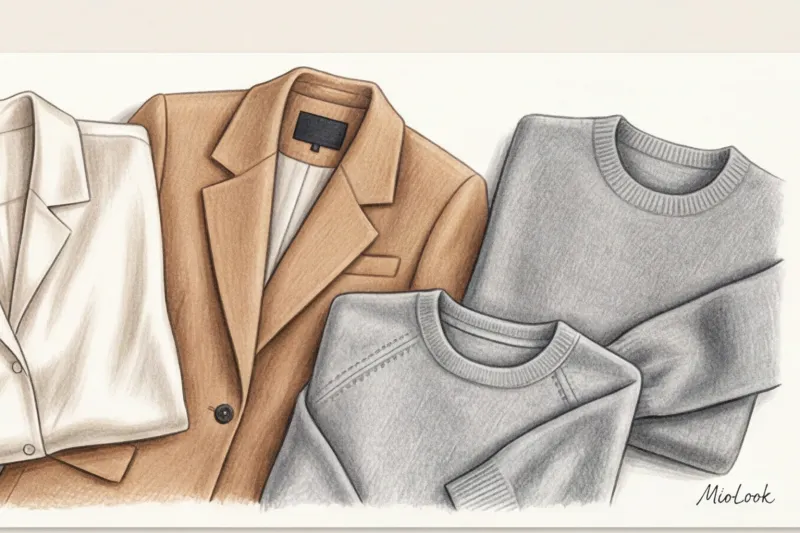
The Hard Shoulder and Structural Lines Rule
One of my favorite metaphors is this: your wardrobe should be your architecture. As we age, our natural curves soften a little—it's a natural, natural, and beautiful process. But if we add soft, shapeless clothing to this, the silhouette begins to visually "sag" and lose its dynamic shape.
The main enemy of a slim silhouette is that beloved thin knit cardigan without buttons. It instantly adds ten years and turns a gorgeous woman into a tired housewife. Replace it with a structured blazer. The "hard shoulder" rule (a clear, graphic armhole, a properly placed sleeve, and perhaps neat shoulder pads) works wonders. This geometric cut visually lifts the figure, elongates the neck, slims the waist, and creates a regal posture. You literally look younger and a few pounds slimmer just because of the correct construction.
Add vertical lines to the structured shoulder to further elongate the silhouette. And we're not talking about a simple striped fabric! A clever vertical line can be created with an unbuttoned jacket over a contrasting top, a long row of buttons on a shirtdress, or crisp, pressed creases on straight-leg trousers.
Access to MioLook for €0.99 — one-time payment
A smart AI stylist will select the perfect look based on your measurements, help you sort through your wardrobe, and show you which textures work best for you.
Get access — €0.99 onceInvesting in the right materials
When building a high-status wardrobe, we must be ruthless about the ingredients on the labels. I always recommend applying the cost-per-wear principle: it's better to buy one impeccable jacket made of good wool for 250 euros that you'll wear for years than five dubious sweaters that will lose their shape after the first wash. Here are the top 5 fabrics to consider:
- Thick silk (19 mm and above) - it is not see-through, does not cling to underwear and falls in heavy, expensive waves.
- Cashmere — the epitome of tactile luxury. It provides incredible warmth without the slightest extra bulk.
- Blended wool — the perfect balance. The addition of a small percentage of silk or viscose makes the wool soft and pliable.
- High-quality flax — Choose options with a viscose or cotton blend so that the fabric wrinkles gracefully rather than looking chewed.
- Thick cotton (poplin, gabardine) - for perfect shirts that hold up the collar and cuffs.
What should you get rid of right now? My "black list" is categorical: shiny polyester, which sparkles and cheapens the look; thin viscose, which instantly becomes covered in untidy pilling; and "glassy" nylon, which is stiff.
And the final secret is how to wear it. Italian fashionistas masterfully utilize the rule of contrasting textures: "smooth with fluffy, matte with shiny" Sleek leather pants or a skirt call for a fluffy angora or cashmere sweater. A matte, tailored wool jacket looks incredibly beautiful when paired with a flowing satin silk top. This technique creates that deep, multidimensional elegance that's impossible to buy off the rack, but so easy to master.
Capsule Wardrobe 50+: 7 Things Every Woman Should Have
Analyzing the wardrobes of hundreds of women, I noticed a paradox: the more random items in a closet, the older and heavier their owner appears. Last year, Marta, a 54-year-old architect from Barcelona, approached me. Her closet was overflowing with colorful blouses, dull cardigans, and dozens of jeans, but she panicked before every important meeting. We conducted a thorough audit and kept exactly 22 items. And you know what? A week later, her colleagues decided she'd had a facelift. This is the magic of the "smart wardrobe" concept: fewer items, but dozens of stylish combinations.
I discussed the mechanics of assembling such matrices in more detail in our article. "Capsule Wardrobe: The Complete Guide to Creating One".
Many people are afraid of base colors, mistakenly believing them to be boring and uniform. But the right base is a clean, luxurious canvas for accent accessories. To make this canvas work for you, you need to rethink your palette. According to the laws of color theory and the observations of PANTONE Institute experts, a deep black color acts like a magnifying glass on a face after 50. It absorbs light, casts micro-shadows on the face, emphasizing wrinkles, and makes the skin tone appear sallow. My uncompromising advice: replace black in portrait areas with deep navy blue, elegant chocolate, or rich emerald. They provide the same prestigious contrast but subtly illuminate the face.
To avoid getting confused about shades when putting together new outfits, I always recommend that my clients digitize their items. Upload them to MioLook — A smart wardrobe manager will help you visualize how new chocolate-colored trousers will pair with your existing silk blouses, and will protect you from impulse purchases.
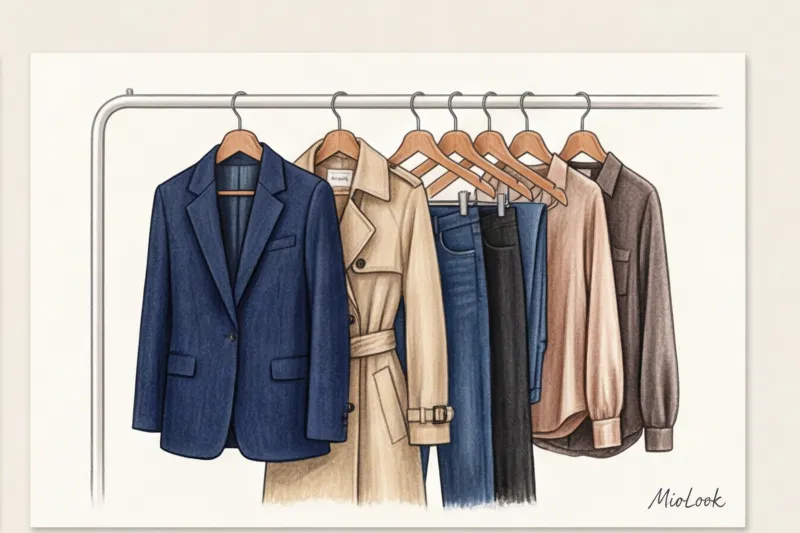
The perfect straight-cut jacket
Forget the snug, fitted jackets of the 2000s—they instantly add a decade to your age. Our choice is a straight or semi-fitted jacket. There should be some air between you and the fabric. Length is crucial: the hem of a well-fitted jacket should end just below the widest part of your hip. This geometric trick visually elongates the silhouette and conceals excess weight.
How to choose between a single-breasted and a double-breasted jacket? If you have a full bust or an apple-shaped figure, your savior is a single-breasted jacket with a single button, which creates a slimming vertical V-shape. Double-breasted styles with active lapels look stunning on rectangle and pear-shaped figures, adding much-needed structure to the shoulders. This piece is absolutely versatile: wear it with jeans and loafers during the day, throw it over a flowy dress in the evening, and pair it with a silk skirt for dinner.
Palazzo or straight high-waisted trousers
Modern styling has ruthlessly eliminated skinny jeans and slim cigarette pants from the list of elegant pieces for women over 50. They throw off proportions, highlight even the slightest unevenness, and often look simply outdated. Invest in palazzo pants or straight, wide-leg styles.
The secret to their magic lies in the physics of the cut: a high waist combined with a maxi, floor-length length (where the leg almost completely covers the shoe) visually lengthens the legs by a good 10 centimeters. Note the pleats. Delicate folds at the waist are perfect for women with a pronounced waist-to-hip difference, creating a beautiful drape and concealing the tummy. However, if volume is concentrated in the center (a pronounced "apple" shape), excessive pleats and a completely flat, taut cut in the front should be avoided—the fabric should not bulge. The ideal solution is trousers with a smooth front made of a dense, flowing fabric without unnecessary details.
Silk shirt and bias-cut midi skirt
If there's a pairing that epitomizes luxurious relaxation, it's silk, done right. The bias-cut midi skirt is a brilliant invention by fashion designer Madeleine Vionnet, and it works wonders on the female figure. Thanks to the bias-cut weave, the fabric doesn't hang heavy, but it also doesn't dig into the body. It flows softly, delicately hugging curves without highlighting imperfections.
A loose silk shirt is the perfect pairing. For elegant women of a certain age, it's a stunning, classy alternative to a basic cotton T-shirt. Where a white T-shirt might look too casual, matte silk instantly adds a touch of gloss and a refined sheen.
The key to styling a bias-cut skirt is playing with contrasting textures. Wear it with a voluminous cashmere sweater, casually tucked in at the front (the aptly named French tuck), or pair it with a tailored men's jacket. This will create an effortless chic effect—as if you threw on the first thing that came to hand, but still look like a million bucks.
Mediterranean Chic: How to Add Lightness and Color to Your 50s
Have you ever watched Italian women sipping their morning espresso in a piazza in Rome? Their secret to staying attractive after 50 isn't the logos on their bags, but their complete rejection of excessive "effort." There's a fascinating term in style. Sprezzatura — the art of deliberate casualness. In my experience, this Mediterranean aesthetic serves as the best antidote to the excessive "strictness" of a mature wardrobe, which often turns a high-status woman into a dry, buttoned-up school teacher.
How does Sprezzatura work in practice? Here, micro-styling techniques make all the difference. A perfectly ironed, tightly buttoned shirt looks boring. Unbutton the top two or three buttons—the resulting V-neckline will visually lengthen the neck. Casually roll up the sleeves of a blouse or jacket to mid-forearm, revealing the thinnest parts of the arms—the graceful wrists. Be sure to use this technique. French tuck (semi-tucked shirt): Tuck only the front of your top into the waistband of your trousers. This trick instantly defines your waist while leaving some breathing room in your stomach and hips.
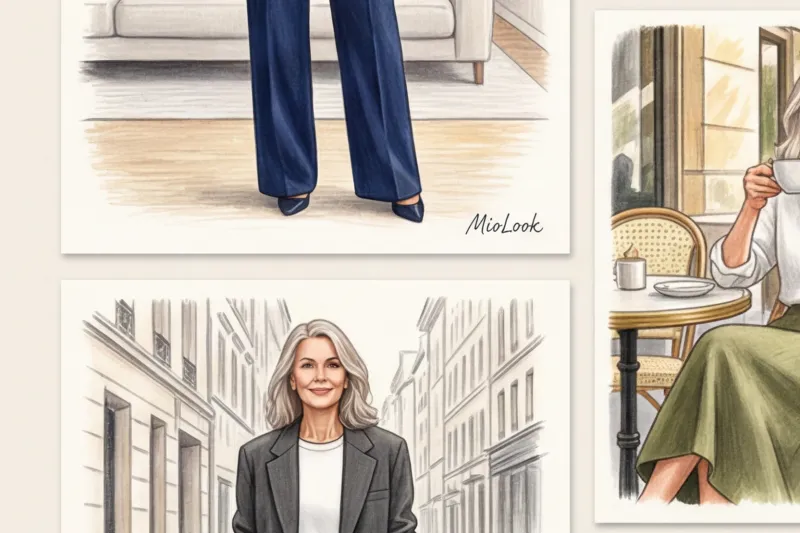
The second rule of Mediterranean chic is bold yet strategic color integration. Have you noticed how many women start hiding behind bland beige and gray outfits as they age? Let's break this pattern. My favorite technique: choose rich, vibrant shades (rich terracotta, deep azure, or bold fuchsia), but relegate them away from the face or into accessories.
Whether it's flowing, wide-leg terracotta trousers or a structured fuchsia bag, it will elevate the entire look. For the portrait section, stick to a refreshing white, ecru, or a refined pearl color. This way, you'll achieve a dynamic, vibrant outfit without the risk of highlighting shadows or age spots on your face.
And finally, the secret to a modern look lies in mixing styles. A prestigious wardrobe no longer tolerates the all-out classic "suit and pumps" format—it inevitably adds years. Combine sporty chic and classic silhouettes. Wear tailored palazzo pants with pleated hems and simple white leather sneakers (Veja offers excellent basic styles for $130-$150). Throw a classic trench coat over a premium cotton hoodie. This subtle dissonance conveys a crucial message: you know the rules of style, but have the luxury of playing by your own.
Access to MioLook for €0.99 — one-time payment
Start creating your perfect looks with artificial intelligence. Upload your items and let the algorithm create outfits with just the right amount of relaxedness.
Get access — €0.99 onceStatus accessories: details that decide everything
Do you know where the eye first falls when a woman wears simple straight-leg jeans and a plain white shirt? Her wrists, shoes, and bag. It's after 50 that accessories become the primary tool of self-expression. While in youth, a striking cut or a wild print can elevate a look, in elegant age, clothing should be impeccable yet subdued. Details, however, carry the weight of style and communicate your personal taste.
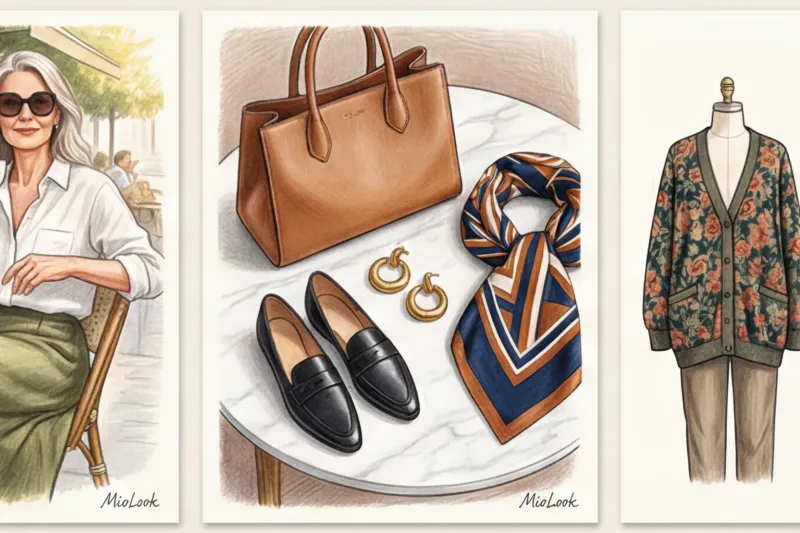
During this period, the most important rule of proportion comes into play: we choose large shapes over small ones. Why is this so critical? With age, facial features soften, and skin texture changes. Thin, barely noticeable gold chains, micro-studs, or tiny pendants simply disappear on a mature woman. Worse, due to the contrast in scale, they visually accentuate age-related changes on the neck or earlobes. We need confident visual weight: sculptural earrings, massive cuff bracelets, and statement masculine watches.
Herein lies the most important financial law of a wardrobe. Compromises don't work when it comes to details, so investments in quality pay off daily. Remember the simple math of status: one truly expensive $800 bag with perfect stitching and exquisite hardware is better than ten mediocre $80 mass-market options that will crack and lose their shape within a month. We discussed the mechanics of choosing such investment pieces in more detail in the article. "Status Accessories: What Marks a Successful Expert".
Shoes: A Balance Between Comfort and Style
The most common request I receive during shopping tours is how to stop suffering in heels without slipping into orthopedic aesthetics. Modern fashion is absolutely kind to our feet: you no longer have to choose between joint health and elegance.
A clear rejection of shapeless, soft moccasins in favor of stylish comfort is your first step to rejuvenating your silhouette. Structured, flat-soled styles are your best friends: classic thick leather loafers, tailored brogues, Chelsea boots, and minimalist white sneakers without unnecessary embellishment. If the dress code calls for height, swap out unstable stilettos for an elegant 3-4 cm kitten heel or a sturdy architectural block heel. Just recently, a client of mine shared that in the right structured loafers, she walked 10,000 steps without pain for the first time in years, looking like a fashion editor.
Jewelry, glasses and bags
If I were asked to name one item that could instantly transform my face, I would choose eyewear without hesitation. The right glasses are your ultimate lifting accessory. A chunky frame made of high-quality acetate (like a soft cat-eye or geometric polygons) visually lifts the contours of your face, drawing attention away from signs of fatigue and fine lines. Forget the thin metal wires from the 2000s—they only add age.
When it comes to jewelry, opt for vintage pieces and chunky metals. Smooth or textured gold and silver reflect light beautifully, giving your face a healthy glow. To avoid an overly relaxed look, always pair your look with a crisp bag. Soft duffel bags often create a bulky silhouette, while a bag with sharp edges instantly adds a touch of style to even a basic knit suit.
"The secret to perfectly integrating accessories is trying them on in context. A statement piece shouldn't exist separately from your closet; it should tie it all together."
To avoid making spontaneous purchases of accent pieces that will then end up on the shelf, I recommend digitizing this process. Take a photo of statement earrings or a new bag right in the boutique and upload it to MioLook smart wardrobe The virtual fitting room feature allows you to see how your new item will fit into your everyday outfits in just a few minutes, saving you from unnecessary spending.
What to definitely avoid: the main anti-trends
Let's debunk perhaps the most dangerous style myth I encounter in almost every wardrobe review: "Classics never get old." I'm sorry to disappoint you: they do, and how. Patterns and proportions do. A basic pencil skirt or jacket bought fifteen years ago will mercilessly distort your silhouette today, even if they're still in perfect condition.
To ensure your wardrobe works for you, not against you, you need to conduct a rigorous audit and permanently eliminate the following age-related triggers:
- Excess of infantile decor. Lace on everyday blouses, rhinestones, bows, and vibrant small floral prints (that same "chintz" pattern) will instantly simplify an outfit. In the premium segment, brands like The Row or Jil Sander It's long been proven that the cleaner the lines, the more expensive a woman appears. Visual noise around the face only emphasizes fatigue.
- Old-fashioned accessory sets. The rule that a bag, shoes, and belt must perfectly match in color and texture is long gone. If you wear burgundy pumps, grab a matching bag, and cinch your waist with a matching belt, the look will look artificial and mothballed. Modern style calls for a variety of textures: suede shoes pair beautifully with a smooth leather bag.
- An outdated approach to tights. A conservative take on the "skirt + shoes matching the tights" combination (for example, a black skirt, sheer black tights, and black leather shoes) will transform you into a '00s uniformist. A modern alternative is to play with subtle contrasts or use thick matte textures.
- Muted dark tones of the face. Black and earthy gray have a tricky property—they act as reflectors, casting micro-shadows on every wrinkle and age spot. If you're not ready to give up a dark top, be sure to create a refreshing barrier: this could be a white cotton shirt collar, a warm-toned silk scarf, or a deep V-neck that reveals your collarbone.
Your ideal image
it begins Here:
Join thousands of users who look flawless every day with MioLook.
Get access — €0.99 onceStylish formulas for every day: how to put together a look in 5 minutes
How many times have you stood in front of your open closet 15 minutes before heading out, feeling the panic creeping in? Ready-made style formulas aren't a limitation to your imagination, but the most reliable fashion insurance. According to research from the Pantone Color Institute, we spend up to 20 minutes every morning just choosing harmonious color combinations. Why waste this valuable resource when you can use foolproof recipes that always work?
My main secret to quick styling is built on two pillars: layering and playing with proportions. Layering is your secret weapon. Firstly, it's a brilliant way to cope with sudden temperature changes, which is especially critical if you periodically experience hot flashes or simply spend the day between the street, the car, and an air-conditioned office. Secondly, an unbuttoned top layer—be it a jacket or a thick shirt—creates two vertical lines. These lines visually elongate the figure, act as an optical illusion, and "cut" the volume on the sides by 3-4 centimeters.
The second essential rule is to play with contrasts. We always pair a voluminous top with a simple bottom, and vice versa. If you're wearing wide, flowing trousers, the top should hold its shape. If you choose straight jeans, you can indulge in a soft, oversized sweater. To always have these formulas at hand, I highly recommend digitizing your clothes using an app. MioLook and create ready-made outfits in the "smart wardrobe" section. This way, you can get dressed in just one click.
For office and business meetings
Formula: A loose two-piece suit (wide-leg trousers + long jacket) + a basic T-shirt made of thick cotton + structured loafers.
Forget tight pencil skirts and stiff, fitted shirts that cut into your body with every movement. Modern business dress codes, even in conservative corporations, have long embraced this aesthetic. relaxed tailoring (relaxed tailoring). A loose pantsuit conveys confidence and the absolute status of a modern expert: you're a professional who no longer needs to confine yourself to uncomfortable armor to prove your worth.
Pay close attention to the density of the T-shirt: it should hold its shape and not sag like a thin, translucent fabric. The ideal cotton weight for such a base is between 180 and 220 grams per square meter. This texture won't highlight any details around the waist and will create the perfect, luxurious contrast with the formal wool of a suit. Smooth leather loafers will add a dynamic touch to your look—you'll be able to easily spend eight hours on your feet in them, maintaining your posture.
For an evening out
Formula: Midi slip dress + oversized, mannish blazer + statement earrings + kitten heels.
When people ask me for an outfit for the theater, an exhibition, or an anniversary, nine out of ten women initially ask for a "classic floor-length evening dress." And every time, I suggest this exact formula, which ultimately looks a hundred times more elegant and modern.
The secret lies in the bold clash of textures: the delicate, flowing silk of a bias-cut dress meets the rough, textured wool of a blazer. The voluminous jacket delicately covers the shoulders and upper arms—the very area that many clients over 50 prefer to underplay. At the same time, the most graceful parts of the body—slim collarbones and wrists—remain exposed. Add statement earrings and a micro heel. kitten heel (about 3-4 cm). You'll get a look with a touch of European chic—as if you didn't spend hours in front of the mirror, but were simply born with impeccable taste.
Relaxed Casual for the Weekend
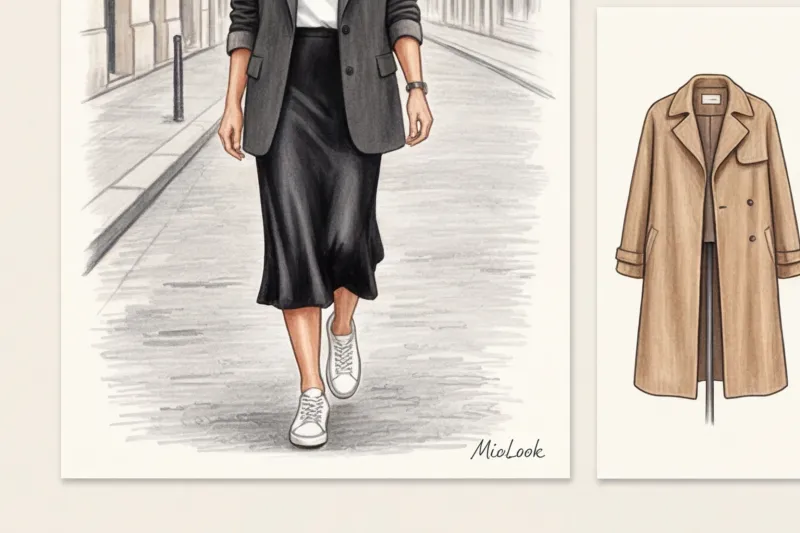
Formula: Straight-leg jeans without any fading + cashmere sweater (not too tight) + quality robe coat + white leather sneakers.
This is the absolute quintessence of the "quiet luxury" style, perfect for long walks, brunches with friends, or trips out of town. The biggest mistake in everyday looks after 50 is a retreat into overtly sporty styles (hoodies and soft sweatpants), which often dulls the look. We, however, create maximum comfort through fine materials.
A pair of straight-cut jeans made of heavyweight denim (around 12-14 ounces), with no holes or contrast stitching, creates a secure visual frame. A cashmere sweater adds softness and tactile pleasure. A small but crucial stylistic nuance: be sure to tuck the front edge of the sweater into the waistband of the jeans (use the technique French tuck ). This is essential to define the waistline; otherwise, when paired with a voluminous robe coat, the silhouette risks becoming a shapeless rectangle. White leather sneakers (smooth leather, not fabric) complete this fresh look. A budget for such a flawless basic set from quality mid-market brands will be around $300-400, but these pieces will last for years, recouping every cent.
Action Plan: Wardrobe Review and Style Creation with MioLook
According to the WGSN (2024) analytical report, the average woman regularly wears only about 15-20% of her closet's contents. The remaining 80% is visual noise that leaves us irritably rummaging through hangers every morning. When discussing fashion for women over 50 Endless lists of trends are useless without a fundamental clearing of space. Elegance requires air. Theory works only when paired with ruthless practice, so let's move on to a concrete action plan.
Step 1: Get rid of things that have no shape
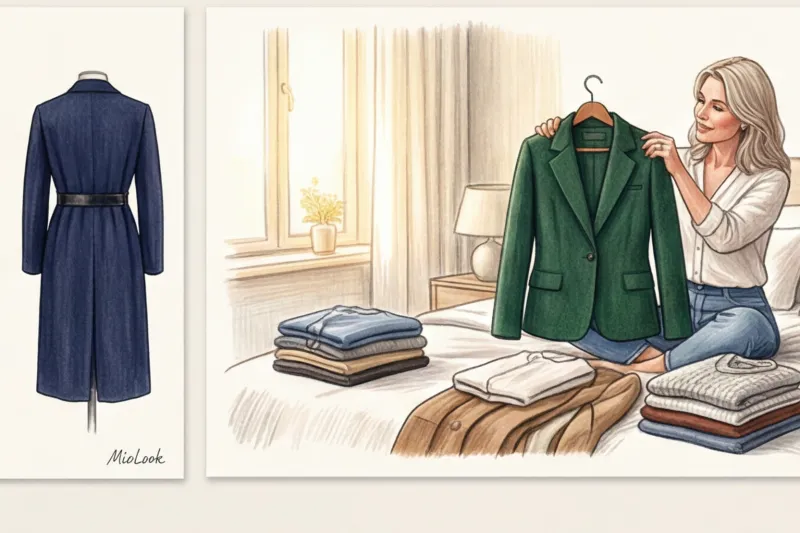
The first rule of my styling detox is to remove anything that can't support its own weight. Flimsy, thin knitwear, stretched-out cardigans with sagging pockets, and see-through viscose blouses—these are your main stylistic enemies. The physics of optics are unforgiving here: soft, featureless fabrics visually pull the silhouette down, highlighting even the slightest age-related changes in contour.
Conduct a rigorous test: if you hang something on a hanger and it looks like a dull rag, feel free to recycle it or donate it. Keep only clothes that act as a strong frame and flatter your figure within easy reach.
Step 2: Invest in Basic Building Blocks
Now that we've cleared the canvas, we need to build a new architecture. Your base is a straight-cut jacket with a defined shoulder line and high-waisted trousers made of a dense blended fabric. When purchasing these items, I always ask my clients to use the CPW (Cost Per Wear) formula.
A high-quality structured wool blazer for $250 that you'll wear at least 100 times a year (CPW = $2.50) will be far more cost-effective than five acrylic jumpers at $50 that will pill after the first wash. Pants and a jacket aren't an expense item; they're a long-term investment in your everyday status and impeccable posture.
Step 3: Add modern accessories
Once the structural foundation is assembled, we breathe life into it with details. Accessories demonstrate that you're keeping up with the times. Put away those micro-bags and thin, invisible chains—they're simply lost against the dense textures of a mature wardrobe.
Your new go-to is geometric, rigid bags, chunky sunglasses with trendy horn-rimmed frames, and modern shoes. Even the simplest outfit of straight jeans and a white shirt becomes ultra-fashionable when paired with leather square-toe loafers and a chunky metal bracelet.
Smart approach: how to avoid unsuccessful purchases
The biggest fear when changing your personal style is buying an expensive, status-conscious item only to discover it doesn't go with anything in your current closet. Before I began integrating digital tools into my styling practice, women constantly made these impulsive mistakes, creating "lonely pieces."
That is why I strongly recommend digitizing the database remaining after cleaning through MioLook app How does this save money in practice? You upload photos of your items to the smart wardrobe. When you're standing in a store's fitting room or scrolling through an online boutique's website and see a stunning pair of wide-leg palazzo pants, you simply add a photo of them to the app.
MioLook instantly and virtually tries on this new style with your existing tops, jackets, and shoes, generating dozens of ready-made outfits. You can immediately see whether this purchase will fit into your wardrobe. This saves hundreds of euros, hours of morning time, and completely eliminates the risk of unsuccessful purchases.
Turning fifty isn't a time for fashion compromises or wearing boring clothes. It's your time to wear the best textures, choose the most comfortable pieces, and look so good that your reflection in the mirror brings nothing but a genuine smile. The tools and formulas are now in your hands—all that's left is to take the first step.
Guide Chapters
Accessories and jewelry for women over 50
Accessories aren't just a way to camouflage the signs of aging, but rather stylish architectural elements of your look. We'll explore common mistakes and learn how to wear them correctly.
Evening Dresses for Women Over 50: Stylish Looks
Tired of cheap lace and shapeless styles? We'll explore how to create a luxurious evening look after 50 using the right cut and color.
Summer Wardrobe for a Woman Over 50: Elegant in the Heat
Hot weather isn't a reason to give up style and hide in shapeless tunics. Discover the secrets to elegant and comfortable summer looks for women over 50.
Winter Outerwear for Women Over 50: Style and Warmth
A well-chosen winter wardrobe isn't a compromise between style and warmth. We'll explore how to choose the perfect down jacket or coat for a modern and elegant look.
Shoes for women over 50: style and comfort
Age isn't a reason to switch to boring orthopedic loafers. Learn how to choose stylish, classy, and incredibly comfortable shoes for every day.
Colors That Make You Look Younger After 50: A Guide to Shades
Forget the "pastel only" rule. Learn how to use the right shades and textures to refresh your complexion and look stunning at any age.
Casual Style for Women Over 50: Comfortable Looks
Forget shapeless clothes! We'll show you how to create an elegant and modern everyday wardrobe that will highlight your beauty.
Can a virtual stylist choose clothes for people over 50?
Finding it difficult to find stylish pieces after 50 among the shapeless robes? Find out how a neural network helps women create the perfect modern wardrobe.
How to Choose Jeans for Women Over 50: Stylist Tips
Forget about shapeless, elastic-waisted pants. A personal stylist explains how to choose the right denim to visually flatter your figure and look youthful.
Dress Styles for Women Over 50: The Perfect Choice
Choosing clothes just to hide is a major mistake. Learn how to find a dress that fits perfectly and boosts your confidence.
Age-appropriate makeup after 50: lifting secrets
Learn how to apply makeup properly as you age to achieve a visually lifting effect. We'll explore common mistakes and share stylist secrets.
Fashion for Plus-Size Women Over 50: Style Secrets
Forget shapeless robes! Discover the secrets of architectural tailoring that will help you look slimmer and more elegant after 50.
The best haircuts for women over 50 that make them look younger
The right hairstyle can completely transform your look. We explore stylish, rejuvenating haircuts and debunk myths about short hair.
A Basic Wardrobe for a 50-Year-Old Woman: A Stylish Checklist
Learn how to choose the right everyday pieces without looking "grandmotherly." A detailed checklist for stylish, perfectly tailored clothing.
Clothes that make women look older: 10 wardrobe mistakes
Trying to dress "respectably," women often achieve the opposite effect. We'll explore the 10 biggest wardrobe mistakes that make you look older.