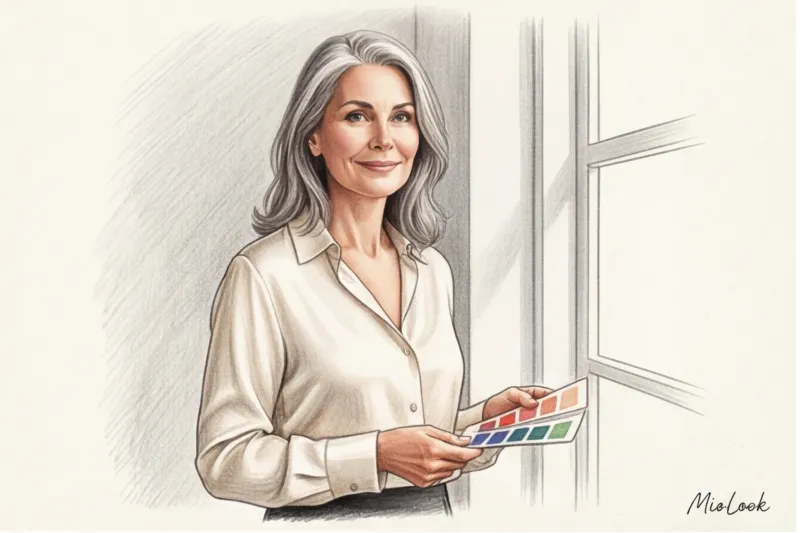
Have you ever noticed how your skin literally glows from within in one blouse, while in another it appears dull and tired, even after getting the recommended eight hours of sleep? According to statistics from textile institutes and practicing stylists, approximately 80% of visually tired faces—under-eye shadows, pronounced nasolabial folds, and a dull appearance—are caused not by lack of sleep, but by poorly chosen color in the portrait area.
When we discuss Colors that make you look younger after 50 , most advice in glossy magazines boils down to the banal cliché: "Wear pastels and forget about black forever." As an expert in textiles and sustainable fashion, I categorically disagree. It's not about the pigment per se. The secret lies in the physics of light and the texture of the fabric that reflects it. We've already discussed the basic wardrobe in more detail in our complete guide to Fashion for women over 50: style secrets without looking like a woman In this article, we'll go further and explore color as a powerful tool for anti-aging visual correction.
Light Reflection and Color: Why the Old Rules No Longer Work
One of the most pernicious myths is that simply wearing light colors will make you look younger. In practice, an all-pale beige or dusty gray wardrobe often leads to the "moth effect"—the face is lost, and the look appears washed out. To truly understand how color works, you need to look at clothes through the eyes of a photographer.
Your blouse or sweater is a portable softbox. The physics of light are unforgiving: rays from the sun or office lamps hit the fabric on your chest and reflect onto your chin, neck, and cheeks. According to recent research, Pantone Color Institute (2024) Regarding the influence of color on the perception of age, shades with the right temperature can visually even out skin tone, acting as a light color corrector.
As we age, the contrast in our appearance decreases by an average of 20-30%. Hair loses its rich pigment, the whites of the eyes become less vibrant, and skin becomes thinner. Johannes Itten's classic theory of visual color weight proves that if facial contrast decreases and you wear an aggressive, heavy color (for example, a dull matte burgundy), the color literally "eats" your face. People will notice your dress first, and only then you.
What colors in clothing make women look younger after 50: a guide to the best shades
To create a lifting effect, we need "reflective shades." These are complex tones that contain hints of gray, white, or gold, which softly illuminate the skin.
- Ivory and pearl instead of snow-white. Pure white (the color of A4 office paper) is merciless to mature skin. It highlights even the slightest yellowness of tooth enamel and pigmentation. I recently worked with an elegantly mature client who absolutely couldn't wear white. We swapped her stiff cotton shirts for eggshell and ivory blouses—her complexion instantly looked more rested.
- Complex pastel. Swap out fuchsia for dusty rose, and bright lime green for sage or matcha. These muted colors look sophisticated and complement a natural flush.
- Deep jewel tones. For those who prefer a dark palette, gemstone tones like sapphire, emerald, and amethyst are the best choice. They create a luxurious contrast, but unlike a deep black, they have an inner glow.
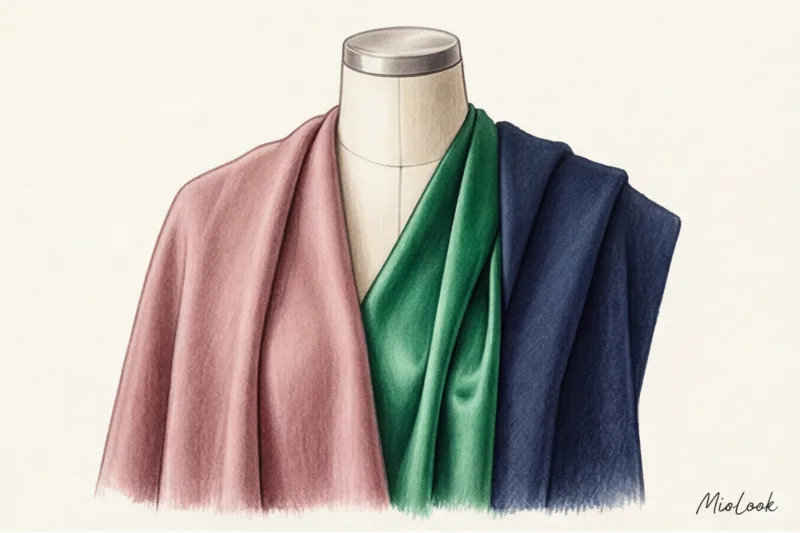
"Elegance isn't about being noticed, it's about being remembered. Complex, multifaceted shades enhance your individuality, while pure spectral colors often simplify an image."
How Fabric Texture Changes Color: A Secret They Keep Quiet
No guide on color types of appearance It won't work if you ignore the texture of the fabric. The same burgundy dress made of linen and silk are two completely different dresses with opposite effects on the face.
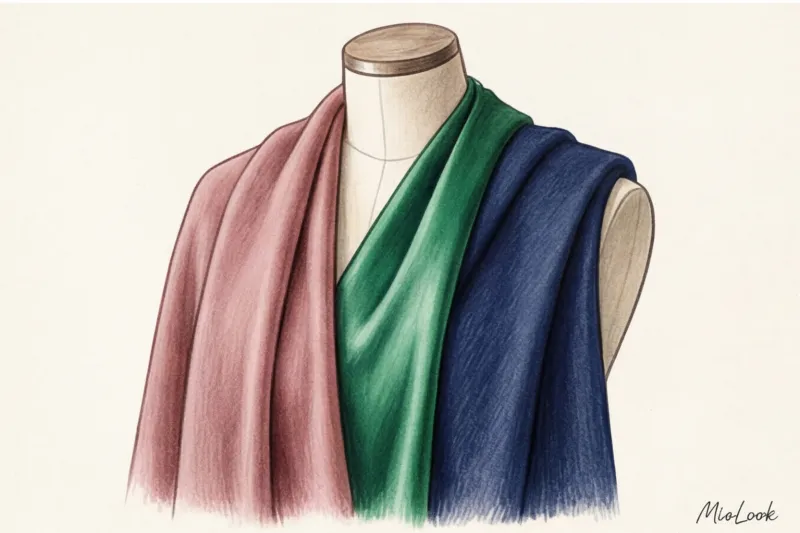
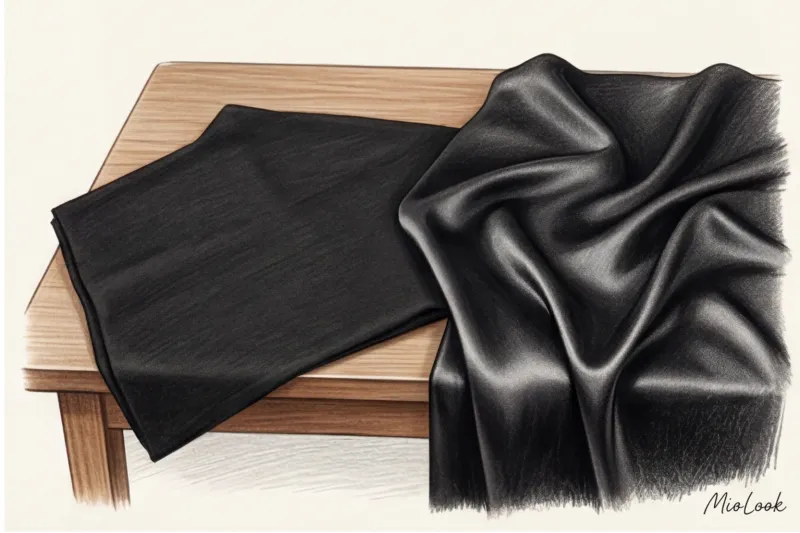
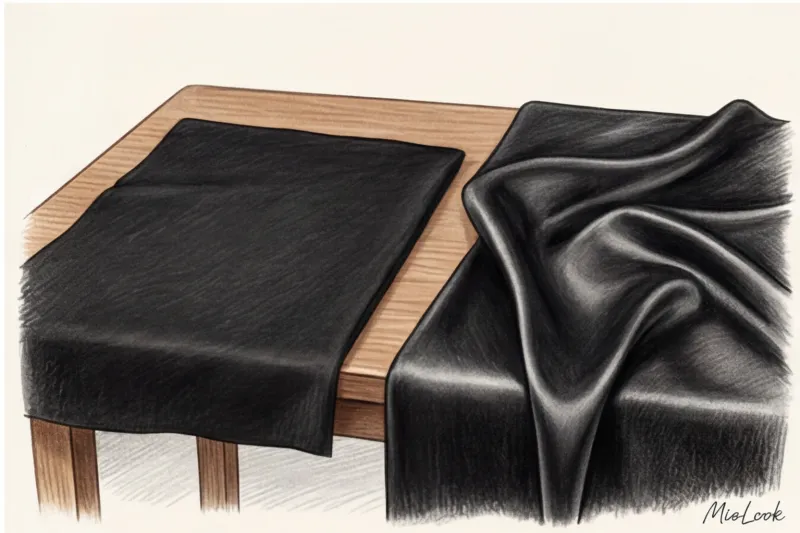
In the textile industry there is a concept Silk Reflection Index (fiber reflectance index). Matte fabrics like linen, heavy cotton, or cheap acrylic absorb light. They flatten skin tones and often cast gray shadows on the chin and neck. Satin textures—natural silk, high-quality viscose (cupro, tencel), or fine polished wool—have a subtle sheen. They reflect light back onto the face, blurring wrinkles better than expensive highlighters.
Your perfect look starts here
Join thousands of users who look flawless every day with the MioLook smart wardrobe.
Get access — €0.99 onceThere is an important limitation here that I must warn you about. This advice It doesn't work If the gloss is synthetic, consider this. Cheap polyester with a high sheen won't illuminate your face, but will instead highlight even the slightest imperfections and create a sweaty effect. If you choose gloss, invest in natural or high-quality synthetic fibers.
The main myth: does black really make you look older after 50?
Perhaps the most ingrained stereotype is that black is strictly forbidden after 50. This is a half-truth that deprives many women of an elegant base. It's not the black itself that ages. It's the matte, washed black cotton right under the chin that does.
Over 12 years of working as a stylist, I've developed the "15 Centimeter Rule" for my clients. If you adore black, simply move it at least 15 centimeters away from your face. How do you do it?
- Deep V-necklines. A black jacket worn over a low-cut top creates a picture frame effect, with your décolleté skin becoming the primary reflector.
- Transparency and lace. Black organza or chiffon on the shoulders looks airy and removes the visual heaviness of the color.
- Change of texture. A black turtleneck made of thick cotton will highlight all the nasolabial folds. A black silk slip top, on the other hand, will create a toned facial contour thanks to the contrast and shine.
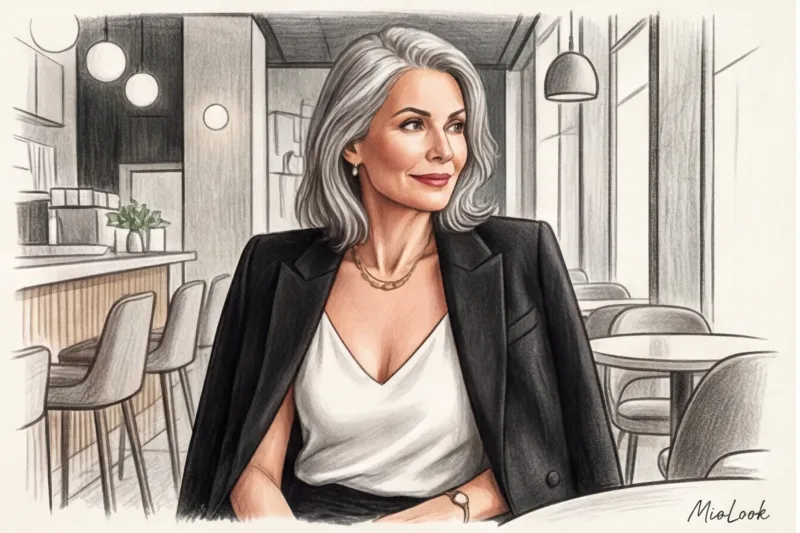
If you still want to soften your basic wardrobe, great options status alternatives Black will be replaced by deep blue (navy blue), dark chocolate or anthracite graphite.
Dangerous palette: shades that can add 10 years to your age
Certain colors have a tricky way of draining the freshness from your skin. I strongly recommend caution when choosing the following colors in the portrait area:
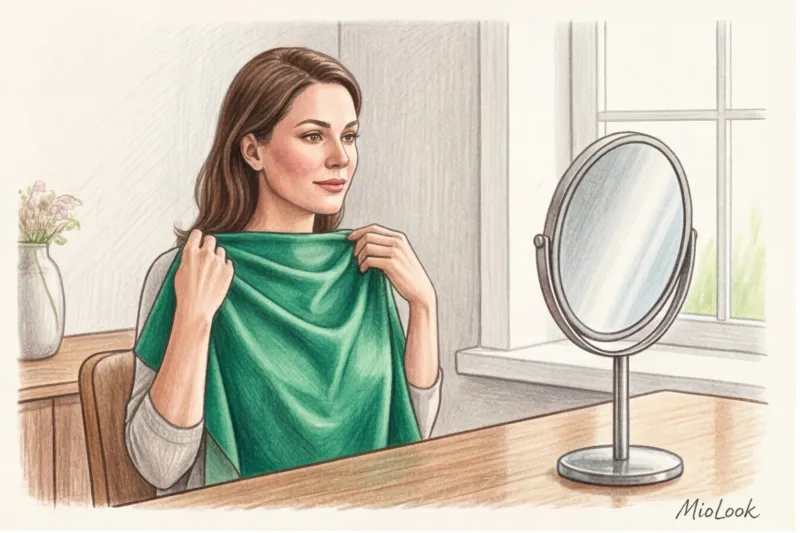
Earthy and swampy tones. Khaki, mustard, dull olive, and rust. These colors often contain a green undertone, which visually overlays the skin, creating the effect of illness or chronic sleep deprivation. I had a client, Marina (54), who complained of a constantly dull complexion. It turned out her favorite piece of clothing was a matte mustard cardigan. As soon as we swapped it for an emerald merino sweater with a subtle silk sheen, the earthy tone disappeared without a drop of makeup.
Neon colors. Acid yellow or electric pink often create disharmony. On mature skin, which has lost its natural high contrast, neon looks alien and creates a "desperation effect"—an attempt to appear younger through flashy pigments rather than elegance.
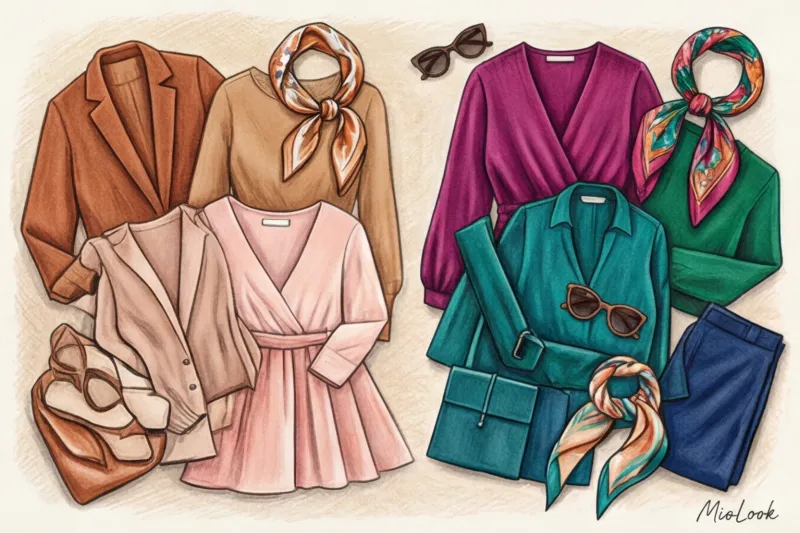
Infantile pastel. An all-over pale pink (cotton candy) or sky blue look can create an "old-lady" look if styled incorrectly. To make pastels work for you, ground them with crisp textures (like pink, but in the form of a chunky jacket rather than a shapeless knit).
Access to MioLook for €0.99 — one-time payment
A smart AI stylist will select the perfect look based on your best colors and body features.
Get access — €0.99 onceChecklist: How to Create a Personalized Anti-Aging Palette
Theory is great, but how do you apply it to your own closet? To find your perfect colors, do a simple practical test in daylight.
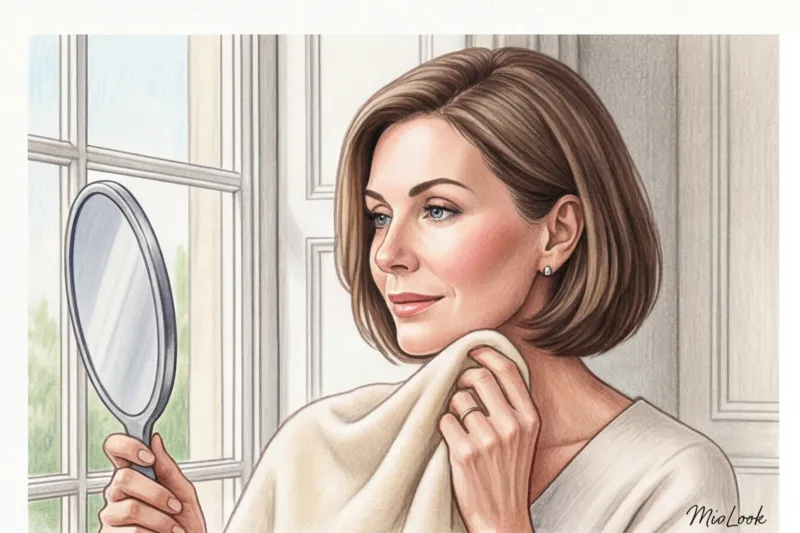
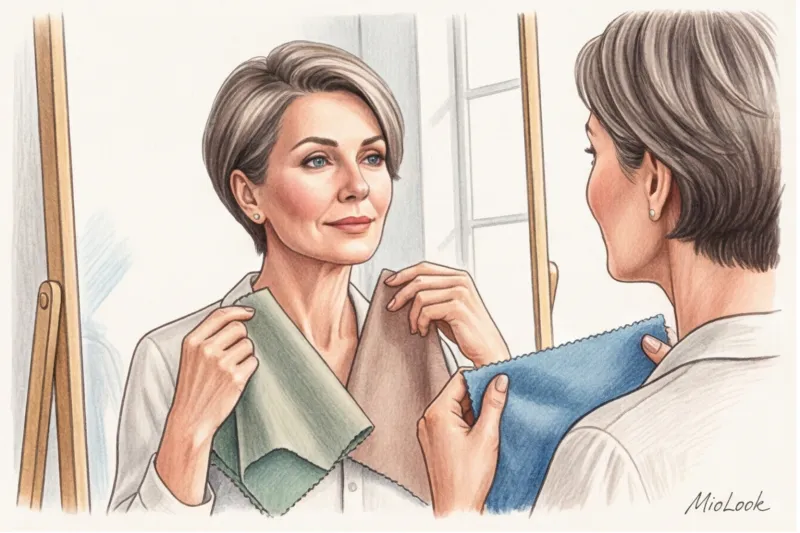
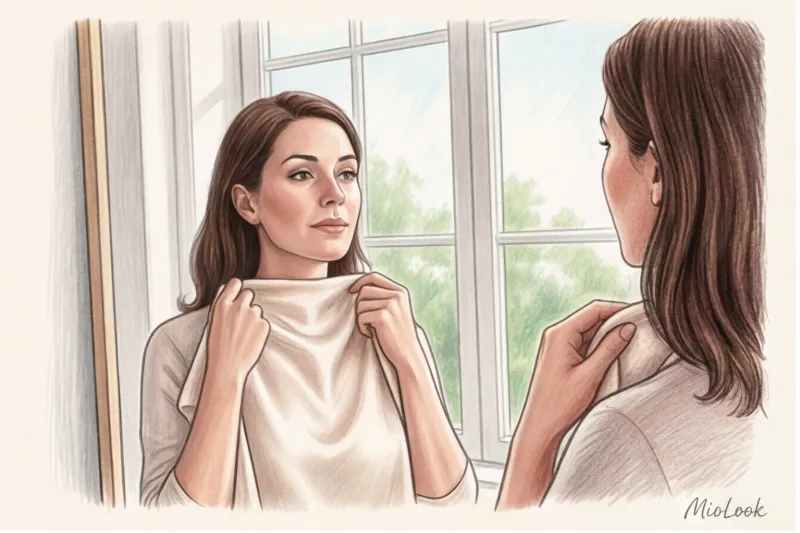
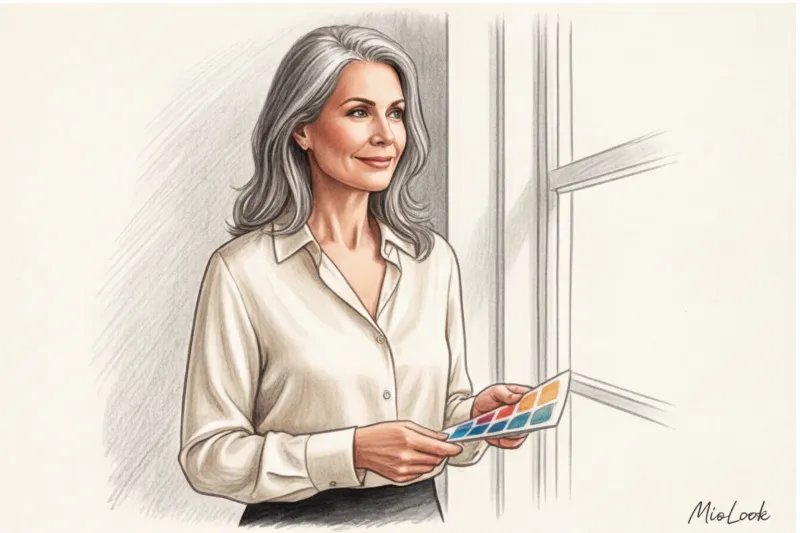
Take two pieces of fabric (or just sheets of paper): one crisp white, the other butter or ivory. Stand in front of a window (no makeup) and apply them alternately to your chin. You'll instantly see the difference. One shade will deepen wrinkles, while the other will even out your skin. This is the basic method for determining your undertone (cool or warm).
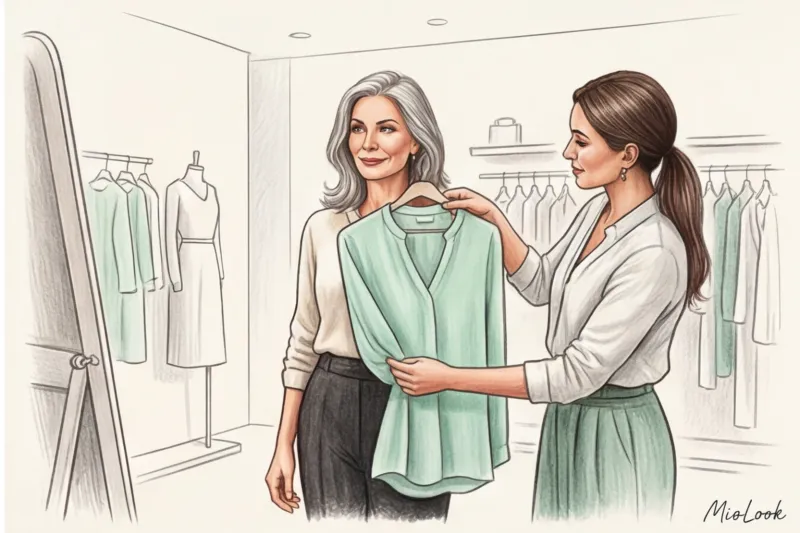
The 70/30 balance rule. Your wardrobe shouldn't consist solely of light blouses. Use 70% calm, deep base colors for skirts, trousers, and jackets, and 30% refreshing accents directly near the face (scarves, tops, shirts). If you adore a "dangerous" color (like mustard), simply wear it lower down—in trousers or a skirt—where it won't draw attention to your face.
To avoid getting confused with shades while shopping, I recommend using the “smart wardrobe” function in MioLook You can digitize your most flattering, refreshing pieces, and the app will automatically suggest how to pair them without disrupting the color balance.
Remember the cardinal rule of conscious elegance: color should serve you, not you serve color. Forget universal no-no lists. Invest in fine fabrics with a subtle shimmer, reveal your neckline, and choose sophisticated shades of jewel tones or powder. Your clothes are a frame, and you have the power to ensure they highlight your experience and beauty, not hide them.