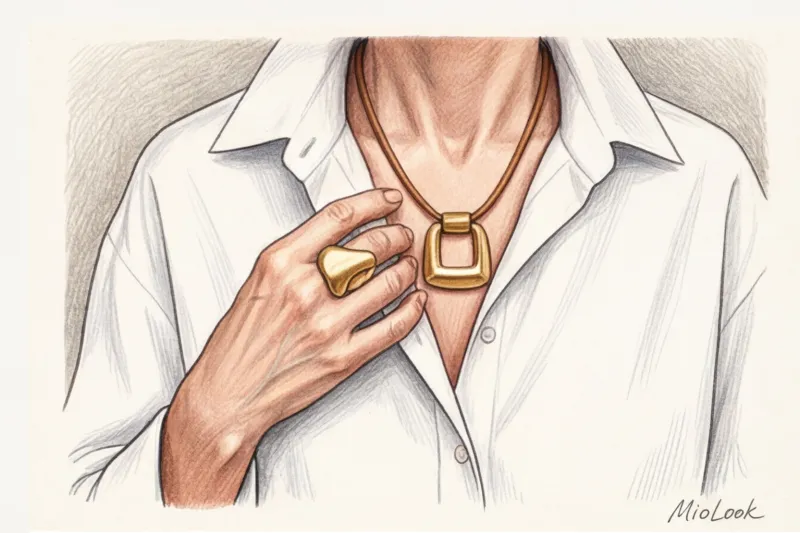
You know what visual mistake I see in eight out of ten new clients over 50? They use accessories as camouflage. Trying to hide the signs of aging on their necks, women wrap silk scarves tightly, turning them into a kind of medical bandage. Ironically, this technique has the exact opposite effect—it draws the eye to the décolletage and creates a persistent association with "retired flight attendant."
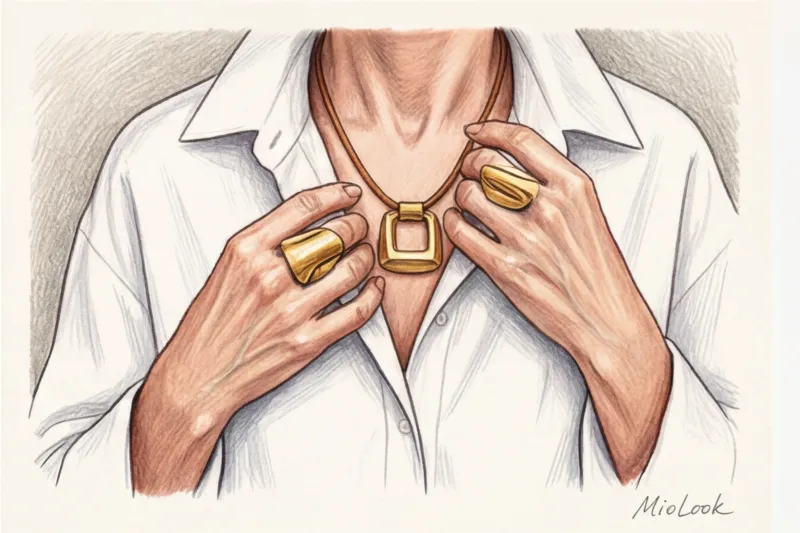
This article debunks the myth that accessories are needed for camouflage as we age. We'll be looking at scarves, bags, and jewelry for women over 50 Like architectural elements. They create a silhouette, direct the attention of others, and convey status—but only if the textures are impeccable. We've covered the basic principles of creating a fashionable wardrobe for this age in more detail in our The complete style guide without the auntie effect.
Jewelry for Women Over 50: Why It's Time to Forget the "Wear Sets" Rule
Ditching classic jewelry sets (where earrings, a ring, and a necklace are all identical) is the quickest and cheapest way to rejuvenate your look. Historically, sets have conveyed conservatism and predictability. Today, they look downright mothballed.
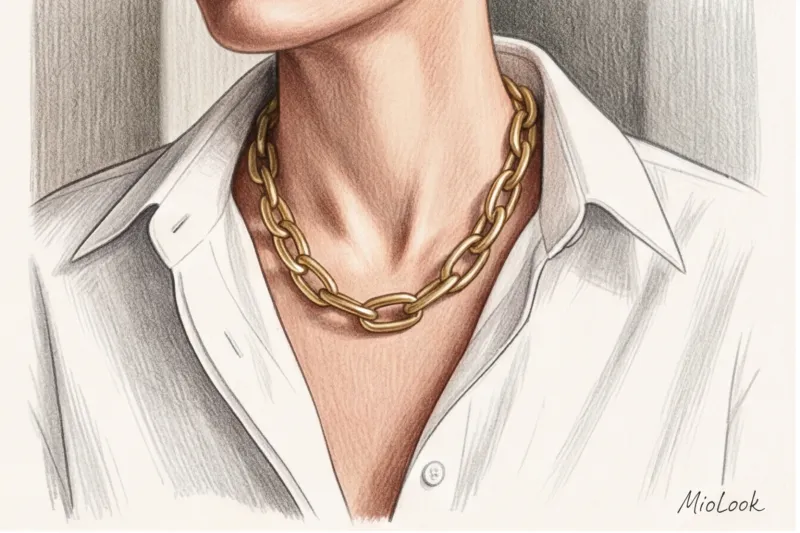
In styling, there's a strict law of scale that works like an optical illusion. A thin gold chain with a microscopic diamond or filigree string earrings act like a magnifying glass against mature skin. When contrasted with overly small, fussy jewelry, any changes in skin texture (wrinkles, pigmentation) become visually more noticeable.
That is why the concept demi-fine jewelry Semi-precious jewelry is currently experiencing a boom. According to a 2024 McKinsey research report, the segment of high-quality costume jewelry made of gold-plated silver or brass with natural gemstones grew by 35%. Why bother with a dozen bland, thin rings made of mass-market gold when you could buy one luxurious, heavy, architectural ring or bracelet for the same price, which would become your personal statement?
"Don't be afraid to mix metals. The sterility of a single color (just gold or just silver) makes a look bland. Modern styling welcomes the juxtaposition of cool rhodium and warm gold plating in a single outfit—it adds dynamism and suggests you haven't tried too hard."
Access to MioLook for €0.99 — one-time payment
A smart AI stylist will select the perfect look based on your accessories and body shape.
Get access — €0.99 onceGeometry and scale: how jewelry size influences perception
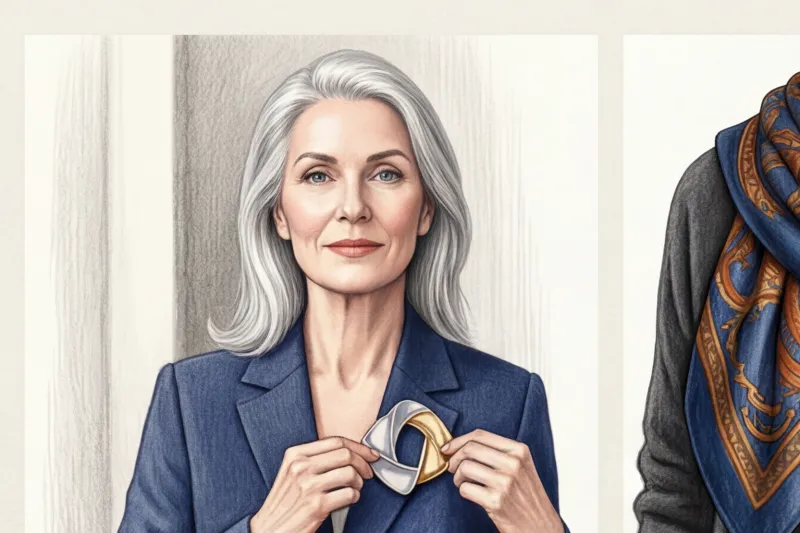
To make jewelry work for you, choose sculptural, smooth shapes. Instead of a complex floral pattern, choose a polished sphere. Instead of a scattering of small cubic zirconia, choose a single, large, irregularly shaped baroque pearl.
- The One Big Accent Rule: If you wear a massive cuff bracelet that covers a third of your wrist, avoid wearing rings on that hand.
- Single earring: A chic look for short haircuts or updos. A large geometric earring in one ear instantly adds a fashionable touch.
- Limitation: This sculptural minimalism doesn't work well if your wardrobe consists exclusively of romantic floral dresses. Such pieces require a simple backdrop—a white shirt made of thick cotton, a cashmere turtleneck, or a structured jacket.
Silk, cashmere, and texture: how to wear scarves without looking 'auntie'
Let's get back to scarves. One of my clients, a 54-year-old top manager, brought in an entire collection for a wardrobe review—about fifteen colorful scarves. All of them were mass-market, made of polyester, and slippery like plastic. We ruthlessly got rid of them in favor of a single, thick silk square (90x90 cm) from a premium brand. She later admitted, "This one scarf made my wardrobe look three times more expensive than all those fifteen scarves."
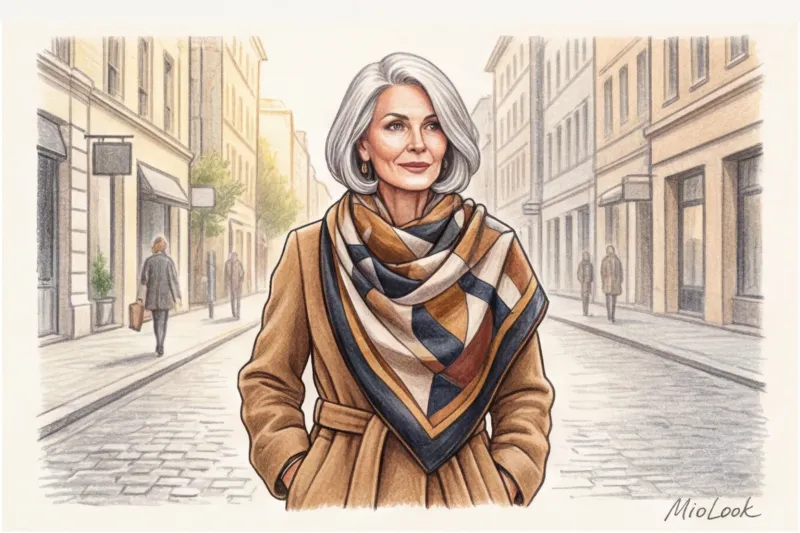
As a textile expert, I can give you clear criteria for selection. Silk quality is measured in momme (the weight of the fabric). Scarves with a density below 14 momme look cheap, are see-through, and, most importantly, don't hold their shape They hang limply around the neck, like a forlorn rag. The ideal scarf should have a density of 16-19 momme. When folded, it forms a firm, architectural fold. The second marker of status is the rulik (the hand-stitched edge of the scarf, rolled toward the front).
Modern ways to style scarves and stoles
How to wear a scarf if not tied around the neck in a knot?
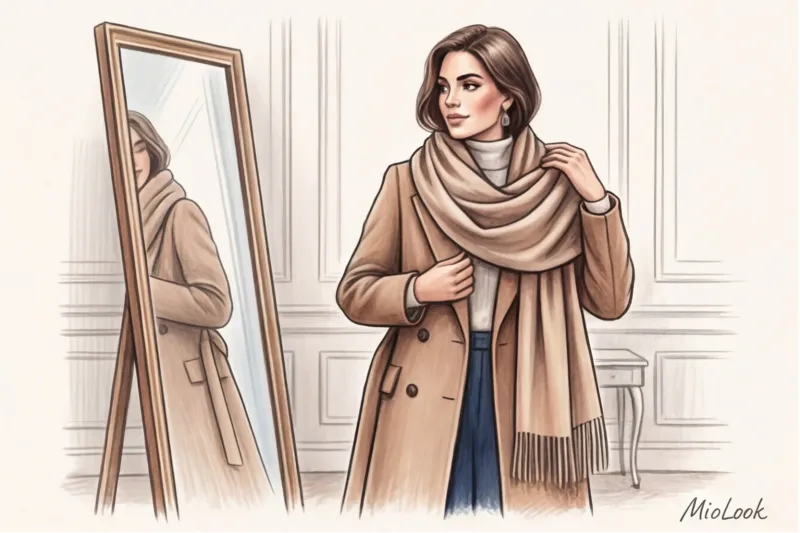
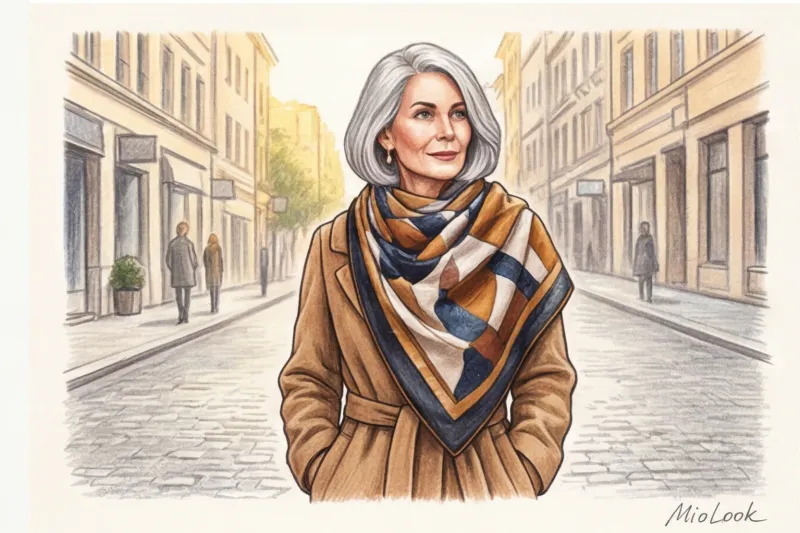
- Asymmetrical draping: Drape a large silk scarf folded into a triangle over one shoulder over a basic wool coat or trench coat, pinning it under the lapel. This creates a vertical line that visually elongates your height.
- Twilly (narrow silk ribbon): Wear it around your wrist instead of a bracelet or wrap it around the handle of a structured bag. It's the perfect way to introduce a pop of color near the face without overwhelming the portrait area.
- Cashmere stole with belt: Place a thick stole around your neck so that the ends hang freely in front, and tie them at the waist with a wide leather belt over the jacket.
Architecture in your hands: choosing bags that bring your look together
If silk and metal are decorative, then a bag is the framework of your look. With age, our natural architecture (the oval of the face, the line of the shoulders) can become slightly softer. And if you add a shapeless bucket bag or a relaxed nylon backpack to this softness, the silhouette instantly blurs. Relaxation turns into sloppiness.
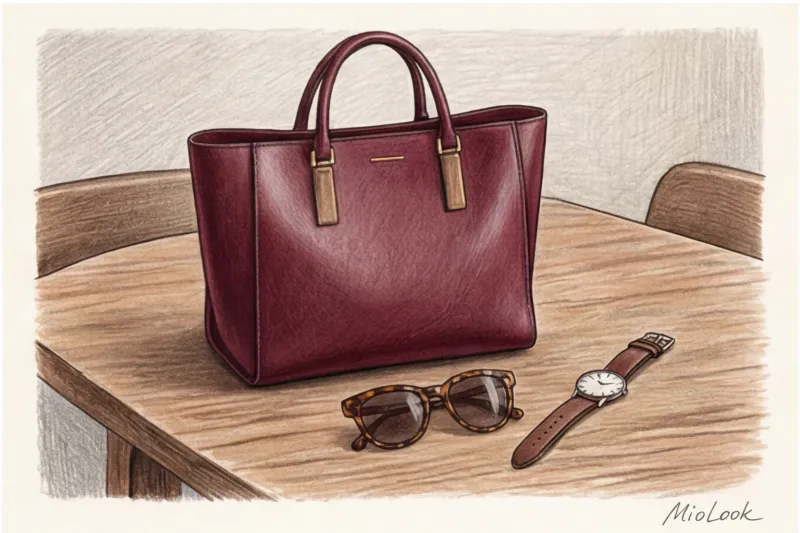
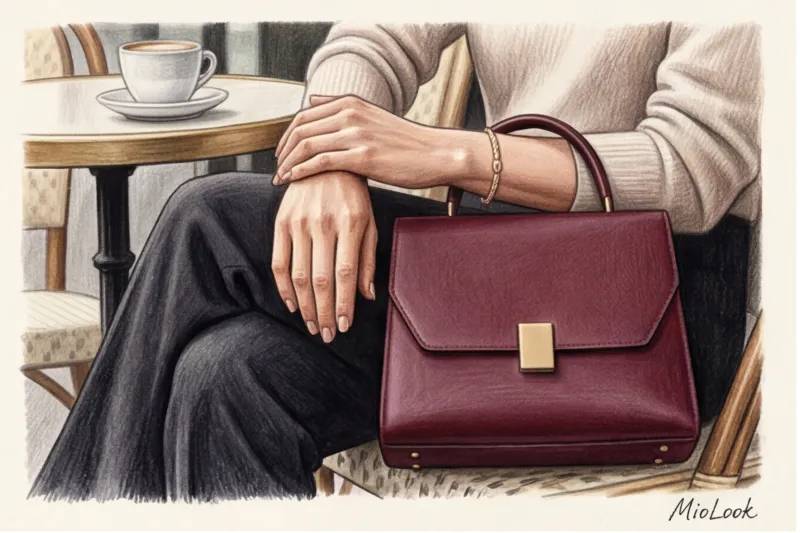
Over 12 years of practice, I've developed an ironclad rule: after age 50, switch to bags with rigid, geometric shapes. Totes, satchels, and baguettes should stand up on their own on a table, without tipping over.
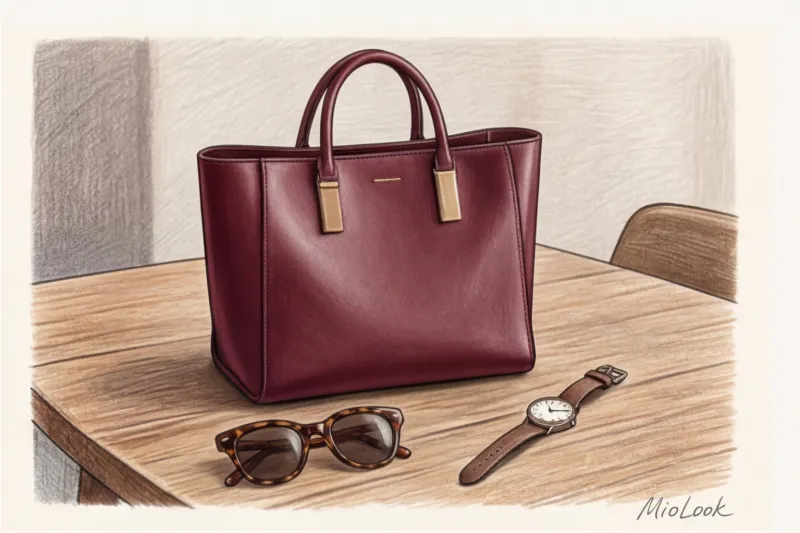
We once replaced a 52-year-old client's shapeless hobo bag with a crisp, dark chocolate-colored leather tote. The transformation was astounding. The bag's crisp angles magically lifted her casual look of jeans and an oversized sweater. She looked in the mirror and said, "It felt like my back had straightened."
Pay special attention to the hardware. Cheap, samovar-like gold gleam on locks and oversized logos will ruin any style. Look for matte metal—brushed brass, tarnished silver, or leather-covered hardware. Read on to learn about other details that reveal impeccable taste. about status accessories.
Your perfect look starts here
Join thousands of users who look flawless every day and save time in the morning with the MioLook app.
Get access — €0.99 onceConscious consumption: investing in quality, not quantity
The philosophy of sustainable fashion in the context of accessories is extremely pragmatic. It's better to have three flawless pieces than a drawer full of quickly outdated trends made of artificial materials. Faux leather (even the highest quality) rarely lasts more than two or three seasons, beginning to crack at the handles and corners.
When deciding to buy an expensive accessory, always consider Cost per wear (cost per wear). A $300 bag made of dense, grained leather that you wear 300 days a year for five years will cost you 20 cents per wear. A cheap $50 bag that will lose its shape after 20 wears costs $2.50 per wear. The mathematics of elegance are merciless.
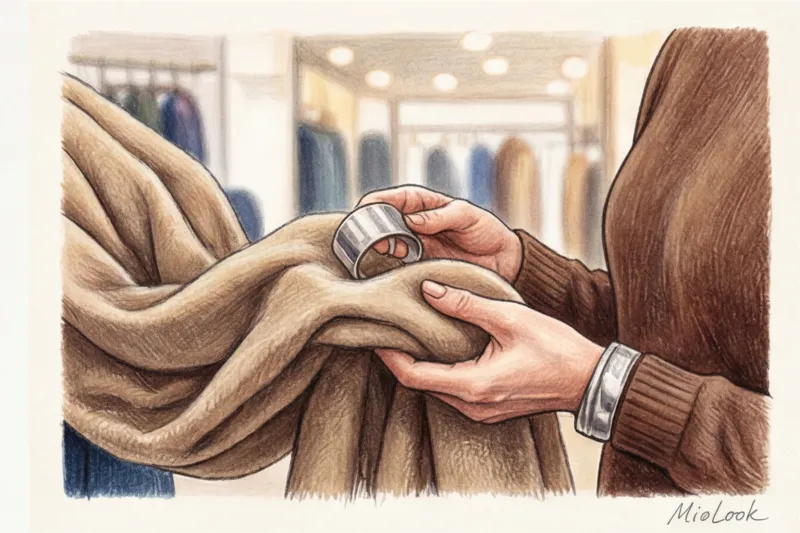
But quality items require care rituals. For me, cleaning a leather bag with a special beeswax-based conditioner is a true Sunday meditation. Leather lives, breathes, and ages beautifully (acquiring a noble patina) only if it's moisturized. The same goes for cashmere—never store it on hangers, always folded, preferably in cotton bags lined with cedar mothballs.
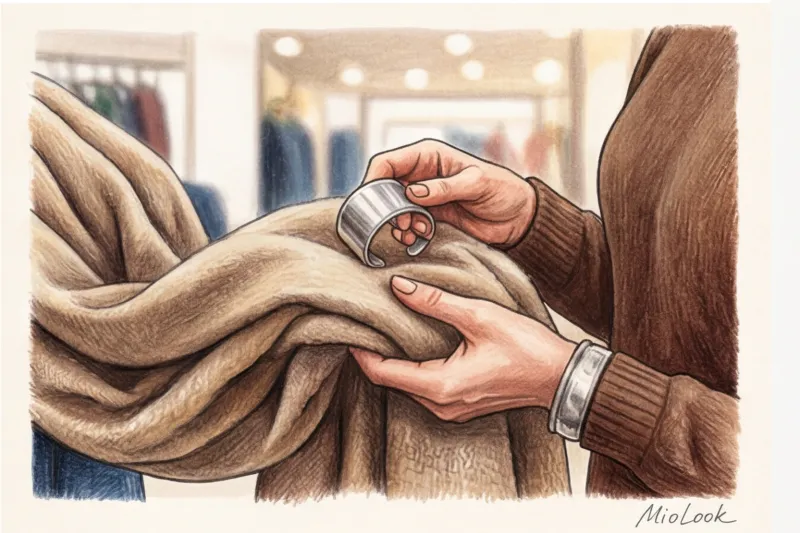
Checklist: A Quick Audit of Your Accessories
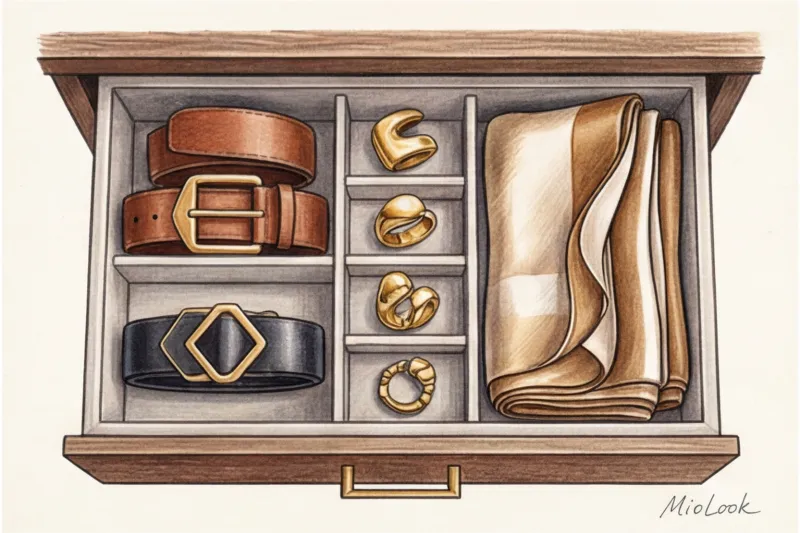
Open your accessory drawer right now and take a rigorous inventory. Anything that doesn't enhance your status should go.
- What you should get rid of today: ready-made jewelry sets, bags with frayed corners or cracked edges (paint on the ends of the handles), thin gossamer scarves with lurex, outright fakes of luxury brands (nothing cheapens an image like fake fittings).
- Basic minimum for the coming season: 1 structured, rigid bag (black, burgundy, or camel), 2 statement pieces (single earring or large, smooth bracelet), 1 heavy silk scarf (from 14 momme) or 100% cashmere scarf.
If you find it difficult to independently assess the relevance of your bags and jewelry, you can digitize them by adding them to the "smart wardrobe" feature in MioLook The algorithm will help you create dozens of new combinations with them, based on the rules of scale and geometry we discussed today.
Remember the key: accessories are the punctuation marks of your look. They can turn a boring sentence into an exclamation or add a confident full stop. Stop hiding behind them. Use them to make a statement—loudly, elegantly, and with dignity.