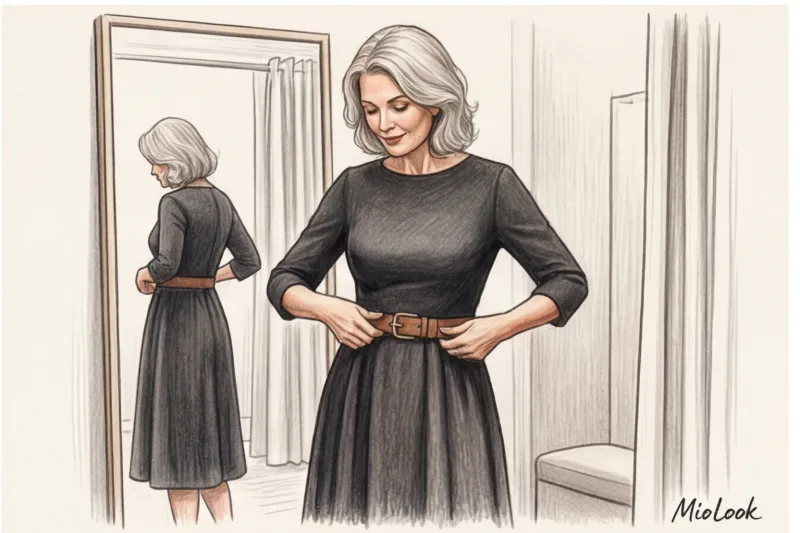
In 14 years of working as a personal stylist, I've memorized one scenario. A stunning, accomplished woman in her 50s comes to me for a consultation. We walk into a store, and she unerringly, as if hypnotized, heads for the rack of shapeless robes. To my silent question, she shrugs: "Olena, but I need to hide my stomach and arms. Structured clothes are for young and thin people."
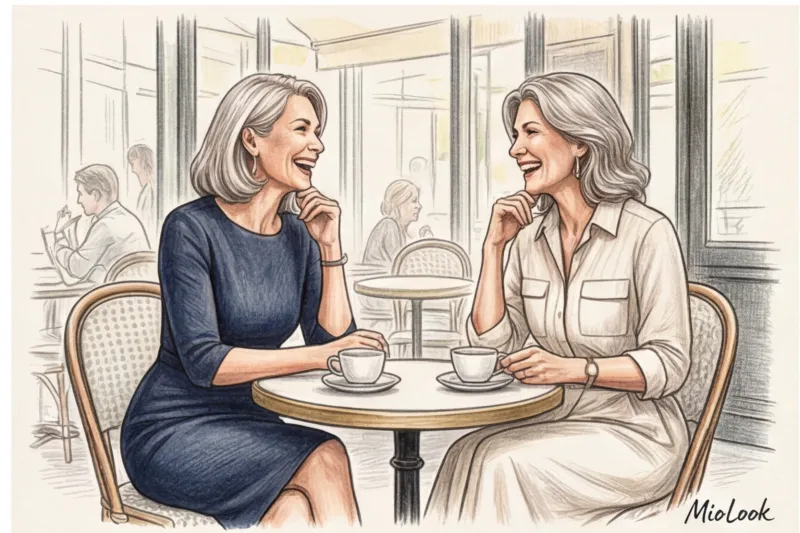
It is at this moment that our main work begins. Because choosing Dress styles for women over 50 "Just to hide" is the most destructive stylistic mistake. We've already discussed the evolution of age-appropriate wardrobes in more detail in our The Complete Fashion Guide for Women Over 50 , but today I want to focus specifically on dresses.
Let's be honest: baggy clothes don't hide excess weight. They transform your figure into a monolithic, massive block, visually adding at least one size and a decade to your figure. Your wardrobe should serve your confidence, not serve as a cover for imaginary flaws.
Why the old rules about dresses for women over 50 no longer apply
Remember the glossy magazines of the 2000s? They were full of rules: "After fifty, cover your knees," "No bright prints," "Forget about bare shoulders." Forget this advice; it's hopelessly outdated.
According to a 2024 report from the authoritative analytical agency WGSN, the fashion industry is finally moving towards the concept ageless fashion (fashion transcends age). Brands no longer divide clothing into "for the young" and "for the mature." We dress according to our status, lifestyle, body type, and personal preferences, not the number on our passport.
The "grandmother effect" isn't caused by wrinkles or gray hair. It appears when a woman chooses flimsy, thin floral knitwear, a soft, shapeless collar, and a lack of shoulder definition. It's interpreted as self-weariness.
Your perfect look starts here
Join thousands of users who look flawless every day with the smart wardrobe manager MioLook.
Get access — €0.99 onceCut Architecture: 4 Styles That Look Perfect on Any Figure
The main secret of tailoring is that darts and a well-defined shoulder shape shape your posture. As soon as a dress has a defined shoulder line, your silhouette instantly becomes more composed. You look taller, slimmer, and more energetic. Soft draping only looks good on perfect bodies; everyone else needs structure.
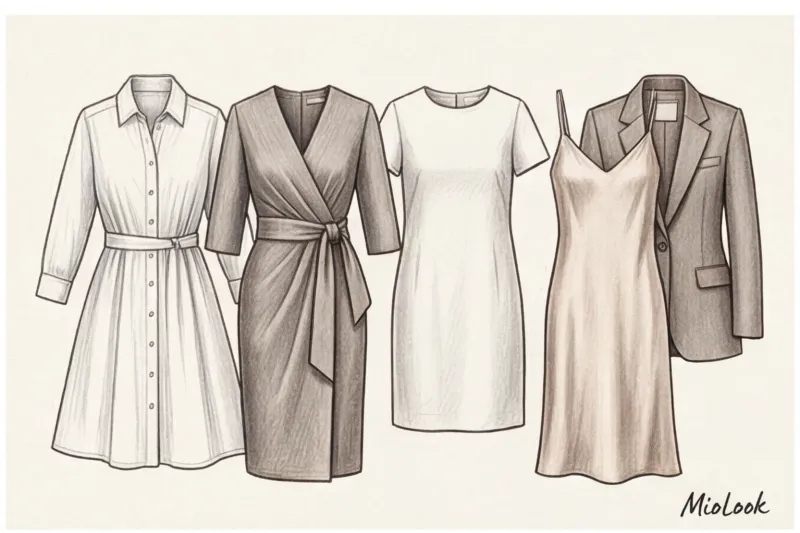
1. Shirt dress: a smart wardrobe staple
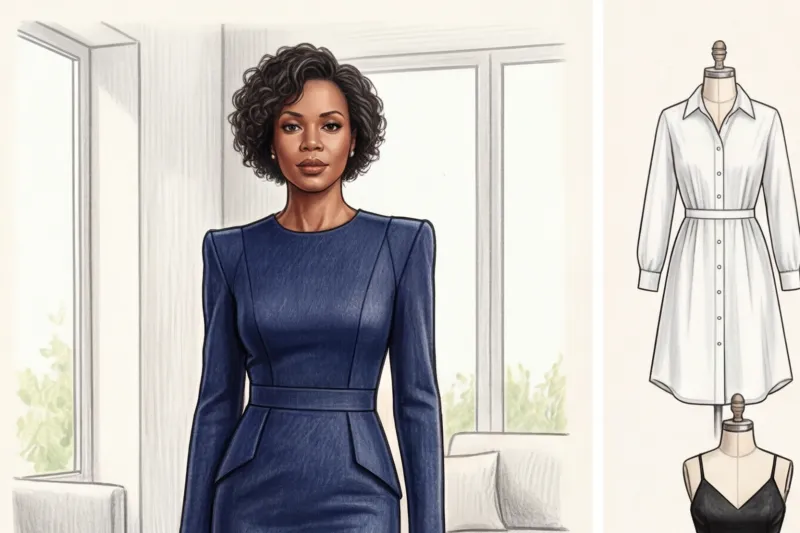
If I were asked to keep only one dress in my wardrobe, it would be a shirt dress in heavy cotton (poplin) or matte silk. It's a phenomenal investment.
- How does this work: A continuous vertical line of buttons from collar to hem cuts the silhouette in half, visually elongating the height and narrowing the waist.
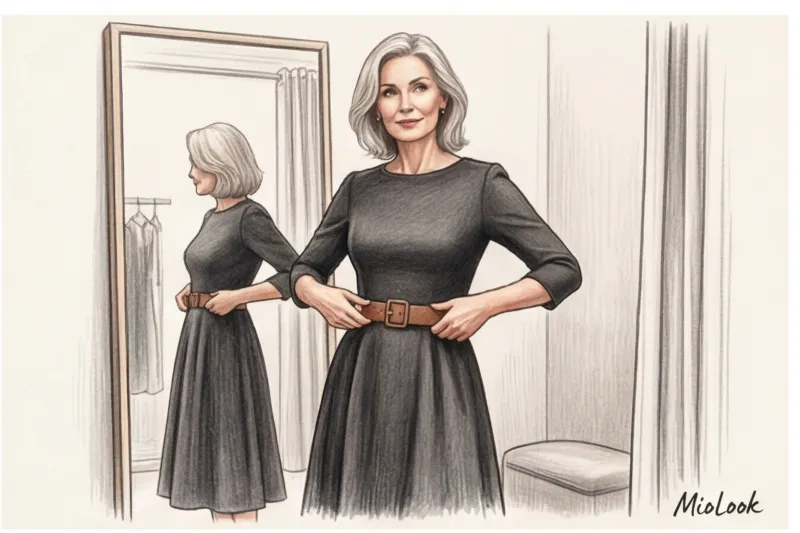
- Styling secrets: Never button it all the way up. Unbutton the top two buttons to create a V-neck (it elongates the neck). Be sure to roll up the sleeves to reveal graceful wrists. Wear it with a wide leather belt or loose, depending on your mood.
2. Structured Wrap Dress
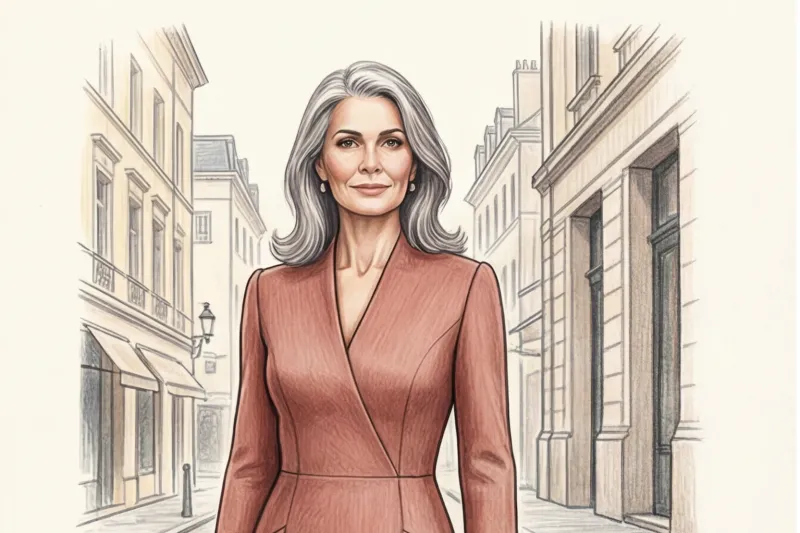
The diagonal wrap line is a brilliant invention that "drapes" the waist even in areas where it's not anatomically defined. This cut is ideal for women with a full bust, as it beautifully frames the décolleté without weighing down the top.
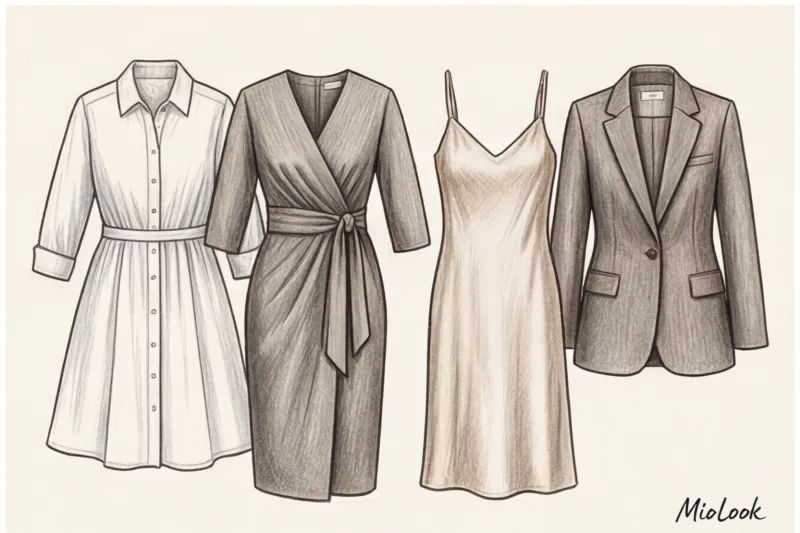
But there's a dangerous trap here! Beware of thin viscose (kulirka), which treacherously clings to every fold of the back. We need a dense fabric: heavy crepe, suiting wool with elastane, or linen with viscose. The dress should hold its shape like a light coat.
3. Laconic straight-cut dress (Shift dress)
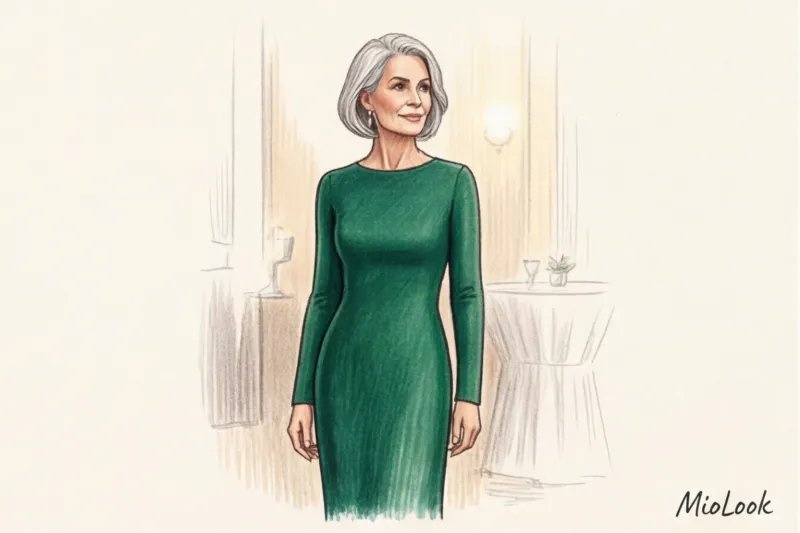
This is the very essence of Parisian chic: minimalism that looks expensive. A straight dress without an accentuated waist is a salvation for an apple-shaped figure (when most of the volume is concentrated in the abdominal area).
The key here is proper fit. There should always be some air between your body and the fabric (about 2-3 centimeters). If a straight-cut dress is too tight, it will look like a caterpillar. A simple style calls for statement accessories: add statement earrings, a high-quality leather bag, and loafers.
4. Lingerie style 50+: a slip dress paired with a jacket
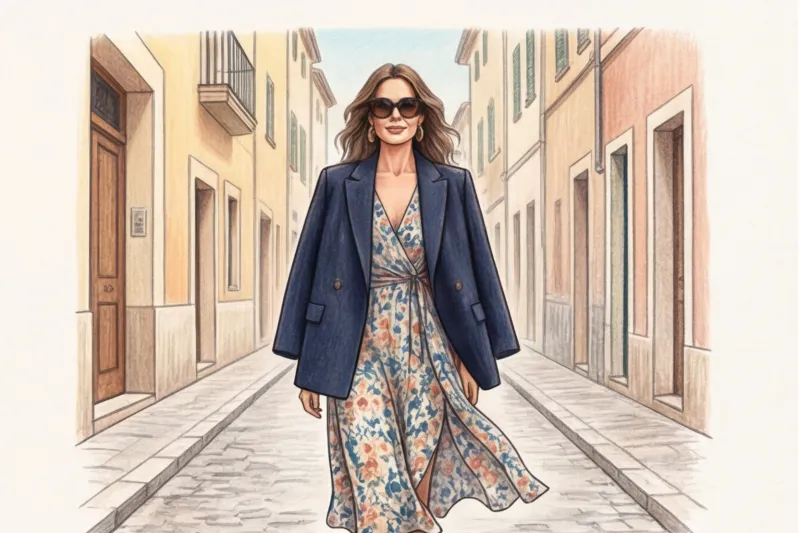
Let me tell you the story of my client Anna. At 54, she was convinced that a silk slip dress was the preserve of twenty-somethings at parties. Until we dressed her in a dark blue, heavy matte silk midi dress, layered over a heavy graphite-colored men's jacket.
The contrast of textures (delicate silk and coarse suiting) works wonders. The jacket cinches the figure, concealing the forearms and waist, while the flowing silk hem adds lightness and movement to the look. It's an incredibly feminine and classy touch.
Access to MioLook for €0.99 — one-time payment
A smart AI stylist will analyze your clothes and suggest which jacket will best pair with your favorite dress.
Get access — €0.99 onceLength, Sleeves, and Proportions: The Anatomy of a Perfect Fit
Beyond the cut, the devil is always in the proportions. Over the years of working in fitting rooms, I've discovered three golden rules that work without fail.
Finding your midi length. Midi is a new classic. But midi comes in different shapes and sizes. Never let the hem end at the widest part of your calf—this will visually make your legs look bulky. The ideal point is just below the knee, at the narrowest part of your leg, just before it meets your ankle.
The open hands problem. Many of my clients don't like to show their upper arms (forearms). If this is the case for you, avoid short cap sleeves—they only emphasize volume. Opt for an elegant 3/4 sleeve or a loose short sleeve ending a couple of centimeters above the elbow.
Open Zone Rule. The statistics of visual perception are relentless: if you show the narrowest parts of your body (wrists, ankles, and collarbones), the observer's brain constructs the rest of your silhouette based on these fine lines. You automatically appear 3-5 kilograms slimmer. Therefore, always pull your sleeves up slightly and choose shoes that expose your ankle bone.
Fabrics That Work for Status (and Those to Avoid)
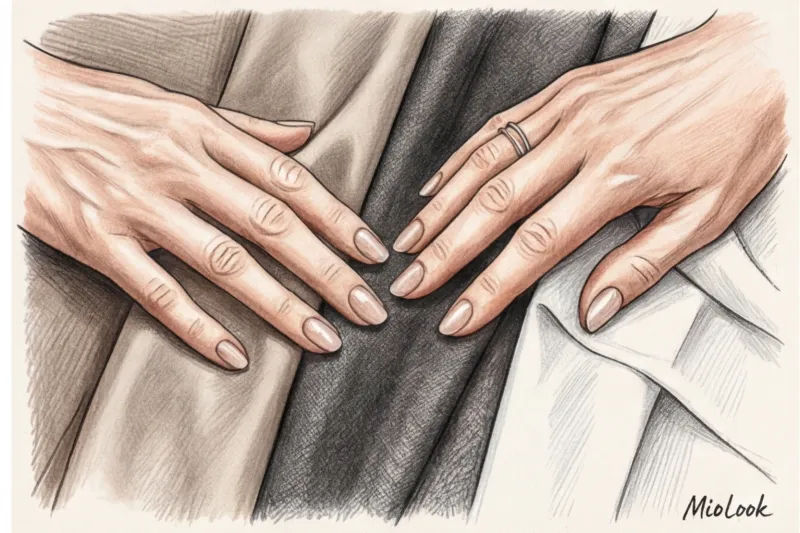
At age 50+, fabric becomes more important than style. Cheap, shiny synthetics or loose knits can ruin even the most brilliant haute couture cut.
What we invest in:
- Thick cotton (from 180 g/m²);
- Suit wool (virgin wool);
- Matte dense silk (not satin!);
- Tencel (drapes well, but has weight).
What to avoid: thin jersey, cheap elastic guipure, revealing lurex and polyester, which becomes electrified and sticks to tights.
A fair limitation: Linen with added viscose is a wonderful summer material. But let's be realistic. If your job involves driving or you sit in an office for eight hours, even the highest-quality linen will develop deep creases in the groin area. In such scenarios, it's better to choose wrinkle-resistant Tencel or cotton with a special non-iron finish.
Let's count Cost Per Wear (cost per garment). You buy a cheap, shapeless dress for $30, wear it twice because it's uncomfortable, and it loses its shape after washing. Cost per garment = $15. Or you buy a perfect shirtdress made of premium cotton for $150, wear it 2-3 times a week for two seasons (about 60 times). Cost per garment = $2.50. Investing in quality fabric always pays off.
Pre-purchase checklist: 5 questions from a stylist in the fitting room
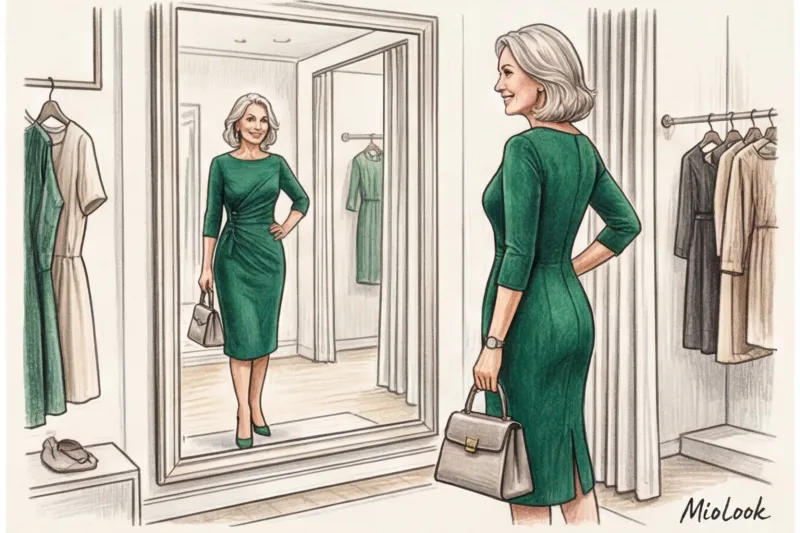
I give this signature checklist to every client during my shopping experience. Before you take your dress to the checkout, ask yourself these five questions:
- Is there 2-3 centimeters of “air” between the fabric and the body? If the dress is tight across your hips or bust, it's the wrong size. Go up a size and have your waist adjusted (if necessary) by a tailor.
- Can I raise my arms without adjusting my hem? Sit on the ottoman in the fitting room. If the dress is riding up and you have to constantly tug it down, you won't wear it.
- Is the fabric cutting in at the armhole area? The armhole (cutout for the arm) should not squeeze the armpit, creating unnecessary folds.
- Does the fittings match the price? Mass-market brands (like Zara or Mango) often make excellent cuts but skimp on buttons. Budget $10 to have plastic buttons replaced with horn or metal ones—the item will instantly look three times more expensive.
- What three pairs of shoes will I wear this with? If you need to buy special shoes, a bag, and a cardigan to go with a dress, it's a bad investment.
Ready to get started?
Upload photos of your items to MioLook, and the algorithm will show you what to pair your new dress with, using your existing wardrobe.
Get access — €0.99 onceSummary: A dress as a manifestation of your confidence
Finding the perfect dress after 50 isn't about trying to fit into the mold or disguise changes in your body. It's about taking your style to a new level, where your personality, expertise, and life experience play a key role.
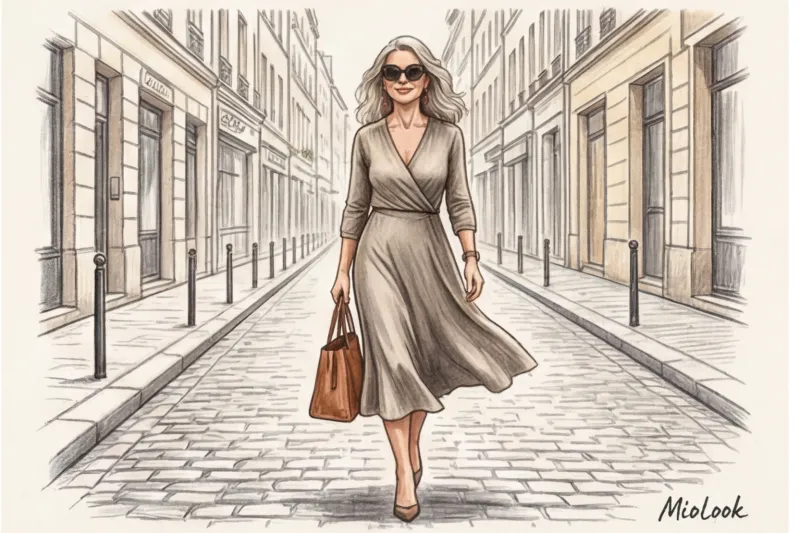
Ditch shapeless knitwear in favor of architectural cuts. Opt for a semi-fitted silhouette, thick textures, and a midi length. And remember: the perfect dress isn't one that makes people say, "What a beautiful dress!" but rather, "How stunning you look today!"
To make things easier, take stock of your current closet. Select items that already adhere to the principles of structured tailoring. Digitizing them and creating ready-made capsule wardrobes for every day will help you. Smart wardrobe feature in the MioLook app Your style is your message to the world, let it be strong and beautiful.