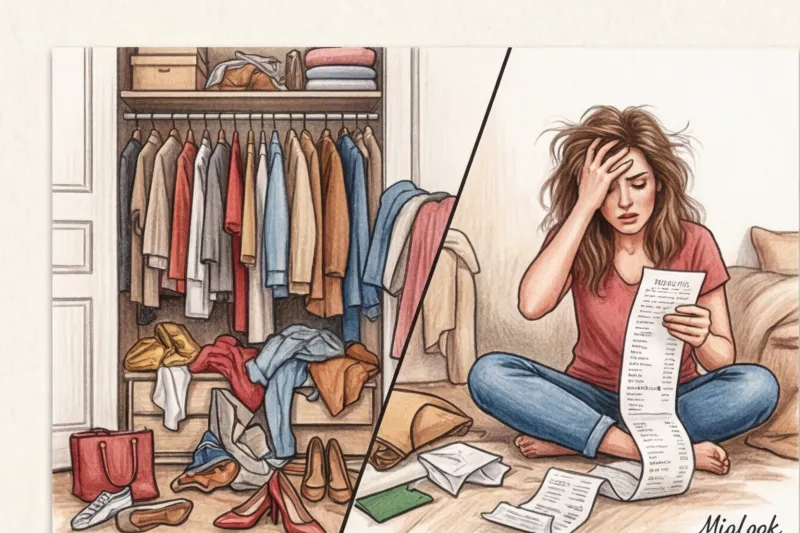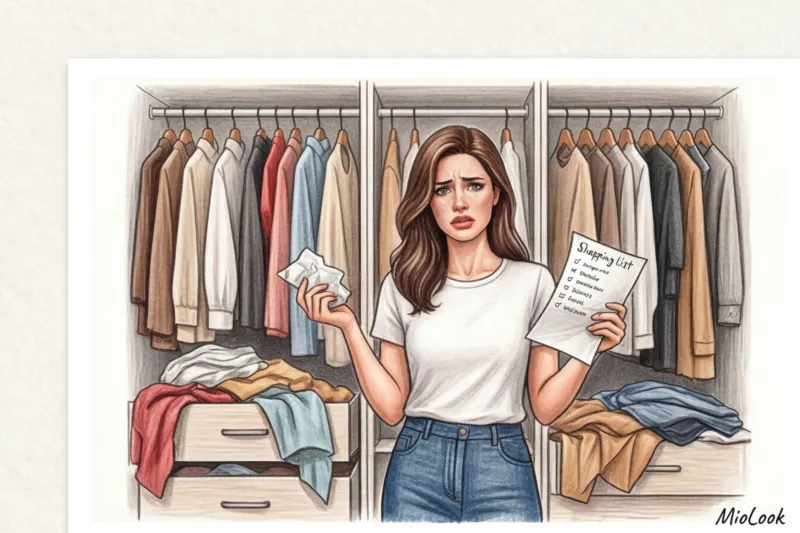
One of my clients, let's call her Anna, had a disastrous lack of luck with trousers. When we first met for a wardrobe audit, she had twelve pairs of black mass-market trousers hanging on her hangers. None of them fit perfectly. Some bunched up in the crotch, others clinged to her legs, and still others lost their shape after the first wash. When I asked her why she needed so many similar items, she answered sincerely, "Well, of course, every list of essentials says: buy the perfect black pants "I was looking!"

This is the main trap of modern consumption. An abstract entry in our phone notes provokes us to compromise on purchases. How to create a clothing shopping list , you must understand one harsh truth: a wardrobe is not a grocery basket, but an investment portfolio. And you need to approach its filling with a cool head. We've covered the basic principles of such investments in more detail in our guide to How to build a basic wardrobe on a budget: stylist tips.
Why Abstract Lists Don't Work: The Main Mistake When Decluttering Your Wardrobe
Writing "I need a white shirt" in your notebook is the worst thing you can do for your style and your wallet. This request is based on no understanding of your body shape or knowledge of textures. In the store, you'll inevitably grab the shirt that's closest, the cheapest, or the one being worn on the prettiest mannequin. This is called a "compromise buy"—you buy the thing that almost suitable to close the gestalt.
According to a large-scale study by the Ellen MacArthur Foundation (2022), the average woman wears a purchased item only 7-10 times before discarding it. Ten years ago, this figure was twice as high. The reason lies precisely in compromises. An item bought from an abstract list doesn't integrate into your life. It waits for a "special occasion" or the right weather to finally end up in the landfill.
A working shopping list should read like a strict technical specification. You're not looking for just a jacket. You're looking for a tool to solve a specific stylistic problem.
Access to MioLook for €0.99 — one-time payment
A smart AI stylist will select the perfect look based on your real wardrobe.
Get access — €0.99 onceReality Audit: How to Create a Clothing Shopping List from Scratch
Most girls start making wish lists by scrolling through Pinterest. Forget it. Your shopping list starts in your Google Calendar. Over 12 years of working as a stylist, I've discovered a golden rule: your wardrobe should reflect real life, not fantasy.
Draw a diagram of your month. If you spend 60% of your time in the office with a dress code, 30% out with the kids, and only 10% on dates and the theater, your budget and shopping list should be distributed exactly in this proportion. Buying a third luxurious evening dress when you're on a home-office-home schedule is like freezing your assets.
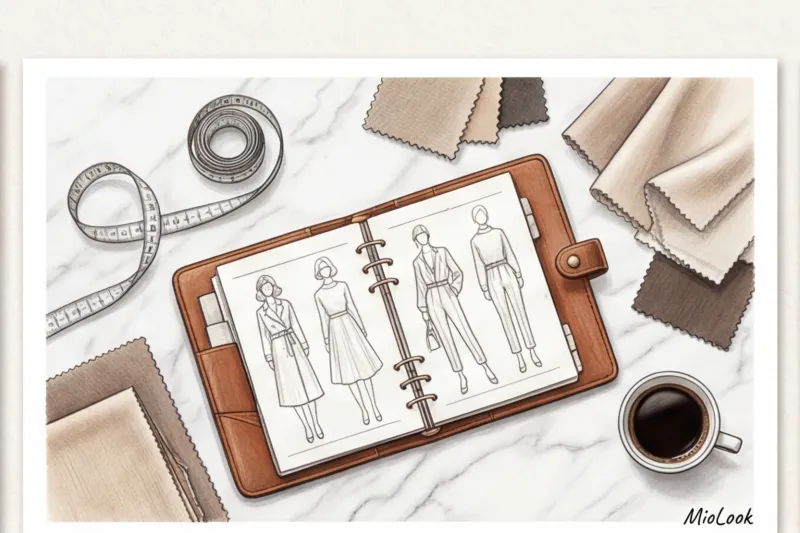
Get into the habit of keeping a "look journal" for at least a week. Every morning, as you get dressed, write down what you're missing. You'll quickly find your "wardrobe holes"—those missing elements that ruin dozens of potential outfits.
The 3-Image Rule for Integrating New Products
There's an ironclad rule in the world of styling: never add an item to your shopping list unless you have at least three ready-made looks for it in your head (or in your wardrobe app) consisting of already existing you have things.
If you're considering a complex skirt, ask yourself: which three tops and which shoes from my closet will I wear it with tomorrow? If you need to buy a special blouse and new shoes to complete the skirt, it's a "standalone" item. Such wardrobe items suck money out of your wallet like black holes, forcing you to buy more and more accessories.
From Abstraction to Specifications: The Anatomy of the Ideal Shopping List Position
Let's compare two approaches. An amateur writes down: "black jacket." What does an expert do? They formulate the technical specifications.
"A straight-cut, double-breasted jacket made of a dense wool blend (at least 60% wool). Color: dark chocolate or graphite. Structured shoulders, length exactly to mid-thigh. Hardware: horn or matte metal buttons. Budget: €150–€250."
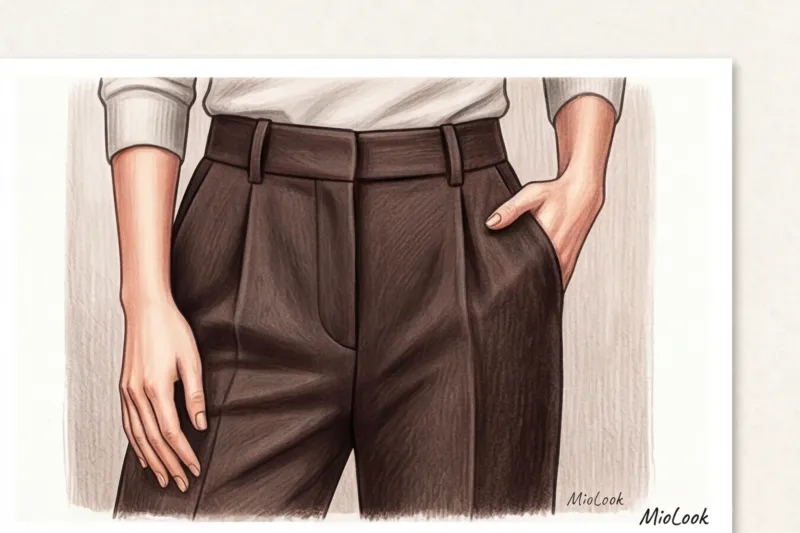
Why does this work? With this specification, you'll avoid those flimsy viscose jackets for €40. You'll eliminate 90% of the unnecessary selection while still browsing the online store's catalog.
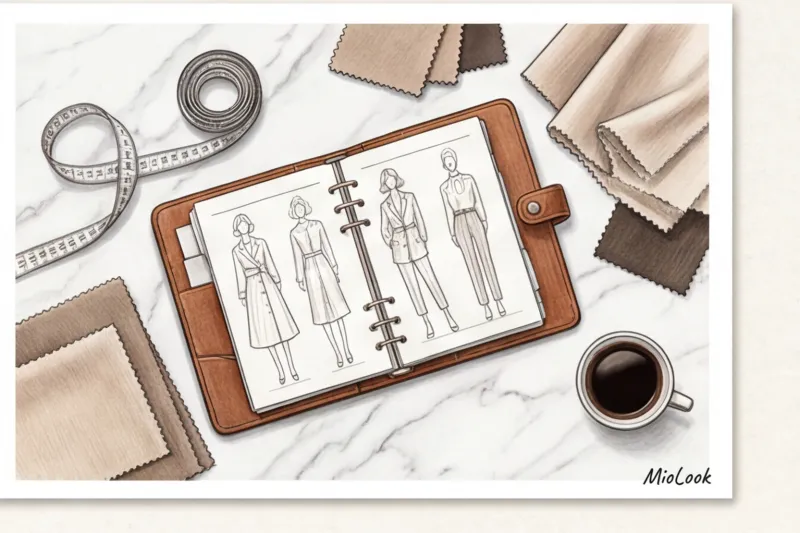
When drafting the technical specifications, pay attention to fabrics that look expensive Investing in Italian suiting wool (super 100s and above), dense silk, and mercerized cotton always pays off. In the premium segment, look for quality markers: the lining should be cupro or viscose (not squeaky polyester), the seams should be covered, and the pattern at the seams of the fabric (such as checkered patterns) should match perfectly.
Your perfect look starts here
Join thousands of users who look flawless every day with MioLook's smart features.
Get access — €0.99 onceInvestment Mathematics: How to Forecast Cost Per Wear
My favorite tool that I give to all my clients is the Cost Per Wear (CPW) formula. You take the price of the item (plus the cost of dry cleaning or atelier alterations) and divide it by the expected number of wears.
Let's look at a classic example. A cheap acrylic sweater from a fast-fashion store will cost you €40. You'll wear it five times, after which it'll become covered in unremovable pilling, lose its shape, and be sent to the dacha. Your CPW = €8 per wear.
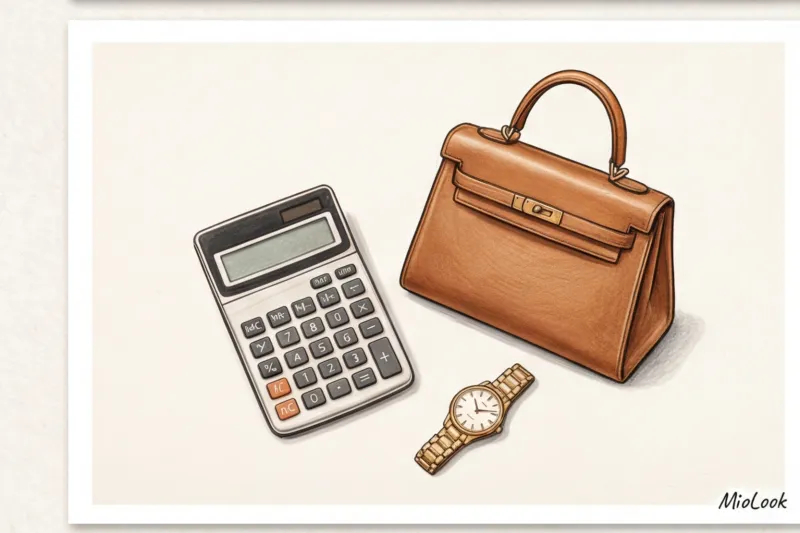
Now let's take a basic premium cashmere sweater for €250. With proper care, you'll wear it for three seasons straight, wearing it at least 100 times. CPW = €2.50. It's a paradox, but an expensive item costs you more than three times less! That's why the lion's share of your shopping budget should be for items you wear most often: outerwear, essential bags for all times and quality shoes.
Fair limitation: The CPW rule works great for basics, but it's pointless for evening wear. If you buy a luxurious dress for your best friend's wedding for €300 and wear it once, its CPW will be enormous. But here you're paying for emotion and status, not utility.
Sale traps: how to avoid buying unnecessary items
Brands spend millions of euros on neuromarketing. When you see a red price tag with a 70% discount crossed out, your prefrontal cortex, the part responsible for logic, literally switches off. You forget your carefully crafted specifications and buy a neon green sweater simply because it used to cost €200 and now costs €60.
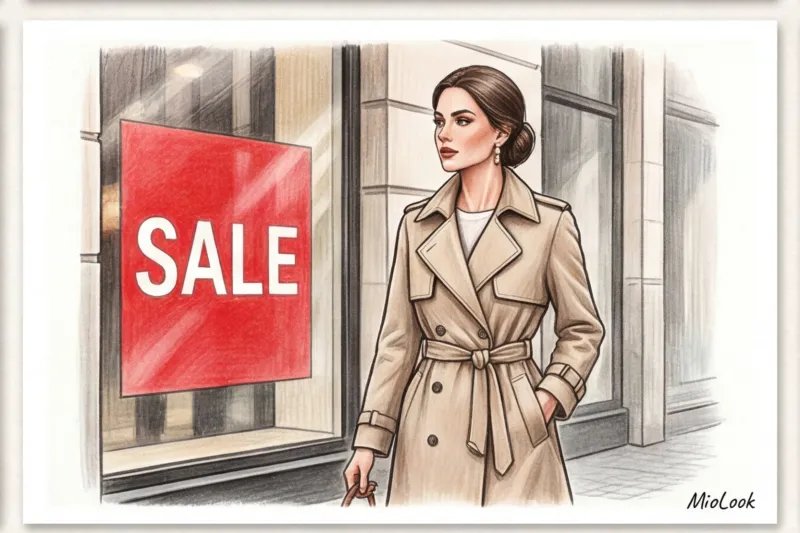
To protect myself, I use the "cart quarantine" rule. When shopping online, add the item to your cart and close it for 24-72 hours. Trust me, 8 times out of 10, you won't even remember you wanted to buy it.
Another sobering question before buying at a sale: "Would I buy this item right now if it were on sale at full price?" If the answer is "no," you're buying a discount, not a product. It only makes sense to look for those items on sales. things that will pay off: classic trench coats, leather shoes, cashmere and designer bags that were already on your shopping list.
Smart automation with MioLook
Keeping track of your entire wardrobe and the math behind your looks is no easy task. Digitizing your wardrobe is the step that takes you from being a consumer to being the stylist of your own life.
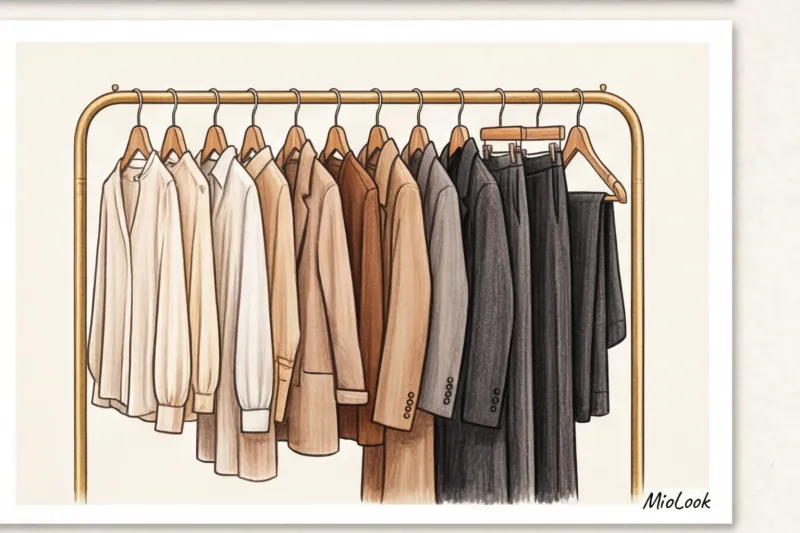
Using smart wardrobe feature in MioLook , you can not only upload photos of all your items but also let the algorithms identify duplicates. Artificial intelligence will suggest that you already have four similar blue shirts and prevent you from buying a fifth. You can also virtually try on an item from your shopping list with existing tops and bottoms in the app, testing the "three looks" rule in just a few clicks.
Investor Checklist: 5 Questions to Ask Before Going to the Cashier
Before you pull out your card or hit the "Pay" button, go through this rigorous filter. If an item fails even one step, return it to the shelf.
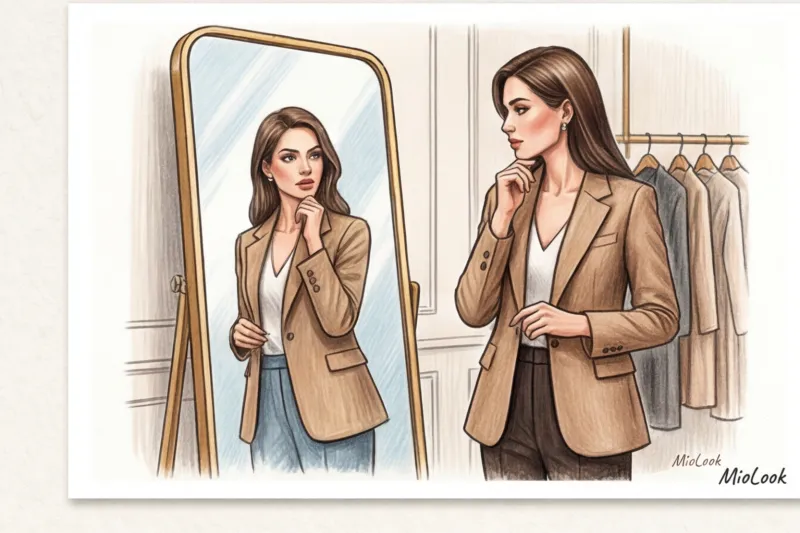
- Is this thing in my detailed specifications? (Specifically in the technical specifications with a description of the characteristics, and not just in fantasies).
- Does she pass the 3 look rule? Can I wear it tomorrow with three different things without buying anything extra?
- How did it pass the wrinkle test? (Stylist secret: squeeze the edge of the fabric in your fist for 10 seconds. If sharp creases remain, the item will look untidy after just an hour of wear.)
- Is it comfortable to live in? (Sit on a chair in the fitting room, cross your legs, and raise your arms. Beauty doesn't require sacrifice, it requires the right fit.)
- What is the projected CPW of this thing in a year? Does the frequency of wear justify the stated price?
Creating a shopping list isn't about restricting your freedom. It's about creating the architecture of your style. By stopping buying random things based on emotion, you'll suddenly discover that your budget can handle premium brands and luxurious fabrics. Invest in quality, consider the cost of entry, and remember: a truly luxurious woman is one who knows exactly what suits her and won't settle for less.