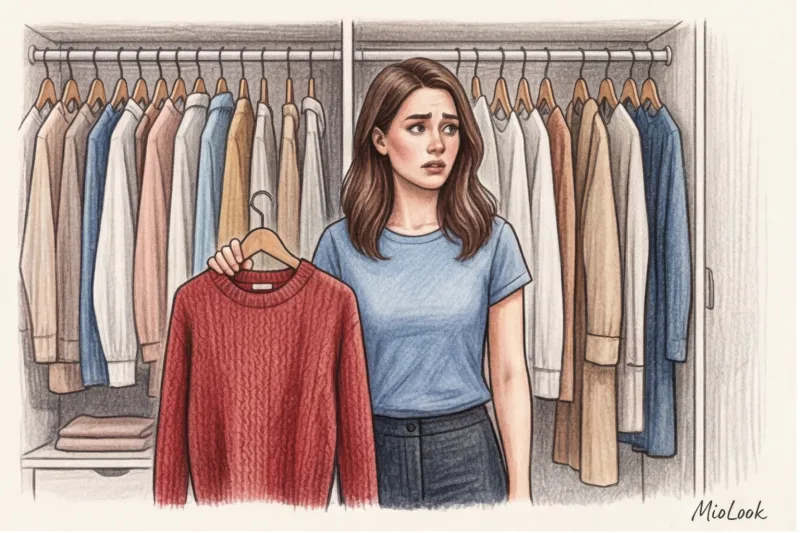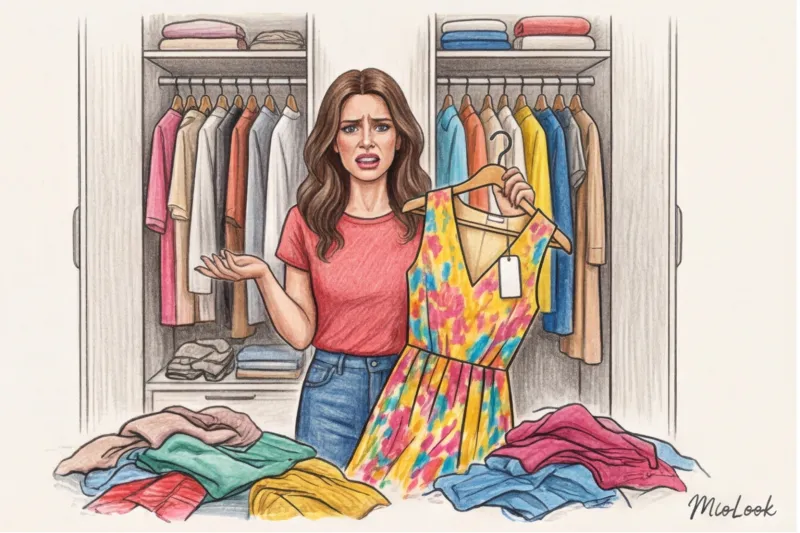
Seven years ago in Milan, I bought a neon-orange hobo bag at an incredible 80% discount. I still vividly remember the adrenaline rush at the checkout and the pride I felt at getting a "good deal." Do you know how many times I walked out with it? Exactly zero. It still sits in its signature dust bag, serving as a silent reproach to me and an excellent teaching aid for my clients. That's when I realized: spontaneous shopping on sale ruins any style, even the most carefully considered one.
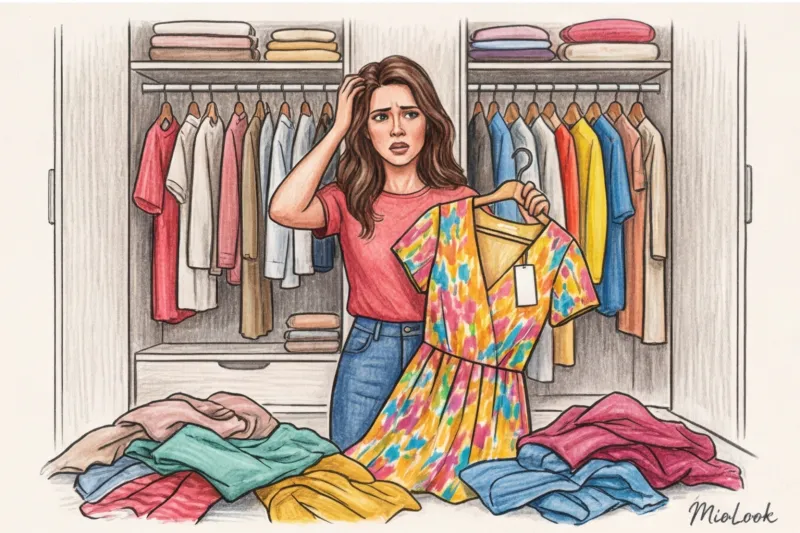
Most glossy articles before the sale season advise the standard "throw out the old and buy the basics." But as a certified colorist and stylist, I strongly disagree with this approach. Today, I'll show you... How to make a clothes shopping list , relying on wardrobe math and strict color theory. We'll search for your "orphaned items" and find the "boring glue" to go with them. We've already discussed the psychological traps of shopping malls in more detail in our The complete guide to smart shopping during sales , and now let's move on to harsh practice.
The "Full Closet" Illusion and Why We Always Have Nothing to Wear
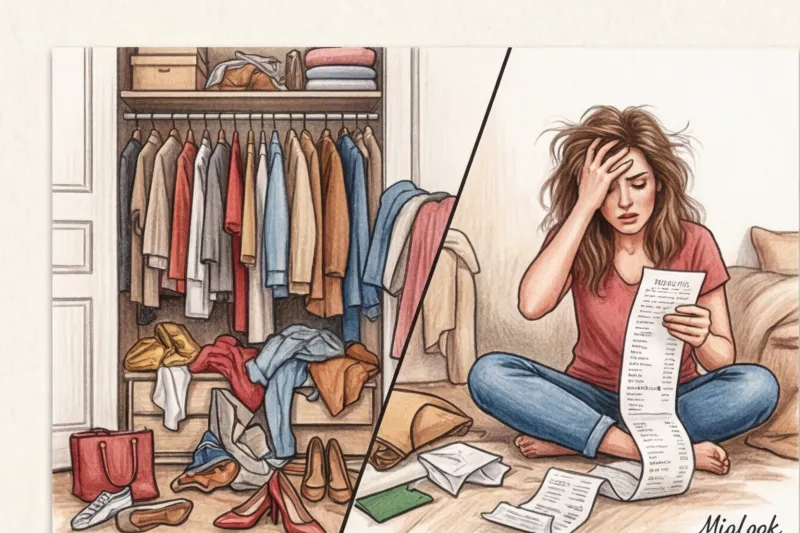
According to a large-scale consumer habits study conducted by Barclays and WGSN analysts in 2023, the average European woman spends around €600 per year on clothes she'll never wear. Think about that figure. That's the cost of a great cashmere coat or a pair of designer shoes, which we squander on knitwear that's just a day old.
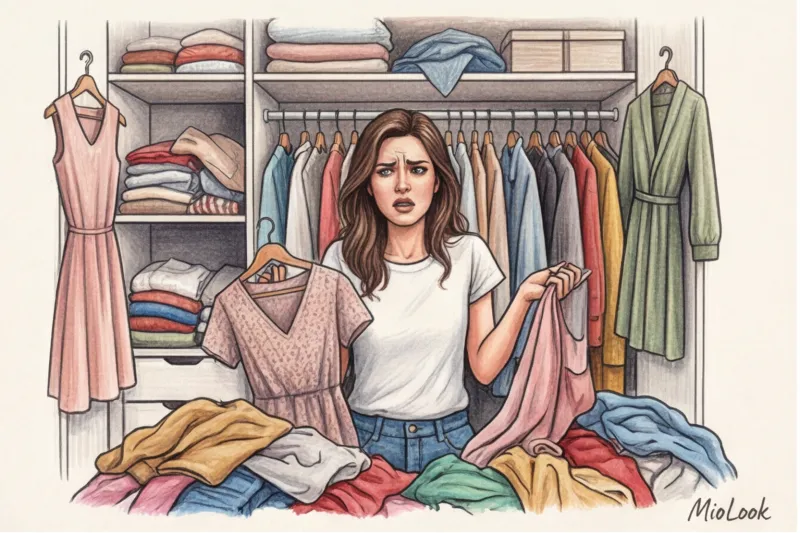
Why don't the closet doors close, and why is there nothing to wear in the morning? The problem lies in the lack of structural connections between items. Your wardrobe is no longer a well-coordinated orchestra, but a crowd of soloists trying to outshout each other.
My professional term: "Sale points" This is a cognitive distortion in which the neurobiological surge of dopamine from a crossed-out red price tag literally switches off the prefrontal cortex (the area responsible for logic). You begin to evaluate the size of the discount rather than the crooked seams, loose threads, or poor fit.
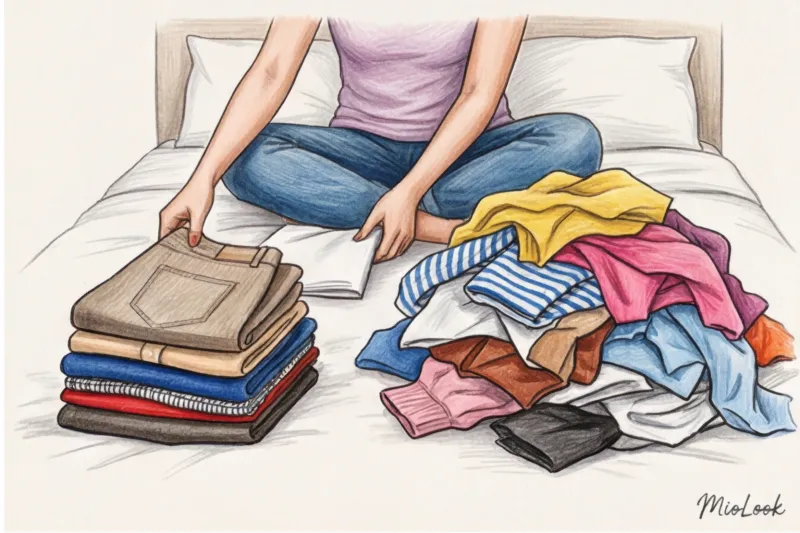
Step 1: Take Inventory Before Making a Clothing Shopping List
A wardrobe review isn't a spring cleaning. It's a thorough financial audit of your assets. At this stage, our main goal is to identify "orphaned items" and identify "duplicates."
Orphan Thing — an item with a complex cut, a specific print, or a texture that you don't have a single matching pair for in your closet. One of my clients, a top manager at an IT company, complained that she had nothing to wear to the office. During our review, we found 15 stunning silk and viscose blouses (from Massimo Dutti to local brands), but not a single pair of basic trousers that fit properly. She was buying "pretty" items, ignoring the "essential" ones.
Another trap - wardrobe cloning Have you noticed that you have five identical black turtlenecks hanging up, but not a single high-quality white shirt? Identify these repetitions. You have the right to your own "uniform," but duplicates shouldn't take the place of functional pieces. For more information on how to build the core of your looks, read our article about The difference between a capsule wardrobe and a basic wardrobe.
The Three-Piece Rule: Test Every Item
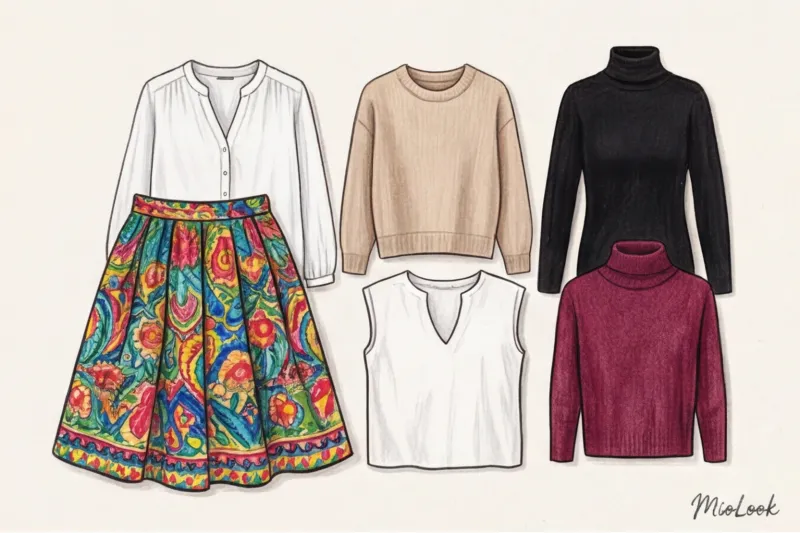
Stylists have a rigorous closet test. Take any item from the hanger and honestly answer the question: what can I wear with this? right now (without buying additional shoes, a belt or a top)?
If a piece doesn't create at least three complete outfits for different life situations, it's at risk. It urgently needs a companion. It's this missing companion, not the striking item itself, that will be at the top of your future shopping list.
Step 2: Wardrobe Math and Calculating Blind Spots
Style formation is subject to strict mathematical rules. The gold standard of stylists: the ideal ratio of "tops" (tops, shirts, jackets) to "bottoms" (pants, skirts, jeans) should be 3:1 or even 4:1.
Why is this so? Firstly, the portrait area (the area closest to the face) is much more memorable to others. If you show up in the same black pants three days in a row but change shirts, your colleagues will assume you have a huge wardrobe. Secondly, bottoms wear out and get dirty faster, so they should be as durable as possible (for example, denim of at least 12-14 ounces).
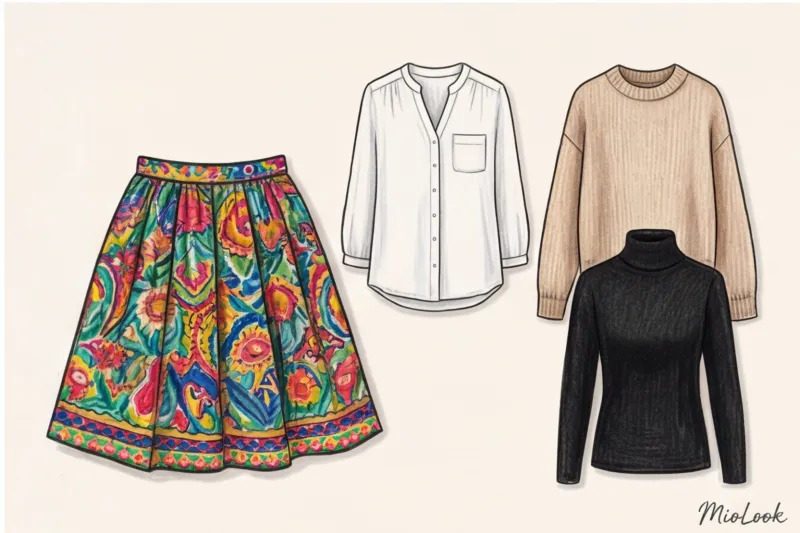
Important disclaimer: To be fair, this rule doesn't apply if your personal style is based solely on dresses or one-piece jumpsuits. In that case, the math shifts toward shoes and outerwear.
Analyze yours blind spots These are situations in life for which you physically don't have clothes. For example, you work remotely and walk the dog, but your closet is full of formal jackets and pencil skirts that are uncomfortable to bend over in.
Access to MioLook for €0.99 — one-time payment
A smart AI stylist will analyze your clothes and automatically identify any missing wardrobe items.
Get access — €0.99 onceStep 3: Color Analysis of Your Closet Before the Sale
Back to my story with the acid-orange bag in Milan: the 80% discount didn't make it worth it because the color clashed with my cool and contrasting wardrobe palette (emerald, cobalt, graphite).
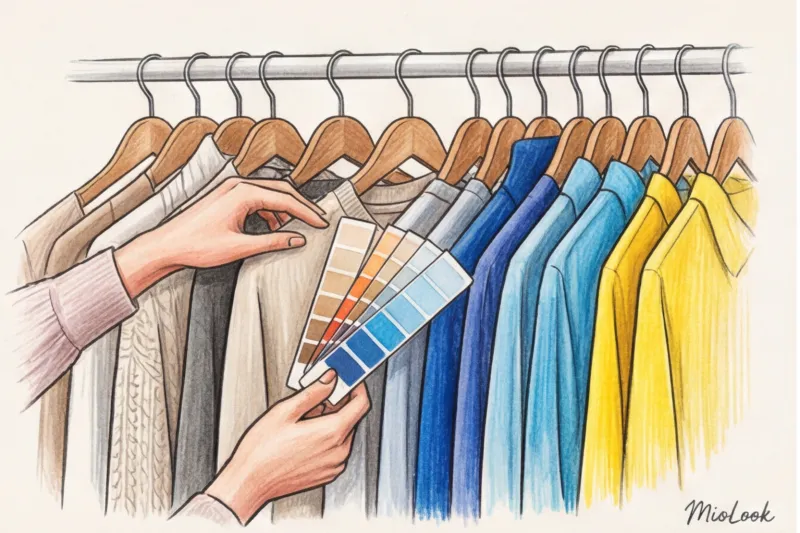
Before writing your list, determine your base color scheme using Itten's color wheel. You should have 2-3 neutral shades (e.g., navy, camel, or off-white) and 2-3 accent colors.
- Achromats (black, white, gray) is the canvas.
- Related colors (standing next to each other on the color wheel) create expensive, status monochrome images.
- Complementary colors (opposite each other) create dynamics.
If you have a lot of bright colors that clash with each other, you don't need another fuchsia on sale. You need a peacemaker. Often, the right shade of gray or deep chocolate can be just the thing.
How to Make a Clothes Shopping List That Actually Works
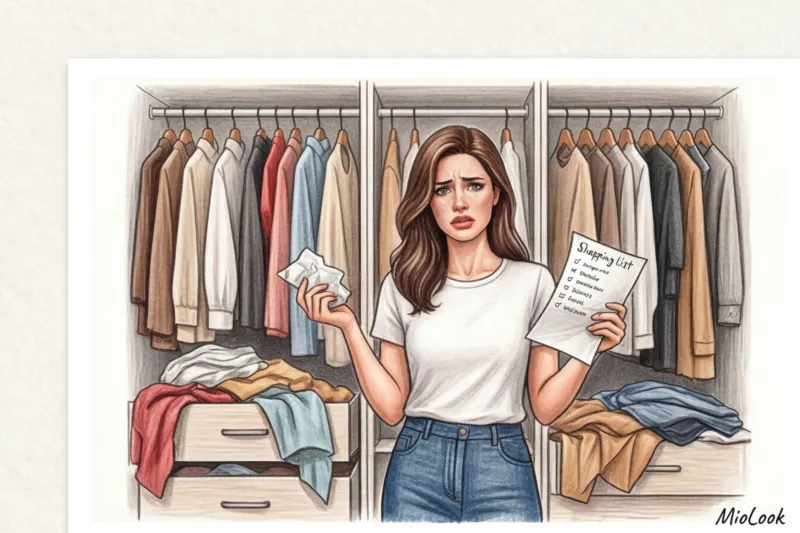
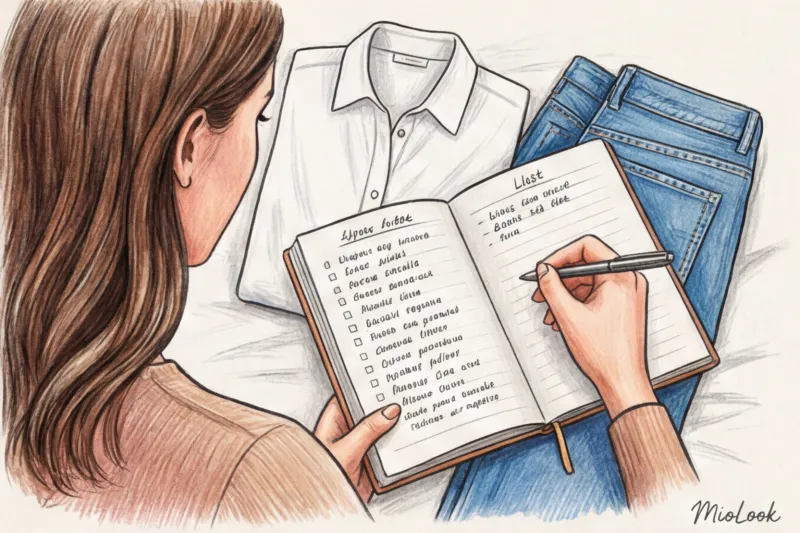
Never enter an outlet store or shopping mall without a list. It's best to have one in digital form, for example, by uploading your items to the smart wardrobe feature in MioLook app Your list should be divided into three strict categories:
- Urgent base: something that is worn out or too small (white T-shirts, high-quality smooth underwear, a replacement for your favorite jeans).
- Connecting element: The perfect companion for "orphaned items" (for example, a neutral jacket that will calm down a busy printed dress). You can read more about this in the guide. How to put together a capsule wardrobe.
- Investment: an expensive status item (a rigid bag, a cashmere coat, leather shoes) that you've been planning to buy for a long time, and now there's a real discount on it.
The secret of professional buyers: be as specific as possible when asking. Don't say "buy a skirt." Say: "Buy a gray wool midi skirt, straight cut, no slits, medium fabric thickness, budget up to €120".
Always calculate Cost Per Wear (CPW) — the cost per wear. A €200 cashmere sweater that you'll wear 100 times (€2 per outing) is much more cost-effective in the long run than a €25 polyester top that you'll wear once to a corporate event and then throw away.
Your perfect look starts here
Join thousands of users who look flawless every day with MioLook. Digitize your closet and stop buying unnecessary items.
Get access — €0.99 onceThe biggest mistake of sales: why you shouldn't buy "accent" items
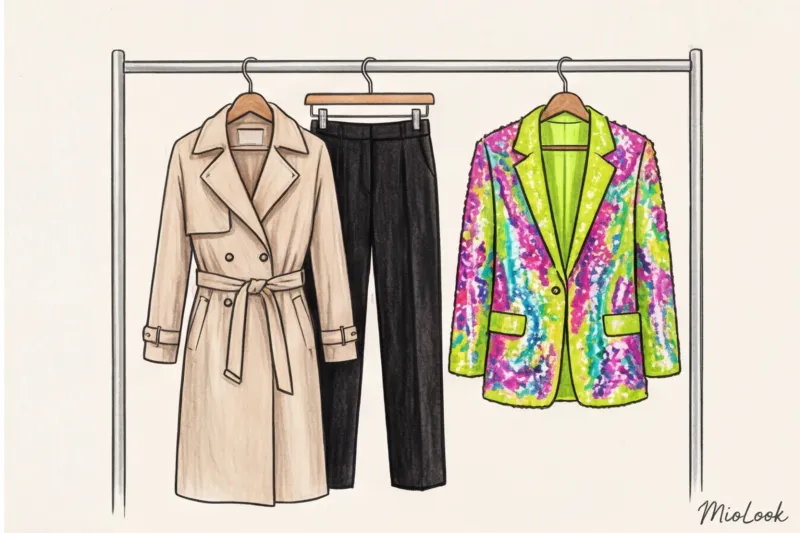
I want to dispel the biggest myth of mass-market fashion. Sales are the worst time to buy sequins, neon, exaggerated ruffles, and complex micro-trends. It's counterintuitive, but it's during sales that you should buy the most "boring" things!
Brands often discount extravagant collections precisely because they prove unwearable in real life. What looked stunning on the runway or on TikTok often doesn't translate to urban realities. The best investments during the sale are:
- Basic thick knitwear (look for cotton with a density of 180 g/m² or more).
- Classic straight jeans without fraying or torn knees.
- Good quality shoes in neutral shades.
- Structured bags without a lot of fittings.
Insider tip: Be careful at large outlet stores. Many mass-market and mid-market brands (for example, Ralph Lauren and Calvin Klein) create special, cheaper collections made from lower-quality fabrics specifically for outlet stores. Always check the label for the composition—it shouldn't say 100% acrylic disguised as a "wool blend."
Stylist Checklist: How to Make a Clothing Shopping List and Final Check
Before you step foot in a shopping mall or open a tab on your favorite online store, follow these 5 simple but life-saving steps:
- Take a photo of the "orphan things" with your phone. Store lighting distorts colors. Having a photo (or, better yet, bringing the item with you) will help you accurately select the right shade for the connecting element.
- Have lunch before shopping. This is no joke. Psychologists use the HALT rule (Hungry, Angry, Lonely, Tired). If you're hungry or tired, impulse control drops to zero, and the risk of buying unnecessary things triples.
- Dress appropriately. Wear clothes that are easy to remove in the fitting room. Ideally, jeans, a basic T-shirt, and comfortable shoes (slip-ons or loafers). Underwear should be smooth and nude—this way, you can properly assess the fit of any item.
- The 24-hour rule. Make a deal with yourself: if the item you're holding wasn't on your original list, you put it aside at the checkout and give yourself 24 hours to think about it. If you still want it the next day (and are willing to come back for it), go for it.
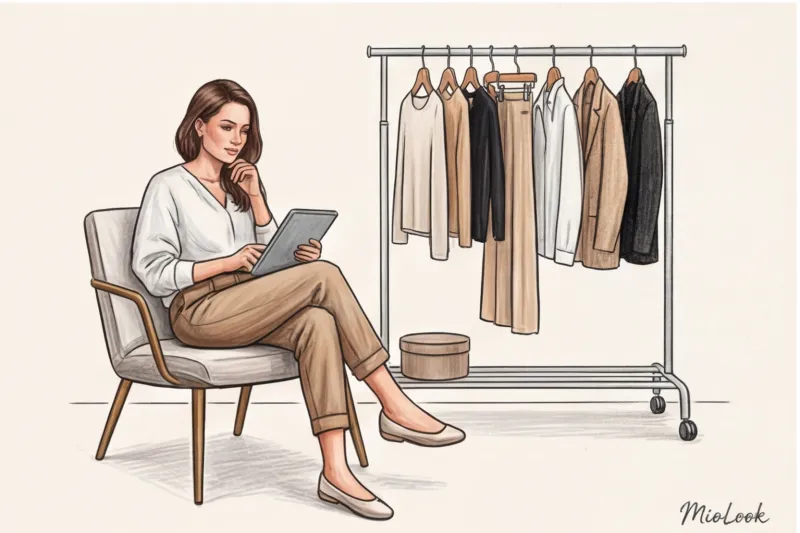
A smart wardrobe doesn't start with a rack in a store or a red "70% Sale" banner. It starts with clearing your head and taking a sober look at your needs. Sales are a great way to replenish your wardrobe with quality, essential items, as long as you're in control, not the brand's marketers. Write your list, calculate your exit costs, and go shopping with a clear head.
Ready to get started?
Try the MioLook plan for free—no commitments required. Organize your closet today.
Get access — €0.99 once