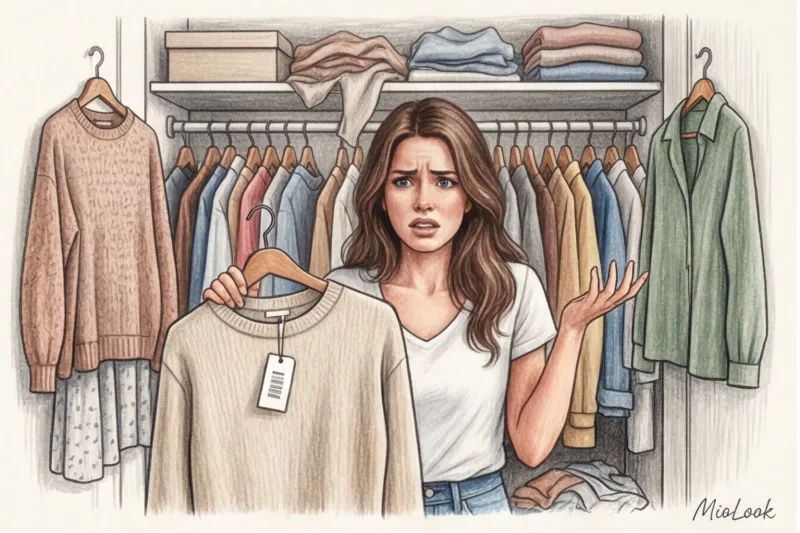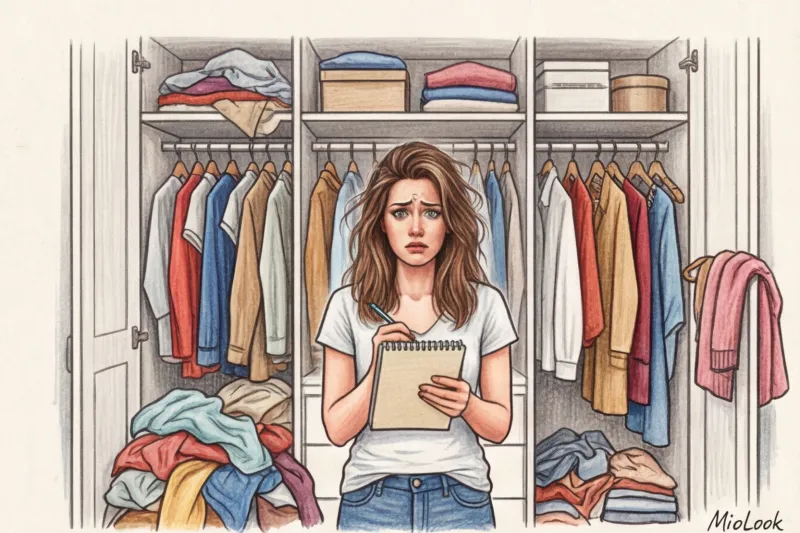
Do you know how many times, in my 14 years of experience as a stylist, I've found five identical white shirts in clients' closets? Or three pairs of black pants with tags, bought in a fit of "I have nothing to wear"? Dozens of times. We buy duplicates not because we're stupid, but because our working memory can't handle the entirety of our wardrobe. And that's where the memory comes in. wardrobe management app — a tool that will forever wean you off emotional shopping. We've covered more about analyzing your belongings and setting stylistic goals in our The complete guide to creating a smart shopping list , and today I want to show you the inside story of the digital approach.
Why the Regular Shopping List No Longer Works
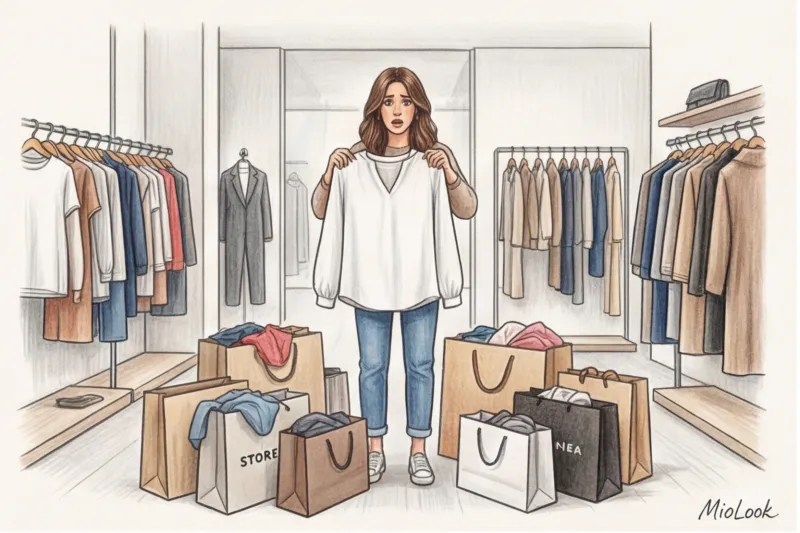
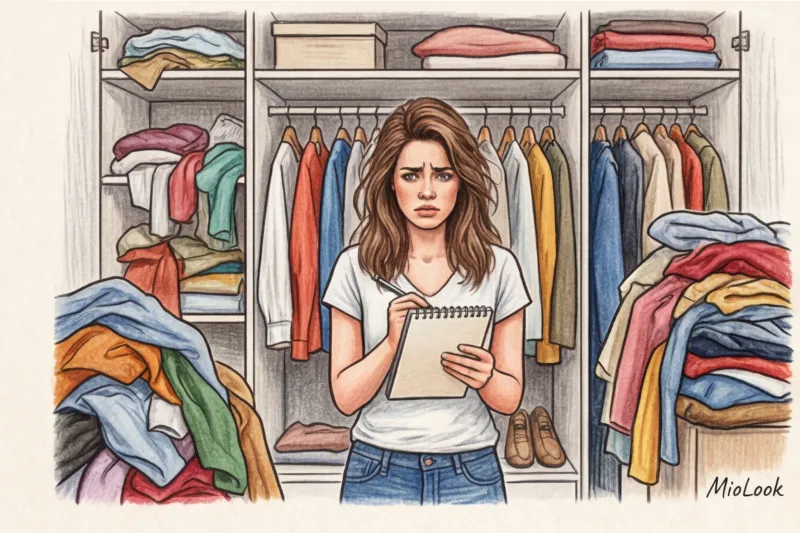
Have you ever noticed what happens before heading to the mall? We jot down on a piece of paper or in our smartphone notes: "I need jeans, a white T-shirt, and a cardigan." But a stuffy closet and a lack of style vision play a cruel joke on us. In the store, our brain immediately reacts to the dopamine from the bright displays. So, you go out for a basic thick cotton T-shirt and return with an €80 leopard print blouse because it's "so unique."
Clients often come to me with a paradoxical request: "Olena, I want to buy something bright and eye-catching, because my closet is so boring." We begin an audit, and discover the exact opposite. Their closets are overflowing with crazy prints, intricate cuts, and rhinestones, but they're simply missing quality basic trousers (for example, made of a perfectly-fitting viscose blend) to tie these "accent" tops together. It's a classic wardrobe blind spot: we adore our favorite pieces, but forget about the boring basics that make them work.
What is a digital wardrobe and how is it changing the game?
Let's be clear: a modern app isn't just a photo gallery on your phone. It's a pocket analyst. According to a global study by the British organization WRAP (Waste and Resources Action Programme), 80% of the time we wear only 20% of our clothes. The rest hangs there as dead weight because we simply don't remember it exists or don't know what to wear it with.
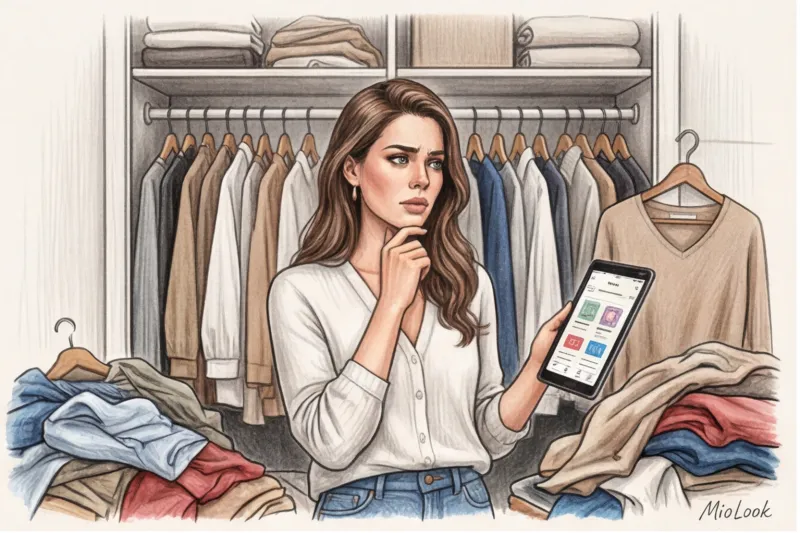
Digitization provides stunning visual clarity. You see all your things at once on a single screen, without the sensory overload of a cramped, poorly lit closet. It's a fundamental shift in thinking: you move from the paradigm of "I need this beautiful thing" to the paradigm of "I need a finished look."
From Chaos to System: The Magic of AI Analytics
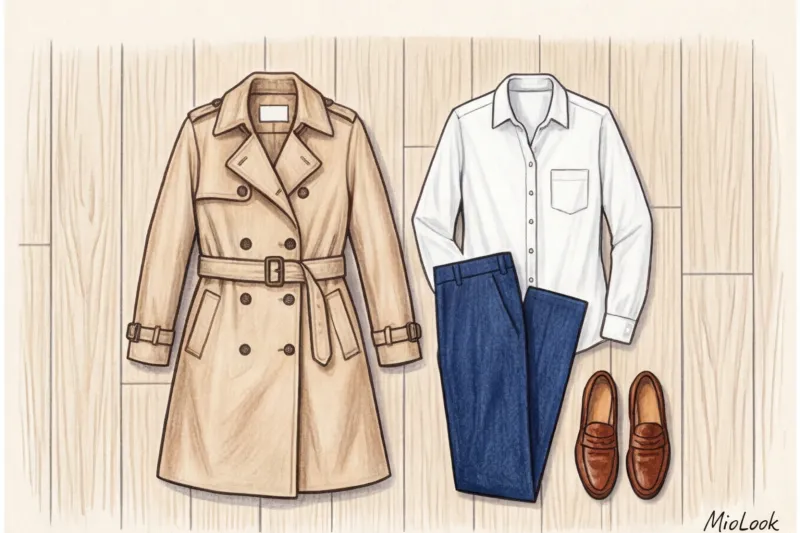
Neural networks work wonders these days. Algorithms automatically recognize the styles, colors, and seasonality of the items you upload. They instantly remove backgrounds from photos, creating aesthetically pleasing collages reminiscent of perfect Pinterest boards. You no longer need graphic design skills to create outfits.
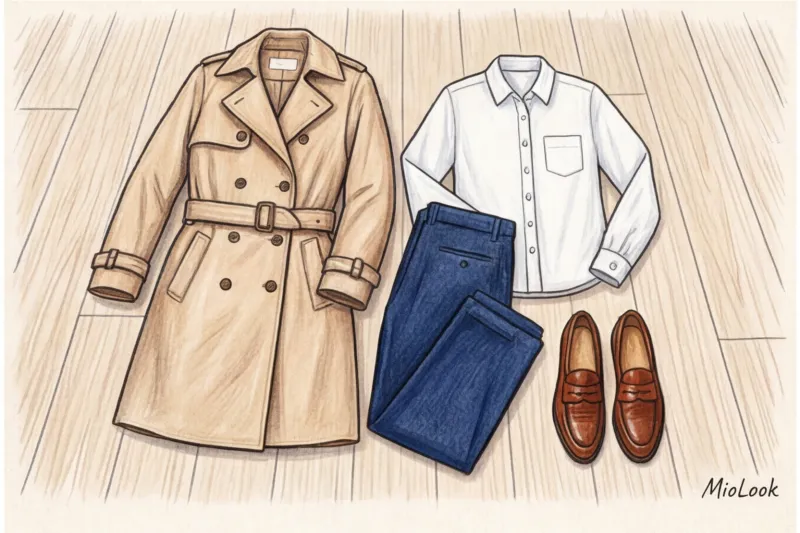
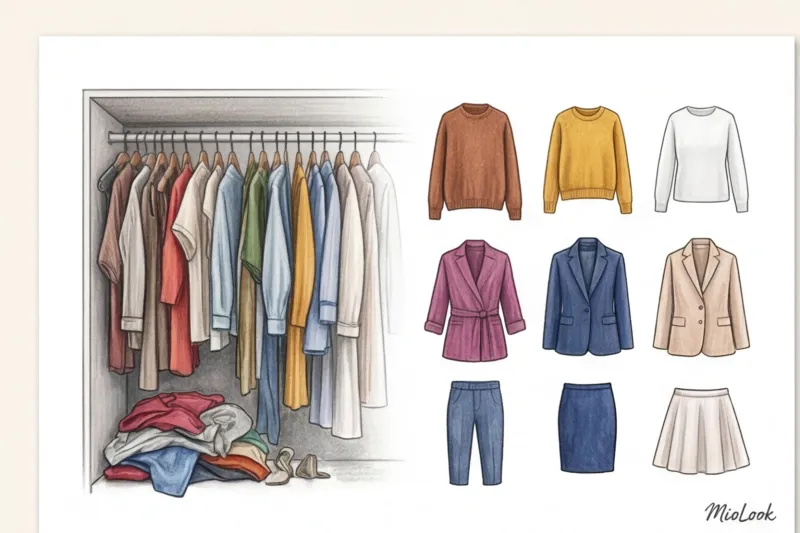
Moreover, the AI generates a so-called "wardrobe matrix." This is a visual representation of proportions. The golden rule of style states: for every one "bottom" (pants, skirt), there should be three "tops" (tops, blouses, jackets). The AI will mathematically calculate this ratio and display a diagram. If you have 15 pairs of jeans and only 5 T-shirts, the algorithm will highlight this imbalance in red.
Access to MioLook for €0.99 — one-time payment
A smart AI stylist will select the perfect look based on your items and suggest what's missing.
Get access — €0.99 onceAI as a Personal Stylist: Finding Holes in Your Closet
The algorithm for identifying shortages of basic items works on the principle of augmented reality. It analyzes what you already own and suggests the missing pieces of the puzzle. But the most ingenious feature is its comparison of your wardrobe with your actual lifestyle (lifestyle diagram).
"Your closet should reflect your real life, not the fantasy version of you that walks the red carpet every night."
I had a client, Anna, a successful freelance illustrator. Her wardrobe consisted of 60% tailored business suits from Massimo Dutti and COS, even though she worked 80% of the time from her favorite coffee shop in jeans and a hoodie. AI analysis clearly demonstrated this discrepancy. She didn't need a fifth sheath dress; she needed high-quality cashmere sweaters and comfortable loafers.
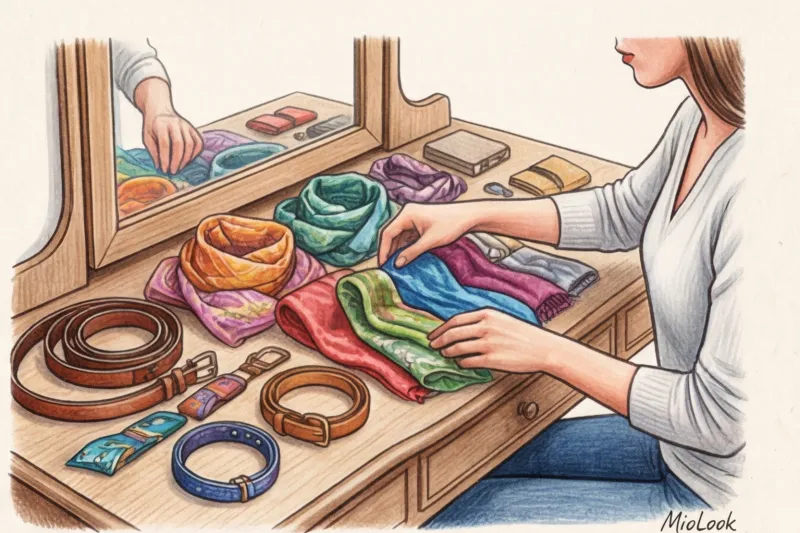
AI often generates looks from existing items, proving that you don't need to buy anything right now. Simply style a sweater differently, draping it over a trench coat rather than wearing it the traditional way.
Smart Shopping Formula: How Artificial Intelligence Generates a List
A shopping list generated by artificial intelligence is a document of sniper precision. The algorithm doesn't just write the abstract word "skirt." It suggests: "a beige A-line midi skirt made of heavy cotton or linen." Why that? Because the system calculated that this particular item will fulfill the needs of five unfinished looks with your current shirts and jackets.
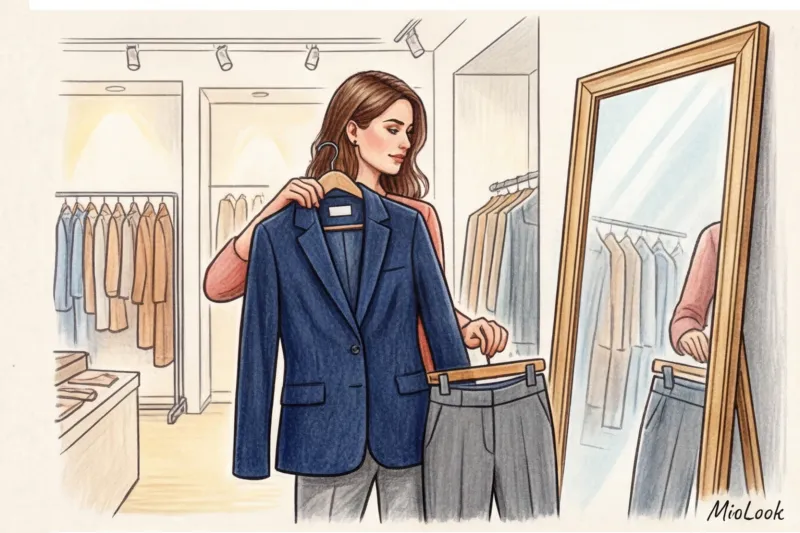
My favorite "Rule of 3," which I teach all my clients, is to never add an item to your cart (either online or in person) unless you can create at least three different looks with it and your current clothes. With the virtual fitting room app, you can upload a photo of an item from an online store (like Zara or H&M) directly to your digital closet and check its compatibility before you go to the checkout.
Duplicate analysis and personal stop lists
The app ruthlessly protects your wallet from buying yet another "perfect blue jeans." You get a personalized stop list: colors and styles you already have in excess. If you have four gray sweaters in your database, the system will simply block your attempt to add a fifth one to your shopping plan, suggesting an alternative—for example, a deep wine-colored cardigan.
Calculate Cost Per Wear (CPW) before purchasing
The Cost Per Wear concept is the gold standard of conscious consumption. To calculate it, divide the cost of an item by the expected number of wears. I tested this on myself: last fall, I was desperately craving a trendy fuchsia jacket for €150. The AI calculated that it would only work with my wardrobe in two combinations. Wearing it five times per season, I'd get a cost per wear of €30. Instead, I bought a basic, premium tote bag for €250. I wear it 200 days a year. CPW = €1.25. The expensive basic ended up costing me 24 times less than the cheap trendy item.
Your perfect look starts here
Join thousands of users who look flawless every day with intelligent wardrobe planning.
Get access — €0.99 onceDebunking the Myth: "Digitalizing a Closet Takes Too Long"
I know what you're thinking. "Digitizing your wardrobe is for pedants; photographing it will take weeks." This is the most common myth, and one I fight daily. In reality, the process takes just one weekend, but it saves dozens of hours of morning hysterics in front of the mirror and protects you from wasted thousands of euros each season.
As a stylist, I'm giving you a life hack that goes against all the rules of perfectionists: no need to take pictures of everything at once Start with the current season only. Is spring here? Digitalize only the spring capsule. Turn it into a gamification: pour a glass of wine, turn on your favorite podcast, and do some browsing.
However, honesty is needed here: when it does NOT work This advice is useless if you view the app as a magic pill. AI won't come to your house and throw out the stretched-out T-shirts you've been saving for the last 10 years. A digital wardrobe requires initial, ruthless manual filtering.
Step-by-step plan: from revision to the perfect shopping list
To ensure the process goes smoothly, follow this proven algorithm:
- Physical analysis and ruthless filtering: Get out your current season's items. Only items that fit properly, have no defects, and aren't outdated are left for digitalization.
- Correct shooting: The secret to clean backgrounds is shooting in natural daylight. Hang the garment on a hanger against a plain wall (ideally white) or lay it out on the floor. Avoid harsh shadows.
- Loading and tagging: When uploading to the app, fill out the tags (season, color, category, composition) with as much detail as possible. Be specific: not just "cotton" but "heavy cotton," not just "wool" but "merino." The more accurate the input data, the better the AI performance.
- Games with a constructor: Let the AI generate capsules for the week. At this stage, gaps will become clear. You'll see that three perfectly styled skirts are desperately missing a neutral sleeveless top.
- Formation of the target list: Transfer your identified needs to a shopping list. Set a budget (for example, €30 to €80 for a top) and save the list on your phone.
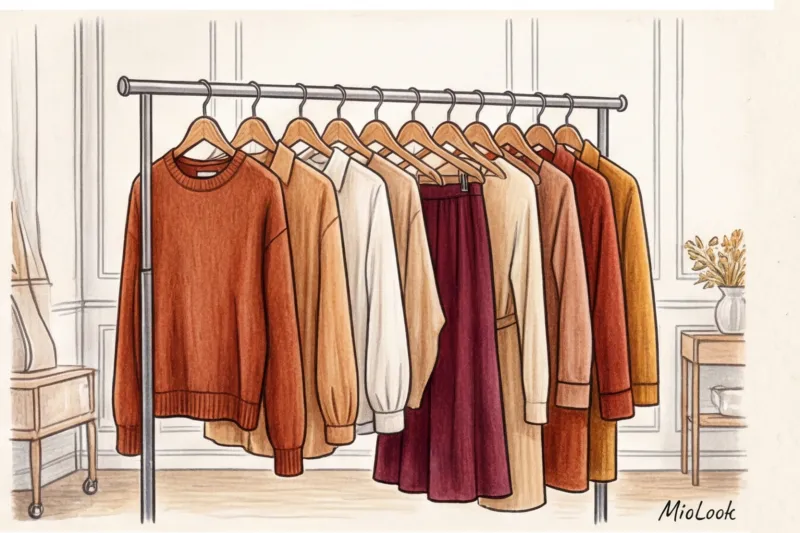
Your Pocket Stylist: Why Shopping Will Never Be the Same Again
The future of fashion is mathematics dressed in silk and cashmere. A shopping list, compiled by artificial intelligence, is based on cold, hard data, not on the momentary emotions of a dressing room under harsh lighting.
The long-term benefits of this approach are colossal. You get an eco-friendly, breathable wardrobe in which every item works 100%. You save up to 30% of your annual clothing budget by eliminating spontaneous duplicate purchases, and gain rock-solid confidence in every look. Set aside the next weekend to digitize your favorite basics. Trust me: creating your smart wardrobe in the app , you'll forever change your attitude towards shopping, turning it from a source of stress into a conscious investment.