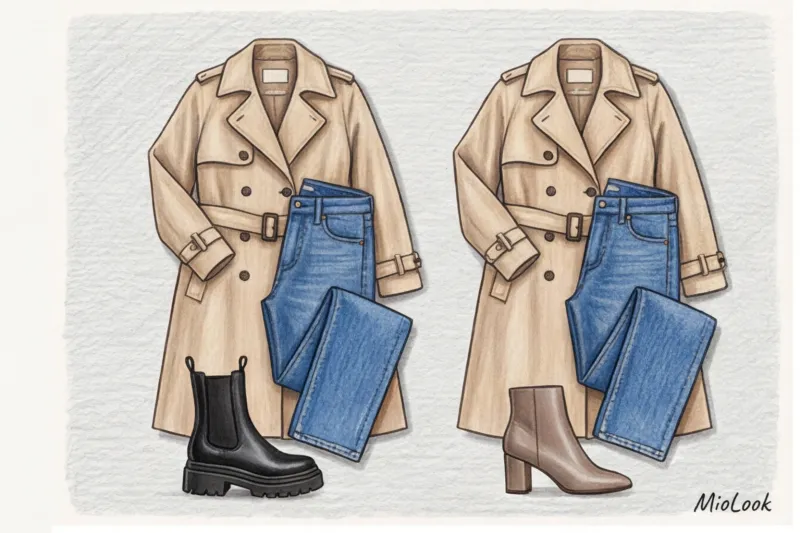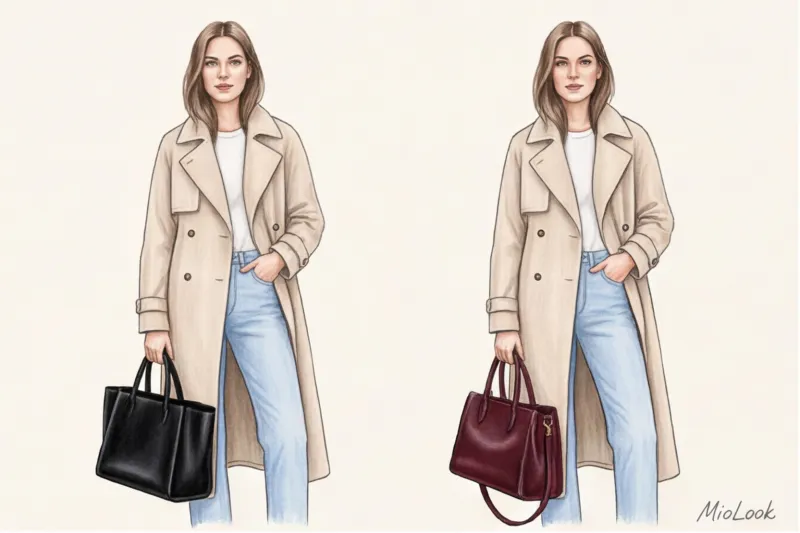
Nine out of ten women, when they come to me for their first consultation, proudly show off their "biggest investment"—a sturdy, medium-sized black bag. "It goes with everything!" they say, genuinely confused as to why their carefully put-together spring looks of beige trench coats and light denim suddenly look heavy and cluttered. Finding the answer to the question of which versatile bag color truly complements your wardrobe, rather than undermines it, isn't a matter of taste. It's pure math and color theory.
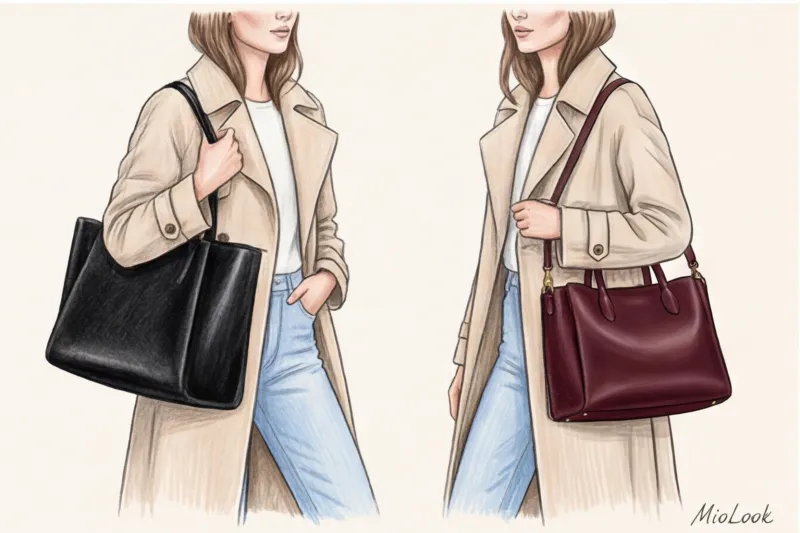
We talked about the architecture of accessories in more detail in our The Complete Guide to Essential Bags Today, I want to debunk the biggest styling myth that's causing women to waste thousands of dollars and introduce you to the concept of "sophisticated neutrals."
The Black Myth: Why It's Not the Most Versatile Bag Color
One of my clients, top manager Elena, bought a classic black tote for $2,500 as her main work bag. In winter, paired with a graphite coat, everything was perfect. But then May arrived. Elena threw on a powder-blue shirt, light trousers, and her expensive bag, and... the look fell apart. The black square acted as a visual anvil, dragging the entire lightweight ensemble down, creating an unnecessary, aggressive contrast.
Jet black is a spectral egotist. It doesn't adapt. If you don't have any other black elements in your outfit (and I don't mean a thin watch strap), a black bag will look out of place.
There's another secret they won't tell you in boutiques. When I inspected tanneries in Florence in 2018, the artisans showed me the differences in hide grading. In the mass market (and sometimes even in the mid-range segment), dull black dye is often used as an eraser. It perfectly covers scars, insect bites, and imperfections in cheap leather. But to create a beautiful cognac or olive shade, the raw material must be flawless—that's grade leather. Full-grain By choosing a complex color, you automatically increase your chances of purchasing higher-quality material.
Access to MioLook for €0.99 — one-time payment
A smart AI stylist will select the perfect look based on your color preferences.
Get access — €0.99 once7 Most Versatile Shades for Investment Foundation
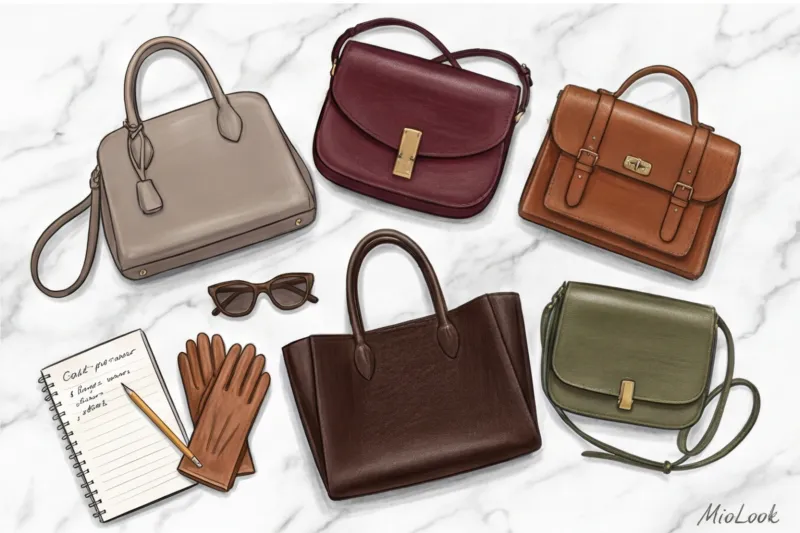
In luxury styling we use the term complex neutrals (complex neutrals). These are chameleon colors that blend several pigments. It's this versatility that allows them to draw the desired undertone from your clothing and blend into a seamless symphony.
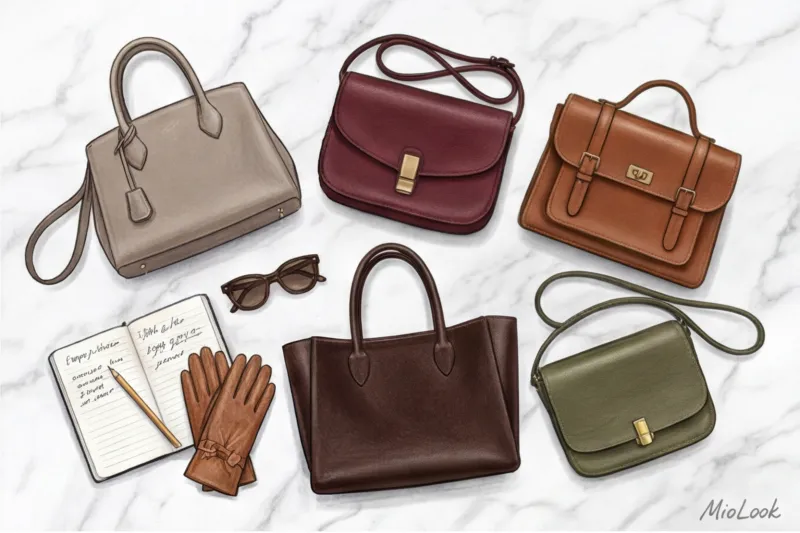
1. Taupe (Greige): the perfect chameleon
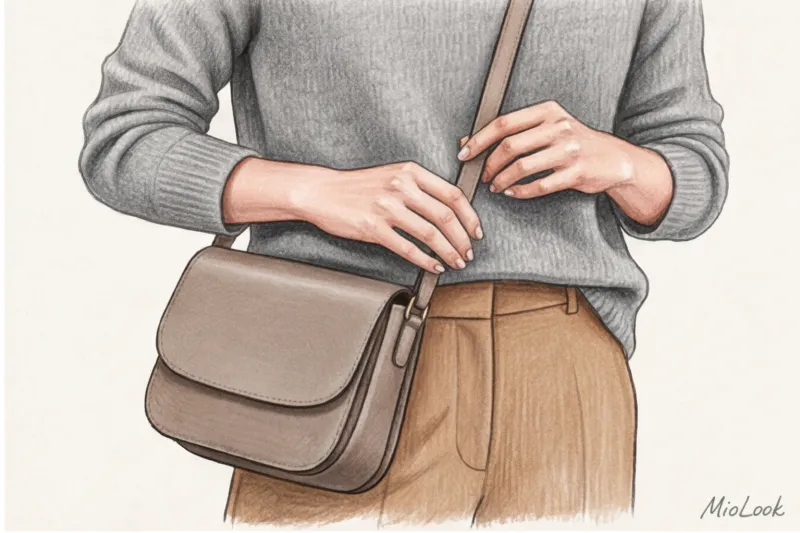
If I were asked to leave only one color in the world for bags, it would be taupe—a brilliant blend of gray and beige. Its superpower lies in its temperature adaptability. Wearing a cool graphite suit with silver jewelry? Taupe will respond with its gray base. Changing to warm camel and gold? The bag will immediately highlight its beige pigment. It's the perfect choice for those who love beige color in a business wardrobe , but does not want to look monotonous.
2. Deep Burgundy (Oxblood)
A historic color of luxury. Think of the iconic Rouge H, created by Hermès back in 1925. Burgundy works as a neutral yet adds a touch of class to any look. It pairs beautifully with basic navy denim, gray cashmere, and a classic sand-colored trench coat. If you're wary of bright colors but tired of taupe, this is your perfect investment.
3. Cognac / Caramel
The protagonist of the old money aesthetic, cognac has a unique quality: it ages incredibly beautifully on vegetable-tanned leather. Over the years, the color doesn't fade, but rather develops a noble patina—darkening on the handles and corners that only adds character to the bag. It's an absolute must-have for smart-casual looks and boho-chic styles.
4. Dark Chocolate
Dark chocolate is the intellectual black. It serves the same purpose (grounding the look, suitable for winter and chunky outerwear), but lacks the harshness of black. Paired with milk, cream, or powdery pink, dark chocolate looks significantly more expensive and softer.
5. Midnight Blue / Navy
A status color for a strict business dress code. If corporate rules require you to wear dark suits, a navy blue bag will be a breath of fresh air. It maintains formality without weighing down the silhouette and pairs perfectly with black shoes (yes, black and navy blue can and should be worn together for a long time).
6. Olive Green
An understated yet incredibly functional base color. If your closet is dominated by natural, muted tones (ochre, terracotta, mustard, sand), an olive bag will tie it all together. Olive is also a complementary color to any shade of red or pink, opening up a wealth of possibilities for complex combinations.
7. Graphite (Charcoal / Soft Black)
For those who physically cannot resist a dark palette, graphite, or "soft black" with a subtle gray undertone, reduces contrast. It works especially well in matte textures that lack an aggressive glossy sheen.
Wardrobe Architecture: How to Pair Your Bag Color with Your Palette
Buying a bag shouldn't be done in a vacuum. Apply the Pareto principle: you wear 20% of your clothes 80% of the time. It's these 20% (your main outerwear and your favorite pair of shoes) that you should choose your accessories for.
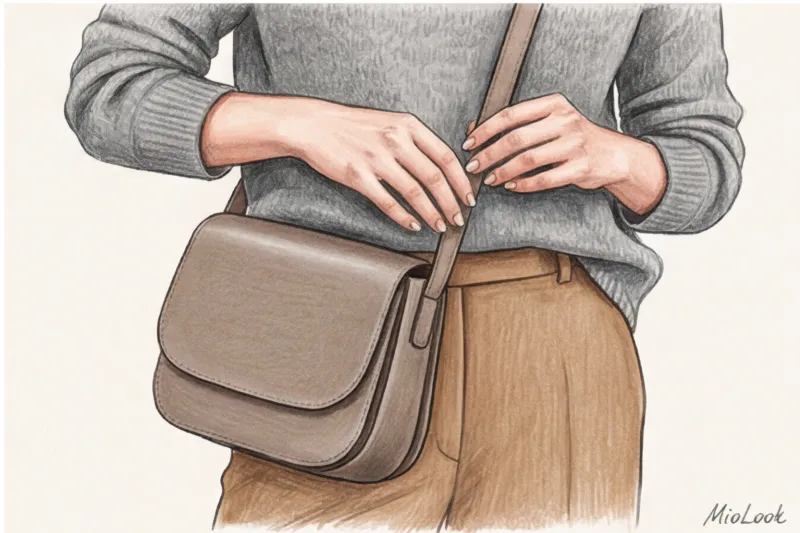
Forget the outdated rule that "your bag should match your shoes tone-on-tone." Today, it seems contrived and overly meticulous. Instead, I use a "color stretching" technique with my clients. The bag should either echo the color temperature of the outfit (warm/cool) or be the third point in the color vertical (for example, brown glasses frame, brown belt, cognac bag). If you have trouble visualizing such combinations in your mind, upload photos of your items to MioLook smart wardrobe — the application will help you see how a new color will fit into the current base.
Your perfect look starts here
Join thousands of users who look flawless every day with an AI assistant.
Get access — €0.99 onceThe magic of texture: why the same universal bag color looks different
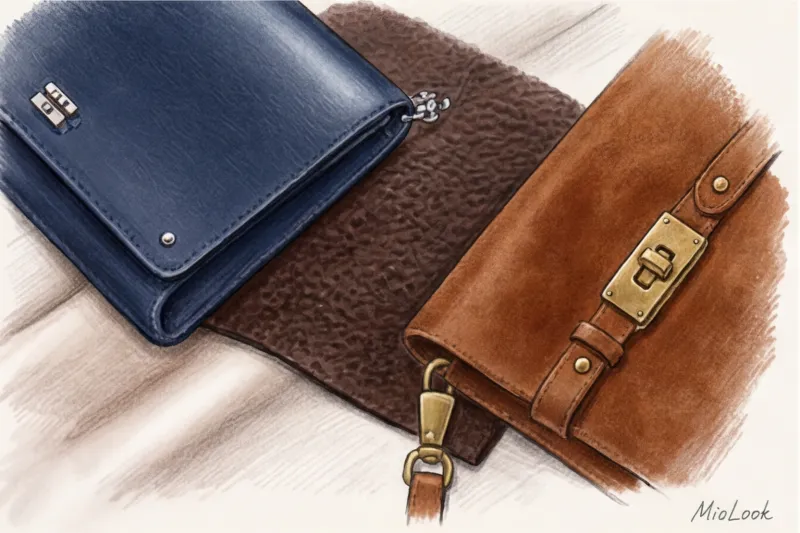
Color is an illusion manipulated by light. And the way light reflects off your bag depends entirely on the texture of the leather. You can choose the perfect shade of dark chocolate, but in different versions it will tell completely different stories.
- Smooth skin (Box calf): Reflects maximum light. The color appears denser, more austere, and cooler. This burgundy bag in smooth leather is a formal briefcase for the boardroom.
- Full grain leather (Togo/Clemence): Diffuses light with texture. The color becomes softer, cozier, and more casual. The same burgundy in grained leather would pair perfectly with a relaxed sweater.
- Suede: Literally absorbing the light, suede makes cognac and chocolate shades incredibly deep, velvety, and luxurious.
Don't forget about the hardware. Gold (brass) hardware "warms" the bag, while silver (palladium) hardware "cools" it down. Taupe and gold will fit perfectly into a fall wardrobe, while taupe and silver will be a great choice for a summer one.
ROI Formula: Calculating the Cost Per Identity for Basic Shades
As an investment wardrobe expert, I encourage you to consider not the price of an item, but its cost per use—Cost-Per-Wear (CPW). According to a 2024 McKinsey study, conscious consumers are returning to a long-term purchasing strategy, and the math is crystal clear.
Imagine you bought a trendy neon green bag for $500. It's bright, gets likes on social media, but only goes with two dresses in your closet. You'll wear it five times a year. The cost per wear (CPW) is $100.
Now, let's take a premium leather taupe bag for $1,500. It pairs perfectly with your trench coats, overcoats, jeans, and business suits. You'll wear it 300 days a year. The cost per wear in the first year will be just $5. And since the sophisticated neutral color never goes out of style, after three years, that figure drops to $1.60. Investing in the right, versatile bag color always pays off.
Checklist: How to Choose Your Perfect Base Shade
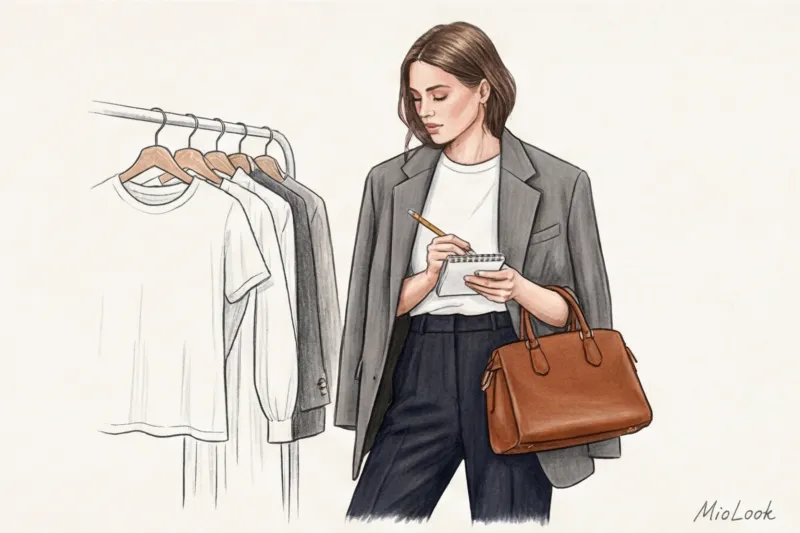
To turn theory into practice, stand in front of your open cabinet and follow these three simple steps.
- Analyze your outerwear. What's more: warm beige trench coats and camel coats (your choice - cognac or taupe) or cool gray and blue jackets (your choice - graphite, burgundy or navy)?
- Rate everyday shoes. If you wear light-colored sneakers and beige loafers, a dark brown bag will create a soft contrast, while a black one will create a rough one.
- Play on the difference in tones. Choose a bag 2-3 shades darker or lighter than your base color. If you have a light gray coat, a graphite bag will create beautiful volume.
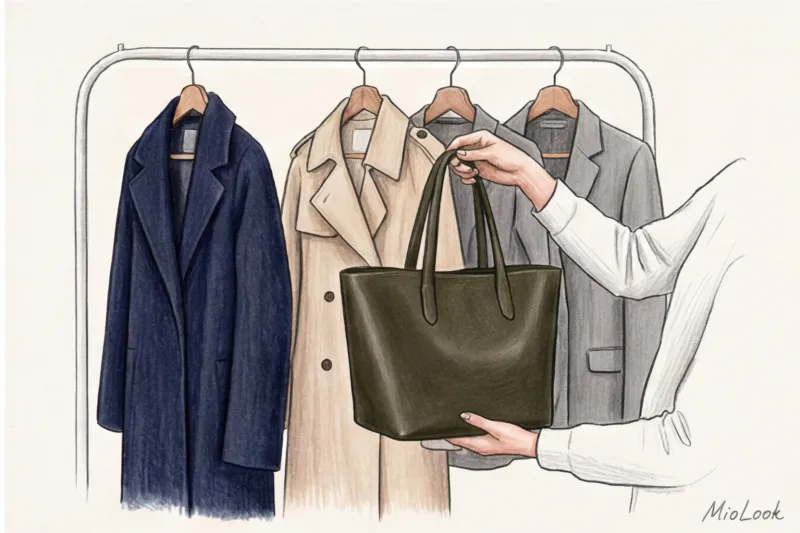
Let's be honest: this whole concept of complex shades doesn't work only if you're a fan of all-out avant-garde black (in the spirit of Yohji Yamamoto or Rick Owens). In this style, a black architectural bag is truly essential. But for 95% of women's wardrobes, buying a black "everyday" bag is a missed opportunity to elevate your look.
Choosing the color of a basic bag isn't an emotional impulse at the checkout, but a strategic decision. Allow yourself to break away from the boring black template, and you'll see how your everyday items sparkle with completely new, luxurious colors.