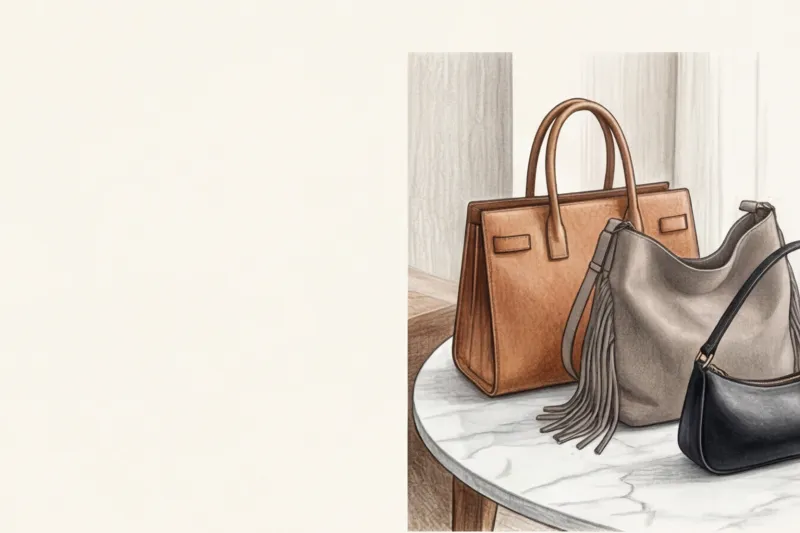
The Architecture of Style: Why Women's Bag Styles Are More Than Just Shapes
Have you ever wondered why the same basic trench coat can look like a tired clerk's uniform or a European film heroine? My name is Isabella Garcia, I'm a personal stylist, and after 12 years of working with wardrobes, I've discovered one immutable rule. Clothes are words, and a bag is the punctuation in your outfit's sentence. You can wear an impeccably tailored suit, but if it ends with a shaky, worn-out bag, the whole look instantly loses its meaning. That's why studying types of women's bags - This is not a boring theory, but a basic impression management skill.
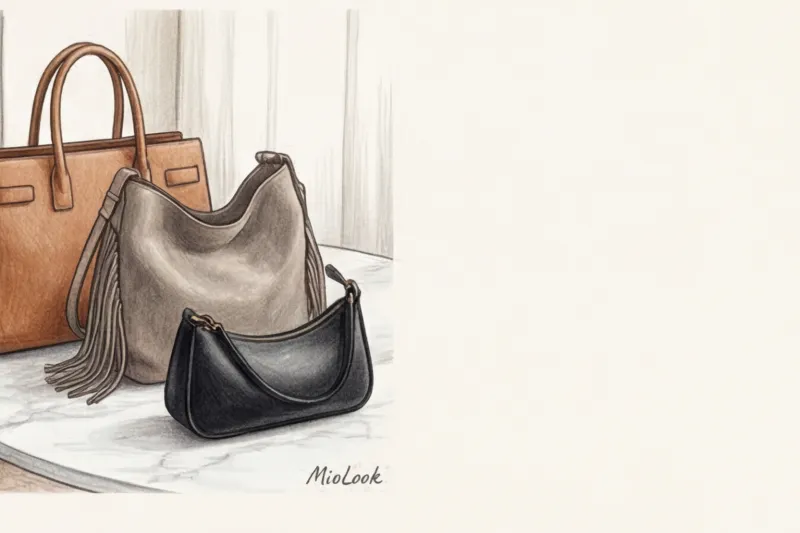
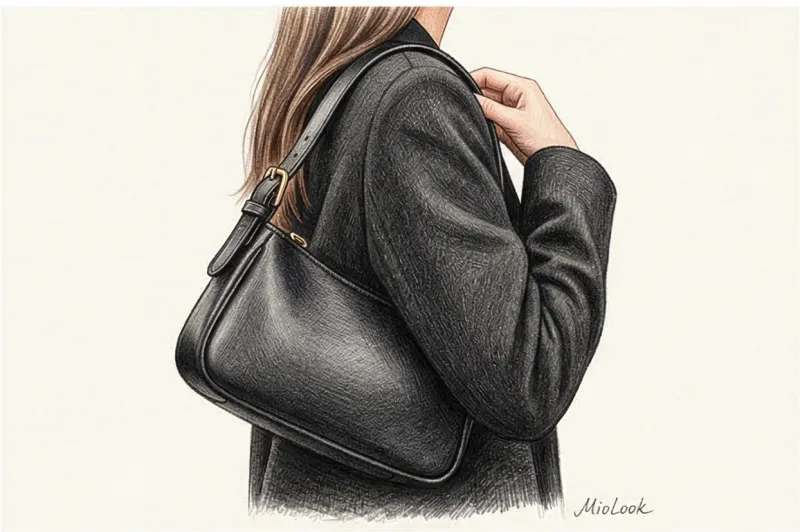
In the world of style, a bag is never just a functional container for keys and a phone. It's an architectural detail, a focal point, and the finishing touch that brings disparate items together into a cohesive composition. It instantly, even before you speak, conveys your status, current mood, and lifestyle to those around you.
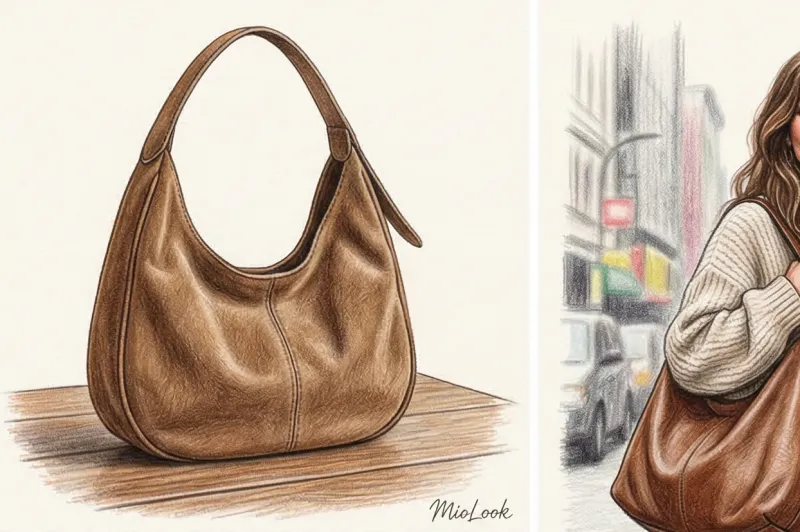
Consider contrasts: a soft suede crescent-shaped model instantly adds relaxed Mediterranean chic. It makes even a simple linen shirt and jeans look like you've just returned from a leisurely seaside brunch. Conversely, a sturdy leather briefcase with simple matte hardware switches you into a strict corporate mode, adding visual weight and authority to any business meeting.
But why is it so important to know the correct names for these shapes? In my experience, 8 out of 10 women make impulse purchases precisely because they lack a basic understanding of terminology. When you're looking for an office bag but don't understand the difference between a satchel and a soft shopper, you risk buying something "just nice" that violates the work dress code. Knowing the terminology works like a filter: it helps you formulate precise requests, make informed purchases, and save hundreds of euros on erroneous investments. Furthermore, understanding the functionality of your accessories will make it much easier to load them into your MioLook smart wardrobe and create flawless image formulas in just a couple of minutes.
A Complete Fashion Glossary: The Main Types of Women's Bags
Just last month, I was reviewing a top executive's wardrobe in Madrid. We opened the doors to her luxurious walk-in closet, and I saw fifteen bags. The problem was, all fifteen were identical black, medium-sized crossbody bags, just from different brands. "I never have anything to take to dinner or a business meeting," she complained. It's a classic pitfall.
Studying the different types of women's bags isn't just for the sake of flaunting terminology in boutiques. It's your guide to a functional wardrobe. When you understand the role each shape plays, you'll stop buying duplicates and start building a system. Below, we'll break down the main silhouettes not in a boring alphabetical order, but by their real-life function.
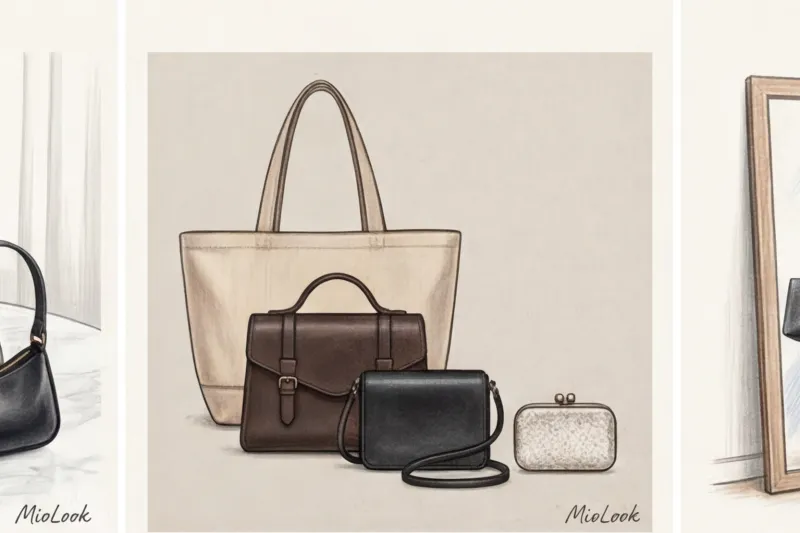
Everyday Workhorses: Tote, Shopper, and Hobo
These are the foundations of our daytime wardrobe. Bags that can hold "our whole life," but don't look like shapeless potato sacks.
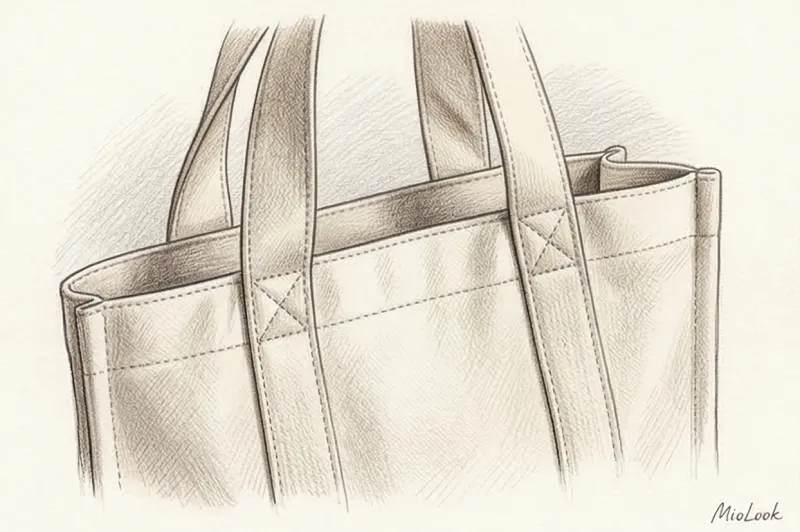
Tote A tote bag is a geometrically shaped bag (usually rectangular or trapezoidal) with a rigid bottom and two parallel handles. Historical background: the tote design was popularized by the American brand LLBean in 1944—it was originally a durable canvas bag for carrying ice! Today, a hard leather tote bag is an ideal choice for the office. Thanks to its sturdy frame, it won't wrinkle A4 documents, and it reliably protects your laptop. A little secret of a stylist: Pay attention to the weight of the bag itself. A high-quality tote made of thick leather (full-grain) with metal hardware can weigh about a kilogram before you even put your things inside. If this is too heavy for you, look for models made of thick canvas with leather inserts.
Shopper Often confused with a tote, there's a fundamental difference: the lack of a rigid frame. A shopper has a soft shape, is more spacious, and exudes a distinctly casual aesthetic. It's the perfect companion for a weekend, shopping trip, or a flight when you need to easily stash your bag under the seat.
Hobo — a crescent-shaped bag made of soft, flowing leather or suede with a single handle that extends from the body. The name "hobo" itself refers to the knotted poles carried by American hobos in the early 20th century. But this bohemian chic style came into fashion in the 1970s. The hobo works brilliantly in looks that require a more casual approach.
"Hard lines in clothing require soft lines in accessories, and vice versa. This is a basic rule of harmony that works without fail."
Image formula: A soft hobo + linen pantsuit + sliders = relaxed elegance with a touch of Mediterranean vibe. This look is perfect for brunch with friends or a creative meeting.
Structured Classics: Satchel, Kelly, and Portfolio
If the previous category was responsible for comfort, then this one is responsible for status, composure and so-called power dressing (influence style).
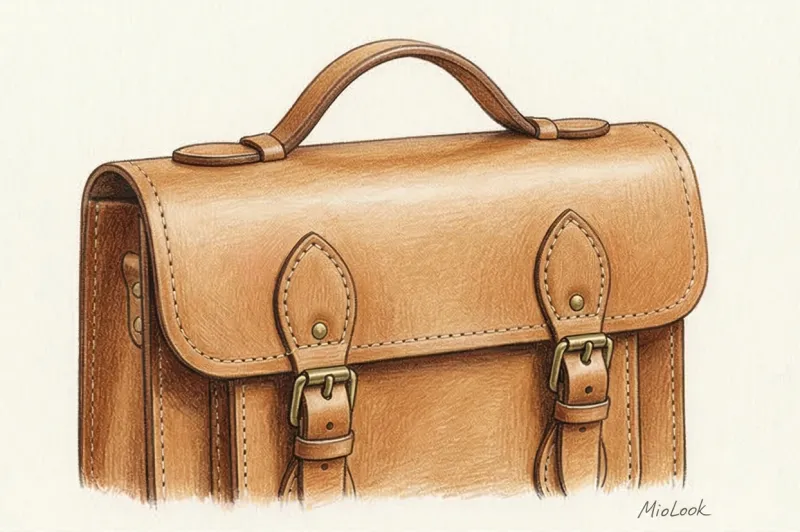
Satchel Easily recognizable by its flat bottom, flap closure, and short handles (often paired with a long strap). Its DNA echoes retro satchels and classic English schoolbags. A satchel perfectly ties together even the simplest outfit. Throw on regular straight jeans, a white T-shirt, throw on a trench coat, and pick up a stiff satchel—and the look instantly looks €1,000 more expensive.
Kelly style (Kelly bag) The Grace Kelly bag is a trapezoidal shape with a single top flap, a short handle, and a distinctive clasp. This iconic silhouette owes its name to Grace Kelly. In 1956, the newly crowned Princess of Monaco used a voluminous Hermès bag to conceal her growing belly from the paparazzi. The photo went viral, and the bag became an absolute symbol of old-money aesthetics. Today, you don't have to buy the original for tens of thousands of euros—many brands in the €200 to €500 price range produce stunning Kelly-style models that will add a touch of aristocratic flair to your wardrobe.
Briefcase — these are strict, uncompromising lines. Unlike men's models, women's briefcases often feature more elegant hardware and come in complex, deep shades. They're the heavyweights for those days when you need to conduct difficult negotiations or present to the board of directors.
Hands-free: Crossbody, Saddle, and Messenger
The dynamic nature of the modern city dictates its own rules: we need to simultaneously hold a cup of coffee, answer messages on our smartphone, and open the door of a taxi. This is where long-haul bags come into play.
Crossbody — It's not so much the shape as the way it's worn (slung diagonally across the body). This is the epitome of versatility. However, there's a stylistic risk here: a strap crossing the chest can visually distort proportions, especially on women with a fuller bust. In such cases, I always recommend wearing a crossbody simply over one shoulder.
Saddle — a saddle-shaped bag with an asymmetrical flap. It's a pure equestrian aesthetic that fits perfectly with smart-casual style. John Galliano gave this shape its iconic status when he created the Dior Saddle in 1999. If you love wearing Cossack boots, flared jeans, oversized sweaters, or flowy floral dresses, the saddle will become your favorite investment.
Messenger — a messenger bag. This is a roomy bag, often made of fabric or soft leather, with a wide shoulder strap and a large flap. It's a great, more grown-up and stylish alternative to a city backpack if you prefer a sporty or grunge style.
Access to MioLook for €0.99 — one-time payment
A smart AI stylist will find the perfect look and help you integrate new bag shapes into your current wardrobe, ensuring no item sits idle.
Get access — €0.99 onceEvening and accent: Clutch, Baguette and Minaudière
We've reached the most emotional part of the wardrobe. These types of women's bags aren't designed to carry a kilogram of makeup and a charger. They exist to add the finishing touch to an outfit.
Clutch and envelope Traditionally associated with evening wear, fashion has long since blurred these boundaries. Today, we wear oversized daytime clutches (remember the famous Pouch model from Bottega Veneta, resembling a huge leather cloud) tucked under our arms with voluminous coats and chunky boots. Meanwhile, stiff, geometric envelope clutches remain the preserve of cocktail dresses and tuxedos.
Baguette — an elongated rectangular bag with a very short handle. It's a warm welcome back to the 90s. Do you know why it's called that? Silvia Venturini Fendi, who created this style in 1997, designed it to be comfortably carried tucked under the arm—just like Parisians carry a freshly baked French baguette on their way home from the bakery. The baguette is ideal for dates and parties: it frees up your hands but still sits close to the body, creating a very composed, dynamic silhouette.
Minaudière A minaudière isn't even exactly a bag; it's a hard-shell evening case that often doubles as jewelry. The story behind its origin is fascinating: in the 1930s, Charles Arpels (founder of the Van Cleef & Arpels jewelry house) saw socialite Florence Gould using a simple Lucky Strike cigarette tin to carry lipstick. Inspired, he created a precious metal box with compartments for powder, lipstick, and theater tickets. Today, minaudières are made of metal and acrylic, encrusted with crystals and pearls. Sure, it only holds a credit card and lipstick (even a phone often has to be held in one's hand), but the effect a minaudière creates on the red carpet or at a dinner party is priceless.
Understanding these shapes is your first step to a conscious wardrobe. When you know for sure that you need a structured tote for work and a baguette for evening wear, you'll never buy a fifth shapeless crossbody on sale again.
A stylist's secret: how to choose a bag based on your body type and height
A study by the European Academy of Style, published in 2023, confirmed what I'd known intuitively for years: the wrong accessory can add up to 5 kilograms to your figure. After countless hours spent in fitting rooms with clients of all sizes, I've become convinced that a bag works as a powerful optical illusion. We can spend weeks searching for the perfect pair of jeans, only to grab the first bag we see at the door, ruining all our efforts to shape our silhouette. Let's explore three golden rules of style geometry that will forever change your approach to shopping.
The Rule of Contrast: Geometry vs. Softness
The main secret taught to professional stylists: the shape of your bag should be the exact opposite of your body type. If you have soft, rounded curves (a prominent bust, sloping shoulders, and voluminous hips), you absolutely need strong lines. A structured tote, a graphic satchel, or a classic briefcase with sharp angles will sculpt your silhouette, adding movement and visual lift. Think of Prada's iconic rigid bags—they act like a corset for your entire look.
Conversely, women with an angular, athletic figure, narrow hips, or prominent collarbones are ideal for softer shapes. A voluminous hobo bag in supple leather or a relaxed suede bag will soften sharp angles and add that Mediterranean fluidity and femininity we love so much.
Scale and Proportion: Why Size Matters
Imagine a petite woman, 158 cm tall, carrying a gigantic leather shopper. The bag literally "eats" her, making her look like a schoolgirl carrying all her textbooks home at once. Or the opposite: a statuesque plus-size woman carrying a tiny Jacquemus micro-bag. Against the backdrop of this microscopic accessory, her larger figure appears even more massive—it's the elementary law of contrasting volumes.
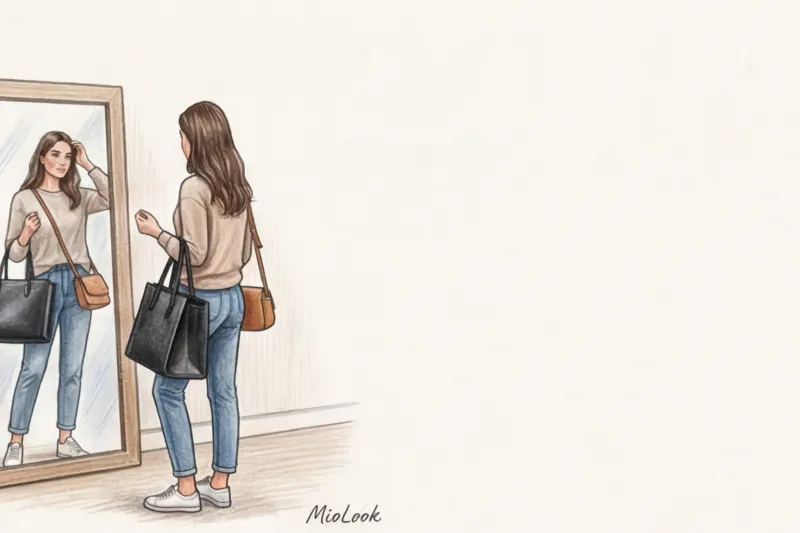
My personal formula for proportionality is extremely simple: the taller and larger you are, the larger your scale should be. types of women's bags in your everyday arsenal. For petite women (up to 160 cm), I recommend small and medium-sized models (up to 25-28 cm wide). If you need to carry a laptop for work, choose vertical rather than horizontal totes—they visually elongate your height. For tall women (over 175 cm), larger models at least 35 cm wide are ideal, as they won't be overshadowed by your height.
The Magic of the Strap: Attention Management
Remember this ironclad rule: the focal point is where your bag ends. It's like highlighter in makeup—it illuminates the exact area where it's applied. People's eyes automatically fall on the part of your body where the accessory dangles.
If you have wide hips (a pear-shaped figure) and wear a crossbody bag with a long strap so that the bag hits the widest part of your hips, you're voluntarily adding extra bulk to your hips and drawing maximum attention to them. The solution? Shorten the strap so the bag sits at waist level (this will accentuate the narrowest part), or choose a trendy baguette bag with a short handle for carrying under your arm. However, if your goal is to draw attention away from a full belly or a full bust, feel free to wear the bag below your hips with a long strap.
Sometimes it's hard to objectively assess yourself in the mirror. One of my clients found a simple visualization helpful: we uploaded several images of her with bags with straps of different lengths to MioLook The ability to view her outfits in a catalog format clearly showed how a belt shortened by just 5 centimeters instantly "drawn" her waist. Try this trick: take a photo of yourself wearing your favorite crossbody, varying the strap length, and compare the results—you'll be surprised how much one detail can change the way you look.
Debunking the Myth: Why the "Uniform Black Bag" Ruins Your Looks
I'll make a bold statement, one that's often criticized by conservatives: a pure black leather bag is the most overrated "basic" wardrobe item. When researching different types of women's bags for their collection, many people habitually reach for what they consider the safest option. If I had a euro for every time a new client tells me, "I bought the black one because it goes with everything," I'd already have saved up for a rare vintage Hermès.
Let's examine the physics of color in practice. Imagine: you're wearing a luxurious beige trench coat, a pastel silk midi skirt, or a light gray cashmere sweater. You grab a black bag, and what happens? It doesn't tie the look together, but acts as a visual black hole. In light and pastel outfits, a black bag often looks out of place. It creates an overly aggressive, sharp contrast that instantly cheapens the carefully crafted, delicate palette and visually disrupts the silhouette, drawing attention away from your face.
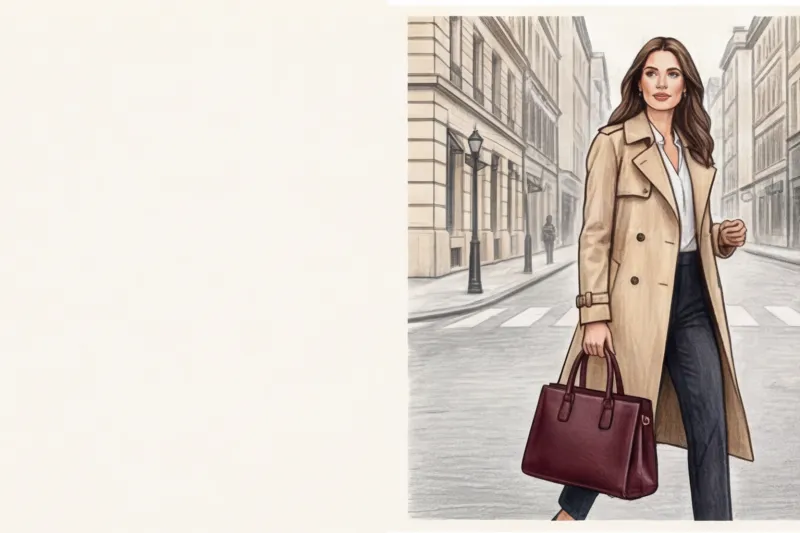
Instead, I strongly recommend turning to the concept of "dark neutral" ( falso nero ), which is a cornerstone of Italian styling. Milanese stylists know the secret: pure black often looks flat and boring in daylight. They choose shades that appear black in the shadows but reveal rich, complex undertones in the sunlight. Such a piece adapts to the color scheme of your outfit, engaging in a dialogue with it rather than shouting down its contrast.
Which alternative base colors actually look more expensive and perform better?
- Deep burgundy (oxblood): My absolute favorite. Pantone Color Institute experts regularly emphasize that complex wine pigments possess unique chameleon-like properties. Burgundy pairs luxuriously with navy blue, camel, gray, and classic blue denim.
- Dark chocolate: Warmer and more aristocratic than black, brown leather ages better and displays its texture more beautifully. Even a simple mid-range tote in a dark chocolate shade for €200–300 will look a cut above its price.
- Taupe (gray-beige): The perfect bridge between warm and cool tones in your wardrobe, it's an essential, elegant base, especially for the spring/summer season.
- Emerald: An unconventional, yet brilliant choice for those whose wardrobe consists primarily of monochrome achromats. It adds a touch of class to the look without being overly bright.
Access to MioLook for €0.99 — one-time payment
Start creating your perfect looks with AI and discover which accessory shades best complement your personal palette.
Get access — €0.99 onceNext time you decide to invest in an everyday accessory, make a little effort and pass by the shelves filled with black pieces. Swap your usual monochrome for a deep wine or chocolate color, and you'll be surprised at how much more cohesive, soft, and "pretty" your usual outfits will feel.
Capsule Wardrobe of Bags: The "3+1" Formula
The Pareto principle works mercilessly in our closets: 80% of the time, we wear only 20% of our accessories. The rest sit on back shelves for years, bought in the heat of the moment during seasonal sales. Consumer behavior analysis from WGSN (2024) shows that women often buy duplicates of the same styles, ignoring the real needs of their schedules.
To break this cycle of consumerism, I implement a strict yet liberating system in my work with clients. You don't have to buy everything imaginable. types of women's bags To look stylish and diverse. The secret to the perfect collection lies in the mathematical overlap of your life scenarios using the "3 + 1" formula.
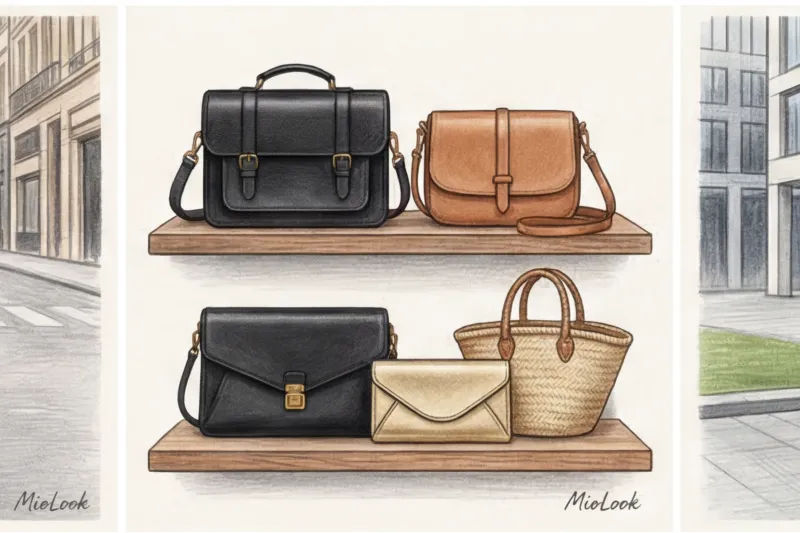
Before investing in new accessories, take an honest inventory. I highly recommend uploading your current collection to MioLook By digitizing your closet, you'll clearly see your blind spots. The app perfectly highlights situations where you have five beige crossbody bags but not a single statement piece for an important presentation.
So, what does a reference base look like that will cover 99% of your needs?
- Bag #1: Structured tote or satchel. This is your career foundation for work and business meetings. The key requirements are a rigid base and clear architecture. The bag should stand firmly on the table, not sink into a shapeless blob. Choose a size that can accommodate a 13-inch laptop and A4 documents. An investment of 300–500 euros in high-quality leather (for example, from brands like Polène or DeMellier) will pay for itself many times over. Note: If your schedule requires remote work, feel free to swap your formal satchel for a relaxed suede shopper.
- Bag #2: Medium crossbody. An indispensable companion for weekends, long walks, and travel. The gold standard for width is 20 to 24 centimeters. It should easily accommodate a smartphone, keys, cardholder, and glasses case. A long strap frees your hands, which is crucial in the fast-paced modern city. Opt for neutral yet sophisticated shades: cognac, olive, or dark chocolate.
- Bag #3: Accent baguette or clutch. A capsule collection for evenings, dates, and cultural outings. Here, we completely ignore utility and focus on aesthetics. Smooth silk satin, reptile-embossed prints, vintage velvet, or a chunky metal clasp. A simple baguette with a short handle instantly brings together even the simplest pairing of straight jeans and a cashmere sweater, elevating it to the "going-out" category.
- +1: Seasonal or trendy bag. That one piece that breathes life into a basic wardrobe and shows you've got your finger on the pulse of fashion. For hot summers, it's the ever-present straw basket (hello, Mediterranean chic and Riviera aesthetics). For the colder season, try a fluffy sheepskin model, an asymmetrical bag, or a bold animal print. This item is a safe bet for mass-market pieces and can be changed year after year without regret.
"A capsule isn't a restriction, but absolute freedom. When you have three perfectly chosen essential bags, you stop wasting your mornings agonizing over choice and are always confident in the impeccability of your silhouette."
Business Etiquette: What Types of Bags Are Acceptable in the Office?
At a recent masterclass for top managers in Frankfurt, a brilliant financial analyst approached me. She complained that at board meetings, she was perceived more as a line performer than an equal partner. Taking a quick look at her, I immediately spotted the "traitor"—a shapeless leather backpack slumped dejectedly on a chair. In the corporate world, various types of women's handbags are not just utilitarian accessories, but your unspoken calling cards.
According to the rules of business protocol taught by the Association of Image Consultants International, the geometry of your accessories directly conveys your professional qualities. The psychology of perception is unforgiving: soft, fluid silhouettes (hobo bags, sacks, backpacks) are subconsciously associated with relaxation, creative chaos, and a lack of strict discipline. In a strict dress code, they literally undermine your authority, making the look too casual.
It is crucial to understand the difference between levels of formality here:
- Business Formal: Traditional banking, law, and senior management. Here, only formal shapes are acceptable. Choose from a classic satchel, a sleek women's briefcase, or a trapezoid bag in deep shades (burgundy, dark chocolate, graphite).
- Business Casual: IT, marketing, and modern corporations. The rules are becoming more relaxed, and you can embrace a light palette (taupe, caramel) or interesting textures (like crocodile embossing), but the bag frame still has to hold its shape.
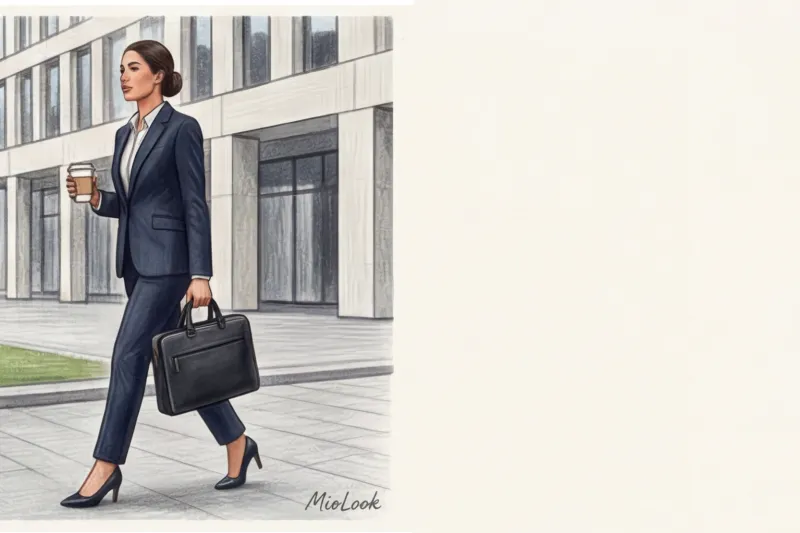
How do you choose a truly prestigious briefcase or work tote? Forget monograms. Flashy logos are a complete faux pas in serious business. True status (that same stealth wealth) manifests itself in three details:
- Hard bottom with bulges: Metal feet protect the leather, and the bag itself should stand firmly on the conference table without tipping over.
- Closed architecture: No open shoppers with cosmetic bags or charging cables sticking out. Only a secure zipper or a tight flap. Make sure A4 documents fit inside without deforming the case.
- Noble fittings: Avoid glossy yellow gold, which often cheapens the look. Matte palladium, rhodium, or satin brass look much more expensive.
My personal advice: treat your work bag as an investment in your career. A high-quality structured tote bag costing €300–€500 will last you for years and pay for itself with your first successful contract. And to avoid wasting your mornings choosing your wardrobe, I recommend digitizing your business capsule wardrobe. MioLook — the app will automatically suggest which bag will best complement your outfit today.
Your ideal image
it begins Here
Join thousands of users who look flawless every day with MioLook.
Get access — €0.99 onceInvesting in Quality: A Pre-Purchase Checklist
In 2019, I was fortunate to spend a day at a small family-run leatherworks in Scandicci—the heart of Italy's tannery, where masterpieces are crafted for the world's leading fashion houses. Antonio, the master craftsman, while sorting through patterns, said something that forever changed my approach to shopping: "The difference between a bag that lasts one season and one you'll pass down to your daughter lies in the details invisible to the layman." Whatever types of women's bags you plan to add to your capsule wardrobe, their true status is determined not by a flashy logo, but by uncompromising craftsmanship.
To avoid overpaying for marketing, I offer you a professional four-point checklist used by stylists and buyers.
Leather: Full-grain vs. Split Leather
The label "Genuine Leather" is perhaps the most common ploy in the industry. This vague term often hides split leather (split leather or pressed leather). This is the bottom, loose layer of the hide, which is generously coated with polyurethane at the factory and stamped to resemble the texture of reptile or smooth calfskin. This type of bag doesn't breathe, and in cold temperatures or where it's folded, it will begin to crack within a few months.
Your goal is marking full-grain leather (full-grain leather). It retains the natural pore pattern and doesn't deteriorate over time, developing a refined patina. Run your fingernail along the inside of the strap: genuine full-grain leather is slightly pliable and has a velvety back, while pressed leather feels like hard cardboard or plastic.
Fittings: weight and precious metal
A cheap item's hardware is a clear sign of a cheap item. Pay close attention to the weight of the locks, rings, and snap hooks—they should be cast from solid metal and feel pleasantly heavy in your hand. Be sure to check the zipper: it should slide smoothly, without the slightest jerk, and without scratching your skin.
The color of the metal is also critical to the perceived status of a piece. Avoid garish, overly yellow, or "samovar" shine, which often imitates gold in mass-market jewelry. Matte gold, delicate aged brass, or cool rhodium always look significantly more expensive, more aristocratic, and are easier to integrate into any outfit.
Seams and edges: markers of Italian masters
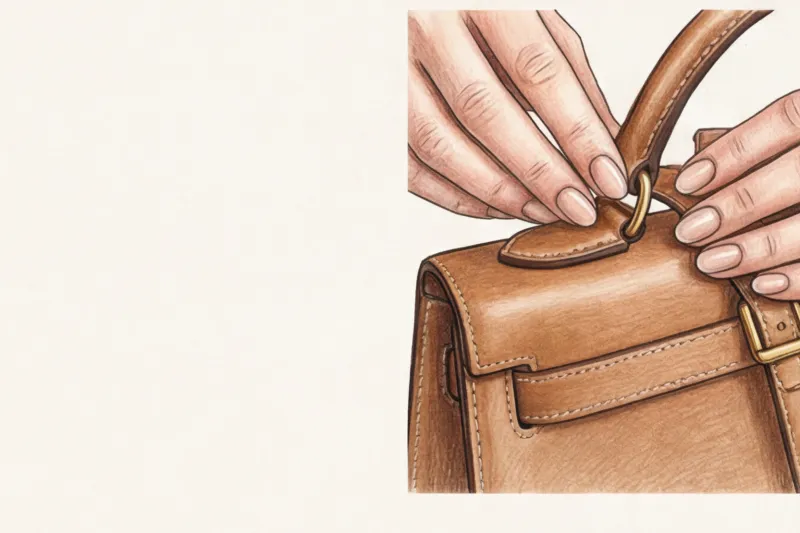
The first thing I look at when evaluating leather goods is the edge (the finished leather edge on the handles and sides). In budget models, it's carelessly coated with a thick layer of cheap, rubbery paint, which begins to peel off in chunks after a couple of months. On a high-quality bag, the edge is carefully polished in several stages and coated with a thin, neat layer of protective compound.
Take a closer look at the stitching. Luxury items often have slightly slanted stitches (called a French seam). This requires special equipment and slower work by the craftsman, so fast fashion factories sew strictly in a straight line to save time.
The Mathematics of Style: Calculating Cost-per-Wear
My clients are sometimes scared by the price tags in the premium segment until we sit down to simple math – the formula Cost-per-wear (cost of one output).
Let's say you buy a trendy faux leather or split leather bag for €50. After two months of daily wear (approximately 60 times), the handles crack and the corners peel. The cost per wear is €0.83. Now, let's take a basic structured full-grain leather tote for €500. You'll wear it to work 200 days a year for at least five years (1,000 times). The cost per wear is only €0.50!
By investing in quality, you don't just get a flawless look. You're making the most sensible purchase that will save you money in the long run and ensure you always look your best.
Practical task: auditing your bag collection
Do you know what my favorite part of working with clients is? The moment of truth, when we unload everything from the closets onto the spacious bed. Theory is dead without practice, so right now I suggest you conduct your own audit. Stop storing accessories that haven't seen the light of day for years.
Step one: a total revision. Take out absolutely every bag you own. Yes, even that straw basket you brought back from Ibiza and that beaded clutch you bought for your friend's wedding five years ago. Now sort them into categories from our glossary. Everyday totes, shoppers, and hobos go one way. Structured briefcases and satchels go another. Dynamic crossbody bags and messenger bags go a third. Evening minaudières and baguettes go a fourth.
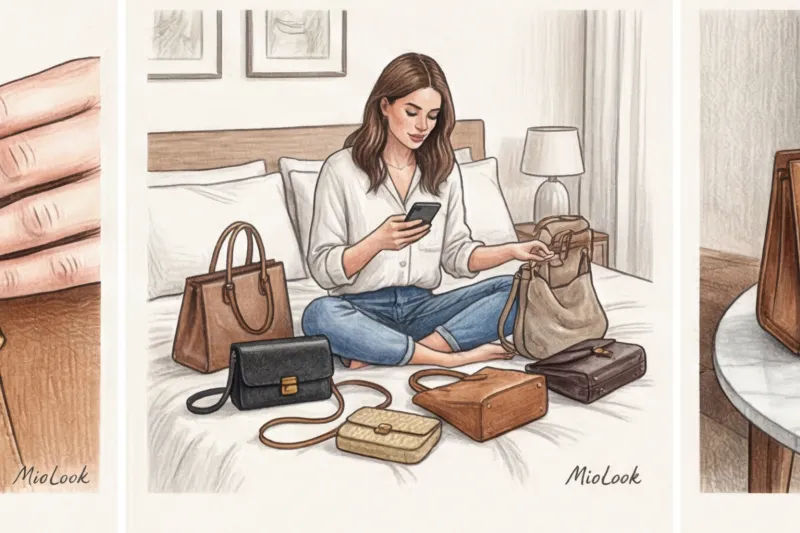
Step two: search for clones and blind spots. This is the stage where key stylistic insights often occur. One of my Parisian clients, the owner of a successful PR agency, was genuinely surprised to discover she owned three black crossbody bags of virtually identical sizes from different brands. Yet she didn't have a single high-quality, durable bag for the office or for important pitches to investors.
We often buy duplicates simply because that's our "comfort zone." Our brains are too lazy to explore new solutions. Ruthlessly get rid of clones: keep the model that's in the best condition and has the most up-to-date hardware. Sell the rest confidently on trusted resale platforms like Vestiaire Collective or The RealReal. The 200-300 euros you earn will be excellent starting capital for filling any gaps—for example, buying that all-important deep wine-colored satchel.
Step three: digital integration. Once you're left with just a well-curated base (ideally, our "3+1" formula or a slightly expanded version), the real magic begins. I always insist that my clients take photos of every single item they leave behind. Upload these shots to MioLook app to digitize your wardrobe.
Why is this necessary? The app will help you visualize how your new accent baguette will look with a basic linen suit and generate dozens of new combinations from what you already own. You'll no longer have to frantically sort through your clothes in the morning, trying to remember if this texture matches these shoes—the algorithm will create harmonious looks for you, taking proportions and color palette into account.
In closing this guide, I want to remind you of the most important rule espoused by style icons: your accessories speak volumes about you long before you utter a single word. Handbags aren't just utilitarian pouches for keys and lipstick; they're your personal tools for impression management. Choose them wisely, invest in quality, and take care of the leather, and they'll reward you with flawless looks for years to come. Take the first step toward your new style right now—just open your closet.