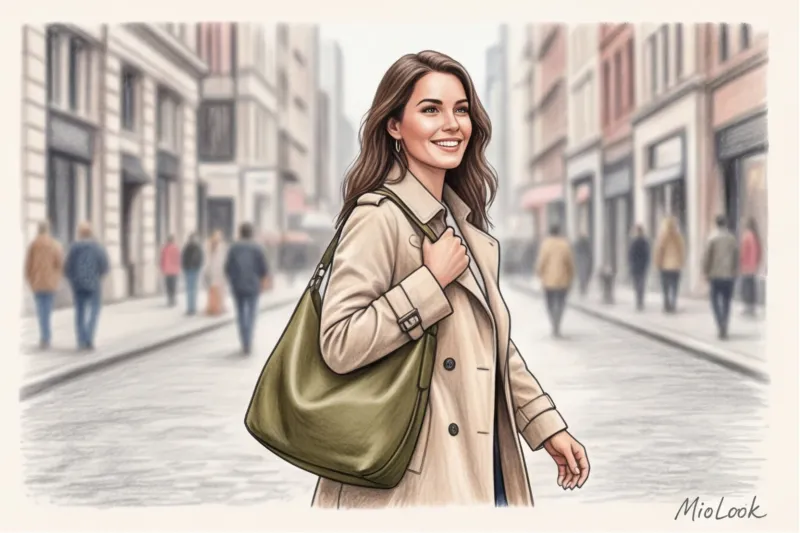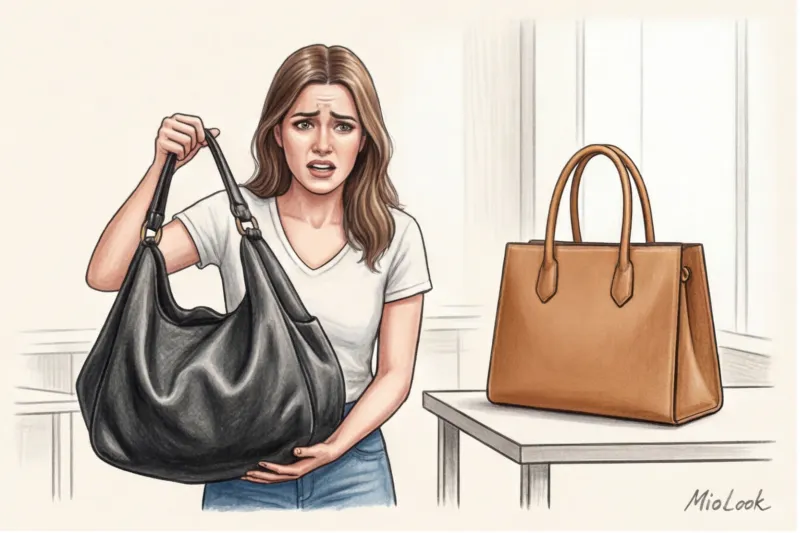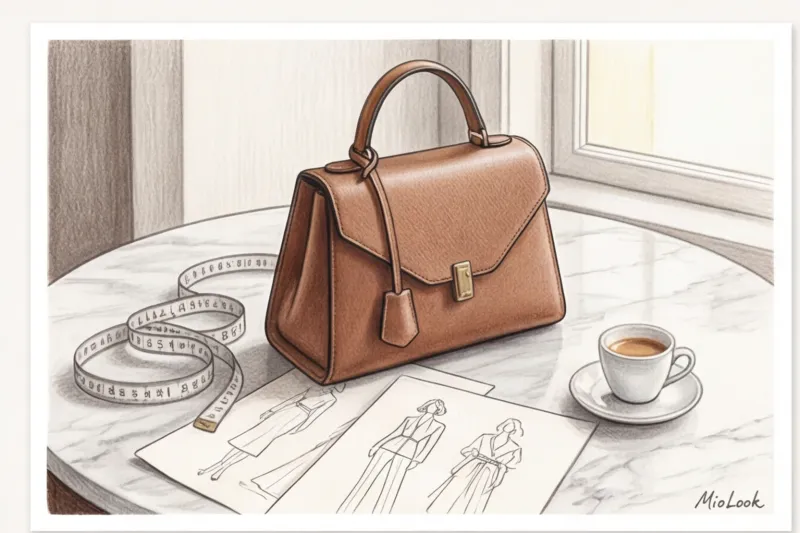
Last Paris Fashion Week, a longtime client approached me before the show. She was wearing a flawless beige trench coat and silk scarf, and would have looked like a street style icon if not for one detail: a completely shapeless, jet-black bag that weighed the entire look down like a heavy visual weight. Even though the accessory cost almost two thousand euros, it looked out of place. This mistake is common. We've become accustomed to the idea that a basic everyday bag must be black and contain half our lives. But the architecture of the modern wardrobe operates according to entirely different laws. We've covered how stylistic accents are shifting globally in our complete guide. How Fashion Accessories Change Your Look: Trends Today, we'll explore the hard math, visual illusions, and formulas that will help you choose that perfect investment partner.
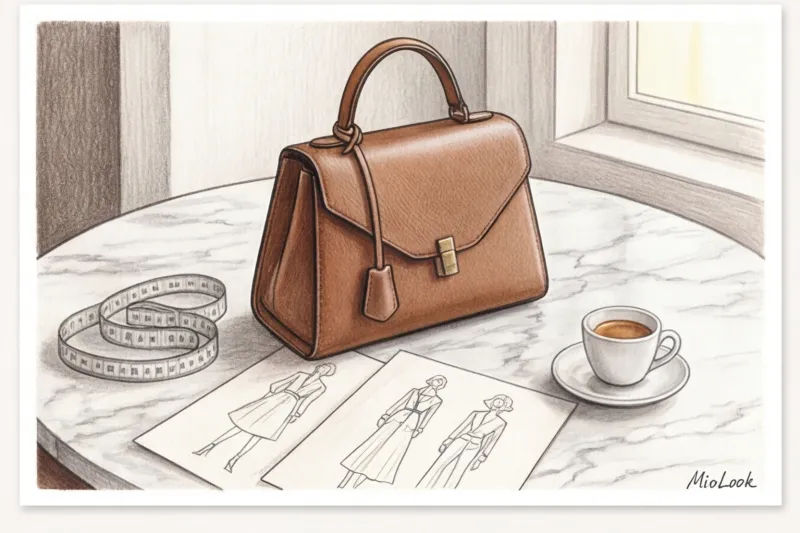
The Anatomy of the Perfect Investment: What Makes a Bag Truly 'Basic'?
The paradigm shift has finally occurred: a bag is no longer a utilitarian "carrier." Today, it's the ultimate status symbol, setting the tone for your entire outfit. The Business of Fashion (State of Fashion 2024) report clearly demonstrates this trend: shoppers are consciously cutting back on fast-fashion clothing, reallocating their budgets toward premium accessories. A simple white T-shirt and jeans paired with an architecturally designed bag looks significantly more expensive than a complex dress with a random accessory.
The concept of "quiet luxury" has taught us to value a garment's structural memory. Studying the archives of Cristóbal Balenciaga, one can discern a key principle: form is always more important than excessive embellishment. A rigid frame versus a soft form is your personal formality slider. A strict geometric model acts like a corset for an outfit: it instantly pulls together a relaxed ensemble. A soft bucket bag, on the other hand, can tone down the formality of an overly formal business suit.
Cost Per Wear (CPW) Formula in Practice
When I accompany my clients on a shopping trip, I always explain the Cost Per Wear principle. The mathematics of conscious consumption are merciless when it comes to compromises. Let's do the math together.
Let's say you buy a trendy mass-market bag for €150. You wear it 10 times, after which the paint on the corners wears off and the coating on the hardware peels off. Your CPW in this case is €15 per wear. Alternatively, consider a high-quality, basic grained calfskin bag for €800. You wear it 300 days a year for at least three years. The cost per wear is only €0.88! Investing in durable hardware and thick leather isn't a waste of money, but rather financial literacy.
Access to MioLook for €0.99 — one-time payment
A smart AI stylist will select the perfect look based on your wardrobe capsule.
Get access — €0.99 onceThe biggest style myth: why a basic black bag isn't for everyone
A basic black bag for every day is a style mistake for 70% of women. Over 12 years of work, I've seen hundreds of wardrobes where this "universal" purchase simply gathers dust on the shelf. The problem lies in the theory of contrasts. Black creates too harsh a boundary with light spring outerwear, pastel dresses, and soft blue denim.
If your look contains no other black elements (no shoes, no belt, no glasses frames), such a bag looks like an aggressive, foreign object, visually "cutting" the silhouette. The exception to this rule is those with a high-contrast coloring (the so-called "winter" complexion) or staunch fans of all-black avant-garde. For everyone else, I strongly recommend considering alternative palettes.
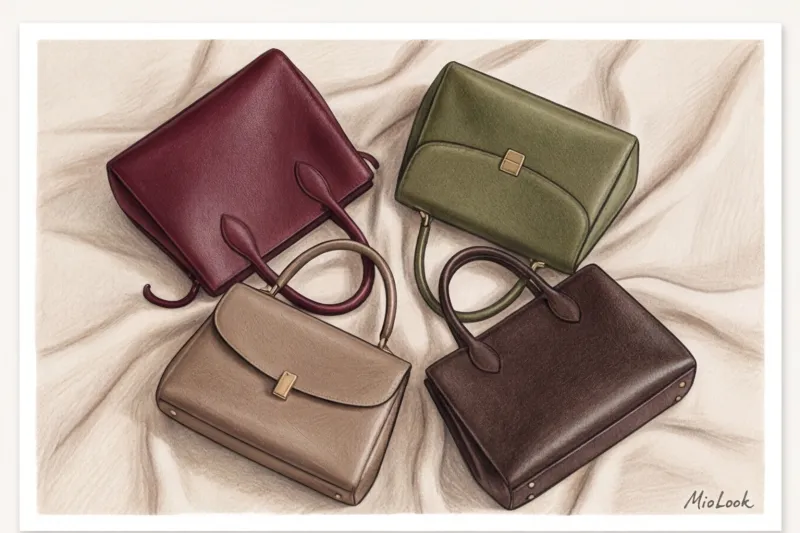
New Neutrals: Burgundy, Taupe, and Dark Chocolate
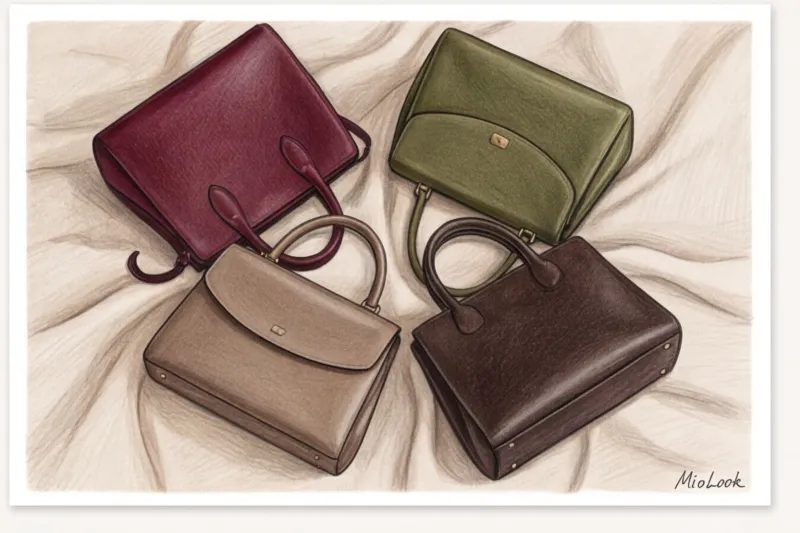
Pantone Color Institute data regularly confirms that complex shades are perceived as more expensive by our eyes. In modern styling, new neutral colors are taking on the role of a base:
- Burgundy (Cherry Red): A perfect accent color that paradoxically works as an absolute base. It pairs luxuriously with gray, beige, khaki, and navy blue.
- Taupe (grey-beige): A true chameleon in the world of accessories, this shade can adapt to both warm and cool palettes in your closet.
- Dark chocolate (Espresso): A deep, elegant alternative to black, chocolate color doesn't produce harsh shadows in photographs and looks much more elegant.
The Mathematics of Proportions: How Your Bag Size Changes Your Figure
The basic rule of visual illusions taught in European styling schools is: the size of accessories should be proportionate to your height and body measurements. A bag isn't just a container; it's a geometric shape against your silhouette.
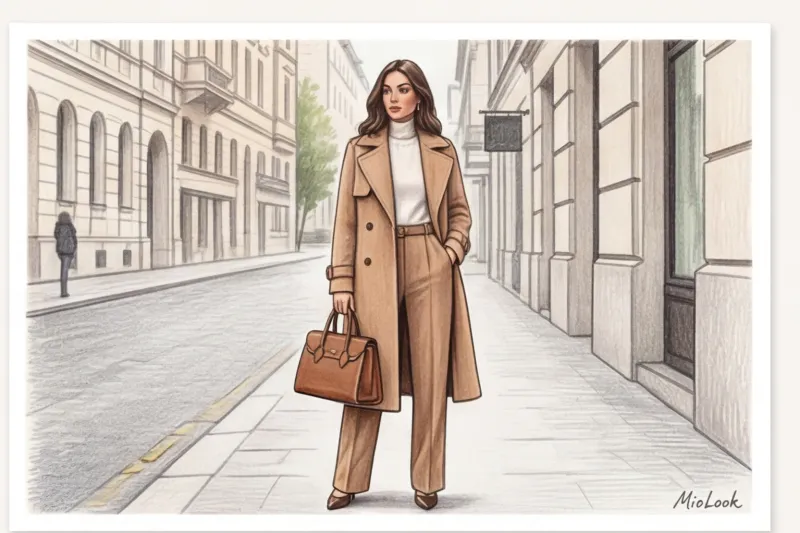
For petite women under 160 cm tall, oversized shopper bags are a stylistic no-no. They literally "eat up" their height, making their figure appear squat and their gait heavy. If you need to carry documents, choose rigid, vertical A4 bags rather than horizontal ones. On the other hand, if you're tall (we've covered this especially for you) perfect jeans for tall people ), exaggerated totes will look absolutely natural on you.
Plus-size women face a different danger. Micro bags play a nasty trick: the contrast with the tiny accessory makes the body's volume appear larger. The optimal choice here is a medium-large size. We discussed this contrast effect in detail when we looked at stylish outerwear for plus size women The length of the strap is also critical. People's eyes always fall where the bag ends. If a crossbody bag hits right at the widest part of your hip, it adds a few visual pounds. The solution is to shorten the strap so the bag sits at your waist.
Insider's Guide to Leather Manufactures: How to Test Quality Before Buying
During my work trips to tanneries in Tuscany (the Santa Croce sull'Arno area), old Italian artisans taught me to evaluate the quality of luxury leather not by the logo, but by the backing and edges. The first thing to pay attention to is the physical weight of the product.
The ideal basic everyday bag shouldn't weigh more than 800–900 grams when empty. Bags made of thick saddle leather are incredibly beautiful, but if an empty model weighs 1.5 kilograms, your back and shoulders will hate it after a couple of weeks of daily wear.
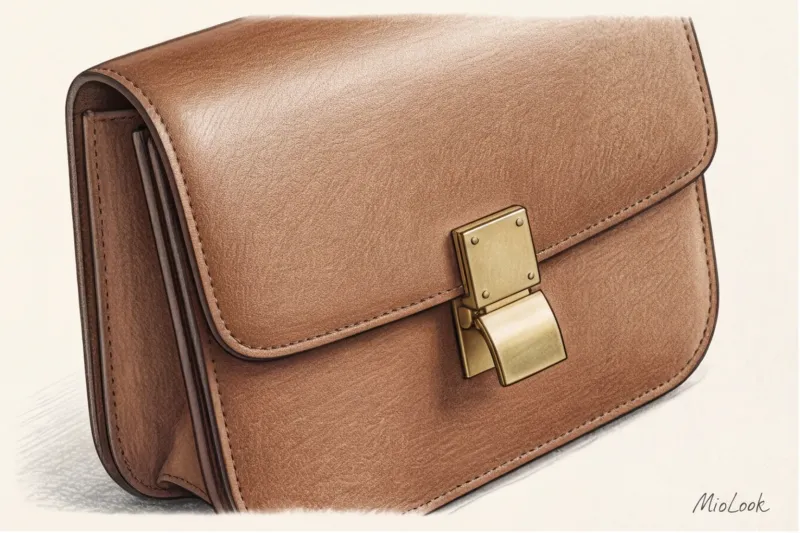
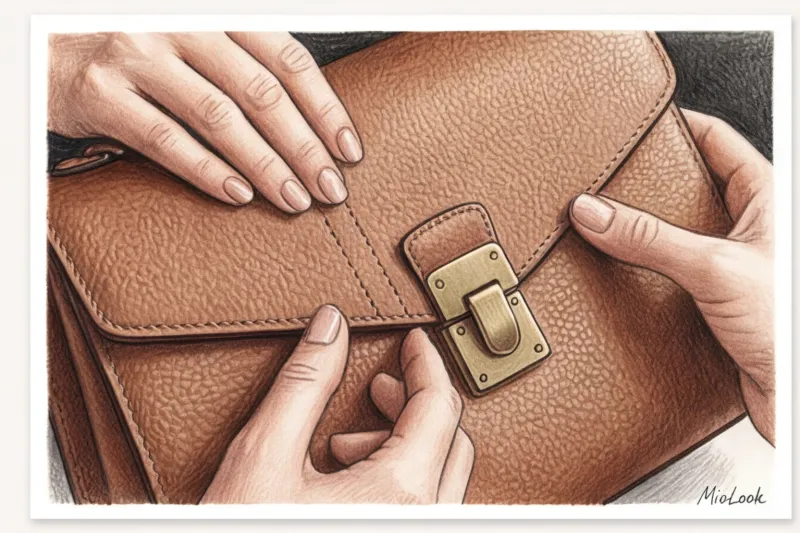
The second aspect is the type of leather. A grained finish (togo or pebbled) is an ideal choice for a busy city life; it's forgiving of scratches from keys and occasional creases. Smooth calfskin (box calf) looks more prestigious and formal, but requires careful care and polishing. Always check the "edge"—the finish on the leather's edges. Cheap rubber filler will crack over time. A quality item's edges are carefully sanded and coated with several thin layers of paint. The stitching should have a slight, barely noticeable slope—this is a sign of intricate workmanship, whereas a perfectly straight machine stitch often cheapens the appearance.
Fittings as a status marker
Bright, shiny "yellow" gold hardware in 90% of cases betrays a low-end product (or its rapid aging). High-end brands today prefer matte hardware, aged antique brass, or cool palladium. And a little professional secret: always listen to the sound of the lock closing. It should be dull, heavy, and confident, reminiscent of the click of the door of an expensive German car.
Ready to get started?
Try the MioLook free plan—no commitments. Upload your items and get dozens of stylish combinations for every day.
Get access — €0.99 onceTop 5 form factors for different lifestyles
There's no one-size-fits-all bag. There's a model that fits perfectly into your schedule. I've identified five key form factors that are relevant today:
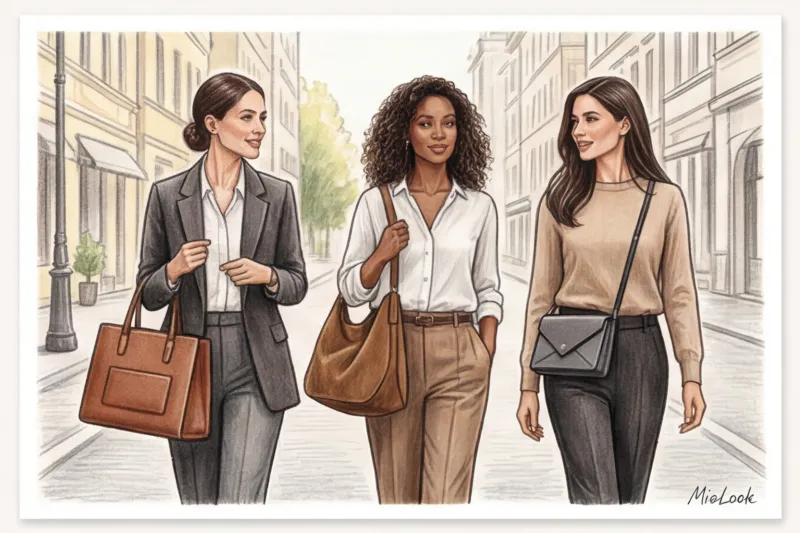
- Structured Tote: A lifesaver for fans of strict dress codes and the "corpcore" aesthetic. It holds its shape even if it's just lipstick, and easily accommodates a 13-inch laptop.
- New Wave Hobo Bag: A semi-soft, streamlined shape, perfect for smart casual. I personally tested the new hobo bags at fashion weeks—they fit a water bottle and even a change of shoes perfectly, without looking like a shapeless sack.
- Top-handle (bag with a short handle): The epitome of elegance with a touch of retro flair, it's the perfect choice for business lunches. If you're building a wardrobe of brands in this style, office siren , the top-handle will become its crown jewel.
- Architectural Cross-body: A rigid, geometric frame and hands-free design. A top priority for young mothers, active freelancers, and those who travel a lot on foot.
- Bucket bag: A clever compromise between excellent capacity and a unique, eye-catching design. An excellent choice for creative professionals.
Stylist Checklist: 5 Questions to Ask Yourself Before You Go to the Checkout
Before you spend €300 in the mid-range segment or €1,500 in a boutique on a new model, run it through my professional filter. No emotional fluff—only pure functionality:
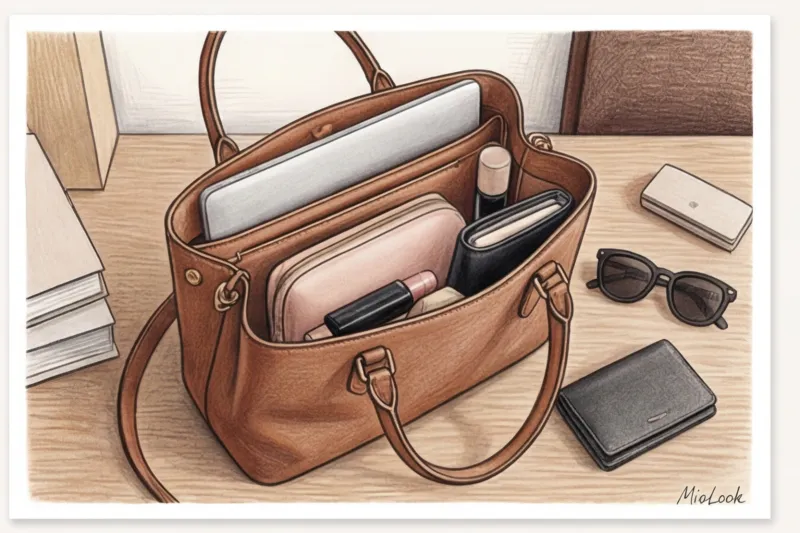
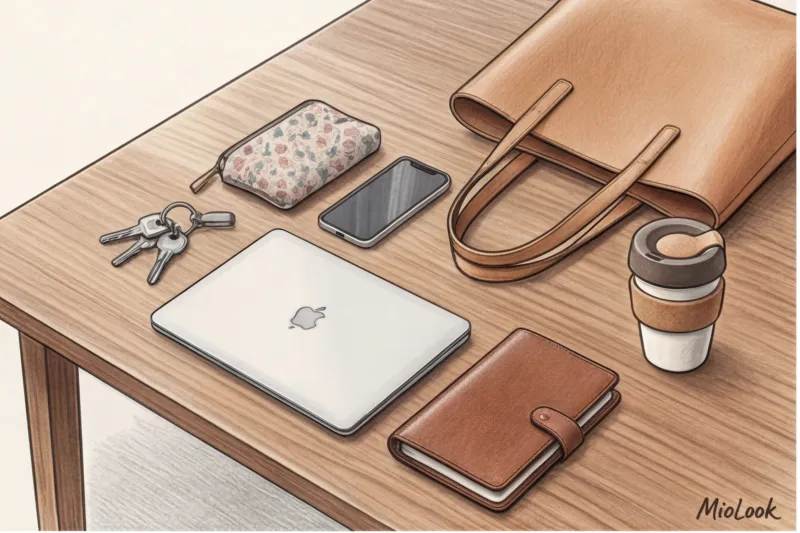
- Does it meet my "living wage"? Go to the store with your usual belongings (keys, phone, cardholder, face powder, hand sanitizer) and try putting them inside. Does the bag close without distorting its shape?
- Does it pass the "winter test"? Does the bag sit comfortably on your shoulder over a bulky down jacket or heavy wool coat? If the handles are too short, it will be useless in winter.
- How safe is it? Does it close with a secure zipper or a hidden lock? On the metro, an open, wide tote bag is an open invitation to pickpockets.
- Does it pass the table test? Does the bag hold its shape when placed on a flat surface? An everyday bag shouldn't sag and puddle.
- Does the hardware fit with your jewelry base? Do the buckles and rings on your bag match 80% of your everyday jewelry (watch, favorite rings, belt buckles)?
Smart Integration: How to Fit a New Bag into a Capsule
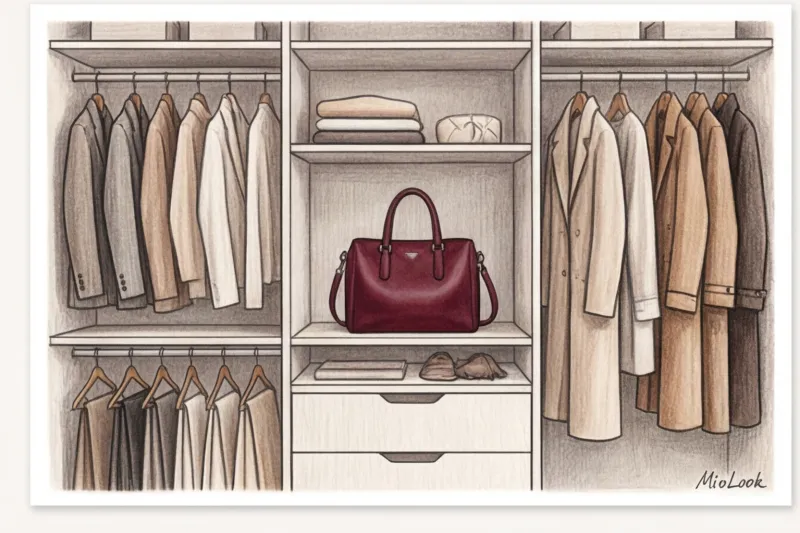
Let's say you've bought the perfect everyday essential. What's next? To prevent it from taking on a life of its own within your look, use the stylistic rule of "two complements." The bag's color, texture, or hardware should be visually supported by at least one element in your outfit: a leather belt in the same shade, tortoiseshell glasses frames, shoes, or even a splash of the right color in the print of your scarf.
"Price is a number at the checkout. The value of a wardrobe is the number of morning minutes you save by getting ready for work without stress." This is the message I try to convey to every woman who doubts the need for a quality wardrobe essential.
To avoid having to remember every successful combination, I recommend digitizing your purchases right away. Take a photo of your new bag in good lighting and upload it to the app. MioLook Artificial intelligence will help you virtually try it on with everything in your closet and, in seconds, will curate dozens of fresh, unique looks for every day.
Remember the most important thing: investing in the right bag is laying the foundation. A well-tailored accessory carries the lion's share of the stylistic weight. It allows you to wear the simplest, most relaxed pieces while still projecting confidence, status, and impeccable taste.