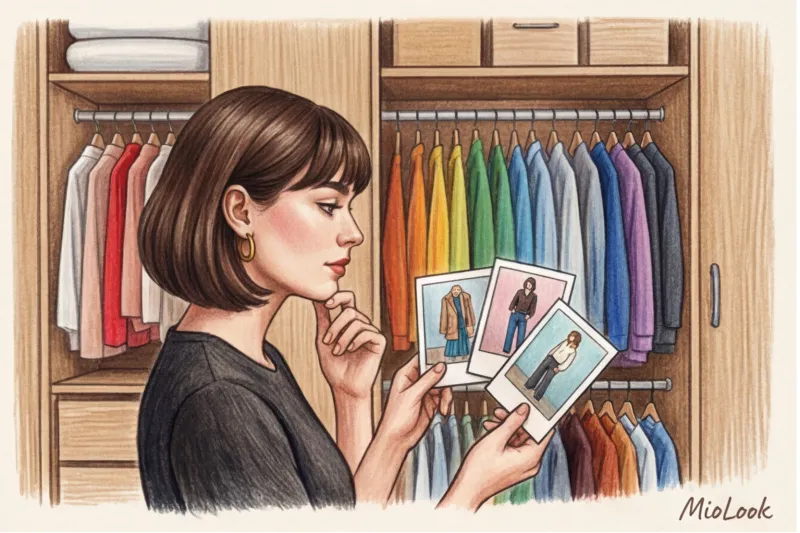

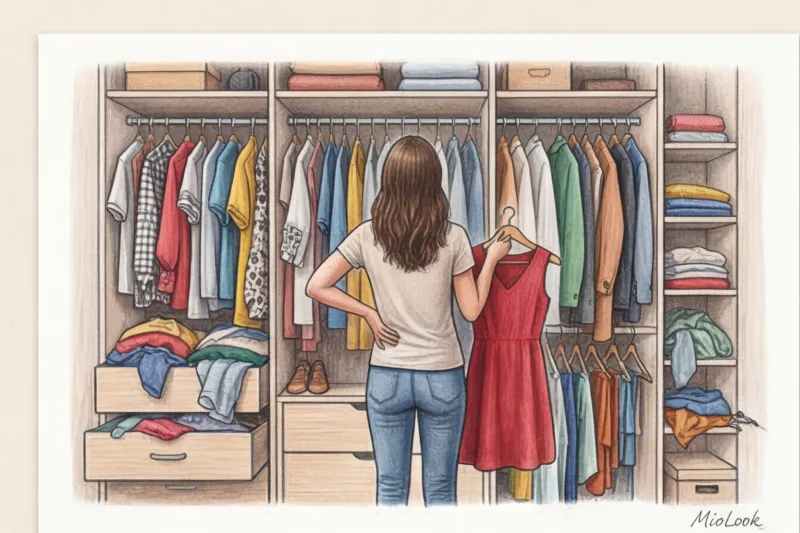
Have you ever stood in front of a packed closet at 7:30 a.m., feeling like your brain literally refuses to make decisions? In 12 years of working as a colorist and image consultant, I've seen this scene hundreds of times. We buy things with emotion, and then try to combine them with the remnants of our morning logic before our first cup of coffee. Spoiler alert: this is a losing strategy.
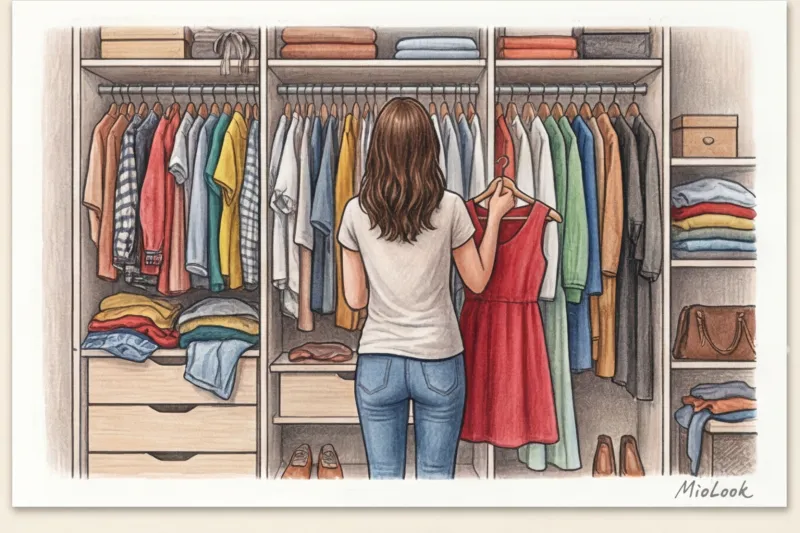
Today, this cognitive load can be completely delegated to artificial intelligence. capsule wardrobe app works like your personal stylist, who never sleeps, remembers every T-shirt you own, and knows color rules better than many boutique consultants. We've already covered the basic concept of a minimalist wardrobe in more detail in our the complete guide to creating a capsule , and today I want to show you the inside story of how fashion algorithms work.
Why a capsule wardrobe app works better than your memory
The phenomenon of "closet blindness" isn't just a pretty metaphor, but a scientifically proven fact. According to a WGSN study (2024), we only wear 20% of our clothes regularly. The remaining 80% slips out of our working memory simply because they're stored out of our line of sight (on distant shelves or in the depths of a dresser).
Getting ready in the morning is stressful for the psyche. The brain takes the path of least resistance, forcing us to wear a tried-and-true "uniform" day after day: our favorite jeans and a gray sweater. Neural networks break this pattern. They transform the process from a chaotic shuffling of hangers into a mathematically calibrated system where every item has its own digital twin.
"The app doesn't just show you clothes. It calculates the cost-per-wear index and pulls out of digital oblivion that silk blouse you bought a year ago and never wore"—that's what I always explain to clients during their first digitization lesson.
The biggest mistake in digitalization: why neural networks collect "strange" images
This is where things get interesting. The main myth is: "I'll just take a photo of my closet, and smart AI will organize it in my style." In reality, computer vision algorithms only see what you show them. If you feed chaos into the system, you'll get automated, neural-network-generated chaos.
My client Anna recently decided to digitize her wardrobe in one evening. She photographed 150 items, laying them out on a mustard-yellow sofa under warm incandescent light (around 2700K). What did the AI do? The algorithm detected distorted colors, attempted to crop out the background, "bite off" half the fit of her palazzo pants, and suggested looks that made Anna look like the city's crazy man. The system recognized crisp white shirts as beige, and cool emerald turned into dirty khaki.
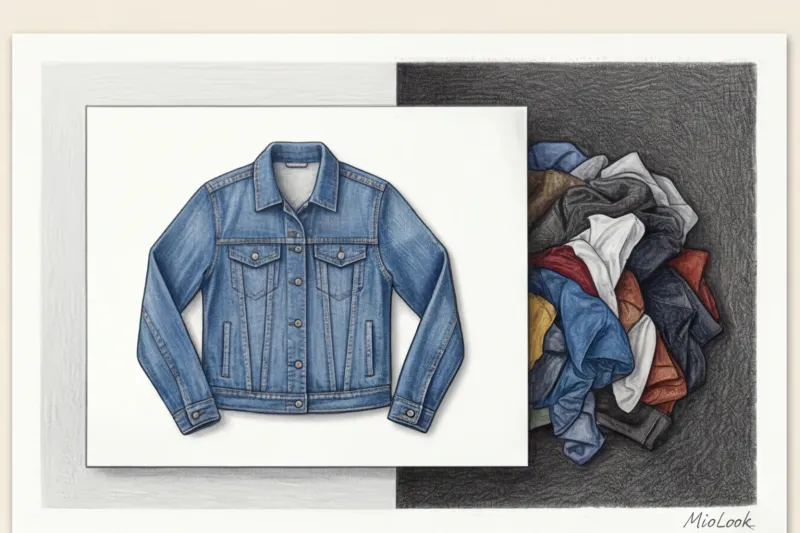
How to Photograph Things Properly for AI
To ensure that a neural network works for you, not against you, you need to follow strict rules of digital hygiene:
- Light - only natural. Take photos of things near a window in the morning. No yellow chandeliers or head-on flashes.
- Flat lay. Lay your items out on the floor against a contrasting background (like a white sheet). Shoot from above, not at an angle, otherwise the algorithm will distort the proportions, turning your wide-leg trousers into cropped breeches.
- Be sure to iron the fabric. Hard creases create deep shadows. AI often mistakes a crease in an unironed shirt for a complex, asymmetrical cut.
Access to MioLook for €0.99 — one-time payment
A smart AI stylist will select the perfect look based on your measurements and eliminate your morning routine.
Get access — €0.99 onceTop Smart Assistants: Which Capsule Wardrobe App Should You Choose?
The Fashion Tech market has come a long way from simple cataloging programs (remember Cher Horowitz's legendary program from the movie Clueless) to powerful generative networks.
A modern capsule wardrobe app should be able to auto-tag items, pull up weather forecasts based on your geolocation, and have a built-in travel planner. But as a stylist, I look deeper: does the algorithm understand the rules of combinatorics? Does it know that a voluminous top requires structured bottoms?
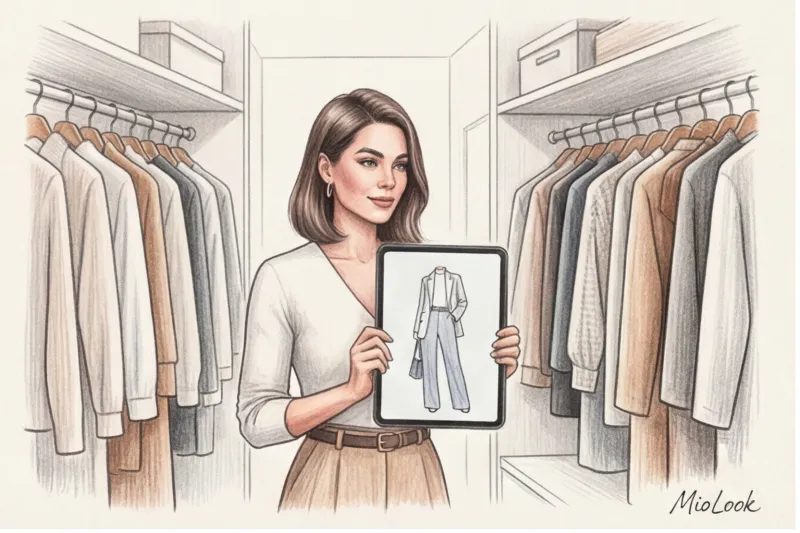
The built-in AI stylist stands out in this regard. MioLook It doesn't just shuffle things like a deck of cards. The algorithm analyzes your appearance and suggests combinations based on classic stylistic principles.
Basic catalogers versus advanced AI stylists
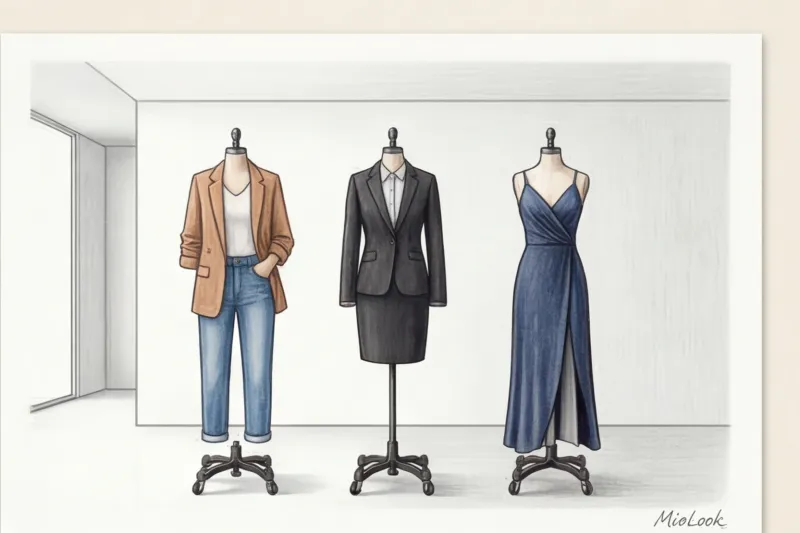
The critical difference lies in the architecture. The basic app is a randomizer. It picks a random T-shirt and a random pair of jeans. The advanced AI is rule-based: it takes into account seasonality, dress code, and even the density of the material, understanding that a thin viscose top shouldn't be worn over a thick wool turtleneck.
Instructions: Assembling your first neuro-capsule in 4 steps
Let's move from theory to practice. If you want the app to truly save you time, follow this algorithm.
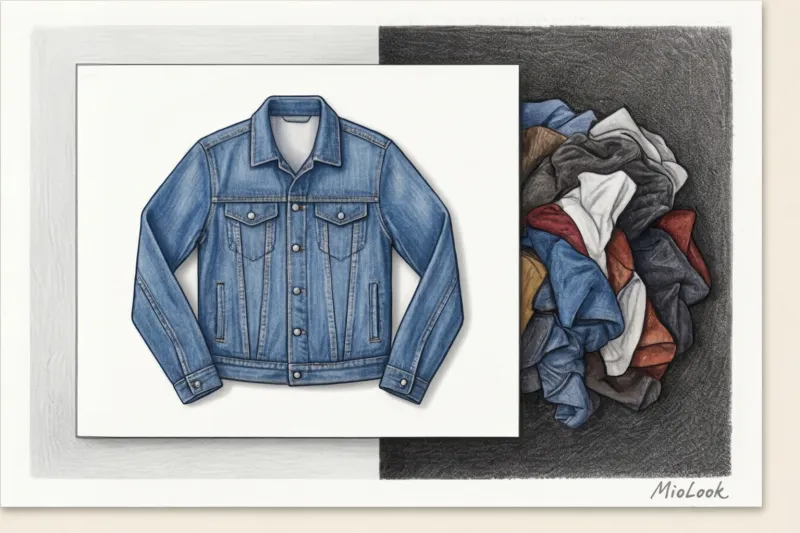
Step 1: Hard physical decluttering. Don't drag junk into the digital world! Pilling items, outdated styles from 2012, clothes for "when I lose weight"—all of this should leave your closet before digitization. AI scales what you give it. Upload bad items and you'll get hundreds of ill-fitting looks.
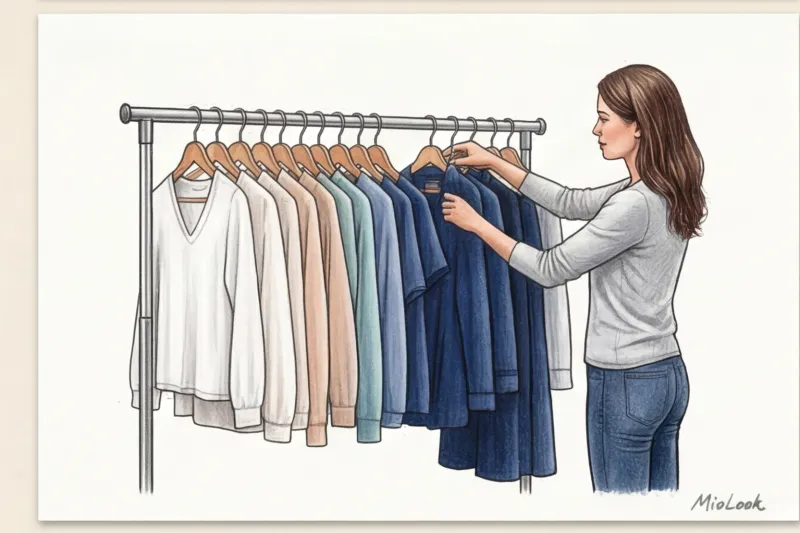
Step 2: Correctly digitize the base. Start with the basics: 3-4 bottoms (jeans, trousers, skirt) and 9-12 tops. Follow the shooting rules I described above.
Step 3: Setting up AI parameters. Give the app context. Specify the current season (e.g., "fall-winter"), your primary dress code ("smart casual for an IT company"), and your preferred color palette.
Step 4: Manual adjustments. Let the AI generate 20-30 looks. At this stage, the neural network will save you hours by suggesting combinations you wouldn't have thought of on your own. Your task is to manually add the finishing touches (shoes, bag, accent belt).
Your perfect look starts here
Join thousands of users who look flawless every day with MioLook.
Get access — €0.99 onceColor Correction and AI: How to Train an App to See Your Colors
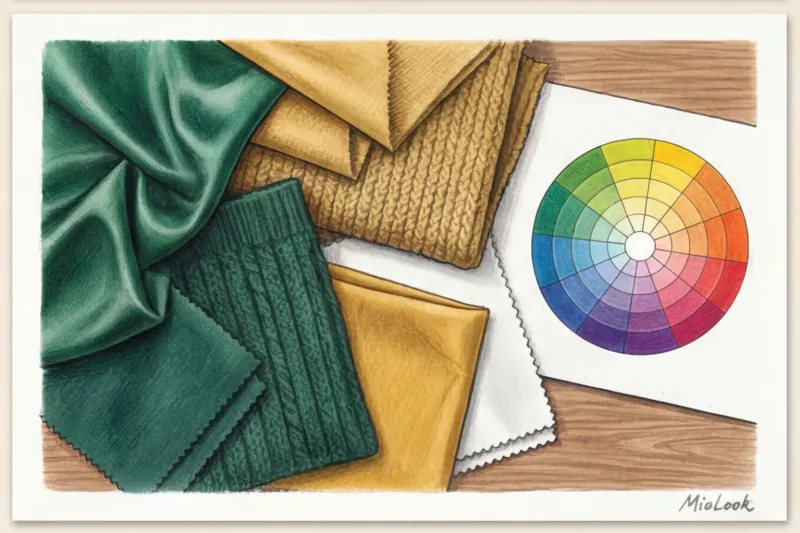
As a certified colorist, I often test how machine learning algorithms handle color theory. Most modern neural networks are based on the digitized principles of Johannes Itten. They are excellent at understanding contrasting (complementary) combinations and monochrome.
But AI has a blind spot: temperature contrasts and complex color combinations. Last week, I deliberately uploaded a dusty rose sweater (a cool, muted pink with a grayish undertone) and taupe pants to three popular apps. Two of the three neural networks simply tagged them as "pink" and "brown," suggesting I pair them with a neon orange puffer jacket.
My advice: Always check the color tags after automatic recognition. If your trench coat has a cool olive undertone, but the app labels it as "warm beige," correct it manually. That's why the palette matching feature for your personal color type is MioLook is a real lifesaver - it does not allow the algorithm to mix incompatible temperature bases.
Checklist: How to check if the generated capsule is viable
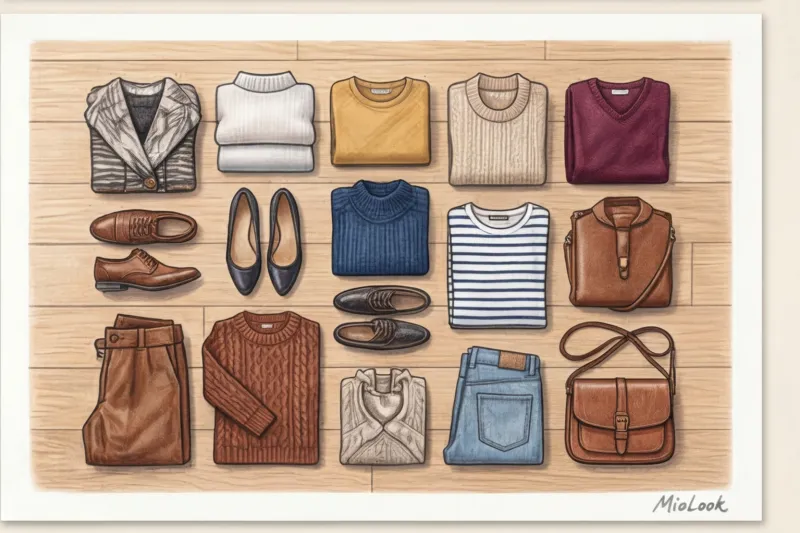
Even the smartest algorithm makes mistakes sometimes. To avoid going out in an absurd outfit, run the app's suggested capsule through this short checklist:
- The rule of proportion (3 tops to 1 bottom). Does the AI follow this math? If a generated capsule contains five skirts and only two blouses, the capsule won't work; you'll quickly get tired of the monotony.
- Temperature balance. Did the algorithm mix a decidedly warm red-brown with an icy gray without a neutral transition color (like off-white)?
- Compatibility of textures. This is an honest limitation of the technology: currently, no app can accurately assess fabric density from a photograph. If the AI suggests wearing a thin silk slip top over a thick chunky knit sweater, feel free to delete the image.
Ready to get started?
Try the free plan—no commitments required. Start building your smart wardrobe today.
Get access — €0.99 onceNeural Networks as Your Personal Assistant: Where to Start Today
My clients' biggest fear about digitalizing their wardrobes is the amount of work involved. It feels like they need to spend a week photographing every single one of their socks and scarves. This is a mistake that kills motivation.
Don't try to digitize your entire closet at once. Start with a micro-capsule for the current workweek. Take 10-15 of your favorite basic items (pants, a pair of jeans, a shirt, a jacket), photograph them according to the rules, and upload them to the app. In just a couple of days, you'll notice a change in your morning routine.
Moreover, regularly using a capsule wardrobe app inevitably changes your shopping habits. Standing in the fitting room at Zara or Massimo Dutti, you'll no longer wonder, "Will this jumper go with my trousers?" You can simply open your virtual closet and check in two seconds.
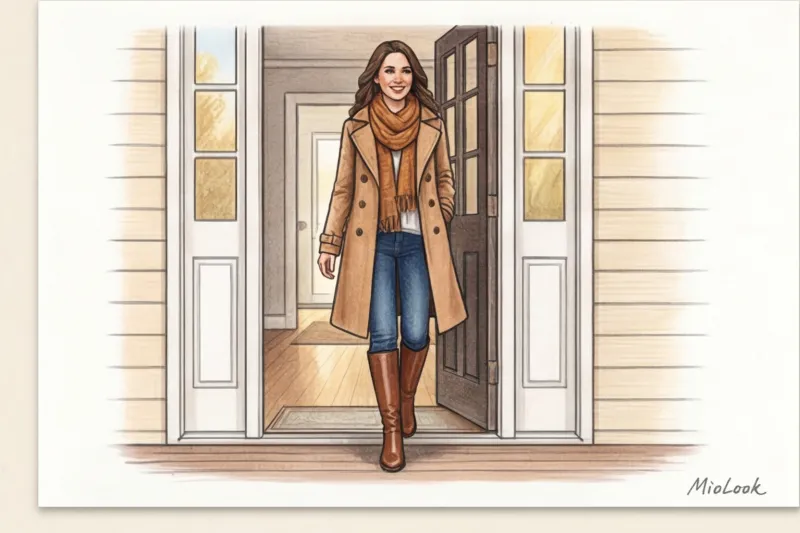
Ultimately, artificial intelligence isn't meant to replace your personal taste. It exists to scale your best styling decisions and forever rid you of the "closet full, nothing to wear" mentality.