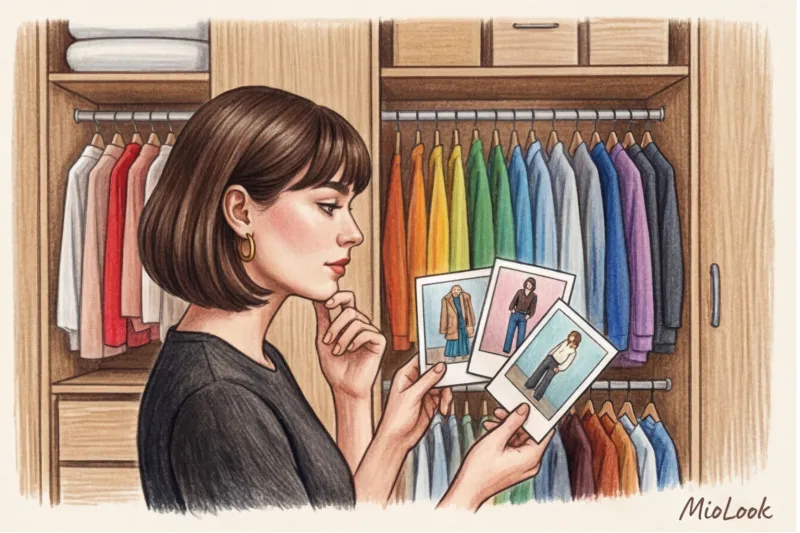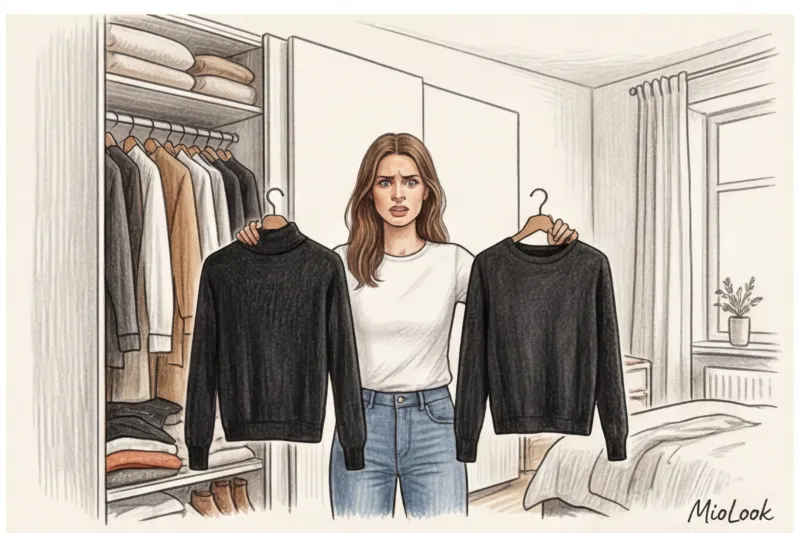
Have you ever noticed the paradox: your closet is physically overflowing with hangers, yet every morning you stand before it with the treacherous thought, "I have nothing to wear again"? Industry statistics are relentless: the average modern woman wears only 20% of her wardrobe 80% of the time. The rest is a graveyard of emotional purchases, items "saving until better times," and the occasional casualties of seasonal sales.
I've been working in fashion journalism and styling for over ten years. I've seen the backstage scenes of Paris and Milan Fashion Weeks, sorted through hundreds of wardrobes, and I can confidently say: the old methods no longer work. neural network to choose clothing style It can be much faster, more objective, and more accurate than an army of glossy consultants with their outdated product lines. I discussed in more detail why classic frames stopped working in our the complete guide to wardrobe psychology.
Recently, as an experiment, I ran my own closet through machine learning algorithms. The results were disconcerting. I've always considered myself prone to spontaneous shopping, but the AI proved that 40% of my supposedly "impulsive" purchases strictly followed a single logic—a love of asymmetry and thick, matte cotton. The machine saw a pattern where I saw chaos.
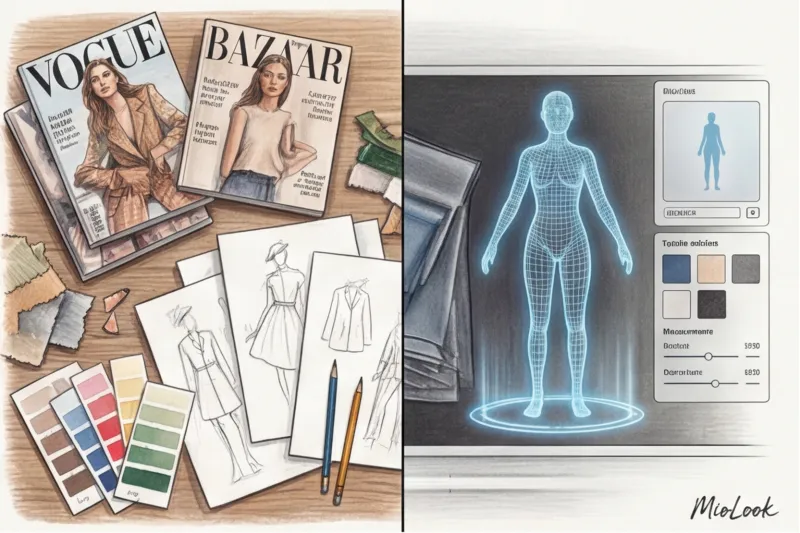
A New Era: Why a Neural Network Can Choose a Clothing Style More Accurately Than Color Type Charts
Let's be honest: color type theories ("you're a soft autumn" or "you're a contrasting winter") and fruit-based body types ("pear," "apple") are hopelessly outdated. I personally stopped using David Kibbee's system back in 2018 because it forced my clients into rigid frameworks, only causing insecurities.
As McKinsey notes in its report State of Fashion (2024) The industry is rapidly moving away from standardized advice to data-driven hyper-personalization. Machine learning algorithms have revolutionized the game. Artificial intelligence doesn't care whether you have a warm or cool skin tone. It analyzes macro-parameters:
- Geometry of the face and body: lines, angles, proportions that dictate the shape of the lapels or the depth of the neckline.
- Contrast level: How does your appearance handle color-blocking?
- Lifestyle and kinetics: your plasticity of movements and the real rhythm of the day.
A human stylist, even the most professional, always views you through the prism of their own taste. A neural network, however, relies solely on cold data and computer vision.
Three Main Myths About Virtual AI Stylists
When I suggest that my clients delegate some of their routine tasks to technology, I often encounter the same fears. Let's explore them.
Myth 1: “The neural network will make my style stereotypical and boring.”
This is the biggest misconception. Unlike a human stylist, an algorithm doesn't have "favorite brands" (like COS or Massimo Dutti) that it imposes on everyone, and there's no professional bias. AI looks for micro-trends in your preferences. It's completely impartial and suggests YOUR style, not the one favored by a consultant.
Myth 2: “It’s a toy for zoomers and streetwear fans.”
Algorithms are brilliant at assembling capsule collections in the "quiet luxury" aesthetic or strict business formality. They don't care whether you're looking for cargo jeans or a €3,000 cashmere Loro Piana coat—the mathematics of proportions work the same way.
Myth 3: “AI will make me buy more things.”
Quite the opposite. The fast-fashion era has accustomed us to mindless consumption. The main goal of a smart wardrobe is to put those 80% of items that have been hanging with tags in a dark corner of the closet for years to use.
Try MioLook
for free
Start creating perfect looks with the help of artificial intelligence and tidy up your closet.
Get access — €0.99 onceFrom Chaos to System: How Exactly an Algorithm Calculates Your Aesthetics
How it works Computer Vision (computer vision) in the fashion industry? The neural network literally "reads" your saved references pixel by pixel.
I had a revealing story with a client, Anna, a director in the IT sector. For a long time, I couldn't figure out her style using traditional interviewing methods. She verbally requested "something basic and office-friendly." But when we loaded her saved Pinterest pins into the analytics system, the AI instantly identified a subtle pattern. Anna thought she simply liked the color blue, but the algorithm revealed that all the references featured complex, architectural cuts—asymmetrical hems, exaggerated shoulders, V-backs. We put together a capsule collection based on this data (with a budget of €150 to €400 per item), and it was a complete hit.
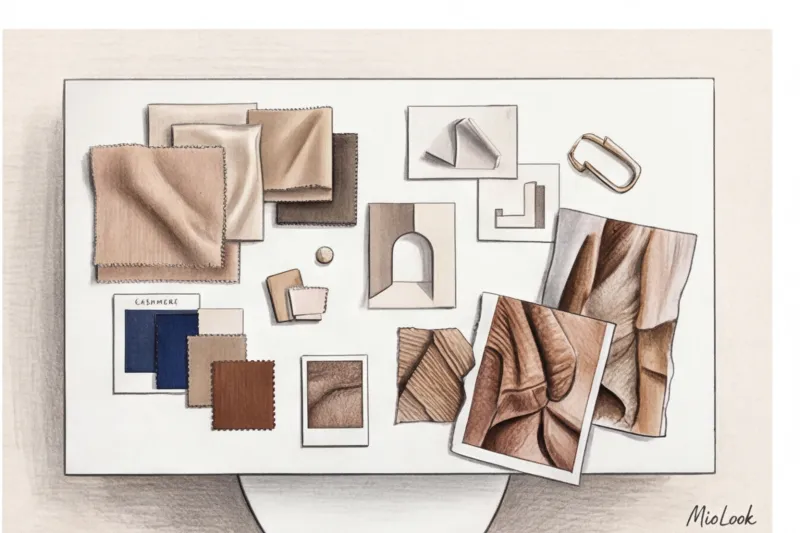
Moreover, high-quality AI always adapts mood boards to reality. Luxurious, multi-layered looks from the runway are pointless if your lifestyle consists of eight hours in an air-conditioned office and commuting. An AI stylist takes this into account, eliminating unsustainable formulas.
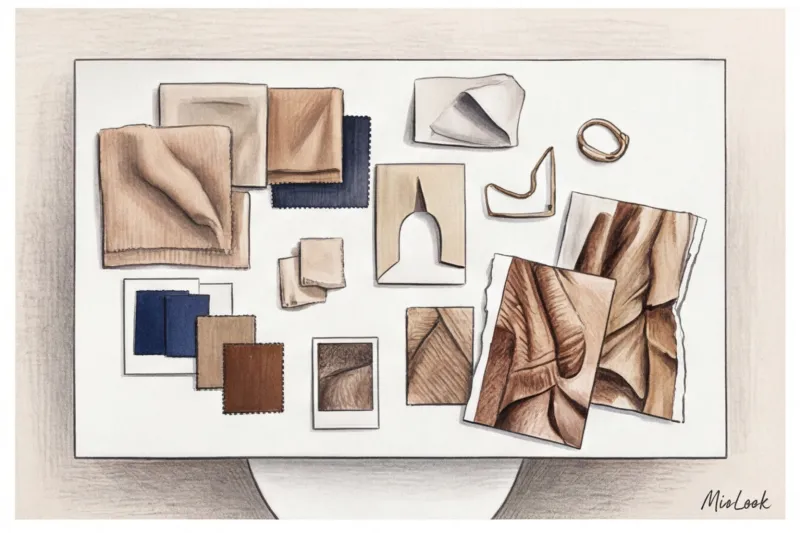
Cost Per Wear and Predictive Analytics
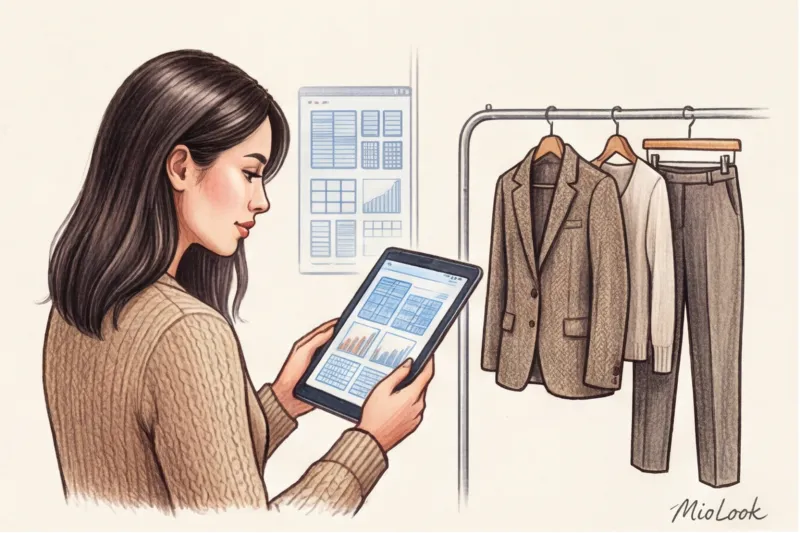
The most powerful feature of algorithms is calculating the real cost per wear (Cost Per Wear). Let's say you see the perfect Super 120s wool jacket for €250. Expensive? The AI will tell you: this jacket goes with 12 items in your closet. You'll wear it at least 50 times per season. The final cost per wear is €5.
But a trendy neon top from a mass-market store for €30 only goes with jeans. You'll wear it once to a party. The price tag is €30. Predictive analytics nip emotional purchases in the bud, displaying straightforward pairing statistics before you even swipe your card. According to industry research, AI integration reduces clothing returns in online shopping by a significant 30%.
Your ideal image
it begins Here
Join thousands of users who look flawless every day with MioLook. Find out your wearability index.
Get access — €0.99 onceStep-by-step instructions: how to use a neural network to select a clothing style
If you're ready to digitize your wardrobe, here's a clear process I recommend to all my clients.
Step 1. Digitizing the database
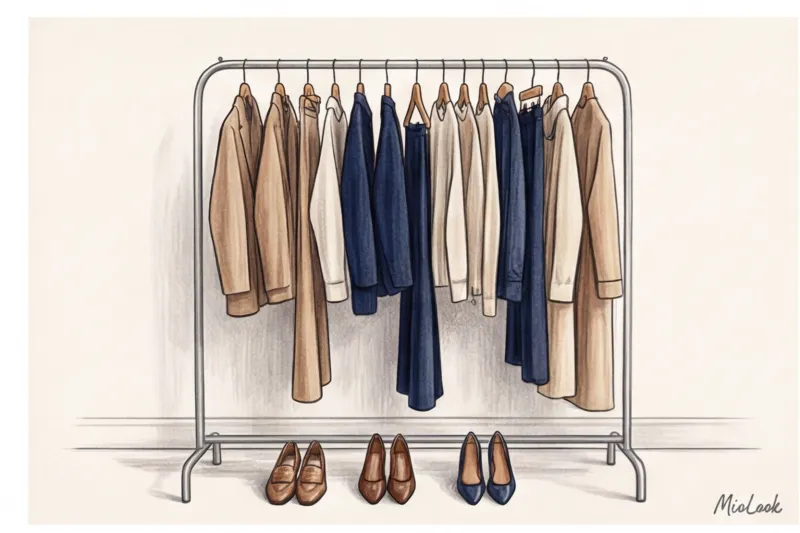
This is the most tedious, but critically important step. Take photos of your items in good daylight. Be sure to upload not only your favorites but also your "errors"—things that irritate you. Neural networks need to understand your anti-patterns. A perfect solution for this is Smart wardrobe feature in the MioLook app , which automatically removes the background and categorizes things.
Step 2. Honest briefing (prompting)
Don't write requests like "I want to look good." Set the context: "I need a capsule collection for the Friday dress code at an IT company where everyone wears jeans, but I'm a manager and want to look a little more put-together. My budget for new positions is up to €200."
Step 3. Virtual fitting and hypothesis testing
Forget stuffy, poorly lit fitting rooms. Combine items on your smartphone screen. Try pairing seemingly incompatible pieces—for example, a silk midi skirt with a tailored men's blazer. AI will instantly show you if the proportions are off.
Step 4. Building "outfit formulas"
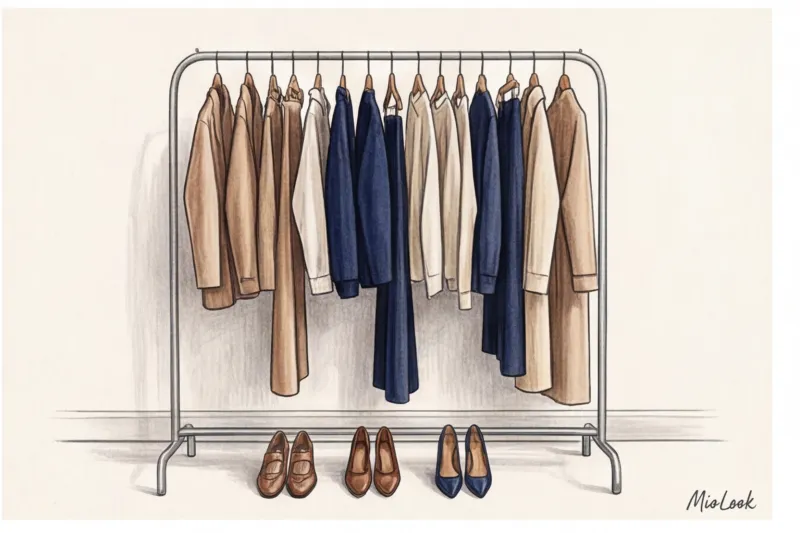
Save your best combinations into ready-made lookbooks for each day of the week. You'll spend just one Sunday evening on this, but you'll save hours getting ready in the morning.
Will neural networks put human stylists out of work?
We often discuss this issue behind the scenes at Fashion Week. My answer is no. But there will be a strict division of labor.
AI brilliantly takes care of all the routine tasks: closet inventory, color matching, searching for links to specific items in online stores, and budget calculations. It's math, and a machine can handle it better than a human.
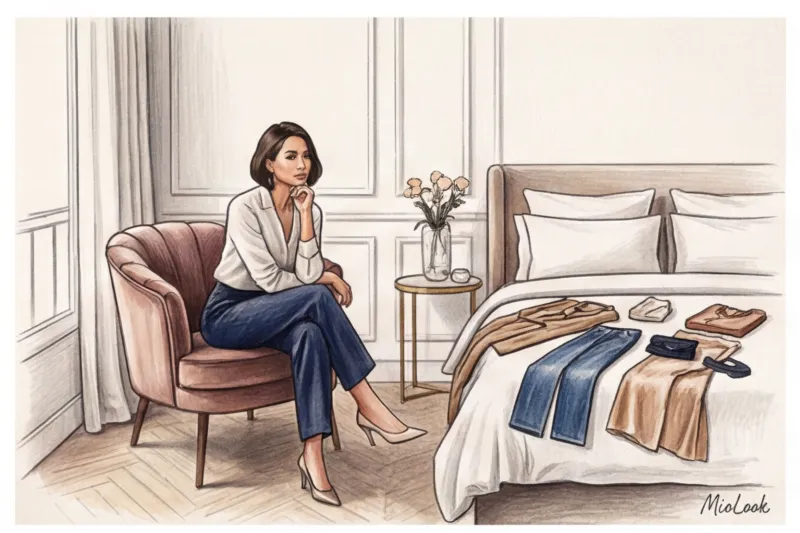
But technology has its limitations. When does AI not work? It's powerless if you're not honest with yourself. If a client has profound body dysmorphia, if they don't accept their changed size, or if they need therapeutic support while shopping, human empathy is needed. A machine won't sincerely tell you, "You look amazing, straighten your shoulders."
Think of neural networks not as a substitute for your taste, but as a powerful exoskeleton for your discernment. Stop buying random things in the hopes that they'll magically come together to create an outfit. Use technology to build a smart, manageable system where every item earns its full value.