What a Capsule Wardrobe Really Is (and What It Isn't)
Have you ever noticed the paradox: the more things we have, the harder it is to get dressed in the morning? According to data The Wall Street Journal We wear only 20% of our wardrobe 80% of the time. The remaining 80% simply sits on hangers, creating the illusion of choice and evoking a deep sense of guilt over the money spent. That's why a well-curated capsule wardrobe is no longer just a fashionable term found in glossy magazines, but a vital necessity for any woman who values her time.
Over 14 years as a personal stylist, I've conducted hundreds of wardrobe analyses. And do you know what changes first when we implement a capsule system with our clients? It's not just their appearance. Their morning mood changes dramatically. When you stop wasting 20 minutes battling with a crowded closet, trying on a blouse for the tenth time because "it just doesn't go with anything," your stress level drops to zero. You simply pick up any item of clothing with your eyes closed, put it on, and look flawless.
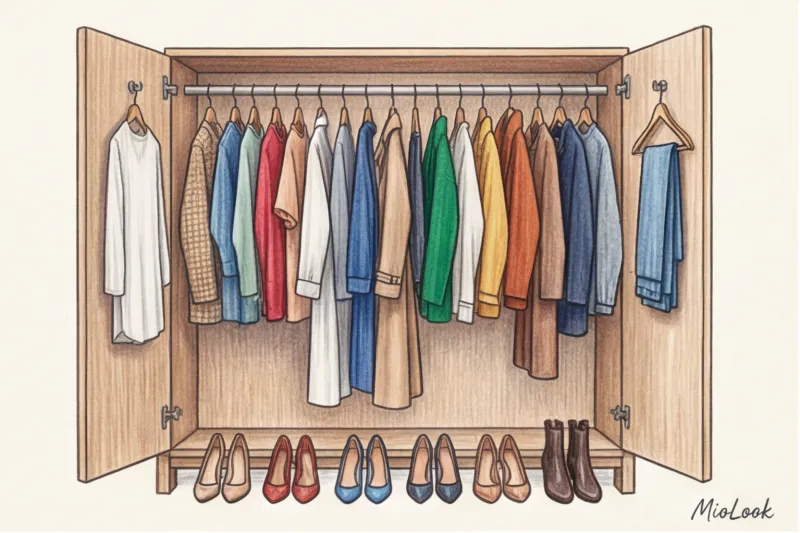
So what does this mean in practice? Capsule wardrobe A capsule wardrobe is a closed system of items that perfectly coordinate in style, color, and function. The idea is that every bottom in your capsule wardrobe is guaranteed to pair with every top, and shoes and outerwear tie any resulting outfit together. It's a true style math, where just 15 well-chosen items can create 40 completely different looks.
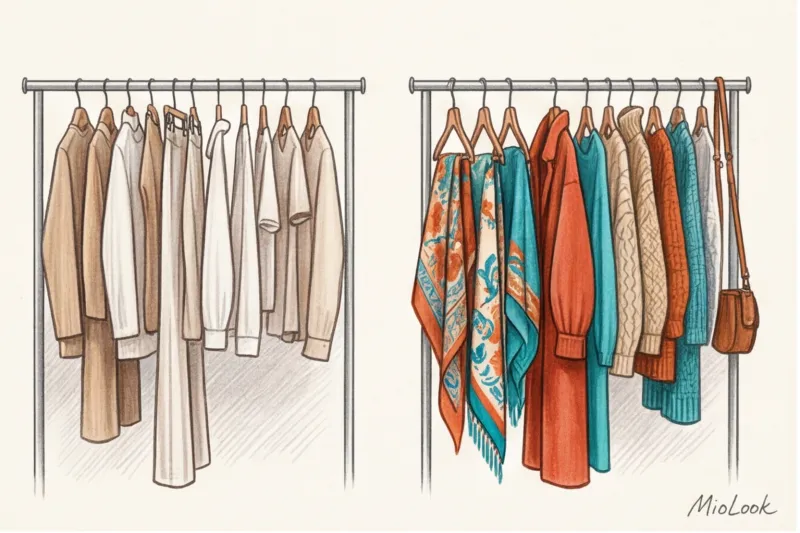
Here I want to immediately dispel the main myth that scares many girls. It's commonly believed that a capsule wardrobe is total minimalism, a dull black-and-white palette, and strict restrictions like the strict 37 items (as dictated by a popular online challenge). Project 333 ). Forget it! Your capsule wardrobe doesn't have to consist of beige trench coats and gray turtlenecks if you hate them.
A capsule collection adapts to your personal style, not disrupts it. If you adore fuchsia, animal prints, and complex asymmetrical cuts, we'll put together a capsule collection of them. The main rule is that items should complement each other, not compete.
The deepest advantage of such a wardrobe lies in psychology. Getting rid of decision fatigue (Decision fatigue) releases a colossal amount of energy in the morning. Our brain can only make a limited number of quality decisions per day—why waste this valuable resource on the agony of choosing between trousers and a skirt?
Moreover, this is an important environmental and financial step. A conscious approach radically reduces the number of impulse purchases from the fast fashion segment that are worn once and end up in global landfills. You begin to invest in quality, not quantity. To clearly see which items are truly worth their cost, I always recommend digitizing your closet. By uploading your database to an app MioLook , you will immediately see those very real 20% of your favorite clothes and understand exactly what elements are missing to complete your ideal system.
The 80/20 Formula: Why Typical Internet Must-Have Lists Don't Work
Open Pinterest or any women's portal, and you're almost guaranteed to stumble upon an article along the lines of "10 Things Every Stylish Woman Must Have in Her Closet." Spoiler: blindly downloading such a ready-made wardrobe essentials checklist is the worst thing you can do for your personal style and budget.
A couple of years ago, a client named Anna, a freelance graphic designer, approached me. After reading blogs like this, she spent about $500 at Massimo Dutti on the right classic basics: a crisp white poplin shirt, a pencil skirt, a structured double-breasted jacket, and classic leather pumps. At our first meeting, she confessed: "Olena, I look at these things; they're high-quality and expensive, but when I put them on, I feel like I'm wearing a bank clerk's uniform. I just have nowhere and no reason to wear them.".
And herein lies the main counterintuitive approach of modern styling. There are no universal lists. A straight-cut white shirt and a classic beige gabardine trench coat (in the spirit of iconic Burberry designs) are not for everyone. If your lifestyle doesn't require a strict office dress code, these must-haves will simply sit like dead weight on the hangers.
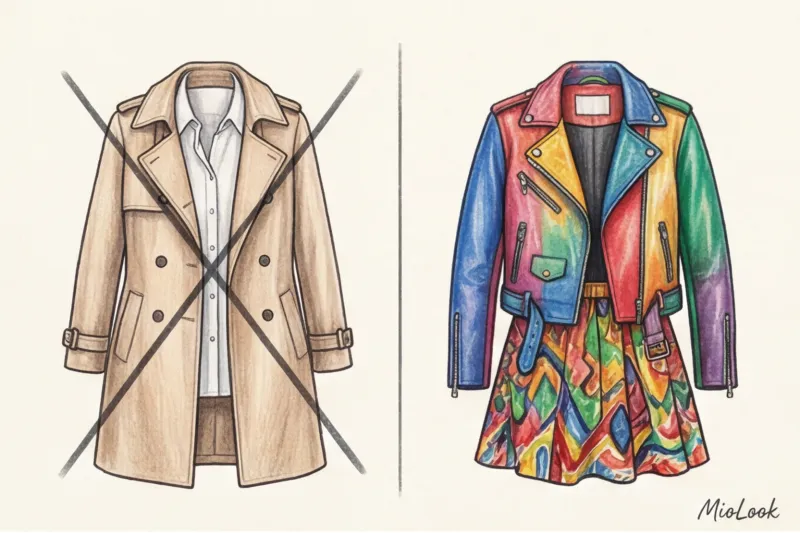
The secret to a functional closet lies in the concept "individual base" If you're a remote IT professional, a freelancer, or a young mother, your ideal stylistic foundation could be heavy cotton joggers (check out the tailored fit at brands like COS or Uniqlo), a voluminous, minimalist logo-free hoodie, and a loose-fitting cashmere sweater. This doesn't make your wardrobe "wrong," it makes it work for your reality.
This is where the 80/20 rule comes into play. A well-designed wardrobe consists of 80% of your individual essentials, and the remaining 20% is made up of statement pieces, seasonal trends, and sophisticated accessories. But for this formula to work, let's once and for all separate two concepts that fashion magazines often confuse:
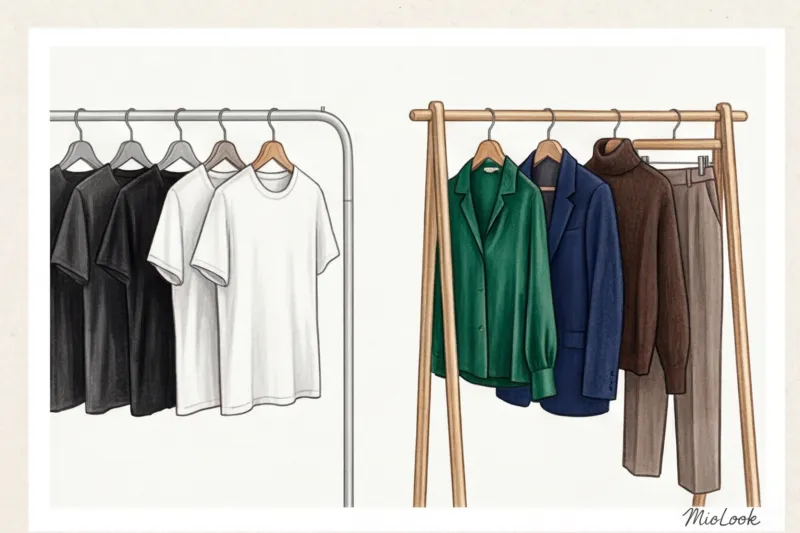
- The base is the foundation. These are simple-cut items in neutral tones that complement your appearance, without any overt embellishment. They serve as a backdrop and a unifying element. Each person's base is completely unique.
- The capsule is a ready-made solution. It's a closed mini-system for a specific area of life (for example, a "business trip capsule" or a "cascade capsule"). The capsule is built on a base, but Necessarily includes accent elements to prevent the images from looking bland.
Access to MioLook for €0.99 — one-time payment
A smart AI stylist will digitize your items and show you how to stylishly combine your personalized basics with accent pieces.
Get access — €0.99 onceOnce you understand this difference, you'll stop buying yet another "universal" black turtleneck just because someone online calls it a must-have. Your wardrobe should serve your life, not abstract rules from glossy magazines.
Step 1: Audit your real life (not your fantasy life)
As a stylist, I always begin working with a new client not by flinging open the closet doors, but with a blank sheet of paper and a schedule of her typical week. This insider approach separates the pros from the amateurs. We can discuss color types and sort silk blouses endlessly, but if they don't fit your daily routine, all this work is pointless.
The most common mistake I encounter in practice is buying clothes for the life we dream of, not the one we actually live. A marketer working remotely once approached me. She had fifteen stunning cocktail dresses and fitted jackets in her wardrobe, but every morning she was stumped because she had nothing to wear for coffee, a walk with the dog, or a casual meeting with friends. Her closet catered to a fantasy version of herself—a socialite who regularly attended premieres. The real woman, however, desperately needed quality jeans, relaxed knitwear sets, and stylish sneakers.
To avoid this psychological trap, I use the concept in my work Lifestyle Matrix It's a brutally honest tool that instantly reveals where your money and closet space should really be invested.
Occupancy chart analysis
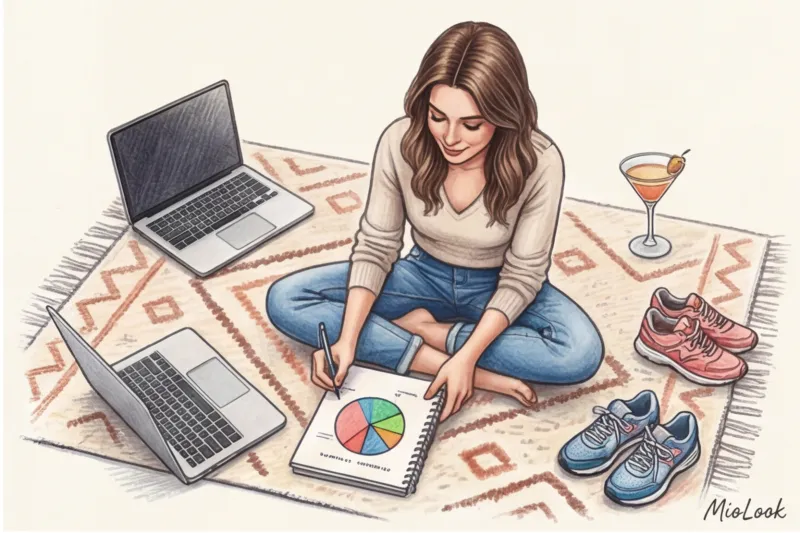
Conducting such an audit is very simple. Draw a circle and divide it into sectors based on how much time each activity takes up per month. The main categories typically include: work (office or remote), leisure and social gatherings, sports, home time, and occasional special events.
The main rule of correspondence: the proportions of your time should strictly coincide with the proportions of your wardrobe and shopping budget.
If an office with a strict dress code takes up 60% of your time, then exactly 60% of your rack space and 60% of your clothing budget should be taken up by your office capsule wardrobe. Buying a fifth pair of stilettos when you spend 80% of your time running around to children's activities with your child is a financial crime against yourself. By the way, to avoid drawing schedules by hand, I advise my clients to use MioLook app There you can conveniently tag added items by areas of your life and immediately see visual analytics: where you have an overabundance of items and where there is a severe shortage of basic elements.
Taking into account climate and seasonality
Another myth actively promoted by fashion influencers from California and southern Europe is the all-season capsule wardrobe. Let's face it: for most regions with harsh winters and hot summers, the idea of getting by with a single set of 30-40 items for the entire year is pure utopia.
Trying to create a versatile wardrobe can leave you with a collection of inconsequential pieces that are cold in January and unbearably hot in July. I strongly recommend dividing your capsule wardrobe into at least three functional sections:
- Spring-summer: Light, breathable textures (linen, viscose, thin cotton), open shoes, lighter palette.
- Autumn-Winter: Thick materials (wool, cashmere, corduroy), thermal underwear as a base layer, and closed-toe insulated footwear. For example, jeans for a winter capsule collection should have a density of at least 12-14 ounces (oz), otherwise they simply won't retain heat, while summer models are made from denim with a density of 9-11 oz.
- Transitional periods (demi-season): The most challenging time of year, when layering reigns supreme. Trench coats, lightweight quilted jackets, cardigans, and suit vests, easily removed if the day suddenly warms up, are the way to go.
The secret to proper seasonality is to ensure that about 30% of your items (quality basic T-shirts, classic poplin shirts, and lightweight turtlenecks) can be worn as a base layer from season to season. The remaining 70% should be tailored to specific climates. Only with this approach will your capsule wardrobe work for you, not you for it.
Step 2: Sort out your current wardrobe using the "three piles" method
Painters never paint a new picture over an old, wet layer of paint. Creating a capsule collection requires the same approach—we need a complete cleansing of the canvas. Before making shopping lists and dreaming of perfect combinations, you need to physically clear out the space. Pull absolutely everything out of your closet and onto your bed. Yes, even that basic T-shirt on the top shelf. An empty closet psychologically sets the mood for a reset and prevents the brain from clinging to habitual patterns.
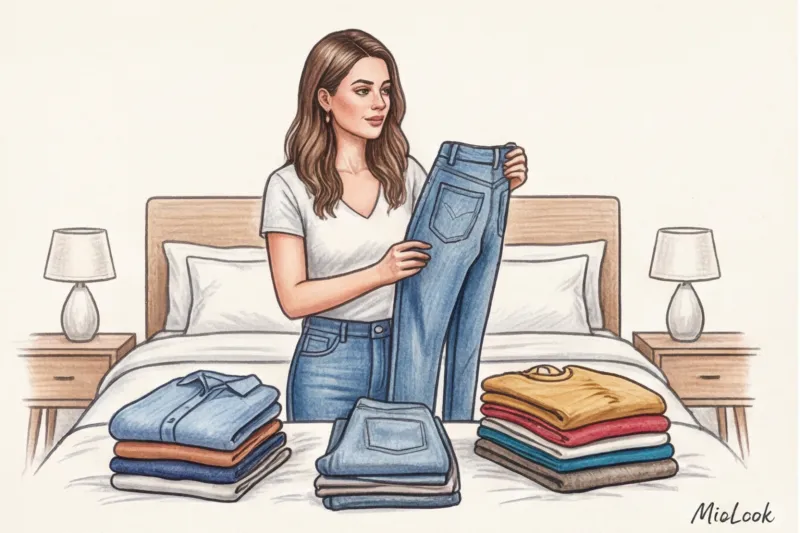
Now, pick up each item and make a decision in 10 seconds or less. Taking too long to decide will only do harm. We divide all clothing into exactly three categories:
- "I'm leaving": Things you love, that fit you perfectly and that you're ready to wear tomorrow morning.
- "Giving/Selling": Anything that hasn't been worn for more than a year is hopelessly damaged, cannot be repaired, or evokes unpleasant associations.
- Quarantine (for 3 months) This is my favorite secret weapon when working with clients. When in doubt, place the item in a sturdy, opaque box, tape it shut, and put it out of sight. A 2023 study by the British agency WRAP found that about 30% of the clothes in our closets hang idle precisely because we're afraid we'll need them. Quarantine alleviates this anxiety. If you haven't opened a box for a specific sweater in 90 days, feel free to donate everything inside.
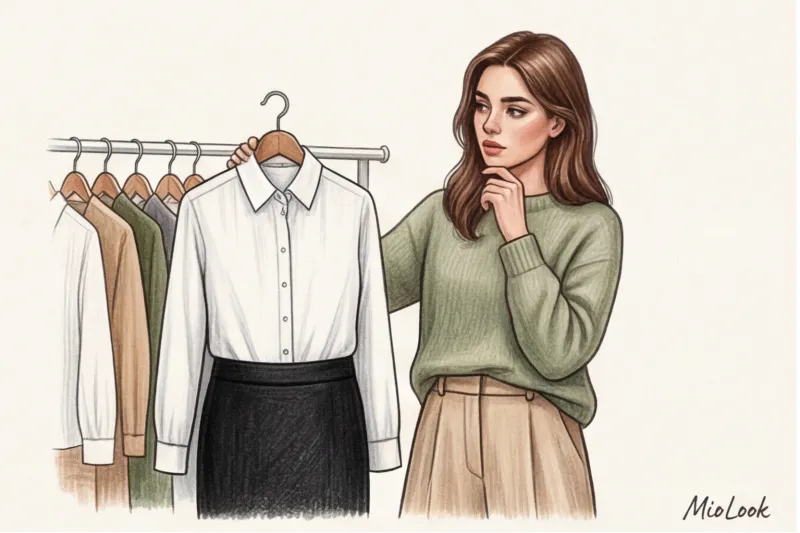
But how do you know if an item is worthy of being in that coveted first pile? I recommend filtering clothes through a rigorous filter of four criteria. First, landing: the shoulder seams should be in place and the fabric should not bunch up. Secondly, wear: Pills in cashmere, elongated elbows, or a washed-out collar instantly cheapen any look. Be ruthless. Thirdly, relevance: the cropped jackets from 2012 violate modern proportions. And finally, compatibility: Can you immediately come up with three different outfits with this item?
"Clothes should adapt to your body, not your body to your clothes. Your closet should be a source of confidence, not a torture chamber."
This brings us to the most important point: understanding your body shape. The most destructive mistake I regularly encounter in my practice is leaving items in your active wardrobe with the thought, "I'll wear them when I lose 5 kilos." Please, never do this. These "motivational" jeans act as a daily visual reproach. This is toxic to self-esteem and completely destroys the logic of the capsule wardrobe, where every detail should work for you here and now. We discussed in more detail how to learn to accept your proportions and choose the right silhouettes in the article How to choose clothes for your body type without stereotypes.
Once the "Keeping" pile is fully formed, it's time to digitize it. Take photos of these items—they will become the foundation around which we'll build new images.
Access to MioLook for €0.99 — one-time payment
Start creating perfect images with the help of artificial intelligence
Get access — €0.99 onceStep 3: Create a color palette and select prints
Imagine a familiar situation: you buy a luxurious emerald skirt. It fits perfectly, the fabric flows beautifully over your legs, but when you open your closet in the morning, you discover the only thing that complements it is an old black turtleneck. In 2022, the Pantone Color Institute published data on consumer habits that only confirmed my daily practice: we tend to buy emotional, beautiful colors individually, without thinking about how they will work together.
Color is the invisible glue that transforms a disparate pile of clothes into a functioning mathematical matrix. The gold standard of a functional capsule is built on strict 3-4 color rule If you go beyond these limits, the number of possible combinations will be sharply reduced.
Let's start with the foundation: you need to choose two basic neutral shades (one dark and one light). Forget the stereotype that base colors must be exclusively black and pure white. I recently worked with a top IT manager whose natural complexion was very soft and warm. Black made her face look tired, so we created a stunning, luxurious capsule based on dark chocolate and warm ecru. Other luxurious alternatives to a dark base include graphite, deep navy, or rich wine. Oatmeal, taupe, champagne, or light gray melange work flawlessly as a light base.
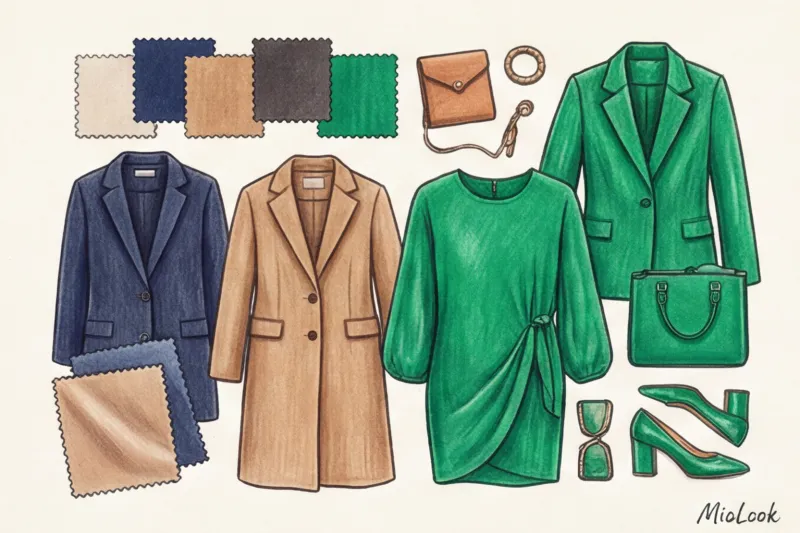
To this neutral base we add 1-2 accent colors These are those bright pops of color that make your eyes sparkle and highlight your personality. For example, if your base is navy and ecru, your accent could be carmine red or trendy creamy yellow. The main rule: these accents should complement not only the base, but also each other. If you're unsure of your color skills, I recommend loading things into MioLook app — a visual representation of your wardrobe on your smartphone screen will instantly show you if any shade is out of the overall color range.
Now let's move on to the most challenging level—prints. Many girls consciously avoid leopard print, plaid, or floral prints, fearing visual noise. But this is where stylists' deep professional knowledge lies: technique. pattern bridging.
A cohesive print is a pattern on one item (often a silk scarf, a blouse, or a Chanel-style tweed jacket) that physically contains All the main colors of your capsule at the same time.
How does this work in practice? Let's say your palette is camel, navy, and emerald. You add a silk midi skirt with an emerald-beige geometric pattern scattered across a navy background. This single piece becomes a visual bridge. It instantly and completely legit ties together a blue cashmere sweater, a beige trench coat, and a green bag. You'll no longer have to wonder whether these colors are appropriate to combine in a single outfit—the print has already done the work for you.
As for classic geometric and animal prints—Breton stripes, tartan, or proper leopard print in natural beige and black tones—treat them as a neutral base. Trend analysts at WGSN have long since reclassified these patterns as "non-print prints." A striped long sleeve or leopard loafers won't clash with your palette, but will instead add texture and dynamism to a basic monochrome.
Step 4. Capsule Matrix: Forming the Wardrobe Core
The psychology of human communication dictates its own unspoken rules: when meeting someone, they always look them in the face. This is why others are quick to remember your blouse, jacket collar, or bright scarf, but are unlikely to recall the exact pair of black trousers you were wearing yesterday. This perceptual peculiarity, often studied in design institutes, is the key to building a functional wardrobe.
This golden rule of combinatorics sounds like this: for every "bottom" there should be at least three "tops" If you buy a stunning skirt, but only one specific shirt in your closet will pair with it, that's not a capsule collection, it's a uniform. A properly assembled wardrobe should always have significantly more tops than bottoms, because they create the illusion that you're dressed differently every day, constantly changing your portrait zone.
Let's reinforce this theory with a concrete mathematical example. Let's say you've assembled a compact base: 3 bottoms, 9 tops, and added 3 second-layer options (for example, a structured jacket, a voluminous cardigan, and a heavy denim shirt). Because all the pieces coordinate in color and style, you get a potential of 81 unique combinations (3 x 9 x 3 = 81). Just think about it: almost three months of daily looks without a single repetition, from just 15 items!
This is where layering plays a crucial role in expanding the range of looks. A third layer doesn't just add warmth—it complicates the silhouette, adds texture, and allows you to wear lightweight summer pieces (like silk cami tops) even in cooler weather, layering them under a voluminous wool V-neck sweater or a tailored blazer.
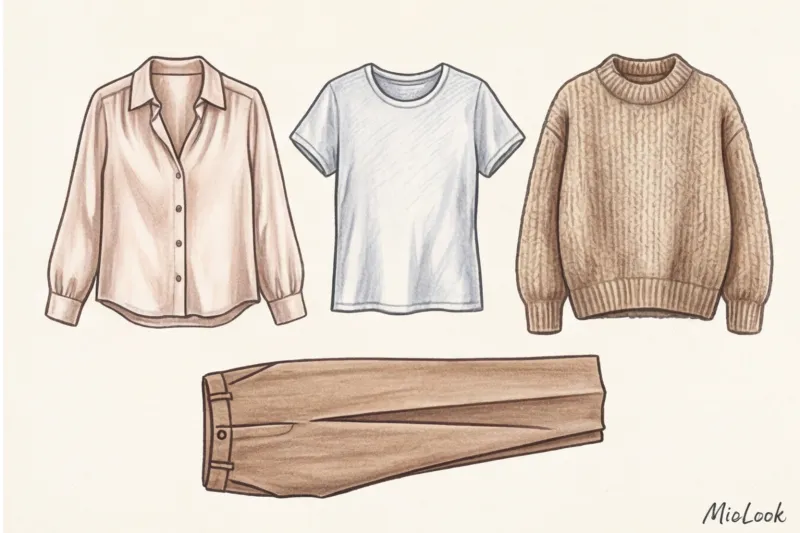
Tops, bottoms and dresses
Let's move on to specific proportions. For a standard seasonal capsule collection, the approximate calculation looks like this: 3-4 bottoms (these could be classic trousers, straight jeans, or a midi skirt), 9-12 tops (basic tops, blouses, T-shirts, sweaters of various weights), and 2-3 dresses.
The secret to successful integration lies in choosing the right cut that can be easily mixed and matched. My personal style advice: choose bottoms with a classic or high waist and a semi-fitted silhouette. Palazzo pants or straight-leg full-length jeans work equally well with a fitted bodysuit or an oversized hoodie (if you use the "French tuck" technique—partially tucking the edge of the sweater into the waistband to define the waist).
As for dresses, they shouldn't be a "thing unto themselves" in the capsule collection. Choose styles that can be layered with a sweater (turning the dress into a skirt), or shirtdresses that can be worn unbuttoned as a light duster over jeans and a top.
Your ideal image begins Here
Join thousands of users who look flawless every day with MioLook.
Get access — €0.99 onceShoes and outerwear as a foundation
If clothes are the notes, then shoes are the conductor, setting the tone for the entire piece. Shoes define the final style vector and level of formality. You can wear a tailored two-piece suit in a neutral shade. Add leather pumps, and it's a flawless boardroom look. But swap the shoes for chunky retro sneakers (like the popular New Balance 530 or classic Adidas Samba), and that same suit instantly transforms into a relaxed, casual Sunday brunch outfit.
The absolute minimum for a functional capsule wardrobe includes three pairs of shoes: flat shoes for everyday wear (loafers, brogues, or ballet flats), an elegant pair with heels or platforms (ankle boots or pumps), and athletic shoes (sneakers or trainers). This set will cover 95% of life's situations.
A minimal capsule wardrobe should have at least two outerwear options that contrast in mood. The first is something structured and classic (a straight-cut wool coat or trench coat), the second is more relaxed and dynamic (a leather biker jacket, a bomber jacket, or a quilted jacket). To avoid getting lost in this matrix and to clearly see how a new jacket pairs with your three pairs of shoes, I recommend listing all items in MioLook A virtual fitting room allows you to check the compatibility of layers before leaving home.
Rookie Mistake: Forgetting About Accessories and Textures
I often see the same scene: a girl puts together a minimalist capsule wardrobe, color-coordinated, wears beige cotton pants with a matching beige sleek top... and looks like she's wrapped in cardboard. Why does this happen? Monochrome and minimalist looks inevitably become flat and downright boring if they don't clash with materials. When light reflects off identical surfaces, the eye simply has nothing to focus on, and the outfit loses volume.
The secret to truly profound and "expensive" outfits lies in the magic of textures. A basic styling rule taught at European fashion institutes: a high-quality look should feature at least three different surfaces colliding. Imagine the flowing softness of silk, the rugged density of distressed denim, the matte sheen of smooth leather, and the cozy volume of chunky wool knits. It's the difference in how these materials move that brings a capsule collection to life, even if it's comprised entirely of black or gray pieces.
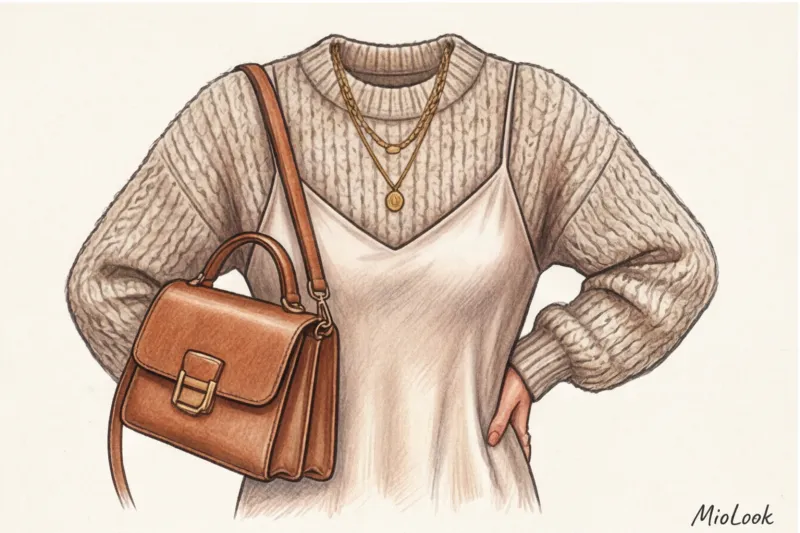
If clothing is the foundation, then accessories (belts, bags, statement jewelry, glasses, and scarves) are the most powerful multipliers of your looks.
My favorite technique on set: we style the same look (basic jeans and a sweater) for three different types, just by changing the texture of the bag and the metal of the jewelry.
For a dramatic look, we're choosing a rigid patent leather bag and chunky silver. For a relaxed boho chic, try a soft suede shopper bag and tiered pendants. And for an elegant classic, try a structured grained leather tote and simple pearl studs. The basics remain the same, but the mood is dramatically transformed.
It's the accessory group that allows you to transform a capsule collection from strictly daytime, workwear, to eveningwear in just a few minutes. You don't need to buy a separate dressy outfit for a spontaneous trip to the bar after work. Simply change the details: swap out a roomy matte bag for a velvet or metallic clutch, accentuate your waist with a stiff leather belt, and replace a basic watch with large, sculptural earrings. The problem is, we often forget about our treasures, buried in closed boxes. That's why I always recommend digitizing not only shoulder and waistband pieces, but also absolutely all belts, scarves, and jewelry. MioLook When the entire arsenal of parts is clearly laid out on a smartphone screen, assembling complex, multidimensional images becomes a matter of minutes.
Checklist: How to check the capsule's functionality before purchasing
Do you know when most perfect style plans fall apart? Right at the checkout or when you click "Checkout." The euphoria of shopping often shuts down rational thinking. A 2024 study by McKinsey on consumer behavior shows that almost 40% of impulse purchases are worn only once and then end up in the closet forever. To prevent your capsule wardrobe from joining these sad statistics, I make my clients go through a rigorous filter before every transaction.
The first and most indisputable condition is The Rule of Three Images Never buy a new item unless you can, right off the bat, create three complete outfits with it from what's already in your closet. These should be outfits for different situations. A statement tweed jacket? Great. It should pair with your basic jeans for brunch, tailored trousers for the office, and a silk slip dress for an evening out. If an item requires you to buy two more pieces to wear it, it's not a capsule wardrobe item; it's a financial black hole.
The second technique that has saved my clients hundreds of thousands of € is mandatory photo try-ons. Our perception of ourselves in a store mirror is heavily distorted by complimentary lighting and the emotions of newness. I always insist: put on the item, take a photo of yourself in a full-length mirror, change, and leave the store. At home, look at the photo with a cool gaze—a phone camera can't flatter.
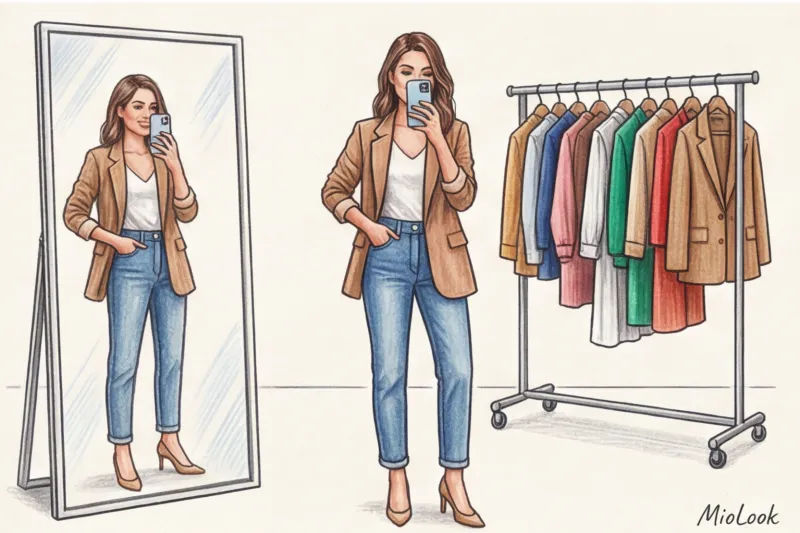
But we live in the digital age, and this process can be made even more precise. Instead of keeping all the combinations in your head, use modern tools. I highly recommend uploading your database to MioLook This wardrobe digitization app allows you to try on clothes virtually right on your phone. Simply add a photo of a potential purchase straight from the fitting room and watch it match your actual skirts and shoes on the screen. This instantly removes any rose-colored glasses and reveals the item's true value.
Finally, let's talk about pacing. The worst thing you can do is try to buy the entire capsule in one wild weekend at the mall. Gradualism — the key to a conscious style. I always warn you: give yourself at least two weeks to integrate new things. Buy two or three key items (for example, the perfect trousers and quality shoes) and wear them. Get a feel for how the fabric moves and whether the fit is comfortable. Only then should you buy additional tops and accessories. A capsule collection should come together like a puzzle, with each piece carefully crafted over time, not through the stress of hours spent shopping.
Ready to get started?
Try a free plan—no commitments. Digitize your wardrobe and start creating your perfect looks today.
Get access — €0.99 onceConclusion: Your wardrobe, your rules
A perfectly curated capsule wardrobe isn't a frozen museum piece. It's a living organism that must breathe, evolve, and change with you. According to McKinsey's global fashion industry report (2024), modern city dwellers radically change their lifestyle on average every three to four years. Have you traded a strict corporate office for remote work, moved to a city with a different climate, become a mother, or taken up active tourism? Your wardrobe must adapt immediately to these transformations.
I recently helped transform the wardrobe of a client who had left her legal position to start her own creative business. We didn't throw out her expensive, perfectly tailored wool jackets. Instead, we toned them down by adding relaxed straight-leg jeans, simple white T-shirts, and statement sneakers. The capsule collection evolved, adapting to the new reality, while maintaining its premium core.
There's a dangerous stereotype, perpetuated by social media, that a functional closet is a strict mathematical formula with absolutely no room for spontaneity. As a practicing stylist, I officially give you permission to break any rules of color, proportions, and "essential lists" if a particular item brings you pure, unadulterated joy.
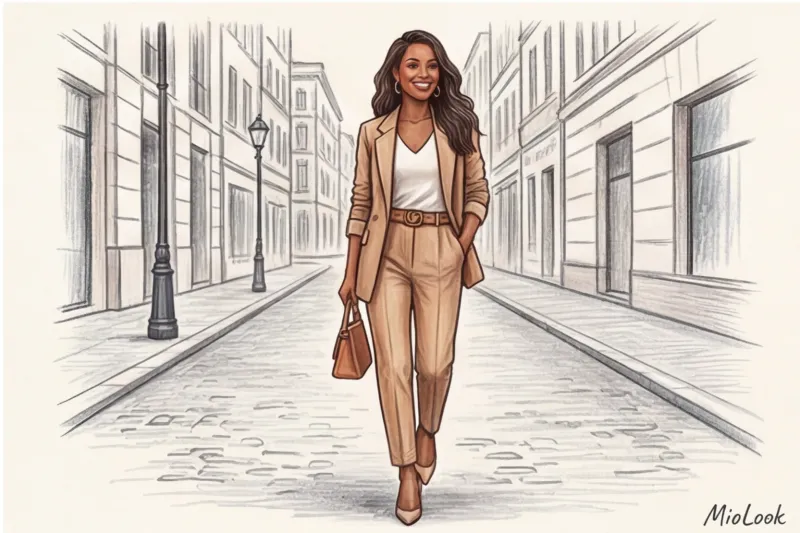
The phenomenon is actively studied in fashion psychology enclothed cognition (embodied cognition) is a scientifically proven fact that the clothes we wear directly impact our cognitive processes and confidence levels. If your personal basics call for a vintage embroidered silk kimono or hot pink Cossack boots, feel free to add them. When 80% of your closet functions like a Swiss watch (thanks to well-designed bottoms, tops, and shoes), the remaining 20% has every right to be your ultimate creative statement.
Reading style articles can be a great source of inspiration, but real change always starts with physical action. I'm offering you a concrete plan for this weekend—just three steps to get you moving right now:
- Free up space (The Purge). Set aside two hours, turn on your favorite podcast, and take absolutely everything out of your closet and onto your bed. Wipe down the shelves. Physically clearing your space is phenomenal for resetting your perception. An empty closet is a blank canvas on which to paint a new picture.
- Find your anchors. Choose 3-5 items that you wear constantly, regularly receive compliments in, and feel your best in. This is the DNA of your future style. Analyze them: what is the cut? What is the texture of the fabric? These are the pieces that will give you the honest answer to what truly suits you.
- Digitize the start. Hide your credit card and don't run to the mall to get the "missing base." Take photos of your found "anchors" in daylight and upload them to MioLook The app will help you look at your existing clothes with a detached approach, just like a professional stylist. Its smart algorithm will show you which combinations you're missing, and you'll clearly understand which connecting elements you're missing to complete your looks.
"Your wardrobe isn't a uniform or a shopping list imposed by glossy magazines. It's your personal armor, your tool for achieving your goals, and a way to tell the world who you are without saying a word."
Start small. Don't beat yourself up over past impulse purchases with tags that hung in the back of your closet for years—those were experiences that helped you understand what you definitely don't want. Allow your style to mature, make mistakes, and find new forms. Creating a smart capsule wardrobe is an exciting journey toward your true self, and you've already taken the first, most important step.