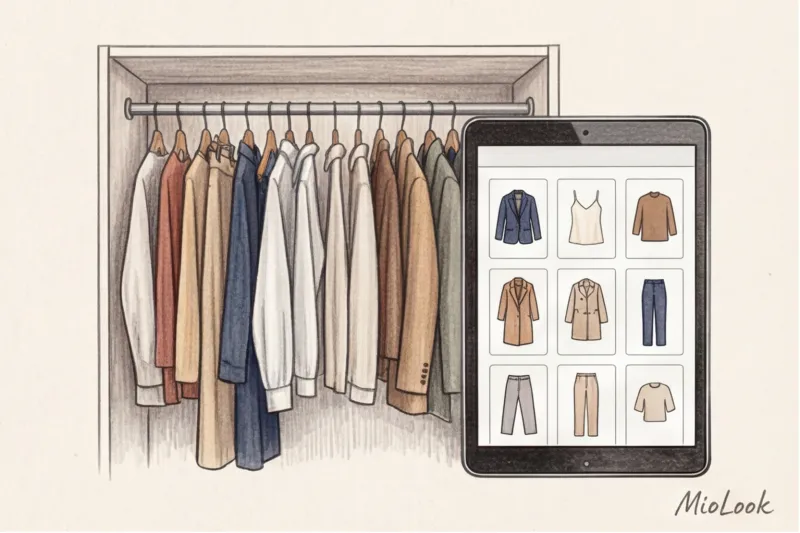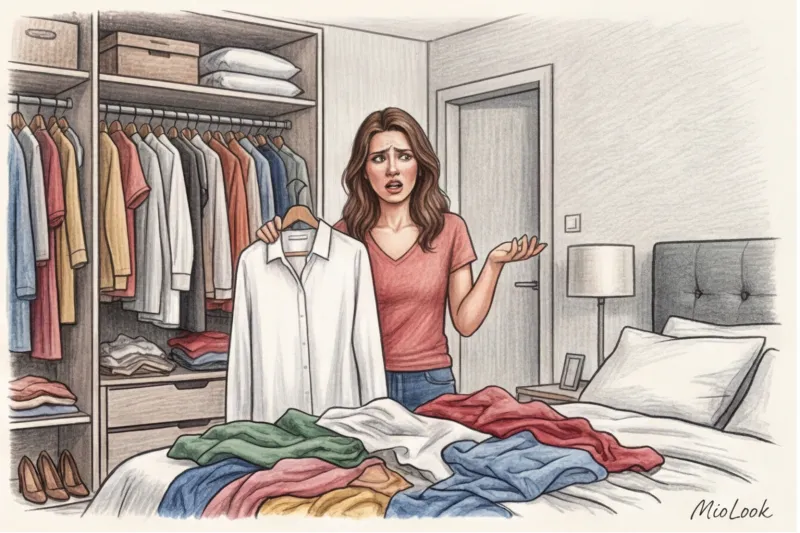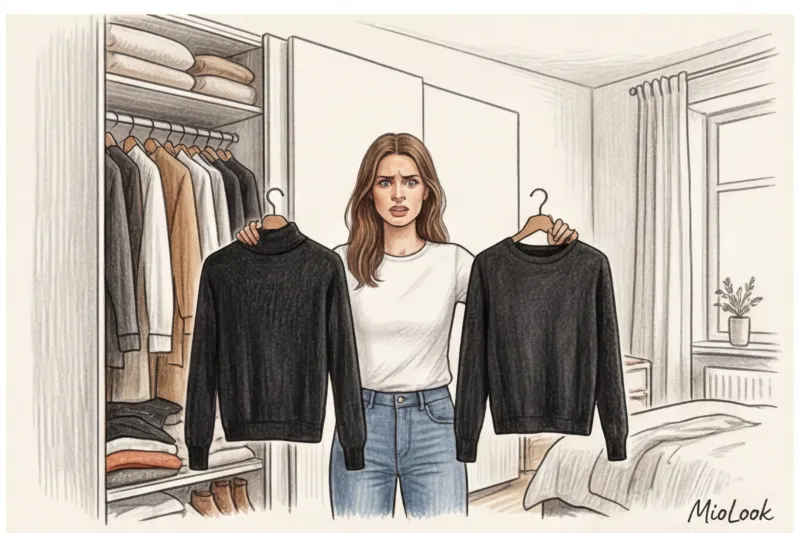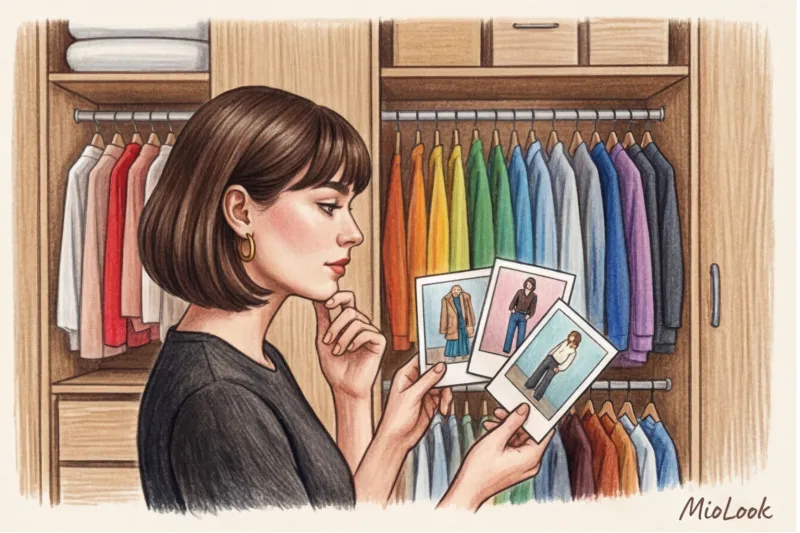
Imagine a typical Tuesday morning. You're standing in front of your open closet, where dozens of items are crammed onto hangers, but the familiar thought is nagging at you: there's nothing left to wear. According to the international organization WRAP (2023), about 70% of the clothes in the average wardrobe hang like dead weight, waiting for a "special occasion" or simply falling out of sight. We explored the mechanics of this paradox in more detail in our guide. Digital Wardrobe: How to Solve the "Nothing to Wear" Problem Spoiler: the problem isn't a lack of things, but cognitive overload.
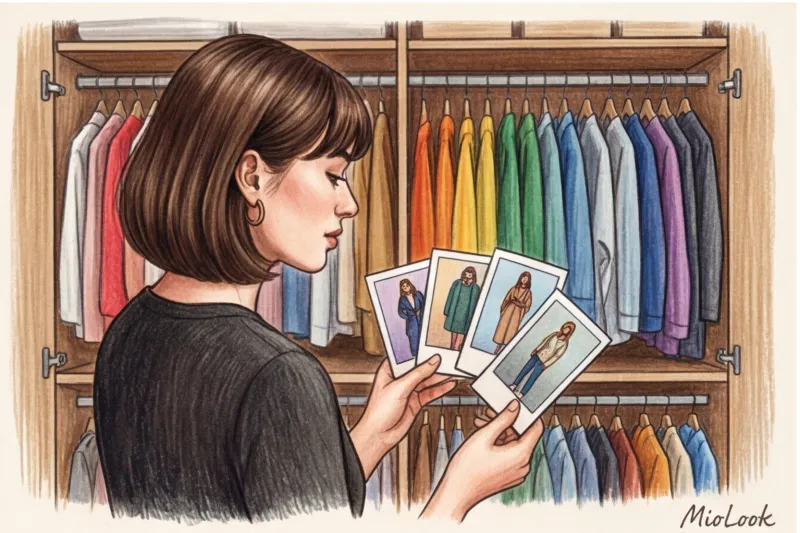
This is where the rules of the game change. If you need neural network stylist, choose clothes Today, you can literally do in a couple of seconds, by entrusting a mathematical engine with what a tired human brain cannot handle before the first cup of coffee.
Why you need a neural network stylist: how to choose clothes without morning stress
Over 12 years of working as a personal stylist, I've noticed one ironclad pattern. At 7:30 a.m., our brains categorically refuse to be creative. Decision fatigue forces us to choose safe, tried-and-true, but frankly boring combination patterns.
One of my clients, corporate lawyer Anna, had been wearing her favorite gray wool jacket from Massimo Dutti for years, always pairing it with the same pair of black trousers. In her mind, this pairing had become ingrained. When we digitized her wardrobe, the algorithm instantly generated 14 new smart-casual business outfits from just 30 basic items. The machine simply ignored her usual fears and suggested wearing the jacket over a silk slip dress and chunky boots for a casual Friday.
"People often 'don't see' things hanging on lower rods or folded on shelves. Artificial intelligence doesn't suffer from this selective blindness—it 'sees' your entire arsenal equally clearly."
Access to MioLook for €0.99 — one-time payment
A smart AI stylist will select the perfect look.
Get access — €0.99 onceAnatomy of an Algorithm: How AI Assembles Your Images
It's a mistake to think that neural networks possess an innate "sense of beauty." They are based on the strict mathematics of style and principles of proportional architecture established by developers and fashion experts.
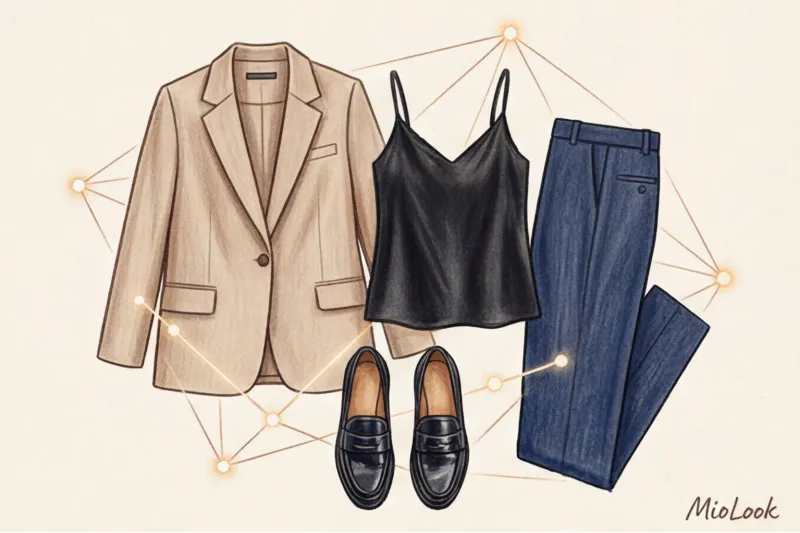
First, the system uses the golden ratio and the rule of thirds (where the silhouette is divided 1/3 to 2/3, rather than 50/50). Second, it uses deep tagging: the algorithm reads not just "blue jeans," but "midweight denim, high-rise fit, ankle length, straight leg." This detail allows the machine to balance volumes: if the bottom is wide, the AI will automatically select a more compact top to maintain the figure's proportions.
From the color wheel to temperature control
The color combinations aren't generated randomly. The code is based on classic Itten patterns: complementary contrasts (for example, a terracotta sweater and navy blue trousers) or elegant analogous combinations (beige, camel, and off-white).
Moreover, the system filters context. You won't be offered the chance to wear linen shorts with a chunky wool sweater—the algorithms have learned to understand the seasonality of fabrics and match them with the current weather outside.
Algorithm Blind Spots: What Neural Networks Can't Do Yet
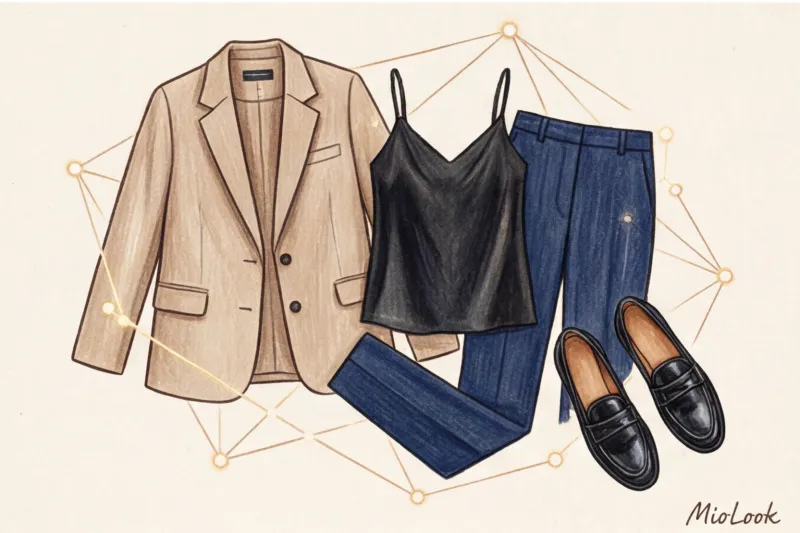
Let's be honest. A myth common in the glossy magazines is that "a neural network will do all the work for you and completely replace a human stylist." As a practitioner, I can confidently say: this is not true. Artificial intelligence is a brilliant analyst, but it lacks sensory experience and empathy.
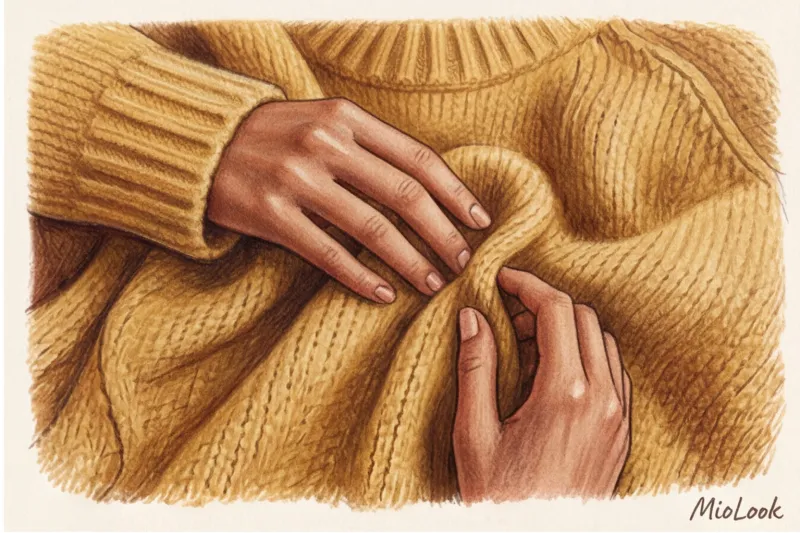
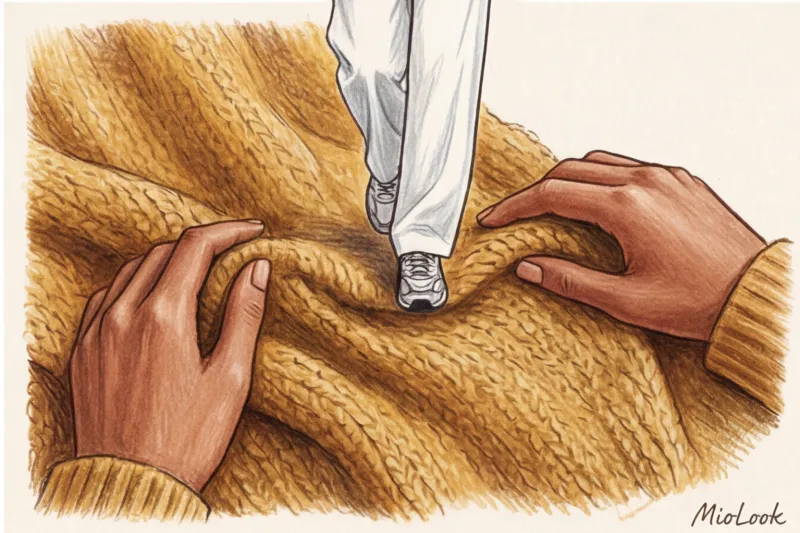
This doesn't work when it comes to tactile comfort. Mathematics can assemble a flawless, multi-layered look on a screen, but AI doesn't know that that particular viscose blouse from Zara is unbearably staticky and clings to your skin. It doesn't know that your perfectly colored pumps are rubbing your heels after 20 minutes of walking, or that your thick sweater is treacherously itchy.
Moreover, the machine doesn't understand emotional context. Today you want to "hide" in a voluminous hoodie, and tomorrow you want to shine at a presentation. That's why you always remain the final art director. The app offers you a canvas and paints, but the decision to go public is yours.
Your perfect look starts here
Join thousands of users who look flawless every day with MioLook.
Get access — €0.99 onceInstructions: How to Train AI to Generate Perfect Bows
A neural network is like a new assistant—it needs to be trained and customized to your liking. There's a golden rule in IT: "garbage in, garbage out." If you photographed a crumpled T-shirt in the dark against a colorful carpet, don't expect miracles from the neural network.
The feedback system is your main tool. If the application MioLook If a combination you absolutely dislike is suggested, be sure to click "Dislike." Machine learning algorithms record these rejections. After a couple of weeks of use, the system will understand that you, for example, dislike the combination of red and green or avoid floral prints.
I also strongly recommend collecting capsules for specific tasks. For example, if there is a task ahead rustic-style wedding With friends, you can set filters for the algorithm to exclude formal office suits and show only flowing fabrics, natural shades, and matching accessories from your inventory.
Rules for the ideal digitization of things
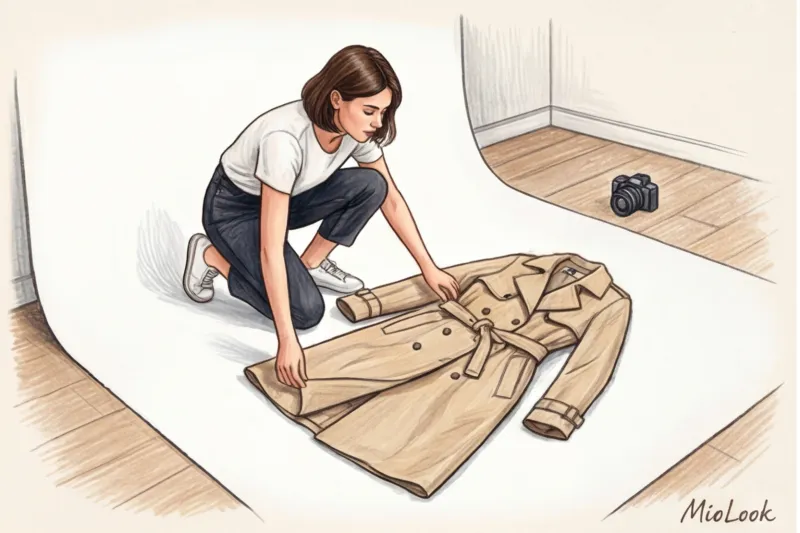
To ensure the machine accurately calculates the garment's geometry, photograph the garment in natural daylight against a contrasting, solid background (ideally, a white sheet or flat floor). Smooth out any folds and show off the silhouette.
Don't be lazy in manually adjusting tags if the AI makes a mistake. A smartphone camera can distort a complex shade of navy blue, turning it black. Be sure to specify the composition (for example, 100% cashmere or linen) – this will help the algorithm avoid mixing summer and winter textures in the same look.
The Digital Style Economy: Reducing Cost Per Wear
The most interesting thing about working with algorithms is the financial audit of your closet. A McKinsey study (2024) showed that the focus of conscious consumption is shifting from buying eco-friendly brands to maximizing the use of what you already own.
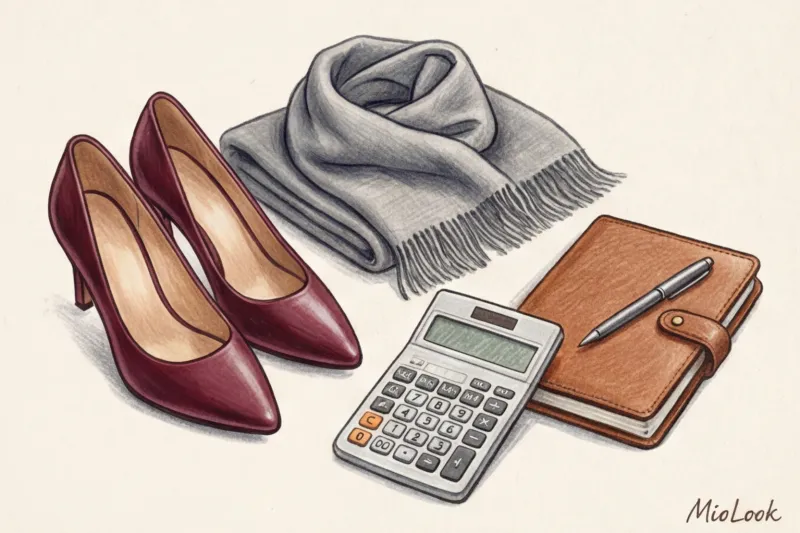
We use the Cost Per Wear (CPW) metric—the cost of one use of an item. If you buy a jacket for €200 and wear it twice, your CPW is €100. That's catastrophically expensive. The neural network squeezes 100% of your clothing's potential. The math is inexorable: a well-designed basic capsule collection of 12 items (for example, from Uniqlo or COS) yields over 40 wearable combinations.
When the algorithm generates new looks daily with a skirt forgotten on the back shelf, its CPW plummets. Moreover, AI saves you from impulsive purchases of "single items." Before going to the store, you clearly see: you don't need a fifth white T-shirt, you need one chocolate-colored structured belt that will instantly complete eight existing looks.
The Future of Personal Style with MioLook
A smart wardrobe doesn't mean abandoning your personal style in favor of a mindless machine. On the contrary, it frees up your time and cognitive resources for more important life tasks. Let AI handle the combinations, proportion calculations, and color schemes.
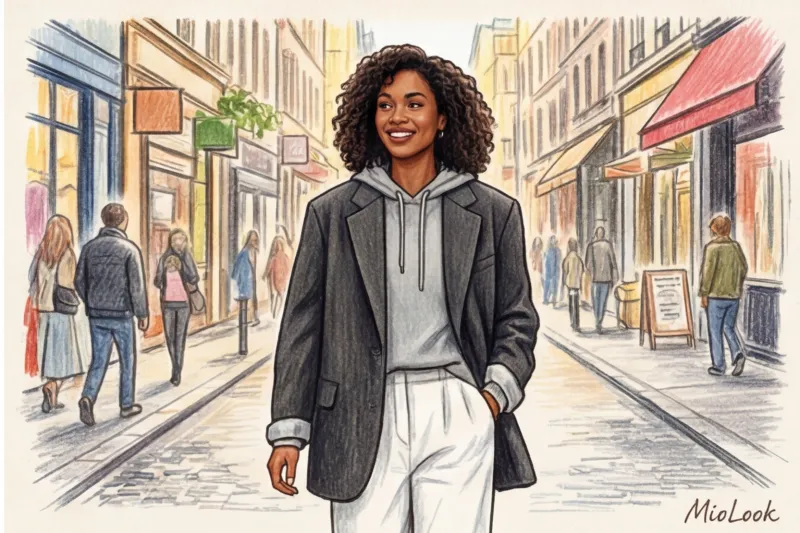
The synthesis of human intuition and machine logic produces amazing results. You stop buying duplicates of the same things, start wearing what previously seemed "too complicated," and finally get rid of morning stress.
Your first step to a smart wardrobe doesn't require a massive shopping spree or a complete closet cleanout. It starts with digitizing those 10-15 favorite items you wear most often. Let algorithms take care of them. MioLook , and let the mathematics of style find dozens of new, unexpected, and aesthetically pleasing solutions in your usual wardrobe.