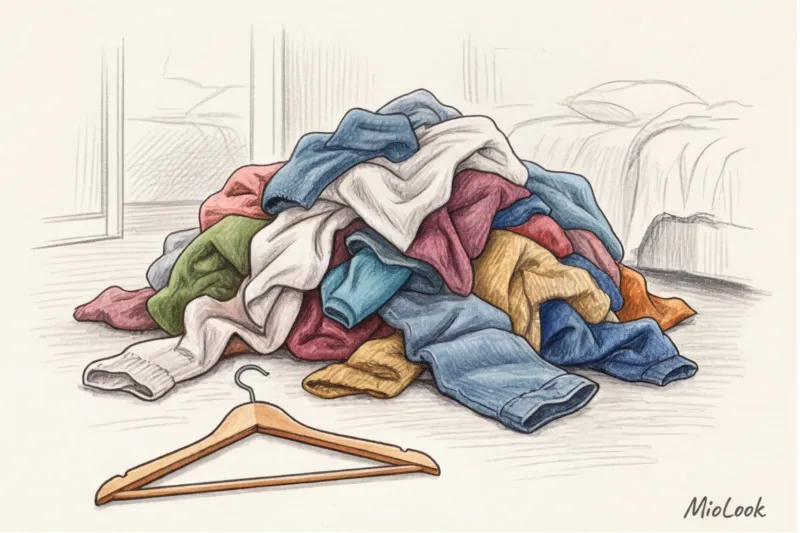
Last week, a client came to me proudly proclaiming, "Darina, I packed up five huge bags of mass-market clothes and took them to the dump! Now I'm going to build a mindful wardrobe: I'll buy only the right linen, hemp, and organic cotton." Guess what I told her? That she'd just committed an act of environmental vandalism.
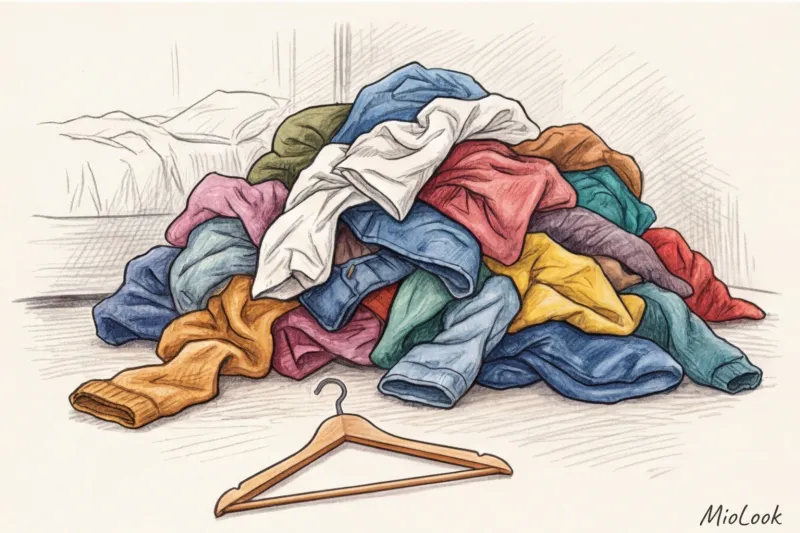
Throwing away perfectly good, intact items to buy new clothes with a green "Eco" label isn't mindfulness. It's classic overconsumption, simply wrapped in socially acceptable marketing (greenwashing). True eco-friendliness begins not in an expensive sustainable fashion boutique, but right behind your closet doors. We wrote more about this global concept in our the complete guide to an eco-friendly wardrobe , but today I want to talk about purely practical things.
After 12 years of working as a stylist and colorist, I've come to a clear conclusion: to stop the endless cycle of buying, you don't need to declutter. You need to digitize. And the right one virtual wardrobe app copes with this task better than any persuasion.
The Eco-Wardrobe Illusion: Why Radical Decluttering Harms the Planet
According to a major report by the Ellen MacArthur Foundation (2023), every second, the world burns or landfills a volume of clothing equivalent to an entire garbage truck. When you throw out your old sweater from the mass market, it becomes part of this alarming statistic.
I often see girls, in a rush to "cleanse their space," getting rid of perfectly good basics simply because they bought them at Zara a couple of years ago. The irony is that wearing your old polyester-blend sweater 50 more times is much more eco-friendly than throwing it away and ordering a new recycled cashmere jumper delivered.
My clients' wardrobes are always governed by the inexorable Pareto principle: 80% of the time, they wear only 20% of their clothes. The remaining 80% becomes "dead weight" simply because they're forgotten.
"The most sustainable clothes are the ones you already have in your closet," says Orsola de Castro, co-founder of the global Fashion Revolution movement.
Try MioLook for free
A smart AI stylist will select the perfect look from your items.
Start for freeWhat is a virtual wardrobe: an app as a tool for mindfulness
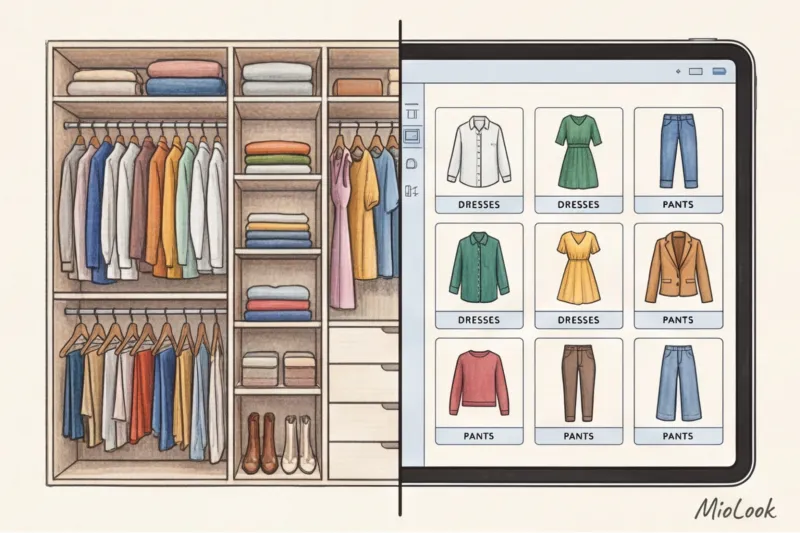
Many remember the iconic scene from the film Clueless (1995), where the main character collects looks on a large computer monitor. Modern virtual wardrobe apps have long been more than just a pretty catalog toy, but a powerful analytical tool.
Its main and revolutionary difference from a physical closet is the absence of physical boundaries. On the shelves, your items are hidden behind one another, separated by season, tucked away in covers and drawers. In the app, you see absolutely everything at once on a single screen.
When a client first looks at the grid of her 15 white T-shirts and eight matching blue jeans, she's shocked. This visualization of her "blind spots" is more sobering than any lecture on the dangers of fast fashion. The brain finally registers the true scale of her accumulation.
Cost-Per-Wear Formula: The Math of Your Style
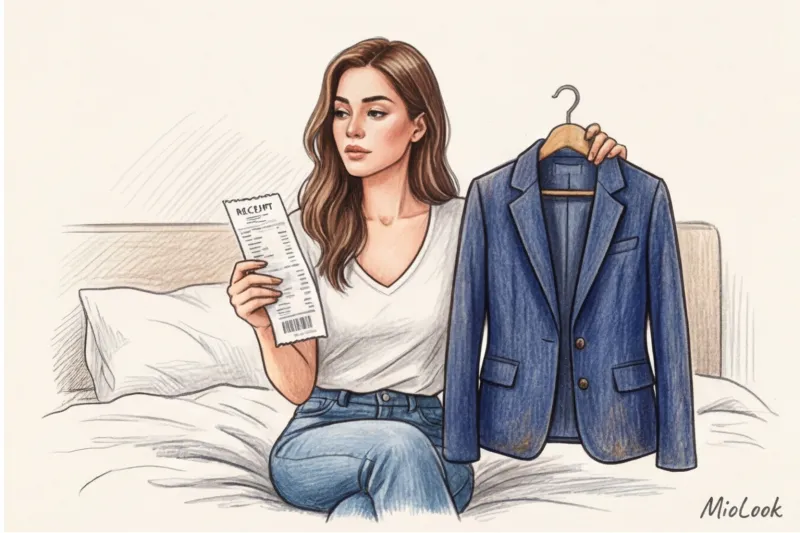
Have you ever calculated the true cost of your clothes? In professional styling, we use the Cost-Per-Wear (CPW) formula. It's calculated simply: (cost of the item + dry cleaning or repair costs) / number of wears.
Let's do the math. You bought a 22-mommie silk blouse for €200 and wore it to work 50 times. Its CPW is €4. Next to it, there's an acrylic top for €20 that you wore to a party once and then forgot about. Its CPW is €20. It's ironic, but the "expensive" silk blouse cost you five times less!
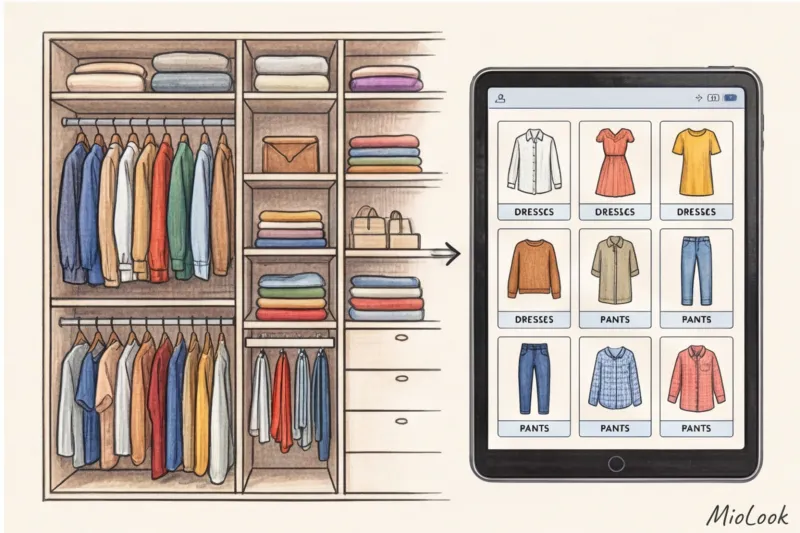
A digital wardrobe calculates this math automatically. It mercilessly highlights items with a high CPW, teaching you to invest in what you actually wear. Incidentally, according to a 2024 report from the platform ThredUp, the average modern woman wears a mass-market item only seven times before discarding it.
Your perfect look starts here
Join thousands of users who look flawless every day with MioLook.
Start for freeHow a virtual wardrobe stops impulse buying
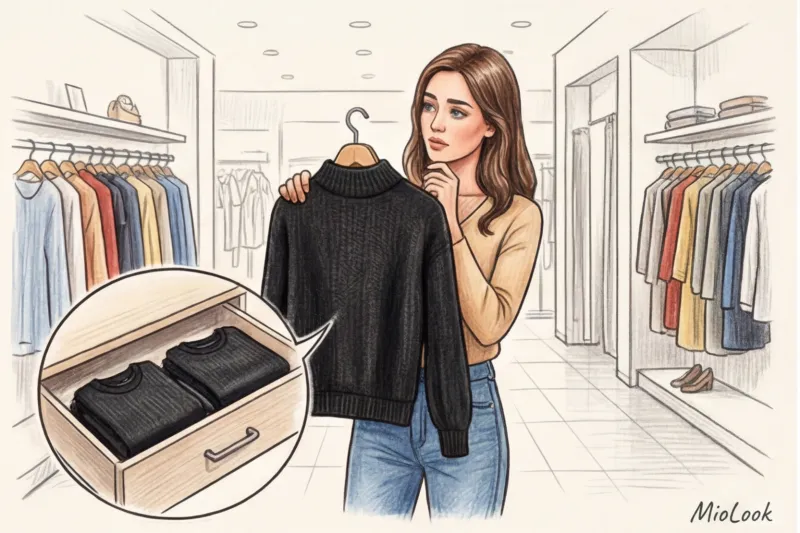
Remember that feeling: you're standing in the fitting room, the light is perfect, the 50% discount beckons, and your hands are reaching for the cash register. That's the moment you need to pull out your phone.
I recently went through the closet of Anna, the CFO of a large company. In her dresser, we found five identical black turtlenecks made of thin viscose. She bought each one in a state of "I urgently need a basic item," genuinely unaware of the four previous ones, buried under thick sweaters. The "I already have this" mentality is the best antidote to shopaholism.
According to our users' internal statistics, regular use of the app reduces impulse purchases by 40% within the first month. MioLook It doesn't just show you what you have, but also analyzes any real gaps. The algorithm can subtly hint: you don't need a sixth "beautiful top," but you're critically short of basic bottoms to create outfits.
The "Nothing to Wear" Syndrome and the AI Stylist: The Magic of New Combinations
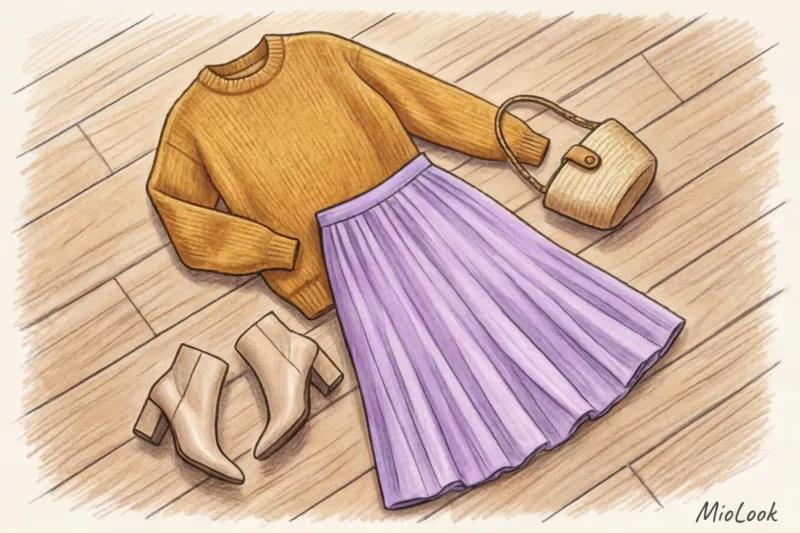
Why do we wear the jeans-and-sweater uniform for years? Because our brains are lazy. In the morning, we don't have the resources to create complex layers. And this is where the real magic of neural networks begins.
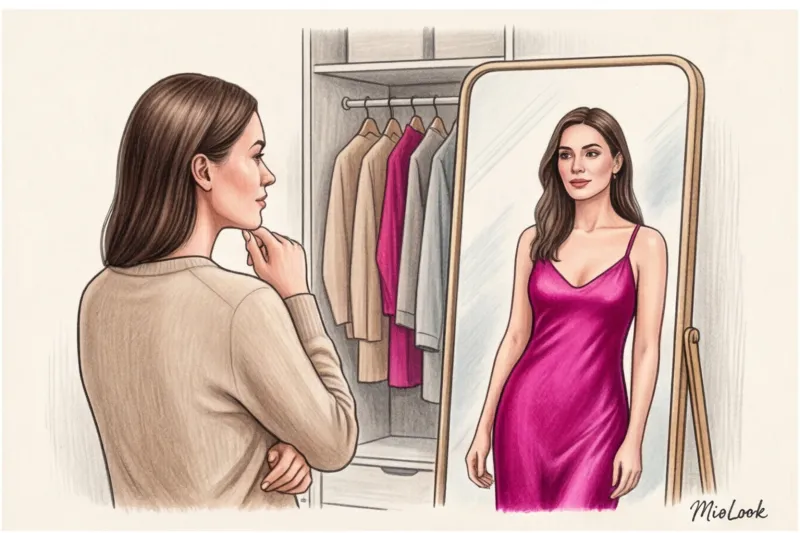
As a certified colorist, I love giving my clients unconventional color combinations. For example, the complementary contrast of fuchsia and deep emerald. In real life, 9 out of 10 women are afraid to wear this combination—they're afraid of looking awkward. But when an AI stylist assembles this look on your smartphone screen from your own photos, the fear disappears. You suddenly see that the colors match perfectly.
Algorithms are devoid of human patterns. They'll suggest wearing a summer slip dress over that same thin black turtleneck, paired with chunky boots. You satisfy your need for novelty without spending a single euro. Read more about how algorithms analyze appearance in this article. Accurate color type: neural network or stylist?
A Stylist's Checklist: How to Digitize Your Closet Without Stress
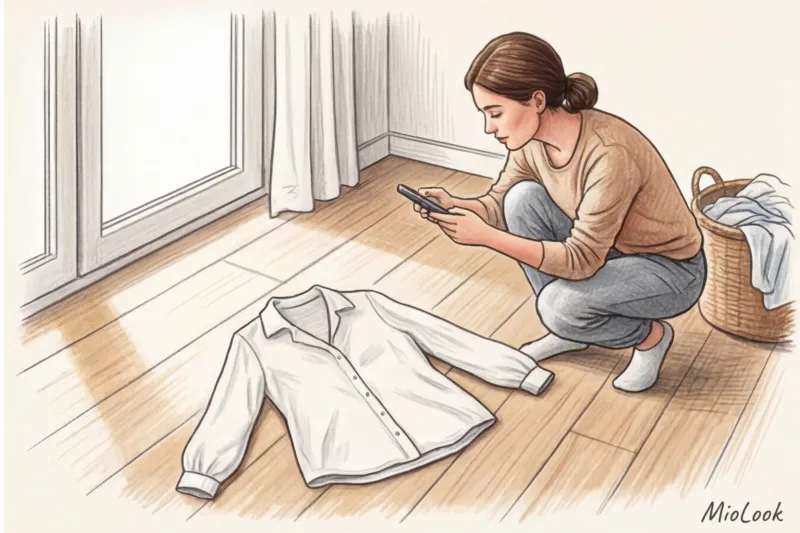
Who and when is digitalization NOT suitable for? The answer is simple: those who try to do everything in one weekend. The biggest mistake beginners make is dumping 200 things on the bed and trying to shoot them all at once. Trust me, from my own bitter experience: this ends in a nervous breakdown within the second hour of work.
Here's my proven strategy that works without burnout:
- The "Today + Laundry" Rule: Don't touch your closet. Photograph only the outfit you wore when you left the house today, plus the 3-4 items you took out of the dryer or ironing board. Within a month, your active wardrobe will digitize itself.
- Light decides everything: Take photos only in daylight (near a window) against a contrasting background (for example, a clean wooden floor). Turn off the flash—it distorts the texture of the fabric. More tips can be found in our article about mistakes when photographing clothes for an app.
- Don't Ignore Metadata: Please take 10 seconds to enter the brand, season, color, and approximate price of the item. Without these inputs, the AI will not be able to calculate the CPW and suggest a weather-appropriate capsule.
The Future of Fashion: Why Downloading a Virtual Wardrobe (App) Saves the Planet

Mindfulness isn't an abstract noun, it's a verb. It's the daily management of what you already own. Digitizing your wardrobe is becoming the bridge that allows us to love fashion, enjoy beautiful looks, and avoid destroying the environment with impulsive purchases.
You don't have to throw out old T-shirts or buy eco-friendly linen to become a responsible consumer. Simply start wearing what you already own. Take the first step today: download the app, take a photo of just 10 of your favorite items, and let the algorithm create an outfit you never imagined possible.