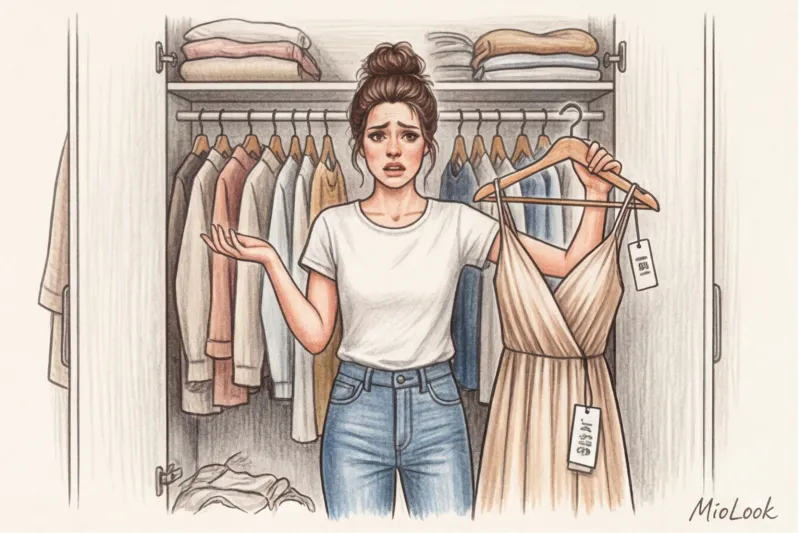
"Just cut up your credit card and unsubscribe from branded emails." This is the most common and most useless advice given to women looking for a way to overcome their shopping addiction. Over 12 years of working as a personal stylist in Europe, I've reviewed hundreds of closets. And believe me: uncontrolled shopping is not a sign of financial illiteracy or poor taste.
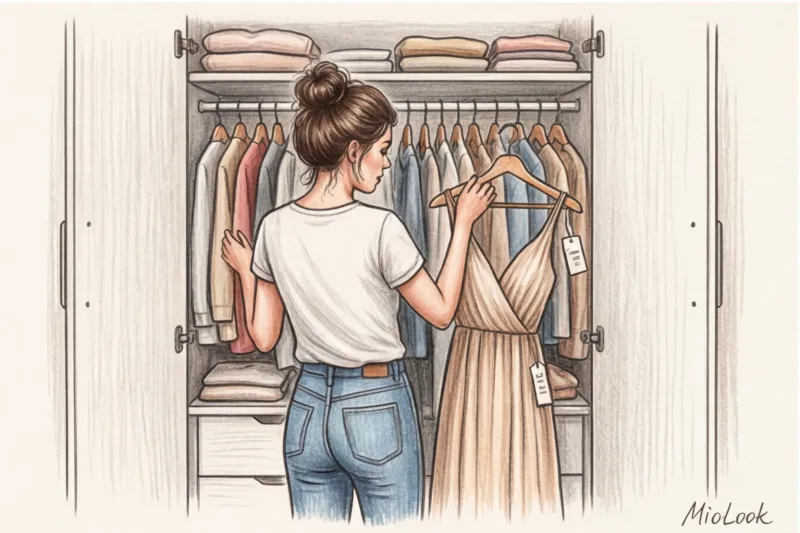
Shopaholism is a symptom of "style amnesia" and an attempt to buy not a piece of fabric with seams, but a fantasy of a new, better version of yourself. We discussed the mechanisms of this substitution in more detail in our the complete guide to the psychology of shopping Here, I want to offer you not a motivational lecture, but a rigorous but effective "wardrobe rehabilitation" system that I use with my clients.
The New Wardrobe Illusion: Why Do We Buy Clothes But Always Have Nothing to Wear?
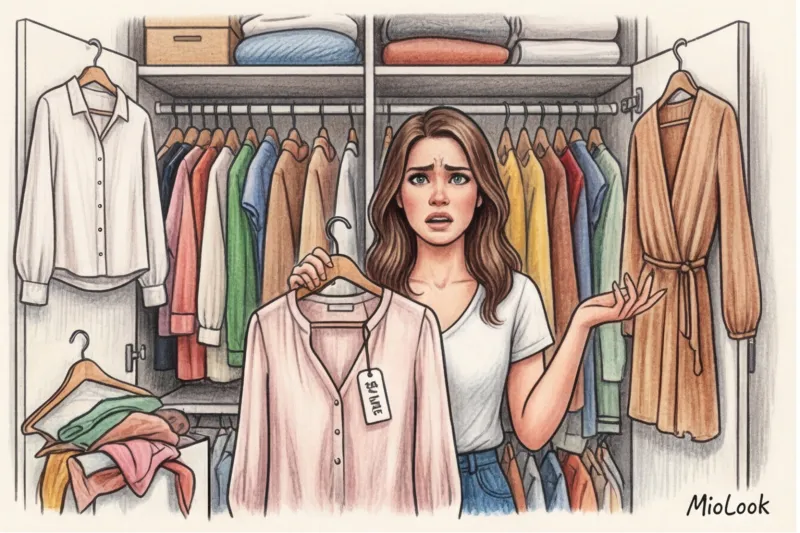
In my experience, nine out of 10 women face the "closet paradox." Clothes are spilling off the shelves, hangers are creaking, but every morning begins with stress and the familiar uniform of trusty jeans and a cozy sweater.
One of my clients, an executive at an IT company with a hybrid schedule, bought a pair of luxurious Manolo Blahnik pumps for €500 and a sequined dress. She hasn't worn them once in two years. Why? Because she wasn't buying these items for her real-life routine of Zoom calls and trips to pick up her kids, but for her "fantasy self"—the movie socialite she sometimes aspired to be.
Scientists Hajo Adam and Adam Galinski introduced the term in 2012 Enclothed Cognition (clothed cognition). They proved that clothing directly influences our psychological processes. When you buy a tailored jacket from Massimo Dutti, you're not buying wool, but a sense of confidence and professionalism.
The problem begins when the number of things exceeds our brain's cognitive capacity to choose. Behavioral economics calls this overchoice (overchoice). When you look at 30 shirts in the morning, your willpower is depleted even before breakfast. Your brain takes the path of least resistance, and you put on that same gray turtleneck again.
How to Recognize Shopaholism: 5 Atypical Symptoms of Wardrobe Addiction
My clients' wardrobes tell me more about them than their resumes. Addiction rarely begins with loans—it begins with small, unnoticeable habits.
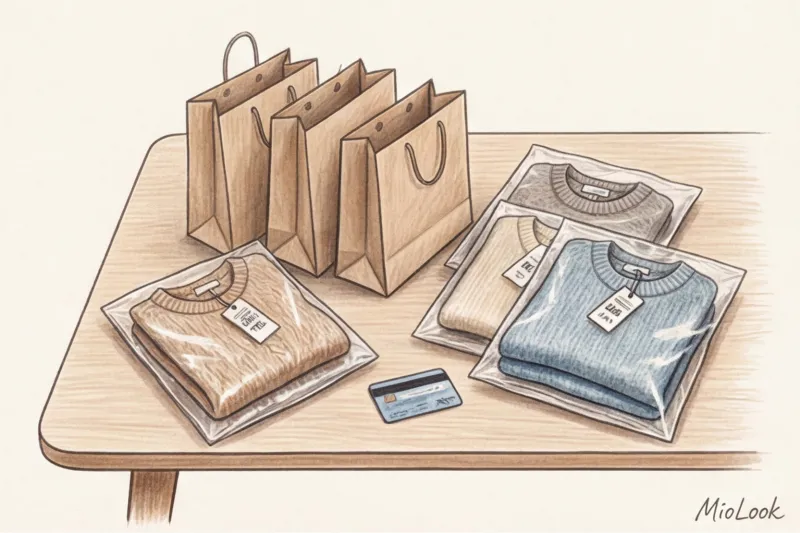
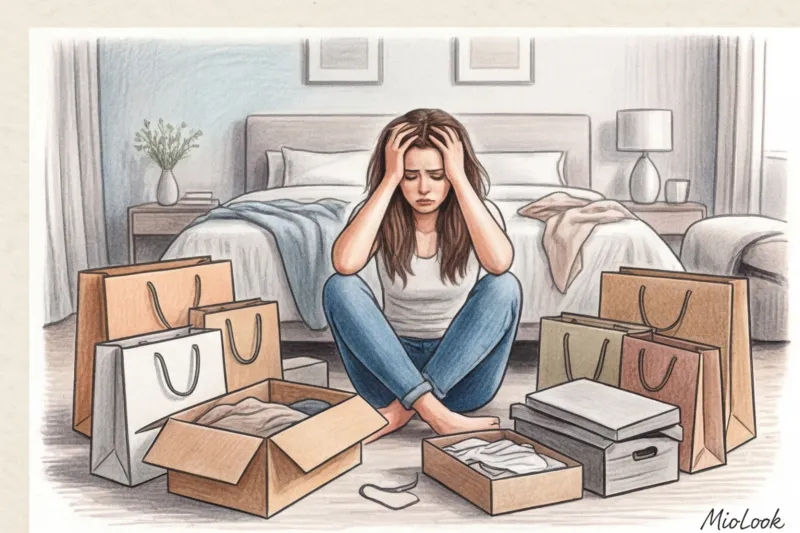
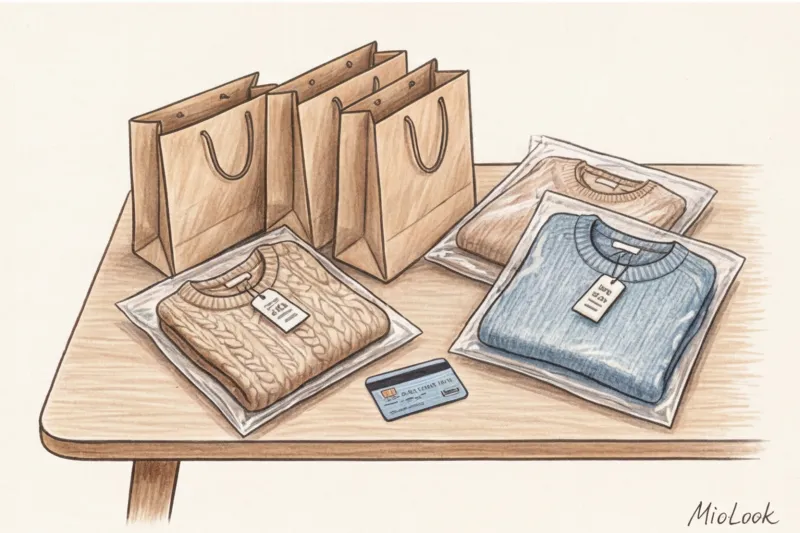
- Hidden packages. You leave bags from Zara or H&M in the trunk of your car or sneak them home so you don't have to explain your latest purchase to your partner.
- Cemetery of tags. Are there items hanging in your closet that haven't had the price tags removed for over a month? This is a classic sign that the purchasing process was more important than the item itself.
- Cloning. We were once sorting through a client's wardrobe and found 15 nearly identical white T-shirts. She was constantly searching for "the one, the perfect one," but was buying cheap alternatives that would lose their shape after the first wash.
- Consolation purchases. Shopping is like a Band-Aid. If your first thought after a tough meeting is, "I deserve this bag," you're at risk. Emotional clothing shopping - this is an attempt to cover the stress with a transaction.
- Instant loss of interest. You spent a long time choosing an item, carrying it to the checkout with trepidation, but as soon as the payment went through, the magic wore off. At home, the item simply sits on a chair.
The Dopamine Trap: How Mass Markets Hack Our Brains
To defeat an enemy, you need to understand how it works. The release of dopamine in our brain occurs not at the time of possession of the thing , and in anticipation of a purchase. As soon as the card is placed on the terminal, hormone levels drop sharply.
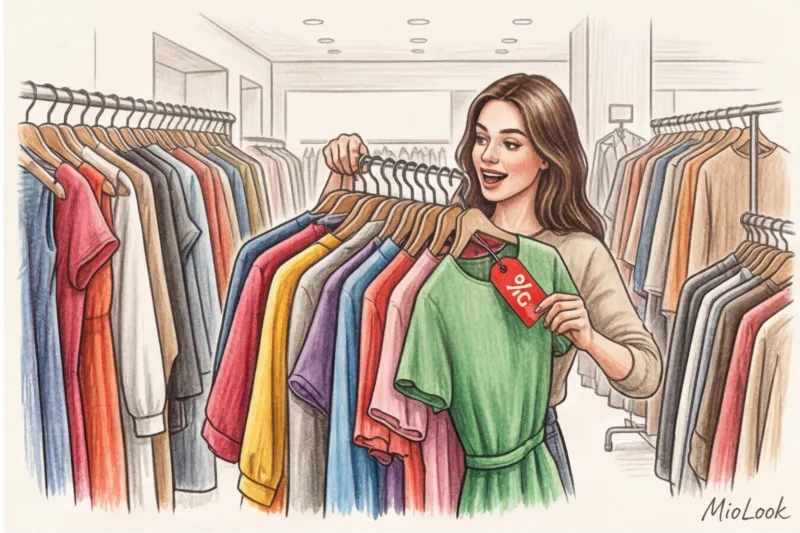
The fast fashion industry has built a multi-billion-dollar business on this neurobiological loop. Zara changes its collections in stores every two weeks. This creates artificial scarcity: "If I don't buy this jacket now, it won't be available tomorrow." Our ancient brain perceives this as a threat of resource loss and pushes us to act impulsively.
The Thrift Myth: Why Sales Make Us Poorer
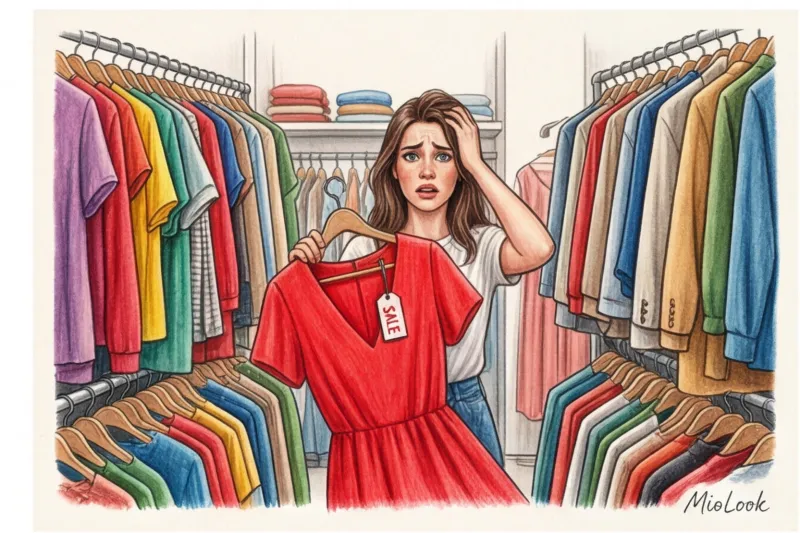
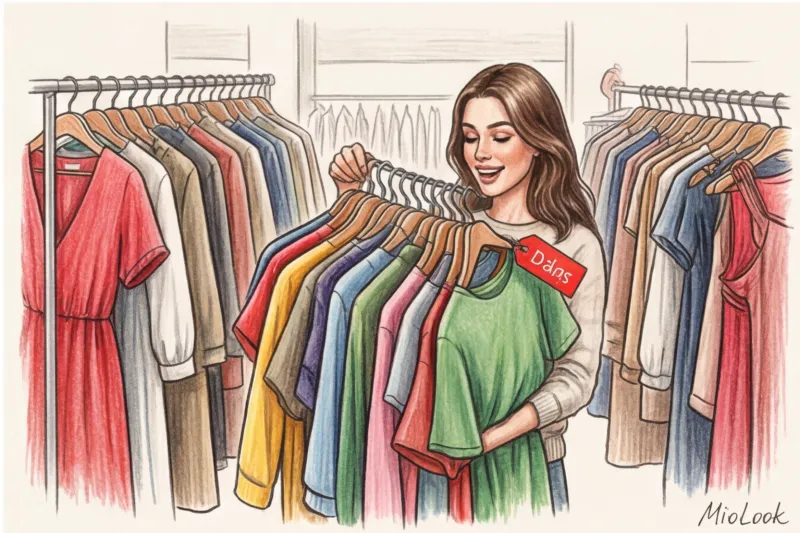
Nothing shuts down critical thinking (the prefrontal cortex) like a red price tag with "-70%" written on it. But let's calculate the true value of the item using the Cost Per Wear (CPW) formula.
Imagine you bought a trendy asymmetrical top on sale for €20. You wore it once to a party, realized it was uncomfortable, and forgot about it. CPW = 20 €.
At the same time, you bought a basic cashmere jumper at COS for €120. It fits perfectly, and you've worn it 40 times this winter. CPW = 3 €.
Cheap items from sales cost you seven times more than quality essentials. You're not saving money; you're funding a wastebasket.
Stop buying unnecessary things
MioLook's smart AI stylist will analyze your wardrobe and show you which items you really need and which ones you should avoid.
Get access — €0.99 onceHow to Overcome Shopping Addiction: The Wardrobe Detox Protocol
Marie Kondo's popular method ("keep only what brings you joy, throw the rest away") is a disaster for someone with symptoms of shopping addiction. A radical purge provides a powerful dopamine rush from the "cleansing." But the next day, you open your empty closet, panic at the fact that you literally have nothing to wear to work, and go buying everything in sight. This is a classic relapse scenario.
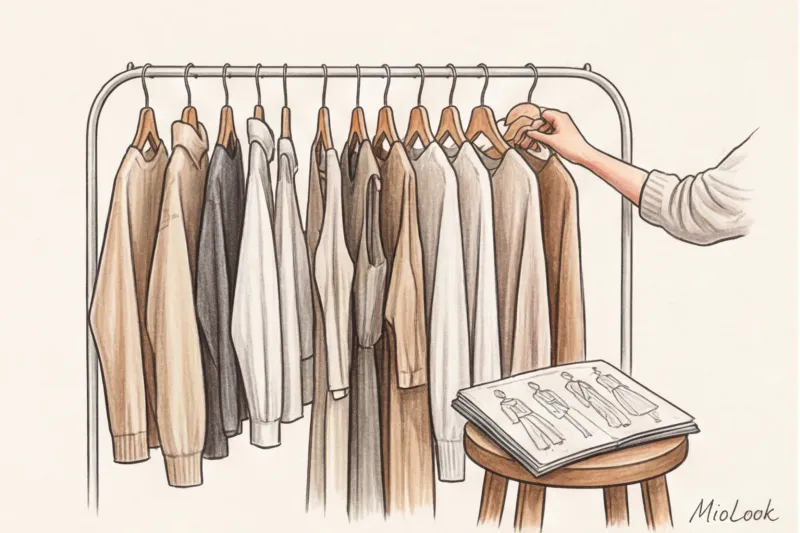
Instead, I offer my clients a soft quarantine method.
- Step 1: Quarantine, not trash. Box up any items you haven't worn in the last six months (not seasonally, but generally) and put them on the top shelf. Don't throw them away. Just isolate them. Your closet should be left with 30-40 items you actually wear.
- Step 2: Shopping in your own closet. From now on, we learn to combine the rest. Digitize your database through the "smart wardrobe" feature in MioLook The program will help you create dozens of new combinations from what you already have, without making a single new purchase.
- Step 3: The 48-hour rule. Saw a cool item online? Add it to your cart and close the tab. Spotted it at the mall? Try it on, take a photo, and leave. If after 48 hours you still clearly remember the item and your brain has come up with three outfits to wear with it, you can come back. Experience shows that 85% of "brilliant finds" are forgotten by the morning.
Reboot: Mindful Shopping Rules for Women
Mindfulness is a buzzword, but in wardrobe, it has a strict mathematical form. During the first consultation, I ask clients to draw a "busyness chart." List out in percentages what your life consists of: 60% office, 20% walks with the dog and kids, 10% sports, 10% restaurants/theaters.
Now look at your closet. If your reality is 60% office casual, why is half your closet filled with cocktail dresses and stilettos?
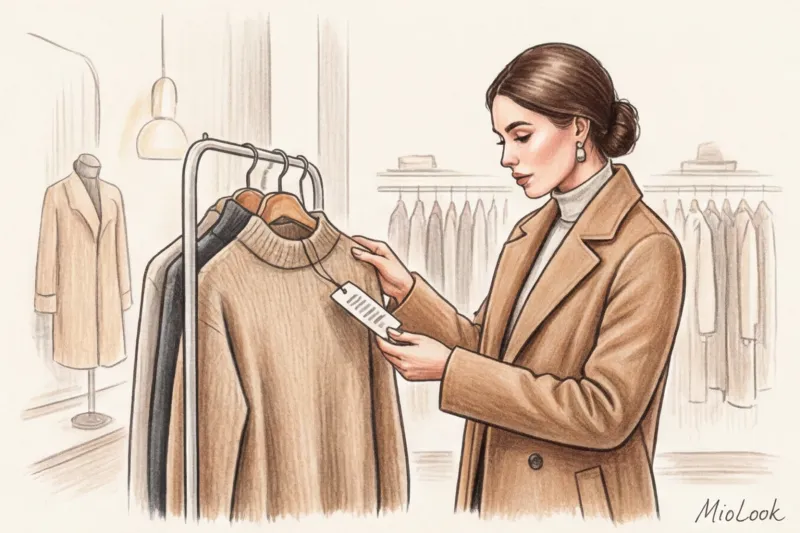
Strict shopping list. We buy only the pieces that are missing to complete our looks. We go to the store not for "something new," but specifically for a straight-cut, dark blue wool-blend, mid-thigh-length jacket.
Test #30Wears. This concept was popularized in 2015 by eco-activist Livia Firth. Before you take an item to the checkout, ask yourself one question: "Will I wear this 30 times?" If the answer is "no" or "I don't know," the item stays in the store.
Your perfect look starts here
Join thousands of users who look flawless every day without spending money on random things with MioLook.
Get access — €0.99 onceChecklist: An Action Plan Before Your Next Purchase
Take a screenshot of this list and open it every time you reach for your wallet. An item is only eligible to live in your closet if it passes this filter.
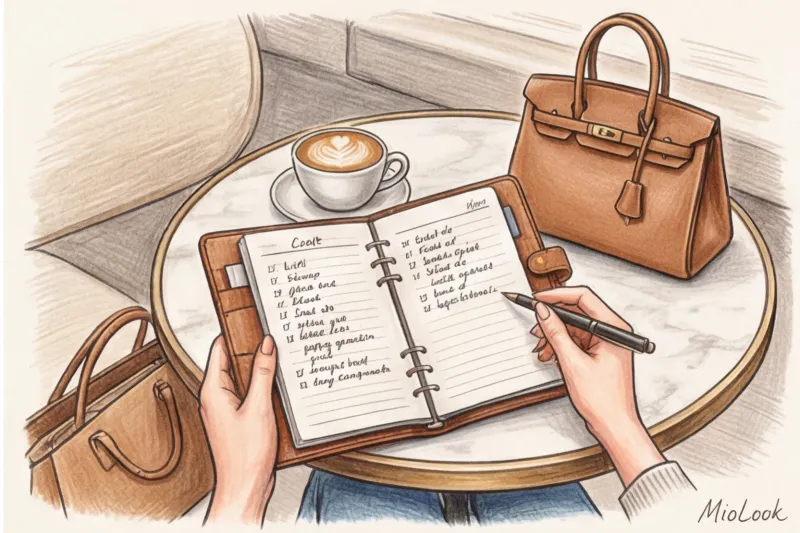
- Does it cover the hole? Will I be able to create at least three outfits with it from what's ALREADY hanging in my closet? (If a new skirt requires buying a new top and new tights, it's a bad investment.)
- Tactility and quality. Am I comfortable in this fabric? Is it 180g/m² cotton, flowing viscose, or squeaky 100% polyester that'll make me sweat in 10 minutes?
- Care. Does this item need dry cleaning? Will I spend half an hour ironing it every morning? If you hate ironing, a silk blouse with intricate draping is doomed to hang in the closet forever.
- Correspondence to reality. Is this thing for me, or for the woman I dream of becoming “someday”?
I'll be honest: there's a catch. This checklist won't work if you're trying to drown out serious emotional trauma or clinical depression with shopping. Clothes don't heal the soul; that's what other specialists do.
But if your goal is to stop wasting money and finally gain control of your style, start with a pause. Your ideal wardrobe isn't one with too many items. It's one in which everything works for you, saving you time, money, and morning stress.