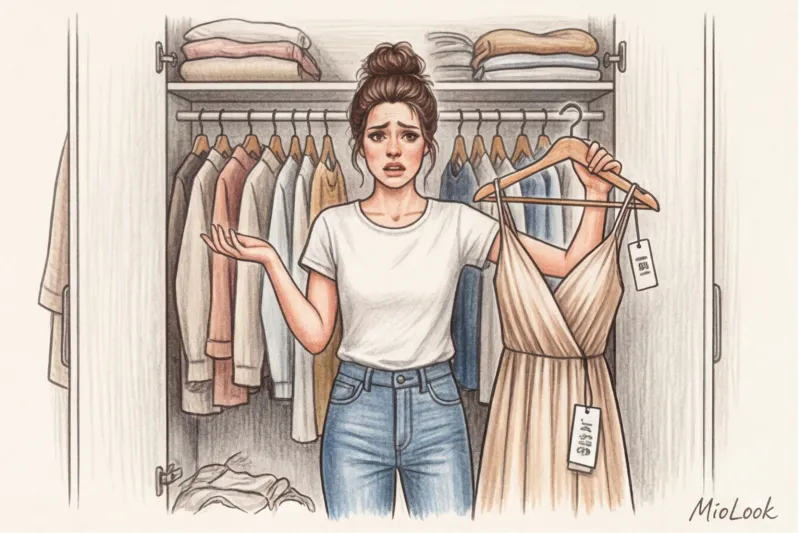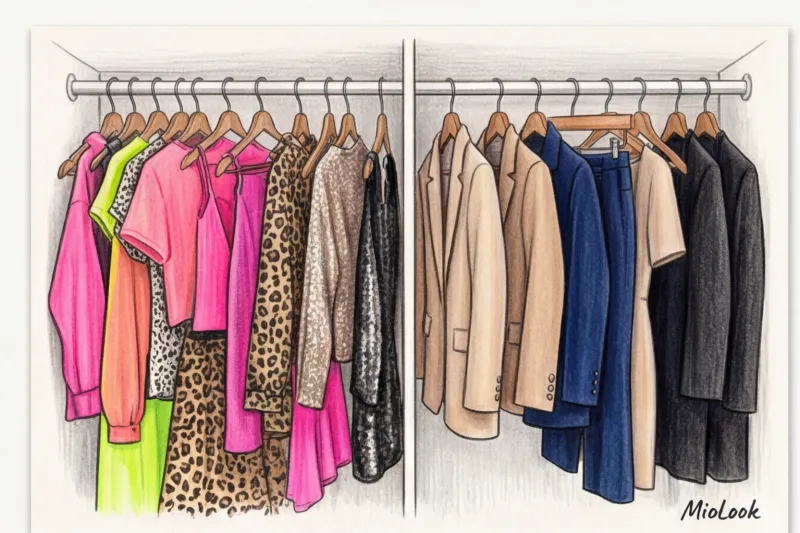
You open the closet doors, and a veritable avalanche of hangers filled with silk, thick cotton, and sparkling polyester literally descends upon you. The clothes rail sways ominously, and a single thought throbs in your head: "Nothing to wear again." Sound familiar?
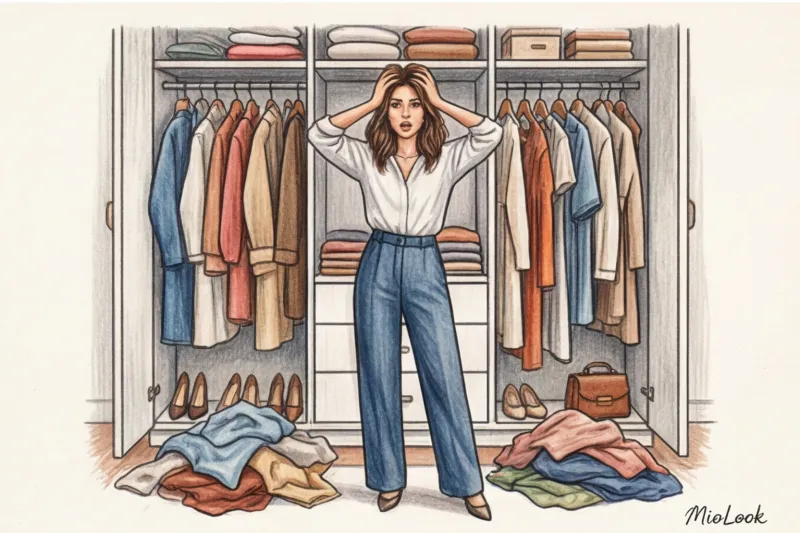
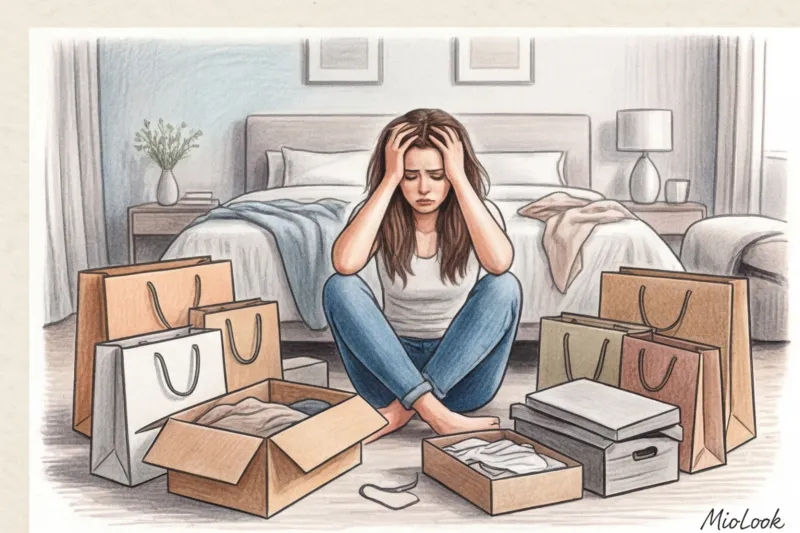
In my 12 years as a personal stylist and wardrobe investment consultant, I've seen this scene play out at almost every initial walk-through. We buy a dress for a hypothetical vacation, a tenth white T-shirt "because it's on sale," and yet another bag just to lift our spirits after a tough Tuesday. We discussed this phenomenon in more detail in our the complete guide to emotional shopping.
But what if I told you that the path to your dream wardrobe isn't through new purchases, but through a radical break? Shopping detox — This isn't financial austerity. It's a tool for purifying your stylistic taste. Like sorbet between courses at a fine-dining restaurant, it helps wash away the aftertaste of cheap mass-market fare and prepare your palate for truly prestigious items.
What is a shopping detox and why you (probably) need one
Essentially, a shopping detox is a temporary (usually 30 days) abstinence from purchasing any new clothes, shoes, or accessories. It's a conscious break from the endless cycle of micro-consumption.
According to McKinsey's 2023 consumer behavior study, the modern woman uses a mere 20% of her wardrobe 80% of the time. This is the classic Pareto principle in action. The remaining 80% of items hang like dead weight, acting as emotional ballast. We fall into a classic dopamine loop: stress – purchase – brief joy – guilt – overflowing closet – nothing to wear.
It's definitely time for a detox if:
- There are at least three items in the closet with the tags still attached.
- You regularly visit the websites of Zara, H&M or Massimo Dutti just to “see what’s new” when you’re bored.
- You can't remember right away what exactly you bought last month.
Access to MioLook for €0.99 — one-time payment
A smart AI stylist will create the perfect look from your own clothes while you're on a detox.
Get access — €0.99 onceGame Rules: How to Prepare for a Shopping-Free Month
You can't just wake up on Monday and decide, "That's it, I'm not buying anything anymore." Your brain will perceive this as a threat and mount a fierce resistance. Preparation is half the battle.
Start with an honest financial audit. Open your banking app and calculate how much money you've spent on clothing over the past three months. This figure is usually a bit of a shock. My experience shows that the average woman spends the equivalent of a good designer bag from Loewe or Celine on spontaneous, small purchases per year.
My personal professional advice: before starting a detox, remove all out-of-season items from sight. I have my clients literally stash them in vacuum-sealed bags or suitcases. Visual noise triggers anxiety, and anxiety triggers the desire to "buy something new to calm down."
Hard Detox vs. Conscious Elimination
I must make an important disclaimer. This method does NOT work if you try to forbid yourself everything. Strict restrictions lead to breakdowns.
Shopping detox should be "smart". What Can What to buy this month? Replacements for torn basics (for example, if your only pair of black, thick tights have ripped). You can buy a basic white T-shirt if your old one is irreparably ruined by a coffee stain. It's also acceptable to buy an item that's been on your "waiting list" for more than three months.
What absolutely not allowed Any "random" finds on sale (even if they're 70% off) and outfits for hypothetical special occasions that aren't yet on your calendar.
Digital Hygiene: Unsubscribing from Trendy Triggers
As long as your phone constantly vibrates with push notifications about closed sales, it will be unbearable to hold on.
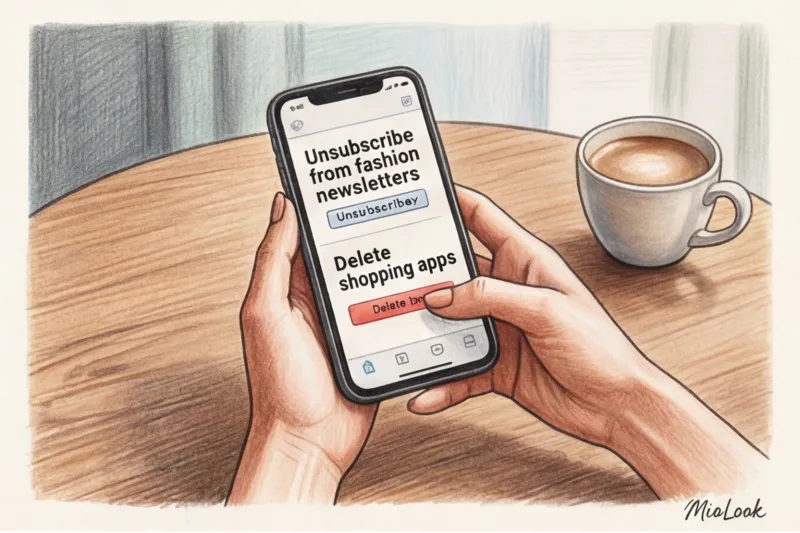
- Unsubscribe from all brand emails.
- Remove marketplace and online store apps from your phone's home screen.
- Cleanse your social media feed of influencers who promote constant consumption (fast fashion hauls).
Shopping Detox Stages: What to Prepare for (Style Diary)
According to neuroscientist Elliot Berkman (2021), it takes an average of 21 to 30 days to break an old neural pathway and form a new habit. Your no-buying month will progress through four distinct stages.
Week 1: Withdrawal. Your hands instinctively reach for your favorite online store app before bed. You have a sharp, almost physical feeling that you absolutely have nothing to wear to the office.
Week 2: Acceptance and Revision Stage. The dopamine storm subsides. You begin to notice the things hanging forlornly on the furthest hangers.
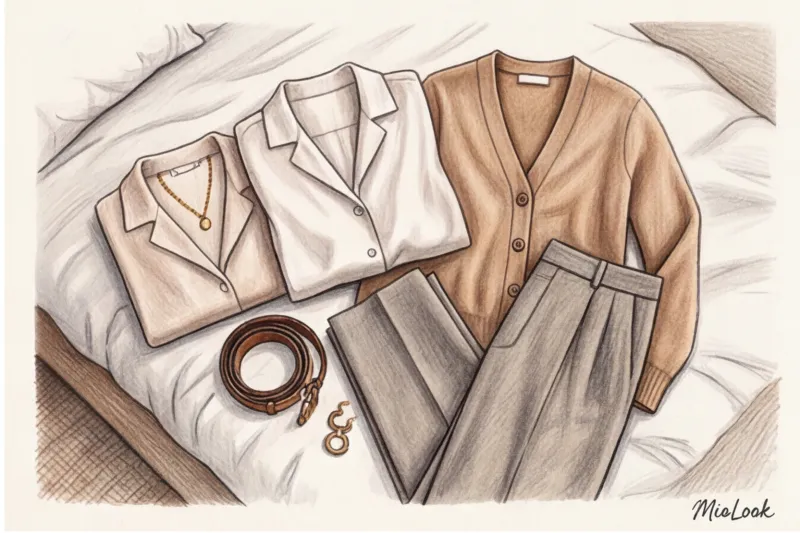
Week 3: Creativity from Constraints. This is my favorite stage with my clients. The best style decisions are born precisely when the choice is limited. A story from my practice: my client Elena, a top manager at an IT company, in the third week of her detox, for the first time wore a silk blouse with a voluminous chunky-knit cashmere cardigan. These two items had been hanging next to each other in her closet for two years, but had never been combined in the same outfit. Built on contrasting textures, this outfit garnered a ton of compliments.
Week 4: Reassessment of values. You begin to form a true wishlist, not one imposed by fleeting trends. You understand what really your capsule is missing.
The Illusion of Saving: Why a Detox Isn't About Not Spending
Here we come to the most counterintuitive point. Many people think a shopping detox is meant to save money and put it into a savings account. No, it's meant to stop squandering your budget on cheap, textile-based fast food.
Once you stop the conveyor belt of small transactions, you have funds for luxury and premium materials. The money not spent on five questionably cut polyester blouses (€40 each) turns into a budget for one impeccable pair of fine Italian wool trousers (€200) or a hand-woven silk scarf.
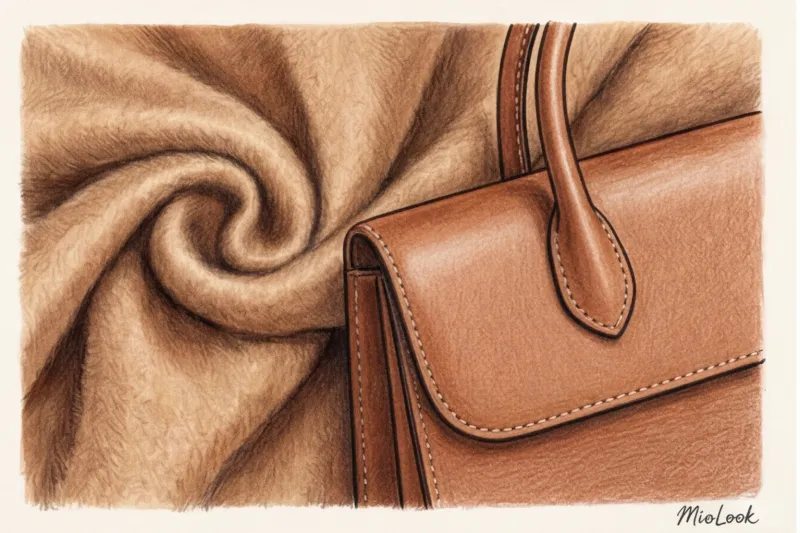
In luxury styling we rely on the concept Cost-per-wear (cost per wear) Let's do the math: a trendy acrylic sweater for €30 that will pill after three washes will cost you €10 per wear. A classic cashmere jumper for €300 that you'll wear 100 times over three seasons costs €3 per wear. Cheap things are too expensive.
Your perfect look starts here
Join thousands of users who look flawless every day with MioLook. Track what you actually wear.
Get access — €0.99 onceHow to fall in love again with something that's already hanging in your closet
While your credit cards are on hold, it's time to focus on what you already own. The practice of "Closet Shopping" is a powerful therapeutic tool.
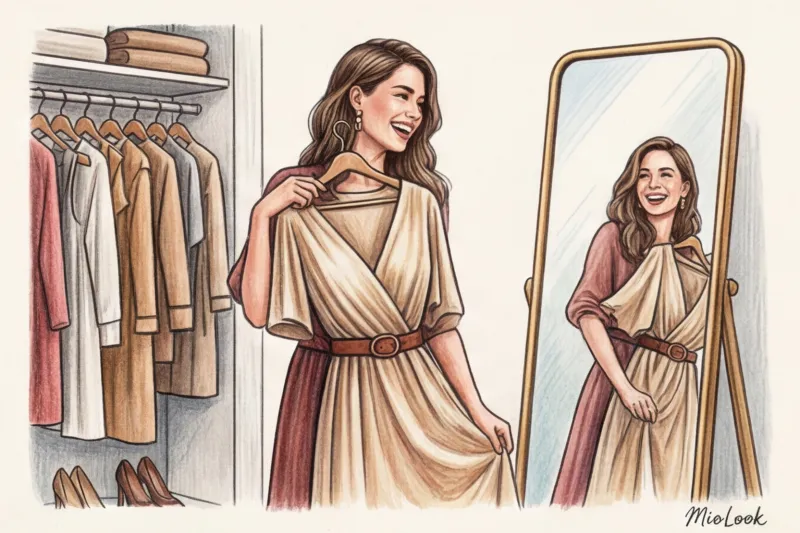
First, take out absolutely everything and try them on in non-obvious combinations. For convenience, I always recommend that clients take photos of successful looks and upload them to the "smart wardrobe" feature in MioLook so as not to waste time thinking in the morning.
Secondly, engage in customization and repairs. You'll be surprised how replacing cheap plastic buttons on a basic jacket with metal, mother-of-pearl, or horn ones makes the garment appear three times more expensive.
Third, discover a tailor. A perfect fit can save 80% of clothes that seemed "unsatisfactory." Recently, a client and I took an old Max Mara jacket to a tailor. We slightly raised the shoulders and reduced the waist. The updated jacket fit so perfectly that it eliminated the need for a new business capsule wardrobe.
And finally, care as a ritual. Proper hand washing of silk with special shampoos, using a high-quality steamer instead of a harsh iron, and using wooden shoe trees (cedar shoe trees) for leather shoes—all this restores the shine to your clothes and makes you respect your wardrobe.
Emerging from a Shopping Detox: A Smart Investment Plan
The main danger on day 31 is the "yo-yo effect." Just as people break down after a strict diet and buy up all the desserts at the bakery, after a detox, there's a risk of blowing your savings on the very first day. To avoid this, you need a clear plan.
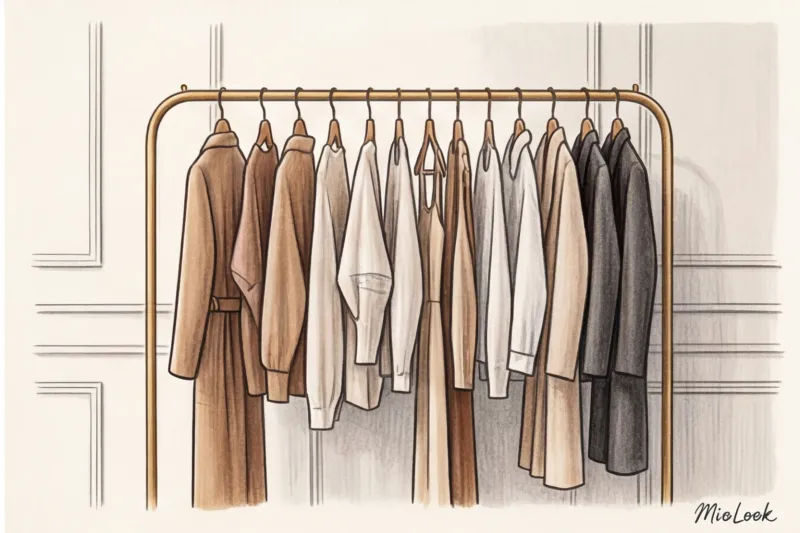
During the detox, you were required to create an investment list. This is a shopping list for the next season, taking into account the actual "holes" in your closet. You can read more about how to fill these gaps in our materials about creating a capsule wardrobe and choice status accessories.
Implement the "48-Hour Rule" into your life. From now on, when you see something you want, don't rush to the checkout with it. Instead, ask for it to be put on hold (or leave it in your online cart) for exactly two days. If after 48 hours you can still justify why you need it, buy it.
Stylist Checklist: 5 Questions to Ask Before Purchasing After a Detox
I print out this personal checklist for all my clients after we've completed our wardrobe collaboration. It saves them from 90% of bad decisions at the checkout.
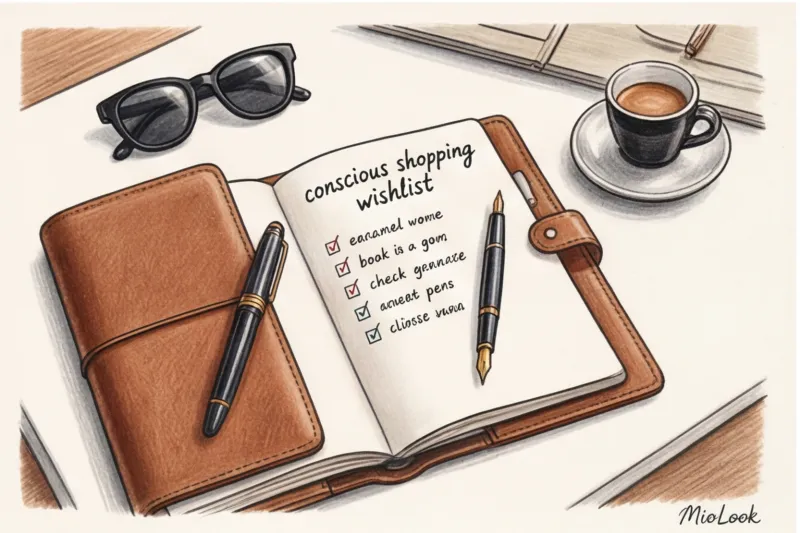
- Will I be able to create at least 4 different looks with this item from what I already have in my closet? If an item requires the purchase of new shoes, a bag, and “those special pants,” it’s a bad investment.
- Is this a natural composition? Look for cotton with a weight of at least 180 g/m², high-quality viscose, heavy silk, cashmere, or merino wool. Avoid 100% acrylic and thin, flimsy polyester.
- Am I ready to look after her? If you hate dry cleaning, avoid buying pants that are not machine washable.
- Does this item fit into my REAL lifestyle? Don't buy the tenth slip dress for Friday night parties if you work in a casual office or hang out with your child 90% of the time.
- Am I buying this for the thing or for the short-term emotion? Answer yourself honestly: do you want this €500 bag because of the quality of its leather and shape, or because you had a terrible conversation with your boss and you want to “reward” yourself?
A shopping detox is a game changer. After this 30-day experience, you'll stop being a victim of fast fashion marketing. Your wardrobe will transform from a warehouse of random, emotional purchases into a carefully curated collection, where every thread, seam, and button contributes to your personal brand and self-confidence.