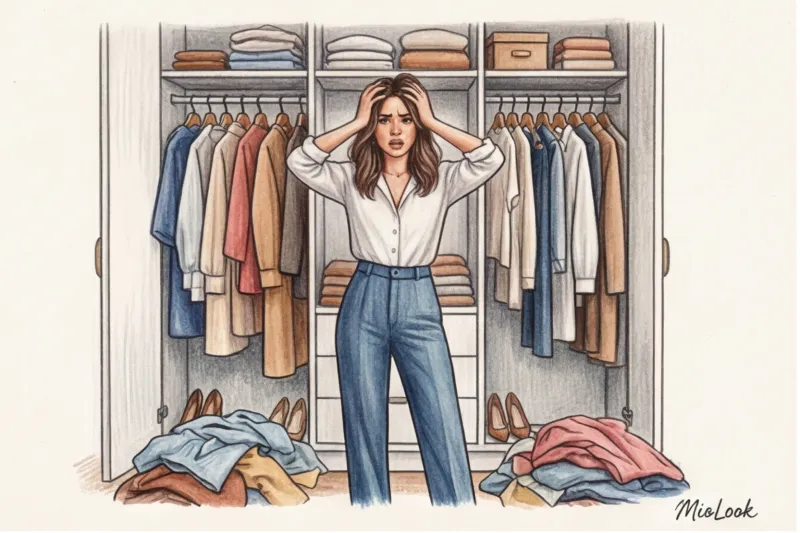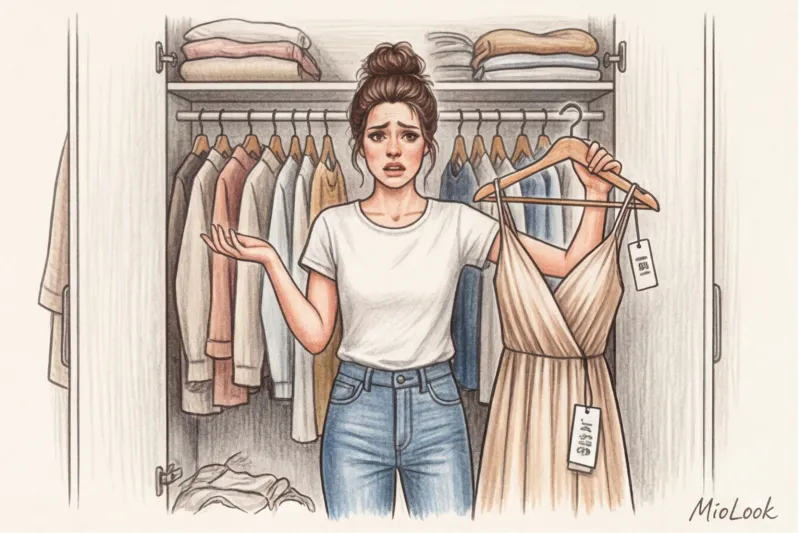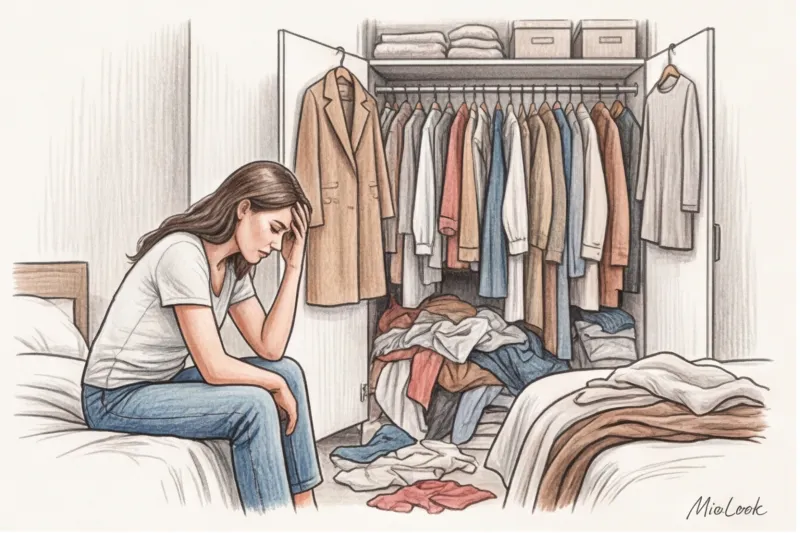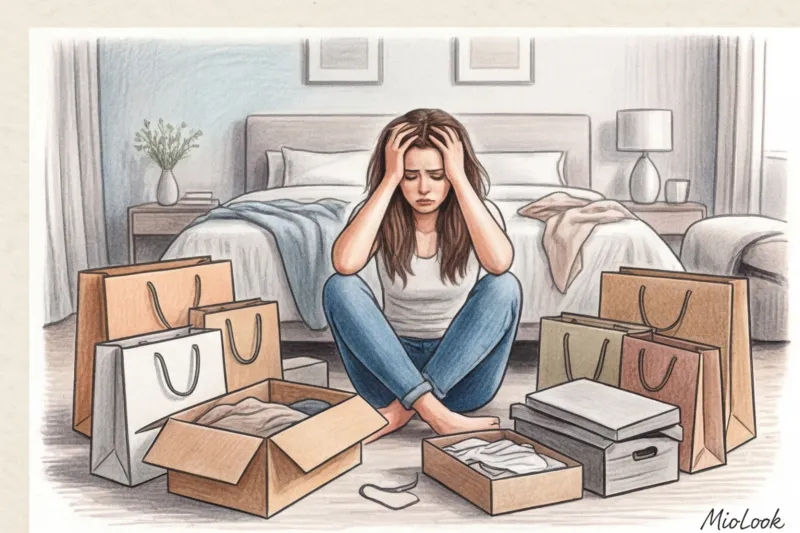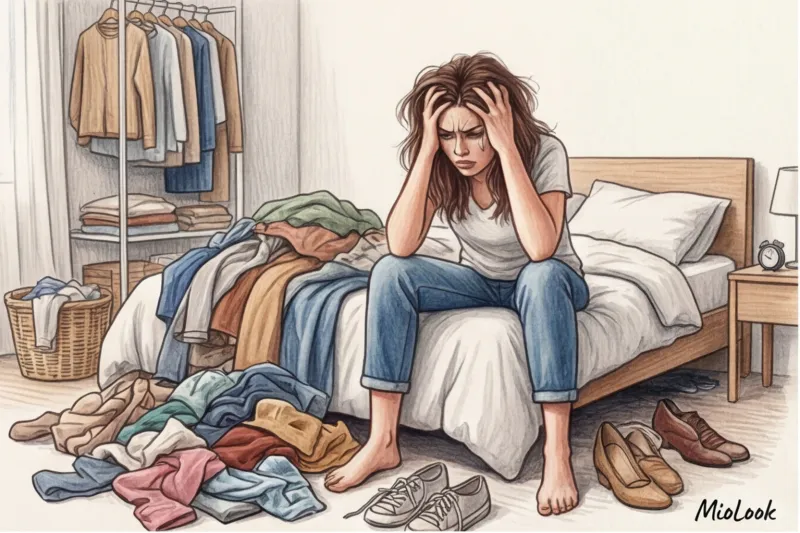
Ninety percent of the women whose wardrobes I've sorted through over the past 14 years have at least three items in their closets with the tags still attached. It's a classic scenario: an impulsive purchase, a feeling of guilt, the item gets consigned to the far corner, and in the morning the sacramental "I have nothing to wear" rings out again. In an attempt to break this vicious cycle, many decide to take a radical step— a year without buying clothes (No Buy challenge). We discussed the basic principles of conscious consumption in more detail in our the complete guide to a rational wardrobe , but today I want to talk about the dark side of strict restrictions.
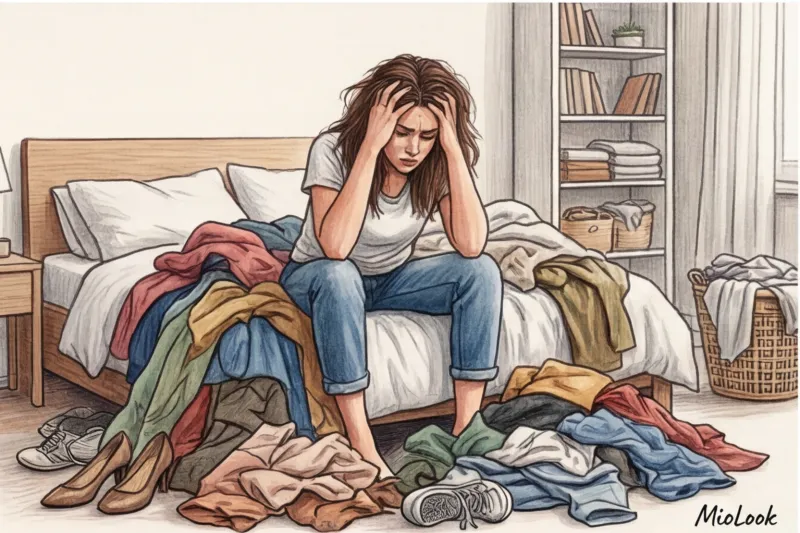
Let's be honest: as a personal stylist, I've seen dozens of failed fashion vows. A strict no-shopping diet works exactly like a strict buckwheat-only diet. You hold out for a couple of months by sheer willpower, and then Black Friday happens, stress at work hits, and you buy half the new Zara collection. Instead of asceticism, I offer my clients a system. Low Buy (low consumption) is a game played by your own rules that actually changes habits.
A Year Without Shopping for Clothes: Why a Strict Detox Works Like a Crash Diet
The human brain hates the word "no." Consumer psychology shows that a categorical ban only increases the value of the inaccessible object. If you've forbidden yourself from going to stores, your brain will start searching for dopamine in online catalogs, turning evening scrolling through marketplaces into the only way to relieve stress (a phenomenon known as "retail therapy").
"According to a 2024 ThredUp report, the average woman doesn't wear about 50% of the items in her wardrobe. We don't buy clothes; we buy the thrill of newness and the promise of a better version of ourselves."
I had a particularly revealing case. My client from Munich, Anna, decided to commit to a "Year Without Buying Clothes." She held up flawlessly for four months. But in November, she had a challenging project at work that coincided with the shopping season. One rainy evening, she snapped and ordered 14 items from a high-street store. Ten of them were completely out of keeping with her real lifestyle—they were dresses for imaginary cocktail parties, even though Anna works from home 80% of the time, casually. It's classic "compulsive overeating," only for fashion.
The hidden danger of a strict challenge is that it turns into self-torture. You endure stretched-out sweaters and frayed jeans just for the sake of a tick on the calendar, forgetting that the clothes should serve you, not you, the idea.
Access to MioLook for €0.99 — one-time payment
A smart AI stylist will select the perfect look from your items and help you avoid unnecessary purchases.
Get access — €0.99 onceLow Buy vs. No Buy: The Concept of Conscious Minimum
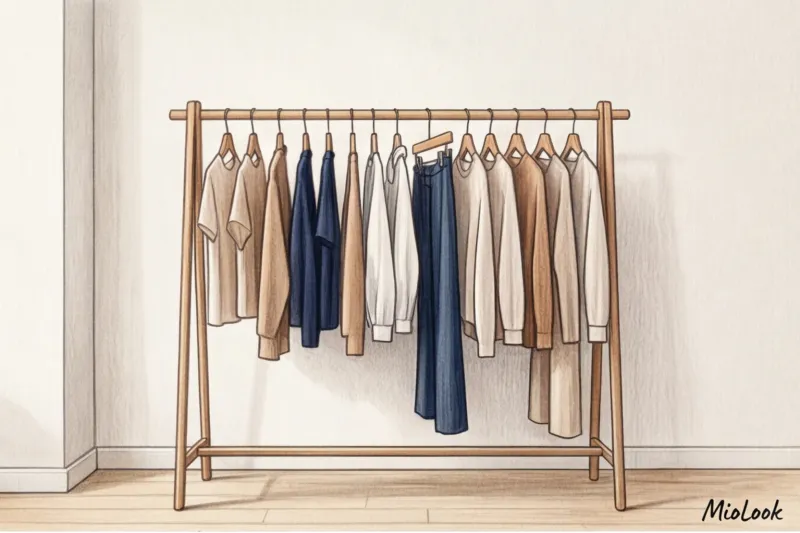
What is the fundamental difference? No Buy - This is a prison with a ban on any transactions. Low Buy — this is financial and stylistic management. You don't completely abstain from purchases, but you implement strict entry filters.
The Low Buy concept supports the principles of a sustainable wardrobe: the focus shifts to utility. Instead of buying a fifth gray jumper from H&M for 40 euros, you redistribute that budget. Take that money to a good dry cleaner to restore your favorite cashmere coat, or to a tailor. Investing in quality care gives your clothes a second life and brings the same level of satisfaction as a new box from the courier.
It's important to set a fair limit here. My Low Buy method It doesn't work If your body has changed dramatically (weight fluctuations of more than 2 sizes) or if you've drastically changed your social role (leaving a corporate bank for maternity leave). In these situations, you need targeted purchases of a new base, rather than limits on the old one.
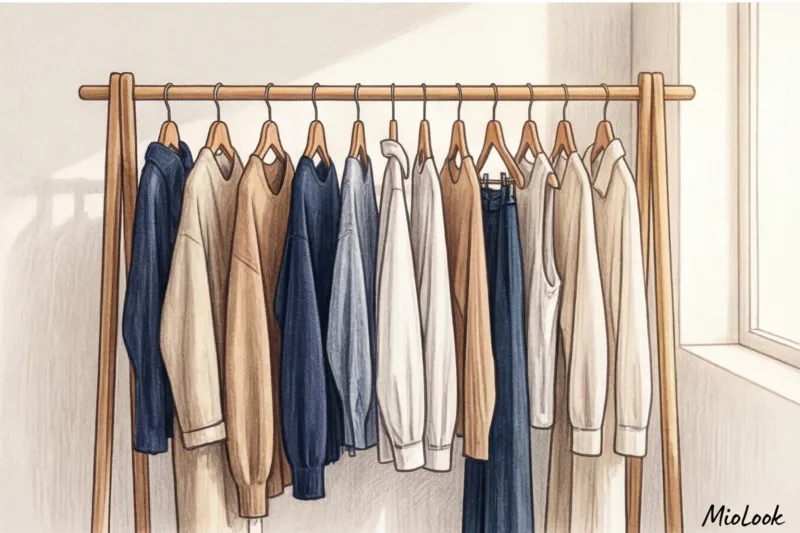
Rules of the Game: How to Create a Personal Low Buy Manifesto
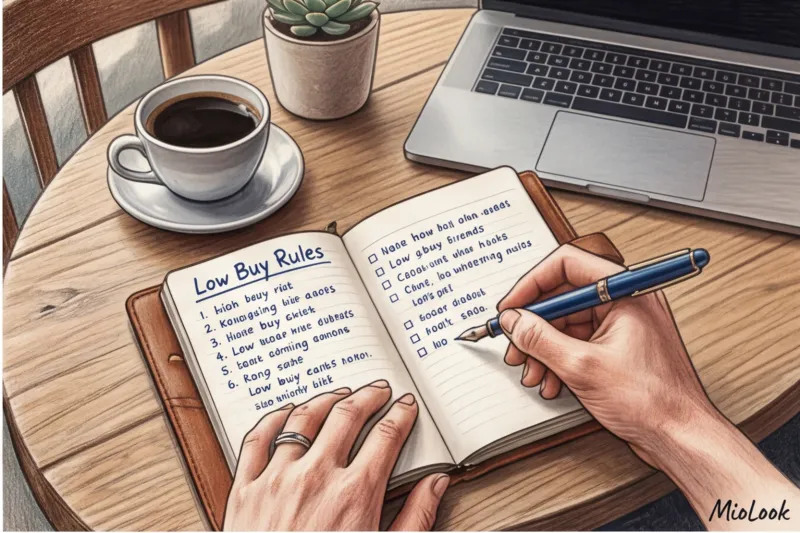
To prevent Low Buy from descending into chaos, you need written rules. Write them down in your phone's notes or a notebook. Here are four working tools from my stylistic arsenal:
- The rule "One in, one out" (One In, One Out). Got new jeans? Old or unsuitable ones should go (recycle them, donate them to charity, or sell them). This physically limits wardrobe growth.
- Waiting List Method. Any unplanned purchase is saved to a hidden Pinterest board or browser bookmarks for exactly 30 days. In my experience, by day 21, the dopamine rush of "I absolutely need this" wears off for 8 out of 10 items.
- Approved List. Decide in advance what to buy it is possible and necessary Typically, this includes underwear, tights, socks, and replacing damaged basics (for example, if your only white T-shirt turns yellow, you go and buy a new one, at least 180 g/m², without feeling guilty).
- Budget for "I want, but I don't need." Set aside a specific, small amount. For example, 50 euros a month for accessories or vintage items. This will act as a safety valve for your psyche, preventing breakdowns.
Shopping in Your Closet: Personal Stylist Techniques
Before complaining about a shortage of clothes, let's look at the data. A 2023 study by the Ellen MacArthur Foundation revealed alarming statistics: the lifespan of clothing has decreased by 36% over the past 15 years, yet the Pareto principle holds true—we wear only 20% of our wardrobe 80% of the time. The rest is dead weight.
Inventory and the 10-Image Rule
Start by removing absolutely everything from your closets. Yes, even seasonal ones. Lay them out on your bed. You're guaranteed to find "blind spots"—forgotten pairs of perfectly fitting trousers or a silk blouse with the tag still attached.
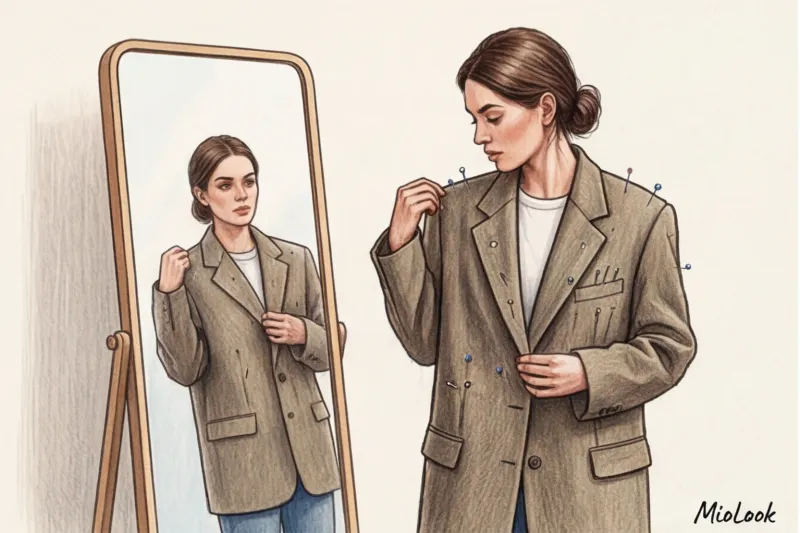
My favorite exercise for clients is to choose one of their most difficult pieces (like a tweed jacket or a sequin skirt) and force themselves to create 10 completely different outfits for different occasions. From grocery shopping to the theater. Mix and match, layer. To remember your successful finds, take a photo of them on yourself and upload them to MioLook Using new combinations of old things gives the brain the same dopamine rush as checking out an online shopping cart.
Repair, fitting and customization
Do you know why so many mass-market items look cheap? It's not always the fabric. It's the patterns, averaged out to fit millions of body shapes. Fit makes all the difference.
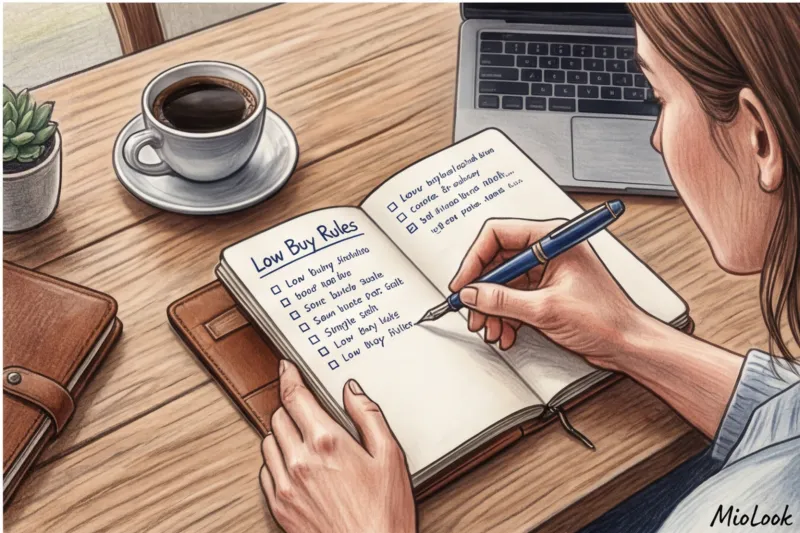
Instead of buying a new jacket at Massimo Dutti, take your old one to a reputable tailor. Shortening the sleeves so that 1.5 centimeters of the shirt cuff are visible and slightly taking in the waist will cost you 20-30 euros, but the garment will look like it was custom-made in Milan. I once saved my old basic coat from COS from the landfill. I simply cut off the cheap plastic buttons and sewed on vintage horn ones, bought at a flea market in Paris for next to nothing. The coat instantly became visually premium.
How to survive seasonal sales without breaking the bank
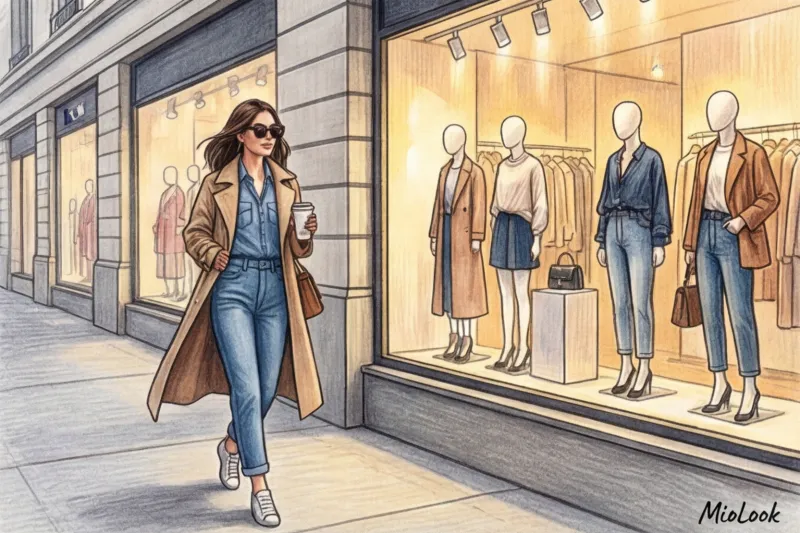
Seasonal sales are a test of endurance. Marketers use powerful triggers: countdown timers, red price tags, and artificial scarcity ("last size left"). Your defense starts with digital hygiene: unsubscribe from all brand emails and ruthlessly delete shopping apps from your phone.
Learn to recognize your true motives. We often shop out of sheer fatigue (the HALT concept: Hungry, Angry, Lonely, Tired). If you go to the mall after a hard day at work "just to browse," you're at risk. You're not looking for a new dress; you're looking for rest and comfort.
What should you do if a friend invites you shopping with her? Go with a specific mission for her, become her personal stylist for that hour, but apply it to yourself. The 5-question algorithm before the checkout:
- Does this fit into my real life (not the one where I go out to restaurants every night)?
- Can I, right now, in my mind, create at least 3 looks with her from what I already have at home?
- Is this item on my "Allowed List"?
- Am I tired/hungry/upset right now? (If yes, put the item aside for 24 hours).
- Will I wear this tomorrow morning? (If the answer is "waiting for weight loss/a special occasion" - the item stays in the store).
Your perfect look starts here
Join thousands of users who look flawless every day with MioLook. Plan your wardrobe without breaking the bank.
Get access — €0.99 onceChecklist: How to Start Your First Month of Low Buy
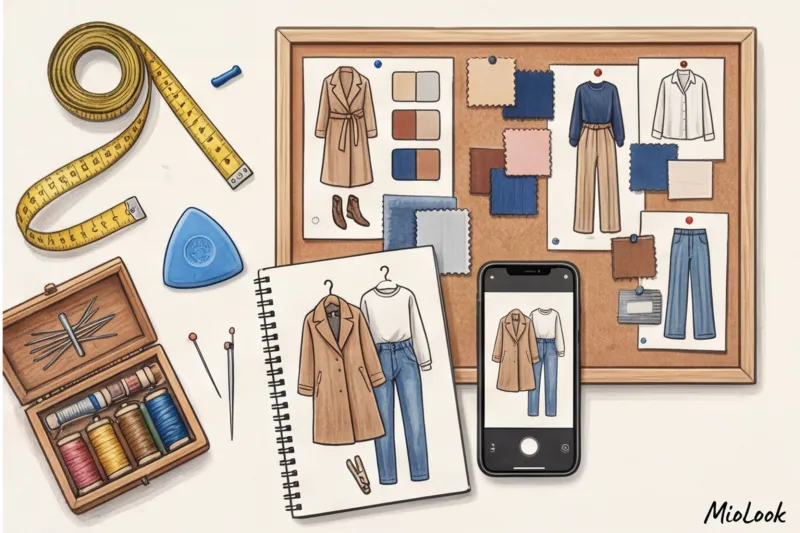
If you're ready to give it a try, don't jump in headfirst and declare a year without buying anything. A 2009 study of habits conducted at University College London found that it takes an average of 66 days for a new behavior to become automatic. So start small.
Here's your step-by-step plan for the coming weekend:
- Step 1: Set a deadline. Promise yourself not to buy anything unplanned for exactly three months (one season). This is a tangible and tangible goal.
- Step 2: Conduct an audit. Get everything out. Try on the forgotten ones. Take photos of your winning combinations with your phone.
- Step 3: Write out exceptions. Create that "Approved List." For example: "I give myself permission to buy new black tights and replace my worn-out loafers."
- Step 4: Find your studio. Look for reviews of tailors in your area. Bring them an inexpensive item that needs alteration to try on.
A sustainable wardrobe isn't about suffering in a single gray turtleneck. It's a shift from mindlessly absorbing trends to mastering your personal style. When every item in your closet is 100% worth its price, the urge to constantly buy new ones naturally disappears.