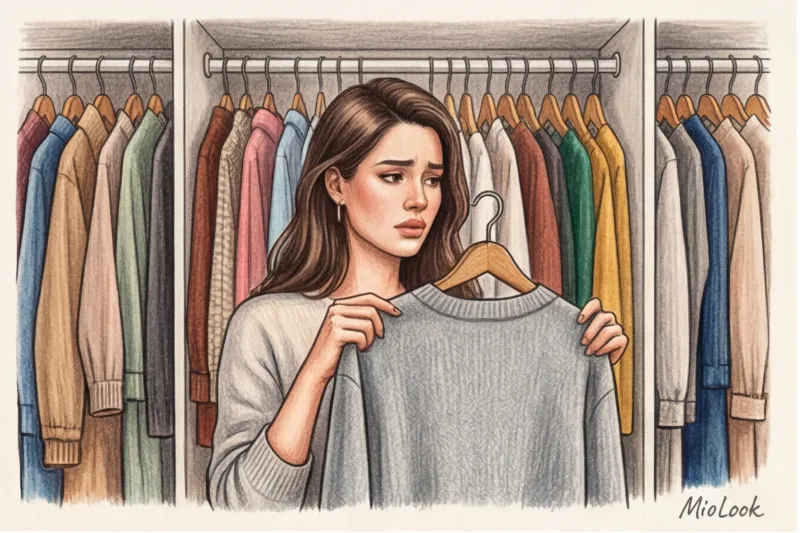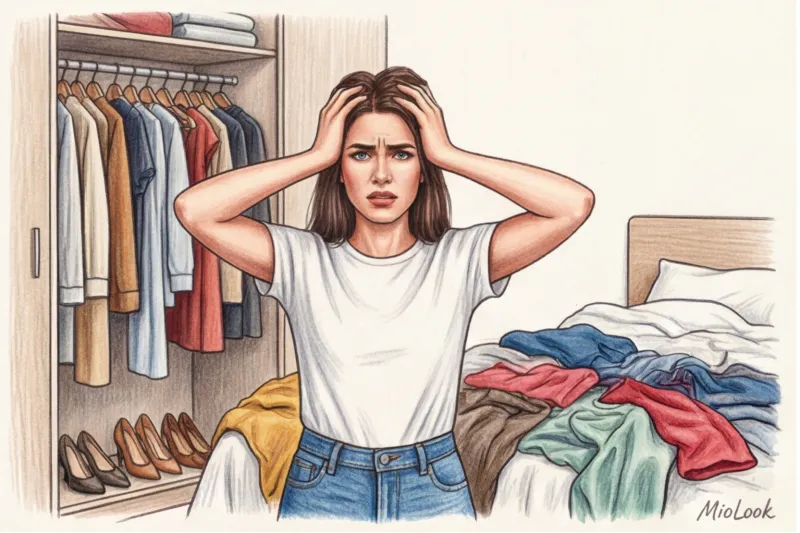
"I have a full closet, but absolutely nothing to wear. I want to throw everything in a trash bag and start from scratch!" In my 12 years as a personal stylist, I've heard this phrase at almost every first consultation. The desire to completely "cleanse" one's wardrobe is usually driven not by a real lack of items, but by simple psychological fatigue from monotony and chaos.
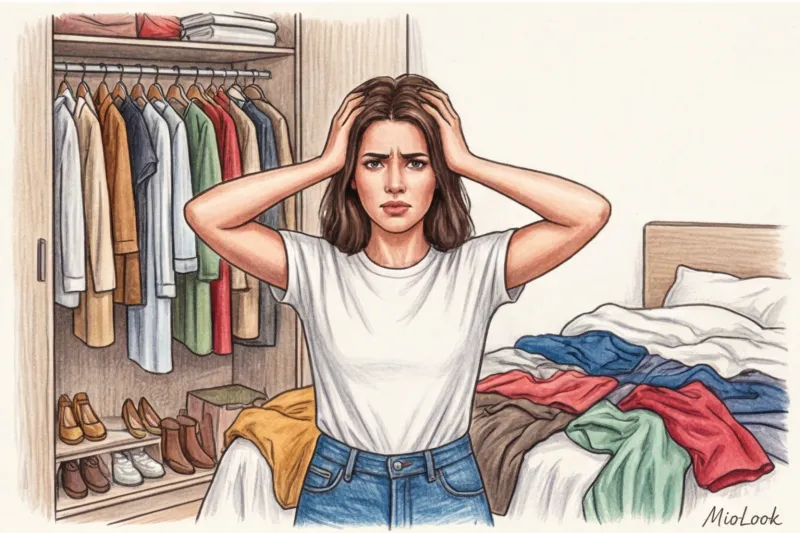
But the paradox is that completely shedding the old doesn't guarantee the acquisition of a new style. We discussed this fundamental approach in more detail in our The complete guide to changing your style without breaking the bank If you are looking for a working algorithm, How to update your wardrobe without spending extra money , you'll have to forget about shopping malls. Free renewal doesn't come from buying cheap basic t-shirts, but from styling, re-tailoring, and bringing a completely new perspective to the pieces you already own.
The Blank Slate Illusion: Why You Shouldn't Throw Away Old Things
When we get tired of our routine, our brain craves quick dopamine-fueled decisions. Throwing out everything old seems like a great idea. But in my experience, eight out of ten clients who, in a fit of anger, got rid of most of their closet, were back at the high-street store a month later and buying exactly the same styles. Why? Because the habit of choosing a certain cut hasn't disappeared.
Besides the psychological trap, there is also a frightening environmental aspect. According to the report Ellen MacArthur Foundation (2020) Every second, one truckload of textile waste is burned or sent to landfill worldwide. We buy 60% more clothes than 15 years ago, but wear them half as much.
"Style evolution always works better and is cheaper than revolution. Start by addressing the flaws in your current wardrobe before spending any money."
Don't try to erase your fashion past. Use it as a foundation for creation of a smart capsule.
Inventory Instead of Shopping: Finding Hidden Resources
Pareto's principle works mercilessly in our closets: on average, women wear only 20% of their wardrobe 80% of the time. The rest are "blind spots," items bought for another life, for weight loss, or simply forgotten on the back shelves.
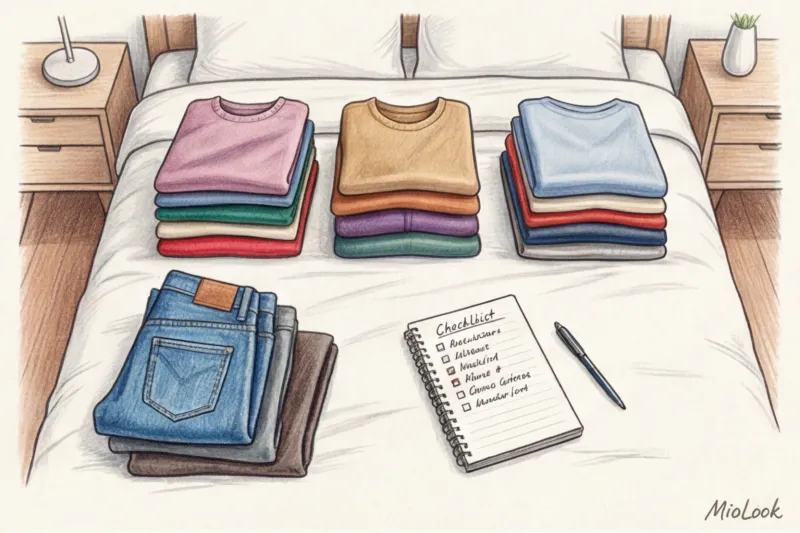
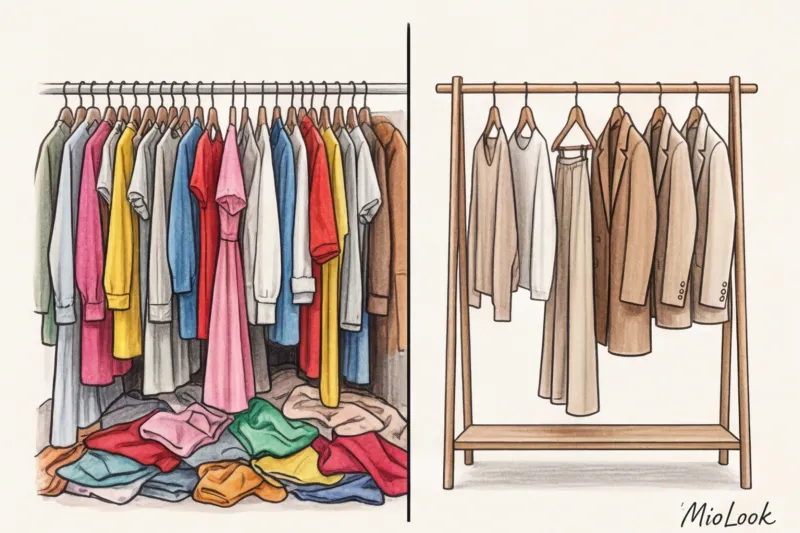
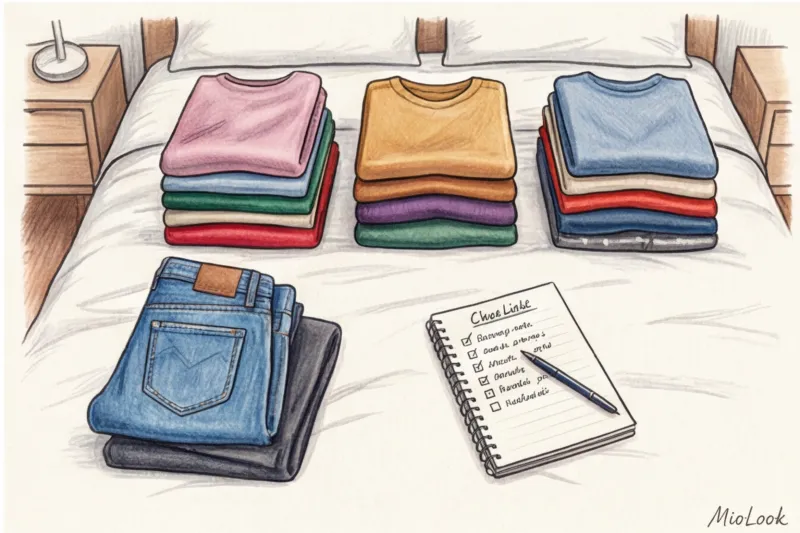
The first step to free shopping is to get out absolutely everything Stylists never sort through a wardrobe while it's still hanging. Lay all your clothes on the bed. This mountain of textiles is usually a great sobering experience and relieves the "I have nothing to wear" symptom.
Lifehack 1: Using the "4 Stacks" formula
Make it a rule to filter everything rigorously: every item should "earn" its place on the hanger. Divide your clothes into four categories:
- Leave: things that fit perfectly right now, without compromise.
- Re-stitch / Repair: something that requires replacement of fittings, dry cleaning or fitting in a studio.
- Sell / Trade: items in excellent condition that you no longer like or that don't fit.
- Give for recycling: worn, stained, beyond repair.
Lifehack 2: New combinations from old things
People think in pre-set outfits: "I only wear this blouse with this skirt." To break this pattern, use the "unexpected pairing" method. Wear a chunky sports hoodie under a classic, tailored trench coat. Pair a silk slip with a chunky, oversized, chunky knit sweater.
To avoid having to keep all your ideas in your head, I recommend digitizing your successful finds. Use MioLook — the app acts as your pocket stylist, helping you mix and match existing items and create a lookbook right on your phone.
Access to MioLook for €0.99 — one-time payment
A smart AI stylist will digitize your wardrobe and select the perfect looks from what you already own.
Get access — €0.99 onceMicro-styling: How to update your wardrobe without breaking the bank
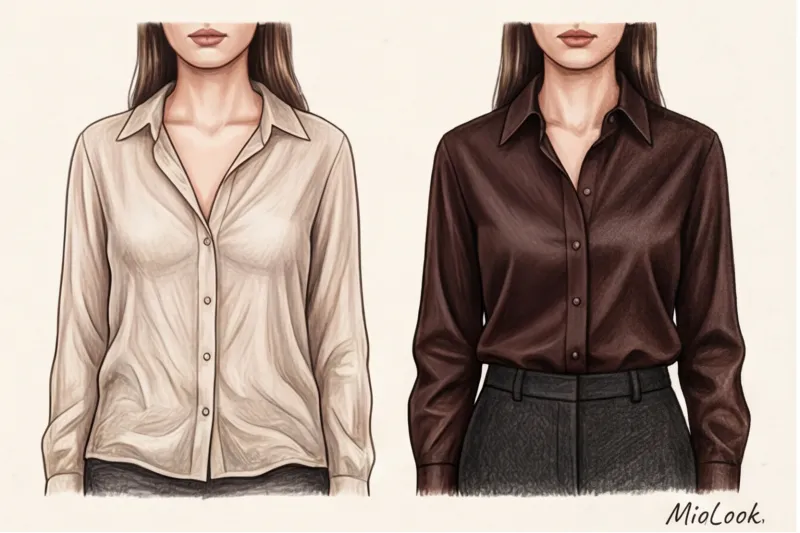
Look at the street style photos from fashion weeks. The secret to a great look isn't in the brand logos, but in How The item is put on. Micro-styling is working with proportions, folds, and knots. It's what differentiates a boring outfit from a stylish one.
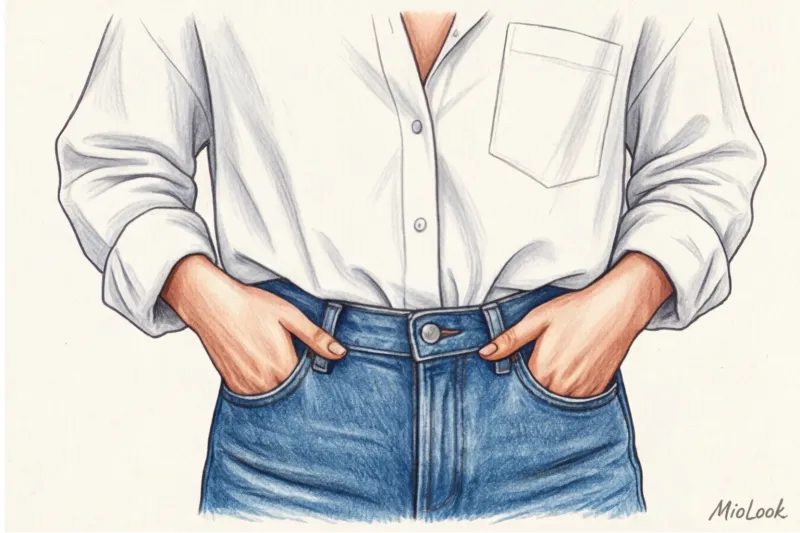
Here are three techniques you can use today:
- French tuck: Tuck a bulky shirt or sweater into your trousers at the front only, leaving the back open. This defines your waist, visually lengthens your legs, and reduces excess bulk in your hips.
- Working with sleeves and ankles: Always roll up the long sleeves of jackets and shirts, exposing your wrists. The same goes for jeans—expose your ankles. These are the narrowest parts of a woman's body, and showing them off makes the entire silhouette appear 2-3 kilograms lighter and more graceful.
- Knots and belts: An overly long basic T-shirt can be tied at the waist, turning it into a trendy crop top. And a simple, oversized jacket, cinched with a wide leather belt, instantly changes the geometric shape of the look.
Upcycling and Renovation: Life Hacks 3-5
Mass-market fashion skimps on details. Plastic, shiny, cheap buttons on a jacket from Zara or H&M clearly betray its origins.
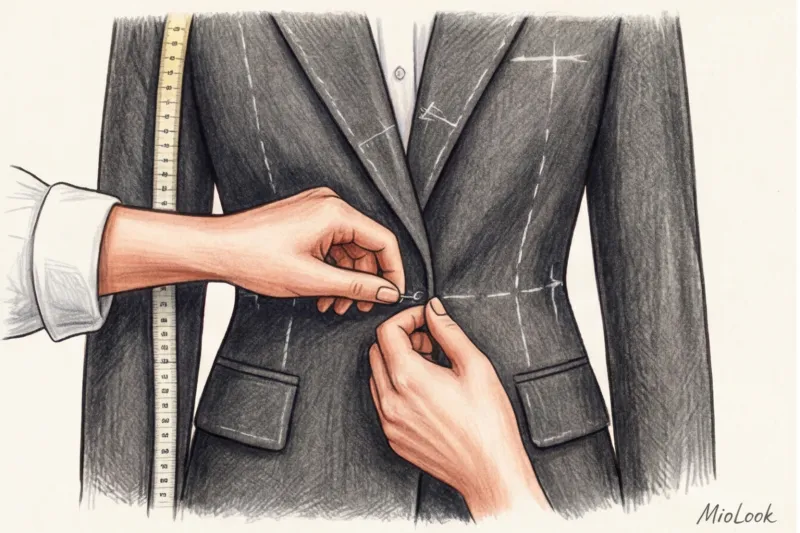
Lifehack 3: Replacing fittings. Rip off the factory-made plastic and sew on high-quality buttons (horn, metal, fabric-covered, or mother-of-pearl). A set at a hardware store will cost you €3–5, but visually the price will rise to the level of Massimo Dutti or premium COS lines.
Lifehack 4: Dyeing faded items. Black jeans and cotton T-shirts turn gray over time from washing. Don't throw them away. Household fabric dye (available in supermarkets for €4–7) will restore their deep, rich black color right in the washing machine.
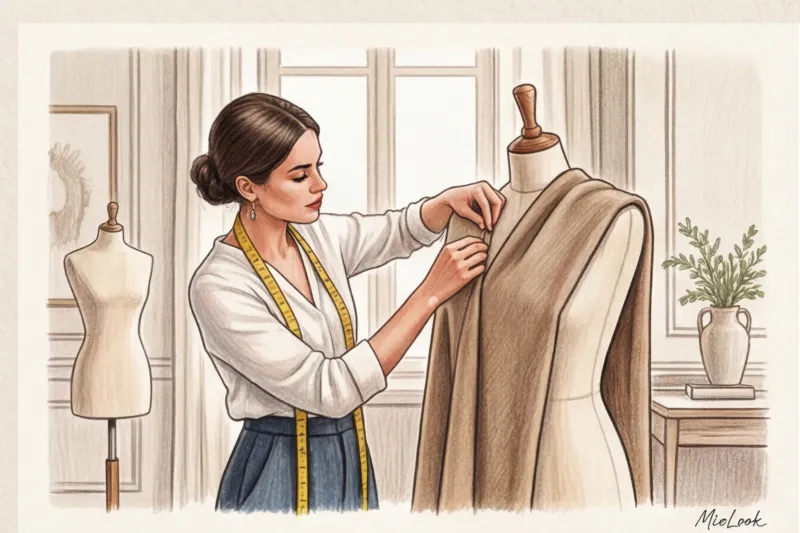
Lifehack 5: The magic of the studio. Remember about Cost Per Wear (cost per wear) A re-tailored item pays for itself 10 times faster than a new one. Recently, a client and I transformed her outdated straight coat, which had been hanging in her closet for four years, into a trendy fitted one. The work cost the tailor €15. It's impossible to buy a new, high-quality wool coat for that kind of money.
But there is an important limitation (when it DOESN'T work): Don't try to alter a garment that's three sizes too small or drastically change the armhole on a jacket. This will disrupt the original proportions of the garment, and you'll be disappointed with the result. A tailor is ideal for shortening the length, tapering the legs, and adjusting the waist.
Alternative Shopping: Where to Get New Things for Free
Sales are the biggest enemy of a zero-budget wardrobe. This is the most counterintuitive rule that many beginners disagree with. You think you're saving money by buying a blouse at 70% off. In reality, buying a cheap item "to treat yourself" actually costs you more than a one-time fee from a good tailor to tailor your old pants.
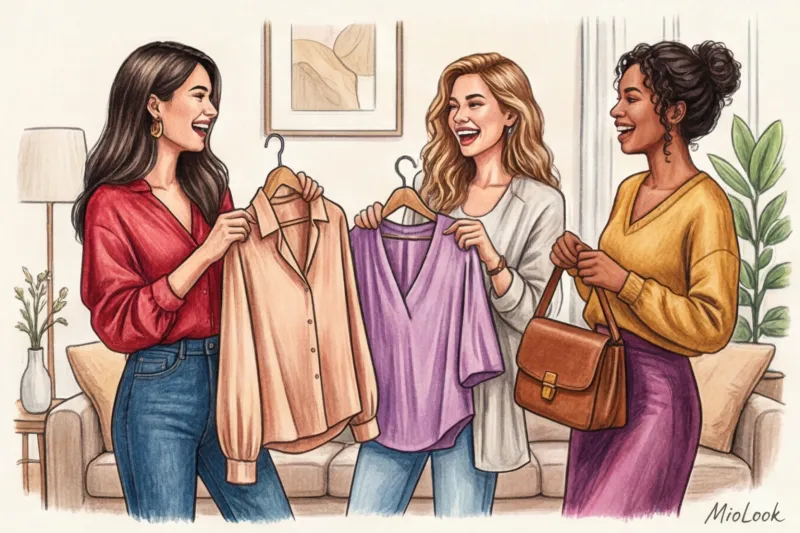
If you need fresh emotions from new clothes, use other methods:
- Swap parties: Organize a get-together with three or four friends (preferably in similar sizes). The rule is simple: each person brings items from the "sell/donate pile," and you swap. To avoid picking up someone else's junk, only bring items you can immediately create at least three outfits with.
- Resale platforms: Vinted, Vestiaire Collective, or local marketplaces. Sell items you don't wear to create a mini-budget for essential purchases.
- “One in, one out” rule: For every new item added to the closet, one old one must leave. This is an ironclad discipline that prevents clutter.
Lifehack 6: Cross-dressing and the men's department
Stop ignoring your partner's wardrobe (or the men's section in stores). Men's T-shirts are typically made from higher-quality, heavier cotton (180 g/m² and higher). They hold their shape better, are less see-through, and last longer than women's fitted shirts. An oversized men's shirt worn over a tank top and jeans is a ready-made casual-chic look.
Your perfect look starts here
Join thousands of users who look flawless every day with MioLook. Digitize your wardrobe in just a few clicks.
Get access — €0.99 onceTargeted Investments: What to Spend the Minimum on to Make the Maximum Change
If your budget isn't absolutely zero, but microscopic, invest it in accents. There's a persistent myth in the fashion industry: "The basics should be updated first." I categorically disagree.
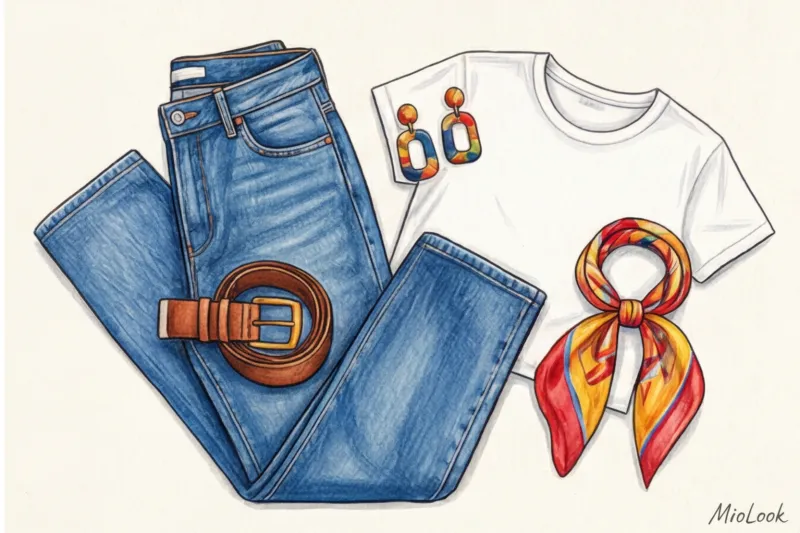
Your basic blue jeans and white shirt might be from a three-year-old high-street brand. If you wear trendy shoes and a modern bag, the whole look will be perceived as expensive and stylish. Conversely, a luxurious dress will lose its appeal if you pair it with outdated round-toe pumps with a hidden platform.
Lifehacks 7-9: Accent Trio
- Lifehack 7: Structured bag. Soft bucket bags forgive sloppiness. A rigid, geometric bag instantly ties together an outfit, adding a touch of class.
- Lifehack 8: Modern belt. A wide leather belt with a minimalist metal buckle can update last year's shirt dress or regular jeans.
- Lifehack 9: Geometric jewelry. Replace small, bland pendants with large, smooth hoop earrings (hoops) or an anchor chain. A trendy metal near the face brightens up the portrait area without a drop of makeup.
Lifehack 10: A Monthly Style Update Checklist
To ensure these tips don't remain just theory, I always give my clients a concrete action plan. Allocate four weeks for transformation:
- Week 1: Deep Review. Remove everything from the closet. Divide into 4 piles. Digitize the "Keep" category items in the app. MioLook to create new combinations.
- Week 2: Maintenance. Take your coat to the dry cleaner, your jeans to the dye machine. Buy new trim for your jacket, and take your long trousers to a tailor.
- Week 3: Monetization and exchange. Take photos of nice but unwanted items in daylight. Post them on resale platforms. Invite your friends to a swap party with wine and try-ons.
- Week 4: Micro-styling practice. Spend two hours in front of the mirror. Tuck in your shirts, roll up your sleeves, mix and match (hoodie + jacket). Take photos of your best looks.
Remember the most important thing: style isn't what you buy in the store. It's how you wear the things you already own. Apply at least three of these life hacks, and you'll see your wardrobe take on a whole new look without spending a single euro.