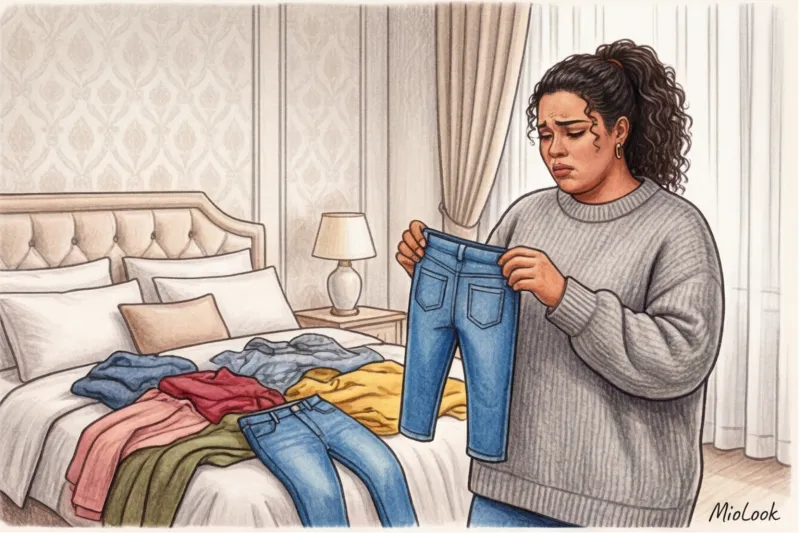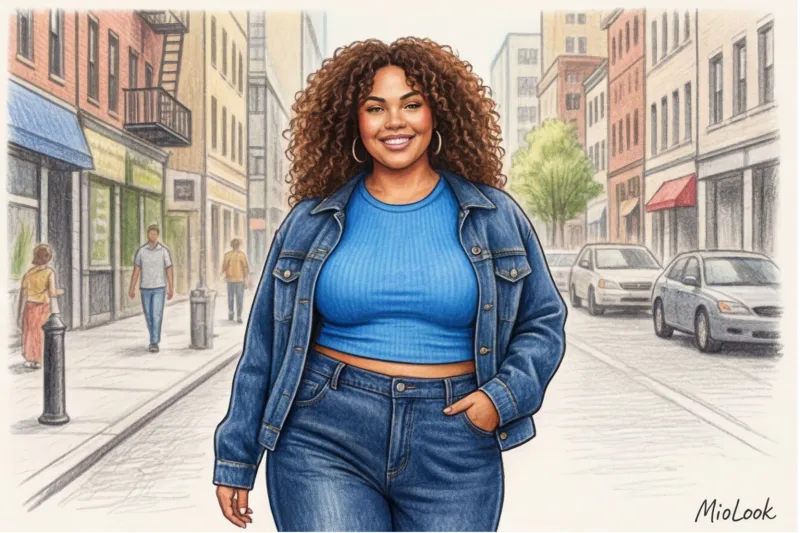
Let's be honest: if you wore a size larger than M in 2003, the fashion industry simply ignored you. The cult of "heroin chic," Paris Hilton's protruding hipbones, and jeans so low-rise they barely fit—the 2000s left many of us with profound fashion trauma. It's no wonder that when the trends of twenty years ago began to make a comeback, many plus-size women instinctively flinched.
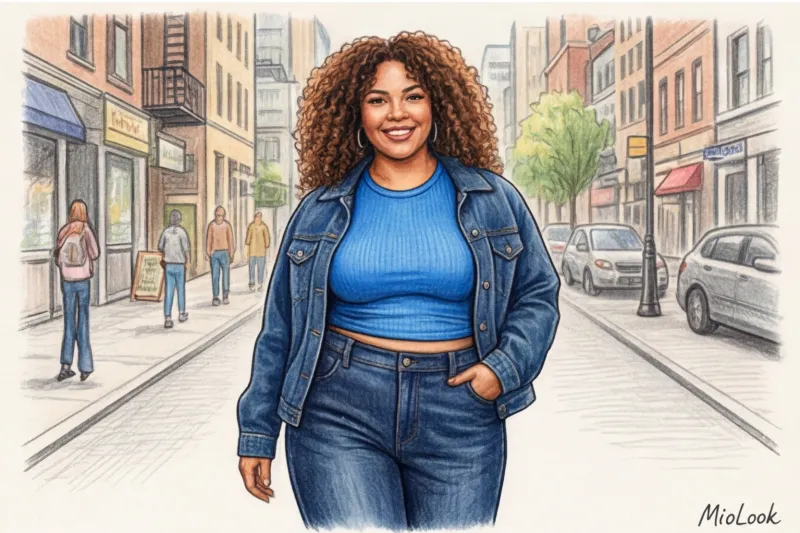
But here's the main paradox: today Y2K style for full Women's body image isn't about trying to squeeze into the Procrustean bed of MTV standards. It's the most body-positive, liberating, and therapeutic trend of the decade. Modern brands have reimagined patterns, added airiness to silhouettes, and proven that to wear crop tops and cargo tops, you only need confidence, not a flat stomach. We covered this global comeback phenomenon in more detail in our The complete guide to Y2K clothing style.
Why Modern Plus-Size Y2K Style Is Therapy, Not Stress
Over 12 years as a stylist, I've heard hundreds of stories of women hiding their bodies in shapeless black robes for years. The trauma of the 2000s led us to believe that the right to fashionable clothes must be "earned" through dieting. But statistics suggest otherwise. According to global fashion platform Lyst, searches for Y2K-style clothing in the plus-size segment increased by a staggering 140% in 2024. On TikTok, videos with the hashtag #plussizeY2K are garnering billions of views.
What's changed? The modern Y2K has returned, with a twist of inclusivity. Take a look at the latest collections from Marni or Diesel: they're no longer just tailoring for teenagers. Today, we're not cramming skinny jeans until our ribs ache—we're embracing the relaxed, voluminous silhouettes of the 2000s and using them for comfort. We're adapting the aesthetic, taking the fun, the boldness, and the bright colors, while leaving the toxic standards of the past behind.
Busting Stereotypes: The Main Myths About the 2000s' Curvy Aesthetics
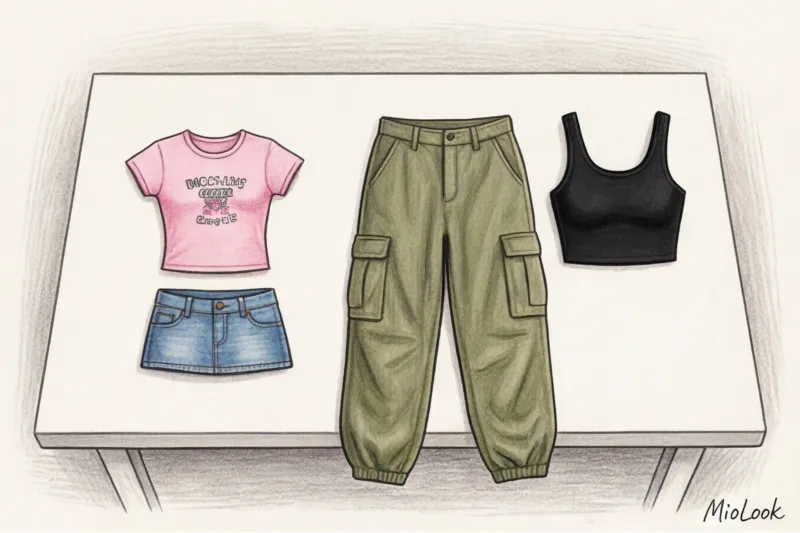
As a professional who works with patterns and proportions every day, I can confidently say: the old rules no longer work. It's time to throw them in the trash. outdated style rules , who insisted that plus-size women should not wear light, shiny or short clothes.
Myth 1: Low waist is forbidden
In my practice, 8 out of 10 clients with a size 50+ are terrified of low waists. They remember Britney Spears' extremely low waist from 2001. But modern fashion offers us mid-low - a mid-low rise that sits right on the hip bones.
"A high-waisted trousers, pulled tight over a protruding tummy, often create a 'ball-on-legs' appearance and dig into the body when sitting. Properly chosen mid-to-low rise trousers in a thick fabric allow the tummy to move freely and create a beautiful, relaxed hip line." — Isabella Garcia, personal stylist.
Myth 2: Crop tops are only for a flat stomach
The most counterintuitive advice I give my clients is to show some skin. A fully covered, long top worn loose visually squares the torso and steals the length of the legs. In today's Y2K era, we use the technique skin sliver (a narrow strip of leather). Leaving a 2-3 centimeter gap between a tight crop top and the waistband of your trousers acts as a visual waist marker and adds a fantastic height boost.
Your perfect look starts here
Join thousands of users who look flawless every day with the MioLook AI stylist.
Get access — €0.99 onceTop 5 2000s trends that look fabulous on plus-size women
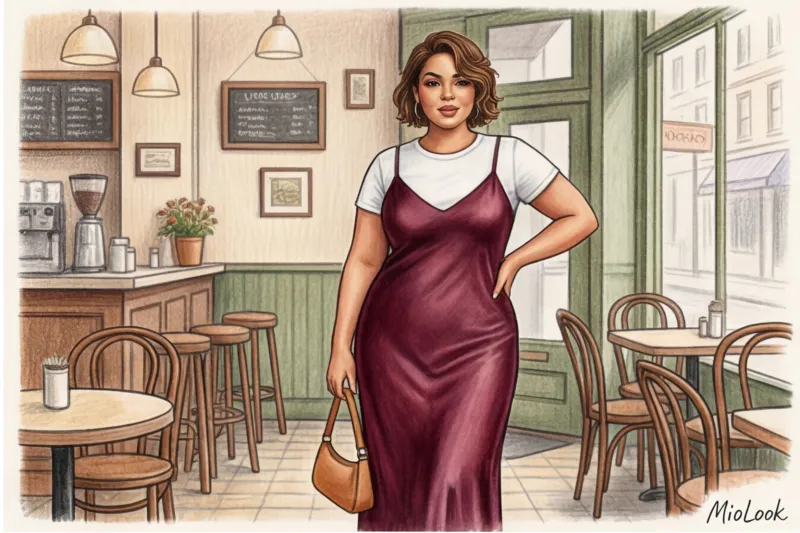
Not all trends are created equal, but these five trends are pure magic for curvy figures.
- Cargo pants and parachutes. My client Elena (size 52) had been wearing boring straight-leg jeans her whole life until we tried on olive parachutes with drawstrings. The voluminous legs create a luxurious contrast, making her ankles look incredibly graceful.
- Slip dress over a basic t-shirt (baby tee). A brilliant invention of the 2000s. The T-shirt conceals full arms and shoulders, while the flowing slip dress gently hugs the hips without constricting them.
- Wide-leg jeans with an accent belt. Stiff denim gathers the hips, while the wide leg cut balances the heavy top.
- Curtain cardigans with one button. Buttoned only at the chest, the cardigan flares out at the bottom, creating an inverted V—the perfect vertical line that's slimming better than any black color.
- Velour suits. Yes, in the Juicy Couture style, but with a modern twist (like Skims). This is no longer loungewear, but elegant sporty chic for casual wear. The thick velour holds its shape perfectly and conceals uneven skin.
Y2K Look Formulas: How to Build a Wardrobe Without Mistakes
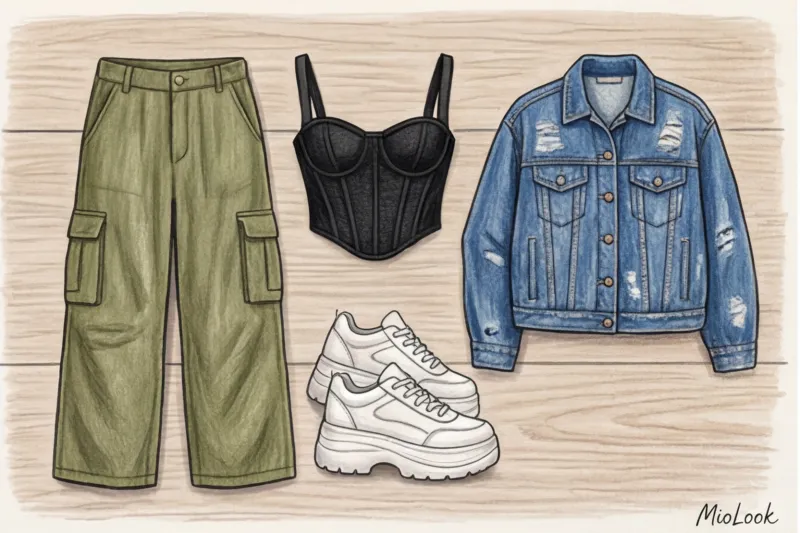
To make trends look relevant and not like a Halloween costume, I use the "combination of incompatible" method. Here are three ready-made formulas that can be put together in 15 minutes.
Formula 1: Skinny jeans + corset top + chunky sneakers.
A corset is a frame garment. It cinches the waist and supports the bust. Paired with relaxed, wide-leg jeans, it loses its boudoir appeal, transforming into confident, urban casual. Chunky shoes are essential to balance the wideness of the legs.
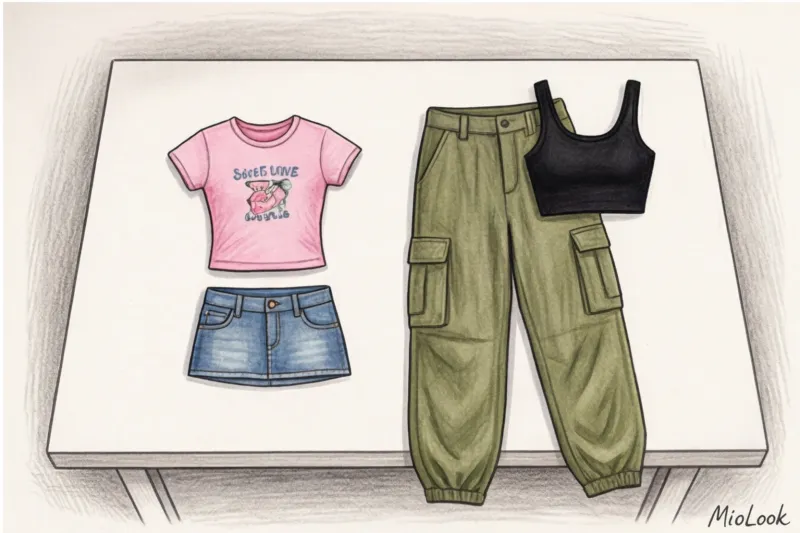
Formula 2: Denim maxi skirt + fitted cardigan + mules.
A long denim skirt with a front slit is a hit this year. The slit reveals leg as you walk, preventing your silhouette from becoming a monolithic column. If you're unsure how to combine items in your closet, try this one. the "smart wardrobe" feature in MioLook — the app will help you choose the right proportions of tops and bottoms from your own items.
Formula 3: Track pants with stripes + oversized jacket + loafers.
Stripes are a built-in vertical element that makes your legs appear endless. Layer a structured men's jacket over the top to add some shoulder definition and tie the look together.
Fabrics and textures: a stylist's secret to avoiding bulk
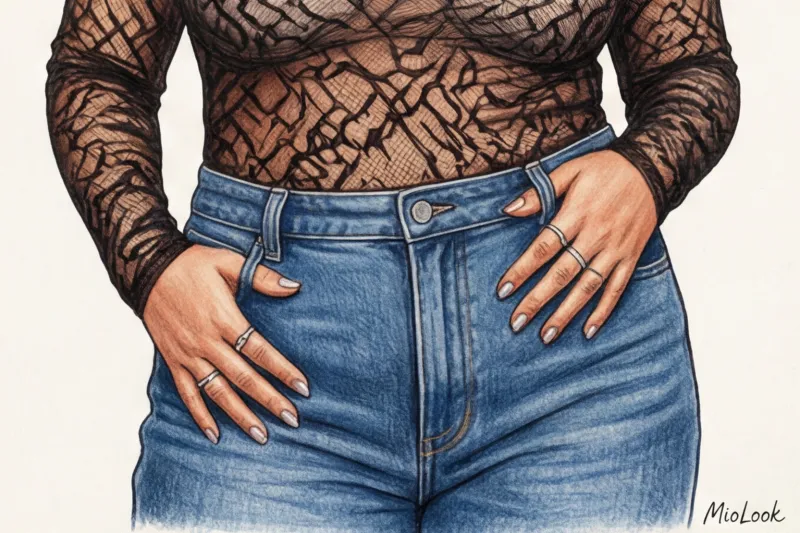
One of the main reasons women reject the 2000s aesthetic is the fear of looking bigger. And herein lies the secret: it's not the style itself that matters, but the texture of the fabric.
Thin, flimsy knitwear from the original 2000s (remember those translucent blouses that treacherously highlighted every crease?) is truly the enemy of your figure. Today, we're replacing it with high-tech materials. Choose heavyweight cotton (180 to 220 g/m²), which acts as a light compression garment. Jeans should be 100% cotton or contain a minimal amount of elastane (no more than 1-2%) so they contour to your silhouette and don't stretch out at the knees by the end of the day.
When it does NOT work: As a colorist and stylist, I always warn my clients about the dangers of glossy textures. Shiny satin or a scattering of rhinestones in areas of maximum volume (for example, on the stomach for an apple-shaped figure) will act like a magnifying glass. Reflections of light will visually add 5-7 centimeters. Save satin for bias-cut skirts (if you have narrow hips) or use matte fabrics.
But translucent mesh is your best friend. Worn over a thick base layer, it creates a complex, intriguing look, visually concealing the body's contours beneath the print.
Ready to get started?
Try the MioLook free plan—no commitments required. Your personal AI stylist is waiting.
Get access — €0.99 onceY2K Accessories: The Safest Way to Embrace the Trend
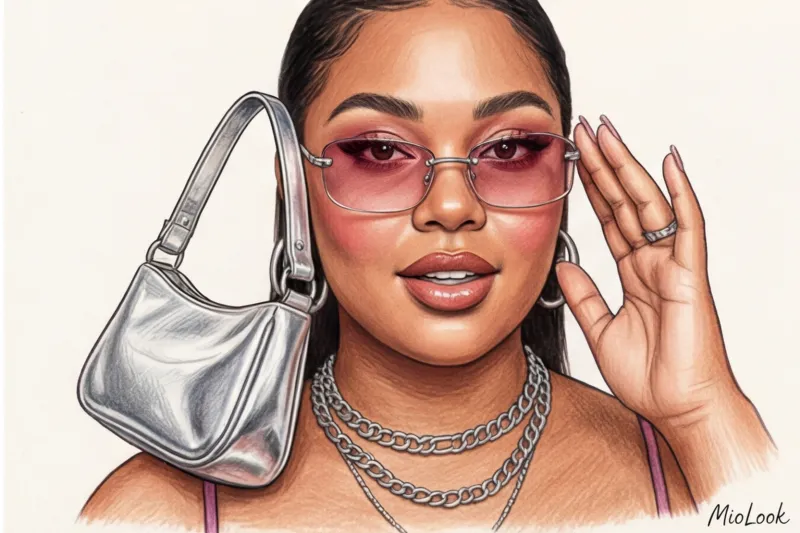
If crop tops and parachutes are too radical for you, start with the details. Accessories from the 2000s were designed to balance proportions.
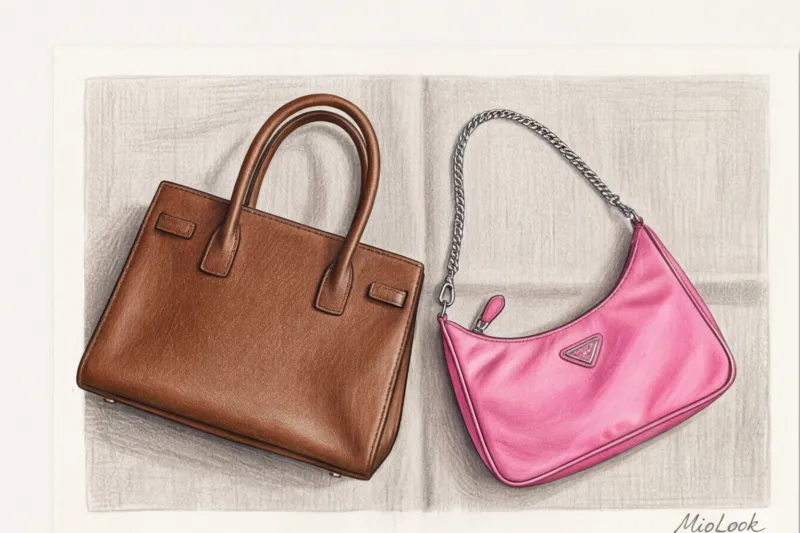
- Baguette bags. Unlike oversized shopper bags, which add extra bulk at the waist and hips, a baguette sits just under the armpits. It doesn't cut into the silhouette and draws attention to the upper body.
- Rimless glasses with tinted lenses. Pink, yellow, or blue lenses provide an instant facelift. They draw attention to the eyes and create a trendy look, even when paired with a basic white shirt.
- Chunky shoes. Puffer skater-style sneakers or platform boots are an absolute must-have for plus-size women. A thin, flat sole (like a ballet flat) makes a larger figure look disproportionate, creating a "chicken-legged" effect. A platform, on the other hand, restores balance and makes the foot appear more delicate.
Checklist: How to Adapt 2000s Trends to Your Body Type
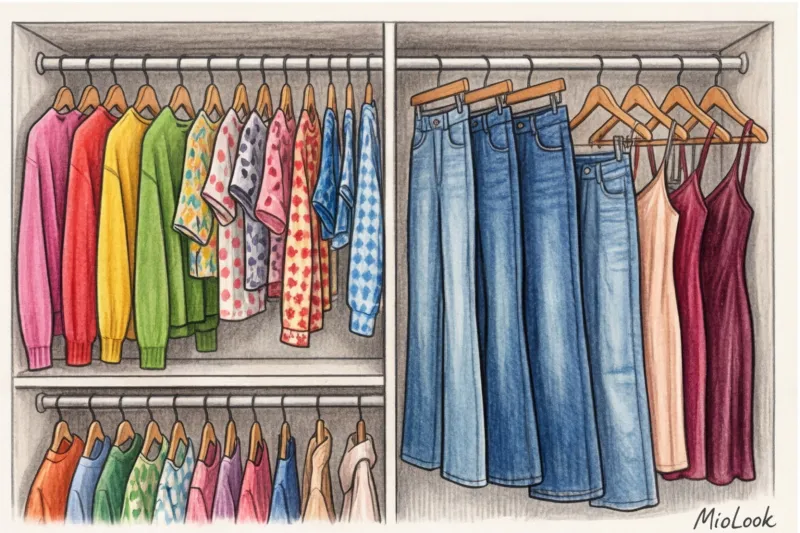
Don't try to embrace every trend at once. Use only those that complement your body shape. We've covered more about how to work with your natural features in an article about body types and the Kibbe system.
- For the Apple figure (waist area): Your trump card is slender legs. Opt for wide-leg, mid-rise jeans, and layer them with a tight top and an unbuttoned, oversized shirt. The two vertical flaps of the shirt will conceal your stomach and elongate your silhouette.
- For a pear-shaped figure (voluminous hips): You want to visually broaden your shoulders. Choose halter tops (with ties at the neck) or off-the-shoulder tops. For the bottom, wear parachute pants in a lightweight, rustling fabric that flow over the hips rather than cling to them.
- For an Hourglass (defined waist): Don't hide your curves! '00s-inspired corsets and fitted cropped cardigans are made just for you. Pair them with straight jeans or a maxi skirt.
The return of 2000s fashion isn't a test you have to pass by squeezing into old jeans. It's a buffet from which you can only take the best. The main lesson of modern Y2K style for plus-size women is this: you no longer have to adapt to clothes or lose weight for the sake of things. Today, clothes must adapt to you—and make you look gorgeous right now, at your current size.