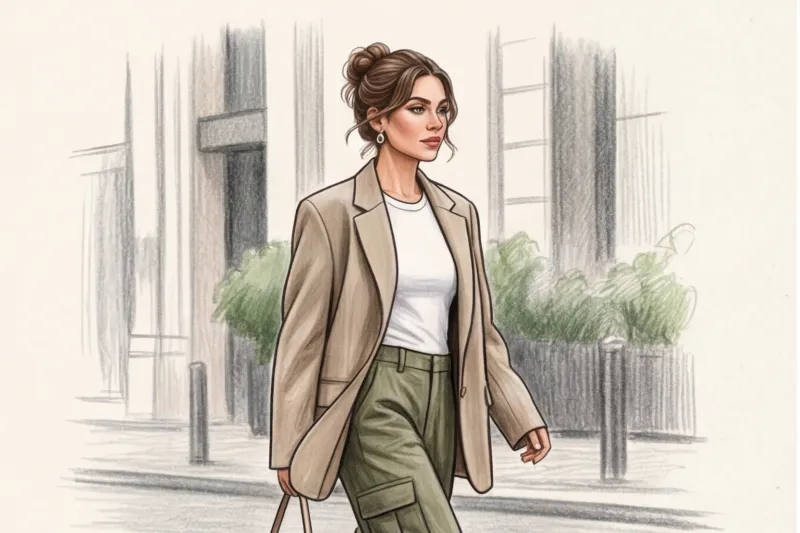
The Comeback Phenomenon: Why Y2K Fashion Is Taking Over the World Again
Remember that moment when you first saw a pair of extremely low-rise jeans on a mannequin in a shop window in a while? I remember the mild aesthetic shock well. It seemed we'd bid farewell forever to the era when trousers were held together solely by the thighs and thighbones, with drawstrings peeking out coquettishly. But there's no denying the obvious: Y2K style in clothing (short for "Year 2000") is no longer a fleeting TikTok microtrend, but a new fashion staple that has firmly established itself in our wardrobes for the long haul.
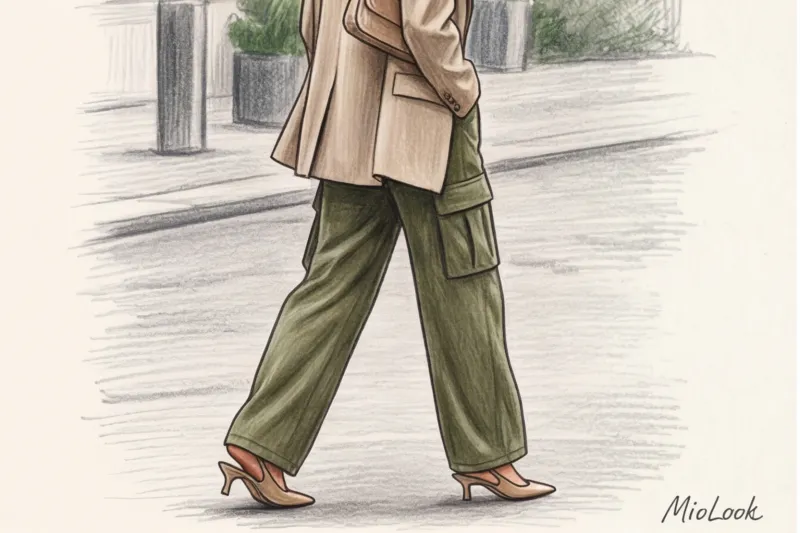
And you know what's most surprising? Today, you can wear these items to look elegant and classy, not like you're stuck in a 2001 Britney Spears music video.
In 12 years of working as a stylist and colorist, I've learned one incontrovertible fact: fashion is mathematically predictable. What's happening now with trends from the 2000s is a textbook example of the theory of cyclicality. Fashion historian James Laver coined the so-called "20-year cycle rule" back in the 1930s. According to Laver's law, clothes worn 20 years ago initially seem ridiculous and tasteless, but exactly one generation later, they suddenly acquire the status of "romantic" and cutting-edge fashion.
We are physically and psychologically programmed to return to the aesthetics of our youth—or our older sisters' youth—when enough time has passed to forget the discomfort of those things and leave only a warm nostalgia.
Industry figures confirm this. According to Lyst, a respected analytics platform that tracks search queries from millions of shoppers worldwide, interest in 2000s aesthetics has exploded. Searches for parachute pants, halter tops, and vintage baguette bags have grown by more than 140% in just a couple of years. Brands from Miu Miu to Diesel have capitalized on this nostalgia—and hit the jackpot.
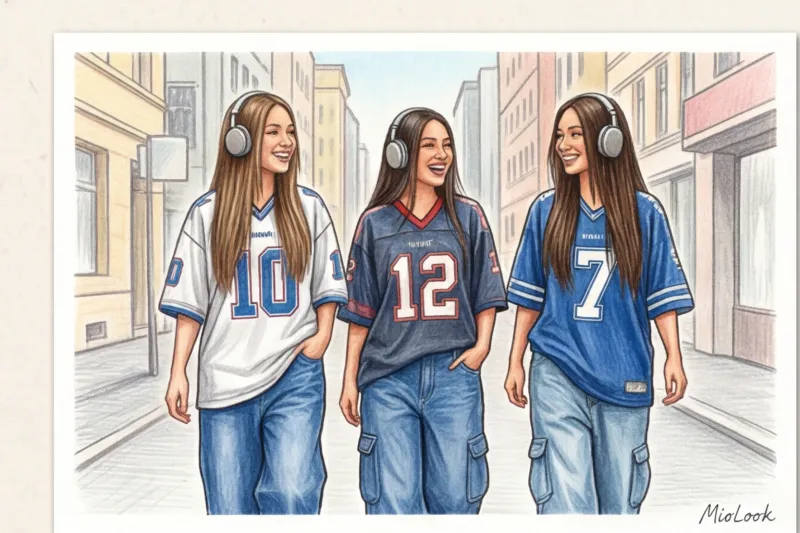
But there's a crucial nuance here that determines how we wear this trend. The perception of Y2K is tightly tied to your generation. For Gen Z, the 2000s are a thrilling costume party. They boldly wear microskirts, wear dozens of butterfly clips, and slather their lips in lip gloss because, for them, it's completely exotic. They don't have the "fashion trauma" of those years.
But for us millennials, Y2K is reimagined nostalgia. We remember what it was like to sit in jeans that dug into our stomachs, and we're no longer willing to sacrifice comfort. So we're taking only the best from the 2000s, moving away from the initial chaos (think dresses worn over trousers, with a chunky rhinestone belt) toward conscious stylization. If you're unsure which pieces of the past should stay in your closet and which are best recycled, check out our article about anti-trends in clothing — there I analyzed in detail which combinations it’s high time to abandon.
To understand whether a vintage piece from the 2000s will work in your modern wardrobe, I always recommend that clients first add it to your MioLook smart wardrobe And virtually try it on with trendy basics: tailored blazers or minimalist coats. If the puzzle fits, the item is ready to wear.
Trend evolution: from cheap glamour to conscious casual
The main difference between "that very" Y2K and its modern interpretation lies in the tactility and quality of execution. In the early 2000s, cheap mass-market fashion reigned supreme: squeaky synthetic polyester, thin, flimsy knitwear that lost its shape after the first wash, and plastic rhinestones. This was fast fashion at its wildest and most untamed.
Today, the trend has matured. The evolution of aesthetics has taken a turn toward integrating it into high-end, conscious casual wear. During consultations, clients often ask with horror, "Am I really going to have to wear plush velour again?" My answer: yes, but only if it's not cheap synthetics that give you electric shocks. Modern variations of relaxed suits are made from premium blends—thick cotton with added cashmere, heavy silk, or high-quality viscose. A basic 2000s-style top can cost €150 today and look like a work of architectural art, not a crumpled €5 rag.
The second tectonic shift is a radical change in silhouettes. The original Y2K demanded extreme, sometimes painful, fits, dictated by the standards of "heroin chic." Clothes fit so tightly they felt like a second skin. Today, we breathe freely. Tight, tight T-shirts have been replaced by voluminous, loose-fitting crop tops. Those same low-rise jeans now have wide, relaxed legs (baggy jeans), creating a beautiful drape around the shoes. We've taken the bold and free aesthetic of the past, but multiplied it with modern standards of comfort and respect for one's own body.
Anatomy of the 2000s: 5 Key Wardrobe Elements
A common mistake women make when embracing the aesthetics of the 2000s is blindly buying original pieces from second-hand stores. As an image consultant, I regularly review these "finds" and see the same thing: the fit hopelessly ruins the proportions. The fact is, the design difference between original vintage pieces and modern replicas is colossal. Twenty years ago, low-waisted trousers were cut along a straight line, which visually flattened the buttocks and shortened the legs. Today's brands use curved waistbands and a mid-low rise, which flatters the female anatomy.
My golden rule of shopping: we look for denim and bags in vintage boutiques, and we only buy knitwear, shoes, and trousers from new collections. The original elastane in tops loses its properties after 20 years, and shoe glue dries out. Modern Y2K clothing is always a mix of time-tested textures and new, technologically advanced silhouettes. Let's break down the foundation of this trend into five key elements.
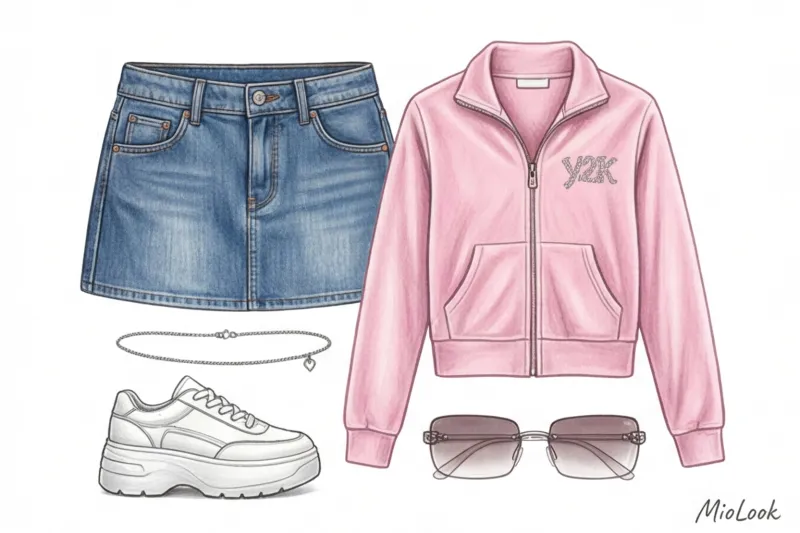
Cargo and parachute pants: voluminous hems
Skinny jeans are a thing of the past decade. Today, the architecture of a relaxed look is defined by exaggeratedly voluminous hems. Cargo pants with large patch pockets and nylon "parachute" drawstrings at the ankles create the perfect contrast of volumes. While the original cargo pants of the 2000s were made of stiff, stiff raincoat fabric, modern models in the €80–150 price range (for example, those from Scandinavian mass-market brands) are made from a cotton-lyocell blend. They drape softly as you walk, without adding extra pounds to the hips.
Halter tops, bandeau tops, and asymmetry
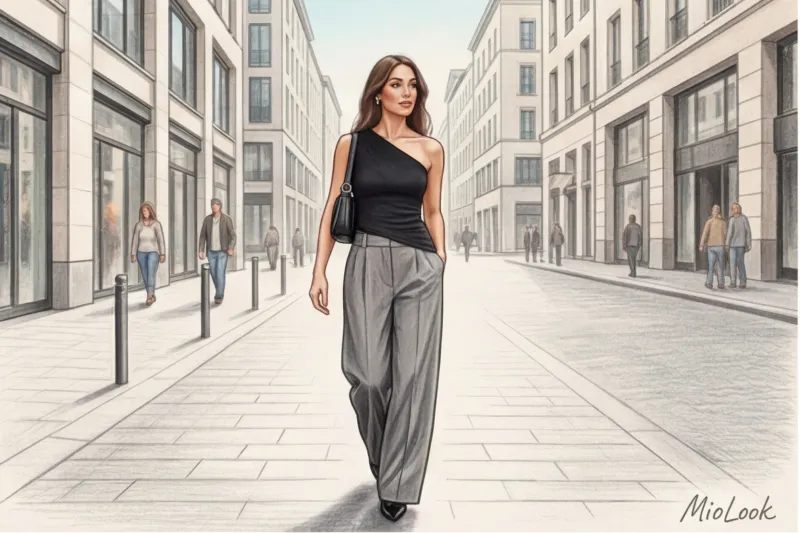
The 2000s taught us how to masterfully play with exposed skin. Halterneck tops, minimalist bandeaus, and asymmetrical one-shoulder crop tops are a brilliant tool for portraiture. Diagonal cuts visually narrow the shoulders and highlight the collarbones—the most graceful part of a woman's body. I always recommend choosing such pieces from the current collections: modern micromodal fabrics provide a snug fit without the "hothouse effect" that plagued synthetic polyester in 2003.
Total denim look and complex designs
If you're looking to invest in true vintage, look for denim pieces. Iconic acid-wash denim, denim corsets, wedge maxi skirts, and patchwork jackets are experiencing a true renaissance. Unlike today's thin, stretchy denim, the original denim of the 2000s was 13-14 ounces. It works like a scaffold: it luxuriously supports the complex architecture of a garment, cinches the silhouette, and over time develops unique abrasions that cannot be imitated by factory methods.
Baguette bags: an accessory must-have
A long, rectangular bag with a short strap, worn strictly under the arm, is an absolute champion in terms of trend persistence. Its cult status was earned by Carrie Bradshaw and Fendi, but today the perfect baguette bag can be found at any price point. The stylistic value of this bag is that it doesn't cut into the hip line (like crossbody bags) and visually elongates the figure. Look for models made of thick, smooth leather or vintage monogrammed fabric.
Shoes with a chunky platform
From padded skate shoes to simple mules, platforms have become a legit cheat code for adding 5-7 centimeters of height without the hassle of stiletto heels. The chunky hems perfectly balance out oversized cargo pants, preventing them from dragging on the ground. Important warning from the colorist and stylist: Never buy vintage platform shoes. Polyurethane soles are susceptible to hydrolysis—after 10-15 years, the material begins to crumble from the inside. You risk literally losing the sole on your first walk. Instead, opt for modern reissues from sportswear giants or niche shoe brands.
Access to MioLook for €0.99 — one-time payment
A smart AI stylist will create the perfect Y2K-inspired look from your own items, taking into account your body shape and color type.
Get access — €0.99 onceY2K Color Palette: How to Adapt Complex Shades to Your Personality
You know what the most common fear I hear during color consultations is? "These acidic tones will make me look like a teenager from 2003 or will highlight all the dark circles under my eyes." And you know what? There's some truth to that. Integrating Y2K style into a modern wardrobe, we're faced with a rather aggressive palette that requires meticulous attention to detail.
Let's start with the biggest fashion crime of the 2000s: frosty shades. Icy pink, bleached blue, and shimmering pearl literally scream glamour. As a colorist, I must warn you: cold pearlescent shades in portraits are merciless to warm color types.
During a recent color test, we applied a silvery-blue top-hall shade to a client with a warm olive undertone. The effect was immediate: her skin acquired an earthy hue, and her nasolabial folds appeared deeper. The frosty texture brought out all the shadows on her face.
If you adore this aesthetic but have a warm undertone (spring or fall), simply move these colors away from your face. A pearlescent baguette bag or icy fuchsia sandals will give the right vibe without overpowering your natural palette.
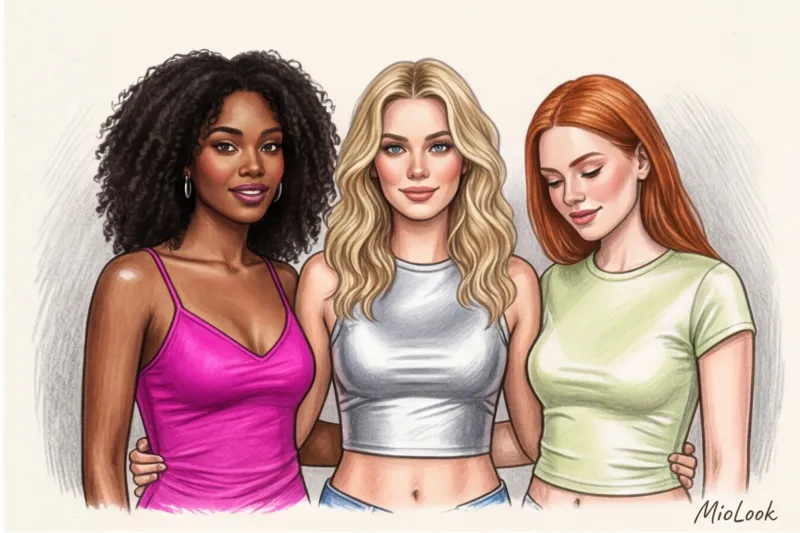
Neon and microdosing colors
Neon and acid colors—fuchsia, electric lime, cyber blue—are the DNA of 2000s style. In the original version, they were worn as a total look, which today would only look appropriate at a theme party. To incorporate such ultra-vibrant shades into a basic wardrobe, use microdosing.
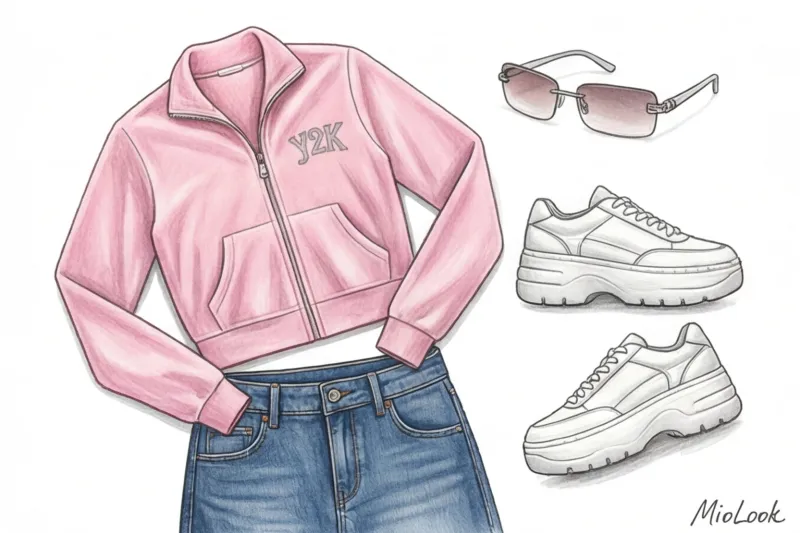
- Peeping layer: the edge of a neon bandeau top, barely visible from under a strict, voluminous jacket.
- Translucency: A cyber blue mesh long sleeve top over a basic beige or black bra.
- Accessory accent: A lime green rigid bag against a monochrome grey suit.
According to the PANTONE Color Institute, high concentrations of neon are tiring for the optic nerve, so one bright spot per image is more than enough. If you're unsure whether your idea will work, try putting together a look virtually. Upload items to the "smart wardrobe" feature in MioLook — the app will help you evaluate color harmony before leaving the house.
Metallic in the rays of the sun
Another powerful trigger of nostalgia is metallics and mother-of-pearl. While 20 years ago, "spacey" textures were reserved exclusively for clubbing, now we're confidently incorporating them into our daytime wardrobes. The secret to successful styling lies in the vibrant contrast of textures.
Wearing silver faux leather pants? Tone it down with an oversized, matte, chunky knit sweater or a basic white, heavy cotton T-shirt. Metallic looks great during the day when paired with a decidedly casual, even slightly casual, texture.
The Anchor Rule for Acid Tones
And here we come to my favorite styling tool: the "anchor" rule. The bright, volatile colors of the 2000s require visual grounding. Many mistakenly try to calm acidic lime or fuchsia with pure black.
Why is this a mistake? Black creates too aggressive, almost theatrical, a contrast. The look begins to look cheap.
Instead of black, use deep, complex base shades: dark chocolate, graphite, or navy (a deep dark blue). Imagine: an acid fuchsia top paired with a pair of cargo pants in a rich chocolate shade. It sounds and looks ten times more expensive (visually, a full $1,000) than the same fuchsia with plain black jeans. "Anchor" absorbs the excess toxicity of neon, leaving only its fashionable charge.
Debunking the Myths: Why You're Unnecessarily Afraid of 2000s Trends
According to analytics platform Lyst (2023), over 60% of searches for vintage items and silhouettes from the 2000s come from women over 30. While the trend has only been popularized on social media by millennials, it's millennials who are buying and consciously wearing it.
And yet, when I'm in fitting rooms, I constantly encounter genuine "Y2K phobia." Many clients are convinced that the Y2K style is aggressive, cheap, and figure-destroying kitsch, appropriate only for a theme party. Let's break down this fashion demonization using three main fears and see how they are countered by clever styling.
Myth 1: “A low waistline will ruin your figure.”
When we hear about low-rise, our minds treacherously conjure up images from the red carpet in 2003, where jeans barely hung on the hips. But the modern industry has learned from its mistakes. Today, the fit is king. middle-low (medium-low).
These pants sit flush against the hipbone, leaving the belly button covered or barely visible. For short-chested figures, this is a total styling cheat. Unlike high-waisted styles, which visually "eat" the already small distance from the chest to the waist, mid-low pants elongate the silhouette and restore harmonious proportions. Furthermore, the waistband relieves pressure on the abdominal area, making these pants incredibly comfortable for sedentary work or flying.
Myth 2: "Y2K clothing style is only for teenagers."
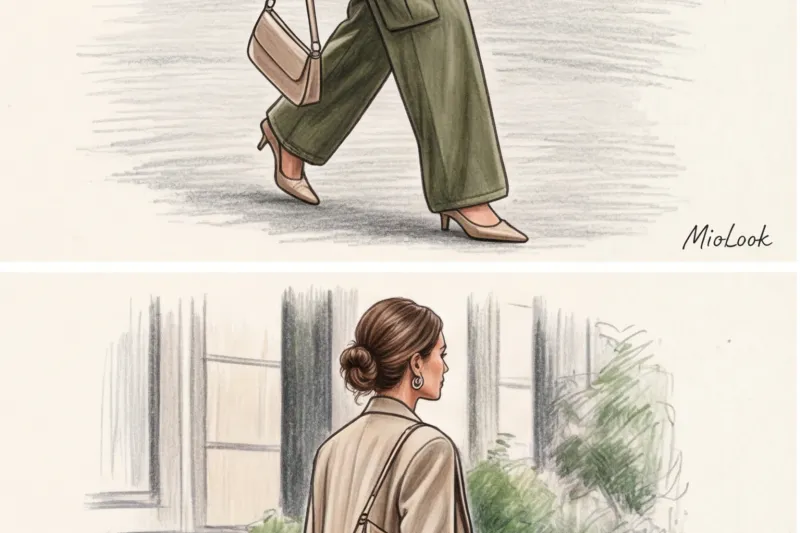
To settle this question once and for all, I ask my image students to analyze two street style looks featuring the same oversized cargo pants. Let's take Bella Hadid's outfit: she styles them in a classic "teenage" way—with a micro crop top, chunky sneakers, and a bare midriff. It looks edgy, subculture-inspired, and very sporty.
Now let's look at Rosie Huntington-Whiteley. She wears identical cargo pants (model by Bottega Veneta (for €1,400), but pairs them with a chunky cashmere turtleneck, a structured men's blazer, and pointed ankle boots. This 2000s piece instantly loses its childishness. The integration is successful thanks to the right environment: we temper one relaxed element with a strict classic.
If you're unsure how to balance a complex silhouette, upload a photo of the item to the app. MioLook Artificial intelligence will analyze your digital capsule and suggest elegant, prestigious combinations without the slightest hint of carnivalesqueness.
Myth 3: “It looks cheap”
The stereotype of "cheapness" has persisted since the 2000s, thanks to the abundance of squeaky polyester, plastic rhinestones, and flimsy knitwear in the original era. There's only one counterargument: in modern interpretations, perception is dictated solely by the texture of the fabric and the depth of color.
I'll share a recent case from my practice. A month ago, a 36-year-old client, a partner at a law firm, contacted me. She flatly refused to try on cargo: "I don't want to look like a skater, I want smart casual, not skate park clothes." We experimented and, instead of our usual stiff cotton, chose a cargo bag made of thick, flowing silk in a deep olive shade.
Thanks to the luxurious material, the patch pockets didn't bulge but draped softly as she walked, creating a beautiful dynamic effect. We paired them with a fine wool polo shirt in the same color and minimalist suede loafers. It became her favorite outfit: absolute comfort, a nod to trend, and a surefire fit for a casual office dress code. The luxurious texture completely changes the DNA of the piece, transforming a purely utilitarian wardrobe item into a touch of quiet luxury.
Try MioLook
for free
Start creating perfect images with the help of artificial intelligence
Get access — €0.99 onceA stylist's guide to wearing Y2K style today and looking classy.
Analyzing the wardrobes of hundreds of women, I've uncovered an interesting pattern. The most common request I get from clients over twenty-five is, "Darina, I want to add a little 2000s sass to my looks, but I'm terrified of looking like a city nut." According to research firm WGSN (2024), today's consumers are seeking a delicate balance between nostalgia and mature functionality. And this is where rigorous fashion math comes in.
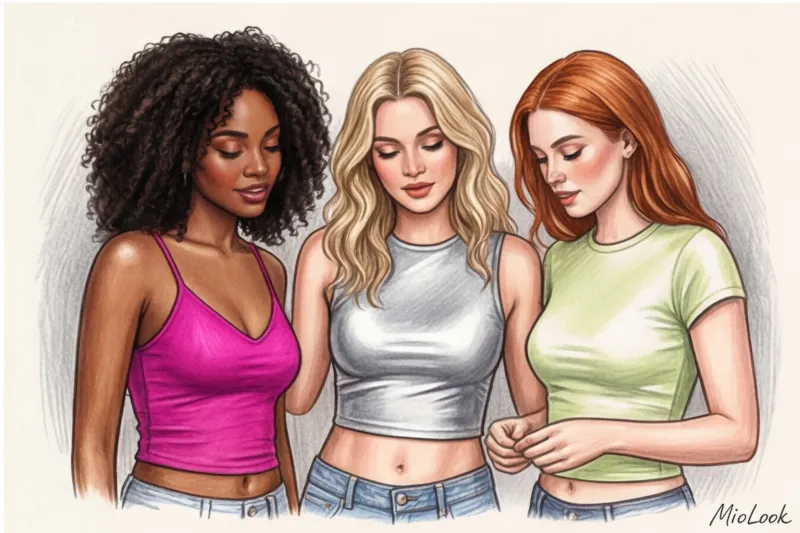
To make the Y2K style of clothing look expensive, we need to surgically remove its initial infantilism. My main tool for this is 1/3 rule.
The formula is simple: for every accent piece from the 2000s, there should be exactly two basic, modern, or distinctly classic pieces. Let's break it down. Let's say you bought a bold rhinestone bandeau top (our accent piece). If you pair it with a low-waisted micro skirt and platform sandals, you'll get a Britney Spears music video costume. But if we pair the same top with wide, pleated, thick wool suit pants and throw on a minimalist, straight-cut trench coat, the look instantly transitions into the "heavy luxury" category. The 1:2 ratio ensures you stay within the bounds of good taste.
"The secret to 'expensive' Y2K is to take the bold form from the 2000s but completely change the content—the textures, the quality, and the context"—is a principle I emphasize at every wardrobe review.
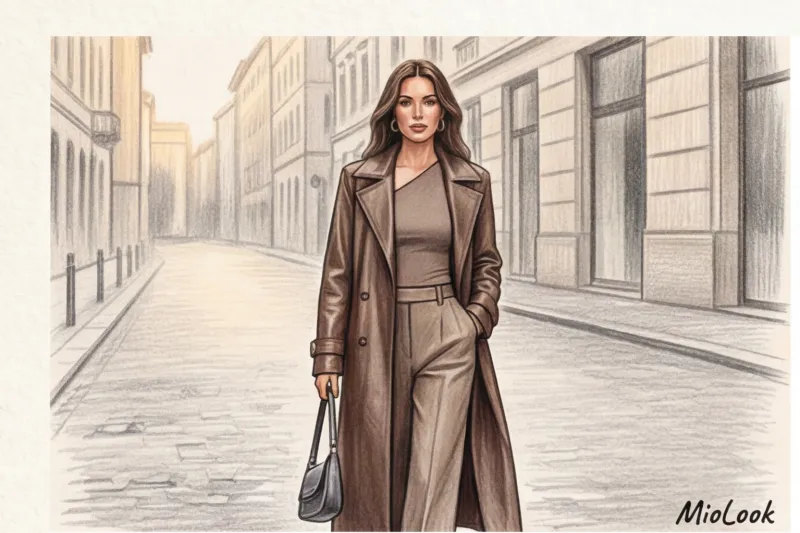
The next level of stylistic mastery is a game of contrasts The secret to truly high-status looks always lies in the clash of opposites. We literally cross-breed relaxed, sometimes fringe Y2K trends with strict, uncompromising classics. Try pairing nylon parachute pants or wide cargo pants not with a hoodie, but with a voluminous, menswear-inspired blazer (with sharply defined shoulders) or a double-breasted maxi coat. This contrasting meanings creates that very fashionable tension. The tailored blazer here acts as an anchor, disciplined by a loose hem.
But this entire architecture will inevitably collapse if we choose the wrong material. The original era of the 2000s was plagued by an abundance of cheap synthetics: thin, squeaky polyester, velour that stretched at the knees, and flimsy knitwear. Today's status is built exclusively on fine fabrics. We're making a radical change:
- Instead of a plush tracksuit, opt for sets made of thick cashmere or wool blends (a high-quality mid-range base will cost around $150–250, but will last for years).
- We're replacing thin knitwear, which treacherously highlights the slightest nuances of the figure, with shape-resistant cotton.
- Soft denim with elastane - for heavy, structured denim, which works like a corset and holds the silhouette.
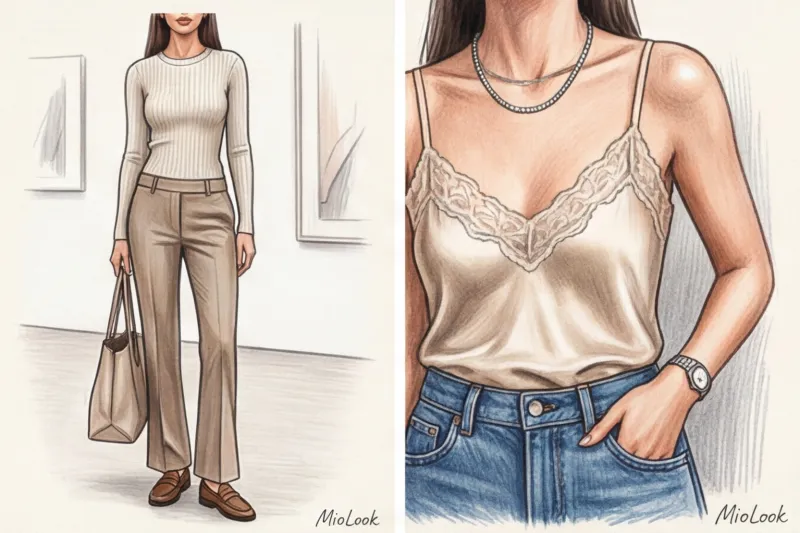
Here, I must issue a crucial warning as an image consultant. Your clothes may be impeccably put together, the fabrics premium, but if you accessorize them with pearlescent lipstick, thick black eyeliner, and hairsprayed to resemble a 2003 high school prom, you'll be a failure. To avoid looking like a woman "stuck in the past," it's vital to be mindful of Y2K-related items. emphatically modern beauty care.
Your main defense against mothballs is well-groomed skin with a "Gym Skin" effect (a natural, dewy glow), trendy hairstyles (light texture or a perfectly sleek low bun), and clean makeup. It's your beauty routine that sends a message to others: it's 2024, and you're a master at following trends.
To avoid spending hours trying on clothes in front of a mirror, checking if the contrast is right, I recommend digitizing your clothes. Upload a photo of your wardrobe to MioLook — The built-in outfit designer will help you visually combine that "one piece from the 2000s" with your basics and evaluate the proportions right on your smartphone screen.
Smart-casual integration: for those who work
Now let's move on to the big challenge: how to incorporate this bold aesthetic into an office with a relaxed dress code? Smart casual Friday is your best testing ground.
Let's start with the rule of silhouette adaptation. While the original Y2K silhouette was dominated by an extremely low waist, for the office, we focus solely on aesthetics, altering the fit. Wide-leg cargo pants made of smooth, fine wool (not rustling raincoat fabric!) with a mid- or high rise are perfect for a business environment when paired with a cashmere turtleneck, a structured jacket, and loafers. For the office, we always leave the midriff and lower back covered.
If large shapes still intimidate you, the safest entry point into the trend for working women is accessories. They work like precious spices: a pinch transforms a basic dish without changing its essence.
How to apply this tomorrow morning:
- Narrow glasses: Add a pair of thin, metal-framed, elongated sunglasses to your everyday work look.
- Metal crabs: Swap your usual hair tie for a simple matte metal hair clip. Available in gold or silver, it looks like jewelry, not a €3 plastic clip from the supermarket, and perfectly complements a business-chic look.
- Bags of the correct shape: A rigid, structured baguette made of smooth leather without flashy logos. It's worn under the arm, respects business etiquette, easily accommodates a smartphone and cardholder, and instantly sharpens your look.
Checklist: Checking Your Y2K Image for Relevance
In conclusion of this analysis, I want to give you a concrete, working tool that constantly saves my stylistic projects during final fittings before street style shoots. Integrating Y2K style in clothing When adding a new look to your everyday wardrobe, it's easy to miss the fine line between being trendy and simply tasteless. To avoid this, stand in front of a full-length mirror before leaving the house and ask yourself just five simple questions.
1. Evaluation of proportions: is the architectural balance of volumes maintained?
The golden rule of the modern 2000s is contrast and airiness. If you've chosen gigantic parachute pants or extremely wide baggy jeans, the top simply must be compact. This could be a bandeau top, a fitted cropped long sleeve, or a basic tank top. Conversely, a voluminous vintage bomber jacket calls for a more relaxed, elongated bottom. If both the top and bottom are oversized, the silhouette will turn into a shapeless cube, and all the fashion flair will evaporate.
2. Checking for "carnivalesqueness": who is wearing whom?
We all remember the classic advice: remove one accessory before going out. For the 2000s aesthetic, I gave it a radical twist: remove one key accent. If you're already wearing a rhinestone-studded top, ruthlessly leave the monogrammed bag and belt with the giant logo buckle at home. An overabundance of prints, glitter, and overt branding is a surefire way to look like a cheap knockoff. Let one accessory stand out, and let the rest act as a refined backdrop.
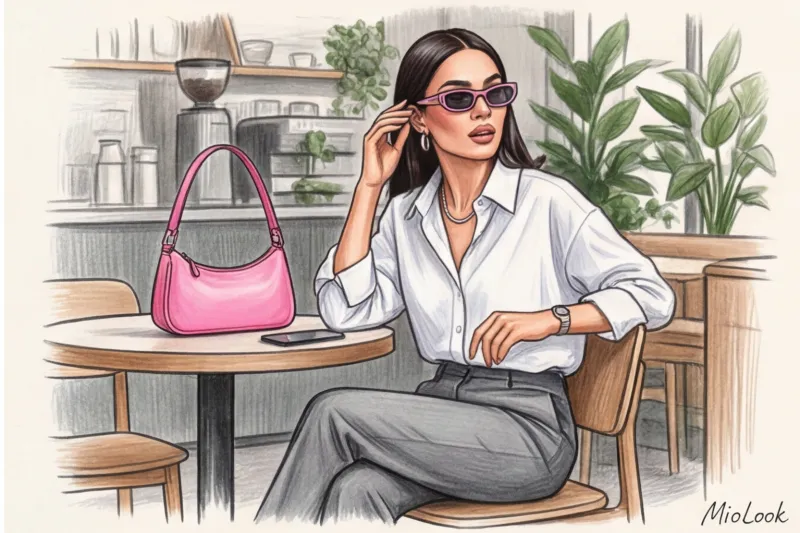
3. Contextual relevance: where is it appropriate to wear this look?
Nostalgia is nostalgia, but social context is still important. A low-rise dress paired with exposed collarbones will work perfectly for a Saturday brunch on the veranda or a fashion exhibition. But if you're heading to a project meeting at a creative agency or IT company (even with the most relaxed dress code), tone down the level of exposure. Choose wide-leg, mid-rise trousers paired with a simple halter top, and be sure to layer a structured men's blazer over the top.
4. Do invoices indicate your status?
Look at your outfit in natural light. Thin, squeaky polyester or flimsy denim that doesn't hold its shape will instantly ruin the look. Replace them with thick cotton, heavy matte silk, or structured wool. A basic T-shirt might cost €15, and trousers $300, but it's the thickness and matte finish of the material that gives the look a visually prestigious feel.
5. Do the shoes ground the entire set?
The 2000s demand visual heaviness at the bottom. Thin, round-toe ballet flats often look comical when paired with wide, tube-shaped jeans, visually shrinking the foot to disproportionate proportions. Opt for shoes with a bold platform, chunky sneakers, or square-toe mules. By the way, to avoid racking your brain over these proportions every morning, I always advise my clients to take a photo of their successful shoe and bottom combinations and upload them to MioLook The app will help you create ready-made capsules and save you from morning panic in front of the closet.
Your ideal image
it begins Here
Join thousands of users who look flawless every day with MioLook.
Get access — €0.99 onceMillennial fashion hasn't returned to make us feel insecure about our body measurements or buy questionable plastic. It's back to remind us: fashion is a game. Your practical assignment for tomorrow: take the most formal, conservative item in your wardrobe (like a classic graphite blazer) and add just one bold detail from the 2000s. It could be narrow, wire-framed glasses or a nylon baguette bag. I guarantee you'll immediately feel this fresh, slightly edgy vibe, while maintaining your impeccable elegance.
Guide Chapters
Dress over trousers trend: how to wear it stylishly
A controversial trend from the 2000s is making a comeback with a new, elegant twist. We explore how to wear a dress over trousers today, from a silhouette perspective.
What to Wear with a Micro Skirt: Stylish Y2K Looks
The extreme miniskirt isn't just a trend for Zoomers. Learn how to style a microskirt to look classy and confident.
Y2K Makeup: How to Create a Modern Look
Is the return of the 2000s causing you a daze? We'll tell you how to adapt colored eyeshadow and lip gloss to the modern era to look stylish, not dated.
Women's Velour Suits: The Y2K Trend
Velour suits from the 2000s are making a triumphant comeback. We'll show you how to adapt the Y2K aesthetic to adult looks without sacrificing elegance.
2000s-Style Shoes: What to Buy This Season
Millennial trends have returned not as kitsch, but as absolute staples. Find out which silhouettes from the 2000s are worth adding to your modern wardrobe without sacrificing comfort.
Y2K Accessories: How to Wear 2000s Trends
Integrating 2000s trends into your everyday wardrobe is easier than you think. Find out which details from the 2000s will elevate your look and make it more modern.
Plus-Size Y2K Style: How to Wear 2000s Trends
The return of 2000s fashion no longer scares plus-size women. Learn how to wear the latest trends from the 2000s stylishly and without damaging your self-esteem.
Total Denim Look for Women: 2000s Trends Today
The 2000s are back, but with a new twist. We'll explore how to recreate iconic denim looks from the 2000s without losing their modern elegance.
What to wear with a crop top for women: stylish formulas
How to incorporate cropped pieces into an elegant wardrobe without sacrificing status? Discover stylish crop top styles for women.
Women's cargo pants: what to wear them with feminine style
Cargo pants are no longer a teenage trend from the 2000s. We'll show you how to style pants with patch pockets for elegant and classy looks.
What to wear with low-rise jeans after 30
How to wear a low-waisted dress after 30 and still look elegant? We explore the "zero gap" rule and modern secrets for styling this trend.
How to try on Y2K style online using a neural network
The 2000s aesthetic is back in fashion, but adapting it can be challenging. Find out how a virtual fitting room can help you find the perfect Y2K look without the hassle.