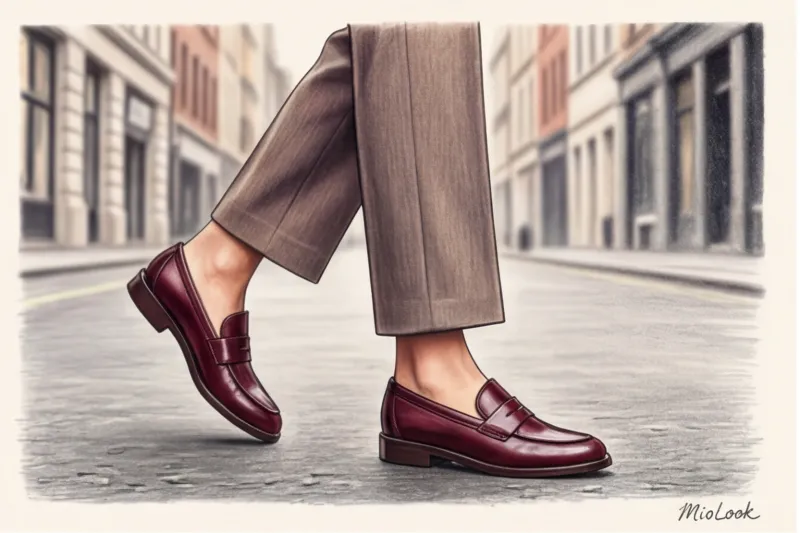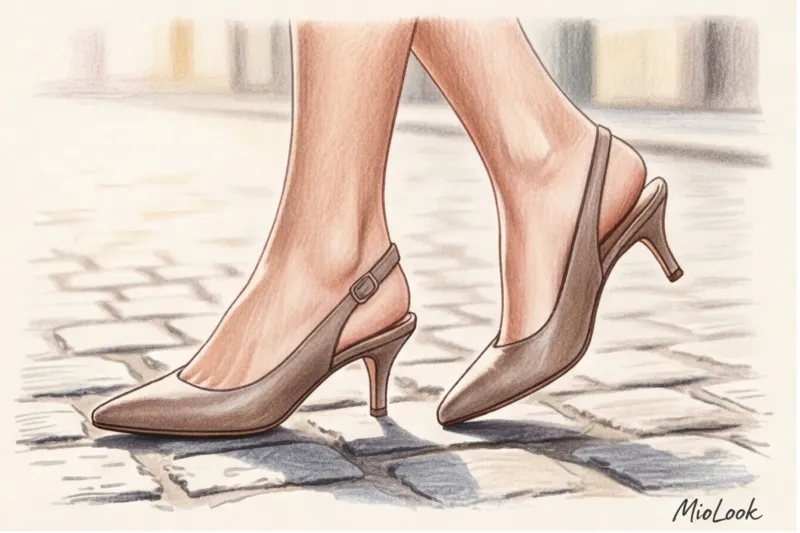

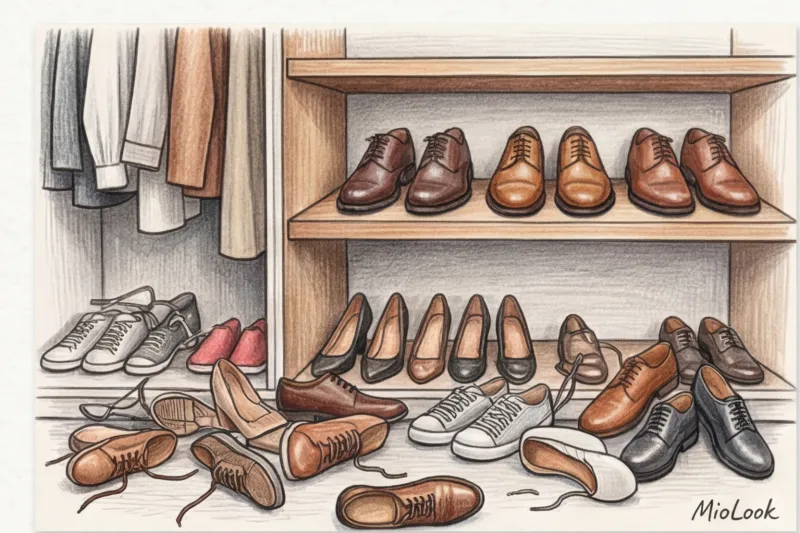
I tracked my looks for exactly 180 days. Do you know what really shocked me when I downloaded the stats? I wore my gorgeous stilettos, which I bought on a whim for $500, exactly four times in six months. Their Cost Per Wear was $125. Meanwhile, I wore my high-quality $150 leather loafers 150 times—their cost per wear dropped to a measly $1.
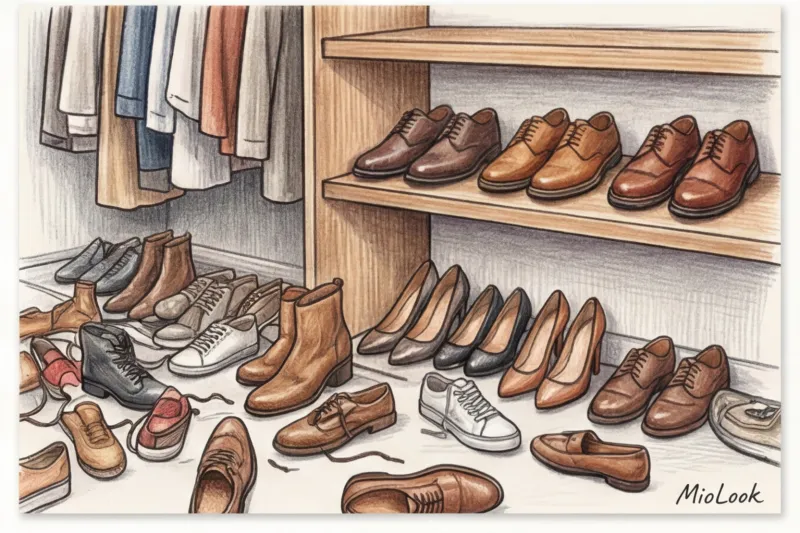
This ruthless math forever changed my approach to shopping. I realized that the perfect closet isn't built on fashion trends, but on hard numbers and an honest analysis of your own life. We talked more about this analytical approach to clothes in our The Complete Guide to Creating a Capsule Wardrobe.
Let's be honest: there's no such thing as a one-size-fits-all "10 pairs every woman must have" list. You don't need beige pumps if your office is a coworking space in Bali or a home office, and you don't need white sneakers if they ruin your grunge aesthetic. This strict mathematical approach won't work if you're a collector and buy shoes as art. But if your goal is a functional closet where every pair is 100% worth its price, let's turn styling into an exact science.
The Illusion of Choice: Why Are the Shelves Overflowing with Clothes and Nothing to Wear?
Have you noticed that most of us live by the Pareto rule (80/20) without even realizing it? Almost 80% of the time, we wear the same 20% of our favorite, time-tested shoes. The remaining 80% of the shoe cabinet's contents simply creates visual noise and the illusion of choice.
In my wardrobe-cleaning practice, I constantly encounter two destructive phenomena. The first is "car shoes": shoes that are physically impossible to walk in for more than a hundred meters on asphalt. The second is "shoes that are only good for sitting in" (they usually feel tight the moment you put them on). Both of these categories slowly drain your budget without giving anything in return.
The right basic footwear for a women's wardrobe works differently: it should tie your looks together, not detract from them or require compromises on comfort. That's why the Cost Per Wear concept should be your primary metric. Every purchase should be evaluated not by the price tag at the checkout, but by this formula: cost ÷ estimated number of outputs.
Ready to get started?
Try a free plan—no commitments. Start digitizing your wardrobe today.
Get access — €0.99 onceThe Perfect Capsule Formula: A Diagram of Your Lifestyle
Why don't glossy online articles work? Because they don't understand your lifestyle. One of my clients, Anna, struggled for a long time to fit classic stilettos into her life because "that's what Vogue says." The only problem was that 70% of her time was taken up with managing construction projects and walking her two Dobermans.
During my first consultation, I give each client a simple exercise—the "Time Pie" method. Draw a circle and divide it into sectors that represent your real life (as a percentage):
- Office with a dress code (e.g. 40%)
- Walking, traveling, casual activities (40%)
- Dating and partying (10%)
- Sports and active recreation (10%)
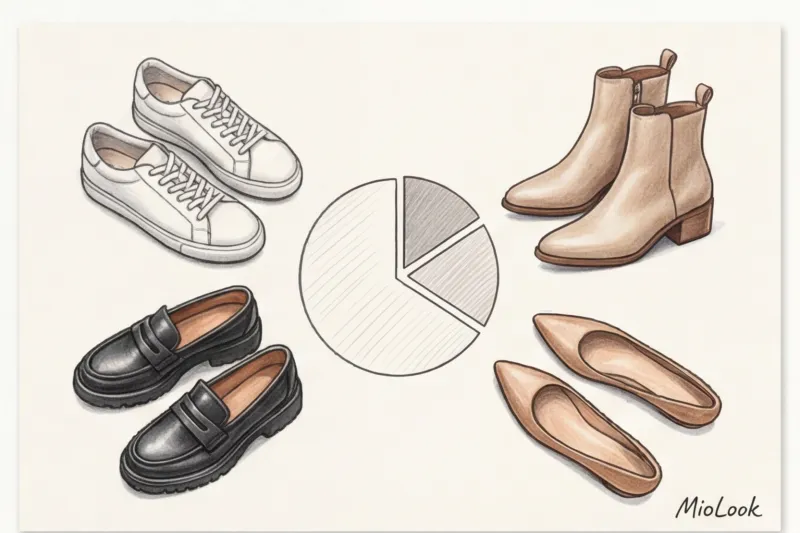
Now take a look at your shelves. If parties take up 10% of your time, but holiday sandals make up 40% of your collection, we've found the biggest budget drain. Your shoe capsule should mirror this diagram. Period.
The Three Pillars Rule: Base, Accent, Function
For the capsule to function, and not just exist, its contents must be clearly divided into three categories. Basic footwear — It's a canvas. Neutral colors, simple shapes without overly detailed hardware, and maximum compatibility with 80% of your outfits. Accent shoes takes the lead: leopard print, complex texture or trendy color are appropriate here (but never at the expense of the last!). Functional footwear — these are purely practical things: moon rovers for harsh winters, rubber Chelsea boots for downpours, or high-tech running shoes.
Basic Shoes for a Women's Wardrobe: Debunking the Myths
Forget everything you've been taught in the 2000s. Comfort is the new luxury, and abandoning uncomfortable "classics" is more than justified today. Let's examine three major style myths that are time to leave behind.
"Basics aren't what glossy magazines call universal. Basics are what you throw on without a second thought at 8 a.m., knowing you'll be comfortable until 8 p.m."
Myth 1: “Everyone needs beige pumps.” Spoiler alert: absolutely not. If you work remotely or at an IT company with a casual dress code, your pumps will be gathering dust in your closet. Save them for the corporate lawyers. Soft leather almond-toe ballet flats or suede loafers can be your elegant base.
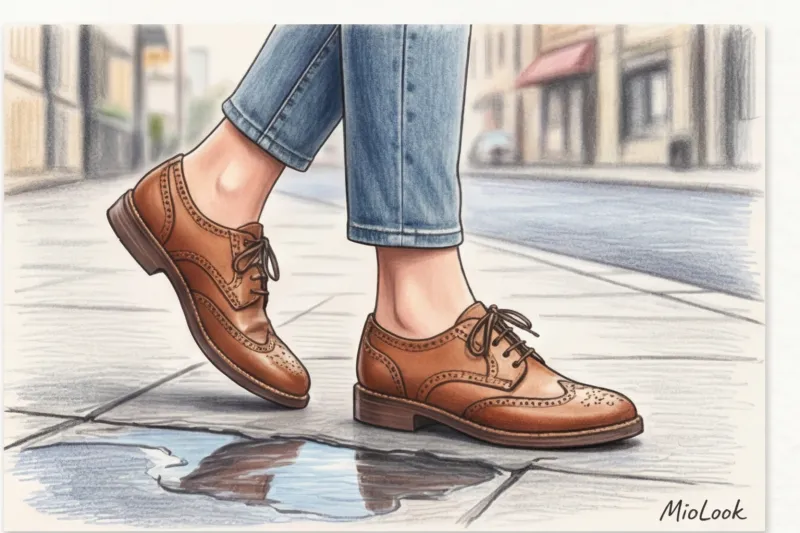
Myth 2: “Black shoes go with everything.” In fact, black often looks too harsh and cuts off the leg unless you're wearing black tights or trousers. Try swapping out black for a deep chocolate, burgundy, or dark olive. You'll be surprised how much softer and more sophisticated your everyday looks will look.
Myth 3: “White sneakers are a staple.” Yes, they're comfortable, but they quickly lose their shape and sometimes ruin a look. A great, slightly more upscale alternative would be leather slip-ons with thick soles, or derbies or brogues made of grained leather. They offer the same level of comfort but up the style ante.
Matrix for the year: how many pairs do you really need?
In my experience, the "12-pair capsule" concept is the gold standard for temperate climates with four distinct seasons. The formula is simple: three pairs for each season (two basic pairs for different weather conditions and one accent/going-out pair).
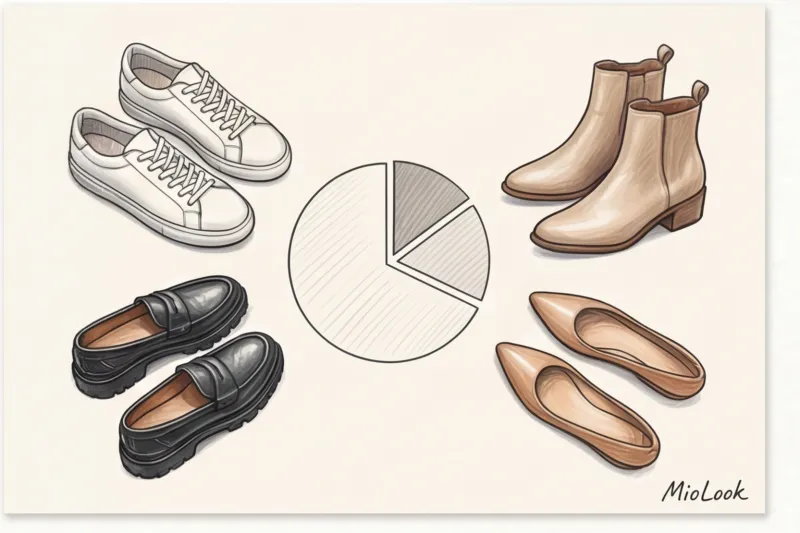
The secret to budget optimization lies in the transition of footwear from season to season. Loafers work great in both warm spring and cool summer. Thick leather Chelsea boots with a chunky sole cover both fall and mild European winters. High-quality leather sneakers are seasonless (except for snow and temperatures above 30°C).
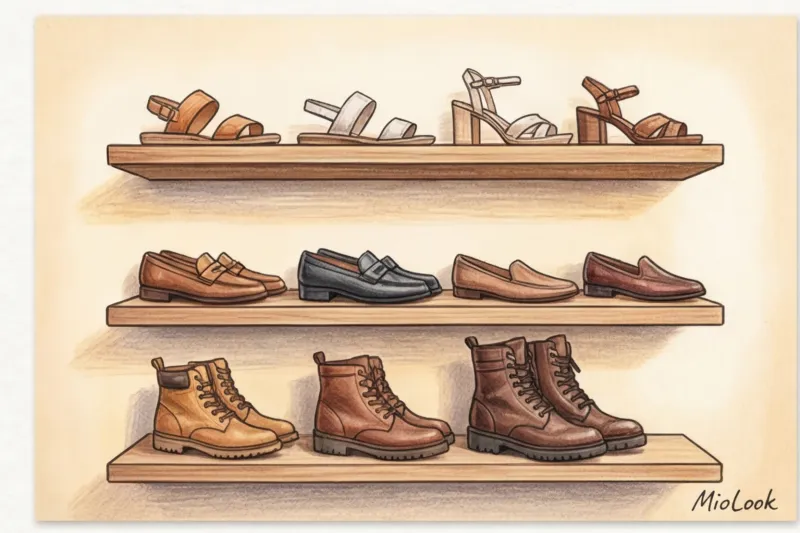
A modular approach is key here. Live in a region with harsh winters? Add a module of two pairs of functional winter boots. Live by the ocean? Your summer module will be expanded to include sandals and flip-flops. The matrix should adapt to your thermometer.
An example of a basic capsule for the demi-season
If I were asked to put together the perfect spring/fall outfit for a city dweller, it would look like this:
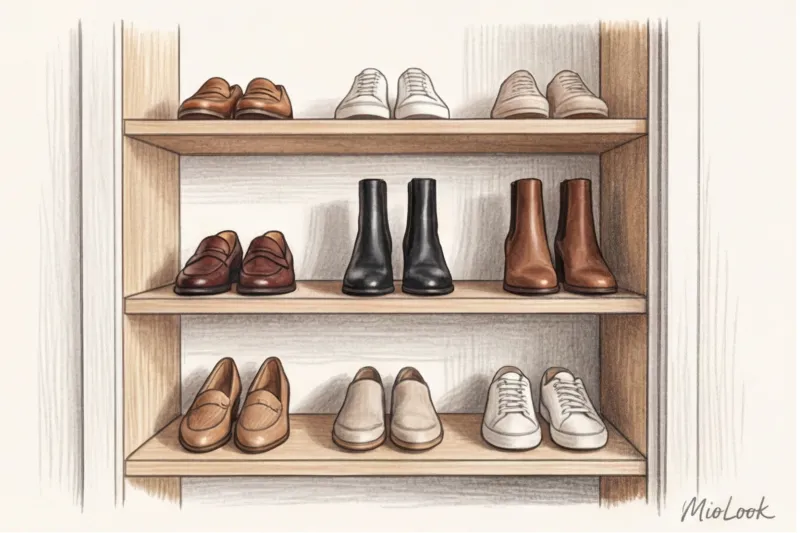
- Structured ankle boots or Chelsea boots with a stable heel/soles (a casual staple for jeans and a coat).
- Loafers or brogues (smart casual option for office trousers and knitted dresses).
- Leather sneakers or technical, minimalist, retro-style trainers (for maximum comfort on weekends).
Your perfect look starts here
Join thousands of users who look flawless every day with MioLook. Digitize your shoe collection in just a few clicks.
Get access — €0.99 onceThe Anatomy of Quality: Where to Save and Where to Invest
According to the American Podiatric Medical Association (APMA), over 70% of foot biomechanics problems in women over 30 are caused by regularly wearing poorly fitting shoes. The health of your feet, knees, and spine directly depends on what you put on in the morning.
McKinsey's "The State of Fashion" report for 2024 clearly identifies a global trend: consumers are shifting en masse from fast fashion to the concept of "quiet luxury" and durability. This means investing in three things: a proper anatomical last, proper arch support, and high-quality upper and insole materials (no polyurethane inside—the foot needs to breathe).
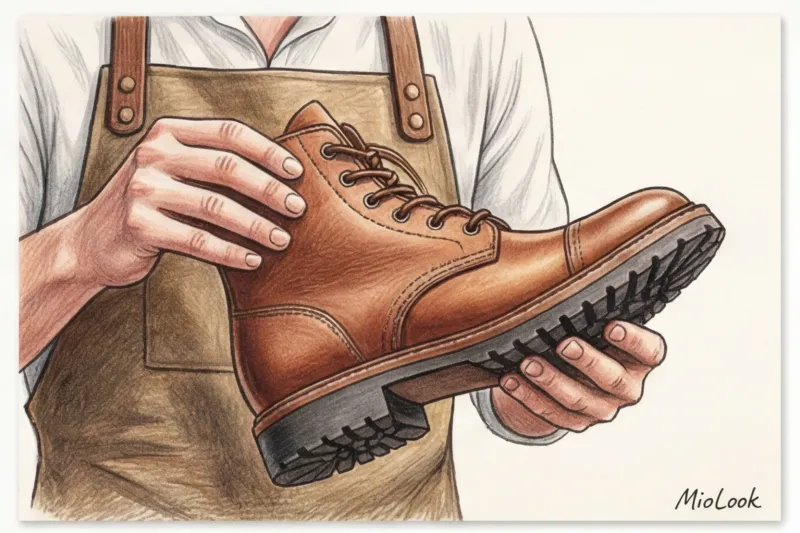
Is it okay to buy shoes from mass-market stores (like H&M or Zara)? Yes, but only if they're trendy seasonal items that you plan to wear 5-7 times over the summer (for example, ultra-fashionable neon sandals). Anything that's worn 8-10 hours a day should be mid-range or premium. My client Olya once got rid of 40 pairs of uncomfortable mass-market shoes in one fell swoop, replacing them with 8 perfect pairs from the premium segment. The result? She forgot about blisters forever.
Checklist: Putting together a shoe capsule collection over the weekend
Theory without practice is dead. I suggest you set aside two hours this weekend to conduct a ruthless audit.
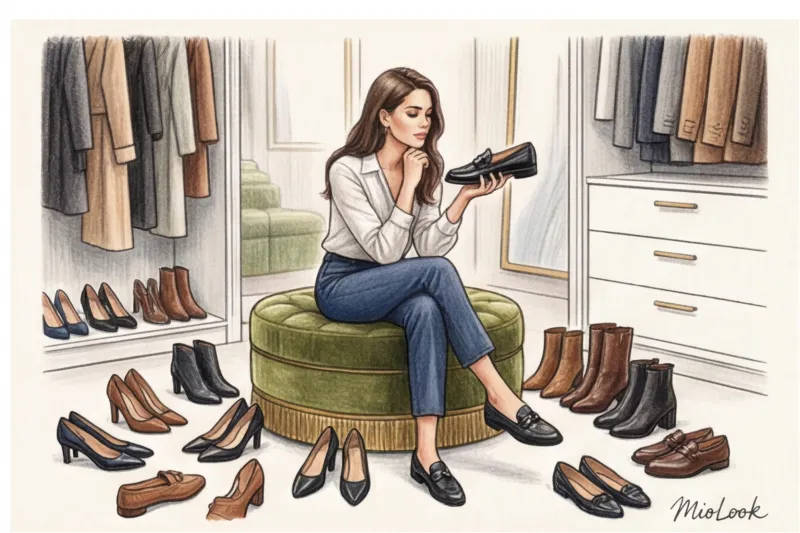
Step 1: Take all the shoes out of the closet. Absolutely all of them, including those hidden in the attic, on the balcony, and in the trunk of the car. You should be able to see the scale of the disaster at a glance.
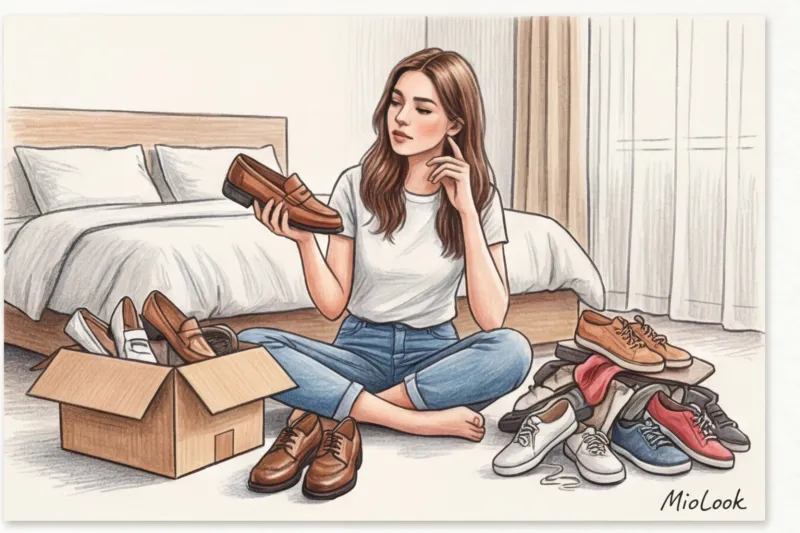
Step 2: Sort everything into three piles. The first is "wear constantly" (this is your real base). The second is "worn 1-2 times" (candidates for sale or donation if they don't fit into your timeline). The third is "needs repair" (take to a repair shop on Monday or throw away).
Step 3: Identify the gaps in your wardrobe. Look at the first pile. What's missing to create the perfect balance with your clothes? Perhaps all your shoes are black, and you're desperately needing a lighter pair to brighten up your spring looks.
To prevent this process from turning into chaos, use technology. In the app MioLook The "smart wardrobe" feature lets you take a photo of your favorite pairs without a background and instantly see how they pair with your outfits. Artificial intelligence will automatically suggest which basic women's shoes will complement your outfits.
Smart care: how to make your capsule last for years
Even the most expensive Italian leather will become a sad rag within one season if you wear it every day. The main rule for shoe longevity, known to all stylists, is the "24-hour rule." Leather shoes need exactly 24 hours to fully release the moisture they've absorbed from your feet throughout the day and regain their shape.
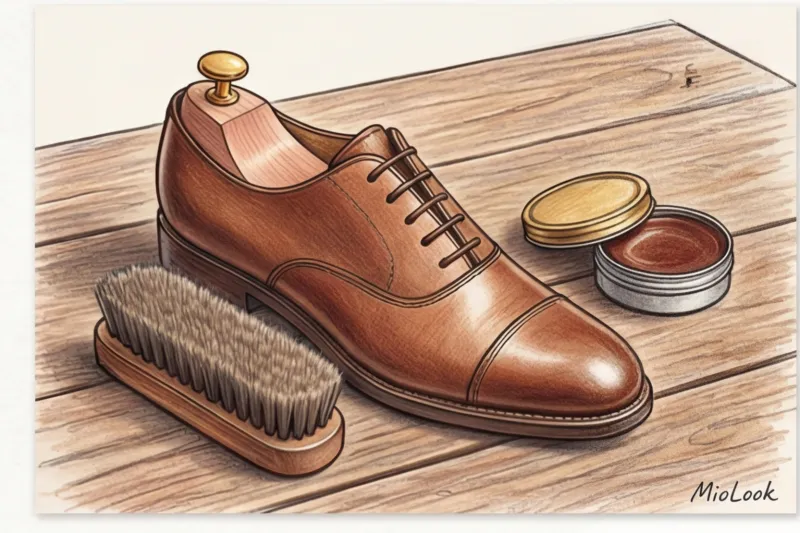
My personal insider secret, which triples the life of shoes, is shoe trees made of unvarnished cedar. As soon as you take your shoes off, insert the cedar tree into them. The wood instantly absorbs moisture and neutralizes odors, and a spring mechanism smooths out creases at the toes. It's a $30 investment that saves $300 shoes.
Prepare a basic grooming kit at home: a natural horsehair brush (for daily dusting), a high-quality nourishing cream (not a silicone gloss sponge, which dries out the leather, but a cream!), and a water-repellent spray. Treat your new pair with the spray before you go outside for the first time, not after being caught in a downpour.
Access to MioLook for €0.99 — one-time payment
A smart AI stylist will select the perfect look for you and help you create a functional capsule wardrobe.
Get access — €0.99 onceUltimately, building a shoe capsule comes down to one simple principle: buy less, but buy better. When every pair in your closet fits perfectly, suits your schedule, and pleases your eye, you'll no longer be tempted to buy random shoes on sale. You'll start managing your wardrobe, rather than it managing you.