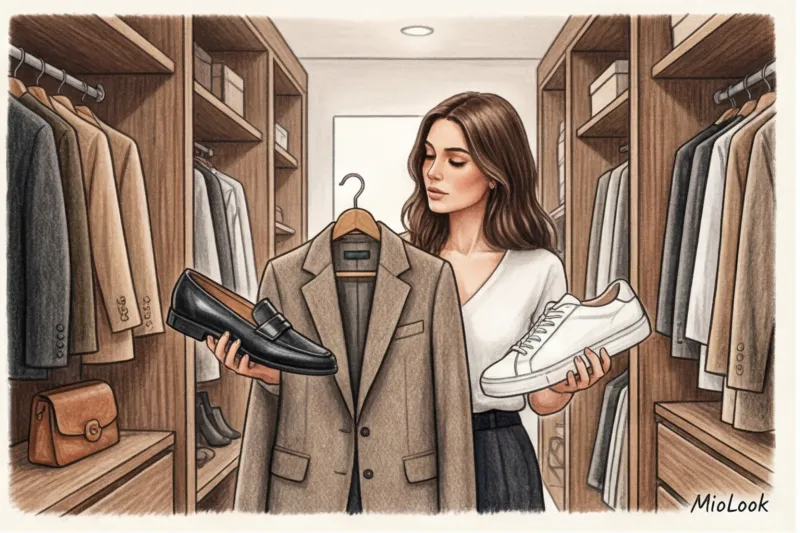
A client of mine from Paris, a top manager at a major IT company, had 40 pairs of shoes. Jimmy Choo pumps, architectural ankle boots, suede mules... And do you know what she wore 90% of the time? The same basic white sneakers. Not because she didn't like beautiful shoes. It's just that in the mornings, the complex lasts and textures always clashed with the geometry of her cropped trousers, creating visual chaos. Her brain chose the safest and fastest route.
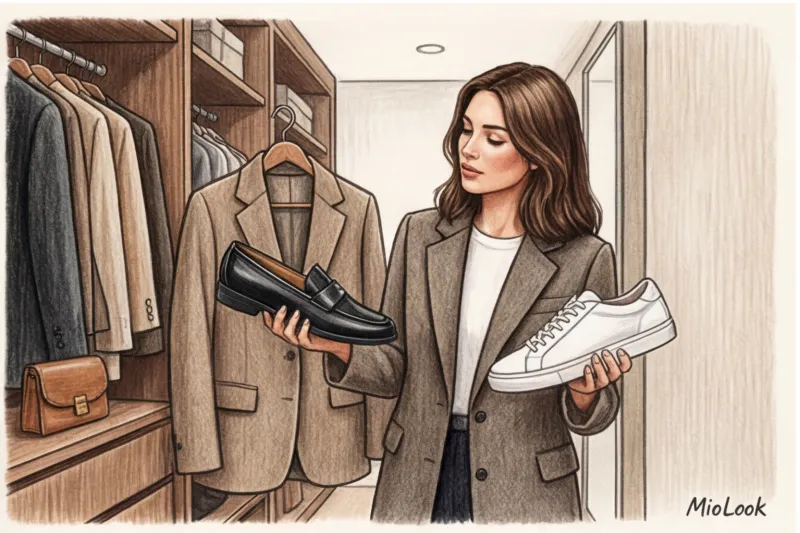
When we discuss the base, shoes for a capsule wardrobe For some reason, it always follows the residual principle. Women obsessively choose the perfect jacket cut, and try to "fit" shoes into an already finished outfit. We talked in more detail about the systematic approach in Our guide: MioLook — an AI-powered capsule wardrobe app , but today I want to talk about the mathematics of accessories. We'll explore why shoes aren't just an addition, but the main "multiplier" of your looks.
Multiplication Formula: Why Shoes Are More Important Than the Clothes Themselves in a Capsule Wardrobe
Shoes and accessories are the thermostat of your look. They set the tone for formality. The same pantsuit made of a quality wool blend with a silk top can look completely different depending on what you wear below the ankle.
Over 12 years of covering European Fashion Weeks, I've noticed a curious pattern. Glossy editors rushing between shows in Milan and Paris rarely carry huge suitcases of clothes. They might have one perfect trench coat, impeccable wide-leg trousers, and a couple of cashmere sweaters. But they pack four or five pairs of statement shoes. Structured loafers in the morning, chunky sneakers for street style during the day, and metallic-toe ankle boots for the afterparty. The "one capsule, one style" rule is dead. Shoes transform a daytime staple into an evening staple in a second.
Here's a simple statistic: the right accent shoes increase the versatility of a 15-piece capsule wardrobe from 30 to 45 complete looks. But a rookie mistake is buying 30 dresses and wearing them with just black ballet flats.
Access to MioLook for €0.99 — one-time payment
A smart AI stylist will select the perfect look.
Get access — €0.99 onceThe biggest myth among stylists: how many pairs of shoes do you really need?
Open any glossy magazine from ten years ago, and you'll find an article titled "10 Pairs of Shoes Every Woman Should Own." This approach is hopelessly outdated. There's no universal list because there's no universal life.
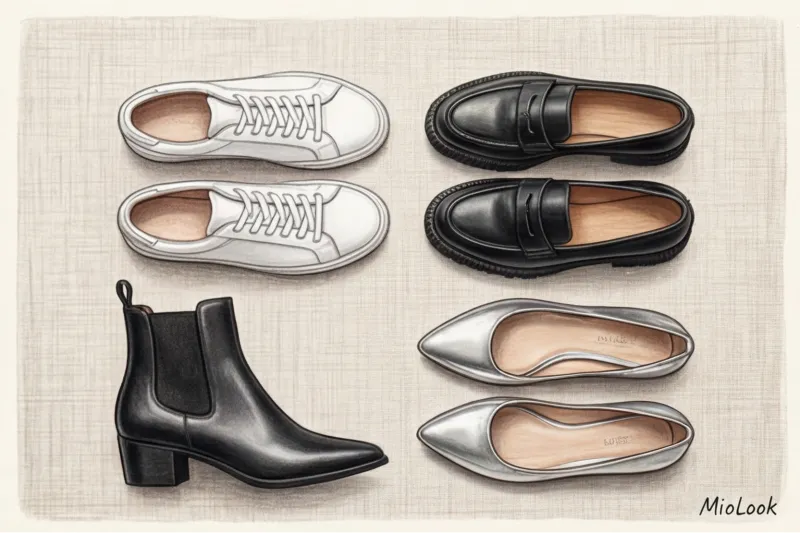
Instead of lists, I use the Lifestyle Coefficient matrix with my clients. If 70% of your time is spent working in a corporate office with a relaxed dress code, and 30% is spent hanging out with the kids, you don't physically need three pairs of stilettos. The danger of cognitive overload is real: 30 random pairs in your closet create the illusion of choice, but in reality lead to stylistic paralysis in the morning.
The 24-Hour Rule: The Opinion of Orthopedists and Leatherworkers
Why can't we get by with just one "universal" pair of shoes per season? The answer lies not in fashion, but in biomechanics. According to a 2023 report by the British organization WRAP (Waste and Resources Action Programme), the lifespan of footwear is reduced by 60% if the materials aren't allowed to regenerate.
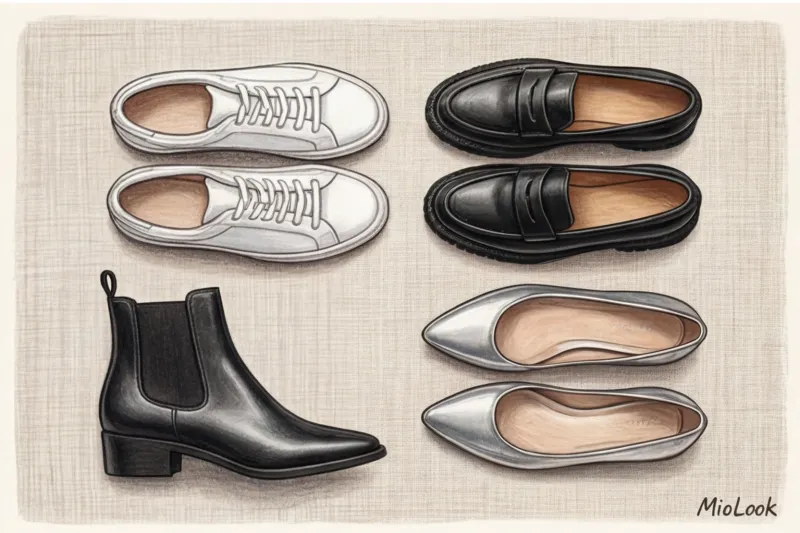
Orthopedists and Italian leather craftsmen are adamant: genuine leather (and even high-quality eco-leather) must rest for at least 24 hours after wearing. The human foot produces approximately 20 ml of moisture per day. If you wear the same leather shoes every day, this moisture doesn't have time to evaporate. The leather deforms and stretches, the last loses its supportive properties, and the inside becomes a perfect breeding ground for bacteria.
The conclusion is stark: a minimally viable shoe wardrobe for one season starts with two alternating everyday pairs This is not a whim, it is the physics of materials.
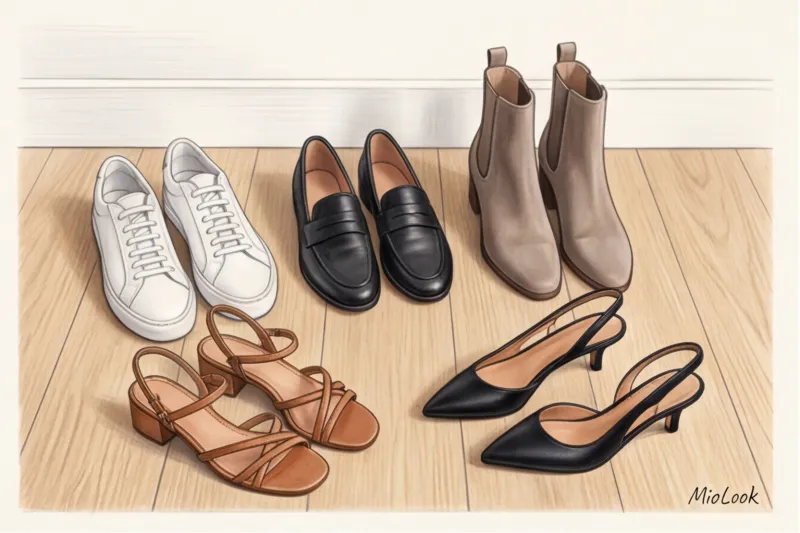
The Perfect Shoes for a Capsule Wardrobe: 5 Styles That Cover 90% of the Needs
If we remove specific hobbies (like trekking) and extreme weather conditions from the equation, the modern urban capsule is built around five architectural formats.
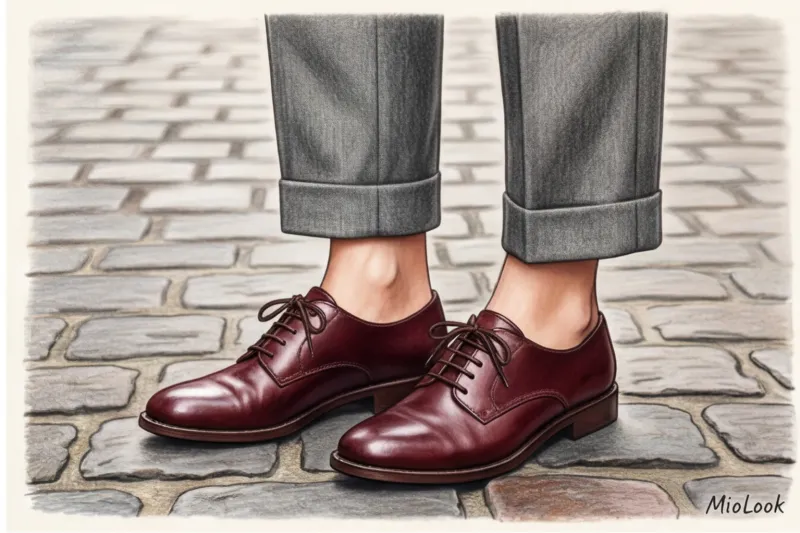
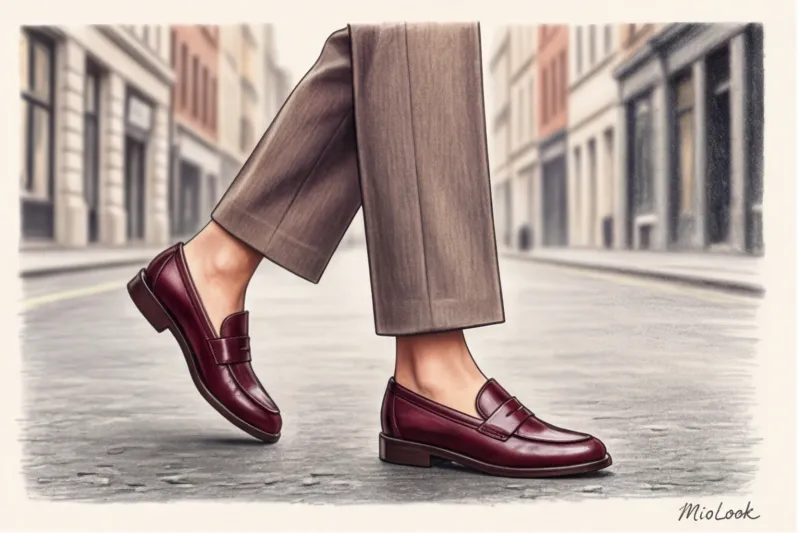
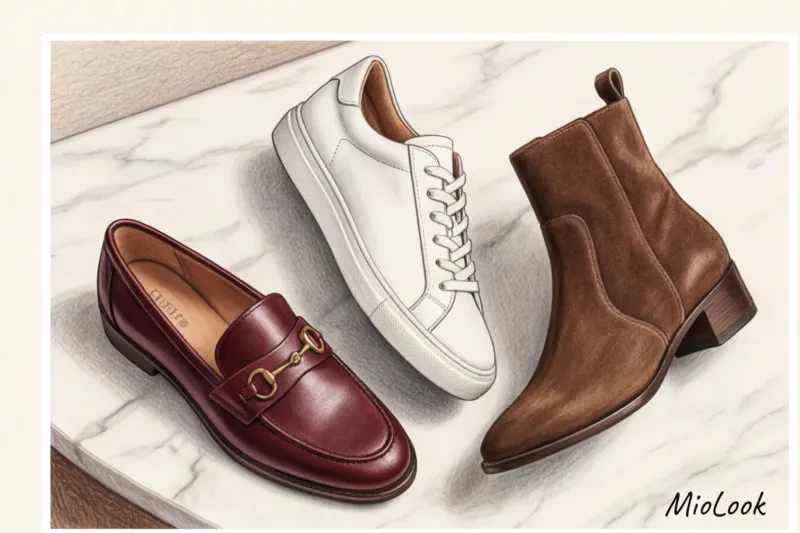
- Structured flat move. Loafers with a stiff sole, oxfords, or derbies are the foundation of business casual. They pull together relaxed jeans and are the perfect complement to formal suits.
- Urban sneakers. Neutral leather or suede, strictly without obvious neon logos or running mesh. Retro tennis-inspired models (like the classics from Autry or the basic New Balance 550).
- Ankle boots or boots with the correct shaft. Here's the main problem: the shaft should fit under the hem of your trousers without bunching up, or fit snugly around your ankle if you're wearing midi skirts. We discussed proportions in more detail in the article. About shoes for tall girls.
- Metallic shoes. Anti-trend alert: Basic nude pumps in the Christian Louboutin style are an outdated stereotype. Today, they visually age an outfit, making it look too forced. Their role as the perfect neutralizer has been taken over by silver or gold ballet flats or loafers. Metallics work like a mirror, adapting to any color of clothing, from fuchsia to khaki.
- Accent pair (your signature). Leopard slingbacks, burgundy pumps, or ankle boots with an architectural beveled heel—these are the pairings that make a simple jeans-and-white-shirt look truly yours.
Accessory capsule: the invisible frame of your style
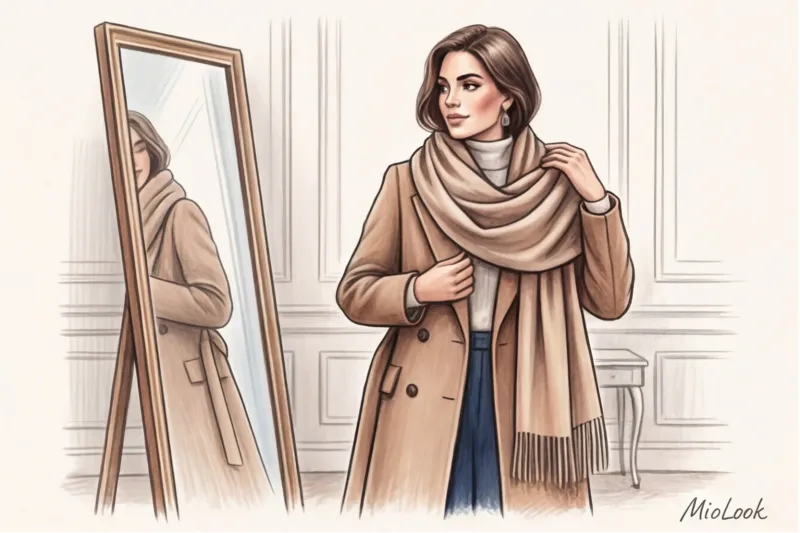
Accessories are often perceived as "embellishments," when in reality, they're tools for controlling proportions. I always teach my clients the "three-point rule": an everyday look should have no more than three active focal points to avoid looking like a Christmas tree. For example: bright lipstick (1), a bold belt buckle (2), and statement shoes (3). Everything else is background.
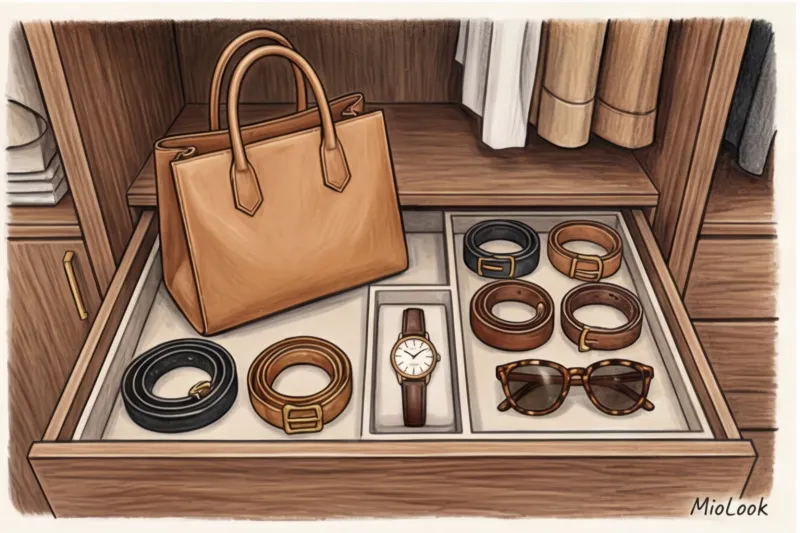
"The belt is the most underrated styling tool. The matte leather texture of a 3-4 cm wide belt can instantly 'pull together' the loose silhouette of an oversized jacket and define the waist where the cut has hidden it."
Bags: The Rule of Three Architectural Forms
You don't need 15 bags if you have the three right shapes:
- Structured tote. For work, a laptop, and documents. Important: soft, shapeless hobo bags are a status symbol in a business environment. A bag should retain its shape even when empty.
- Medium-hardness crossbody. For weekend mobility and travel. The perfect size to fit your phone, passport, and cardholder.
- Clutch or pouch (dumpling bag). A soft shape for evenings, theater, and relaxed dinners. A voluminous pouch tucked under the arm tone down the pretentiousness of an evening gown.
Investing wisely: where to save and where to get premium
There's a golden rule of style: cheap shoes visually devalue an expensive suit, but quality shoes can elevate even a mass-market dress. This is where the Cost Per Wear formula comes into play.
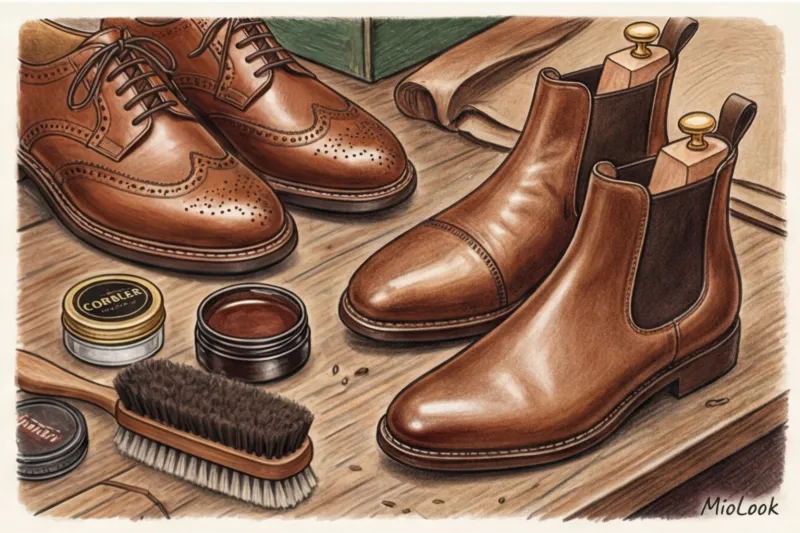
Let's calculate in euros. Let's say you buy trendy ankle boots made of thin polyurethane from a mass-market store for €50. Due to the greenhouse effect and rapid deformation of the last, you'll wear them 10 times per season, after which they'll lose their shape. The cost per wear is €5.
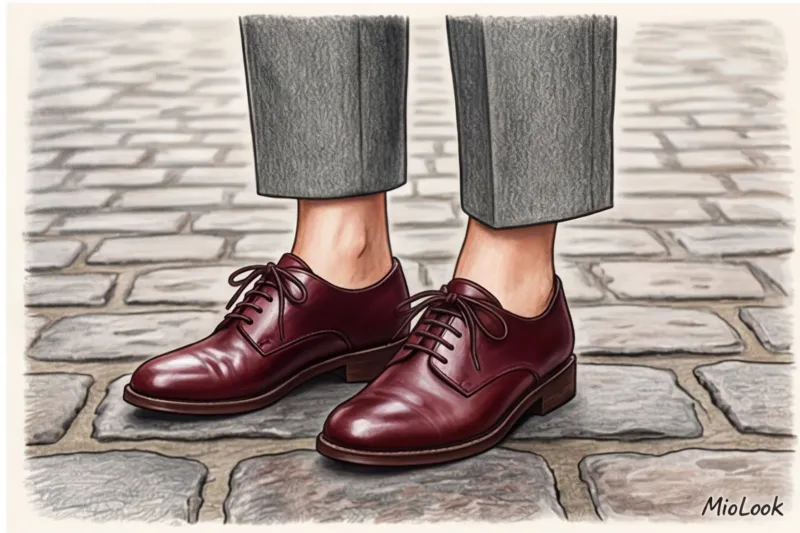
Now let's take a pair of classic Italian calfskin loafers for €250. With proper care (cedar lasts, cream, 24-hour wear), you'll wear them for 5 years, wearing them at least 50 times a year. That's 250 wears total. Each wear costs €1. Premium shoes are five times cheaper in the long run.
To be fair, there is an exception to this rule. It doesn't work. With ultra-trendy shoes. If you want to try a micro-trend (like acid green mules), there's no point in investing in premium items. Stick with mass-market options. But basics (Oxfords, Chelsea boots, classic loafers) should be in the highest price range you can afford.
What's the first sign of cheap shoes and bags? Shiny yellow hardware (high-quality metal has a muted, matte finish), uneven stitching with contrasting threads, and a thin plastic sole that clicks on the pavement. Avoid these markers, even if you're not wearing them. choosing things in the budget segment.
Checklist: How to digitize your accessories in the MioLook app
Neuroscience has long proven that the human brain is incapable of actively maintaining more than 30-40 items of clothing in its working memory. Everything in boxes on the top shelf doesn't exist for your brain. This is the main cause of visual noise and the perpetual "nothing to wear" feeling.
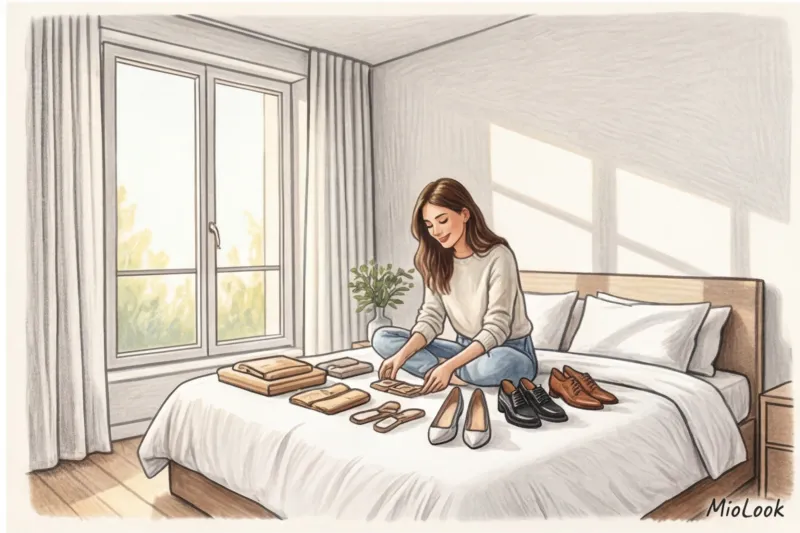
Digitization solves this problem once and for all. How to properly integrate accessories into your virtual wardrobe:
- Take pictures of the shoes from the side and from above. The algorithm needs to understand not only the color but also the shape of the toe. The AI will suggest square-toed ankle boots to pair with wide trousers, while pointed ones will pair with a pencil skirt.
- Add belts and scarves. Most users forget to digitize small accessories. But it's the forgotten silk scarf, added by the algorithm to a boring basic jumper, that completes the look.
- Use seasonality tags. Store your winter footwear in the app's "archive" for the summer. This will reduce visual noise when creating outfits.
Your ideal image
it begins Here
Join thousands of users who look flawless every day with MioLook.
Get access — €0.99 onceMagic MioLook The key is that artificial intelligence analyzes not just colors, but the stylistic vectors of items. It can suggest you pair a tailored tweed jacket with rugged Velcro fisherman's sandals—a combination you'd hardly have dreamed up in your morning rush, but one that will instantly elevate you to the ranks of street-style influencers.
Shoes are the foundation upon which your entire style architecture rests. Before you buy another sweater, take stock of your shoe rack. You might already have the perfect wardrobe—you just needed the right pair of loafers to make it work to its full potential.
", "tags": [ "capsule wardrobe", "shoes", "accessories", "smart wardrobe", "MioLook", "style", "basic wardrobe", "wardrobe digitalization" ] }