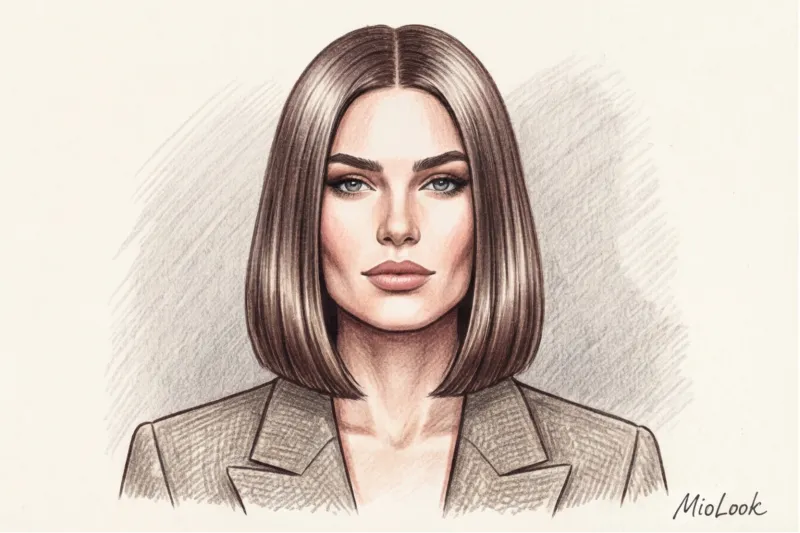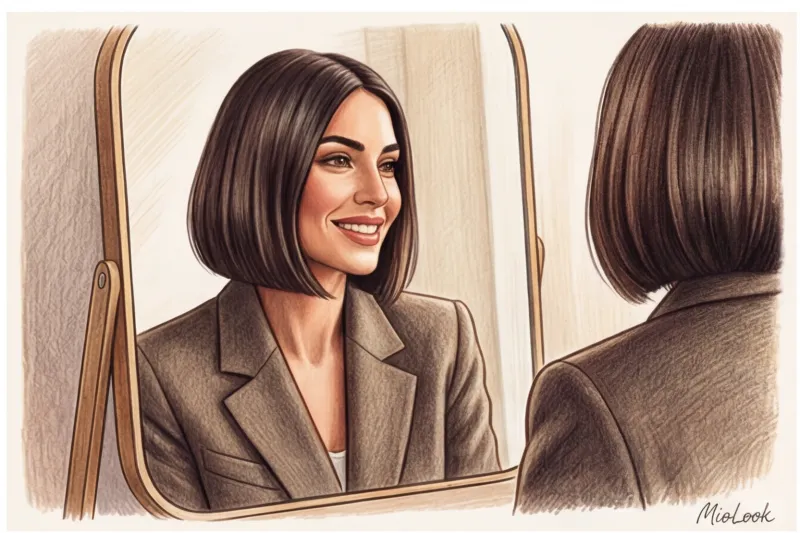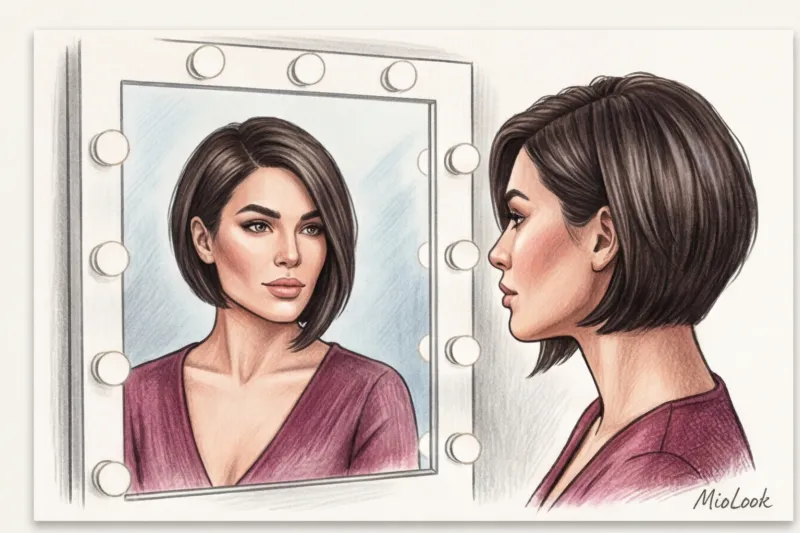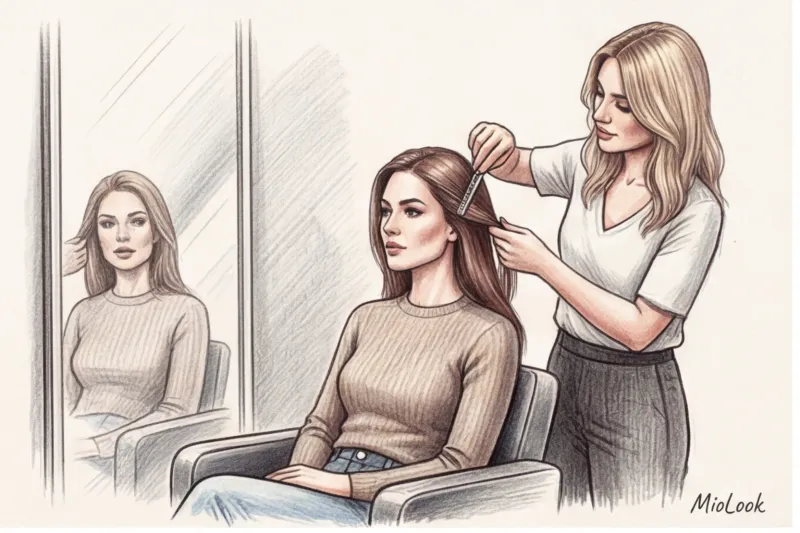
Remember that popular advice from glossy magazines in the 2000s: stand in front of a mirror, close one eye, take a lipstick, and trace the outline of your face? If you're still trying to choose a look based on this "drawing," I have bad news. When we search for the perfect haircut for women's face shapes, most of us, for some reason, continue to think in terms of a flat 2D image. But our face isn't a canvas, but a complex 3D architecture with its own angles, eye depth, and light and shadow patterns.
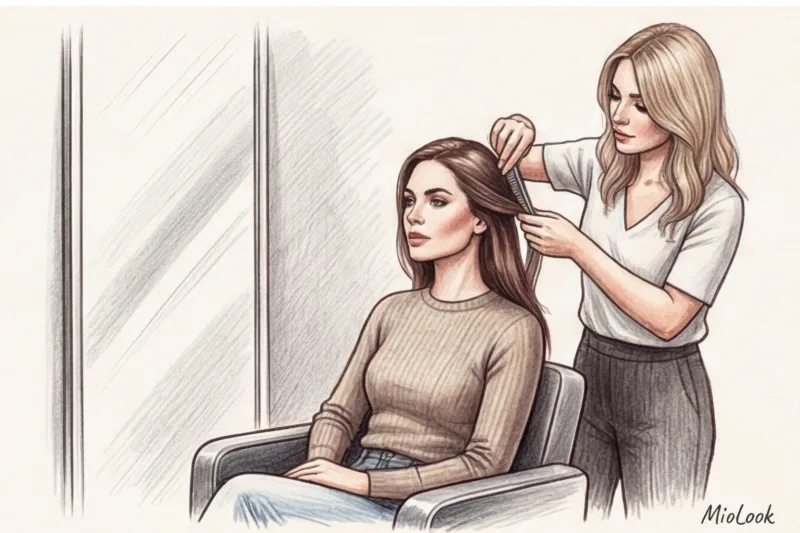
We have written in more detail about how to abandon the “lipstick method” and correctly analyze your geometry in our the complete guide to determining your face shape Today, I propose a different approach to hair. We'll no longer try to "correct" you to some mythical standard. We'll use an architectural approach, where the haircut acts as a tool for volumetric balance.
Why the old rules for choosing women's haircuts based on face shape no longer work
Over 12 years of working as a stylist, I've seen hundreds of women literally ruin their stunning natural profiles by blindly following online advice. This classic, yet hopelessly outdated, approach ignores the most important factors: volume, profile, and depth of the face.
A new method used by top professionals is based on assessing the relationship between bone structure (jaw, cheekbones, brow ridges) and soft tissue (subcutaneous fat). According to statistics, 80% of women misjudge their face shape precisely because they only evaluate a flat, full-face photo. Furthermore, hair is a living material with its own texture, porosity, and density. You can't simply "impose" a haircut on your face like a frame in a photo editor.
The Toxic Myth of the "Perfect Oval"
For decades, the beauty industry has been pushing a toxic message: the ideal face is an oval, and everything else should be visually "shaved down," hidden, and softened. This is absolutely absurd in today's world.
"Square and rectangular faces with a strong jawline are today the main marker of an aristocratic, 'expensive' appearance. Look at Rosie Huntington-Whiteley or Keira Knightley. Their geometry is their strength, not a flaw to be hidden behind curls."
If you have a strong jawline or prominent cheekbones, we should accentuate them with graphic cuts to create a classy look, rather than trying to turn you into a soft circle.
Your perfect look starts here
Join thousands of users who look flawless every day with MioLook. Our smart AI stylist will choose a haircut tailored to your proportions.
Get access — €0.99 onceHaircut Architecture: How Lines and Volume Change Proportions
Vidal Sassoon, the founder of modern hairdressing geometry, proved that a haircut is pure architecture. The three pillars of a proper shape are the weight line, graduation, and layers.
There's one technical nuance that only the pros understand: the cut line always acts as a visual vector. It's literally an arrow pointing to a specific part of the face. If you have a strong, massive chin, and the stylist cuts your bob evenly along your jawline, they're putting a neon sign on it that says, "Look here!" The person's gaze always stops where the strand ends.
Another critical factor ignored by "magazine" advice is age-related changes. According to trichologists, after age 40, hair density can decrease by up to 20%. This means that a haircut that held volume perfectly at age 25 due to its natural thickness can droop like sad icicles at age 45, visually pulling the face down. This is where invisible layers come in, creating the inner framework of the haircut.
Haircuts for Faces with Strong Bone Structure: Square and Rectangle
These shapes are characterized by a strong jawline, defined cheekbones, and a straight hairline. These are faces made for the catwalk.
Fatal error: Attempts to curl small curls from the roots or cut thick, straight bangs to "soften" the face and round out the angles result in the face looking like a heavy block, squeezed into a frame of hair.
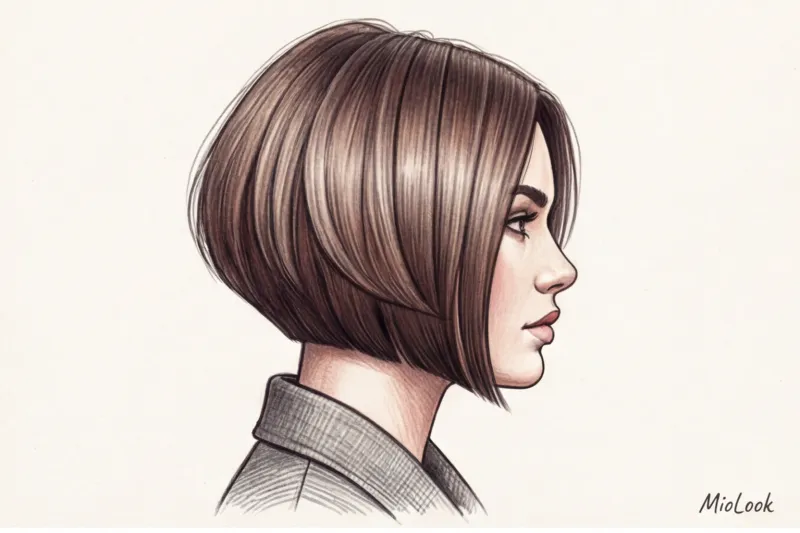
I had a classic case: a client had been hiding her beautiful square jawline behind dull, layered layers for 10 years. Her hair was constantly frizzy, and her face looked tired. As soon as we gave her a graphic, asymmetrical bob with a longer, face-facing cut (the length of the cut fell below the problematic angle of the jaw), she instantly looked like a million bucks. The asymmetry created a diagonal line that broke up the heavy horizontal line of her chin.
Best solutions:
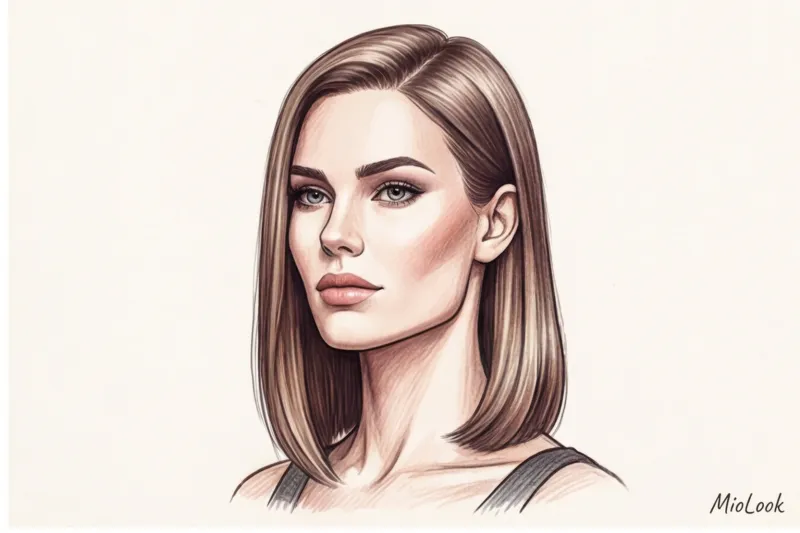
- Sleek, graphic cuts that fall below the jaw (the collarbone is the perfect point).
- Asymmetrical bob with deep side parting.
- Ultra-short pixie with volume on the crown, completely revealing the neck (emphasizes the posture and position of the head).
Not sure which length to choose?
Try MioLook: our AI stylist will analyze your bone structure and suggest ideal haircuts without damaging your hair.
Choose an image onlineHaircuts for soft-tissue faces: Circle and Heart
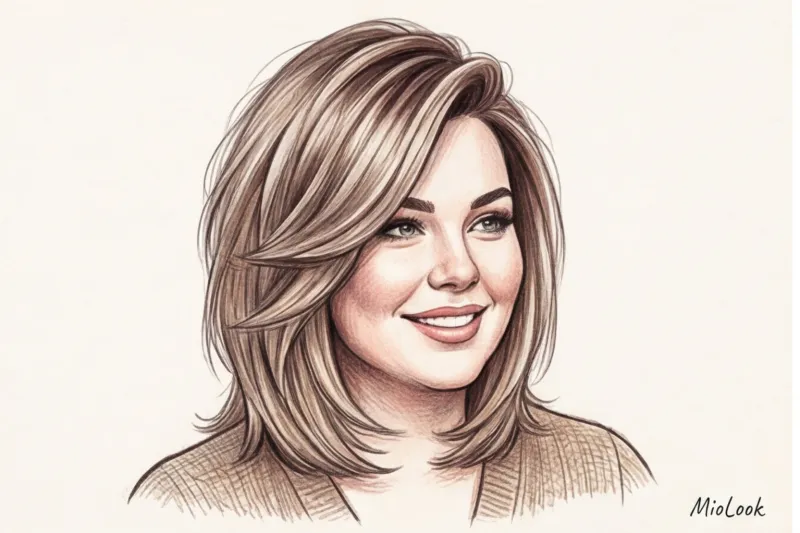
A round face is characterized by full cheeks, soft corners, and equal proportions of width and height. A heart-shaped face has a wide forehead that tapers sharply to a pointed chin, often accompanied by soft cheekbones.
Fatal error: A center parting paired with slicked-back hair. The only thing worse than this is a bob that hits mid-cheek. This widens the face as much as possible, making it appear flatter.
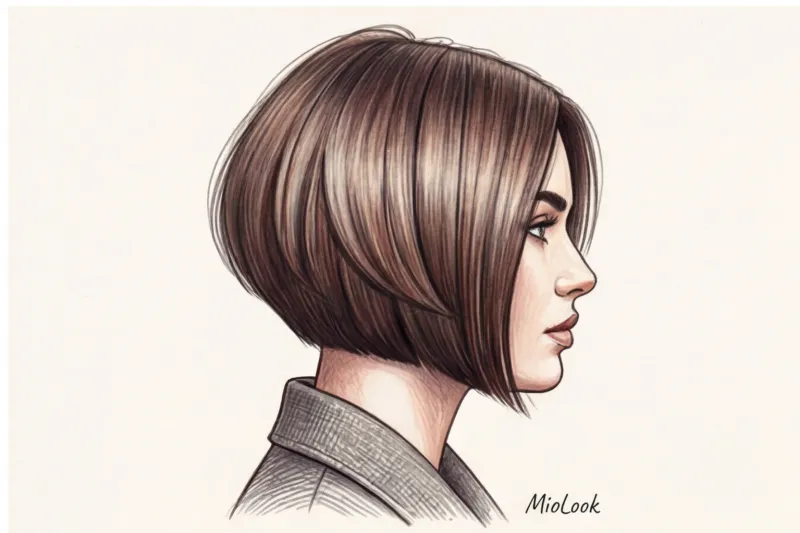
This is where light and shadow come into play. Properly cut strands around the face create a contouring effect without a gram of bronzer. We need to create vertical lines that will visually elongate the silhouette.
Best solutions:
- Long bob (lob) with light texture.
- Deep side partings that disrupt the symmetry of the circle.
- Textured, choppy layers below the chin. For a heart-shaped cut, volume at collarbone level is ideal to offset a narrow chin.
Haircuts for diamond-shaped and elongated faces
A diamond shape is characterized by prominent cheekbones with a narrow forehead and pointed chin. An elongated face has a dominant vertical line, with the height significantly exceeding the width.
Fatal error: Excessive backcombing or volume on the crown will make you look like a tower on an elongated face. Long, straight hair without volume on the sides is a definite no-no for a diamond-shaped face—it will emphasize the narrowness of the forehead and make the cheekbones appear disproportionately large.
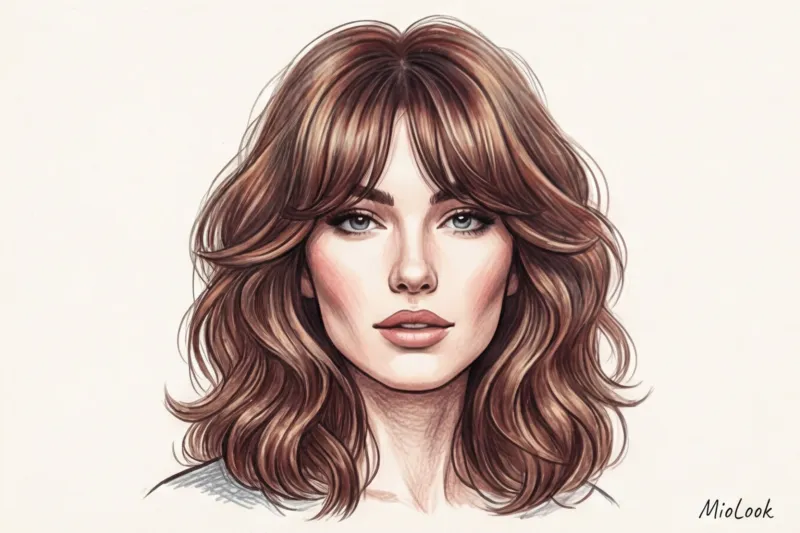
Our goal is to convey volume. If we're talking about a diamond shape, the volume should be concentrated at the temples or chin. A great example is the classic cascade haircut, where the shortest layer starts right at the cheekbones, drawing the eye into the width.
Such textured and vibrant haircuts, by the way, are perfectly adapted to a strict office dress code, if you know how to style them. In our article about 10 Strict Hairstyles for Every Day We discussed in detail how to elegantly pin up a cascade.
Bangs as the main tool for correction: who, why, and which ones?
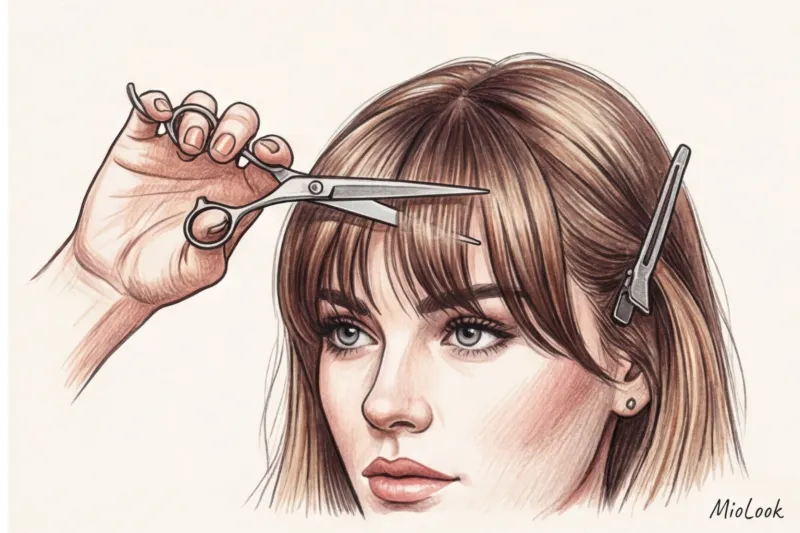
Bangs are the plastic surgery of the hair world. But they can also be your biggest mistake. Never cut your bangs impulsively, depending on your mood! Before cutting a strand, a stylist must evaluate your cowlicks and hairline. Otherwise, styling will turn into a daily morning nightmare.
Curtain bangs: A versatile style. It conceals wide forehead angles, seamlessly frames the face, and adds luxurious accents to cheekbones. It suits 90% of women, grows out easily, and doesn't require a strict hold.
Straight dense bangs: This is a powerful horizontal line. It visually "cuts off" a third of the face's length. When it does NOT work: If you have a square or round face, straight bangs will make your jawline look incredibly wide. Leave it to those with elongated oval faces.
Choppy Micro Bangs: An ultra-trendy option for the bold. It looks bold, but requires perfect proportions in the lower third of the face, as it leaves it completely bare.
A practical checklist: how to set the right task for a hairdresser
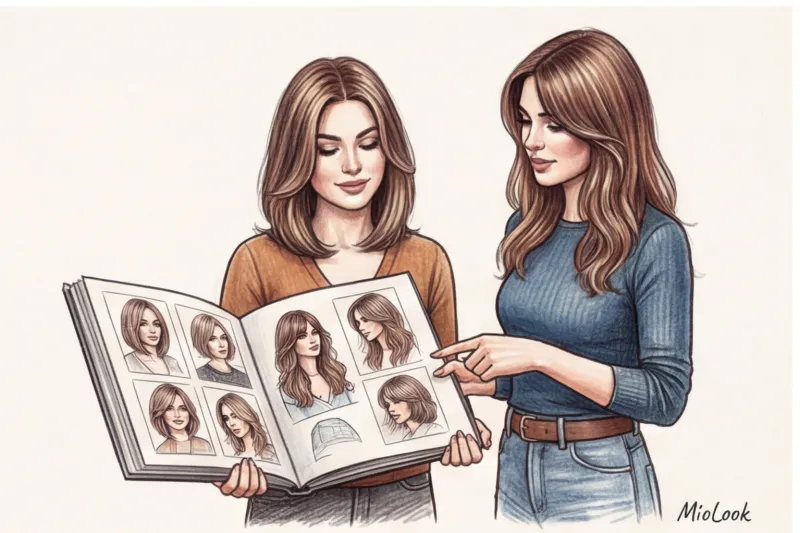
You found the perfect reference, went to the salon, and were disappointed when you left. Sound familiar? Even a €150 haircut from a top stylist won't cut it if you spoke different languages. To avoid post-salon tears, follow this insider checklist:
- Don't ask to "make it like in the photo" blindly. The girl in the Pinterest photo has thick Asian hair, while you have thin Slavic hair. The haircut will look different. Ask your stylist to tailor the style to your hair thickness, or consider a smart haircut that doesn't require styling.
- Discuss the "weight line". Ask your stylist directly, "Where will we achieve the thickest volume?" Make sure this point isn't on the problematic facial area.
- Show your routine. Do you always tuck your hair behind your right ear? Do you like to wear a low ponytail during practice? Your stylist should know this before making the first cut. If they cut the short strands at your temples, you won't be able to tie them up in a ponytail.
- Check the profile. Turn sideways to the mirror. The haircut should complement a prominent nose or the length of your neck. For example, volume at the back of the head visually balances a large nose.
Your hair is your crown, the one you never take off. Stop fighting your natural geometry, trying to force your face into outdated standards of the perfect oval. A great haircut is one that transforms sharp angles into stylish accents and volume into smooth lines. Choose your shape wisely, trust your mirror more than old rules, and remember: a perfect haircut doesn't hide you, it reveals you.