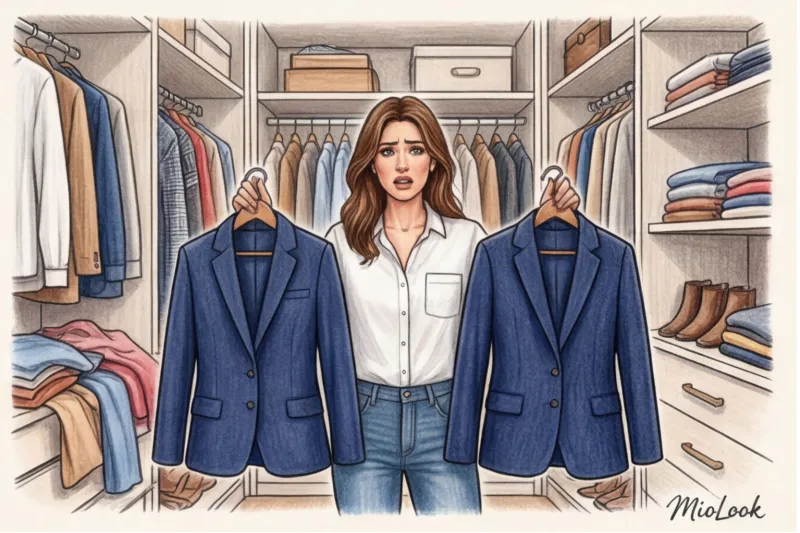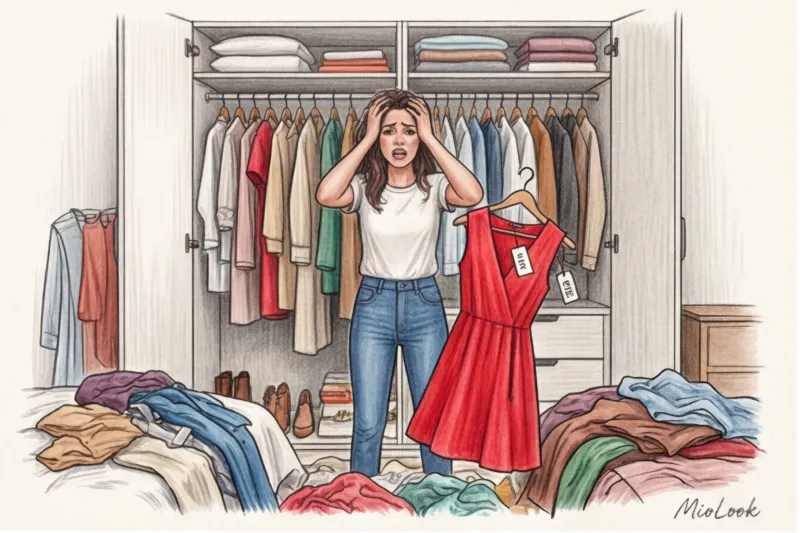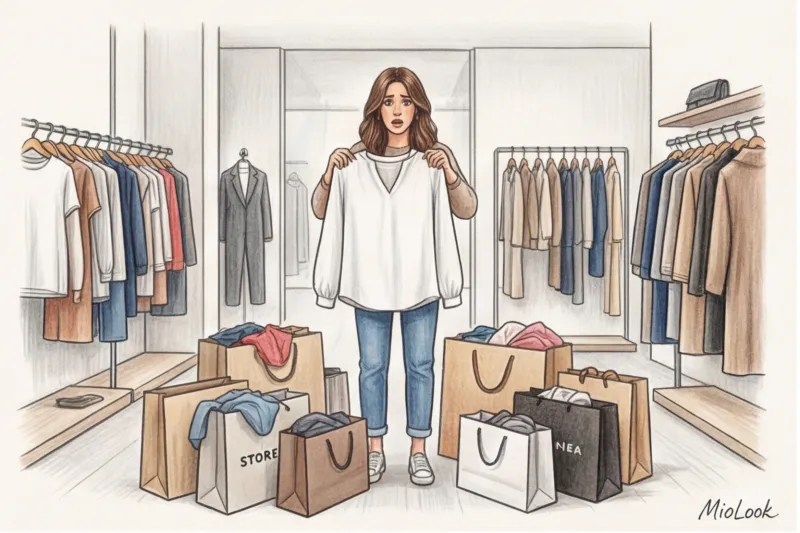
Over 12 years as a fashion journalist and stylist, I've examined hundreds of closets—from minimalist Parisian studios to sprawling New York walk-in closets the size of living rooms. And almost everywhere, I've seen the same paradox: a closet overflowing with clothes, hangers crammed tightly together, yet a woman stands in front of the mirror in utter despair, thinking, "I have absolutely nothing to wear." An hour later, she's already at the checkout, paying for yet another black sweater that's supposed to "save the day."
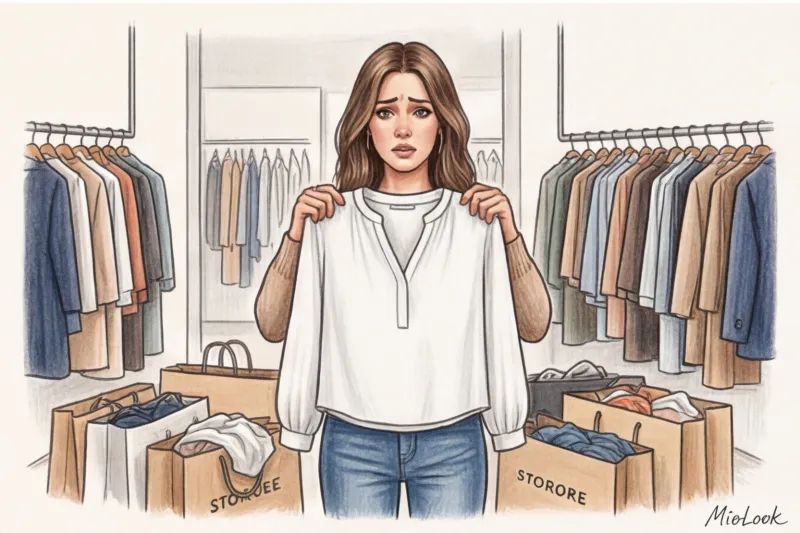
Let's be honest: we often buy emotions, not clothes. Stress relief after a hard day at work, compensation for fatigue, or the illusion that a new item will magically change our lives. We discussed the mechanics of this process in more detail in our the complete guide to emotional shopping But today I want to talk about a practical antidote. Digitizing your wardrobe to prevent impulse purchases It's more than just transferring photos of your belongings to your smartphone. It's a powerful psychological tool that acts as a dopamine loop breaker and saves your budget from pointless spending.
The Anatomy of Impulse Buying: Why We Repurchase What We Already Own
One of my clients, Anna, invited me to help her sort through her wardrobe. Opening her luxurious closet, I discovered six unopened silk blouses. They were hanging in store-bought cases, tags still attached. Anna had bought them at different times, while under intense stress at work. At the time, the purchase gave her the illusion of control and confidence. But as soon as the blouse found its way into the dark depths of the closet, it ceased to exist in Anna's mind.
I call this phenomenon "closet blindness." The human brain is lazy: it only remembers what it sees right now or what's easily accessible. According to a global McKinsey study (2022), the average European woman wears only about 20% of her wardrobe 80% of the time. The remaining 80% is "frozen" capital.
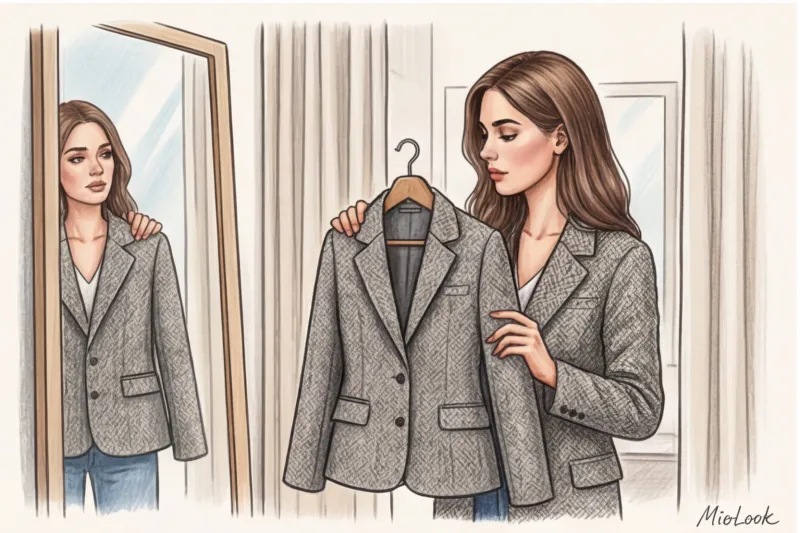
We fall into a trap: stressed, we go to the mall. Fatigue blocks analytical thinking. We see a beautiful jacket on a mannequin, buy it, bring it home, and hang it next to three others. We buy a fortune, not fabric.
Digitizing Your Wardrobe to Prevent Impulsive Buying: How Your Smartphone Breaks the Dopamine Loop
To understand how a digital wardrobe works, we need to understand the biochemistry of shopping. The classic dopamine loop looks like this: Anticipation of purchase → Transaction → Short-term euphoria → Guilt for spending money Note that the peak of pleasure occurs at the moment of anticipation and payment, and not at the moment of wearing the item.
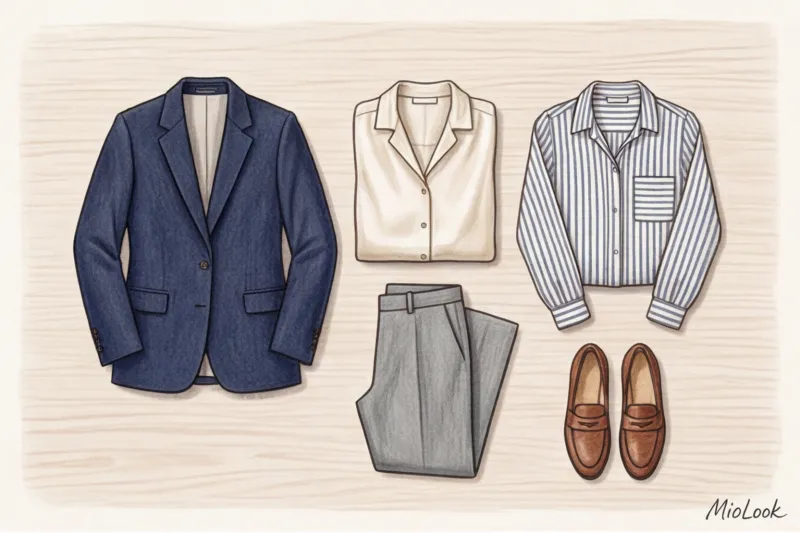
According to a 2021 study in the Journal of Consumer Psychology, introducing a mandatory 15-minute pause before paying reduces the likelihood of impulsive buying by 64%. A smartphone with your digital closet acts as the perfect buffer for this pause. When you're standing in the fitting room with another shirt from Zara, you don't immediately go to the checkout. You open image creation function in MioLook and try to virtually combine this shirt with something you already own. Your brain gets its dose of dopamine from the process of "putting together an outfit"—the shopping illusion works, but the money stays in your account.
The effect of virtual integration
My golden rule for clients: a new item is only worth buying if you can visually pair it with three or four tops or bottoms from your current wardrobe right now, without leaving the store. Virtual try-ons in the app eliminate about 80% of spontaneous "wants."
I must make a fair disclaimer: This method does NOT work for highly specialized clothing (like ski gear) or statement black-tie evening dresses, which by definition are worn as a stand-alone statement and don't require integration into a casual base.
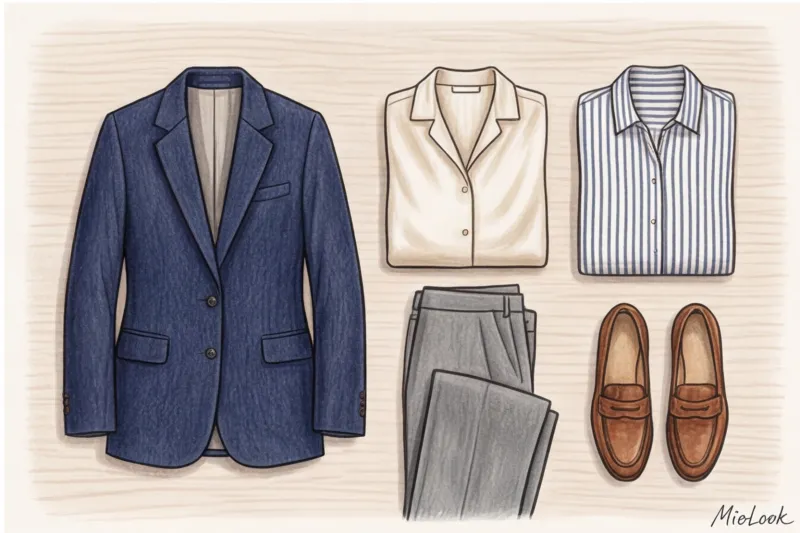
Clone Syndrome: How to Identify Duplicates That Are Eating Up Your Budget
I once laid out a client's jeans on her bed and counted seven pairs of absolutely identical dark blue jeans. The only difference was the color of the stitching on the back pocket—a detail that no living person would notice from more than half a meter away.
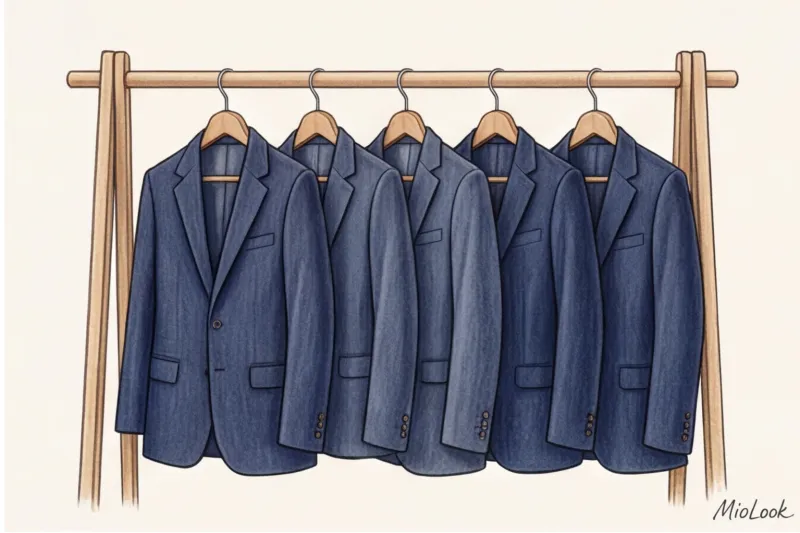
What are "wardrobe clones"? They're items we buy unconsciously because they represent our stylistic comfort zone. We're afraid to try new silhouettes, so we buy the same familiar black sweater again and again.
Your perfect wardrobe without duplicates
Upload your items into the app and let the AI create new combinations from what you already have.
Get access — €0.99 onceWhen you digitize your wardrobe, the system won't let you lie to yourself. You open the "Sweaters" category and see five identical black turtlenecks on one screen. Visual clarity is the best cure for illusions. It's important to learn to distinguish "work uniforms" (for example, two pairs of identical, perfect trousers if you wear them to the office five days a week) from meaningless cloning. The money you stop wasting on clones can be invested in truly prestigious pieces. €400-600 saved over six months is already an excellent basis for a quality Loewe bag or classic pumps that will take your looks to the next level.
The Mathematics of Style: Calculating the Cost Per Wear
In the fashion industry, there's an ironclad rule used by all professional analysts: Cost Per Wear (CPW). This concept radically changes the way we look at price tags in stores.
It's calculated like this: the total cost of an item is divided by the number of days you wear it. Let's look at a specific mathematical example. You buy a gorgeous classic trench coat made of thick cotton for €350. That seems like a significant amount. But you wear it in spring and fall, a total of about 100 times a year. Its CPW is €3.50. On the other hand, you give in to an impulse and buy an ultra-trendy sequin skirt from a mass-market store for €50. You wear it to one party, and then the trend dies. The CPW of this skirt is €50. Paradoxically, the "expensive" basic item turns out to be 14 times cheaper than the "budget" impulse purchase.
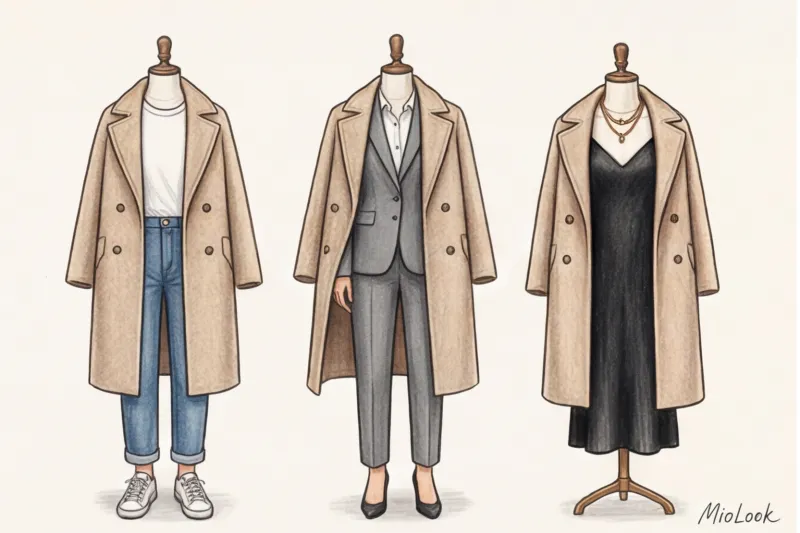
A digital wardrobe takes care of these calculations. Apps track how often you add an item to your outfits. You shift your thinking paradigm from "how much does it cost at the checkout" to "how much is it worth in my life."
The Wasted Time Myth: Why Digitization Saves Hours of Your Life
"I won't do that; I don't have the free weekend to photograph every pair of socks"—that's the phrase I hear from 90% of women when I suggest they start a virtual closet. It's the biggest myth about digitalization.
Most old-school stylists still recommend setting aside a Saturday, dumping everything on the floor, and suffering until nightfall. I offer a completely counterintuitive approach that works flawlessly: digitize your wardrobe after the fact.
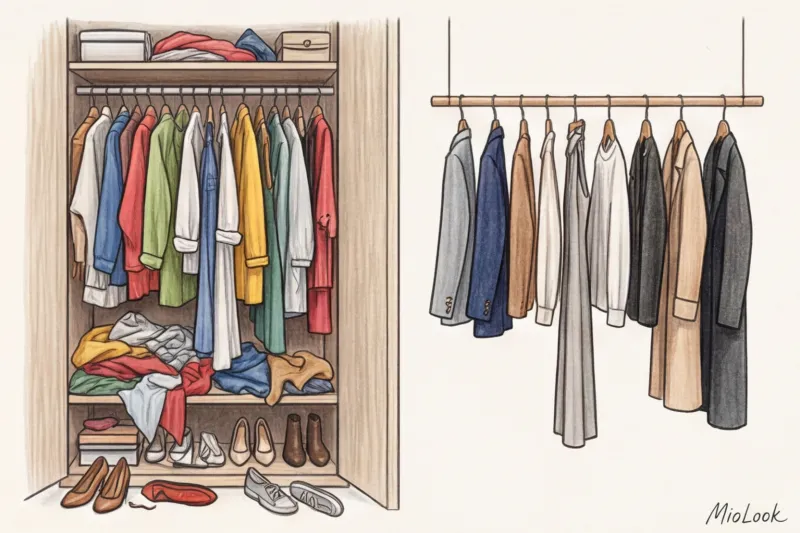
Don't touch anything that's been hanging in your closet for years. Tomorrow evening, when you come home and take off your clothes, take exactly 40 seconds. Photograph your pants and blouse on a hanger against a white wall. Modern MioLook smart wardrobe Using artificial intelligence, it will automatically cut out the background, determine the category, color, and seasonality. Do this every day only with the items you actually wear. In a month, you'll have a perfectly digitized, 100% functional capsule collection of those 20% of items that make up your real style base.
The Three-Category Rule for Starting
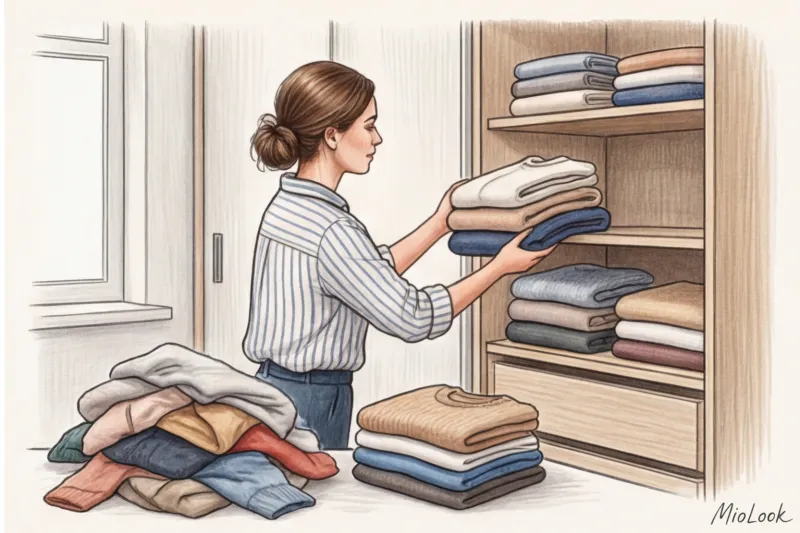
If you still want to download the database in one evening, use the three-category rule. Digitize only:
- Favorite structured bottoms (trousers, jeans, basic skirts).
- Outerwear and jackets (what shapes the silhouette).
- Accent shoes.
Don't waste time on basic white T-shirts, loungewear, and especially underwear. A digital wardrobe is for style architecture, not knitwear inventory.
Checklist: 5 Questions to Ask Before Buying a New Item (Through the Lens of a Digital Closet)
To ensure your knowledge doesn't remain just theory, I offer you a rigorous but life-saving algorithm. Save this list and ask yourself these questions every time you stand in a fitting room or before clicking "Place an order" in an online store.
- Do I have an item in my digital database that performs exactly the same function? (Not “the same color,” but specifically the function—for example, fulfilling the need for a strict office top).
- Can I create 4 different looks with her right now? Open the app and visually pair the new item with your existing bottoms and shoes. If you can create fewer than three looks, the item will remain dead weight.
- Does this item solve the “nothing to wear” problem or just relieve today’s stress? An honest answer to this question saves hundreds of euros.
- What will be the projected CPW (Cost Per Wear) of this item in one year? Divide the price by a realistic number of wears. If the figure is alarming, return the item to the hanger.
- Would I want to add this item to my digital capsule? If you're too lazy to even take a photo of it for the app, it means you don't have an emotional response to it.
Ready to get started?
Try the free plan—no commitments. Upload your first 10 items and see how the AI stylist works its magic.
Get access — €0.99 onceUltimately, a digital wardrobe on your smartphone isn't a pedantic textile catalog. It's your personal armor against aggressive marketing and endless seasonal sales. The moment you begin to view your clothes as an investment portfolio rather than consumables, you stop depending on emotions and begin to manage your style with true awareness.