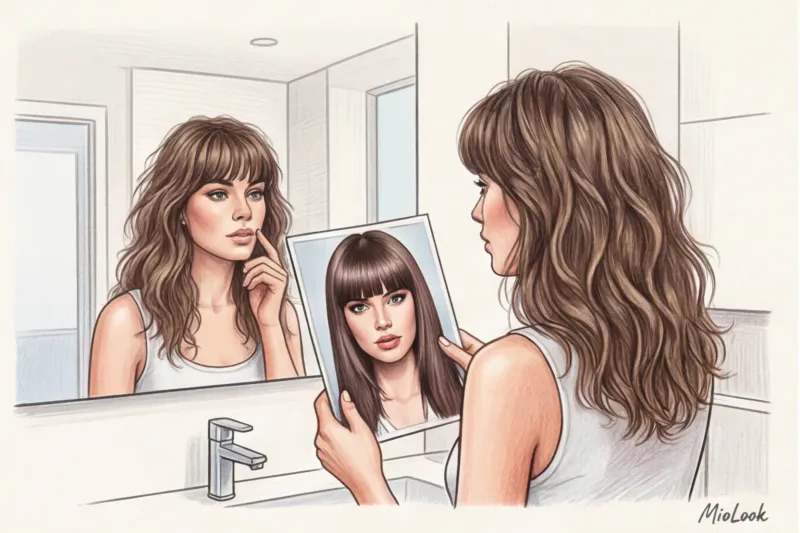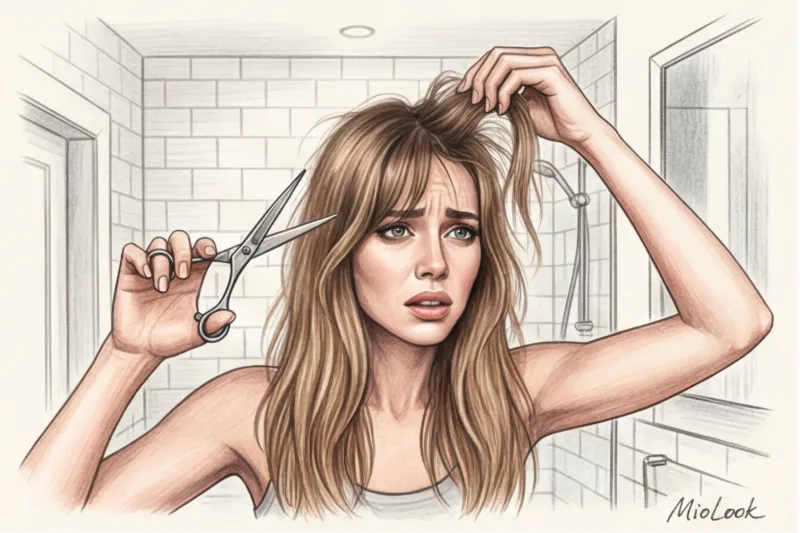
You know what question I hear most often from clients in November or early spring? "Olena, I freaked out yesterday and cut my bangs. What should I do with my wardrobe now? Half of my clothes don't suit me anymore!" In 14 years of working as a personal stylist, I've learned one ironclad rule: spontaneous hair experiments are too expensive. Today, when the question arises, "Will bangs suit me?" checking this hypothesis online is the smartest decision before calling the salon.
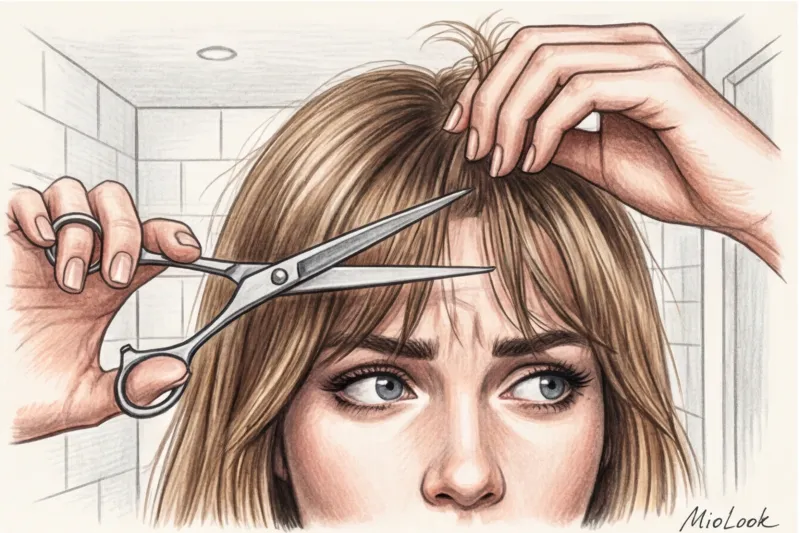
Unlike classic advice from the 2000s, we won't be talking about the notorious "face shapes." A face doesn't exist in a vacuum—it's always embedded in the geometry of your wardrobe. We've already written in more detail about how technology is changing our approach to appearance in our a complete guide to virtual hairstyle try-ons Now let's explore why artificial intelligence has become the primary tool for pragmatic style and how it protects us from stylistic failures.
The Price of an Impulse Haircut: Why the Question "Will Bangs Suit Me?" Costs at Least €150
Almost every woman is familiar with the "I freaked out yesterday" syndrome. We often confuse the need for major life changes with the desire to simply change our haircut. But the math of error is merciless. Let's do the math together.
One of my clients, top manager Marina, impulsively got thick, straight bangs. The next day, she discovered that her favorite basic turtlenecks now made her look like a mushroom, while her tailored jackets with wide shoulders, paired with her new hairstyle, had transformed her silhouette into a boxy one. The result: new V-neck blouses, an arsenal of texturizing sprays, a round brush, and regular (every three weeks) touch-ups with a stylist.
Fixing a bad haircut and purchasing hair care products will easily cost you €150–300. With an average hair growth rate of 1–1.5 cm per month, growing your bangs to a length that can be comfortably tucked behind your ears will take about 6–8 months. That's why transitioning from an intuitive to a calculated look isn't boring, but a matter of financial literacy.
Access to MioLook for €0.99 — one-time payment
A smart AI stylist will select the perfect look based on your individual characteristics.
Get access — €0.99 onceForget Your Face Type: What Really Decides Whether You Need Bangs
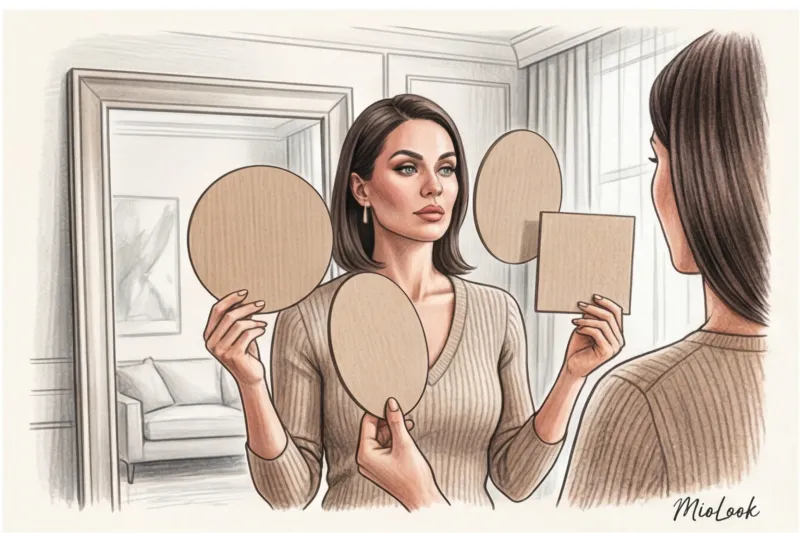
It's time to consign the "bangs should be matched to the shape of your face" rule to the dustbin of fashion history. It's counterintuitive, but as a stylist, I insist: bangs should be matched to the geometry of your usual clothing necklines. According to the WGSN Global Trends Study (2024), modern styling considers the look entirely holistically—from head to toe.
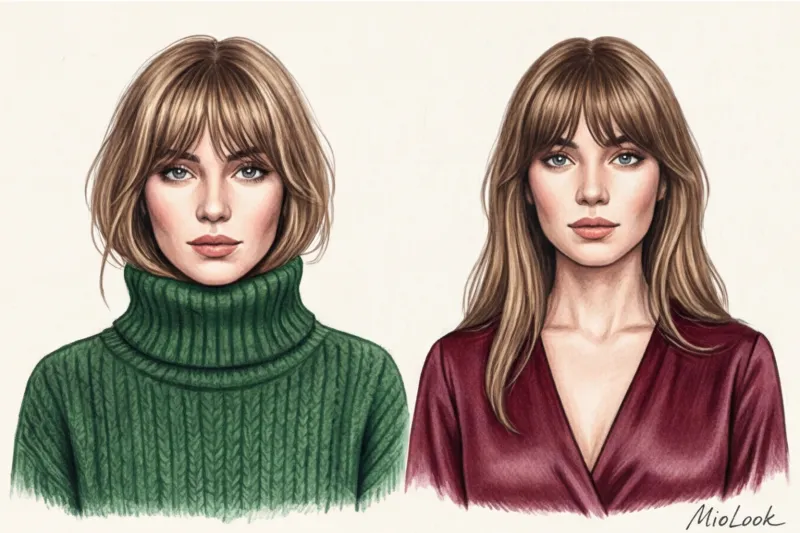
A horizontal fringe acts as an architectural limiter. It visually "squeezes" the height and widens the face. If you have broad shoulders or a large bust, thick, straight bangs will disrupt the proportions of your body, making your upper body appear heavy.
Wardrobe geometry and necklines
Bangs clash directly with a high collar. If turtlenecks and turtlenecks form the core of your winter wardrobe, bangs will deprive you of the necessary "air" in the portrait area. Your head will appear to rest directly on your shoulders.
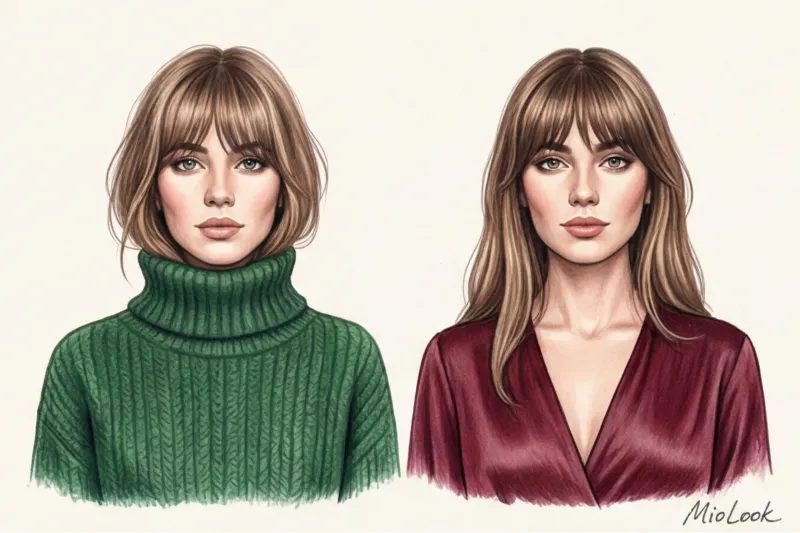
Conversely, if you often wear jackets on the bare skin, wrap dresses or silk blouses, curtain bangs combined with a V-neck will create the perfect vertical line that will elongate and slim you down.
Portrait Focus and Accessories
Any fringe is an arrow pointing to a specific part of the face. A straight line accentuates the cheekbones and nose, while longer lines on the sides highlight the lips and chin. But the real trick is in the glasses. If you wear bold acetate frames (like Celine or Tom Ford), adding bangs will create an overloaded effect—too much stuff per square centimeter of your face. In this case, I recommend first Try on glasses online using a photo to find a thinner metal frame.
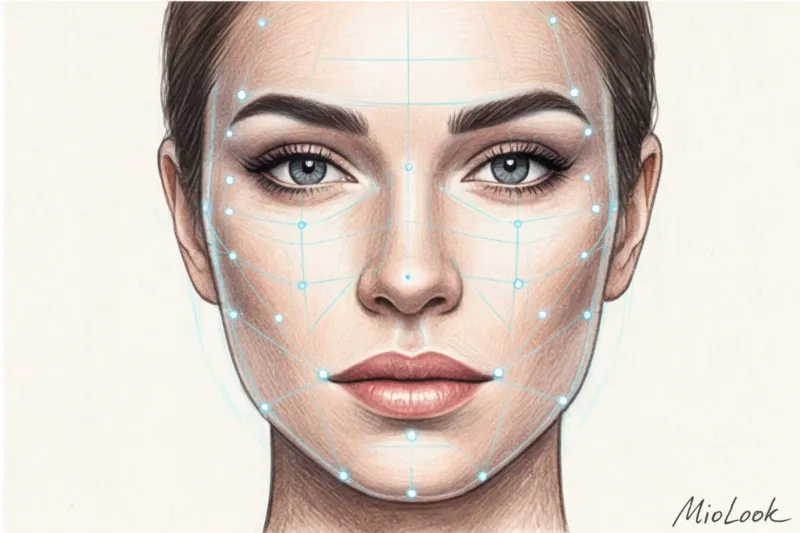
How biometrics work: If you need to know if bangs suit me, the most reliable way to check is online.
Forget those funny social media masks that simply slap a pixelated wig on your forehead. This is entertainment, not a styling tool. Professional AI analysis works on the principles of biometric scanning.
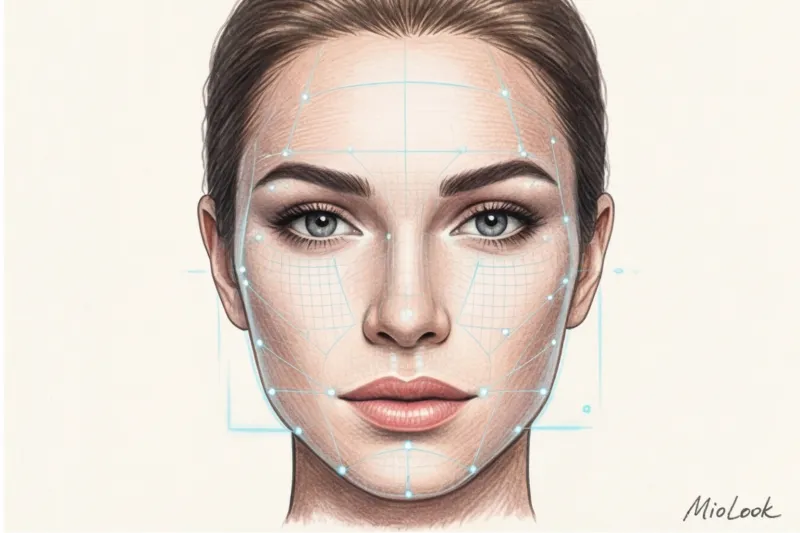
When you upload a photo to MioLook The algorithm reads up to 150 points on your face. The neural network analyzes not only the shape but also the depth of shadows, the way light falls on your cheekbones, the height of your forehead, and even your skin tone. The technology understands how real hair will cast shadows on your eyes. This precision allows you to save money on salon expenses and avoid six-month depression from a bad haircut.
Testing Bangs with AI: A Step-by-Step Guide from a Stylist
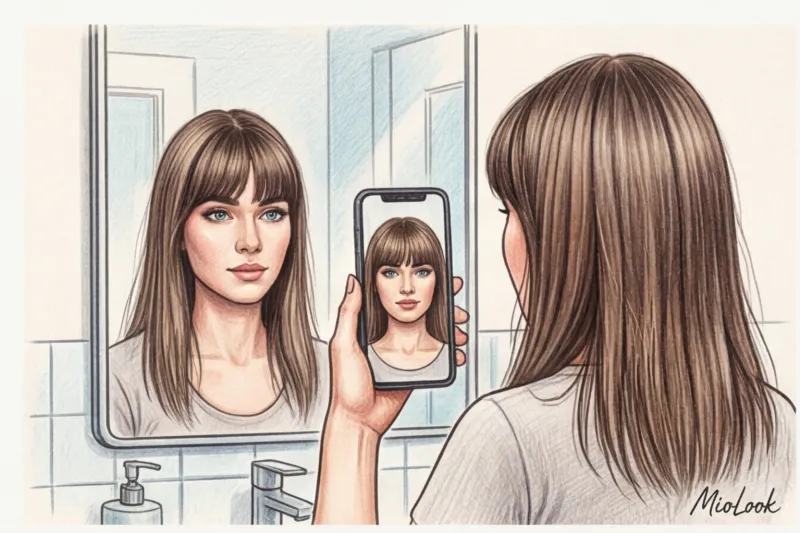
Artificial intelligence is a machine. As programmers say, "garbage in, garbage out." If you upload a selfie taken from the bottom up in a yellow bathroom light, the algorithm will produce a distorted result. For a virtual try-on to be 100% effective, the original must be flawless.
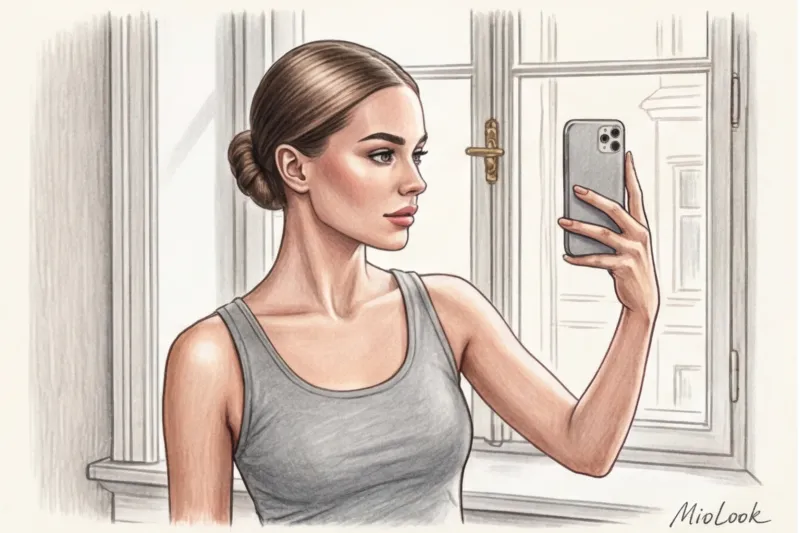
How to take the right initial selfie for AI
- Light: Stand facing a window in natural light. There shouldn't be any harsh shadows on your face (no sun from the side or a lamp overhead).
- Hair: Gather your hair into a tight, sleek ponytail or bun. Remove any flyaways so the neural network sees a blank canvas.
- Facial expressions: Maintain a neutral facial expression. Smiling changes the volume of your cheeks and jawline, which will distort the geometry of the virtual haircut.
- Cloth: Wear a basic tank top or a low-cut T-shirt. The algorithm wants to see your exposed neck.
Your perfect look starts here
Join thousands of users who look flawless every day with MioLook, testing hairstyles and clothes with one click.
Get access — €0.99 onceThe biggest mistake newbies make when trying on hairstyles virtually
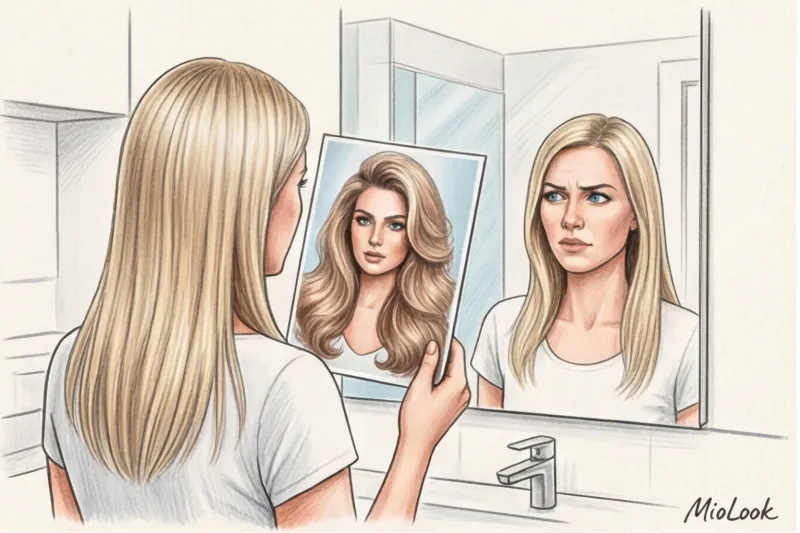
In my experience, nine out of ten women make one fatal mistake: they evaluate the result using the "floating head" approach. They look only at how the strands frame the eyes, completely ignoring the rest of the body.
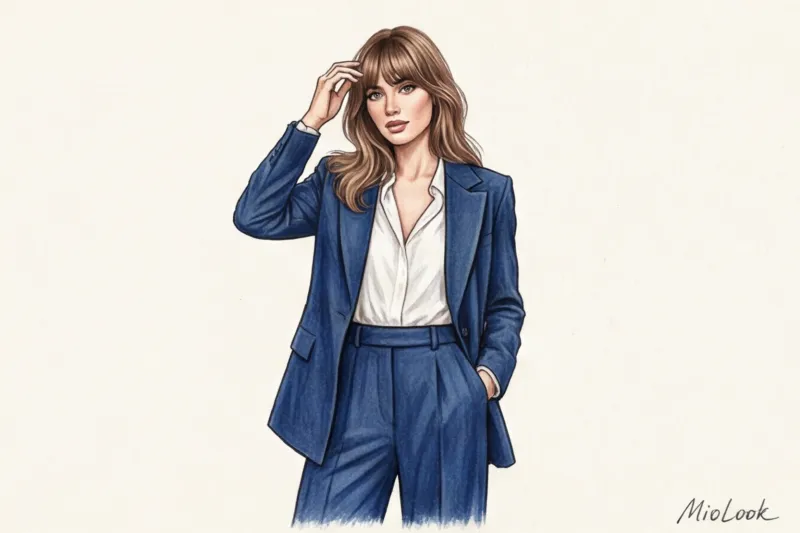
"Hair is as much a part of a silhouette as the shoulders of a jacket or the width of a pair of trousers. You can't change the top point of a composition without upsetting the entire balance."
Integrating an AI-generated hairstyle should take place within the full context of your wardrobe. Create a collage: place your generated face with bangs over a photo of your favorite everyday look. If you wear voluminous, oversized suits, sparse, choppy bangs will simply get lost against the bulk of your clothes. You can learn more about balancing proportions in our article about How to choose clothes according to your body shape using neural networks.
Checklist: 5 Questions to Ask Before Going to the Salon (Even If the AI Says "Yes")
Artificial intelligence is ideal for checking visual harmony. But it has one limitation: it doesn't know your lifestyle. As a practitioner, I always put my clients through a final pragmatic filter. Answer these five questions honestly:
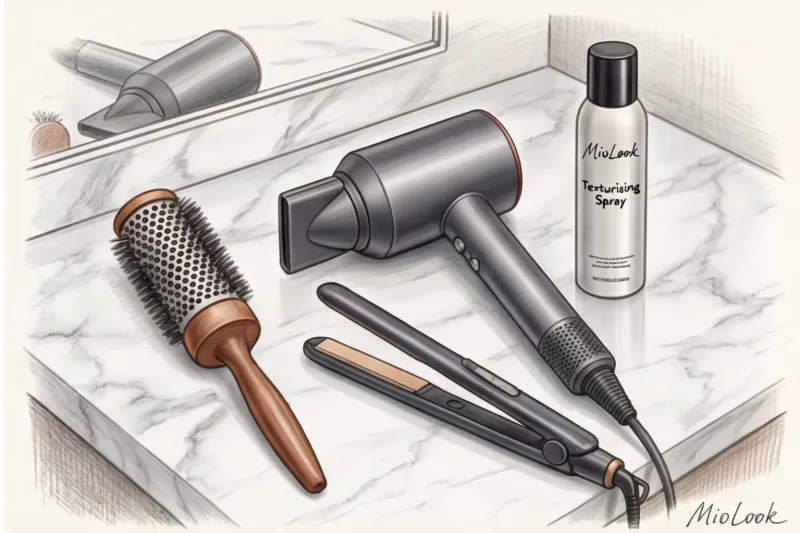
- Do I have an extra 15 minutes every morning? Bangs don't have a life of their own. They require daily brushing, even if you oversleep.
- Am I ready to wash my hair in sections? Bangs get dirty twice as fast due to contact with your forehead and face cream. You'll have to wash them separately in the morning.
- What's wrong with my hair porosity? AI creates a perfectly smooth look. But if your hair is frizzy or prone to humidity, the first autumn rain will turn your perfect French fringe into an unruly frizz.
- Does this fit my dress code? For strict corporate protocol (banks, law firms), a relaxed curtain fringe may look too casual.
- Does this fit into my capsule? Analyze your wardrobe. If turtlenecks and oversized scarves dominate your closet, be prepared. completely change style or give up bangs.
Your hair is the only accessory you wear every day without taking it off. And while technology today allows you to glimpse the future with a few clicks, the final decision should always be based on your personal comfort. Use neural networks not as a magic pill, but as a smart tool for risk reduction, and your wardrobe will reciprocate.