Sound familiar? The courier delivers the long-awaited box from COS. Inside is a flawless wool jacket, the very epitome of minimalism on the model in the lookbook. You put it on, go to the mirror, and... see a rectangular box that has completely erased your waist and added a slouched look. You file a return, lose the shipping fee, and feel a slight sense of disappointment in your figure.
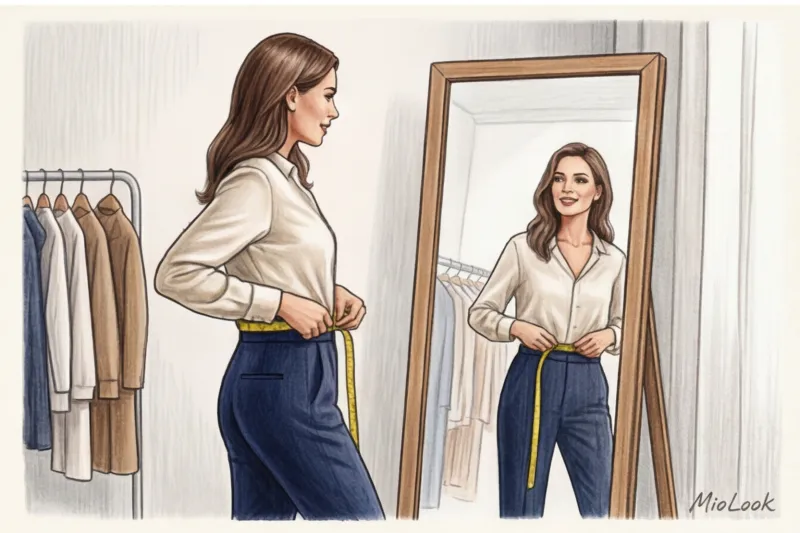
I see this every day. As a personal stylist, I've been watching women for years blame their bodies for what are actually pattern errors. But the rules of the game have changed. Today, we'll explore how smart visualization works and why. neural network to select clothes according to body shape Perhaps more accurately than a boutique consultant with a measuring tape. We've covered the basic principles of working with proportions in more detail in our A complete guide to visual body shaping: concealing flaws , and today we'll delve into the mathematics and algorithms of smart shopping.
From Roulette to Algorithms: Why We So Often Get Size Wrong
After 12 years of working with wardrobes, I've learned one hard and fast rule: the letter on the label means absolutely nothing. The standard size chart (S, M, L) is the greatest illusion of the mass market. You can wear S at Zara, M at H&M, and drown in XS from Scandinavian brands like &OtherStories.
According to data National Retail Federation (2024), approximately 70% of e-commerce clothing returns are due to disappointing fit expectations. We order items in our "usual" size, forgetting that brands constantly change basic fits depending on the manufacturer and oversized trends.
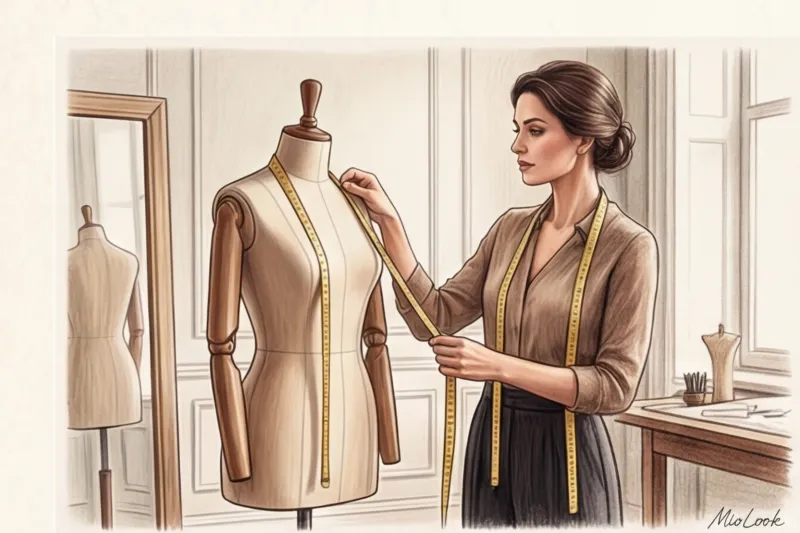
One of my clients regularly ordered from Massimo Dutti. She wears a classic European size 38. And every season, she returned up to 80% of her purchases. The problem wasn't her figure, but rather that the brand had changed the armhole gradation in new collections, making the jackets feel tighter in the shoulders. When we started using virtual fitting for stylists , returns have dropped to zero. The algorithm doesn't just look at the bust measurement; it calculates how a specific pattern will fit on specific shoulders.
Access to MioLook for €0.99 — one-time payment
A smart AI stylist will select the perfect look based on your individual parameters.
Get access — €0.99 onceBody Architecture: What the AI Stylist Really Sees
Let's be honest: classifying body shapes by fruit type ("apple," "pear," "inverted triangle") is hopelessly outdated. This is the most harmful stereotype, and one I wean my clients off during their very first consultation. Neural networks don't see fruits. They analyze geometry.
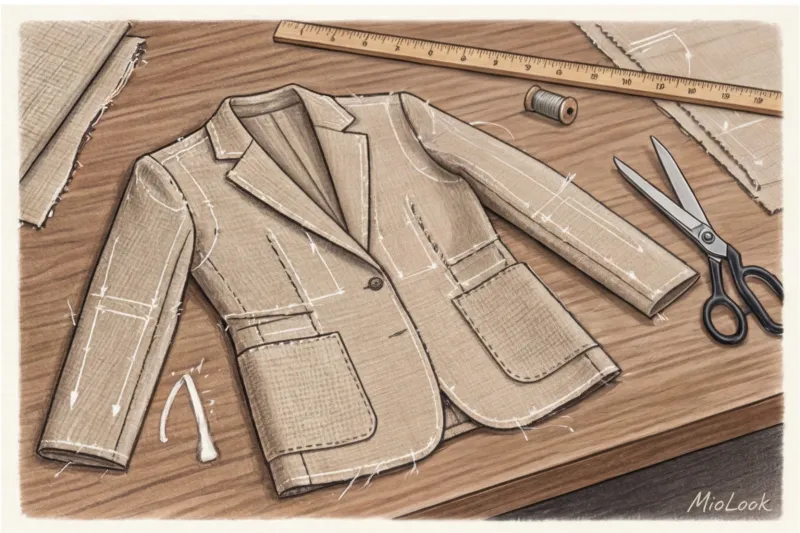
Modern AI uses an architectural approach to the body. Research by the Institute WGSN Digital Fashion (2023) confirms that for a perfect fit, it's not the volumes themselves that matter, but the vectors and guiding lines of the silhouette. The algorithm calculates the length of your torso relative to your legs, your shoulder angle, your hip height, and the distribution of visual weight.
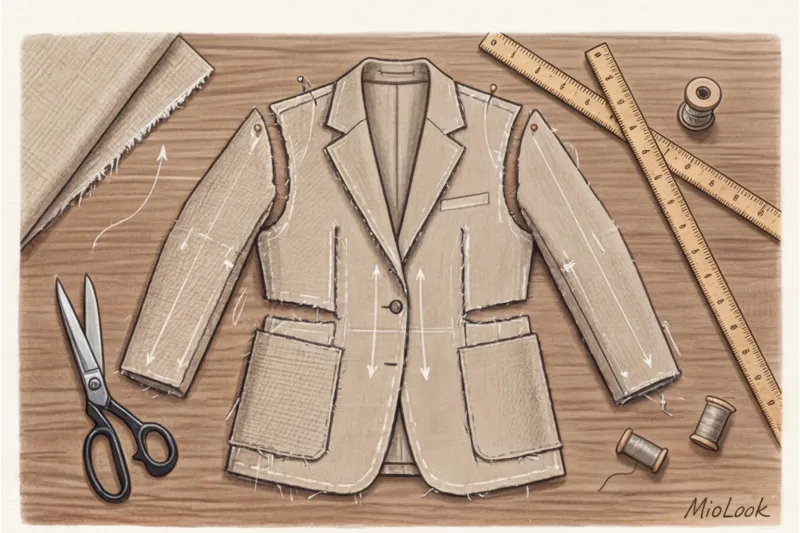
"Instead of frantically masking 'problem areas,' AI seeks out your focal points—those strong lines that can be used to construct the correct architecture of the image."
The Mathematics of the Perfect Cut
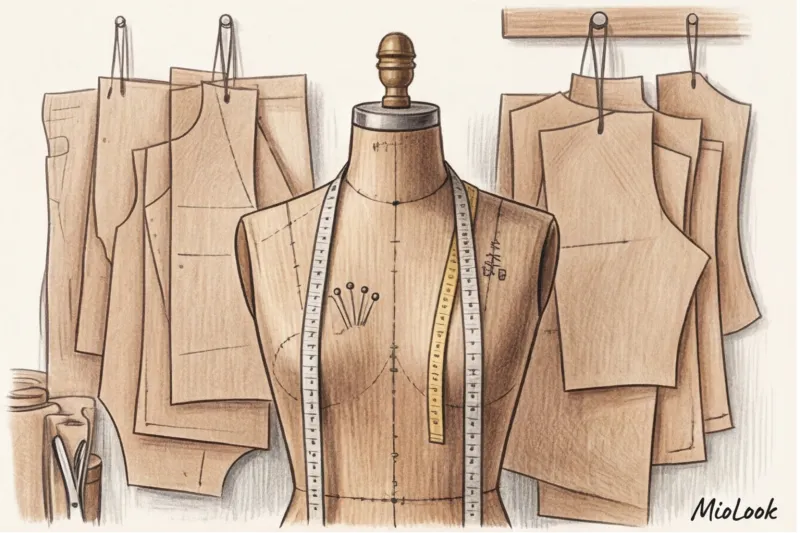
Did you know that when choosing trousers, hip circumference isn't the most important measurement? Much more important are the "saddle height" (the distance from the groin to the waist) and the slope of the pelvic bone. If these measurements don't match the trouser pattern, you'll end up with those unsightly creases in the groin area that no tailor can remove.
This is where the neural network works its magic. The virtual fitting takes into account not only your measurements but also the physics of the fabric. Stiff denim (12 ounces and over) behaves differently than flowing viscose. The algorithm understands where the fabric will stiffen and where it will drape softly, concealing your figure's nuances.
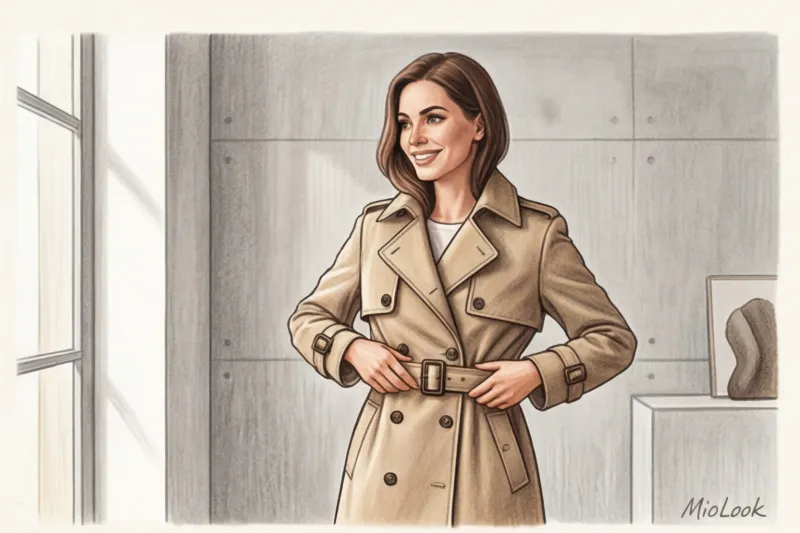
How to choose clothes for your body shape: a neural network as your personal stylist
Integrating artificial intelligence into the shopping experience is a game-changer. Instead of mindlessly scrolling through hundreds of pages in an online store, you're presented with a curated selection where every item is guaranteed to fit.
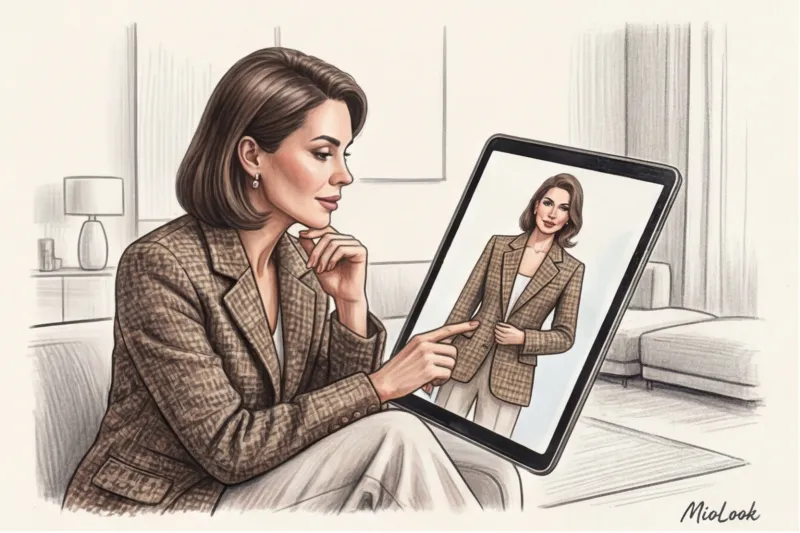
In practice, the process looks like this: you upload your exact measurements or a photo (I'll tell you how to do this correctly below), and the system compares them with the pattern database. neural network to select clothes according to body shape maybe even from categories you would never have looked at.
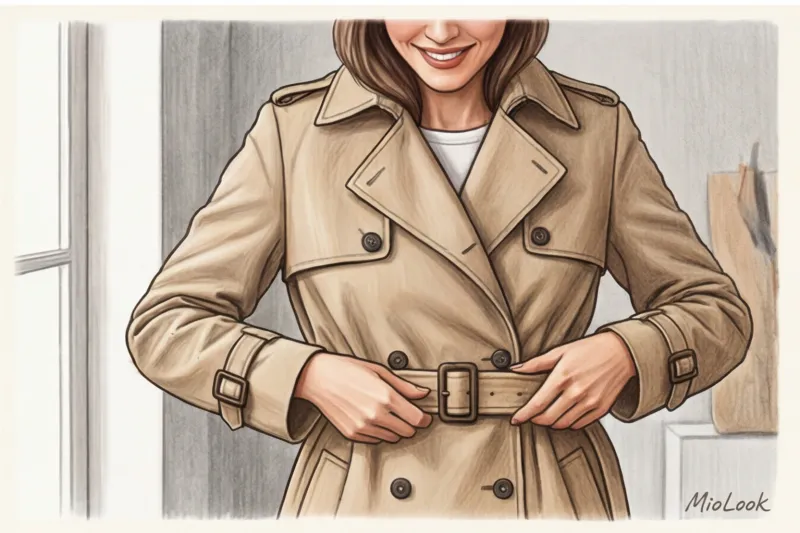
A telling case from my practice: my client Elena had avoided wide-legged palazzo pants for five years. They made her look shorter and wider in mass-market fashion. She was convinced this trend wasn't for her. We uploaded her data to selection system by parameters , and the algorithm returned an unexpected result—a palazzo made of flowing Tencel with a 3-centimeter-high waist and two deep tucks. We found a similar style at Uniqlo. The result? The legs visually lengthened, and the waist appeared slimmer. The algorithm simply found that mathematical proportion that the eye couldn't detect in the store.

Your perfect look starts here
Join thousands of users who look flawless every day with MioLook.
Get access — €0.99 onceThe biggest mistake when using AI for wardrobe selection
I have to be completely honest with you: this technology has a blind spot. And more often than not, we create that blind spot ourselves. There's a golden rule in programming: "Garbage in, garbage out."
The biggest mistake is trying to "tighten up" when taking measurements. When you enter a waist measurement of 68 cm instead of the actual 72 cm, hoping the garment will "stretch a little" or motivate you to lose weight, you're throwing the entire algorithm out of whack. The AI stylist will create recommendations for a non-existent geometry, and as a result, the garment won't just be too small—it'll distort the proportions: the darts will be pushed up, and the shoulder seam will be pushed toward the neck.
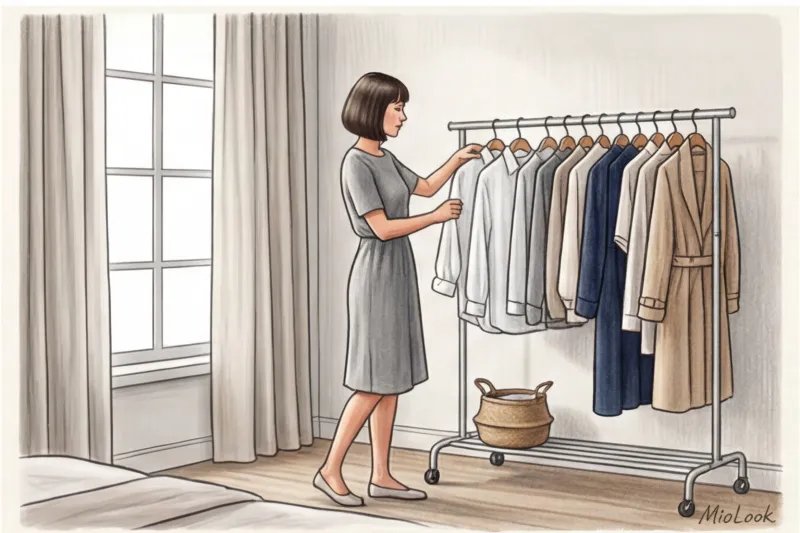
The second limitation is ignoring fabric recommendations. A neural network might brilliantly select the perfect slip dress style for you. But if you ignore its advice to choose a heavyweight silk (19mm or higher) and buy the finest budget polyester, the garment will highlight even the slightest unevenness in your underwear. A style that doesn't take fabric density into account doesn't work.
Checklist: Preparing for a Virtual Fitting Without Mistakes
To AI-powered image makeover It went smoothly, but proper preparation was essential. Here's my checklist for a practicing stylist—no abstractions, just concrete steps:
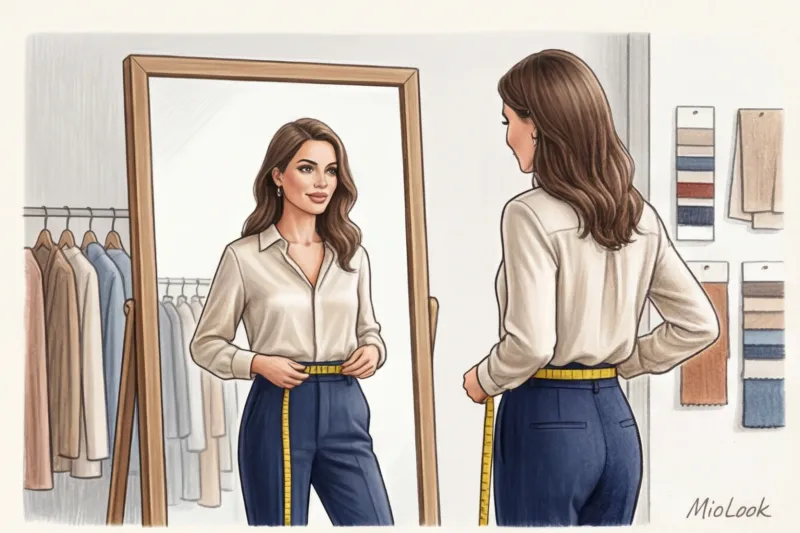
- Take measurements correctly: Wear only underwear, no constricting elements. The tape measure should be parallel to the floor. Measure not only the classic bust-waist-hip measurements, but also the inseam length of the pant leg and the width of the shoulders at the back.
- Identify focal points: Think about what you love about your figure. Graceful collarbones? Thin wrists? A defined waist? The algorithm needs to be given the right direction—what we'll reveal and highlight.
- Conduct an audit of your favorite things: Find those jeans or jacket in your closet that already fit you perfectly. Take their measurements. This will give the neural network an excellent reference for your personal comfort zone (how loose you like your clothes).
The Smart Shopping Economy: How Much Does Precision Fit Save?
Let's calculate the benefits using real numbers. Many people think personal analytics are a waste of time. But let's take a look at your closet. How many "compromise" items with tags still hanging there, bought on sale for €30-50 but never worn because they fit so poorly?
Moreover, hidden costs associated with clothing alterations often take away from the joy of the purchase. In Europe, the average cost of shortening trousers while preserving the original hem is around €15–20. But what if you bought a second-hand jacket? Having it tailored by a reputable tailor will cost between €40–80, and you may not be satisfied with the result if the armhole height was initially off.
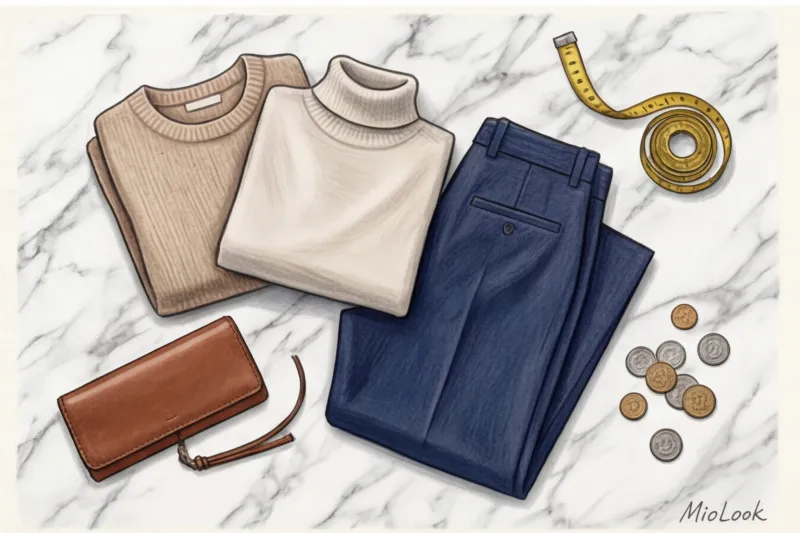
Usage modern neural networks for style — this is a pure ROI (return on investment) for your wardrobe. You stop buying things that will last a lifetime and invest only in pieces that become an architectural extension of your body.
Stop dressing the fantasy figure you see in fashion magazines. Dress your real, living geometry—algorithms have already learned to understand its beauty and uniqueness.