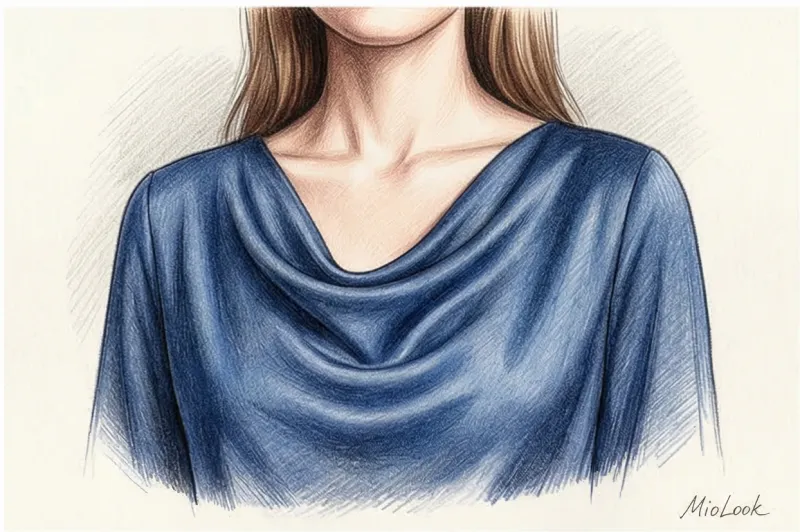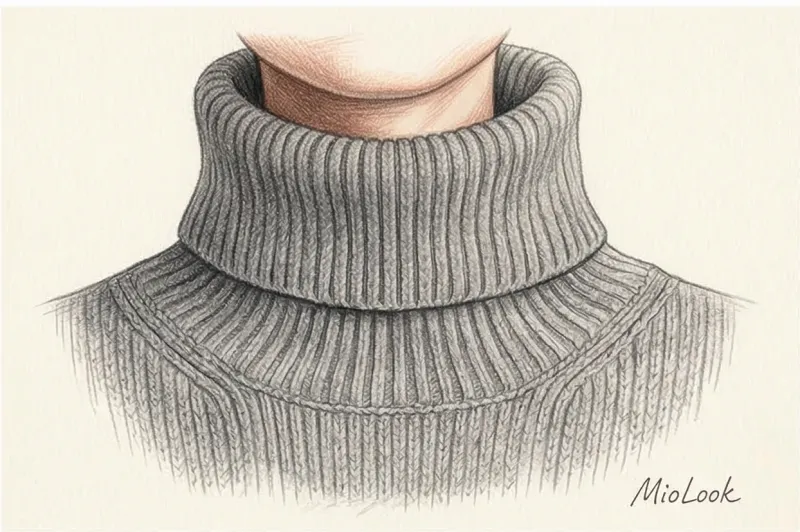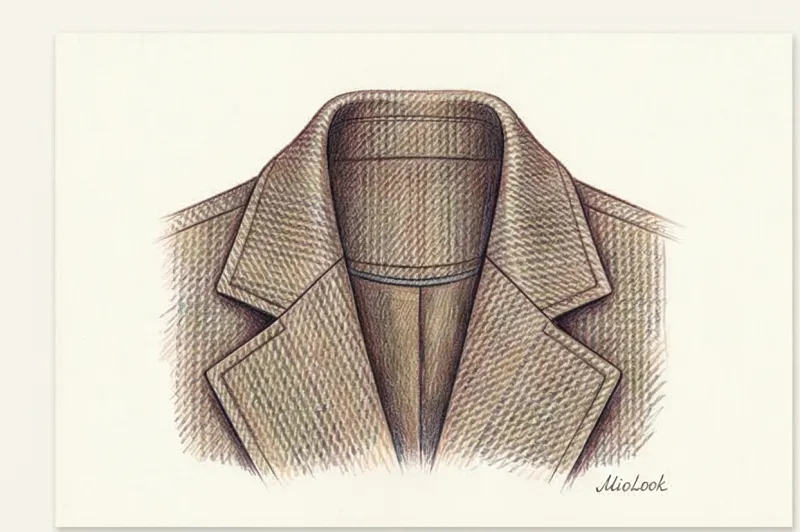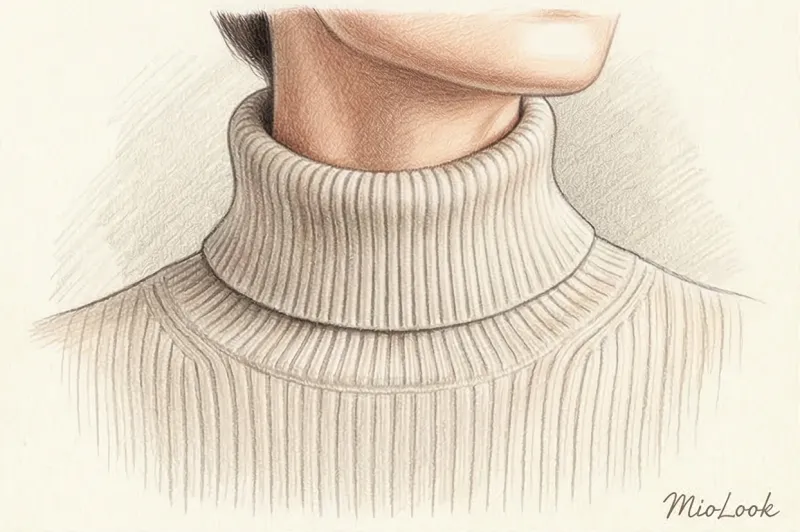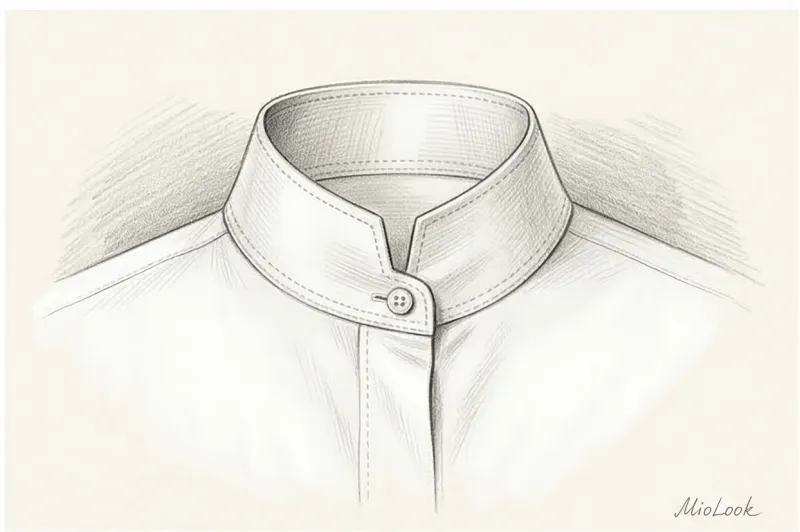
What is a stand-up collar?
Stand-up collar - is a vertically positioned collar that fits tightly or loosely around the neck and does not have a turn-down part (fly-back) or lapels.
Structurally, the element is a straight or slightly curved strip of fabric sewn into the neckline of a garment. Historically, this detail originates from traditional Asian clothing, particularly the mandarin collar, as well as military uniforms, which required strict neck support.
In modern tailoring, the stand-up collar serves a clear aesthetic function. It visually elongates the silhouette, accentuates the jawline, and creates a minimalist, composed look.
Main types
Depending on the design and materials used in clothing construction, there are several types of stand-up collars.
- Classic rigid stand. A thick collar with an internal lining that holds its shape well. It's often used on tailored men's and women's shirts, as well as military-style jackets.
- Mandarin collar (Chinese stand-up collar). A low collar with rounded or straight edges. The edges do not meet tightly in the front, leaving a small gap.
- Soft stand (mock neck). An elastic collar without a rigid frame. Typical for knitwear, turtlenecks, and sweaters.
- Funnel neck. A one-piece or set-in collar that flares slightly at the top. Often found on coats and heavy jackets.
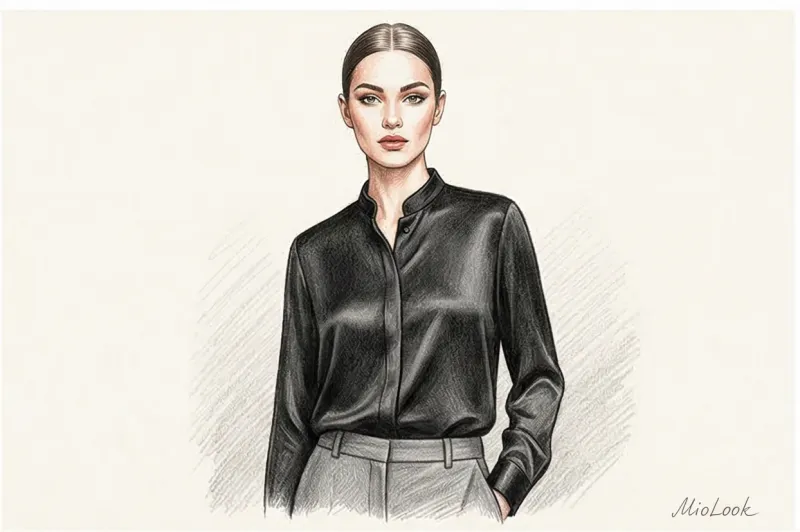
What to combine with
Silk blouses with stand-up collars are paired with straight-leg trousers or a pencil skirt. This style is perfect for creating a formal office look.
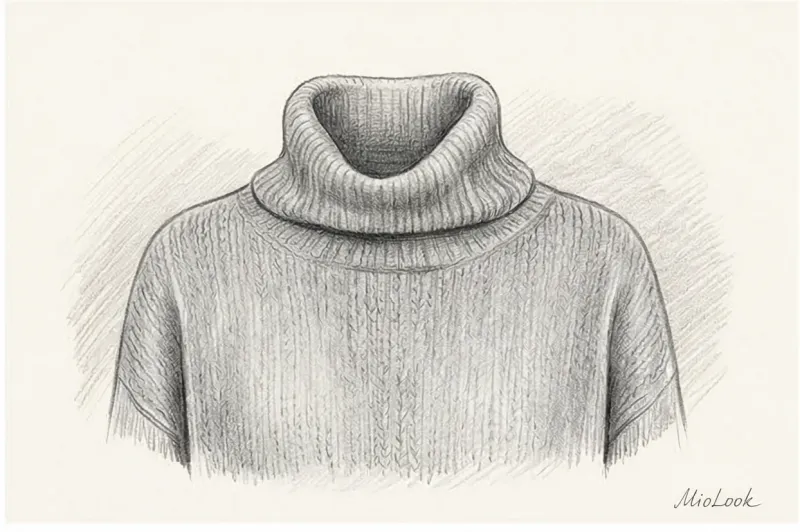
Knitted sweaters with a soft stand-up collar are used as a base layer. They are worn under a classic jacket, blazer, or trench coat for a smart-casual look.
Outerwear with a stand-up collar requires careful styling of the neck area. It's recommended to tuck scarves and shawls in, avoiding bulky knots over the collar.
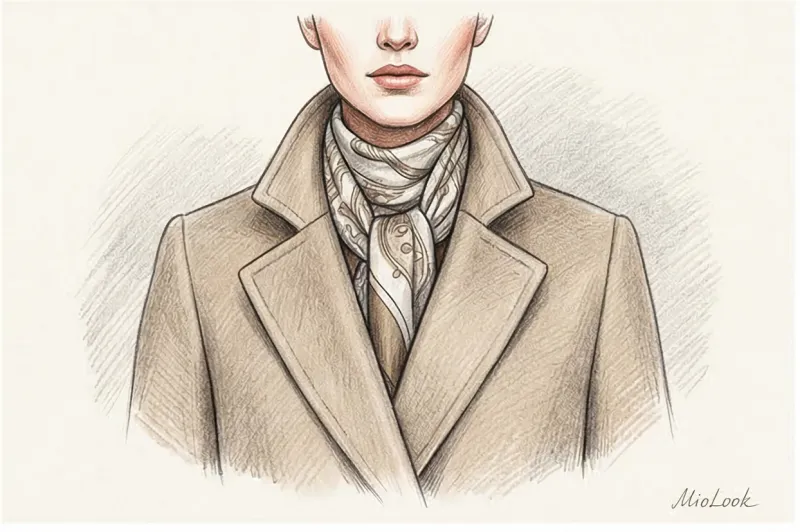
To accentuate the geometric line of your collar, it's best to pull your hair back into a sleek style, such as a bun or ponytail. For jewelry, choose simple earrings and avoid bulky neck accessories.