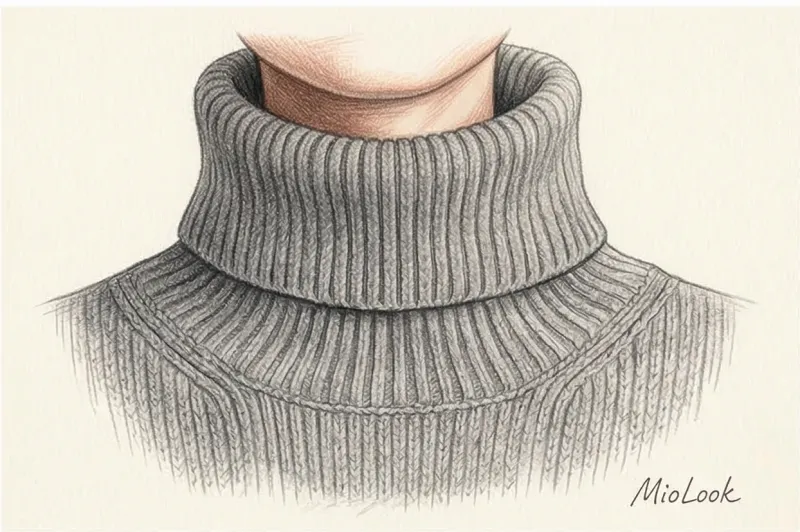
What is a turtleneck?
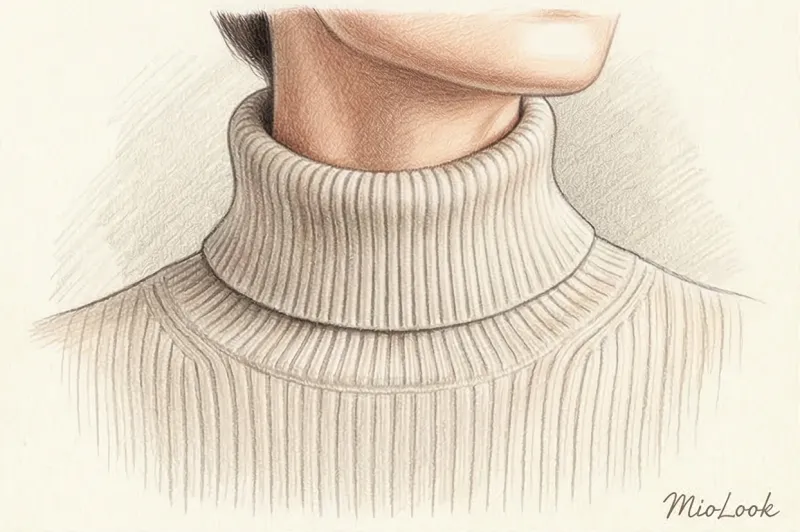
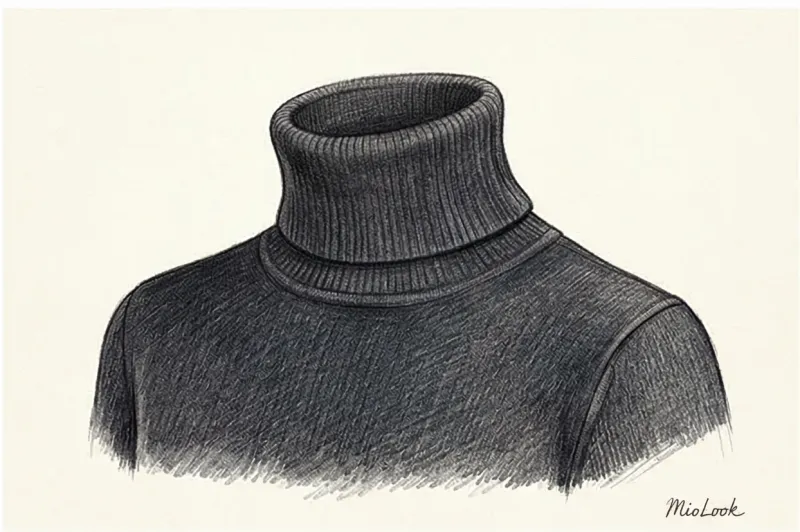
turtleneck — a thin, fitted sweater with a high collar that covers the neck. This item is also often called a turtleneck or a turtleneck.
In the modern wardrobe, a turtleneck is a basic garment that functions as an underlayer or a standalone top. The term historically derives from the garment's original purpose: in the late 19th century, divers wore these sweaters under their diving suits. The high collar protected the neck from chafing from the metal helmet and retained warmth.
The garment entered everyday wardrobes in the mid-20th century. It became a symbol of intellectual fashion thanks to Yves Saint Laurent, Pierre Cardin, and Audrey Hepburn.
Distinctive features and materials
The main design element of the garment is the high collar. It can be turned up (the classic version) or a shortened stand-up collar, known as a mock neck.
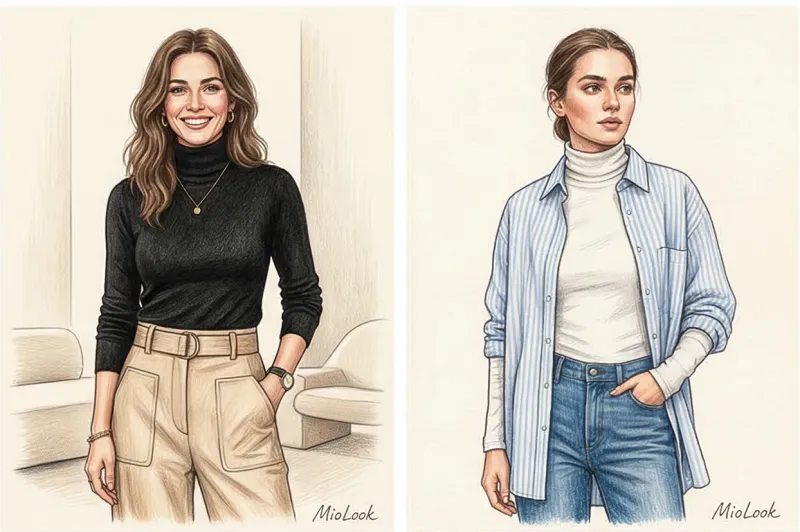
The cut is traditionally form-fitting ("second skin") or semi-fitted. The garment has no fasteners, zippers, or buttons, and is pulled on over the head. To maintain shape and ensure a snug fit, elastic fibers such as elastane or spandex are added to the fabric.
The materials used for tailoring ensure a comfortable fit. In the warm season, these are thick cotton, viscose, and microfiber. For the colder months, fine merino wool, cashmere, or silk-blend yarns are used.
What to combine with
In business attire, a turtleneck is a formal alternative to a classic shirt. It pairs seamlessly with pantsuits, double-breasted jackets, and pencil skirts.
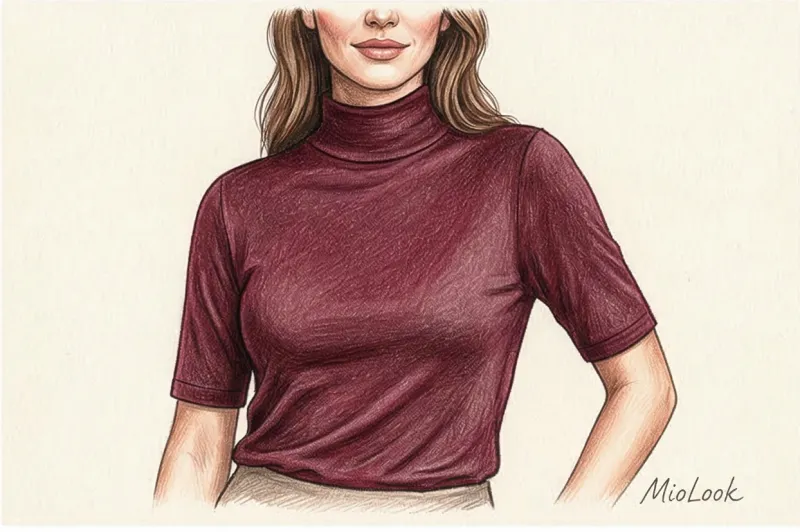
In layered looks, a thin turtleneck is worn as a base layer. It's paired with oversized cotton shirts, slip dresses with thin straps, thick sundresses, knitted vests, and cardigans.
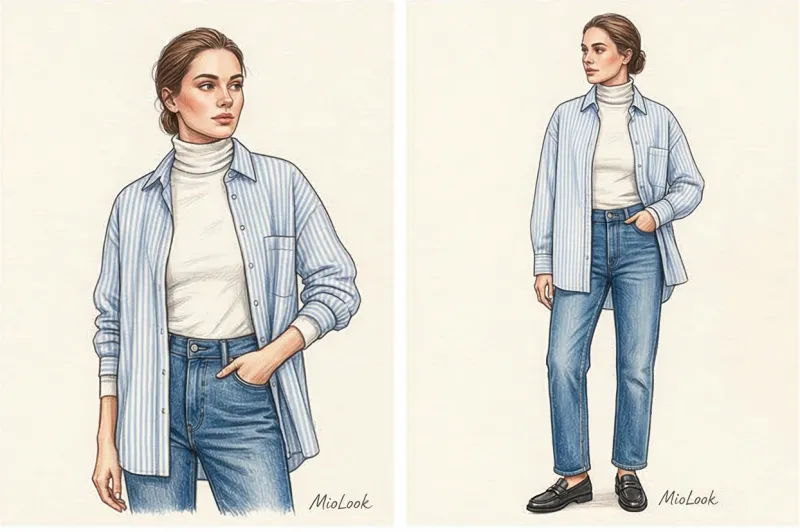
For everyday smart casual looks, a basic black, white, or beige turtleneck is paired with straight-leg jeans, leather midi skirts, or wide-leg palazzo pants. When creating outfits, the rule of proportion applies: a fitted top looks best with a voluminous or structured bottom.