
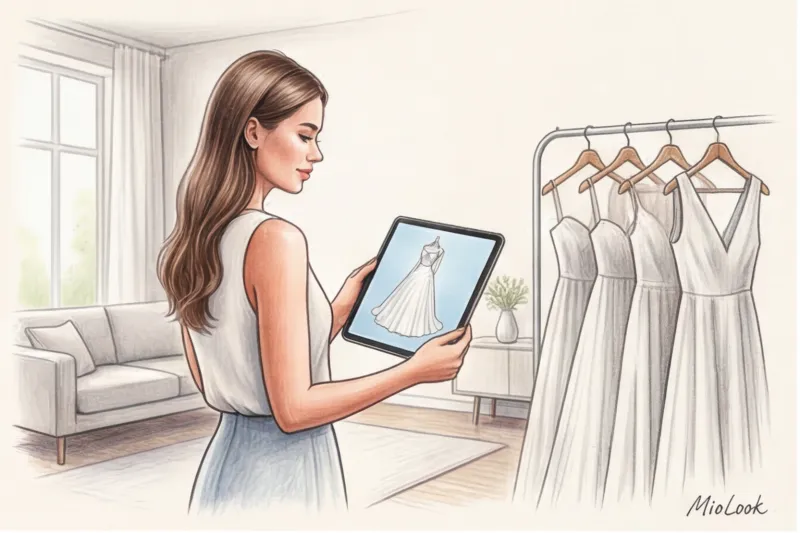
The Era of Fashion Tech: How Online Wedding Dress Try-Ons Are Changing the Game
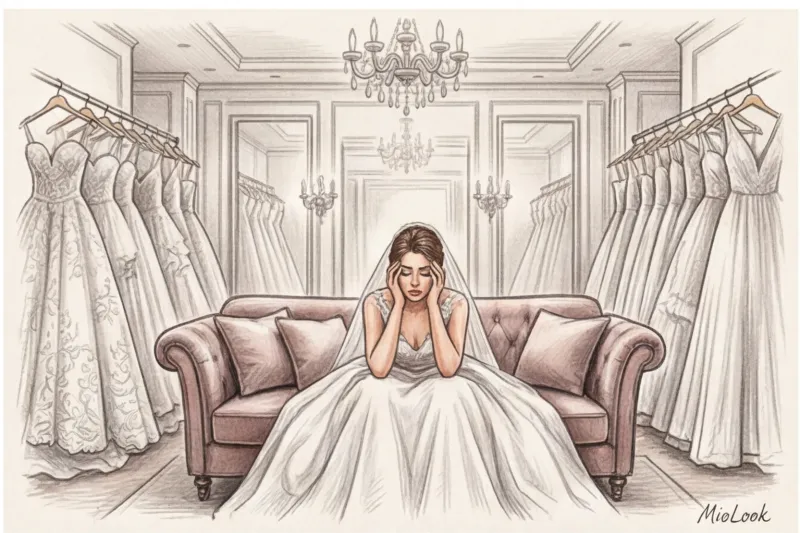
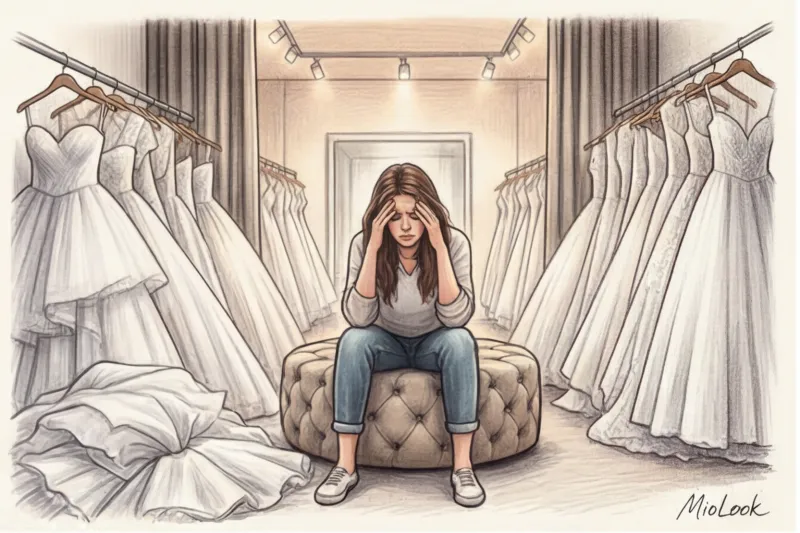
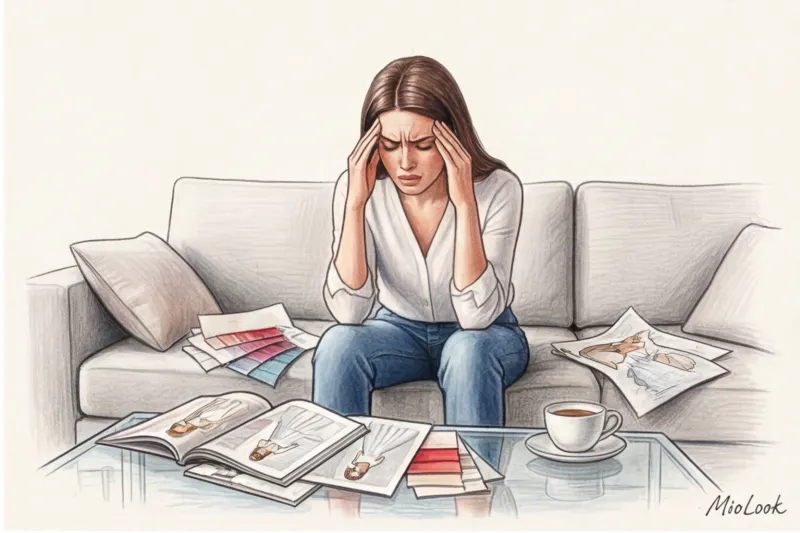
Do you know at what point the anticipation of the perfect wedding turns into exhausting work? Around the fifteenth dress. According to a 2023 survey by wedding portal The Knot, the average bride tries on 10 to 15 outfits before saying "yes" to that perfect silhouette. But in my experience, that number often exceeds 30. Add to that the physical fatigue—a beaded couture dress can weigh up to 8 kilograms. Stiff corsets, scratchy tulle, blinding studio lighting, and pressure from salespeople—all of this leads to choosing an evening gown becoming a source of immense stress. It's at this stage. Trying on a wedding dress online acts not just as a fun feature, but as a necessary technological pain reliever.
I'll never forget my client Anna. Last spring, we met at a coffee shop after her solo foray into high-end boutiques. She was practically sobbing over a cappuccino after her third salon visit. "They've all merged into one big white blur; I can't even tell what suits me anymore, and the weight of the multi-layered skirts is making my back ache," she complained. Traditional shopping had driven her to emotional burnout even before we'd even started discussing wedding floristry. We immediately stopped this marathon of pointless physical fittings and switched to a digital format.
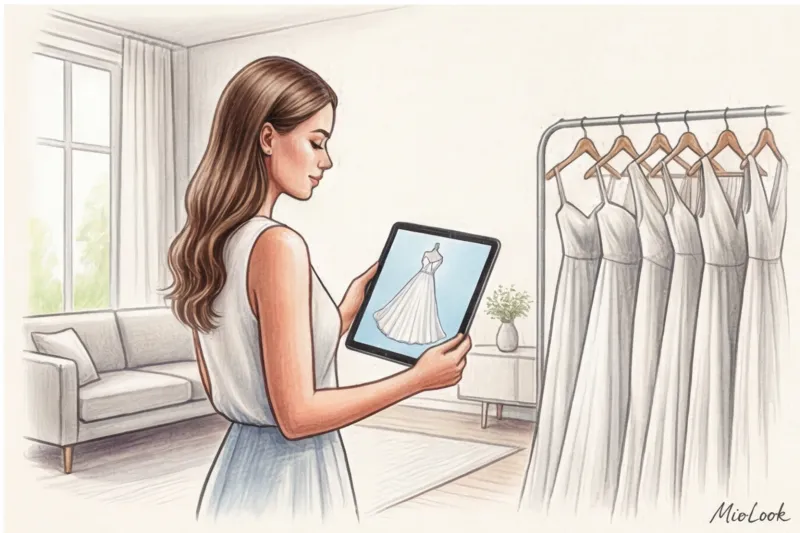
As a tech stylist, I'm an absolute proponent of the "smart filter" concept. There are an infinite number of silhouettes in the world, and trying on them all in real life is a recipe for a nervous breakdown. Artificial intelligence allows us to radically reduce the selection funnel: we take 1,000 abstract dresses from global catalogs and, using algorithms, narrow the list down to 3-4 ideal options. AI instantly analyzes proportions, calculates the golden ratio for your specific figure, and ruthlessly eliminates anything that would disrupt the harmony of lines. It's very similar to how virtual fitting of business clothes , but the stakes here are significantly higher - the cost of a mistake when buying a designer outfit can be measured in thousands of euros or dollars.
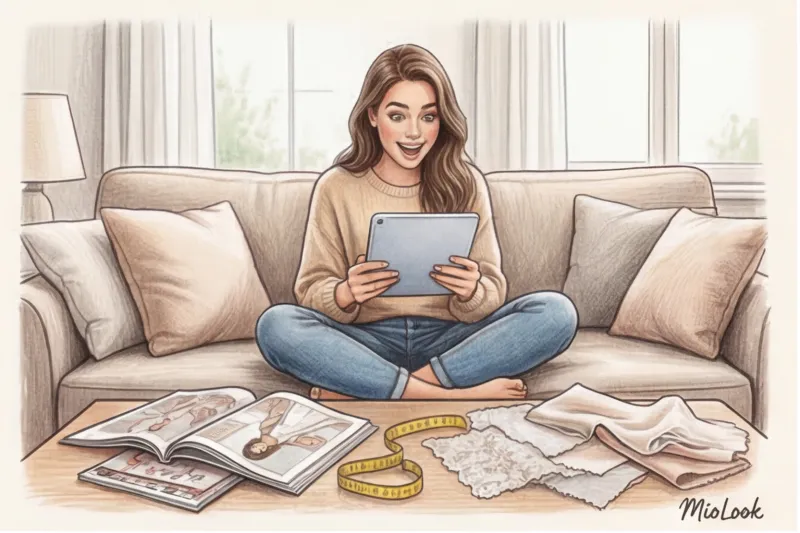
Technology eliminates visual and psychological noise. You can evaluate the design of a dress objectively, sitting on your couch at home, without the constant pressure of a consultant hovering over you, desperate to meet your sales target by the end of the month.
Digital avatars have saved the nerves of dozens of my clients. For example, Anna was sure she wanted a full, ballgown silhouette in the style of early Vera Wang. But when we uploaded her measurements to MioLook — an app for intelligent wardrobe management and outfit selection — the digital twin clearly demonstrated that excess hip volume was visually "eating away" her petite frame. We shifted our focus to simple slip dresses in flowing fabrics. Ultimately, Anna bought the perfect outfit at the first salon we visited with a specific request, spending just 40 minutes on the final fitting.
For busy women whose time is very valuable (we have already discussed this aspect in the material about AI wardrobe for managers ), fashion-tech tools have become a true salvation. Algorithms don't replace the emotion of first touching thick mikado silk or the finest French Chantilly. They do something more important: they take over the grueling, rough analysis, leaving you with only the pure magic of holiday anticipation.
How Algorithms Work: Behind the Scenes of Virtual Dress Try-Ons for Evening and Wedding Dresses
I often hear the same disturbing question during consultations: "What if I look worse on the screen than in the salon mirror?" My answer is always brutally honest: you'll look more real. Have you ever noticed how stunning you look in the fitting room of a premium bridal boutique? The secret lies not only in the virtuoso skill of the tailors. Salon owners invest thousands of dollars in "complimentary" lighting—complex systems of directed light that erase shadows, conceal even the slightest imperfections in the silhouette, and visually smooth out texture. Furthermore, the huge floor mirrors there often have a subtle tilt of a few degrees, artificially elongating the figure. Modern online wedding dress fittings are completely free of these optical illusions. The algorithm doesn't flatter you or try to sell you anything. It operates on dry mathematics, providing an objective picture of how the garment actually fits.
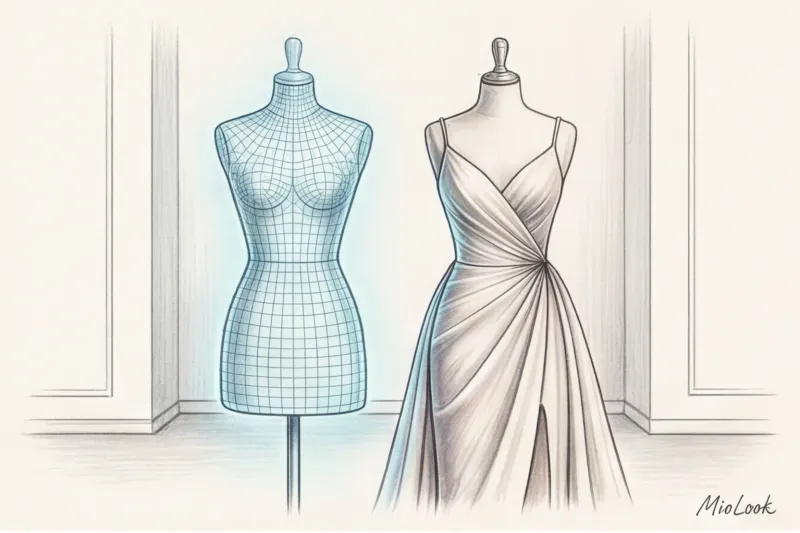
There's a clear technical dividing line between entertaining AR filters from social media and professional fashion tech tools. When you try on a virtual outfit on, say, Instagram, the program simply "glues" a flat 2D texture over the video footage, based on the points of your shoulders and neck. A step to the left, a slight turn to the side, and the digital lace comically slides to the side, revealing the illusion. This method is completely unsuitable for choosing a dress for €1,500 or $3,000. In the app MioLook We use a radically different approach—generating a fully-fledged 3D avatar. The system doesn't overlay a pre-existing image on your photo. It recreates your exact digital double in 3D space, which is then physically fitted with a virtual clothing model, following the contours of your body 360 degrees.
Many people mistakenly believe that knowing their bust, waist, hip measurements, height, and weight is enough to find the perfect size. In reality, two clients with the same weight of 65 kg and a height of 170 cm may have completely different proportions: sloping or straight shoulders, different hip heights, slight pelvic asymmetry, or individual posture differences. Advanced neural networks accurately capture the complex architecture of the body. AI records over 70 key biometric points. It accurately calculates your center of gravity and the precise distribution of muscle and fat tissue. This is why a digital dress takes into account your unique lower back arch, rather than the average shape of a nameless factory mannequin.
The most fascinating part of this technological process is the physics of fabric rendering. How does a computer, without tactile contact, understand the difference between a stiff, architectural taffeta and a weightless, flowing chiffon? According to detailed technical reports from engineers at the Institute of Digital Fashion (2023), modern physics engines use complex mathematical models to calculate gravity and thread tension. Each material in the database is assigned its own "drag coefficient," density level, and precise weight per square meter.
When your avatar tries on a heavy corseted dress made of royal mikado, the algorithm meticulously accounts for the fabric's stiffness—the skirt maintains its strict bell shape without sagging, and crisp, graphic creases form at the folds. If we choose a slip made of fine silk, the system simulates how the material will flow smoothly around the hips under the influence of gravity, creating soft, flowing folds with the slightest movement.
Access to MioLook for €0.99 — one-time payment
A smart AI stylist will select the perfect look.
Get access — €0.99 onceFrom photo upload to digital twin: the technical side
Let's take a look under the hood of this technology. What kind of base data does artificial intelligence need to create an exact replica of you without using a bulky 3D scanner costing tens of thousands of dollars? In practice, a surprisingly minimal set of information is required: a couple of photographs in form-fitting clothing (frontal and profile) in even daylight, along with your exact height. The rest of the magic is performed by the data extrapolation algorithm—the process of transforming a flat 2D image into a three-dimensional 3D model in a fraction of a second.
The program scans the contours of your silhouette, separates them from the background, and constructs a complex polygonal mesh. While a flat frontal photo only shows the width of your ribcage, a neural network, trained on millions of real 3D scans of human bodies of varying sizes, accurately calculates the back width and armhole depth. The AI literally predicts your shape in those hidden areas missed by a smartphone camera.
Imagine trying on an A-line dress with a multi-layered skirt: a bottom tier of thick, shape-forming crinoline, then two layers of stiff tulle, and then delicate French Chantilly lace on top. The algorithm doesn't just sketch this design from the outside. It mathematically calculates how the crinoline will push against the tulle, which in turn will support the weight of the lace. The result is a completely accurate measurement of the hip volume, allowing you to predict whether the layered design you've chosen will add unnecessary bulk to your figure.
At the final stage, the mathematics of proportions, inextricably linked to visual harmony, comes into play. In classical styling, we often rely on the golden ratio or balance of thirds. The algorithm masterfully digitizes these empirical rules. It instantly calculates the ratio of torso length to leg length, and shoulder width to hip circumference. When a digital replica of the wedding gown is placed on this mathematically calibrated frame, the system analyzes exactly where the cut lines will disrupt or, conversely, restore the natural balance. For example, if you have a slightly elongated torso, a low-waisted corset on a 3D avatar will immediately exhibit a visual distortion, making your legs appear disproportionately short. The digital fitting room doesn't simply stretch fabric texture onto a virtual mannequin—it meticulously simulates the real-life interaction of a complex designer cut and your unique anatomical matrix.
Brides' biggest fears: why we're afraid to choose our wedding dress online
According to a 2023 global report by research agency WGSN, over 75% of millennials and Gen Zers regularly shop for basic and even premium wardrobe items via their smartphones. But when it comes to wedding or high-end eveningwear, this figure plummets to 14%. We confidently trust algorithms to select our investment portfolios, but we panic at the thought of finding a key outfit without physically visiting a boutique. Why is this? The answer lies in deep-rooted psychological barriers.
Let's dissect Fear #1: “I can’t touch the fabric.” Over the years of working with capsule wardrobes and evening looks, I've coined the term "tactile trap." Here's how it works: you walk into a salon and run your hand over the softest French Chantilly or smooth Mikado silk. Your brain instantly receives a hit of dopamine from the pleasurable physical contact, and in that moment, without even realizing it, you make a purchasing decision.
Shattering stereotypes: tactile sensations are indeed important for basic comfort, but at the initial stage of selection, they are your biggest enemy. They often lead us to buy items with a truly poor fit simply because "the lace is so soft." AI mercilessly removes this unnecessary emotion.
When trying on a wedding dress online eliminates the tactile factor, you begin to think like a cold-blooded architect. You evaluate the clean silhouette, proportions, and geometry of the cut. The silhouette is always primary: even the most expensive Italian crepe won't save the look if the waistline is too low by a critical three centimeters, shortening your legs.
Next comes into play Fear #2: "The color of the screen distorts reality." This is a completely valid technical concern. OLED and IPS panels render colors differently, and the built-in True Tone filters on modern smartphones automatically make images warmer. The secret to successful online selection lies not in perfectly calibrating your monitor, but in understanding the professional color ranges on product data sheets.
If you see in the description "cool white" (optical white) — Please note that this fabric is artificially bleached and maximally reflects blue light. It looks great on contrasting winter color schemes, but may have a slight neon-blue glare in flash-lit photojournalism. Ivory has a warm yellowish base and is the safest, universal solution for 90% of girls. But champagne It has a deep golden or pinkish undertone that blends perfectly with tanned skin. To avoid mistakes, read the brand's text specifications and check the PANTONE codes, rather than blindly relying on pixels on a screen.
But the strongest block is this Fear #3: “The dress won’t fit.” We think a live consultant with a measuring tape is more reliable than a soulless software program. In reality, however, a consultant evaluates you visually and is often subject to commercial bias: they need to sell what's hanging on the rail and taking up space in the warehouse. At the salon, they might put a US size 8 dress on you and pin it tightly in the back with paper clips, creating the dangerous illusion of a perfect fit in the mirror.
Modern algorithms work differently. When you use the smart wardrobe function in MioLook A neural network builds a mathematical 3D model by analyzing dozens of microparameters of your body. AI knows your true measurements, shoulder slope, and lumbar arch better than any stylist. Mathematics doesn't flatter or use constraints—it reveals the harsh truth about how specific digital patterns interact with your physiology, taking into account the ease intended by the designer.
But let's remain absolutely objective. An honest look: what can't virtual fittings do yet? The digital double doesn't feel fatigue or pain. The algorithm will happily show you that a luxurious ball gown with a long train fits you perfectly. But it won't warn you that five kilograms of hand-embroidered glass beads on the bodice will turn your shoulders into a bruise by the third hour of the reception. A smartphone screen won't convey the degree of rigidity of a corset—you won't know in advance whether you'll be able to breathe properly, sit at the table, or eat a piece of wedding cake in it. Technology is ideal for finding the perfect visual concept and eliminating unsuitable styles, but the final physical test drive of ergonomics is still yours.
Step-by-step algorithm: how to properly conduct an online fitting
In the IT industry, there's an unbreakable rule: "Garbage in, garbage out." As a stylist who has digitized hundreds of capsule wardrobes over the past few years, I can confidently say that this mathematical law applies just as uncompromisingly in fashion tech. The quality of your digital twin directly depends on the accuracy of the data provided. A successful online wedding dress try-on begins long before you open an endless catalog of hundreds of snow-white gowns. It begins with setting up the right environment.
Let's break down the technical aspects of setting up the space and lighting for the original photo. Forget about selfies in the mirror under the dim light of a bedroom lamp or against a backdrop of colorful wallpaper and bookshelves. Computer vision algorithms require contrast and the clearest possible outline of your silhouette. Ideally, you should mount your smartphone on a tripod (or ask a partner to hold it) exactly at waist level. This is critical! If the lens is at eye level, the camera will optically shorten your legs, and a low angle will disproportionately elongate your lower body. Lighting should be frontal and natural. Stand facing a window during daylight hours. Direct sunlight is unsuitable, as it will create harsh, contrasting shadows that the neural network may mistakenly interpret as features of your body. The background behind you should be clear—ideally, a blank, light or dark, solid-color wall that contrasts with your skin tone.
Now for the most delicate part—what clothes to wear for the scan. This is the sticking point where 90% of rookie mistakes are made. No lacy push-up bras or everyday panties with tight elastic bands. Why do regular bras fatally distort the results? They alter the natural topography of your body. Rigid push-up bras artificially alter the height, shape, and projection of your breasts, while underwear seams create non-existent indentations on your hips. Artificial intelligence interprets this contour as your actual anatomical measurements. As a result, the smooth slip dress made of flowing satin generated on the screen will "reproduce" all these lumps. To get the perfect 3D model, wear seamless, flesh-colored underwear, a shapewear base layer without strong compression, or a tight, smooth sports set (for example, cycling shorts and a bra without cups).
Once your avatar is ready and you start layering your looks, turn on your professional filter. How do you analyze the generated looks so you're not fooled by a pretty picture? I use the following stylist checklist with my brides to evaluate fit:
- Architectural balance: Does the waistline on your dress match your natural waistline, or does it visually "slide"? For 1920s-style drop-waist dresses, this is crucial—the slightest shift and your legs will appear disproportionately short.
- Volume conflict: Does a full skirt balance your shoulders or make your figure look monumental? If the voluminous puff sleeves clash with the tiered hem, you'll see a "marshmallow cloud" on the screen, obscuring the bride herself.
- Geometry of cutouts: Is the V-neckline proportional to the length of your torso? Does the boat neckline make your shoulders appear wider than necessary?
- Freedom of fit (ease): Is the fabric stretched in the hip area so that horizontal creases are visible (modern algorithms simulate fiber tension very well), or is there the necessary “air” between the body and the dress?
Preparing the Source Data: Ideal Measurements for AI
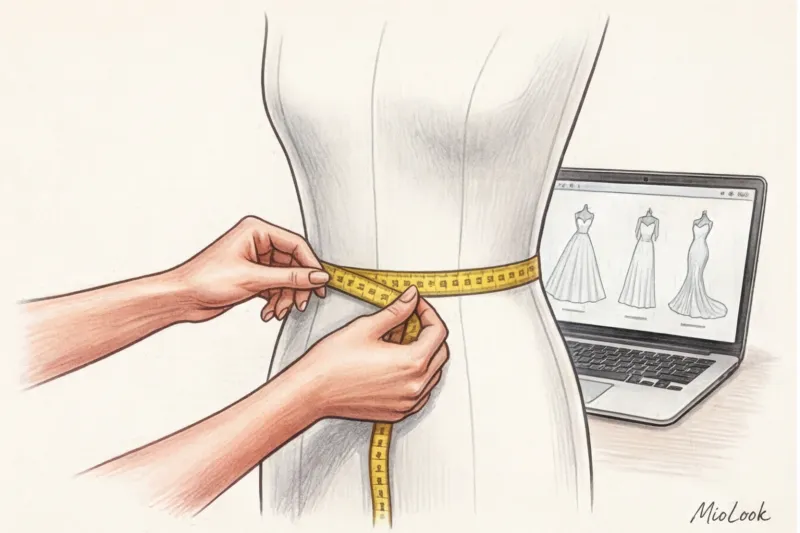
Let's get down to the numbers. The rules for taking measurements at home seem simple, but this is where errors can hide, costing clients thousands of dollars. Use only soft fiberglass tailor's tape, which doesn't stretch over time. No tape measures (yes, I've encountered women who sent measurements taken with a metal ruler) or rulers with string attached.
Frequent errors in measuring the waist and bust are especially dangerous for corset dresses. Many people measure their bust while wearing a loose bralette, then wonder why their profile picture shows a corset bra with rigid cups that sits unnaturally and flattens their silhouette. A basic rule: bust measurements should be taken while wearing the type of underwear that is functionally intended for the dress (unless it's a dress with a built-in underwire). The waist should be measured at its narrowest point (usually a couple of centimeters above the navel), without tightening the tape measure to the point of bruising—two fingers should fit comfortably under the tape measure.
Here we come to the main psychological barrier. Why is it so important to be completely honest with the app and not pull in your stomach in photos or when taking measurements? Have you ever noticed that reflex: as soon as someone points a camera at you or approaches you with a measuring tape, you automatically suck in your stomach, straighten your shoulders until they crunch, and hold your breath? If you pull this trick during scanning, your avatar will be an idealized but unviable version of you. The neural network will fit this mannequin with a tight column dress, you'll fall in love with the render, order the $2,500 outfit, and then, at your first offline fitting, discover you can't even sit at the table in it, let alone dance. The algorithm doesn't forgive deceit. Embrace your natural, relaxed static state—it's in this state that you'll spend the 12 hours of your wedding day.
Access to MioLook for €0.99 — one-time payment
Create your own precise 3D avatar and start creating perfect images with the help of artificial intelligence.
Start a virtual fittingChoosing a Silhouette: Cutting Out the Excess Without Regret
Once your digital profile is filled out correctly, the fun begins—a quick and ruthless elimination of unsuitable options. Traditional offline shopping exhausts us, forcing us to try on dozens of identical styles simply because the consultant deems them "safe." Online, I recommend using a rigorous elimination method: always start trying on radically different silhouettes. Create a virtual starter capsule of four absolute opposites: a sculpted mermaid dress, a classic A-line silhouette, a flowing empire waist with a high waist just below the bust, and a minimalist straight column dress.
How do you use a hypothesis testing app? You probably have some limiting beliefs ingrained in your head like, "A curvy dress definitely won't suit me," or "A fishtail dress with my hips is absolutely not an option." Test each one! Last season, one of my brides was convinced that an architectural cut would weigh down her petite figure (she's 158 cm tall). We uploaded it to her avatar in MioLook A tight mermaid dress made of structured silk mikado. Artificial intelligence clearly demonstrated the opposite: the rigid shape incredibly elongated her height, creating a precise vertical line and emphasizing her fragility. Without the virtual testing, she would have physically refused to even approach the hanger with this style in the showroom.
A deep analysis of body contours on a smartphone screen allows you to capture the slightest nuances of how necklines and train lengths affect an avatar's proportions. For example, a luxurious, three-meter-long cathedral train looks regal in the brand's studio photos. But when superimposed on the avatar of a short woman, the screen clearly shows how this massive fabric visually "presses" the figure to the floor, violating the golden ratio. The technology allows you to spot this disproportion in three seconds. You eliminate obviously unflattering designs with a single swipe, leaving for the final fitting only those architectural solutions that perfectly complement your personal features.
Fit Digitization: How to Know if a Dress Will Fit Your Body Type
In New York City dressmaking, where I interned early in my career, there's one strict rule: a garment fits perfectly only if the silhouette's architectural balance is maintained. For years, we've memorized body type theory, trying to squeeze real women into the molds of "apples," "pears," and "inverted triangles." David Kibbee's system, or classic silhouette geometry, is a great foundation, but it falters when we encounter the micro-features of the real body. What if you have wide hips but a high waist and sloping shoulders?
Artificial intelligence is completely changing this narrative. When you digitize your parameters through the "smart wardrobe" feature in MioLook The algorithm doesn't label you with a fruit. It creates a unique mathematical map of your proportions. Integrating stylistic knowledge with virtual fittings allows you to visually test correction rules. You can see in real time how shifting the waistline two centimeters up visually lengthens the legs, or how a deep V-neckline offsets the bulk of the shoulders. You no longer have to blindly trust articles—you can check the cut geometry on your own 3D model.
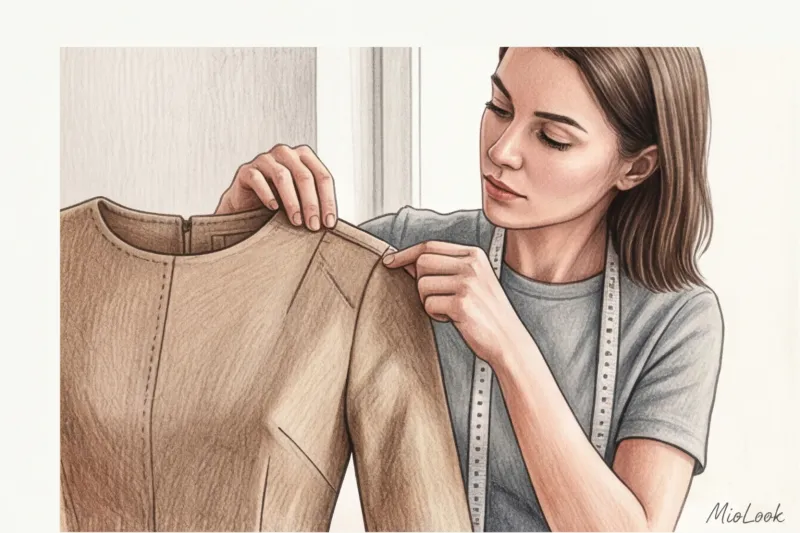
But herein lies the main trap for beginners. When assessing the fit on a smartphone screen, most people look only at the outer contour. I always teach people to pay attention to the technical gap between the fabric and the body—the ease of fit (in professional terminology, ease ). Without proper ease, even the most expensive silk turns into a wetsuit. How can you spot this parameter in a render? Look for "air" and shadows. If the virtual fabric is taut across your hips without a hint of natural folds, and the bodice looks pressed into your ribs, you won't even be able to sit down in this outfit in reality. A high-quality algorithm will always render micro-folds of tension where the ease increase approaches zero.
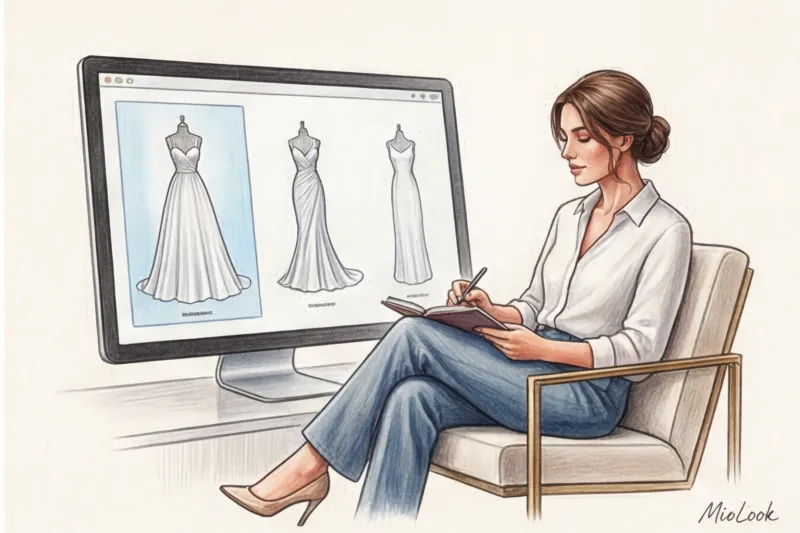
After assessing the fit, we move on to macro-analysis. The architecture of any evening look rests on three focal points: the shoulder line, the neckline, and the waistline. A shoulder seam that hangs just 1.5 centimeters will instantly create a slouched posture and cheapen the look, even if it's a €6,000 couture design. At the neckline, pay attention to the reference point: the hem of the neckline shouldn't disrupt the natural line of your bust, otherwise it will create a flattened silhouette. As for the waist, the dress's seam should align with your anatomical narrowest point. Fit a full skirt just below this line, and you'll visually add a few extra pounds. That's why trying on a wedding dress online requires a stylist's cool, analytical eye, not just emotional admiration for the lace.
A perfect fit isn't when a dress clings to your body, but when the fabric forms a complementary frame around your proportions.
And finally, my ultimate life hack that changes everything: Never make a final decision based solely on static images. Clothes are made for life, dancing, and hugs. If the app supports animation, be sure to try on the dress online in motion. This is your virtual crash test. How does the drape behave when you turn? Does the high slit ride up too revealingly when you walk? This simple step once saved my client from ordering a stunning column dress made of thick crepe. It looked flawless in the static render, but as soon as we turned on the step animation, it became obvious: due to the lack of a back vent, it was physically impossible to take a step wider than 30 centimeters. For a celebration with an active program, this would have been a real disaster.
Top 5 mistakes when trying on evening dresses virtually
While analyzing screen heatmaps and user sessions in the app, our development team noticed a curious behavioral pattern. Given a powerful visualization tool, women often make the same cognitive errors, which negate the magic of the technology. As experience shows, even the most advanced online wedding dress fitting won't save you from disappointment upon delivery if you misinterpret the results on the screen.
Over the years of working at the intersection of the fashion and IT industries, I've compiled a shortlist of the biggest mistakes brides and graduates make when faced with a digital double. Let's break them down to ensure your virtual shopping experience is flawless.
- Focusing on the details of the lace instead of appreciating the overall architectural silhouette. I constantly see clients zoom in on a 3D model up to 400% to spot a French Chantilly pattern or bead embroidery, completely ignoring the fact that a low waistline visually cuts off the proportions of their legs. Technology is designed primarily for assessing macro proportions. Your primary goal is to find your ideal frame. Squint to blur the details and evaluate only the geometry: an A-line, a mermaid, or a straight cut. Only when you're confident that every curve of the silhouette is perfectly calibrated can you move on to analyzing the texture.
- Ignore your color type when choosing a shade of white (warm vs. cool). Smartphone screens, especially with lighting-adaptive features like True Tone enabled, are tricky. A dazzling diamond white with a cool blue undertone can make olive skin look sallow. A warm ivory or champagne shade, on the other hand, will give it a healthy glow. For women with a contrasting winter complexion, I always recommend looking for a crystal white shade in catalogs, while those with an autumn complexion should stick to creamy tones. Always check the shade stated by the brand against your appearance, without relying blindly on the color rendering of the display matrix.
- Trying on virtual dresses without taking into account the concept and location of the wedding or event. You can find the perfect ballgown made of dense mikado silk that will make you look like a porcelain figurine. But if your ceremony is taking place outdoors in Tuscany at 30°C, this heavy architecture will turn into a veritable sauna. Your virtual avatar won't sweat or get its three-meter train caught on branches in the forest. Always apply a filter of common sense: the context of the celebration always dictates the physical properties of the fabric and the freedom of the cut.
- Expecting a mass-market dress to fit like a couture model on screen. It's the harsh truth. The algorithm shows you the perfect fit based on your measurements, assuming a high-quality cut. But a €150 dress from an online hypermarket lacks the internal architecture, built-in corset, and dense mesh lining found in a €5,000 Oscar de la Renta gown. Couture garments have so-called "scaffolding"—a hidden support system. Cheap polyester won't hold its shape as perfectly. Be realistic: AI will stretch the fabric perfectly, but gravity in real life is merciless to budget materials.
- Make a decision alone. In the digital space, it's easy to fall into the trap of your own taste. When choosing an outfit, it's crucial to share the results wisely. Brides often go to extremes: either not sharing with anyone due to superstition, or sending screenshots to a 20-person chat and receiving a cacophony of opinions. Choose a maximum of two "trusted contacts." Instead of flat photos, share a link to your 3D profile on MioLook so an outside observer can rotate your avatar 360 degrees. And ask specific questions: not "What do you think?" but "Does this V-neck make my shoulders look bigger?"
By avoiding these five pitfalls, you transform your smartphone from a fun toy into a fully-fledged analytical tool for personal styling. Your choices become pragmatic, informed, and, most importantly, completely calm.
Your ideal image
it begins Here
Join thousands of users who look flawless every day with MioLook.
Get access — €0.99 onceChecklist: How to Use MioLook to Choose Your Dream Dress
Wedding shopping is often romanticized, but let's be pragmatic: it's a complex project with tight deadlines and a high budget. Treating your wedding dress selection as a well-oiled business process will save you a tremendous amount of energy. My goal as a stylist is to maximize results while minimizing your time. Below is my workflow framework—a step-by-step protocol for working in the app. MioLook , which transforms the process from a chaotic search into a controlled system.
Step 1: Forming a data set (base profile)
Creating a basic profile with precise measurements is the foundation of the entire process. Algorithms need hard numbers, not your ideal size. When entering data for the digital twin, use up-to-date measurements down to the millimeter. No rounding down. If you have slight hip asymmetry or an unusual waist height, the system should recognize it. A perfectly fitting dress is built on the ruthless honesty of the original measurements.
Step 2: Selection Funnel and Creation of the “For Consideration” Capsule
Don't try to overwhelm yourself. Once you've downloaded the catalog, you'll inevitably face choice paralysis. Start with aggressive filtering: select a longlist of 30 options, then drastically narrow it down to a top 10 dresses. Shortlist only those styles that simultaneously pass three filters: they fit the style of the location, fit within your budget (for example, strictly under €2,000), and complement the architecture of your digital body.
The secret to effective styling is ruthlessly eliminating the unnecessary. Every dress in your top ten must have a legitimate reason to be there; otherwise, it's simply a waste of pixels and your focus.
Step 3: Split Testing (Side-by-Side Comparison)
When you're down to two similar outfits (for example, two minimalist slip dresses in the spirit of '90s Calvin Klein aesthetics), use the split-screen feature. How to analyze such looks? Look not at the garment itself, but at the negative space and geometric lines. In dress "A," with its deep V-neckline, the neck appears longer, but in dress "B," with its square neckline, the collarbone is more prominent. Choose the option that best suits your visual needs.
Step 4: Virtual styling of accessories
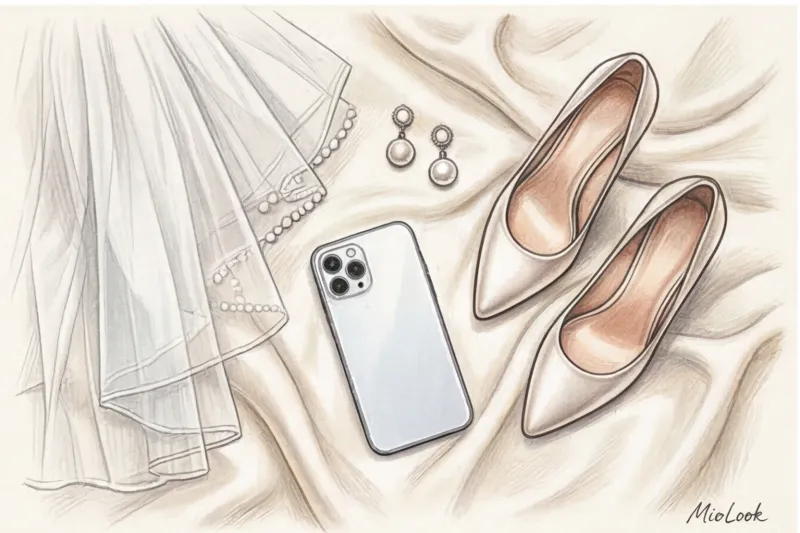
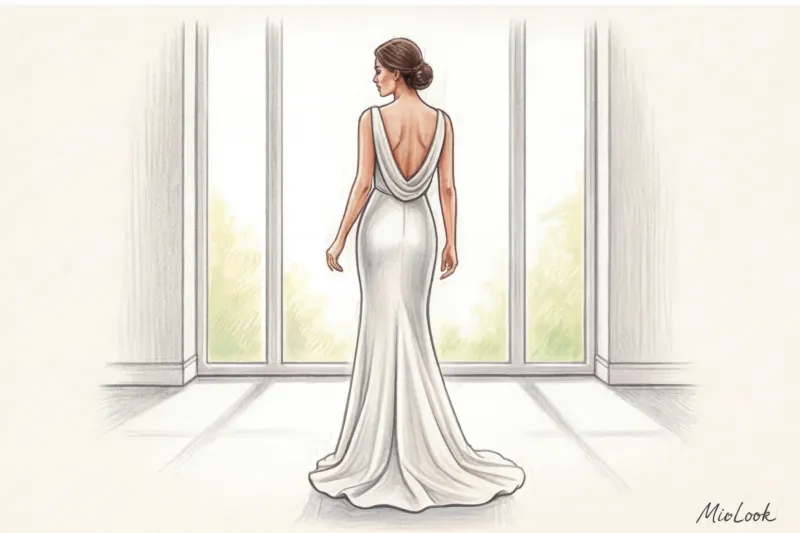
A bare silhouette is just a canvas. Integrate details into your look right in the app: try on a veil, add accent chandelier earrings, or a simple choker. A luxurious dress with heavily embroidered back often clashes visually with a long, multi-tiered veil, creating a cluttered effect. By piecing together the entire puzzle on your smartphone screen, you protect yourself from buying expensive but completely inappropriate accessories.
Step 5: Export the lookbook and provide the consultant with the technical specifications
This is my favorite optimization tool. Once you've finished trying on a wedding dress online, export the results to a single PDF mood board. You don't head to the boutique with a blank canvas, but with a ready-made specification. Simply share the screen: "I need an A-line silhouette in matte crepe, open back, no lace, budget up to €2,500." This completely changes the dynamic of communication—you're in control, protect yourself from pushy sales pitches, and save yourself hours of tedious dress changes.
The Future of Wedding Shopping: AI Stylist Instead of Salons?
By 2026, according to analytical forecasts Business of Fashion , over 60% of purchases in the premium evening and wedding dress segment will begin in a digital fitting room. We are on the cusp of a global paradigm shift: AI stylists are no longer perceived as a fun toy or a geeky experiment. Today, they are a legitimate, powerful tool that is radically changing the mechanics of preparing for the most important events. But does this mean that traditional boutiques with their crystal chandeliers, podiums, and velvet poufs will soon disappear? Absolutely not.
As a practitioner, I always advocate a hybrid approach. Completely avoiding physical contact with a garment, especially if its price exceeds $2,000–$3,000, is an unjustified risk. We still value the tangible weight of a pearl-embroidered bodice, the rustle of silk organza as you walk, and that special feeling when a corset fastens tightly at the back. Therefore, the most effective strategy today resembles a funnel: broad digital filtering at the start and targeted physical validation at the end.
Trying on a wedding dress online takes care of the hardest, most routine, and downright thankless part of the job—the ruthless elimination of hundreds of obviously unattractive options. You come to the salon not to search for a needle in a haystack and pester the consultant with requests to "bring something else," but to try on three specific finalists whose design has already been approved by your digital twin.
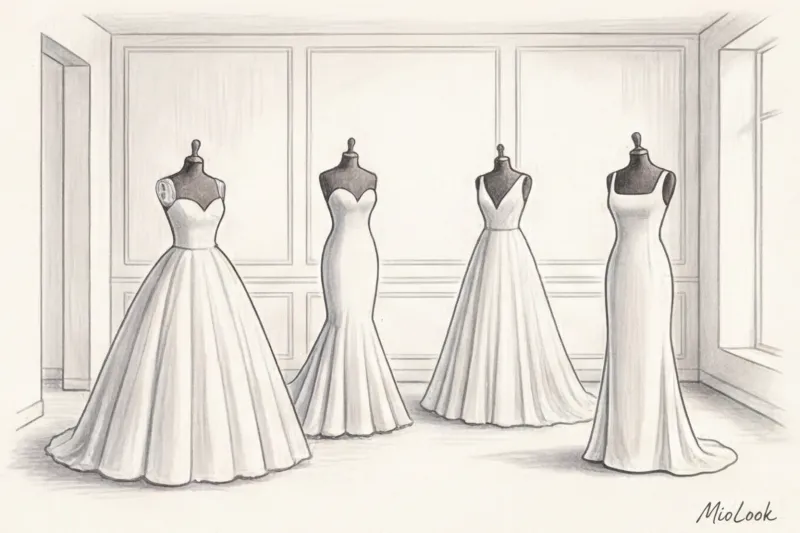
Let's translate this stylistic lyricism into the language of numbers and pragmatism. Technology literally saves you time and money. The average visit to a bridal salon takes about two to three hours. To physically test out 30 dresses of radically different styles, you'd have to spend at least three full weekends, pay for transportation, parking, lunches, and the services of a personal stylist (whose rates in major cities easily start at $150 per hour). A digital algorithm makes the same selection in 15 minutes, while you're drinking your morning coffee.
But the main advantage is that AI conserves your emotional resources and saves your nerves. The app doesn't have pushy salespeople who urgently need you to hit monthly sales KPIs. The algorithm is impartial: it won't flatter you or, conversely, make you feel insecure because the salon doesn't have the right size for a test fitting. You avoid decision fatigue and protect yourself from impulsive spending, when you buy an expensive dress simply out of frustration and a desire to complete the task as quickly as possible.
"The phenomenon of 'bride blindness' has long been known in the industry: after the tenth white dress in a row, the brain stops detecting the nuances of the cut, and all the outfits blur into a single ivory blob. Technology allows us to circumvent this flaw in our visual perception."
What can you do right now, even if the big date is still months away? My main call to action: start digitizing your wardrobe and body image today. Don't wait until you have to make a decision under looming deadlines.
Go to MioLook and create your precise 3D profile. Upload the parameters of the day or cocktail dresses from your current closet that fit you perfectly. Let the neural network study your proportions, curves, flattering lengths, and comfortable necklines. Create a strict basic matrix of your body architecture before you even consider luxurious Chantilly lace, French tulle, or multi-meter trains. First, the math, then, the decoration.
Ready to get started?
Try the free plan—no commitments or hidden fees. Create your digital avatar and find your perfect silhouette now.
Get access — €0.99 onceTechnology doesn't steal the romance of pre-wedding shopping—on the contrary, it clears the way for it. Delegate the cold calculation of proportions, the geometry of darts, and the analysis of cuts to algorithms. And keep for yourself what's most precious: genuine joy, calm anticipation, and those goosebumps you get when you see your perfect reflection in the mirror. Choosing the most important dress in your life should no longer be a marathon of survival—it's now a beautifully orchestrated, deliberate, and completely predictable success.
Guide Chapters
How to choose a maternity wedding dress to suit your figure
Forget the clichéd advice about buying a dress two sizes too big. Learn from a stylist how to choose a comfortable and flattering dress for the expectant mother.
How to take a photo for a virtual dress try-on
Artificial intelligence can work wonders, but only if you give it the right input. We'll explain how to prepare for a virtual evening gown fitting.
How to easily choose bridesmaid dresses online
Matching bridesmaid outfits are a thing of the past. We'll show you how to put together a harmonious mix-and-match ensemble online, taking into account the unique features of each figure.
How to choose colored wedding dresses online: tips
Finding a non-white wedding dress in offline stores can often be a frustrating quest. We'll explain how a digital approach can help you find the perfect shade without compromise.
How to Choose a Black Tie Dress: Stylist and AI Tips
A dress that looks perfect in the fitting room can be a disappointment at a party because of the lighting. Learn how modern AI technologies and color theory can help you avoid mistakes when choosing an evening gown.
How to buy a wedding dress online without trying it on using AI
Tedious trips to salons are a thing of the past. We explain why ordering a wedding dress online with AI is reliable, convenient, and mathematically accurate.
Plus-size wedding dresses: online try-ons
Only 15% of salons offer dresses larger than size 48. Find out how modern technology helps plus-size brides find the perfect silhouette online.
Try on a prom dress online: choose without the shopping mall
Forget the tears and fatigue of stuffy shopping mall fitting rooms. Discover how modern technology allows you to choose the perfect prom dress right from home.
How to choose a hairstyle to match your wedding dress online without tears
The perfect dress and a luxurious hairstyle don't always go together. Discover how a virtual test drive can help you create a harmonious wedding look without the stress.
How to choose a wedding dress based on your body shape using AI
Forget about exhausting fittings and heavy corsets. Discover how artificial intelligence helps brides find the perfect style in just a couple of hours.