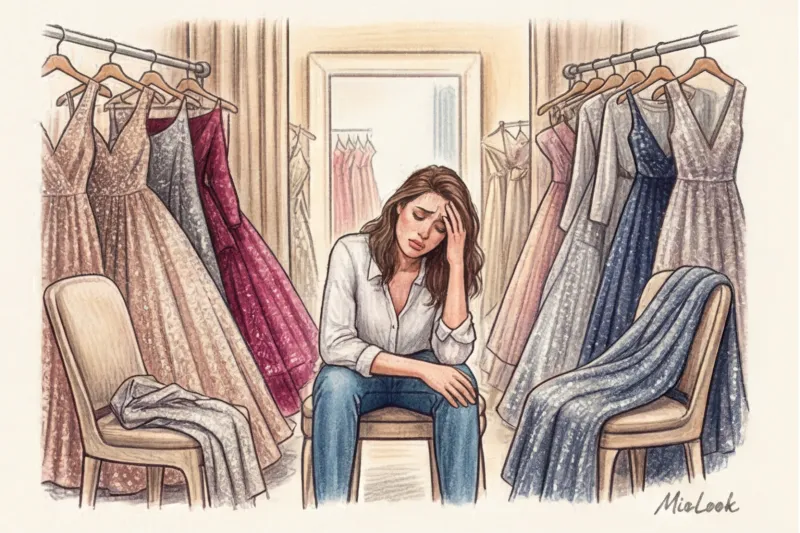
In my twelve years as a colorist and image consultant, I've witnessed the same drama dozens of times. The most striking example occurred three years ago: my client bought a stunning black velvet Tom Ford dress for almost three thousand dollars for a charity gala dinner. In the boutique's fitting room, under the perfect cool glow of the ring lights, she looked like a Hollywood diva. But the next day, she sent me a photo from the red carpet in tears. In the dimly lit banquet hall, lit by yellowish lamps and candles, the black velvet acted like a black hole: it absorbed all the light, emphasized the slightest shadows on her face, and visually added ten years to her age. It was then that I realized: to figure it out, How to choose a black tie dress , we need to forget forever the glossy stereotypes of the 2000s.
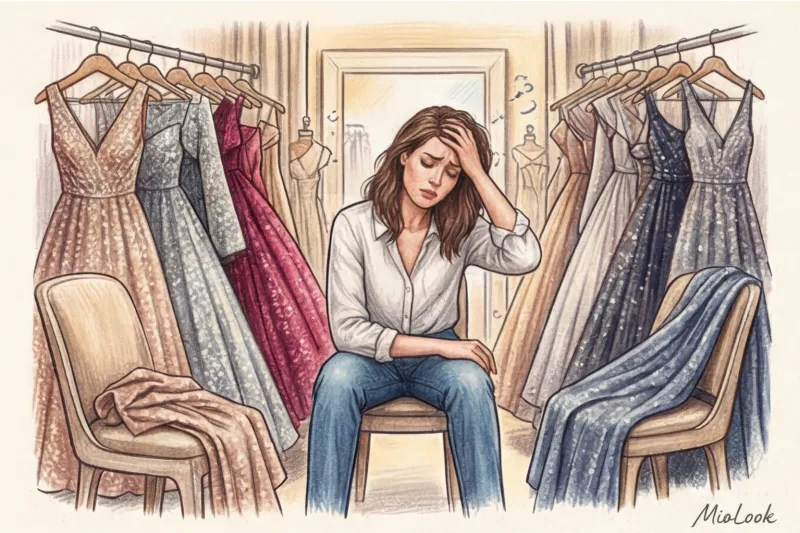
This article isn't just a retelling of dry etiquette rules. We'll combine strict British protocols with advanced color theory and AI technology to prove that evening fashion no longer requires sacrifice, and that the perfect outfit can be found without hours of exhausting fittings.
Black Tie and Cocktail Dress Codes: Why Finding the Perfect Outfit Causes Panic
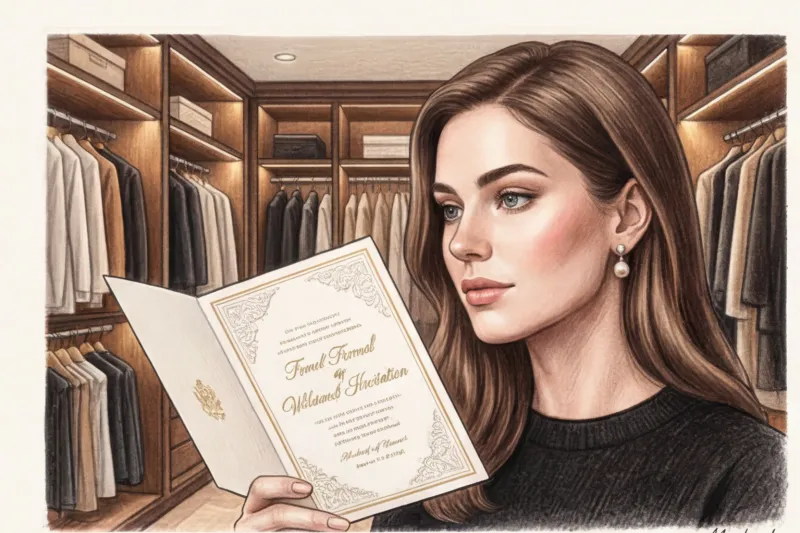
Upon receiving an invitation with the coveted "Black Tie" or "Cocktail" tag, most women experience not a sense of anticipation, but acute anxiety. The psychology of this stress is crystal clear. First, it's the "disposable wardrobe" syndrome. According to a 2023 study by the analytical agency WGSN, approximately 80% of expensive evening gowns are worn by women exactly once in a lifetime. The fear of investing a significant sum in an item that will take up space in the closet for years is entirely justified.
Secondly, traditional shopping is physically exhausting. Trying on heavy corset dresses embroidered with beads or sequins takes a colossal amount of energy. I already discussed this issue in detail when we discussed try on a wedding dress online — by the fifth outfit, your eyes are getting blurry, and fatigue makes you want to buy “at least something, just so it ends.”
That's why the industry is currently pivoting from grueling shopping mall visits to the concept of "smart filters." Artificial intelligence takes care of the grunt work, filtering out unsuitable silhouettes and shades before you even touch the fabric.
Access to MioLook for €0.99 — one-time payment
A smart AI stylist will select the perfect look for any dress code without the hassle of shopping.
Get access — €0.99 onceHow to Choose a Black Tie Dress: Strict Rules and Outdated Stereotypes
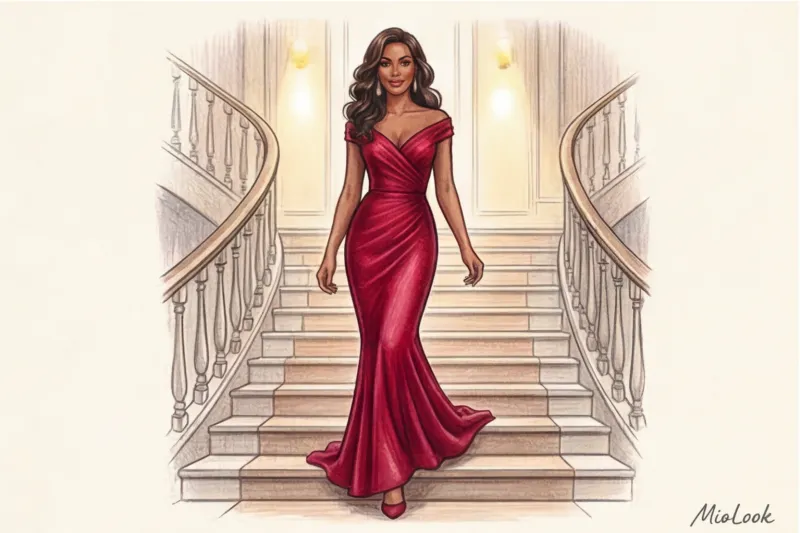
The Black Tie dress code is based on the classic British code of etiquette, Debrett's. For women, the basic requirements are: full-length (ankles must be covered), and fine, dense fabrics such as silk crepe, heavy velvet, or taffeta. No knits, cotton, or linen—even the most premium.
However, the modern red carpet has introduced its own set of concessions. High leg slits and plunging backs are now considered the absolute norm. But herein lies my key rule of silhouette design: we open one thing If the dress has an open back, the sleeves can be long and the collar can be closed.
"The biggest mistake when choosing a Black Tie outfit is trying to fit a stereotype of the 'perfect' figure. Don't lose weight to fit the dress. Look for a silhouette that's technically designed to suit your proportions."
It's important to remember one caveat here. This backless tip doesn't work if the fabric is too thin (for example, cheap satin with elastane). Thin fabric without a rigid frame won't support the bodice's structure, will bunch up at the waist, and will cheapen the look to the level of a provincial high school graduation. Choose matte textures with a minimum weight of 150 g/m²—they're more forgiving of minor fit imperfections and look three times more expensive than their actual price.
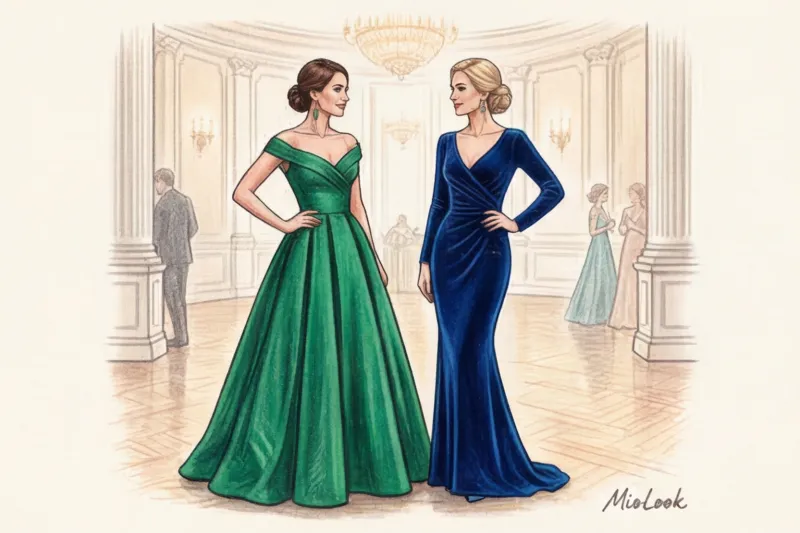
The biggest myth in coloristics: Black Tie doesn't mean black.
The most harmful stereotype I fight daily is "black is slimming and saves you in any situation." Women instinctively hide in black covers when they don't know what to wear. As a colorist, I have to tell the truth: for 70% of Slavic and European skin types (fair skin, light-brown hair, and soft features), all-black near the face acts like an energy vampire. It draws out grayish and greenish undertones in the skin, making you look tired.
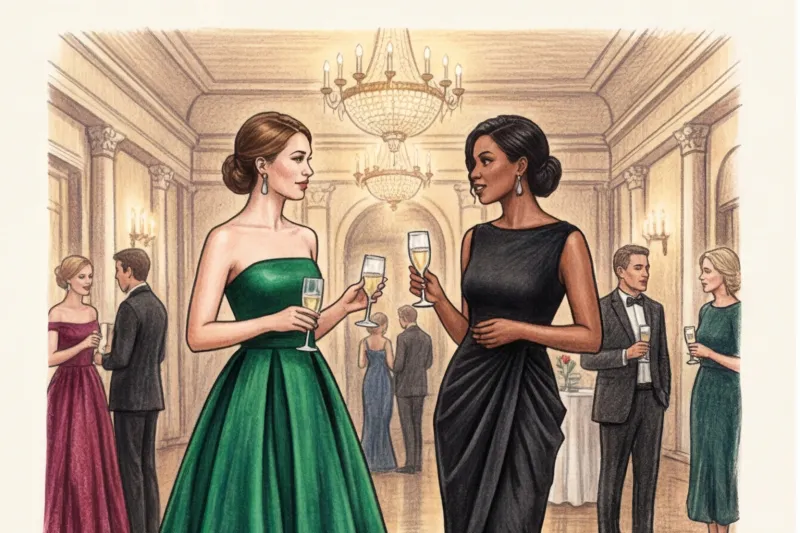
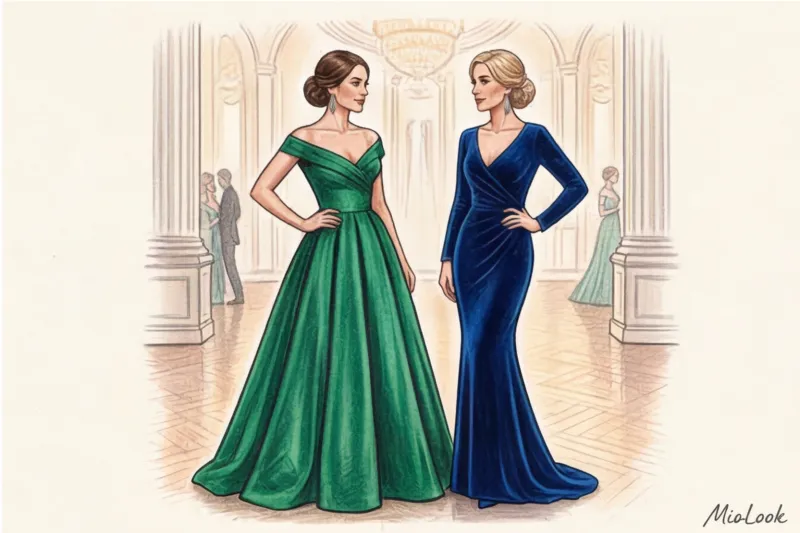
Alternative? My favorite rule "precious stones" Replace black with shades of sapphire, emerald, amethyst, or deep ruby. These colors have the same formality and solemnity as black, but they highlight the face, creating a truly regal look.
Cocktail: Freedom of Color, Midi Length, and Hidden Pitfalls
If Black Tie is the opera and the red carpet, then Cocktail is the after-party. The main difference is the length: midi (just below the knee or mid-calf) reigns supreme. The cocktail dress code allows for sequins, complex asymmetry, feathers, and bold prints.
But don't be fooled by the freedom. Getting a cocktail dress to fit your figure is often more difficult than a full-length dress. Why? Because the midi hemline visually cuts off your leg. If the hem ends at the widest part of your calf, you'll visually add 5-7 kilograms. The correct length is where your calf begins to taper toward your ankle.
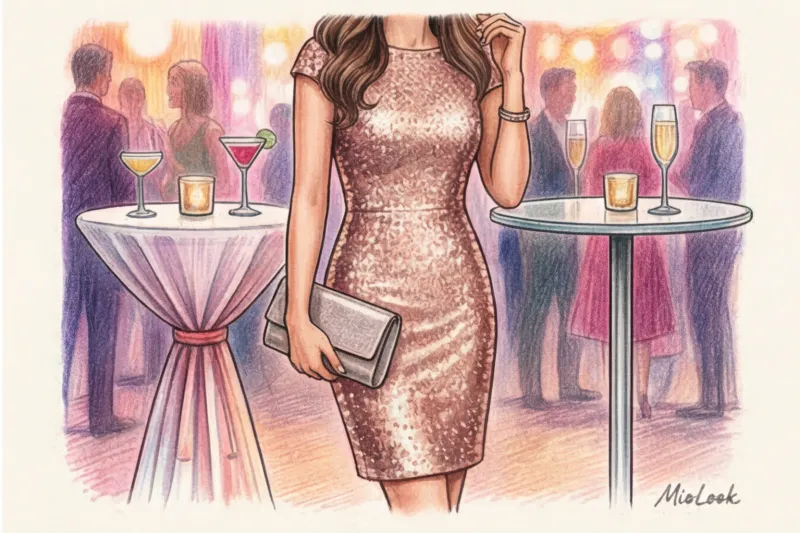
One day, a new client of mine confused the cocktail and smart casual formats. She showed up to the opening of a fashion gallery (labeled "Cocktail") wearing a pair of excellent dark straight-leg jeans and an expensive COS jacket. The look was impeccable for a Friday at the office, but among women in silk slips and sequin dresses, she felt out of place all evening. Cocktails are about celebration, not "I just popped in after a meeting."
Your perfect look starts here
Join thousands of users who look flawless every day with MioLook. Customize your wardrobe to suit any dress code.
Get access — €0.99 onceEvening Lighting and Color Types: A Secret They Keep Quiet in Boutiques
We've reached the most subtle part of choosing a dress. How an outfit looks in the store and how it will look at the event are two completely different physical realities.
Recall the story of the velvet dress from the beginning of the article. According to a comprehensive study by the Pantone Color Institute (2024) on the perception of complex hues in artificial environments, warm lighting (incandescent bulbs, candles, warm LEDs at 2700K) dramatically distorts cool colors. A luxurious icy blue will take on a dirty, swampy hue by candlelight. But warm colors (gold, tomato red, terracotta) will literally glow from within in such light.
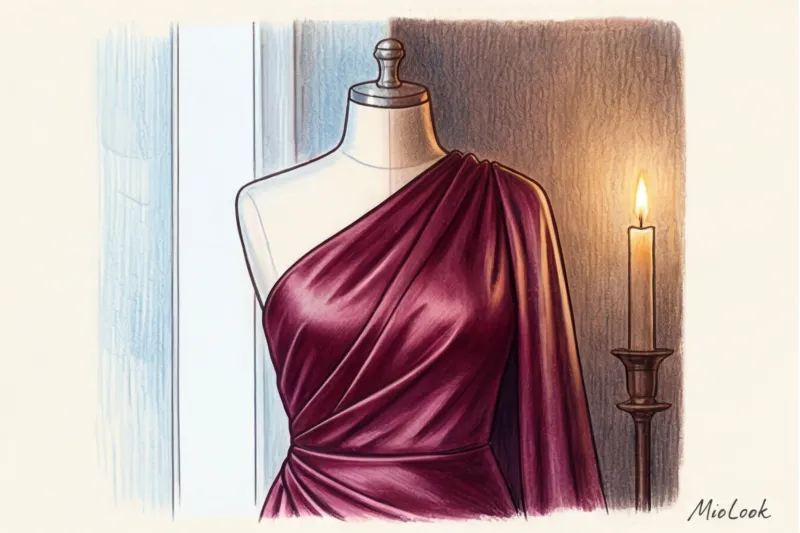
My professional trick: before I buy a dress, I always find out the location of the event.
- For classic banquet halls With the warm light of the chandeliers, choose fabrics with a light satin sheen (it will reflect the light and work as a highlighter for the entire body).
- For modern spaces and lofts For cool architectural lighting (4000K and above), matte velvet or crepe are ideal—they will show all the depth and avoid cheap glare.
AI Stylist: How Virtual Dress Fittings Are Changing the Game
Today, you no longer have to guess how that emerald shade will work with your skin or physically change clothes fifteen times. Virtual fitting technologies have transformed the process from "hard work" to "creative work."
The algorithms operate on the principle of a smart funnel. From 1,000 possible silhouettes, the app selects three that are ideal for your specific proportions. You can test a color you would never try in real life in a second—for example, electric blue or bold fuchsia. According to fashion-tech industry analytics from the past year, using virtual fitting rooms reduces the risk of returns on purchased evening gowns by 60%. This saves you money, time, and the stress of logistics.
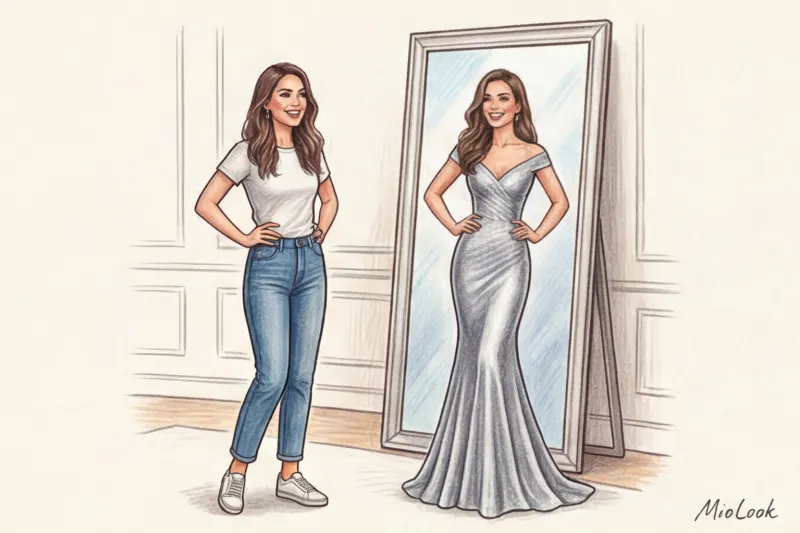
Tools like MioLook They allow you to upload your photo and literally "try on" dozens of options, analyzing not only the fit but also how the fabric's shade interacts with your natural contrast.
Checklist: How to choose an evening dress online and avoid mistakes
To ensure the AI-powered matchmaking process is 100% successful, follow this step-by-step plan:
- Take the correct original photo. This is critical. Take photos in diffused daylight (near a window, but not in direct sunlight). Wear form-fitting, neutral-colored clothing (leggings and a top) to help the algorithm accurately calculate your body structure.
- Set up dress code filters. Cut out the unnecessary items immediately. For Black Tie, tick "maxi," for Cocktail, "midi."
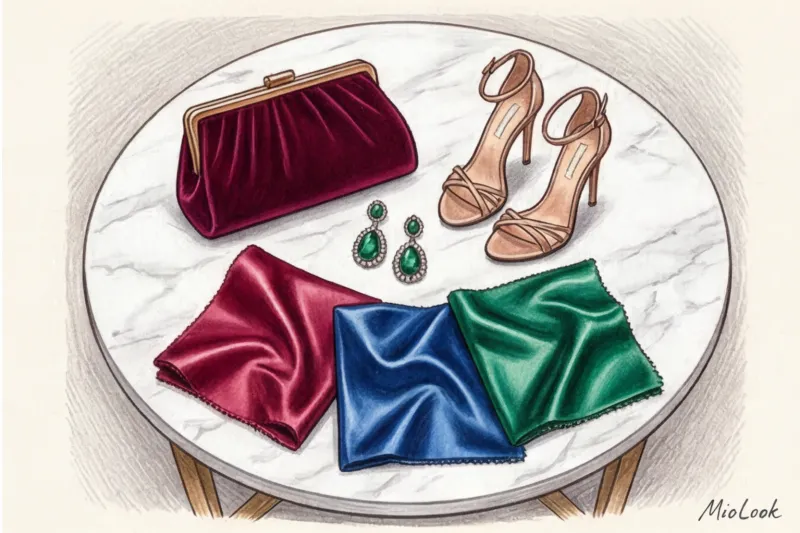
- Do a palette test. Apply three different, deep shades from the "precious stone" rule (ruby, sapphire, emerald) to your chosen silhouette. See how the freshness of your face changes on screen.
- Evaluate the texture on the 3D model. Pay close attention to the highlights. If the fabric is too shiny on your stomach or hips, it will actually add visual volume in these areas.
- Assemble the image as a whole. A dress is just a canvas. Add statement earrings and a clutch in the virtual fitting room to ensure the silhouette isn't too busy.
Ready to get started?
Try a free plan—no commitments. Digitize your wardrobe and create stylish outfits in just a few taps.
Get access — €0.99 onceInstead of a conclusion: invest in confidence
A truly perfect evening dress is one you forget about within five minutes of stepping onto the red carpet or into the banquet hall. You don't tug at the hem, check for a slipping neckline, or worry about the fabric wrinkling when you sit down at the table. You're simply impeccably comfortable.
A combination of knowledge about your color type, an understanding of the laws of lighting, and the use of AI technology gives you this confidence. Don't waste hours aimlessly wandering through boutiques. Digitalize your approach to style, try a virtual fitting before your next big event, and allow yourself to enjoy the occasion, not the preparation process.