What is a tunic?
Tunic - this is an elongated blouse or a short dress, the length of which reaches the hip line or falls slightly lower, not reaching the knees.
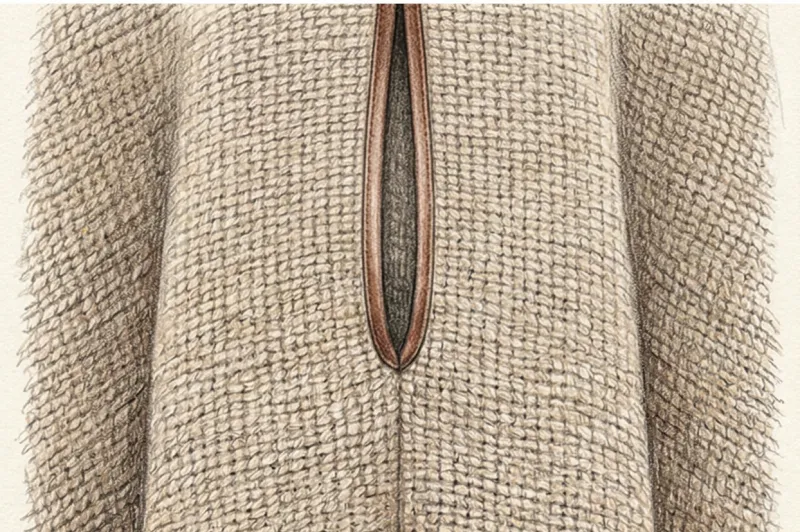
The main design feature of the modern tunic is its one-piece or loose silhouette, the absence of a rigid frame, and an undefined waistline. Historically, the term originates from Ancient Rome, where the tunic served as basic everyday clothing for both men and women, consisting of a simple cut made from two pieces of fabric sewn together.
Unlike a classic shirt or blouse, a tunic is rarely tucked into trousers or a skirt. It's meant to be worn untucked, allowing for freedom of movement and creating a relaxed silhouette.
Main types of tunics
Depending on the material and purpose, there are several main types of tunics.
Casual
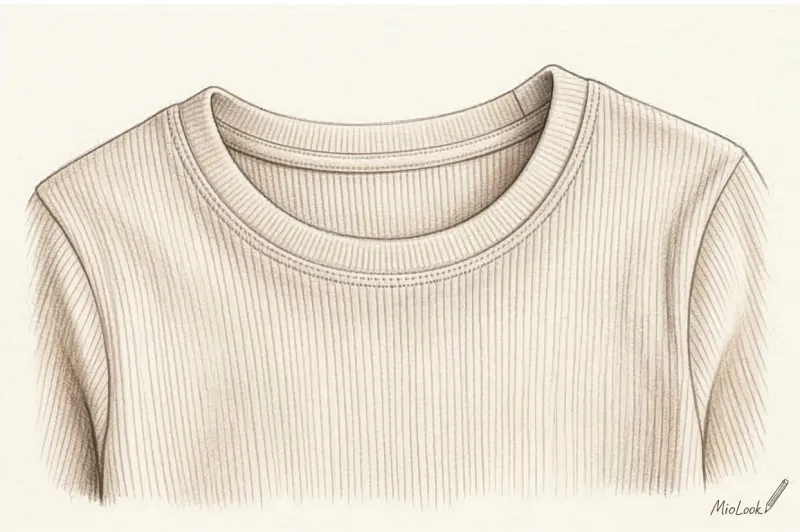
Casual styles are made from breathable materials such as cotton, linen, or viscose. They often feature an A-line silhouette, side slits for ease of movement, and an asymmetrical hem that is longer at the back and shorter at the front.
Beach
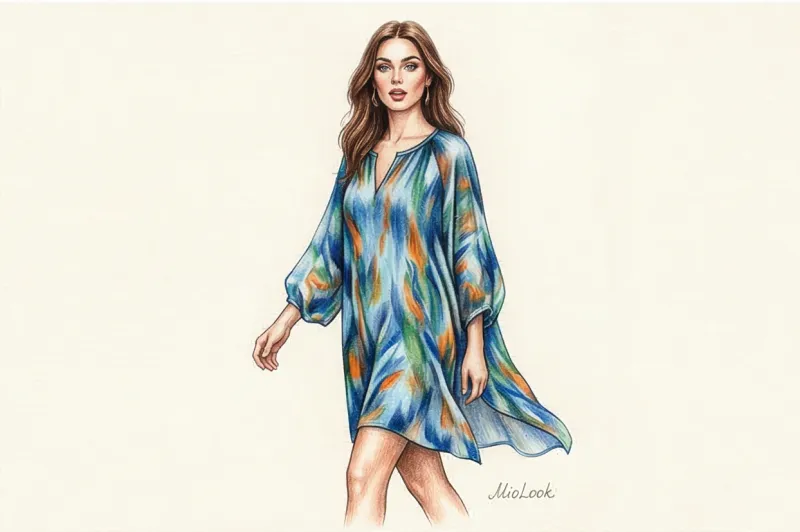
Beach tunics are made from translucent, quick-drying fabrics such as chiffon, mesh, or fine silk. They feature deep V-necklines, loose batwing sleeves, and are worn directly over a swimsuit.
In boho style
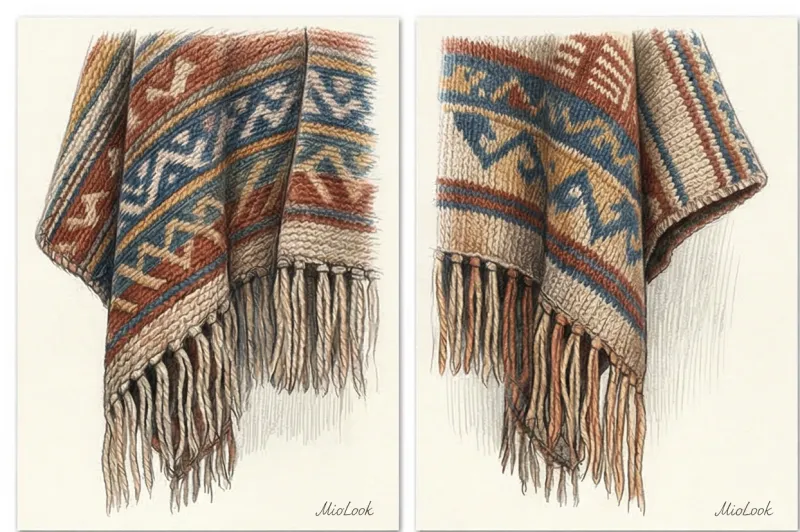
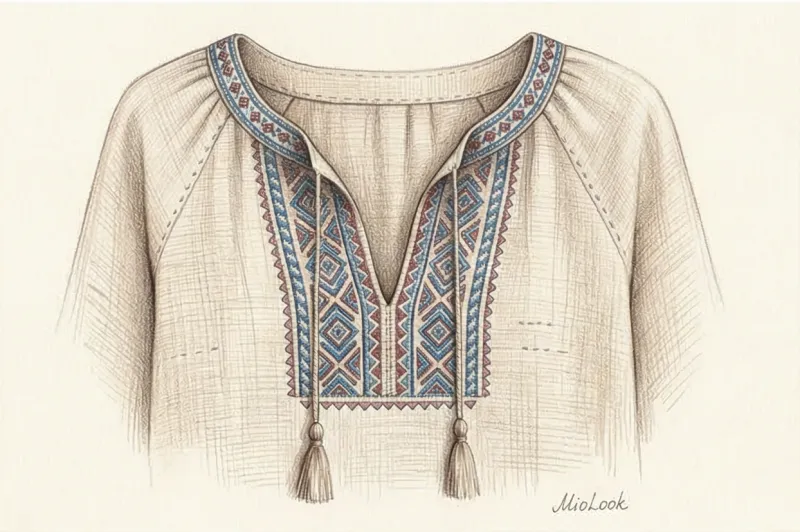
Bohemian tunics are decorated with ethnic patterns, satin stitch embroidery, fringe, or tassels laced at the neckline. They are characterized by voluminous bishop sleeves or flared three-quarter-length sleeves.
Knitted (winter)
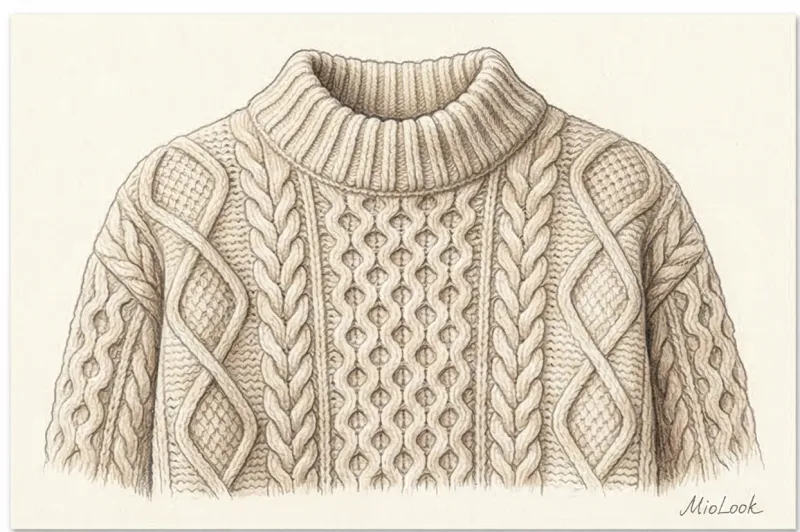
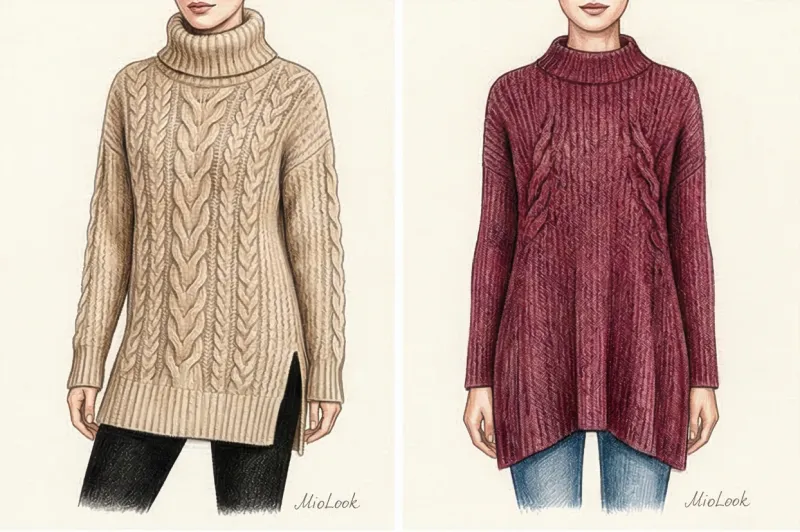
Winter options include thick, long sweaters made of lambswool, merino, or cashmere. These tunics are often complemented by a cowl collar or a ribbed turtleneck, replacing short knit dresses in the cold season.
What to wear with a tunic
When styling a tunic, balancing volumes is key. Since the top is loose-fitting, the bottom should be fitted or straight. Skinny jeans, thick leggings, tapered trousers with a crease, or a pencil skirt are ideal pairings.
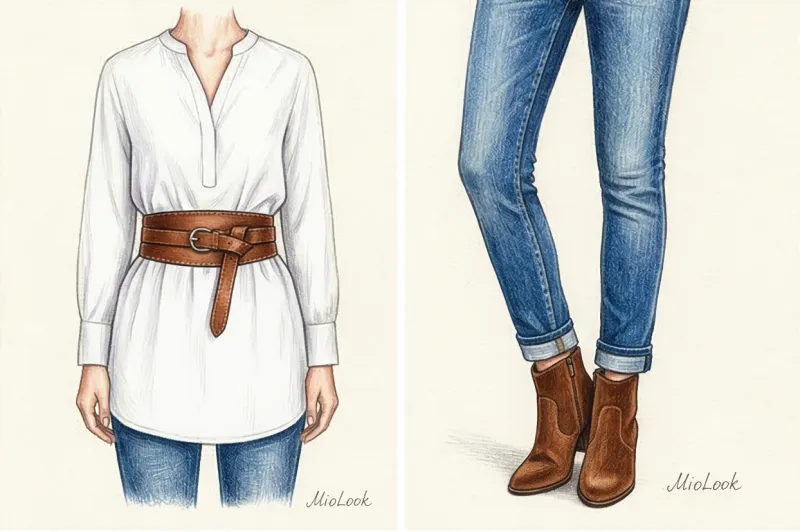
A belt is used to alter proportions. A wide leather belt or a thin metal chain belt helps structure the silhouette and clearly define the waist. This transforms a loose garment into a fitted one, visually lengthening the legs.
Sleeveless or short-sleeved tunics are perfect for layering. Wear them with a thin viscose turtleneck or a basic shirt. Layer a cropped jacket, such as a leather biker jacket or denim jacket, over the tunic to maintain proper proportions.
Footwear selection depends on the season and fabric thickness. Summer cotton and beach styles pair harmoniously with leather sandals, espadrilles, and clogs. Thick autumn tunics are worn with high tube boots, over-the-knee boots, or ankle boots with a sturdy heel.