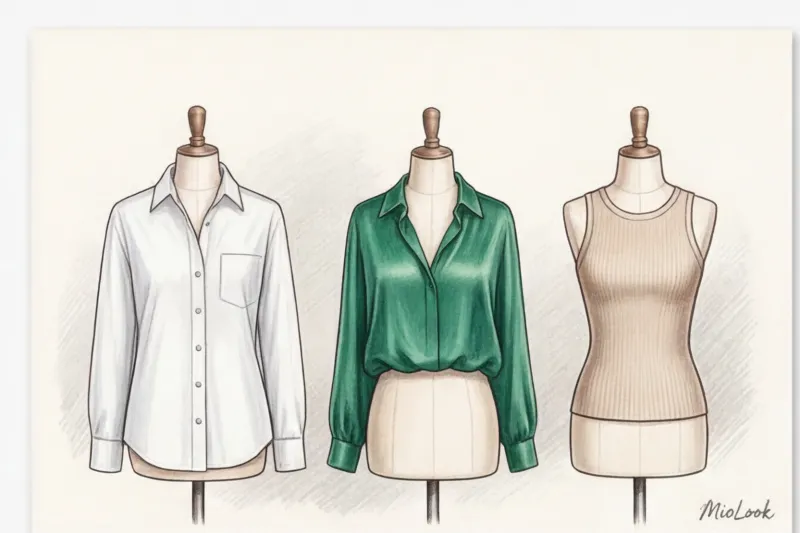
Tops, blouses and shirts: what's the stylistic difference?
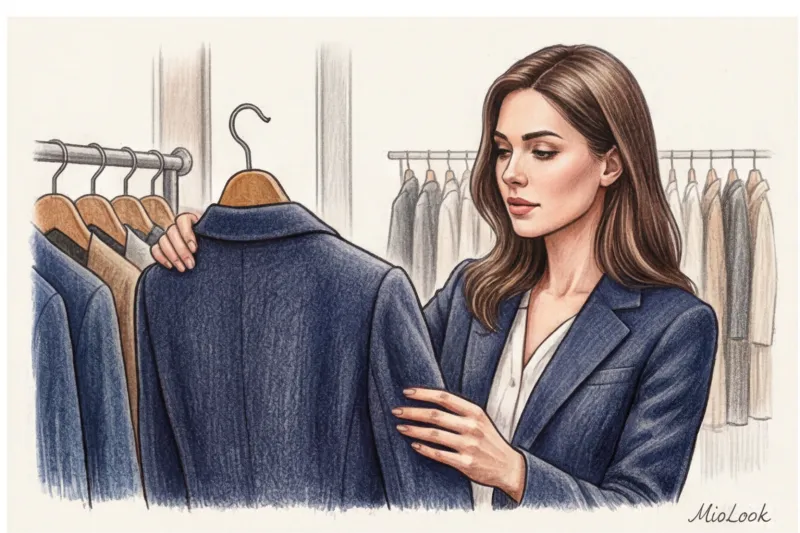
Over 14 years as a personal stylist, I've sorted through hundreds of closets, and the most common complaint is, "There's so much stuff, but nothing to wear." Last week, I reviewed the wardrobe of my client, Anna, a project manager with a hybrid work schedule. We laid out all her upper-body pieces on the railing: 18 basic cotton tees and tank tops and four stiff office shirts. Not a single blouse.
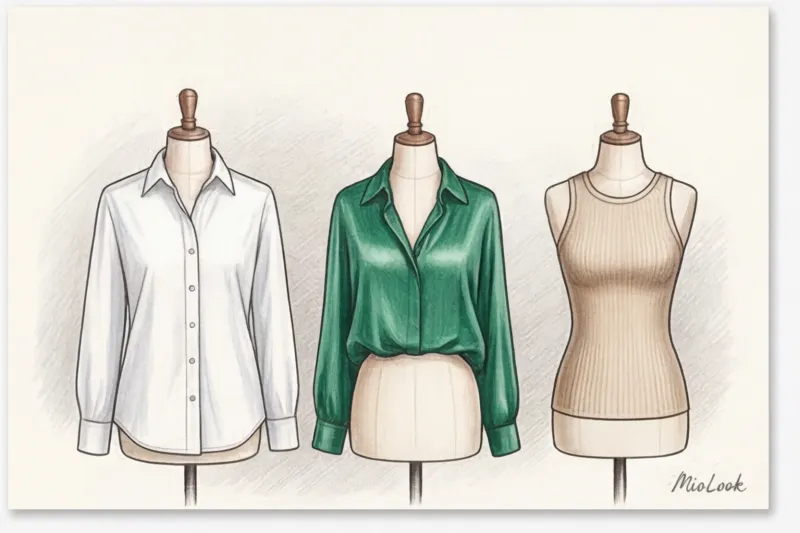
The result of this division? Anna either looked like she was about to go to the gym or like she was about to present her annual report to the board of directors. She simply didn't have the tools to create relaxed yet elegant everyday looks. A bias toward only basic tops or only formal shirts makes a wardrobe look flat and dysfunctional.
That's why it's crucial to understand the stylistic differences between these three elements when putting together a smart capsule. If you digitize your belongings in an app, MioLook , the imbalance of the "highs" will immediately become obvious - the system will show you exactly what you lack for harmonious combinations.
Let's break down the stylistic DNA of each element:
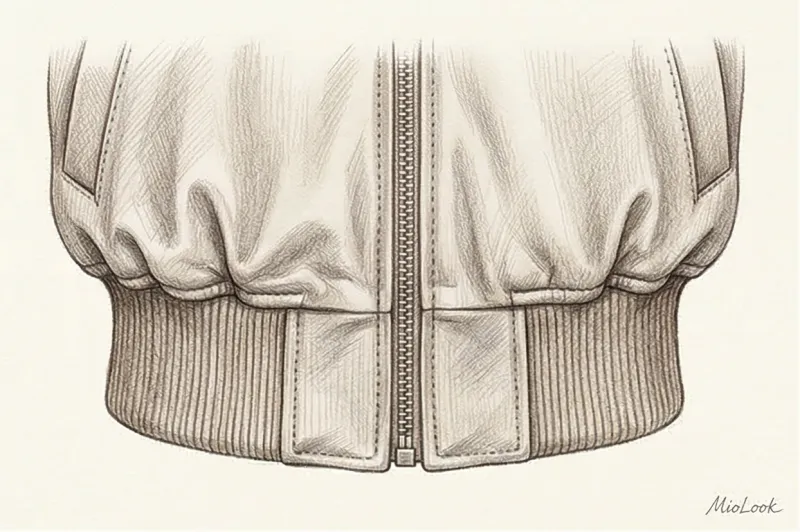
- Shirt — is a direct and proud legacy of the men's wardrobe. Its main characteristics are a clear structure, a turn-down collar, cuffs, and a full-length button placket. The shirt is always made from shape-retaining fabrics (poplin, heavy cotton, linen). It imparts dynamism, composure, and a certain distance to the look.
- Blouse — the quintessence of femininity and softness. Unlike a shirt, it is made from flowing fabrics (silk, viscose, cupro, chiffon). There is no rigid stand-up collar, but there is a huge variety of cuts. Studying types of blouses You'll find styles with bows, ruffles, wraparound sleeves, or bishop sleeves. A blouse softens facial features and reduces the formality of a suit.
- Top — a basic in its most minimalist form. Most often, it's sleeveless and collarless (like tank tops, halter tops, or lingerie tops). In a well-designed wardrobe, a top serves the crucial function of a "first layer," worn under a jacket, a thick cardigan, or an unbuttoned shirt to create a stylish layered look without adding bulk.
The division into tops, blouses, and shirts isn't just buyer terminology. They're three distinct impression management tools. A shirt says, "I'm a professional," a blouse conveys, "I'm open to dialogue," and a top whispers, "I value comfort." For a complete wardrobe, you'll need all three.
Basic Types of Blouses and Shirts: A Fashion Glossary
Imagine a typical situation: you open the app of a major online clothing store to find the perfect top for an upcoming work presentation. You search for "blouse," and the algorithm returns 15,000 results. Scrolling through these pages can be endless, wasting time, motivation, and understanding what exactly you need. That's why knowing the right terminology isn't snobbery, but your most important tool for saving time and money.
I recently accompanied a client on a shopping trip to a popular high-street store. We were looking for a classic chemisiere. When I asked the salesperson which section carried this style, she nodded confidently and led us to a rack of... form-fitting knit long-sleeved T-shirts with laces. And this is completely normal—even those who work in fashion retail often confuse the names of styles.
If you know what kind there are types of blouses and shirts, you can fine-tune filters in online stores, find precise references on Pinterest for visual reference, and clearly explain to your tailor or stylist the exact look you're trying to create. Let's explore the key terms that will forever change your approach to shopping.
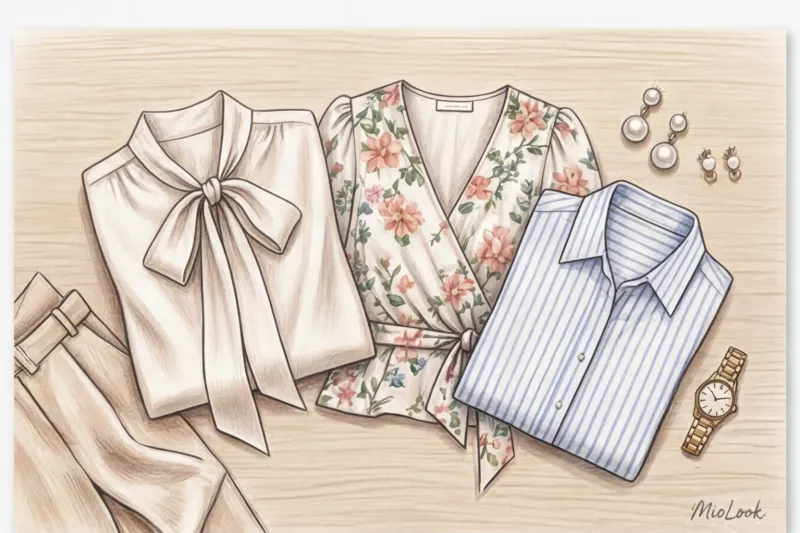
Basic and business models
These styles form the foundation of any functional wardrobe. They pair easily with jackets, cardigans, and separates, creating that "put together in five minutes, but look like a million bucks" effect.
Oxford shirt
This is a direct descendant of the men's wardrobe. Its main distinguishing feature is its dense, slightly textured cotton fabric and button-down collar. Historically, these buttons were sewn onto polo players' shirts to prevent the collar from blowing in the face in the wind. Today, the Oxford shirt is an absolute must-have for smart casual style. It holds its shape perfectly, is not see-through, and looks perfect in layered looks, such as unbuttoned over a basic white T-shirt. A quality model can be found for between 40 and 150 euros.
Shirt blouse (chemisie)
The term comes from the French word chemise (shirt). This is a brilliant hybrid: a chemisiere has a formal cut (collar, cuffs, button placket), but is made from soft, flowing fabrics—silk, cupro, or high-quality viscose. It lacks the stiffness of an oxford, making it more feminine and draping delicately when tucked into trousers. It's my absolute favorite for clients with a formal yet modern dress code.
Ascot collar blouse (with bow)
A status classic that's experiencing a major renaissance thanks to the trend for "quiet luxury" and corporate chic aesthetics. It's a favorite among top managers, as the bow takes on the role of a tie, adding authority to the portrait without appearing overly masculine.
Styling tip: To avoid a blouse with a bow looking childish or outdated, never tie a perfect, poofy school bow. Let the ribbons hang loose, tying them in a single, loose knot, or drape one ribbon over your shoulder. This will add a modern touch to the look.
Collarless V-neck blouse
Perhaps the most underrated, yet the ultimate workhorse of a basic wardrobe, this blouse is collarless, ensuring it never clashes with the lapels of your jacket or coat. And the V-neck visually elongates the neck and creates a slimming effect. If you're planning to invest €150-200 in high-quality, heavy silk, this is the one to choose—it's worth every penny.
Access to MioLook for €0.99 — one-time payment
A smart AI stylist will select the perfect look and help you incorporate new basic and statement pieces into your current wardrobe.
Get access — €0.99 onceRomantic and accent types of blouses
Once the basics are in place, the wardrobe needs emotion. Accent blouses set the mood of the look and act as standalone statements—they don't require complex styling or layering.
Wrap blouse
Diane von Furstenberg made fashion history with her wrap dress, but the same cutting principle works brilliantly in blouses too. Why is it a perfect fit for any figure? The diagonal line across the torso visually cuts off volume, creating the illusion of a narrow waist even where there isn't one. Furthermore, the wrap creates a natural V-neckline, which flatters those with busts larger than a C-cup, as it doesn't create a solid, massive splash of color across the upper body.
Peplum Blouse
The word "peplum" conjures up memories of 2012: tight, flimsy knitwear and a skimpy ruffle at the hips. Forget it. The modern peplum has a different look—it's an architectural cut. How to wear a peplum today without looking dated? Choose thick fabrics that hold their shape well (poplin, taffeta, linen), an asymmetrical hem, and a looser, more sculpted silhouette. This blouse looks luxurious with wide palazzo pants or straight-leg jeans.
Peasant blouse and boho-chic
According to WGSN's 2024 data, the boho aesthetic has made a powerful comeback (remember the recent Chloé shows). The peasant blouse is characterized by voluminous puff sleeves, gathered necklines, tassel ties, and the use of natural fabrics (fine cotton, batiste, linen). The key to styling such pieces is playing with contrasts. Avoid wearing a boho blouse with a flowing, floor-length skirt unless you're attending a themed festival. Tone down its romanticism with rough denim, leather pants, or a tailored pencil skirt.
Off-the-shoulder blouses (Carmen) and asymmetrical styles
The collarbone is the part of the female body that always looks graceful and delicate, regardless of weight fluctuations. A Carmen neckline (which completely exposes the shoulders) or an asymmetrical one-shoulder blouse is the most elegant way to show off your figure without crossing the line of vulgarity. In my experience, this is a favorite technique for transforming an office look into an evening one: simply swap out a formal shirt for an asymmetrical blouse made of thick viscose, keeping the same suit pants, and you're ready for dinner.
Tops: From Lingerie Style to Architectural Cuts
A top is a paradoxical element of a woman's arsenal. While taking up minimal physical space, it carries a colossal stylistic load. If various types of blouses While shirts often stand alone as the star performers of an outfit, tops are the ingenious team players that anchor the entire layering architecture. Let's explore four key styles that can cover the vast majority of modern wardrobe needs.
Camisole top
A silk top with thin straps has long since moved from boudoir wear to a functional essential. A high-quality model made of natural silk or dense Tencel adds texture to the look with the delicate sheen of the fabric.
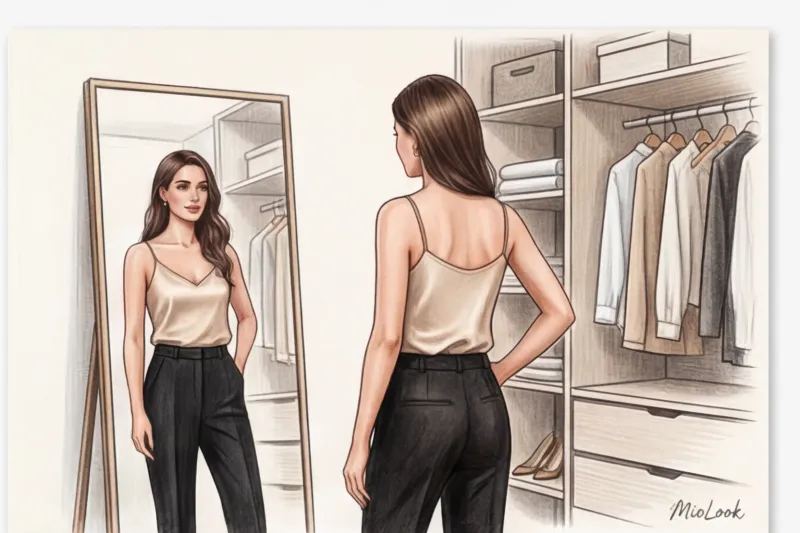
Stylist's rule: A lingerie top is acceptable in a business wardrobe only if two strict conditions are met. First, its neckline should never expose cleavage (the ideal shape is a soft, curved or straight geometric cut). Second, it must be concealed under a thick, well-fitting jacket that you plan to wear throughout the workday.
Crop Top: Rules for Mature Women
Many women shy away from crop tops, considering them a strictly teenage trend. This is a huge oversight. The key to elegantly styling a crop top in an adult wardrobe is the correct fit of the waistband.
Combine it exclusively With high-waisted trousers or skirts. The essence of this architectural technique is to show just a narrow strip of skin (literally 1–2 centimeters) at the most graceful point—just above the navel, where the ribs meet. This visually lengthens the legs and accentuates the waist without the slightest hint of vulgarity.
Halter top (with a loop at the neck)
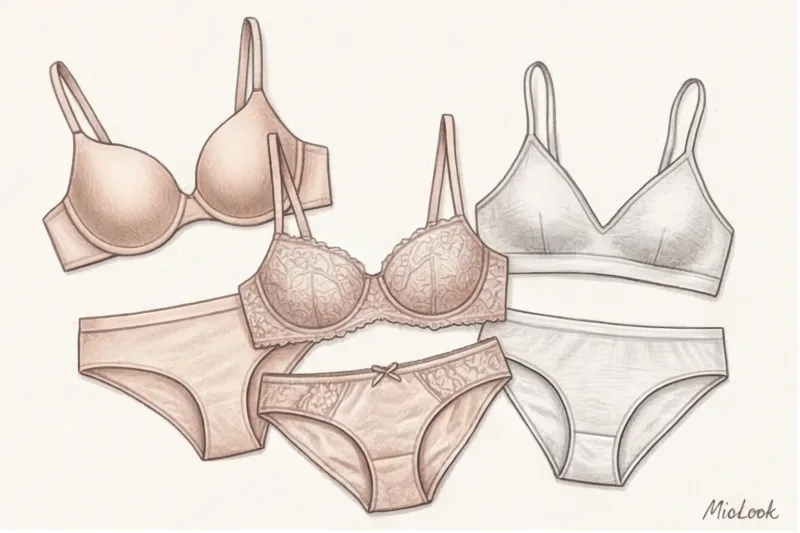
If you need to create perfect proportions, a halter top is your best bet. Thanks to the diagonal lines running from the armpits to the neck, this top provides powerful visual correction: it visually narrows and softens broad shoulders. This makes it a must-have for those with an inverted triangle body shape. Choose styles made of thick ribbed knits—they perfectly shape the silhouette and are unforgiving of careless underwear (a smooth strapless bra is essential).
Asymmetrical tops (one shoulder)
Asymmetry is the fastest way to up the dress factor without much effort. It's my go-to trick for transforming a look from day to evening. How does it work in practice?
During the day, you wear a relaxed casual suit with a basic cotton T-shirt. In the evening, before heading to an exhibition or dinner, you simply swap the T-shirt for an architectural one-shoulder top in heavy suiting or viscose. Add some statement earrings, and your casual suit instantly transforms into a sophisticated, intriguing evening outfit.
To avoid guessing in the morning which top looks best with your favorite palazzo shoes, I always recommend digitizing your items. Upload them to the "smart wardrobe" feature in MioLook — the app will clearly show all possible combinations of "highs" and "lows," and you'll immediately understand exactly what detail you're missing for the perfect capsule.
The myth of the "universal white shirt"
Open any style guide from the 2010s, and you'll see it at the top of the list of absolute must-haves: a classic, fitted white shirt. For years, we've been told it's a wardrobe staple that'll save you in any situation. But let's be honest: today, this advice is hopelessly outdated and more often than not, it hurts your style.
The main problem lies in the color itself. The crisp white of stiff cotton is a very tricky tool. Observing hundreds of try-ons in rooms with harsh lighting, I've uncovered a clear pattern: pure white with a blue undertone acts as a merciless reflector. For most Slavic women, it instantly accentuates the slightest dark circles under the eyes, visually deepens the nasolabial folds, and gives the face a tired, sallow appearance. What should be refreshing, in reality, gives us a couple of sleepless nights.
The second trap is the cut. A skinny shirt with darts paired with basic dark trousers or a pencil skirt inevitably creates the infamous "waitress uniform" effect. Instead of a classy business look, you get a generic work look, devoid of individuality and polish.
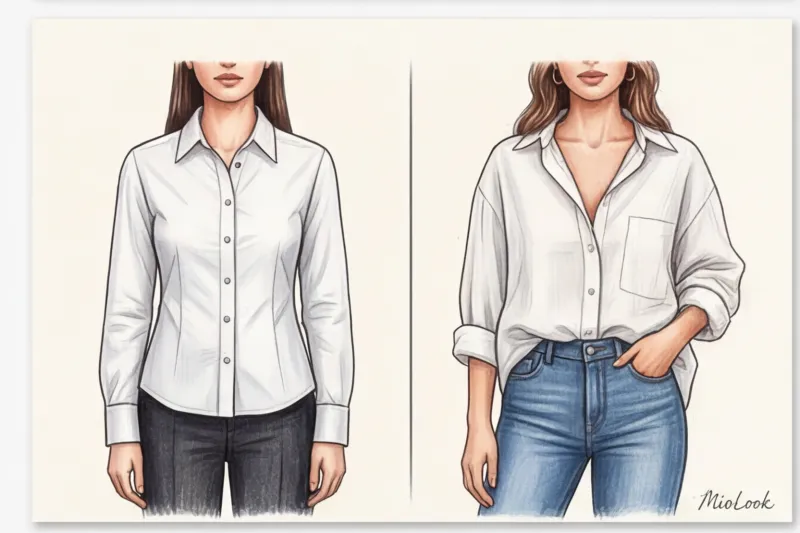
How can I avoid this stylistic mistake? I always offer my clients two modern and much more flattering alternatives.
Alternative 1: Boyfriend Shirt
If you're looking for a truly structured piece, choose a voluminous, straight-cut shirt made of thick poplin. Dropped shoulders, an elongated silhouette, and a loose fit create a relaxed yet composed look. Tuck this shirt halfway into your trousers (the French tuck) or wear it unbuttoned over a top. Even in the mass-market segment, you can find an excellent men's shirt for 40-60 euros that will look premium solely due to the proper airflow between your body and the fabric.
Alternative 2: Milk or pearl colored blouse
Studying various types of blouses For a basic look, consider styles made of dense silk or heavy viscose in off-white shades (milky, champagne, cream, pearl). This is your best portrait investment. Unlike stiff white cotton, the soft sheen of these fabrics acts as a delicate highlighter. The warm undertone of the fabric blends with your skin tone, erasing signs of fatigue and literally illuminating the face from within. The flowing texture automatically removes excessive severity, removing the look from boring corporate standards.
My personal test before buying a light top: Hold the fabric up to your makeup-free face in daylight. If the first thing you see in the mirror is your face, not the blinding white spot of your collar, you've found your perfect shade.
Access to MioLook for €0.99 — one-time payment
Start creating perfect images with the help of artificial intelligence
Get access — €0.99 onceHow to choose the perfect top for your body type
Often, during initial consultations, women immediately declare, "I have a complex figure; nothing suits me." Over fourteen years of continuous practice, I've learned one ironclad rule: body types aren't a death sentence and certainly not a reason to hide in shapeless oversized clothing. They're pure geometry. The main goal of any well-chosen top isn't simply to "hide flaws," but to create the right proportions and, most importantly, to direct the viewer's gaze to your face.
Studying various types of blouses When choosing clothing in a store or on a marketplace, it's important to evaluate in advance how a particular cut will work with your natural features. Let's explore the four main body structures and find functional solutions for them.
Pear shape (narrow shoulders, voluminous hips). Women with this silhouette are often tempted to wear something plain on top and dark underneath. This mistake only highlights the imbalance. We need to visually broaden the shoulders to balance the lower half. Accent collars (like exaggerated Victorian-style collars), voluminous puff sleeves, and voluminous bows work flawlessly here. Choose light shades, textured fabrics, and bold prints—they will draw the eye upward and create the necessary volume where it's lacking.
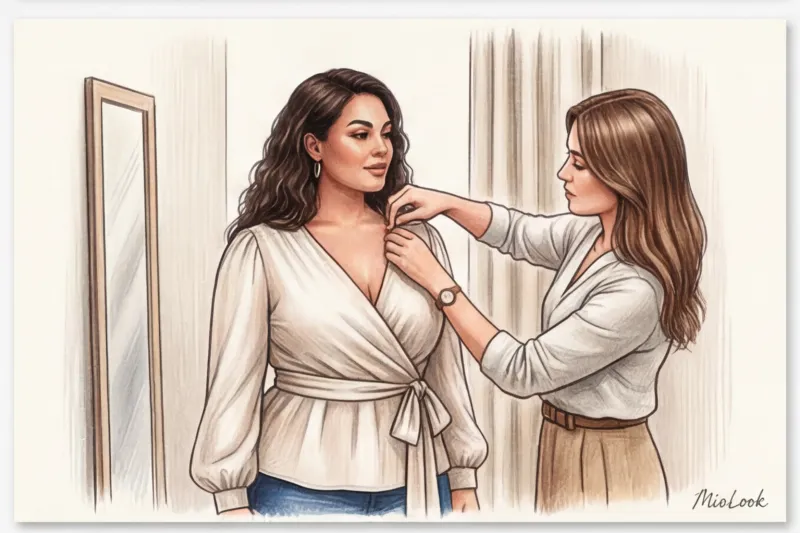
Inverted Triangle Body Type (broad shoulders, narrow hips). If you have an athletic build, the goal is to soften your top line and elongate your silhouette. Avoid shoulder pads, boat necklines, and puff sleeves—they will make your shoulders appear bulky. Your best bet is a deep V-neck, which visually lengthens your neck and breaks up the broad horizontal line of your shoulders. Wrap styles and flowing fabrics with thin vertical stripes work well. Avoid stiff, stand-up materials on the upper body.
Apple type (volume in the abdominal area, slender legs). For this figure, it's crucial to avoid a tight torso, but also avoid creating a rectangular block with loose-fitting garments. The ideal solution is a semi-fitted silhouette and an empire waist (with a high waist, where the fabric gently flares out just below the bust). Consider long tunics in matte fabrics—shiny silk or satin will reveal any curves. The length of such a top should end below the widest part of the stomach, approximately mid-thigh, to avoid creating a horizontal line where we want to conceal volume.
Rectangle type (shoulders, waist and hips in one line). Your figure is made for fashion experimentation, but it often lacks feminine curves. Creating the illusion of a waist through tailoring is your main stylistic trick. Structured peplum blouses look luxurious and modern on you, adding just the right amount of volume to the hips and visually slimming the waist. Wrap shirts in thick cotton, creating a sharp diagonal line across the silhouette, also work beautifully.
A stylist's secret: a garment doesn't exist in a vacuum. Even the most expensive blouse can ruin your silhouette if its geometry clashes with your natural shape. Conversely, the right cut can replace months of grueling diets.
To avoid buying another item that doesn't suit your proportions, I always recommend keeping an eye on your wardrobe. Upload your existing items to MioLook app — its smart algorithms will help you create ready-made outfits and clearly show you whether you have the right tops to create a harmonious silhouette for every day.
Fabrics that look expensive (and those that will make you look better)
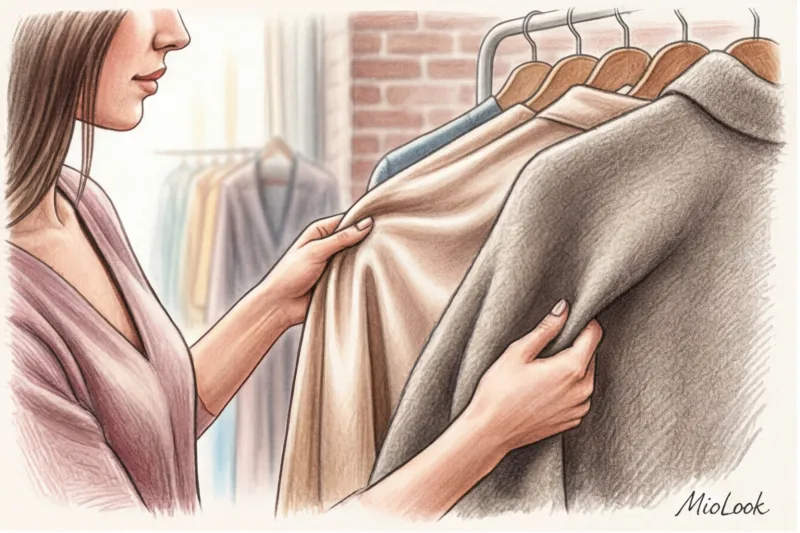
Research by textile institutes confirms an interesting fact: the human eye can determine the expected price of an item in a split second, and the main indicator is not the cut, but the texture of the material and how it refracts light. You can study all the existing types of blouses , choose the perfect style for your body type, but cheap fabric will instantly ruin the magic of the look.
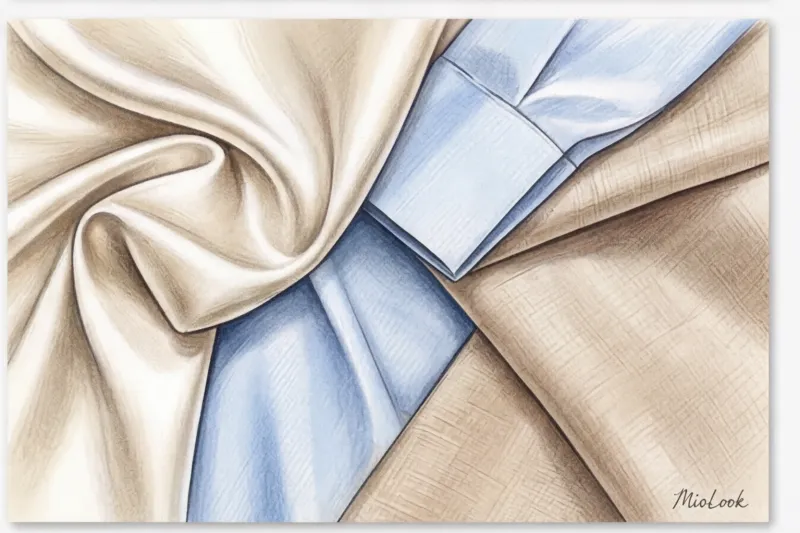
Let's take the eternal stylistic clash: natural silk versus polyester. A basic blouse made of good silk will cost an average of 150-300 euros. It's a luxurious, prestigious investment that requires dry cleaning and delicate care. Does this mean polyester should be banished from your wardrobe forever? Not at all; the key is to know how to choose it. The main rule: avoid smooth, overtly shiny textures. Look for crepe-weave polyester (crepe georgette or crepe de chine)—it's matte, slightly rough, grainy to the touch, and visually almost indistinguishable from heavy silk, yet it's significantly less expensive and wrinkle-resistant.
If tactile comfort is crucial to you, consider artificial fibers (don't confuse them with synthetics!). Cupro, Tencel, and high-quality viscose are true technological saviors of the modern wardrobe. Made from natural cellulose, they breathe beautifully, flow luxuriously over the body, and have a refined, subdued sheen. A Tencel blouse looks as expensive as silk, but is machine-washable. If you're unsure what to pair with such a flowing texture, try putting together virtual outfits in advance. MioLook — the contrast of a matte bottom and a shiny top always looks great.
For shirts that need to hold a rigid shape (like classic men's shirts), cotton poplin and linen remain the undisputed leaders. Poplin creates that crisp, architectural density of the collar, cuffs, and placket. Linen is indispensable in hot weather, but many are wary of its wrinkling. Here's my go-to: to test how a shirt will perform dynamically, do a crash test right in the fitting room. Squeeze the edge of the fabric tightly in your fist for 10 seconds, then release. If the creases are sharp, small, and deep, the shirt will look sloppy on the way to the office. If the creases are large, soft, and easily disintegrate, go for it. Incidentally, dense natural fabrics are excellent at hiding moisture. We discussed this in more detail in our an article about fabrics that don't show sweat.
Now, about the main enemies of elegance. The first thing to avoid is thin, flimsy knitwear (especially cheap "noodles"). It's often used in tight tops that treacherously highlight the slightest unevenness in underwear, quickly stretch out at the elbows, and become covered in pilling after the third wash. The second is low-quality, shiny satin. In the under-30 euro segment, it almost always becomes staticky, sticks to tights, and has an unnatural shine, evoking strong associations with a cheap nightgown. Replace it with a thick, matte viscose, and the style factor of your outfit will instantly soar.
Your ideal image
it begins Here
Join thousands of users who look flawless every day with MioLook.
Get access — €0.99 onceThe Perfect Wardrobe Formula: The 3 to 1 Rule
Research in the psychology of image perception reveals a curious fact: when communicating, 80% of the other person's attention is focused on the so-called portrait zone—from the chest to the crown of the head. Whether it's a business meeting in the office, a first date at a restaurant, or a daily work call, people look at your face and, consequently, at what frames your neck and shoulders. This is why others can accurately perceive and remember various types of blouses, shirts, or T-shirts, but rarely remember whether you were wearing the same dark blue trousers or basic midi skirt yesterday. We communicate visually with the upper body.
This peculiarity of human memory leads to the main mathematical rule of a smart wardrobe: for every bottom, there should be at least three to four different tops. This isn't just a stylistic whim for variety, but pure budget savings. Let's do the math: it's much more rational to buy three new, high-quality blouses (at an average of €50-€80 each) than to spend money on three full suits, which would cost at least €250-€300 each. By changing only the top and leaving the quality base underneath unchanged, you create the illusion of a completely new, well-thought-out look every day with minimal financial investment.
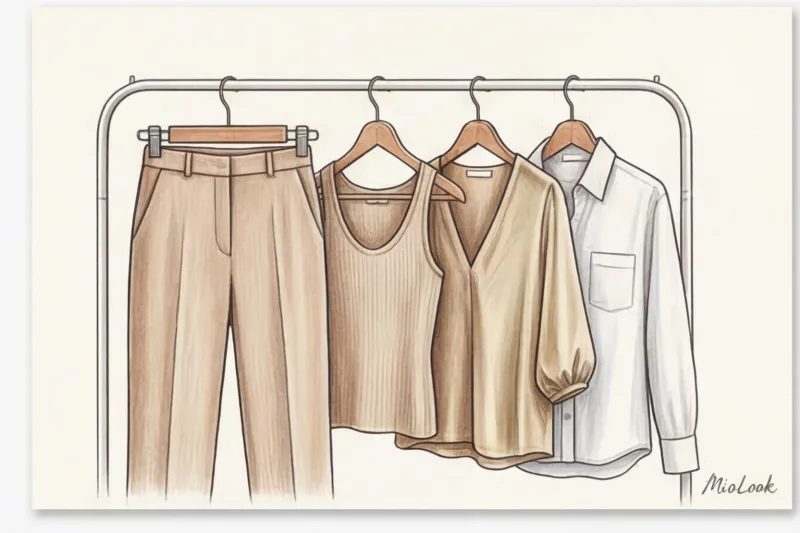
To ensure this formula works flawlessly, it's not enough to simply buy three random items. I always build a micro-capsule of tops according to a strict "base + accent + layering" scheme. Here's what it looks like in practice:
- 1 basic top: Smooth texture, achromatic or pastel colors, and a simple cut. This could be a crisp, straight-cut cotton shirt or a minimalist cupro blouse without unnecessary details. It serves as a calm backdrop and easily fits into any dress code.
- 1 accent top: A piece that sets the mood and attracts attention. A vibrant print, a complex architectural cut, asymmetry, or a rich color are all appropriate. A great example is an emerald blouse with an ascot collar or a top with complex geometric draping.
- 1 layered top: A top that works perfectly as a "first layer" under a structured jacket, a voluminous cardigan, or an open shirt. It could be a thick knit halter top or a high-quality, wide-strapped top with opaque straps.
Keeping track of this proportion in your mind can be difficult, especially when getting ready in the morning. To clearly see if your favorite palazzos have enough suitable companions, I highly recommend digitizing your closet. By uploading the database to MioLook , you get clear analytics: if you only have one T-shirt for every pair of jeans, the app will immediately highlight this gap. This approach eliminates the "closet full, but nothing to wear" problem forever and protects you from impulsively buying yet another pair of identical pants when all you really needed was a couple of fresh blouses.
Stylist checklist: how to check an item before buying
According to a 2023 McKinsey consumer behavior report, women regularly wear only about 20% of their wardrobes. The remaining items are left hanging due to one fatal flaw: they were bought on impulse, without rigorous technical inspection. The magic of visual merchandising and carefully crafted store lighting often trick us into overlooking objective design flaws.
To ensure that various blouses, tops, and shirts not only look great on the hanger but also perform flawlessly in real life, I make my clients perform a mandatory five-step crash test right in the fitting room. Here are the specific steps that will save you from wasting money.
1. Free-fit test. The key rule for a luxury silhouette is to leave some air between the body and the fabric. The minimum gap is 2-3 centimeters. If the buttons on the chest are slightly pulled, creating horizontal folds, or the fabric digs into your shoulder blades, the garment is too small, even if the tag indicates your usual size. It's this small amount of air in the portrait area that creates that casual elegance so prized by stylists.
2. Checking the armhole in dynamics. The most common problem with mass-market brands is an incorrectly designed, overly narrow armhole. After putting on a shirt, mimic your normal movements: reach up as if reaching for a cup from a high shelf, or stretch your arms forward. The sleeve should never cut into your armpit, and the shirt itself should not ride up above your waist. If the armhole drags the entire side seam when you raise your arms, feel free to return the shirt to the rack.
3. Quality of fittings. Buttons are the first sign of a garment's value. Manufacturers often skimp on details, sewing cheap, flimsy plastic onto good cotton, which immediately ruins the overall impression. My favorite styling hack: buy a basic model for 30-40 euros and replace the buttons with genuine mother-of-pearl, imitation horn, or matte metal (work at a tailor will cost around 5-10 euros). The garment will instantly move into the "premium" visual category.
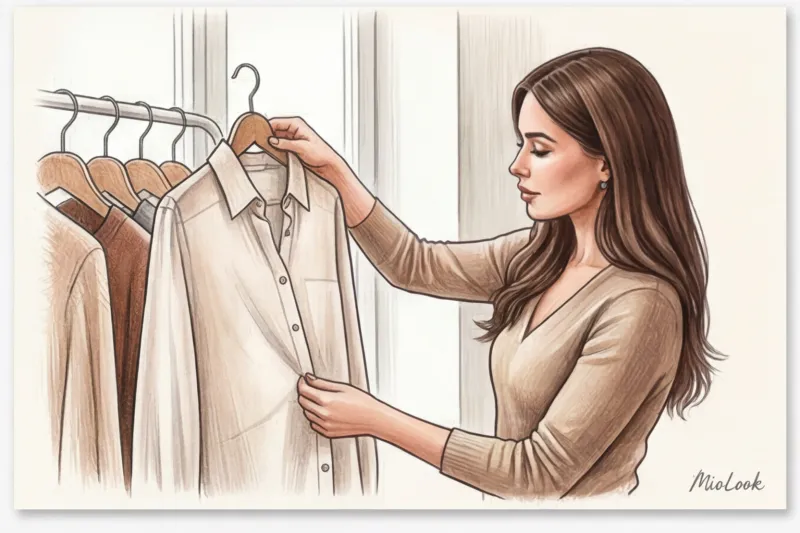
4. Transparency test in daylight. Artificial halogen lighting in shopping malls is extremely tricky. Be sure to approach the window or the brightest area of the store with your chosen item. Try this simple test: place your palm under the fabric and press firmly. If your skin tone and the contours of your fingers are clearly visible through the material, the blouse will reveal not only the contours of your underwear but also its texture. This is absolutely unacceptable for a business attire, even if you're wearing a smooth, nude bra.
5. Architecture of length. The ideal top should be versatile. Check whether the item can be worn untucked or tucked in. The correct length for classic shirts is exactly mid-thigh. Any shorter and it will constantly peek out from the waistband of your trousers every time you squat. Any longer and it will create unsightly bulk and a bulge at the stomach when you try to tuck it into a skirt. The right length also allows you to easily create the trendy "French tuck" without adding extra bulk to your hips.
Remember the golden rule of mindful shopping: we don't just buy beautiful fabric, we buy how we feel in it. Even the slightest discomfort in the fitting room will multiply that discomfort tenfold throughout the workday.
By investing five minutes in such a check, you'll create a truly smart wardrobe, where every item is worth its weight in gold. And to immediately understand what exactly you'll wear with your new purchase, I recommend digitizing your looks. By adding an item to MioLook Right after purchasing, you can easily create dozens of combinations with the skirts and trousers you already own, forever forgetting about the problem of “nothing to wear.”