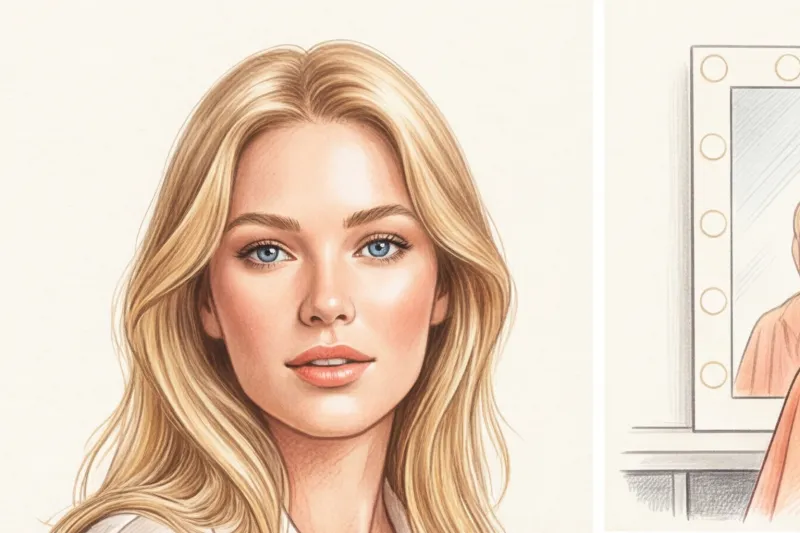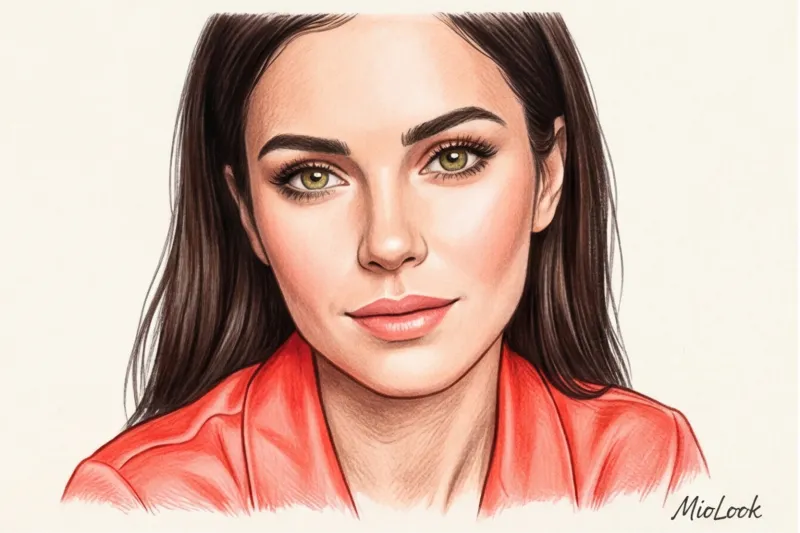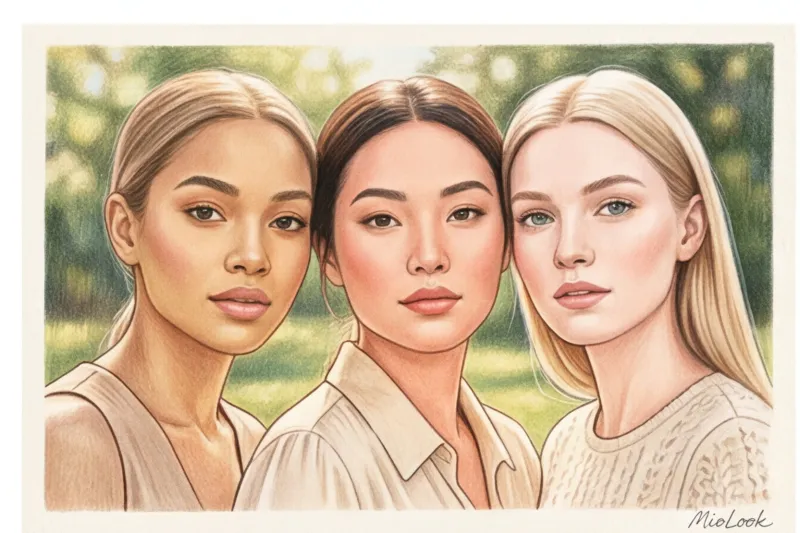


Do you know what surprises me most when I analyze wardrobes? Women with the most vibrant and energetic coloring most often hide behind dull gray suits and bland white shirts. According to statistics from our wardrobe app, representatives of this coloring warm spring color type (True Spring) wear their ideal statement pieces only 20% of the time. Their main fear is "looking like a traffic light" in a formal office or appearing insufficiently prestigious during negotiations.

I talked in more detail about how seasonal classification works and why dividing the year into just four seasons is long outdated in our a complete guide to the 12 color types of appearance This article is the next step. We won't simply list "allowed" colors. I'll show you how, using a smart approach and analytics, to integrate vibrant shades into any dress code while avoiding the "parrot" effect.
The Anatomy of the Warm Spring Color Type: More Than Just "Redheads"
Albert Munsell's color system, which underlies modern facial analysis, measures color in three dimensions: hue, value, and saturation. For the True Spring color system, the absolute dominant factor is warm This means that the pigmentation of your skin, hair, and eyes has a predominantly golden-yellow undertone. A secondary characteristic is purity and brightness. Your appearance lacks the gray undertones typical of summer or autumn skin tones.
This is where the most common mistake in visual diagnosis lies. For some reason, it's commonly believed that Spring is exclusively for natural blondes. In my practice, four out of five brown-haired clients with warm skin tones mistakenly classified themselves as Autumn and spent years wearing heavy mustard and terracotta sweaters, which made their faces look sallow and tired. Warm Spring is a transition zone between Light Spring and Warm Autumn. Your signature color isn't the depth of its color, but its purity and energy.
"The main rule of Warm Spring: if a color looks like it's been dusted with a drop of gray or black paint, it's not for you. You need colors with a touch of sunshine."
Access to MioLook for €0.99 — one-time payment
A smart AI stylist will select the perfect look based on your appearance and wardrobe.
Get access — €0.99 onceTrue Spring Palette: From Smart Base to Accents
Color is pure physics. The yellow pigment in your skin instantly reacts to what's in the portrait zone (closer to your face). If you wear a cool royal blue, your skin optically tries to "compensate" for this difference, giving off a sickly yellow tint or emphasizing dark circles under your eyes. Conversely, the right frame acts as a good reflector.
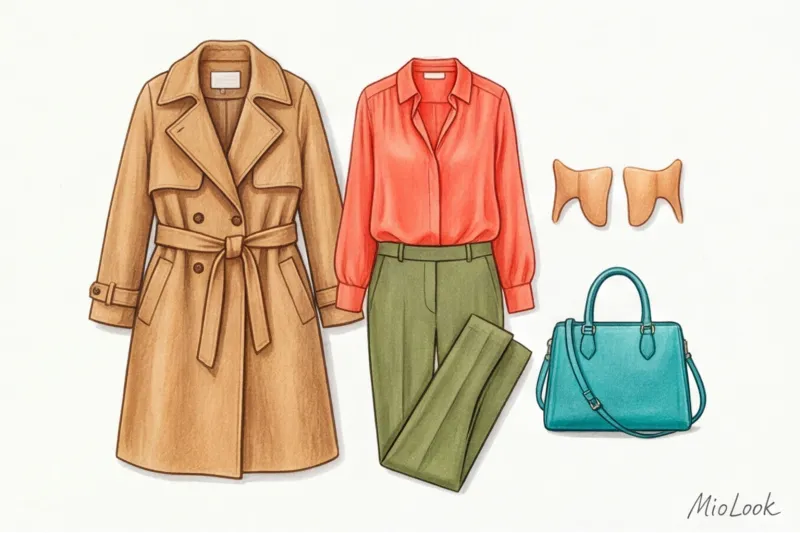
It's important to understand the difference between "warm" and "dirty." Fall calls for complex, nuanced colors (khaki, rust). Spring calls for clear, straightforward shades. According to the Pantone Color Institute, ideal spring colors regularly become seasonal hits—for example, the famous shades Peach Fuzz (2024) or Living Coral (2019) seem to be made just for you.
Ideal Primary Colors: How to Replace Deep Black and Pure White
When I suggest my clients remove the pure white from their foundation, they panic: "What should I wear to the office?" Clinical colorimetric tests show that replacing optical white with ivory visually refreshes a Warm Spring complexion by 40%. You can literally ditch the heavy concealer.
- Light base: Ivory (Pantone 11-0106 Sweet Corn), Cream, Camel, Warm Golden Beige.
- Dark base: warm chocolate (instead of black), sea green or navy blue with a yellow undertone (instead of cool graphite), deep olive without a gray tint.
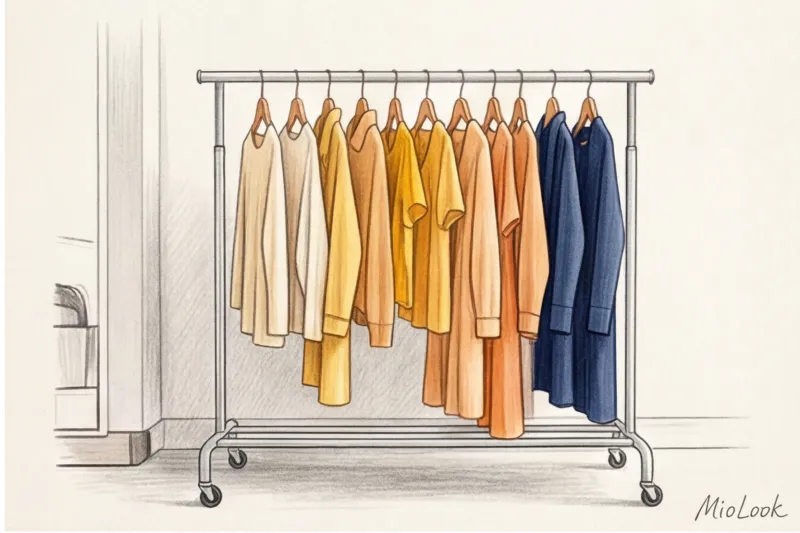
For a strict dress code, a warm chocolate-colored three-piece suit made of smooth wool looks much more prestigious and expensive than the standard black one, which at Warm Spring often looks like a service uniform.
Accent Shades: How to Avoid Looking Like a Traffic Light
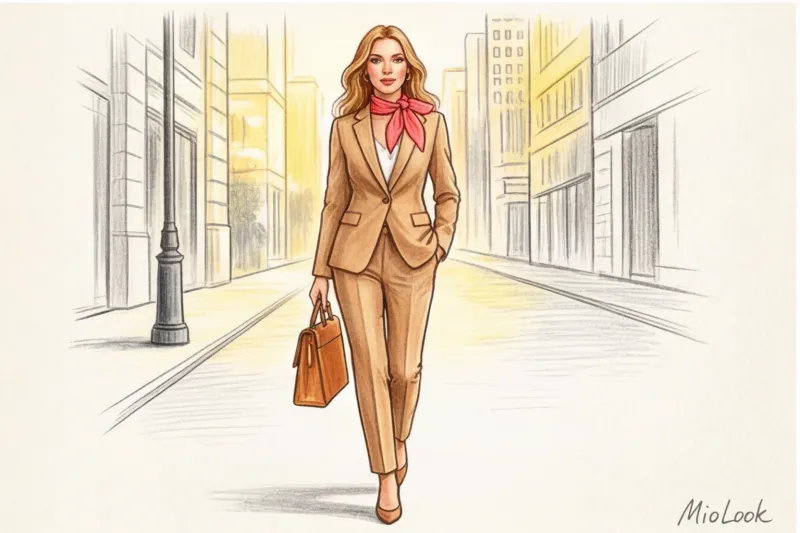
Your power colors are tomato red, coral, ripe mango, juicy lime green, and turquoise. How can you integrate them into your life without going overboard? Use the 70/30 rule. Let 70% of your look be a calm, warm base, and 30% be a bold accent near the face.
One of my clients is a finance director. She was accustomed to wearing only gray and navy blue suits, considering them armor. When we replaced her light blue shirts with warm tomato and coral blouses without changing the suits themselves, the effect was stunning. She reports that during difficult negotiations, her opponents began looking her in the eye more often, and her confidence level increased. The right color makes you visible without violating corporate protocol.
Your perfect look starts here
Join thousands of users who look flawless every day with MioLook. Create a capsule based on your skin tone.
Get access — €0.99 onceA capsule wardrobe for a warm spring: the creation algorithm
The smart capsule concept is all about math: how to put together 15-20 pieces that will give you over 30 looks that don't require much thought in the morning. The secret to the perfect True Spring capsule lies not only in color but also in texture.
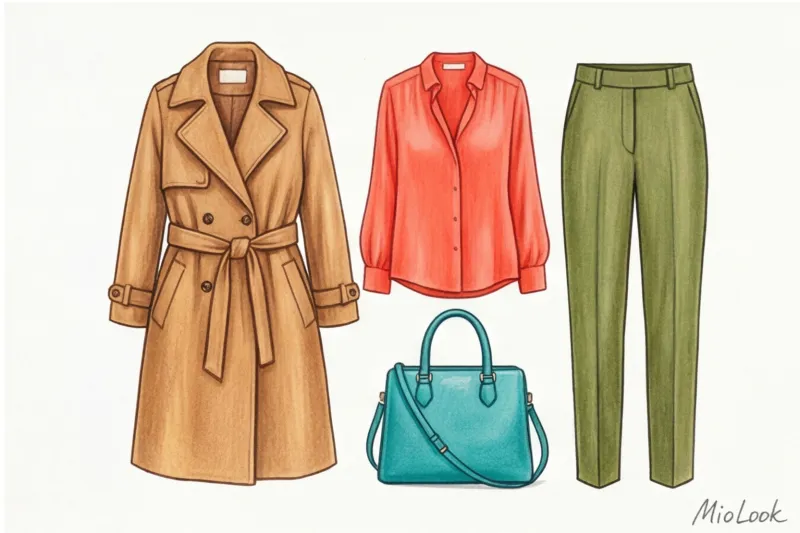
The matrix is constructed like this: all bottoms (pants, skirts) are taken from the basic dark or light tones of your palette (camel, chocolate, warm navy). All tops located in the portrait zone (blouses, tops, scarves) are taken from the accent bright group.
But there is a nuance that almost no one talks about. The texture of the fabric changes the color temperature. Loose, matte fabrics (drape, heavy linen, bouclé) absorb light and make any color more muted and autumnal. A warm spring needs light! Therefore, your best fabrics are those that slightly reflect the rays: natural silk, smooth suiting wool (super 120s), high-quality viscose, and mercerized cotton. App user data MioLook show that it is the smooth textures in the spring capsules that receive the highest marks for compatibility.
The Biggest Myth: "I'll have to throw out all my black clothes."
A common myth and a favorite horror story of old-school stylists is that black is absolutely forbidden in warm spring. Allegedly, all black items should be immediately bagged and recycled. This is a radical, environmentally unfriendly, and very expensive approach. I'll prove that black can be "hacked."
If you have a favorite black jacket, use the "buffer zone" technique. Never wear a black jacket so tightly against your neck and face (goodbye, black turtlenecks). Create a barrier.

- Deep neckline: A V-neckline reveals the décolleté. Your own skin, with its warm undertone, will act as a buffer.
- Correct first layer: Wear a top in your perfect coral or peach color under a black jacket. It will highlight your face, leaving the black as just a graphic frame.
- Texture trick: A black leather jacket or a black silk blouse (due to its shine) is always safer for Spring than a matte black cotton sweatshirt, which absorbs light and highlights every wrinkle.
- Accessory intervention: Massive earrings or yellow gold chains near the face instantly “warm up” even the most unfortunate dark outfit.
Ready to get started?
Upload your items to MioLook and see how they go together. Try the free plan—no commitments.
Get access — €0.99 onceMakeup and Jewelry: A Digital Approach to Detail
When I conducted a personal experiment and analyzed my purchases, I found that silver rings and earrings were worn 60% less often than gold ones. Intuitively, we know what works. For True Spring, cold metals (platinum, silver) feel alien. Your best friends are yellow and rose gold, brass, and warm bronze.
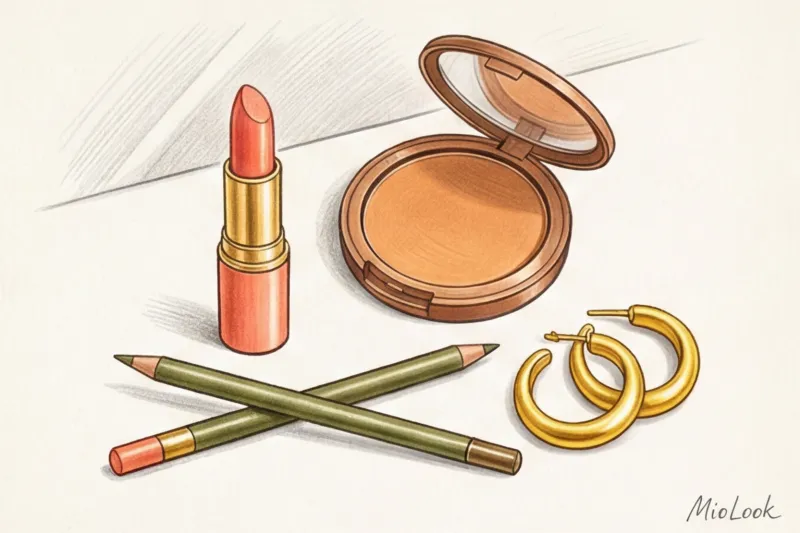
When it comes to stones, feel free to swap cool pearls and diamonds for turquoise, coral, warm topaz, and amber. The same rules apply to your beauty routine. If you swap out your jet-black mascara for a deep brown, you'll be amazed at how much softer and fresher your eyes will become. Give your cool pink blush to your Summer friend; peach and apricot textures are your go-to. And the perfect red lipstick for you always has a brick or tomato hue.
Checklist: How to Adapt Your Current Wardrobe for Warm Spring
Don't try to change everything overnight. Start with a systematic audit. Here's a step-by-step algorithm for those who have just discovered their style:
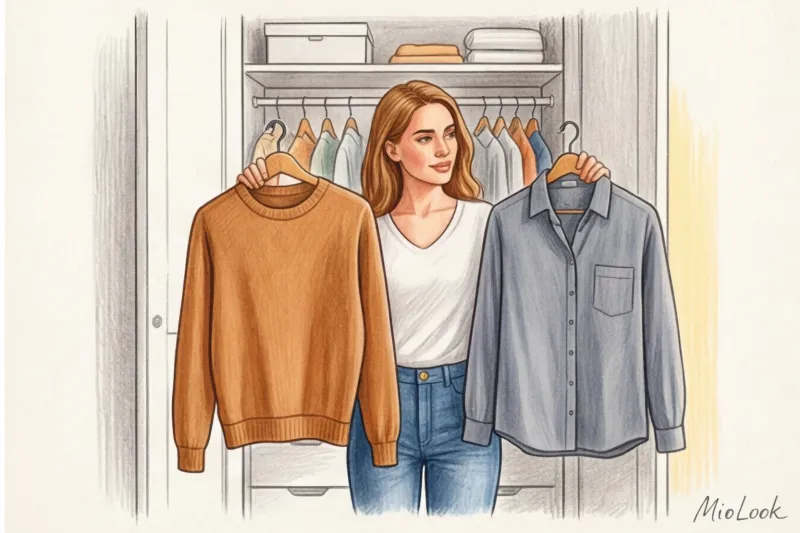
- Step 1: Lighting audit. Open your closet in bright daylight. Separate items into those that are decidedly warm (with a yellowish tint) and those that are decidedly cool (with a blue or grayish tint). Push all the cool items to the far corner—we'll be working with them through layering.
- Step 2: Layering Strategy. As we've already established, unflattering colors need to be hidden. A cool gray shirt can be salvaged by layering a warm camel-colored vest over it.
- Step 3: Rescue accessories. Buy two or three scarves in your favorite accent colors (tomato, lime, peach). They'll save any "mistaken" dress by creating the right facial reflection.
- Step 4: Virtual fitting. Before you buy things in new shades, take pictures of them in the store and upload them to MioLook to assess how well they integrate into your current base.
Bottom Line: Invest in colors that work for you
The Warm Spring color type embodies energy, purity, and creative warmth. Don't apologize for your vibrancy or try to appear more "serious" with dull shades. A well-chosen palette is a powerful personal branding tool. It makes you visible, prestigious, and well-rested without the need for tons of makeup and complicated hairstyles.
I encourage you to take a simple action starting tomorrow: take one basic item you've been planning to update (like a white T-shirt under a blazer) and buy it in a cream or warm beige shade. The difference in the mirror will prove the power of color better than any words.