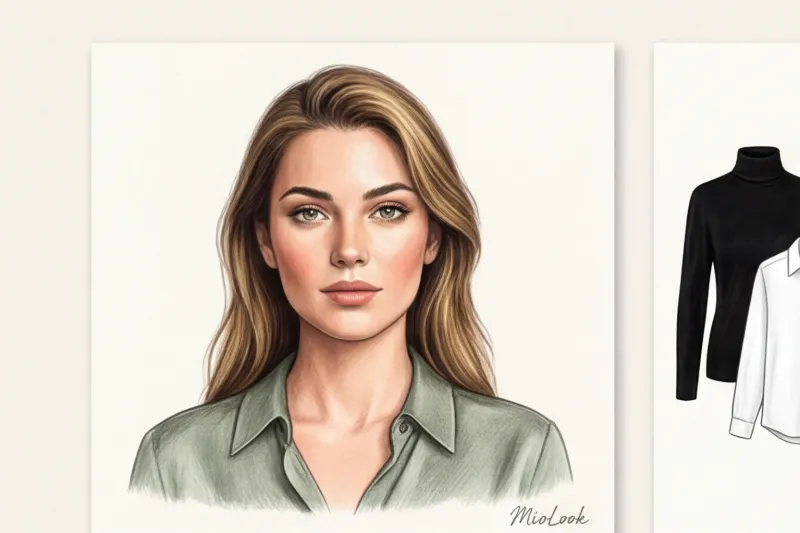

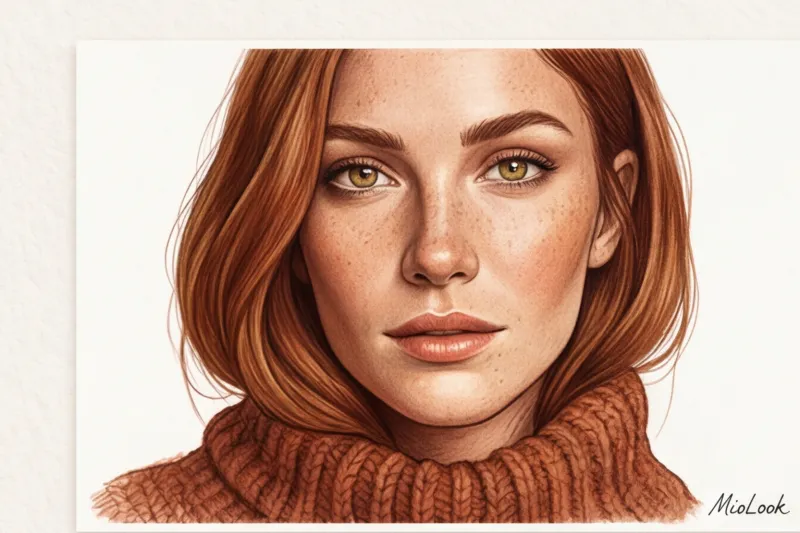
Did you know that almost 80% of standard business attire in the mass market and mid-range segments is made in cool shades? Black, crisp white, steel gray—this corporate uniform puts women with warm skin tones at a distinct disadvantage. In these colors, they often look tired, even if they've gotten the required eight hours of sleep. If this situation sounds familiar, chances are yours... color type - warm autumn (True Autumn).
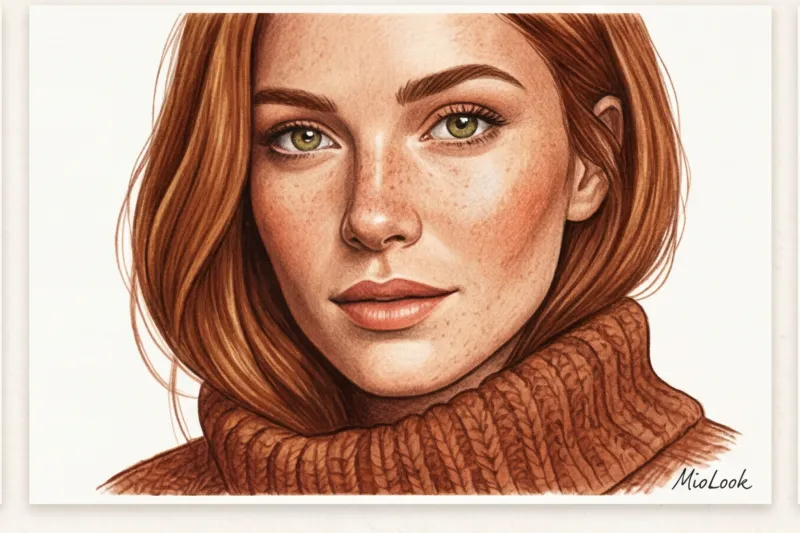
For a long time, this color palette was associated exclusively with relaxed boho style, knitted cardigans, and the "pumpkin shop girl" look. But as a practicing stylist, I categorically disagree with this narrow perception. Warm autumn is the perfect base for the aesthetics of "quiet luxury" (stealth wealth) and status-conscious minimalism. The key is to understand the physics of fabric and work with the depth of hue, not just its temperature.
We have already discussed in more detail the evolution of color theories and why the basic classification is outdated in our a complete guide to the 12 color types of appearance Today, we'll explore the anatomy of style specifically for True Autumn: from the right textures to an investment capsule.
What is the Warm Autumn color type (True Autumn) in the 12-season system?
The classic four-season theory failed for one simple reason: it confined people to rigid frameworks, ignoring undertones. A real breakthrough in color theory occurred when stylists adapted the system of American artist and professor Albert Munsell. At the beginning of the 20th century, he demonstrated that any color is described by three coordinates: hue, value, and saturation.
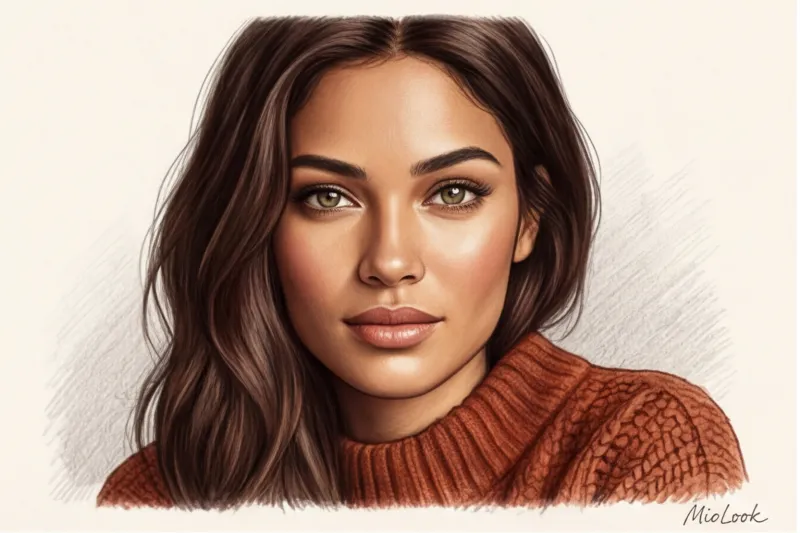
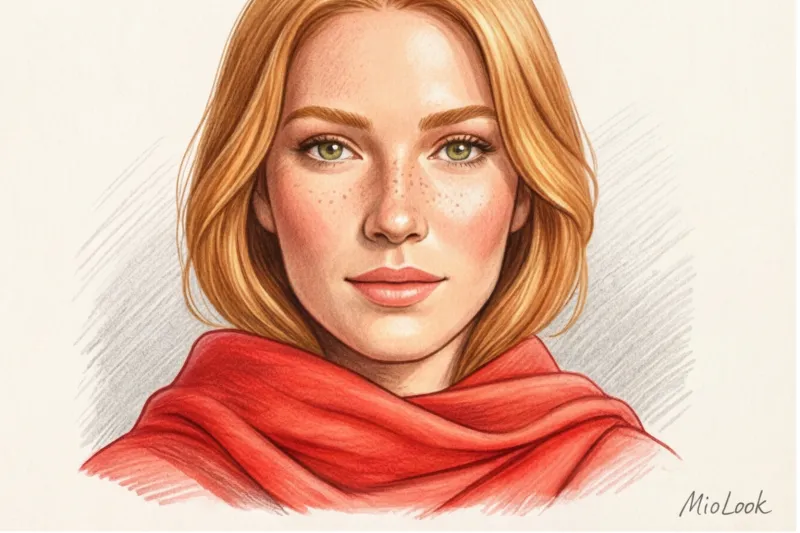
In the modern management system Warm autumn — This type is dominated by absolute warmth, medium contrast, and muted depth. There's not a drop of cool pigment in your appearance. You seem to glow from within with a golden light.
- Leather: has a distinct golden, peach, or copper undertone. Freckles of a warm caramel hue are often present.
- Hair: From golden-blond to rich chestnut and copper. In the sun, they always have a reddish tint, not an ash-colored one.
- Eyes: nutty, olive green, warm brown or topaz.
Unlike Soft Autumn (which has a hint of summer gray) or Dark Autumn (which feels like a contrasting winter), True Autumn is a concentrated warm palette. Your appearance calls for similarly rich yet soft colors, as if filtered through a sepia tone.
The Anatomy of the Perfect Palette: Base, Accent, and Power Colors
The ideal Warm Autumn palette, in short, is one infused with a touch of liquid gold and burnt umber. Your main goal is to create a wardrobe that complements the natural colors rather than clashes with them.
The most challenging thing for my clients is to avoid black and stark white in portraits. Black creates harsh shadows on the face of a warm autumn, highlighting wrinkles and fatigue. White makes the skin look sallow. What to replace them with? Your "new black" is deep espresso, dark chocolate, and mahogany. And instead of optical white, choose ivory or baked milk.
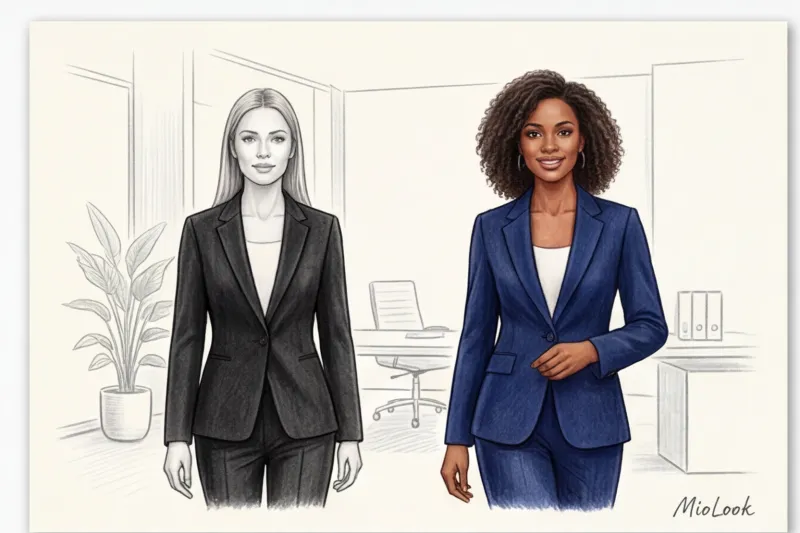
"One of my clients, a C-level executive in the IT sector, complained that she wasn't being treated with enough authority at board meetings. We conducted an audit and removed all the graphic black jackets, replacing them with suits in shades of Deep Teal and Forest Green. It worked brilliantly: the sharp cut retained the corporate feel, while the deep, warm undertone of the fabric illuminated her face, giving her look a polished, classy quality that flat black didn't provide."
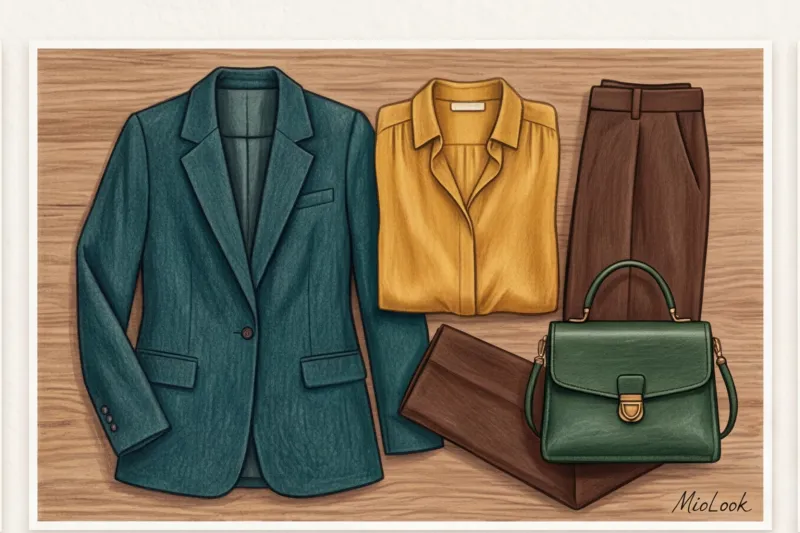
Collecting business wardrobe by color type , use the principle of analogous harmony: combine adjacent shades of the color wheel (for example, mustard, terracotta and chocolate) to create an expensive monochrome.
How to integrate cold trends into a warm wardrobe
What should you do if PANTONE declares cool fuchsia as the color of the year, and you really want to wear it? Use the 30/70 rule. Keep 70% of your look (especially the portrait area) in a warm palette, and 30% in a trendy cool shade, as far away from the face as possible. This could be shoes, a bag, or pants. The key is to use transitional accessories: for example, a scarf with a print that intertwines your basic warm brown and trendy fuchsia.
Access to MioLook for €0.99 — one-time payment
A smart AI stylist will select the perfect look and help you intelligently integrate trends into your personal palette.
Get access — €0.99 onceThe Main Secret of Coloristics: Why Texture is More Important Than Color for Autumn
Here we come to an insight rarely written about in glossy magazines. For Warm Autumn tissue physics Just as important as its color. According to a 2024 WGSN analytical report, focusing on complex textures increases the visual value of an everyday look (the stealth wealth effect) by 40%.
How does this work in practice? Smooth, shiny materials (thin cotton, satin, glossy synthetics) reflect too much light. On a woman with an autumnal complexion, they look cheap and foreign. But textured materials absorb light, making any shade deeper, more complex, and vibrant.
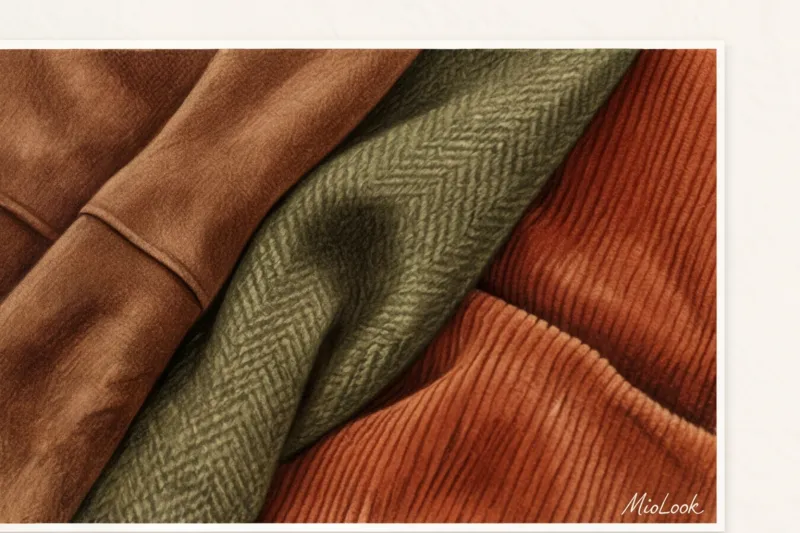
Your style support is rich fabrics:
- Suede and corduroy: They absorb light perfectly, transforming ordinary red-brown into a luxurious shade of old cognac.
- Tweed and boucle: By interweaving threads of different tones, they create the desired autumn ripples.
- Chunky knit and cashmere: give volume and softness.
- Thick matte silk: Unlike slippery satin, matte silk (such as crepe de chine) drapes gracefully.
If you want to look classy, try combining three or four different textures in one monochrome look. For example: smooth camel wool trousers, a thin cashmere turtleneck in the same shade, and a suede jacket. The difference in light reflection will create the depth that stylists love about this style.
Busting the Myths: 4 Mistakes That Are Ruining Warm Autumn Style
When working with wardrobes, I constantly encounter the same stereotypes that prevent women from realizing their potential. Let's debunk the main ones.
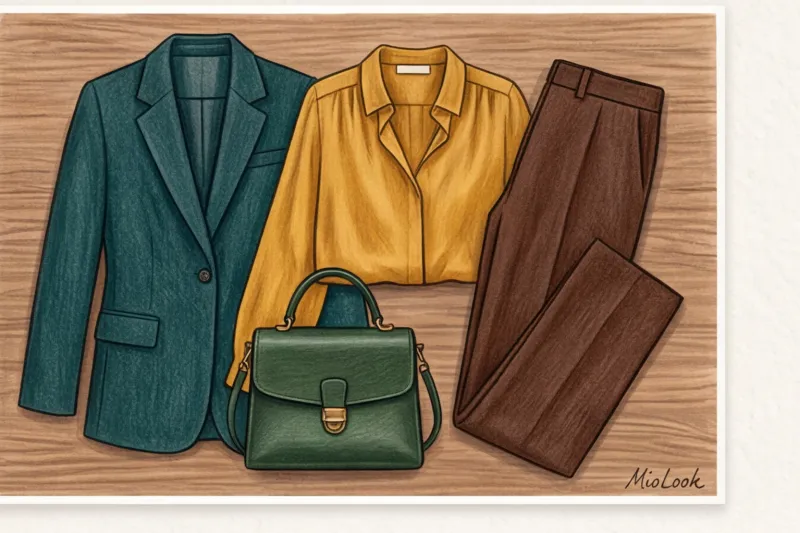
Myth 1: "You can only wear brown and orange."
Absolutely not true. Many are afraid bright colors in office clothes Thinking that autumn is all about fallen leaves? Your palette includes luxurious eggplant, warm blackberry, deep tomato red, and emerald. These are the perfect shades for evening outings and business presentations.
Myth 2: "Warm pastels make a great base."
Fair warning: pastels are the enemy of Warm Autumn. Your look needs richness (chroma). Light peach or pale yellow will make your face look sickly and washed out. If you need a light top coat, choose a rich ivory or rich cream.
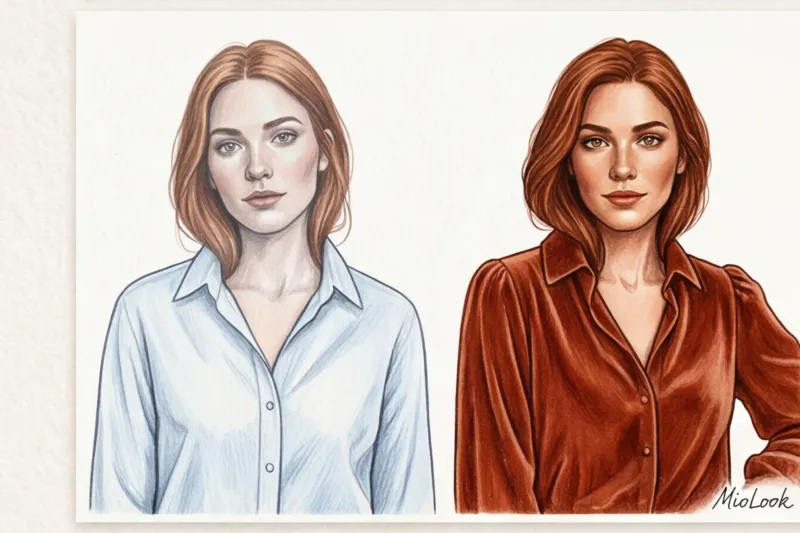
Myth 3: "Autumn is always boho-chic and country."
In the 2010s, stylists may have dressed every autumn girl in tiered skirts and cowboy boots, but that's no longer the case. Architectural minimalism (think COS or Massimo Dutti) in rust, olive, and dark chocolate shades looks ultra-modern. Clean lines perfectly balance the warmth of the color.
Myth 4: Neon colors are refreshing
Pure contrast and neon drown out the natural harmony of True Autumn. You'll simply get lost behind a neon pink sweater—people will see the clothes, not you.
Your perfect look starts here
Join thousands of users who look flawless every day with MioLook's clothing selection algorithms.
Get access — €0.99 onceSmart capsule for the Warm Autumn color type: a formula for 15 things
Six months ago, I conducted a personal experiment: I digitized my autumn capsule in an app. MioLook To track the actual wearability of items (Cost Per Wear). The results confirmed the theory: textured items in deep tones were worn three times more often than basic smooth cotton.
Here's a proven 15-piece formula that will give you at least 30 stylish outfits for every day:
Tops (5 items):
- Cream blouse made of thick matte silk (perfectly highlights the face).
- Mustard or terracotta cashmere sweater.
- Burnt umber base top.
- Emerald ribbed turtleneck.
- Chunky knit cardigan in oatmeal shade.
Bottoms (4 items):
- Wide-leg camel wool trousers - The secret to soft power in a business wardrobe.
- Chocolate midi skirt (preferably made of thick leather or suede).
- Classic straight leg jeans in dark blue with a warm undertone (no grey fraying).
- Olive chinos or cargo pants made of heavy cotton.
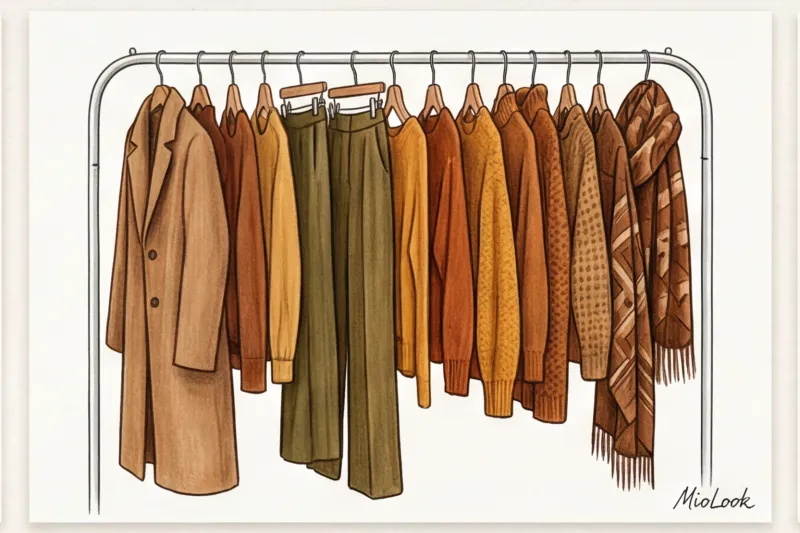
Second layer and outerwear (3 items):
- Tweed jacket in brown and green tones.
- Structured coat in burnt brick or rust color.
- Dark green trench coat (a great alternative to boring beige).
Shoes and bags (3 items):
- Cognac-colored suede ankle boots.
- A structured tote bag in smooth dark chocolate leather.
- Loafers in deep wine or eggplant color.
How to assemble a business wardrobe without boredom
For formal dress codes (Business Formal and Smart Casual), you don't necessarily need to wear solid colors. Use classic micro prints, but in your own palette. For example, Prince of Wales check, where dark brown and olive lines intersect, or houndstooth in a mustard-chocolate version. About How to combine colors in business attire To look prestigious, we wrote about it in detail in a separate guide.
Ready to get started?
Digitize your wardrobe and create stylish capsule wardrobes for every day. Try the free plan—no commitments.
Get access — €0.99 onceMakeup and Jewelry: The Magic of Matte Gold and Bronze
The warm autumn color type dictates its own rules not only for clothing but also for accessories. Shiny, samovar-like yellow gold often looks too plain on you, while cold silver downright cheapens the look. Your choice is blackened, matte, or antique gold, as well as aged bronze and copper. For gemstones, choose the classic autumn gems: amber, tiger's eye, warm green turquoise, and topaz.
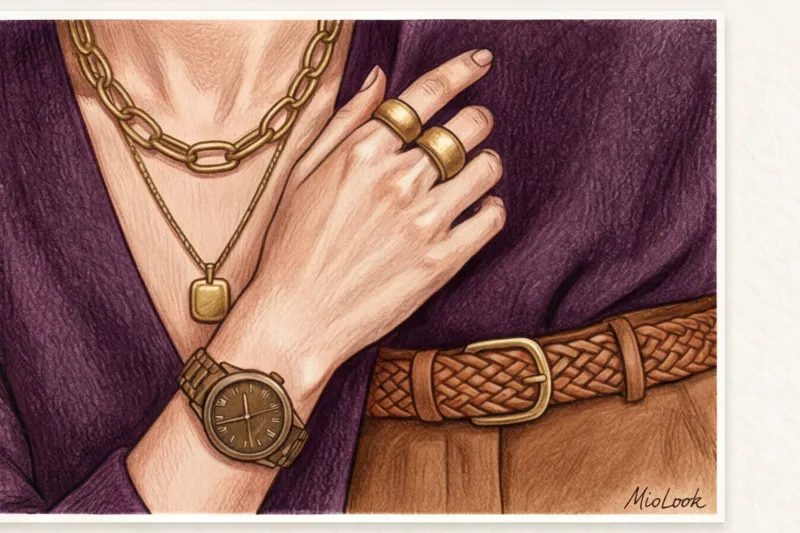
When it comes to makeup, the same texture rule applies: eschew dewy glosses in favor of satin and matte finishes. Bronzer instead of cool-toned pink blush, brown or eggplant mascara instead of black.
I'll be honest: finding your perfect warm nude lip color in a regular store can be incredibly difficult—most of them end up looking like a cool lilac on True Autumn skin. My advice: don't be afraid to mix pigments. Apply a terracotta lip liner and blend it with a warm peach balm. The result will be the perfect shade that will accentuate the natural warmth of your complexion.
Checklist: A 30-Day Wardrobe Transformation Plan
Don't try to throw out everything and buy new things in one weekend. A conscious approach to style takes time. Here's a step-by-step plan based on my real-world methodology for working with clients:
- Week 1: Wardrobe Audit. Take stock and remove overtly cold, "hostile" colors (icy blue, steel gray, fuchsia) from your face. If you don't want to throw something away, wear it with a warm scarf or tuck it into the lower half of your silhouette.
- Week 2: Investing in the Base. Buy two quality tops in your best Power Colors (for example, an emerald blouse or an ochre cashmere sweater).
- Week 3: Implementing Facture. Add one piece with a complex texture to your everyday essentials. This could be a suede belt, a corduroy shirt, or a textured leather bag.
- Week 4: Digitization and assembly. Take photos of successful combinations and upload them to the app so you don't have to waste time thinking about them in the morning.
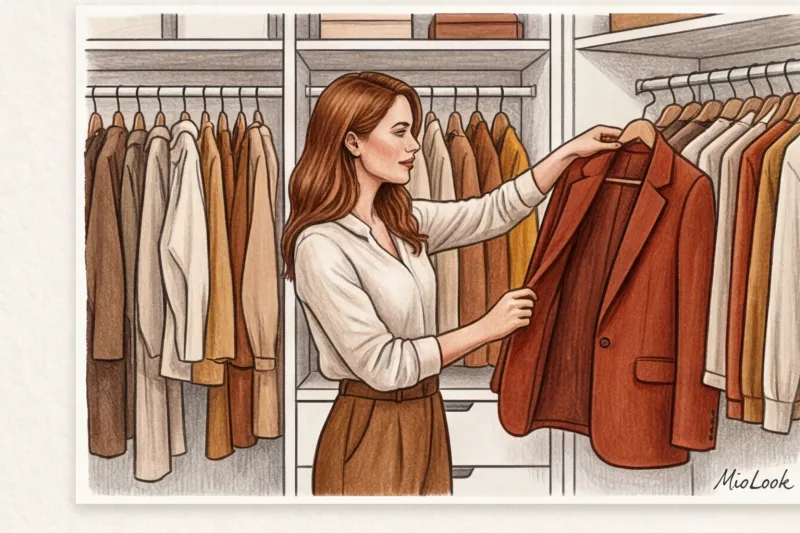
Clothing is a powerful tool for impression management. Once you stop masking your natural warmth behind the bland, cold standards of mass-market fashion and embrace deep, complex shades and rich textures, your style will reach a whole new level. Choose your Power Colors, invest in quality fabrics, and your wardrobe will truly shine.