How much money have you spent on purple shampoos, trying to "kill cheap yellowness"? In 12 years of working as a personal stylist and shopper in Europe, I regularly see the same picture. Women with stunning, warm, glowing skin spend years stripping their hair of its natural golden pigment, trying to achieve trendy ash or platinum blonde. The result is always the same: a dull look, pronounced wrinkles, and the need to apply a thick layer of foundation even on weekends.
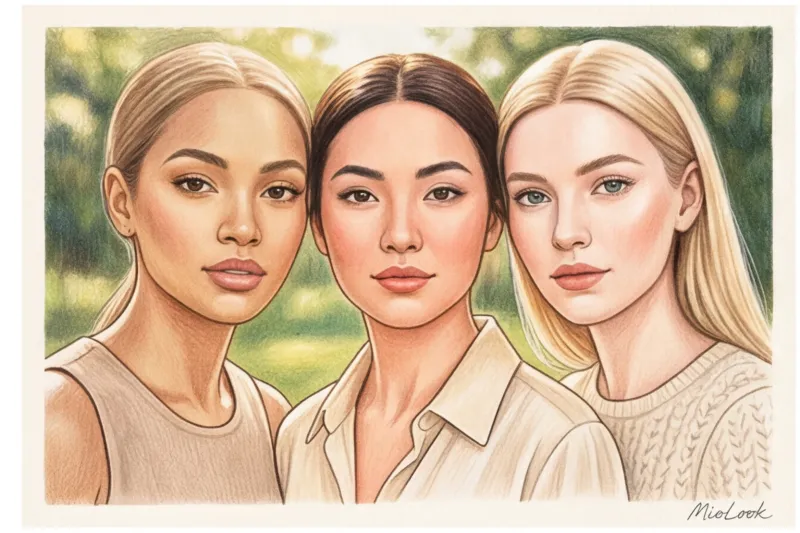
One of my clients, Anna, spent five years bleaching her hair to an icy total blonde. She'd come to our fittings tired, complaining of a sallow complexion. When we finally convinced her colorist to go with a warm beige, the need for heavy contouring disappeared—her face literally glowed from within. Perfect hair color for the spring color type — it's always a story about working with heat effectively, not an endless struggle with it.
We discussed the basic principles of coloristics in more detail in our a complete guide to coloring secrets , but today we'll take a closer look at how to make warm golden and honey shades look expensive, classy, and easy to maintain.
Why "Vesna" Isn't Just Straw Blonde: Understanding the Subtypes
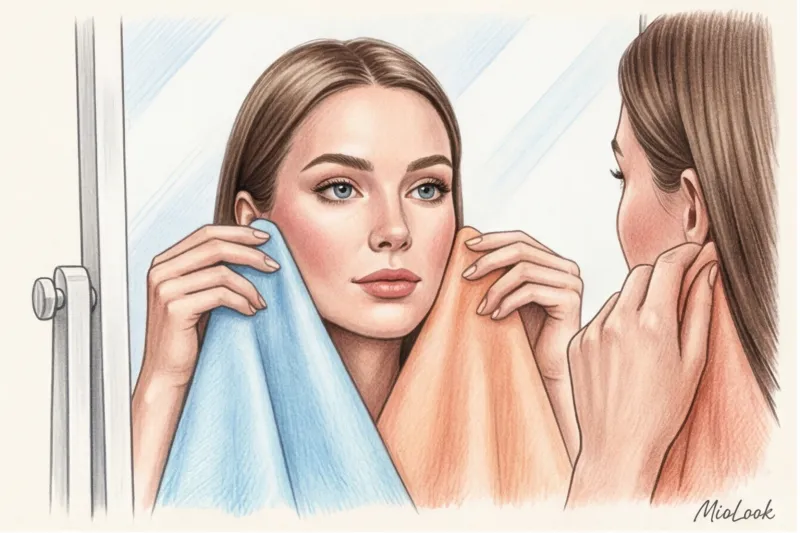
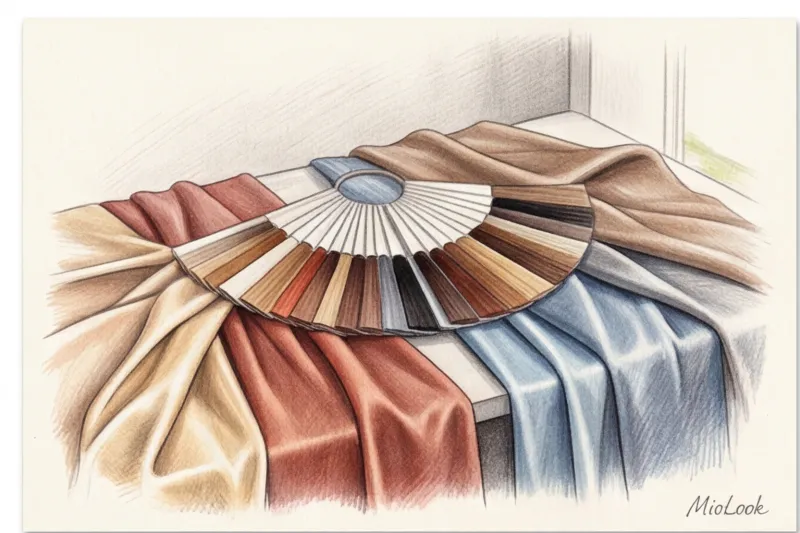
Forget the old magazine tests with orange handkerchiefs and wrist veins. Modern styling relies on an updated 12-season system (developed based on the theory of Catherine Calis), which offers much more freedom.
The main characteristic of the spring skin type is a clear, warm undertone. It seems to glow from within, without an olive gray or deep swarthy tone. However, the level of contrast varies from woman to woman. We discussed this classification in more detail in the article. 12 Color Types of Appearance: A Guide to Choosing a Palette , but to choose a hair color, you need to understand your subtype:
- Bright Spring: The least contrast between skin, eyes, and hair. Your maximum darkening is light blond. Darker tones will look like a coarse wig.
- Warm Spring: Gold is absolutely dominant. Skin often has a peachy flush. Rich honey and copper tones work perfectly here.
- Pure Spring: High microcontrast (for example, bright, translucent blue eyes and golden skin). This subtype can embrace fairly dark, deep caramel and chestnut shades. Spring can easily be a gorgeous brunette!
"My personal pain as a stylist is weaning my Spring clients off the 'only blonde' mentality. According to WGSN analytics (2024), the trend for 'quiet luxury' has finally replaced dense, light blondes in favor of deep, multidimensional light brown and chestnut textures."
Access to MioLook for €0.99 — one-time payment
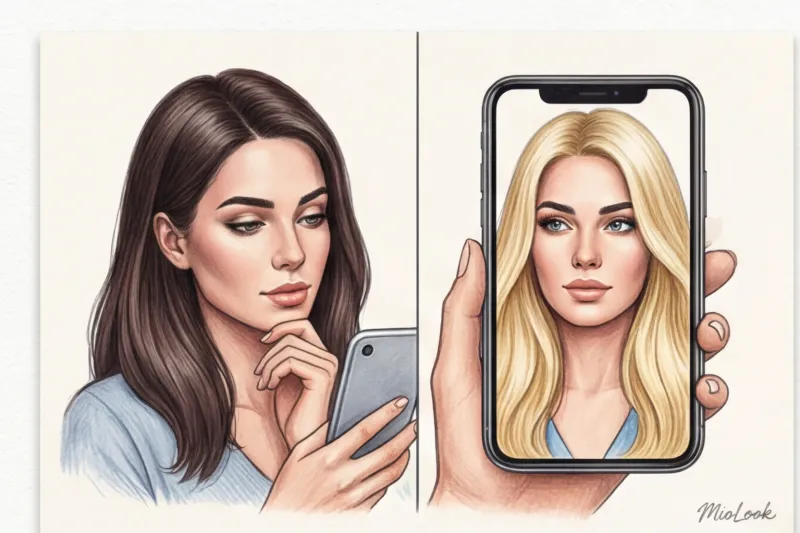
A smart AI stylist will select the perfect look and help you visualize your new hair color with your real clothes.
Get access — €0.99 onceThe Perfect Hair Color for Spring: 5 Expensive Shades
The secret to a high-status coloring is in the nuances. To ensure the salon stylist understands you correctly, I always recommend using "edible" and natural metaphors—they eliminate subjectivity. Saying "dye my hair blonde" can be disastrous.
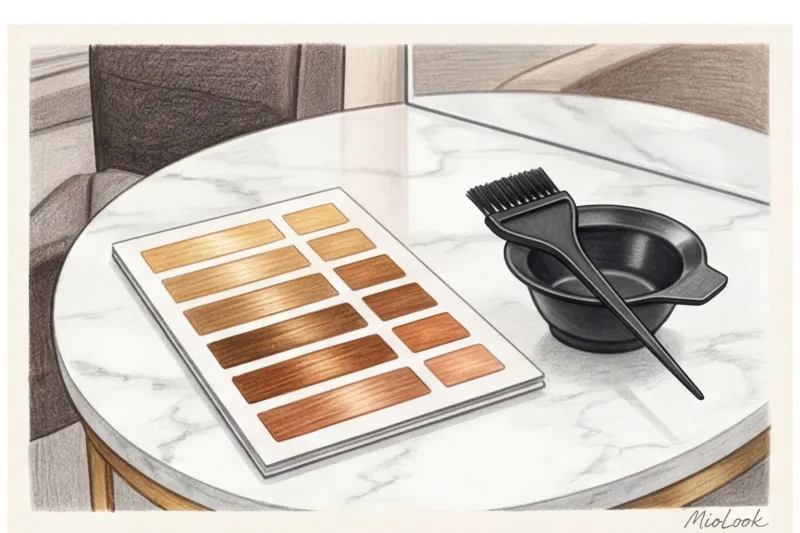
Honey and wheat blonde
The difference between them is fundamental. Honey is richer, thicker, with a distinct yellow-orange hue. Wheat is a soft, sun-warmed light beige. Wheat is ideal for Bright Springs with light green or clear blue eyes, as it doesn't overpower the natural watercolor-like quality of the face.
Golden blonde and caramel
A luxurious alternative for those who don't want to be a classic blonde but need a warm frame for their face. Caramel highlights near the face (the so-called money piece ) instantly refreshes the Warm Spring. This is exactly the color that goes perfectly with beige in a business wardrobe , creating an "old money" look.
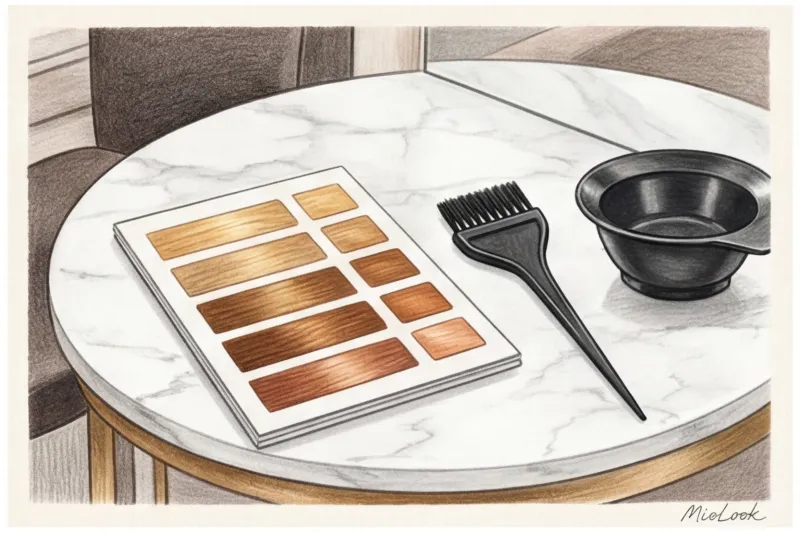
Light copper and strawberry blonde
Don't confuse strawberry blonde with cheap, washed-out red. A proper strawberry blonde is a golden base with a subtle, barely-there peachy-pink undertone. For Pure Spring, adding a touch of light copper is the best way to enhance contrast and vibrancy without weighing down your features.
Million Dollar Mistake: Shades That Will Add 10 Years to Your Age
In color theory, there's a strict rule of color physics. If you apply a cool gray (ash) color to warm, peachy, or golden skin, the skin will take on a complementary hue, according to the law of simultaneous contrast. Simply put, ash blonde will visually pull out all the green and gray tones you never even knew existed.
The main enemies of Spring:
- Platinum and pearl blonde: They make spring skin sore and inflamed. Every little redness or rosacea becomes glaringly noticeable.
- Blue-black: Creates a "heavy helmet" effect. The black color casts sharp shadows on the face, deepening the nasolabial folds and emphasizing the skin's texture.
- Mahogany, Bordeaux and Eggplant: These shades from the 2007 palette will flatter any look, but in Spring they look especially alien, turning a sophisticated woman into a tired saleswoman.
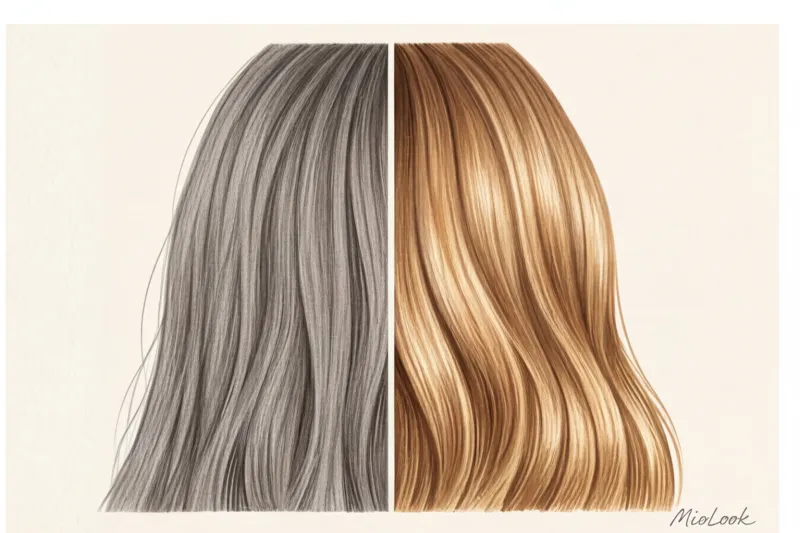
To be fair: This rule doesn't apply if you have more than 70% gray hair. In this case, going completely platinum is sometimes the only aesthetically pleasing and budget-friendly option to avoid having to dye your roots every two weeks.
Complex coloring: how to make a warm color a status symbol
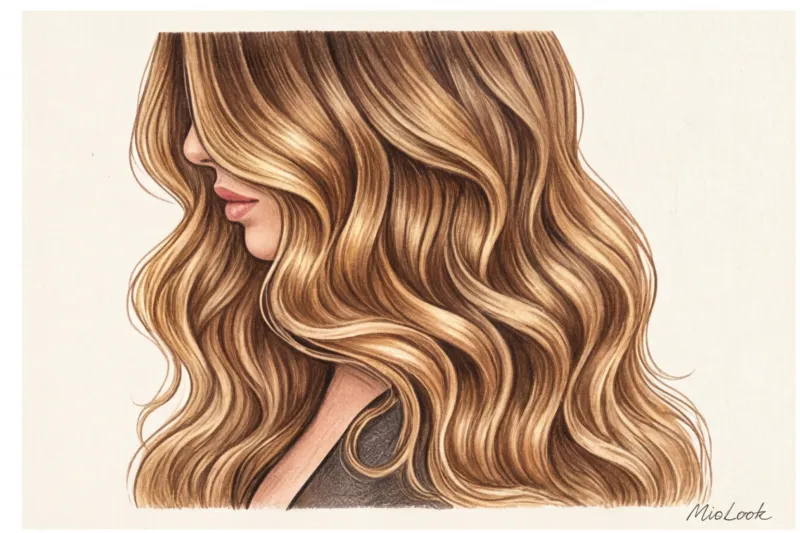
A flat, uniform color from root to tip (even if it's a perfect honey color) always looks simpler than a multi-dimensional coloring. Expensive hair is hair that sparkles in the light.
Modern technologies - Airtouch, shatush and balayage — designed to mimic the effect of sun-bleached strands. For the "Spring" color type, this is a completely natural, organic look.
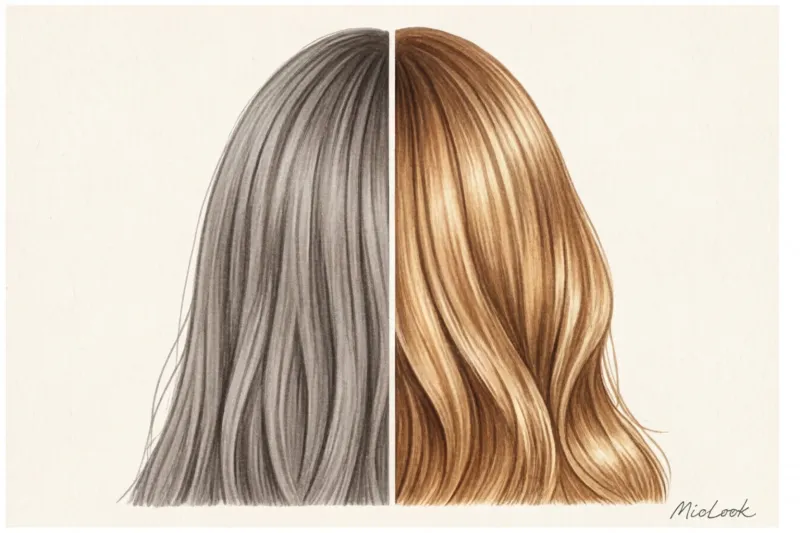
The main rule of modern coloristics: We leave the root natural or darken it with a warm blond shade Firstly, it creates visual volume. Secondly, it's pure math and saves your budget.
"Let's calculate the ROI (payback) of your coloring. Total blonde requires root touch-ups every 3-4 weeks. Complex coloring costs 1.5-2 times more initially, but lasts 6-8 months without touch-ups. Over the next six months, you'll save both money and the quality of your hair."
Your perfect look starts here
Join thousands of users who look flawless every day with the help of MioLook's smart algorithms.
Get access — €0.99 onceHair Color Maintenance Budget: The Harsh Truth from a Stylist
We've reached the most important insight that will revolutionize your hair care routine. For years, marketers have been telling us that yellowness is bad, so buy anti-yellow (purple and blue) shampoos.
The truth is that for the Spring color type, it is the golden and warm pigment that is a beauty enhancer!
Applying purple shampoo to honey blonde doesn't make it more expensive. Purple neutralizes the gold, turning your hair into a dull, dusty, lifeless straw. Spring's biggest enemy isn't yellowness, but dullness and bleach.
Why do warm colors quickly become "rusty" or dull in reality?
- Hard water. Tap water in most European cities contains an excess of calcium and magnesium salts. These salts settle on bleached, porous hair, making it coarse and reddish. Solution: What you need is not a purple shampoo, but a chelating shampoo (one that removes metals) once every two weeks.
- pH level. Use shampoos with an acidic pH (4.5–5.5) for colored hair; they close the cuticle and keep the pigment inside.
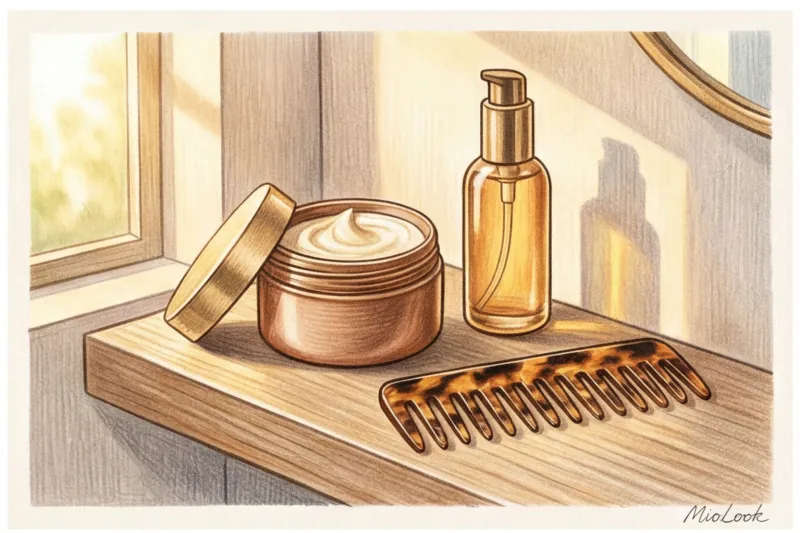
- Maintaining gloss. Instead of camouflaging with ash, use tinted masks with direct golden or peach pigments. They will restore the salon-quality shine.
Checklist: How to Prepare for a Visit to the Colorist
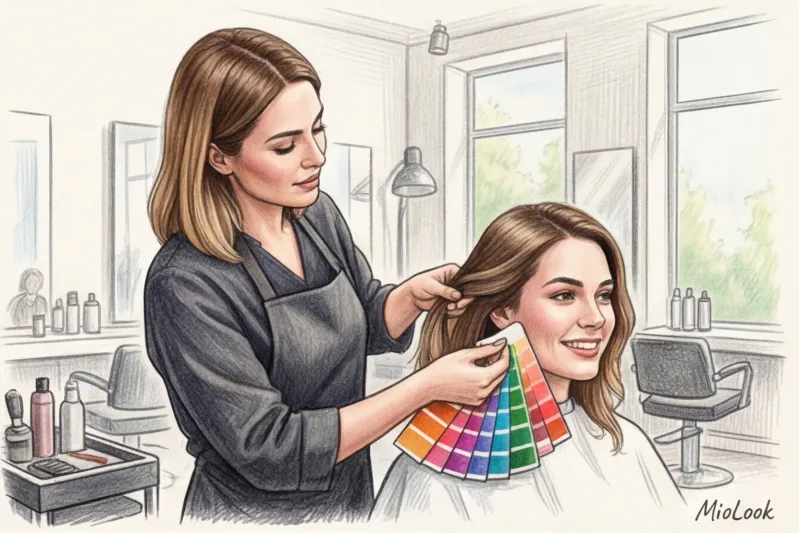
To avoid unpleasant surprises with your results in the salon chair, prepare in advance. I always give my clients this process:
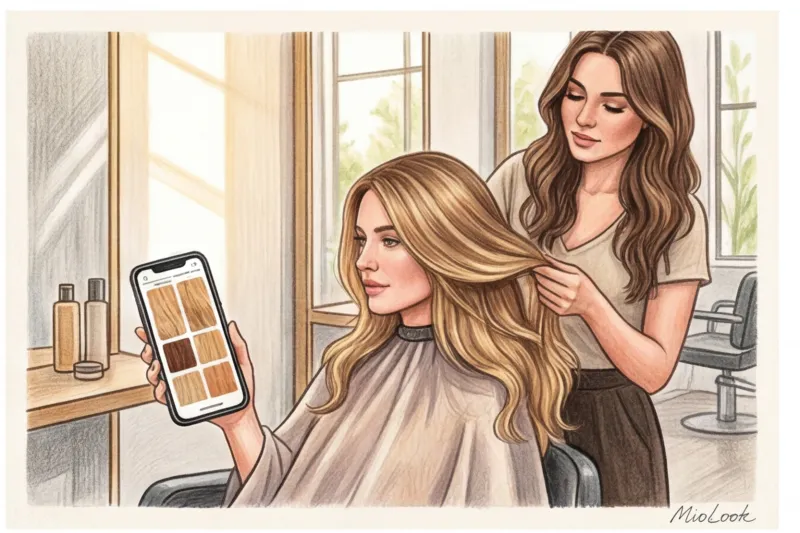
- Collect references correctly. Look for photos of coloring done in natural daylight, not studio shots with a ring light. Save three photos of what you want and one photo of what you absolutely DON'T want.
- Come dressed appropriately. Wear a top in your favorite spring color (peach, camel, warm green, or ecru). The colorist should be able to see how the new hair color complements your portrait zone. By the way, you can check your ideal wardrobe shades through smart wardrobe feature in MioLook.
- Tell the truth. Be honest about everything you've had on your hair in the last two years. Henna, keratin, supermarket toner—your stylist should know the base they're working with.
- Discuss the care budget immediately. Budget at least 20-30% of the coloring cost for professional at-home care. Without it, your expensive color will wash down the drain within three weeks.
Choosing a hair color isn't just a fashion statement; it's an investment in your everyday appearance and mood. Stop hiding your natural spring warmth behind bland, cold ash. Let your hair shine with gold, honey, and caramel—and you'll be surprised how little makeup you need to look rested and sophisticated every day.